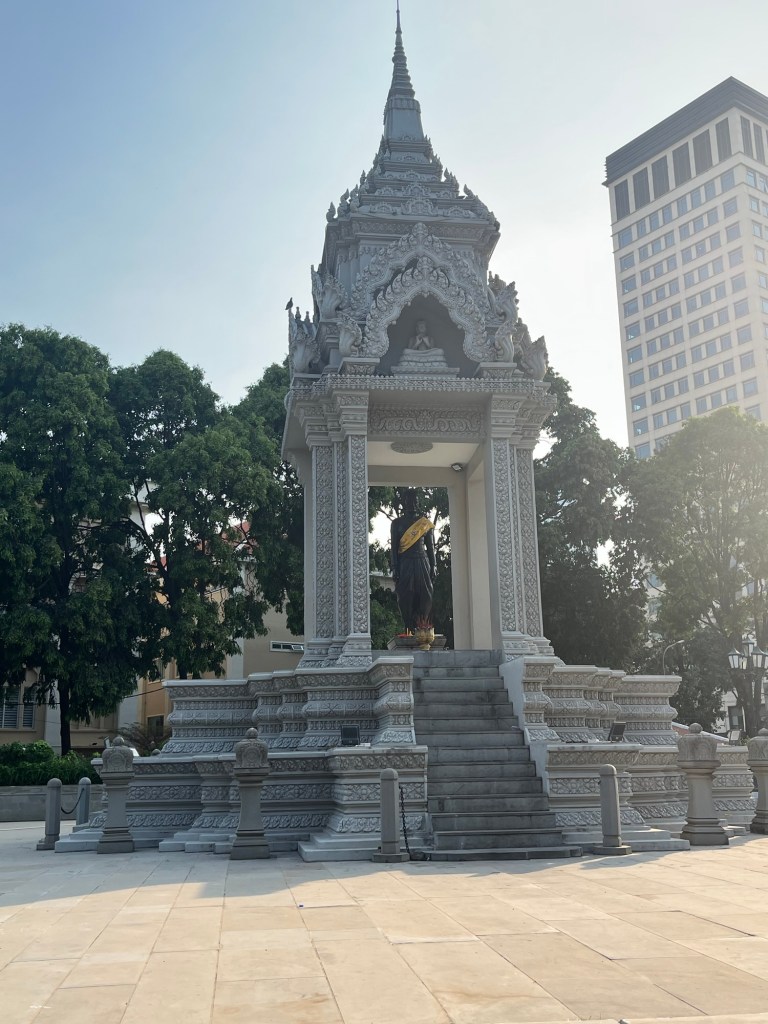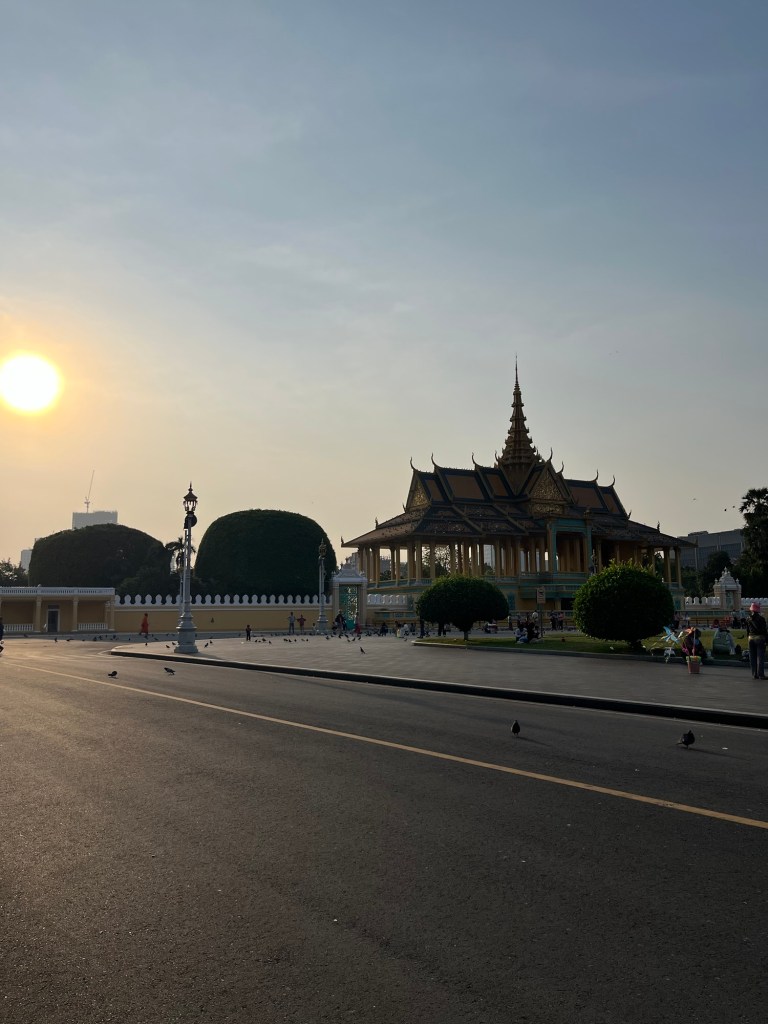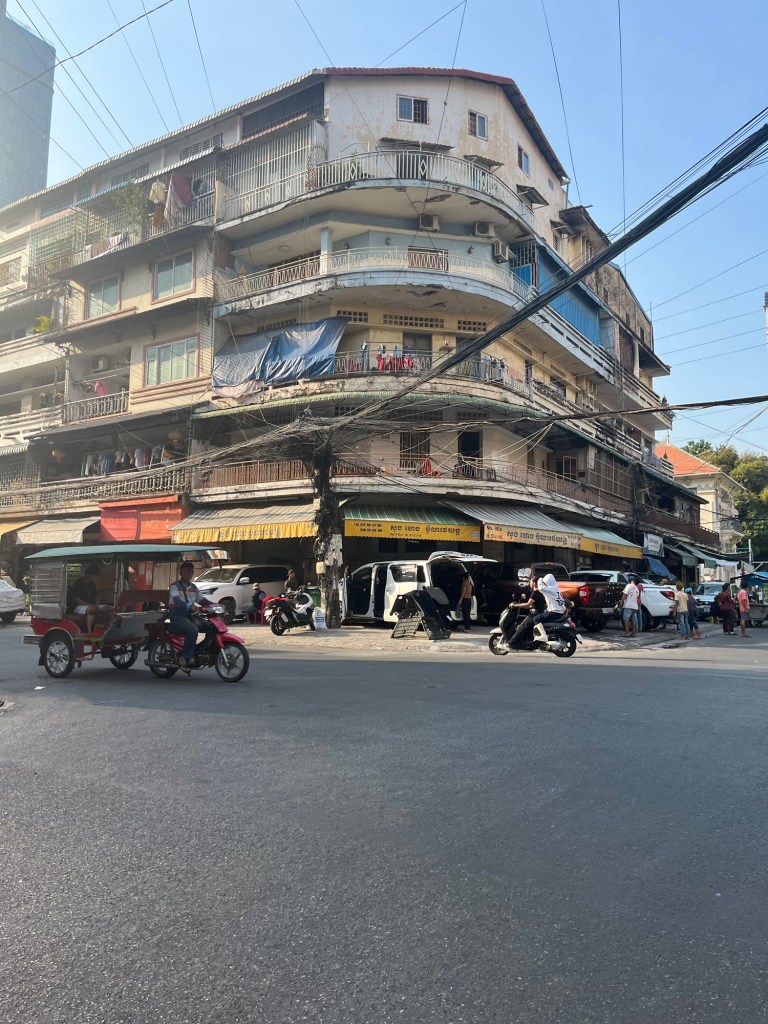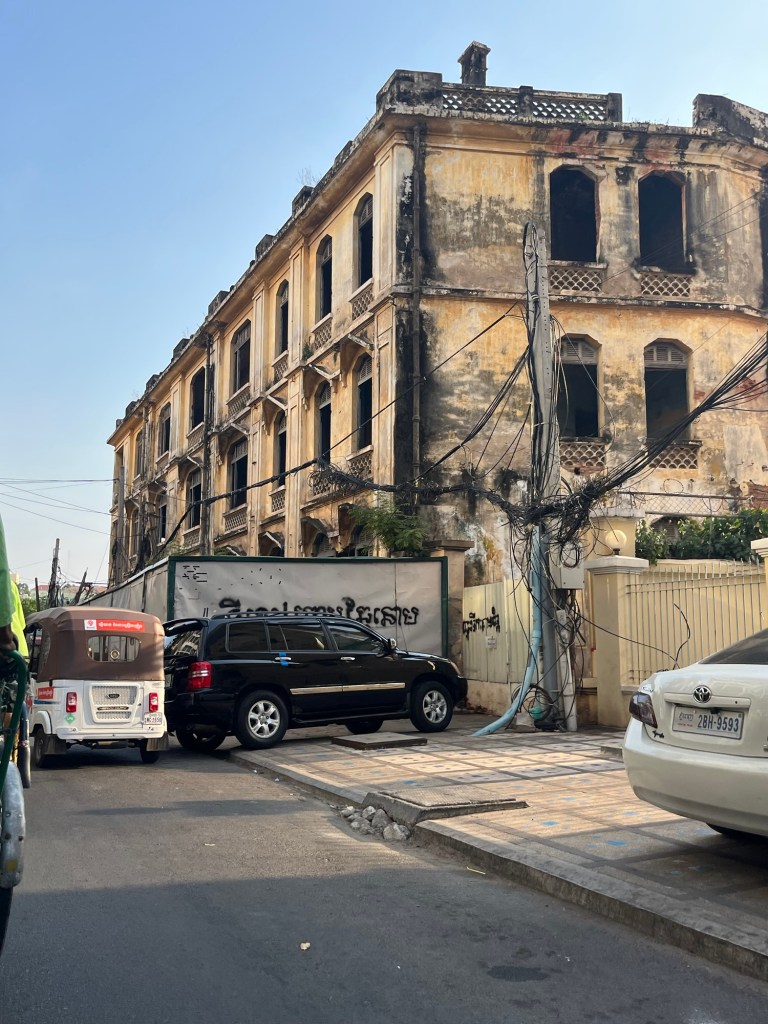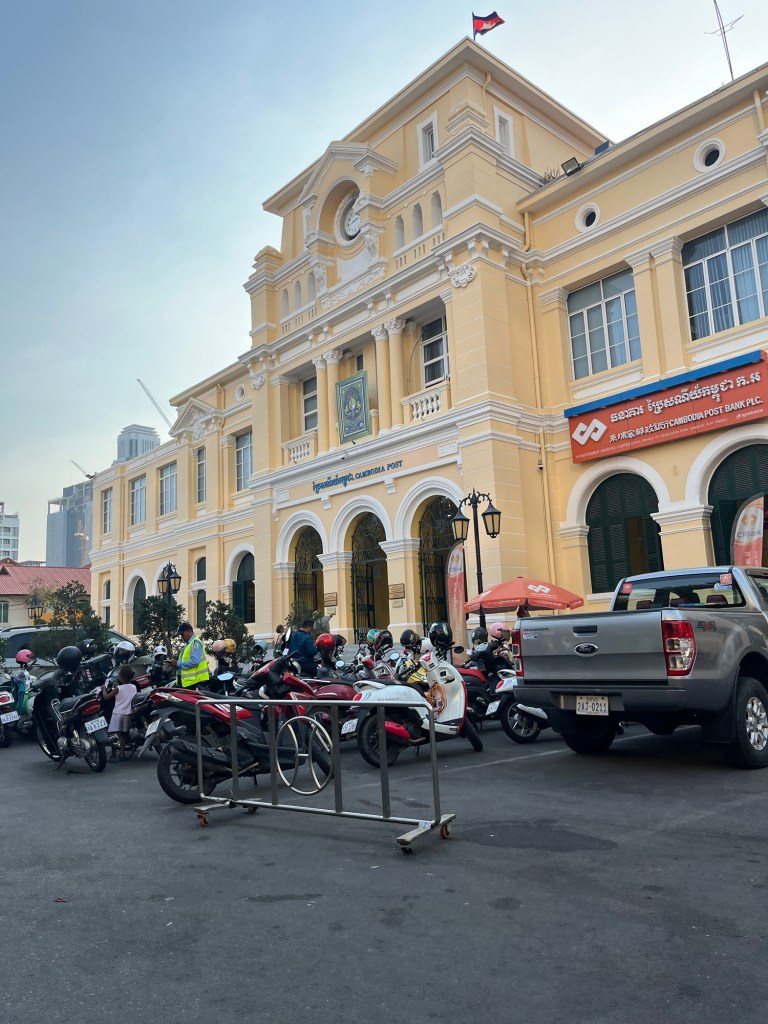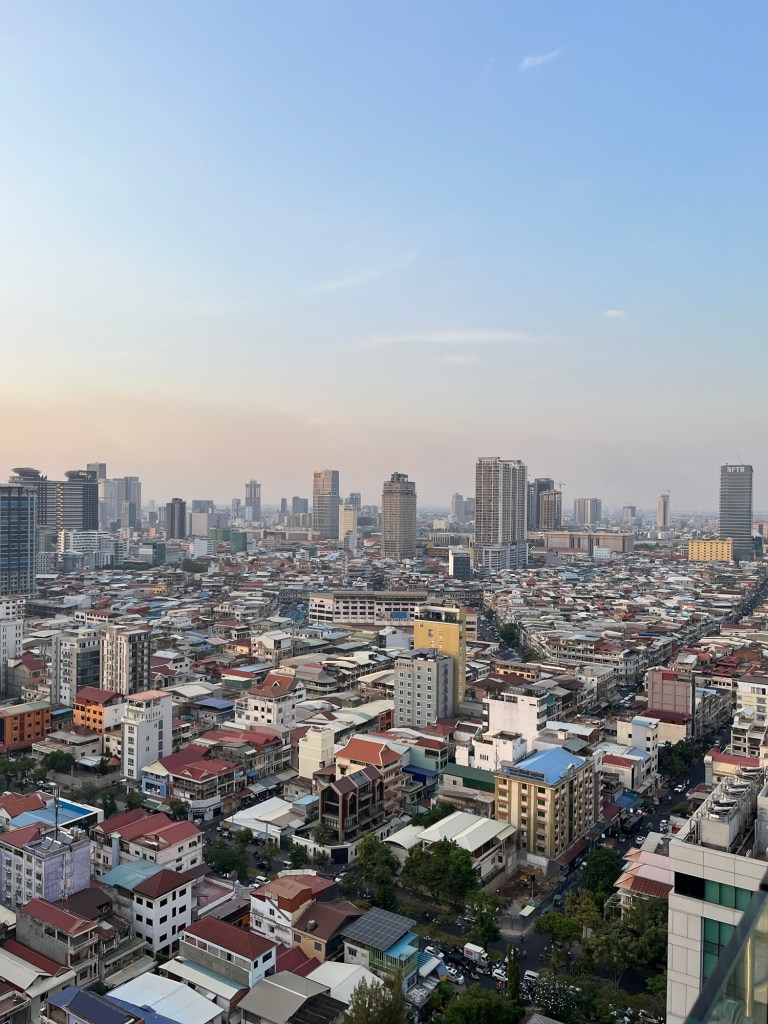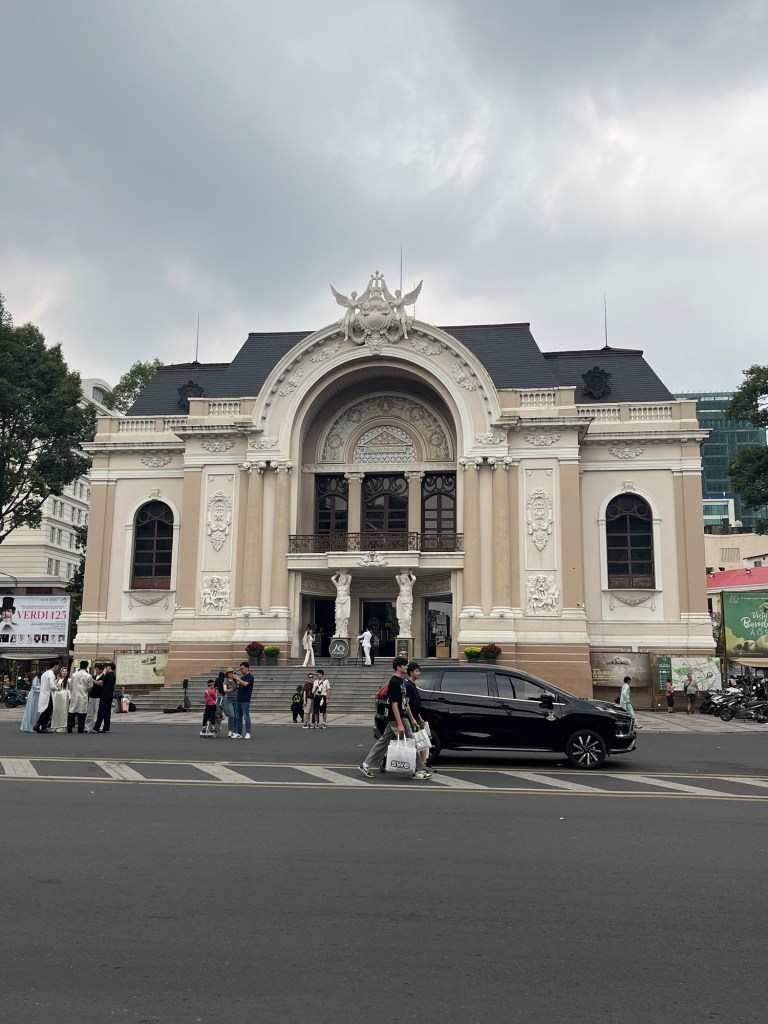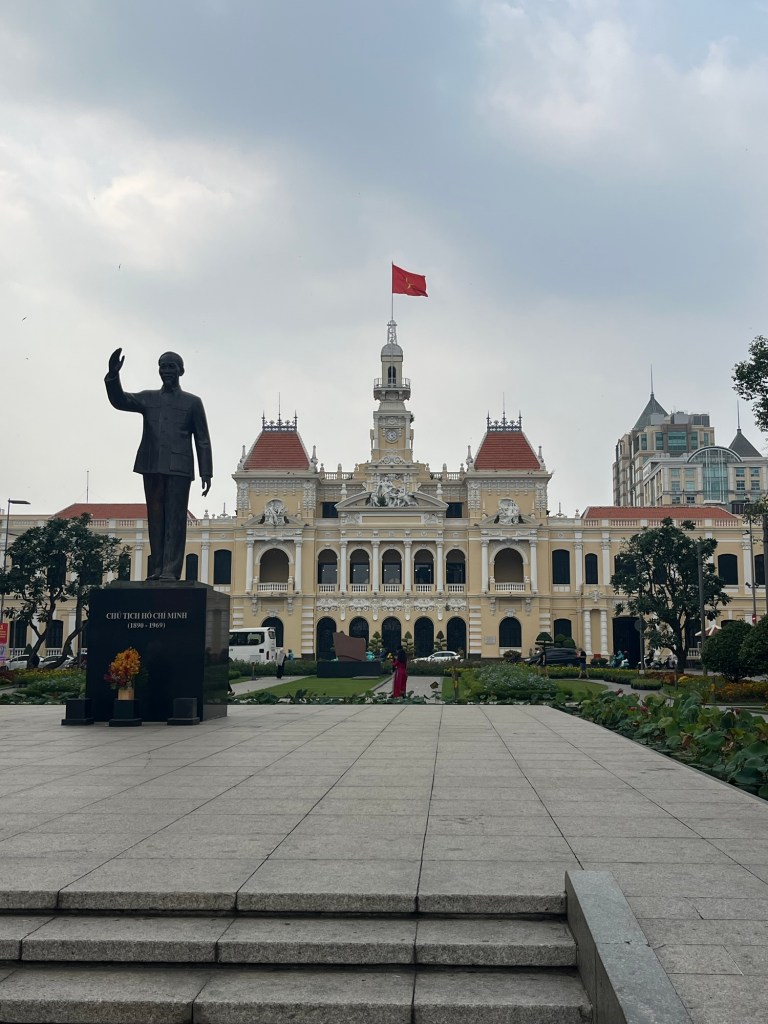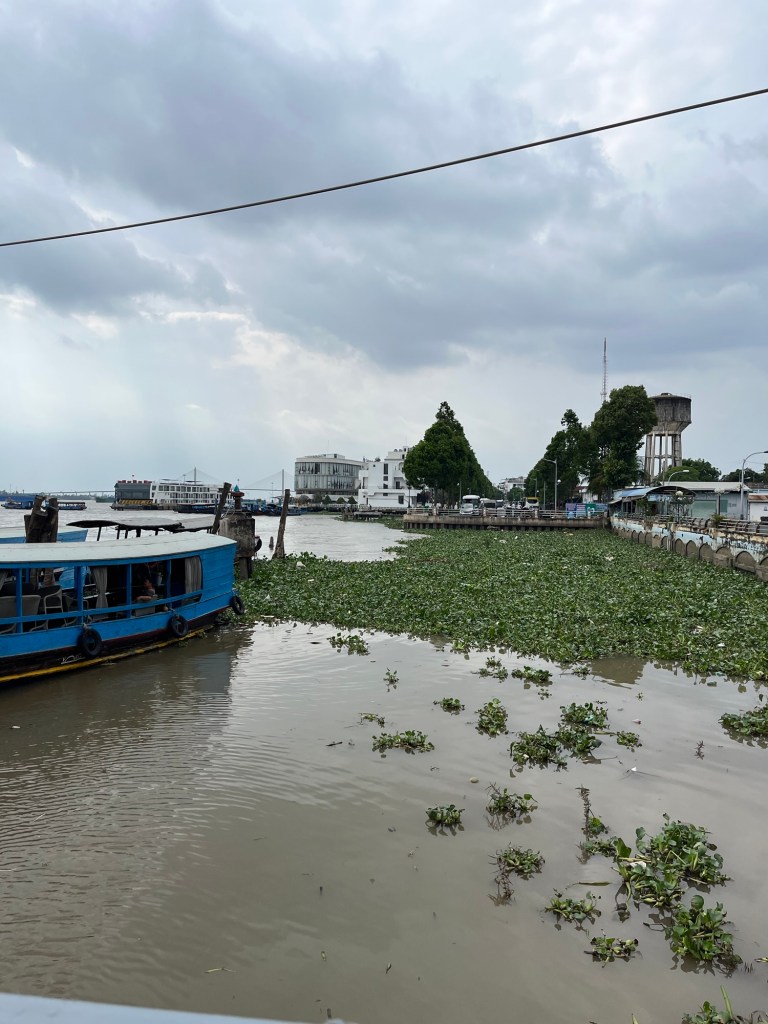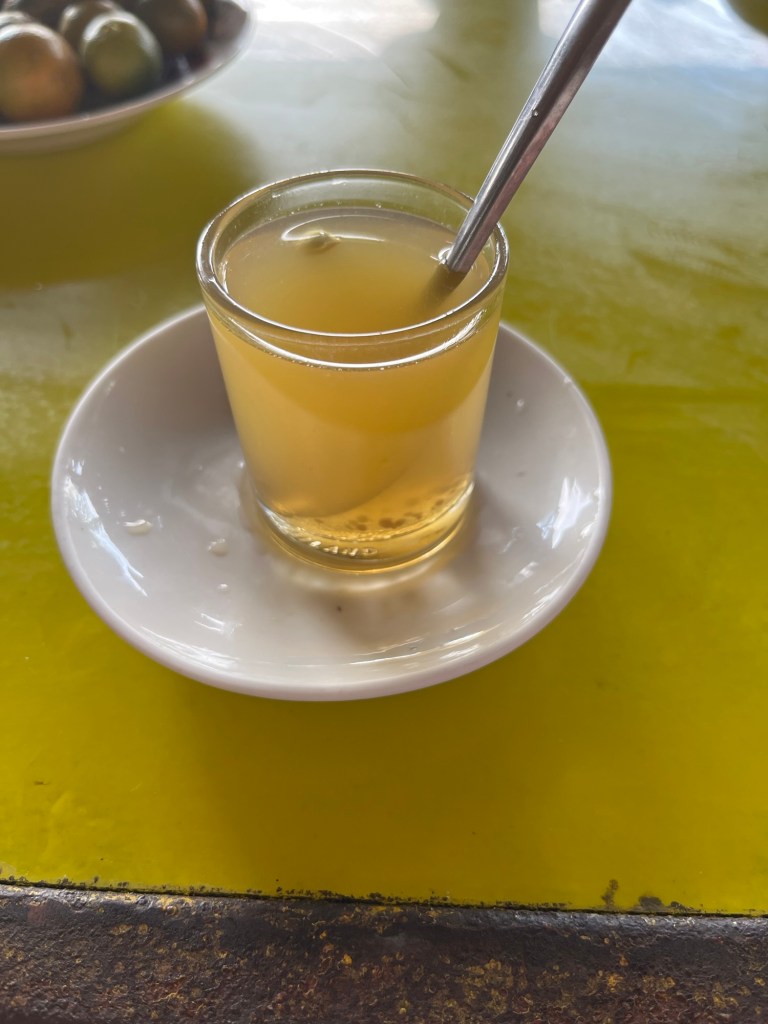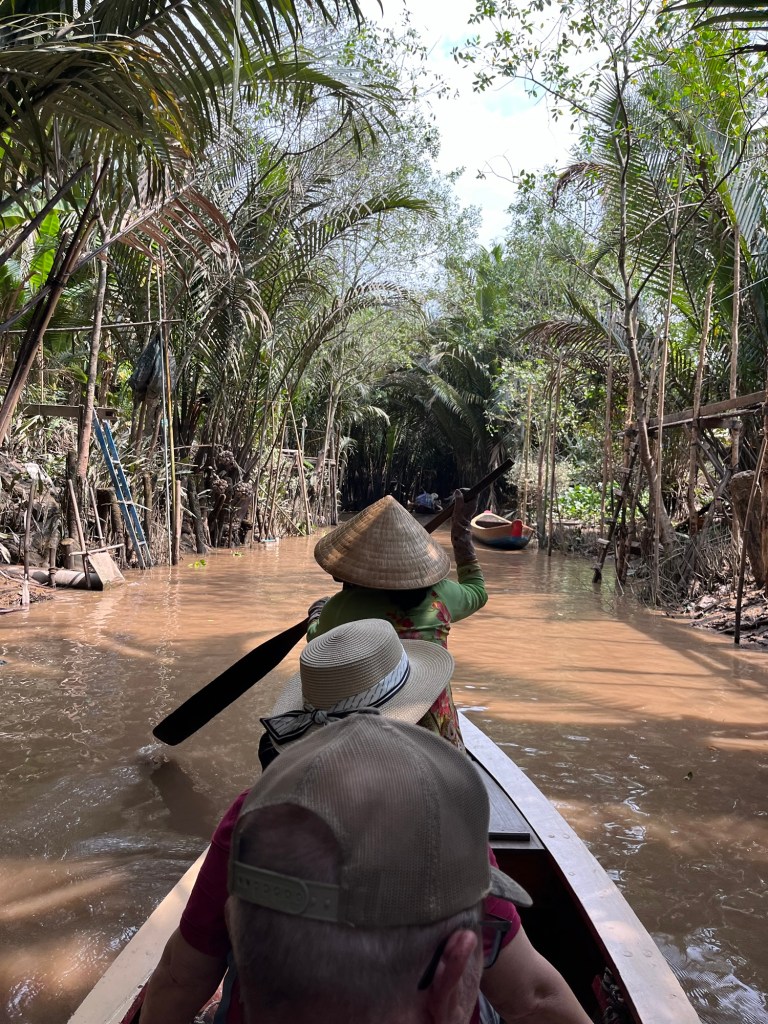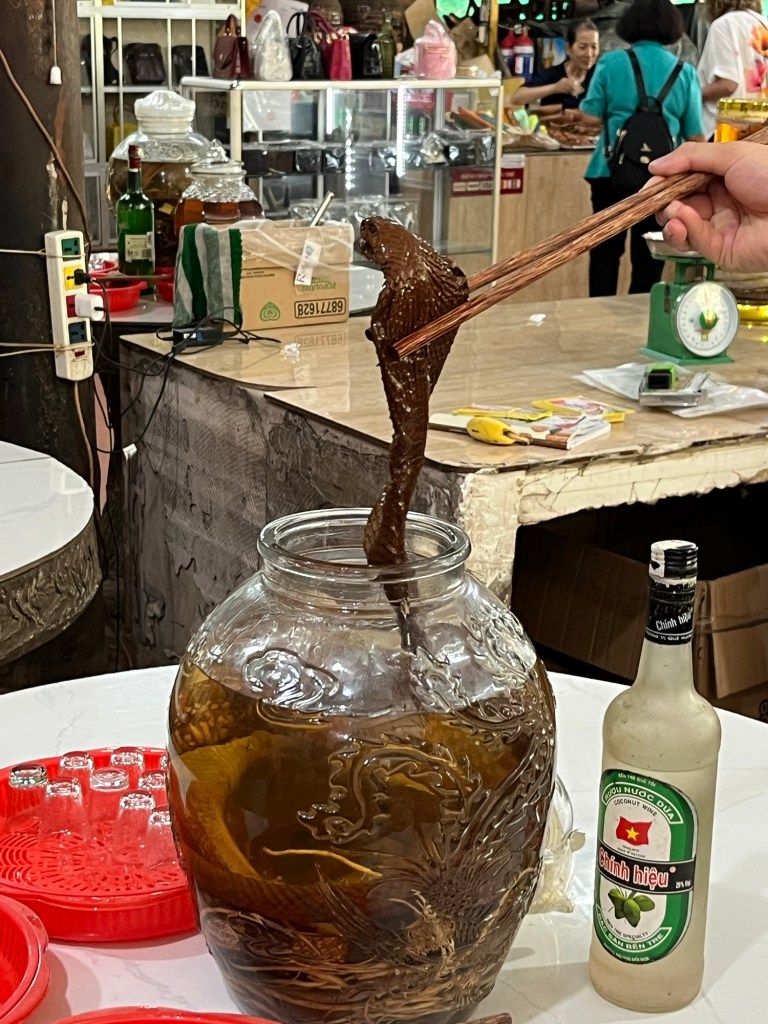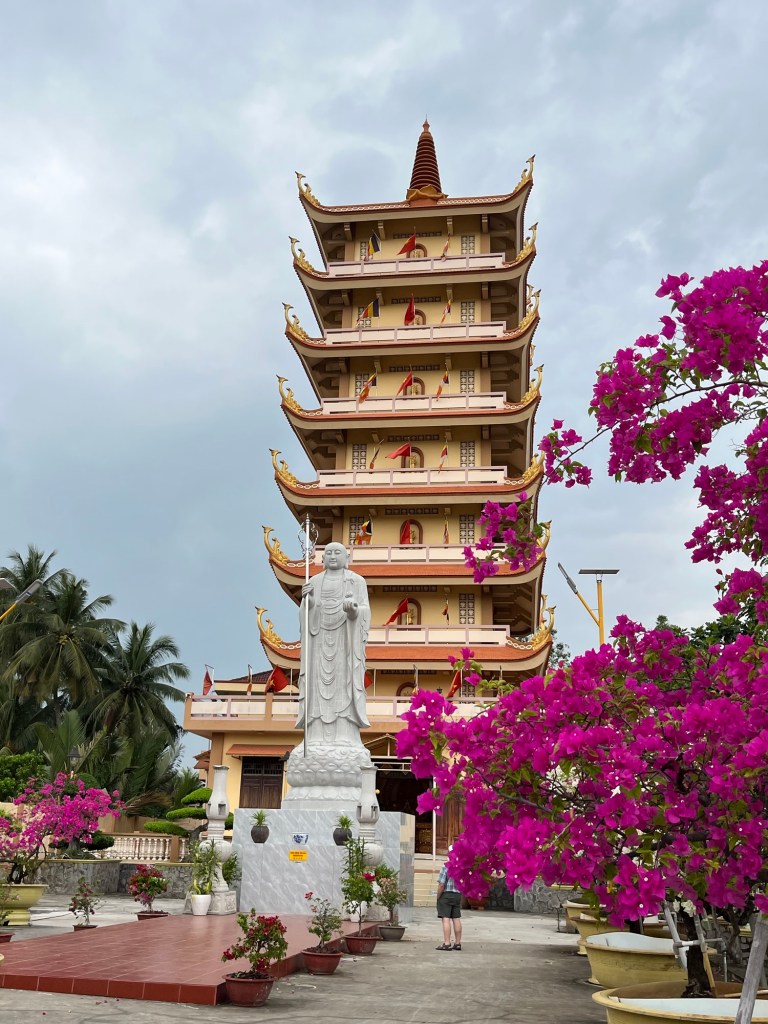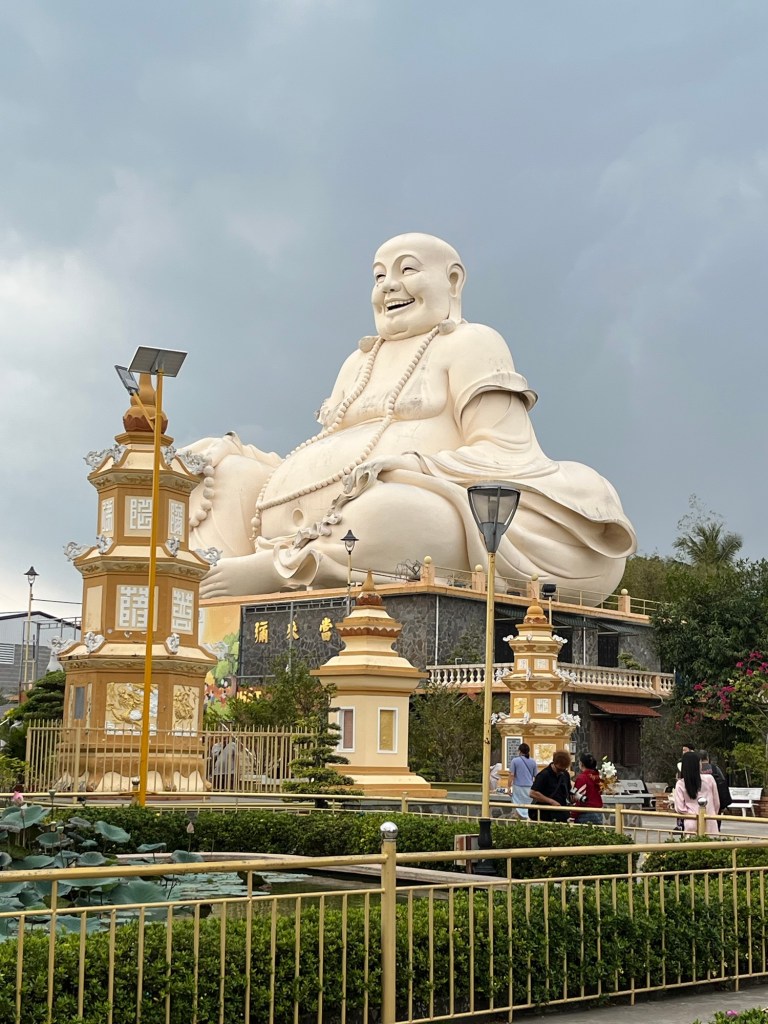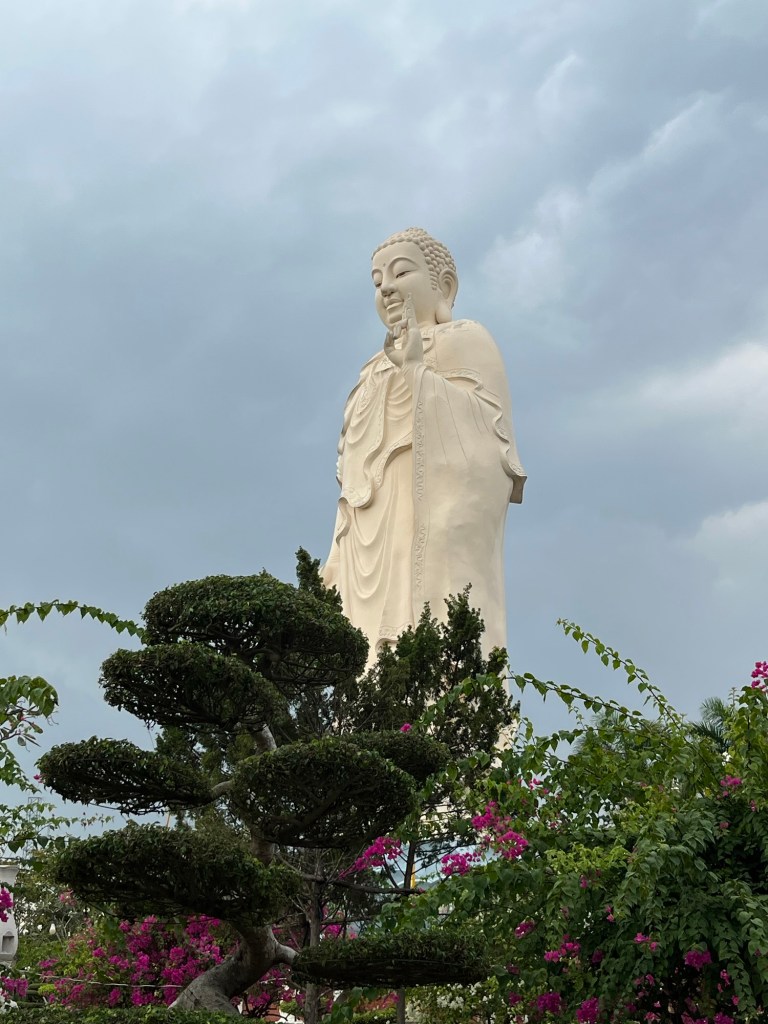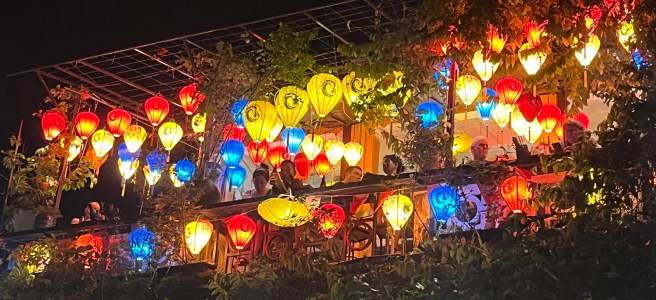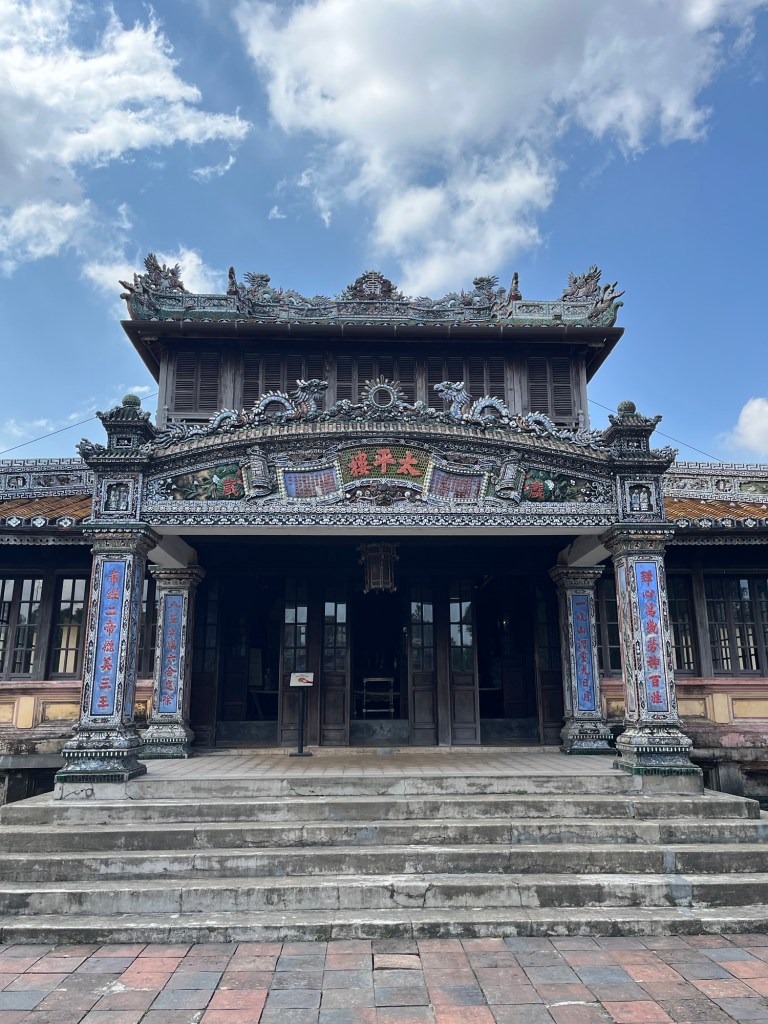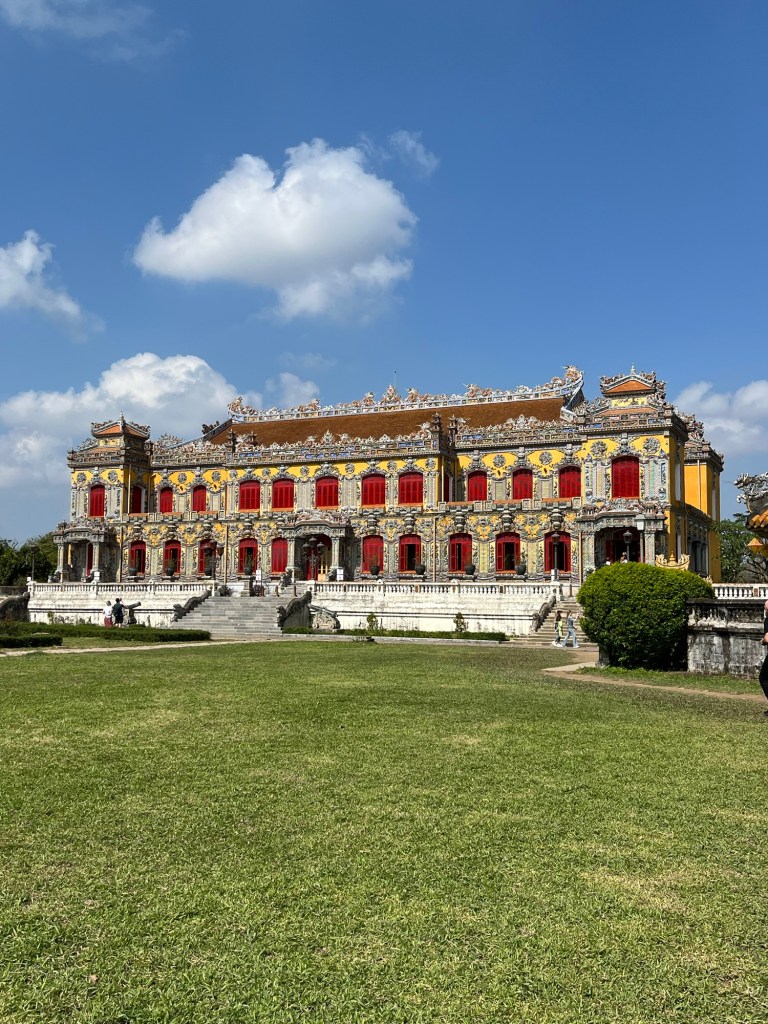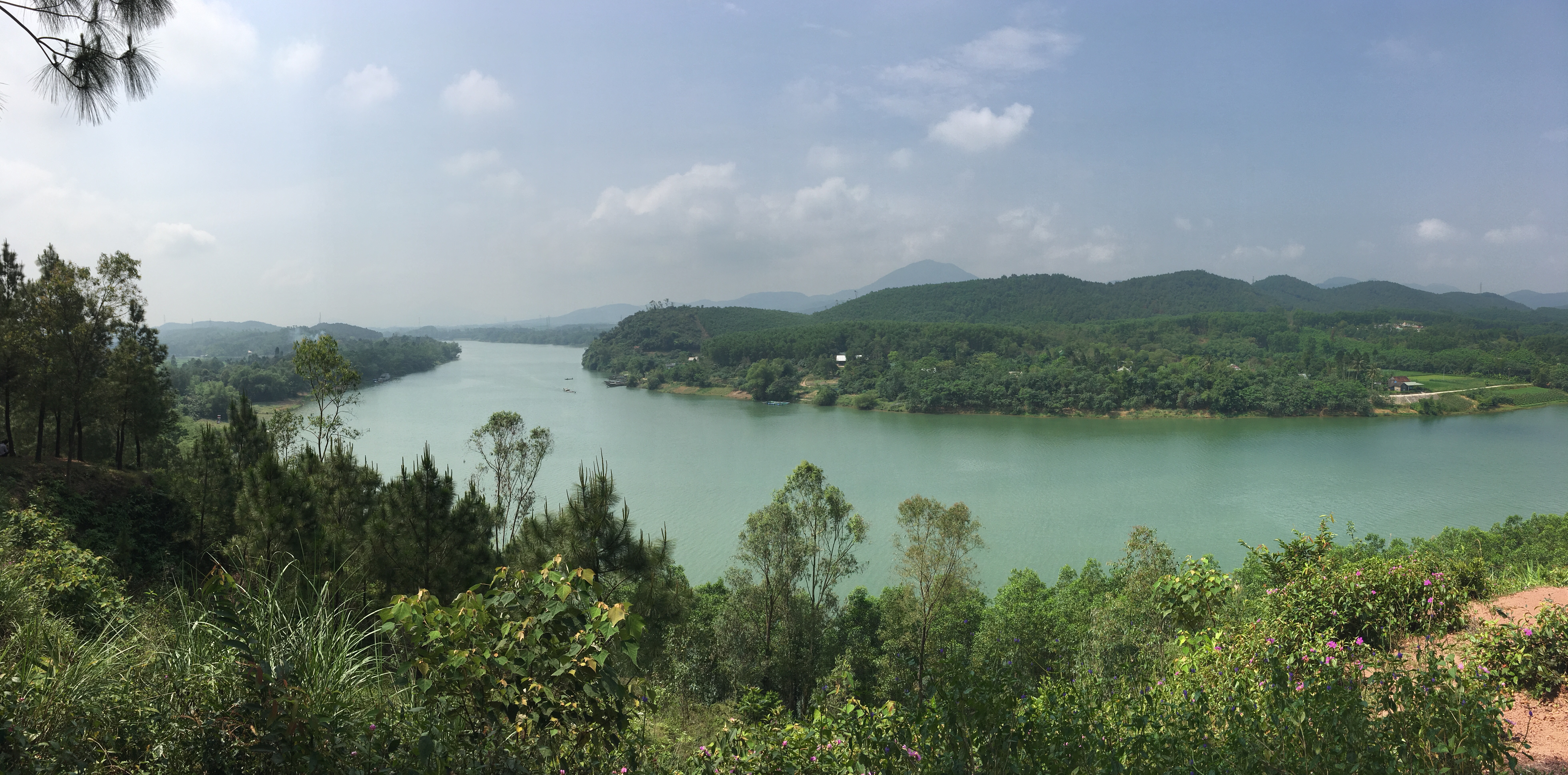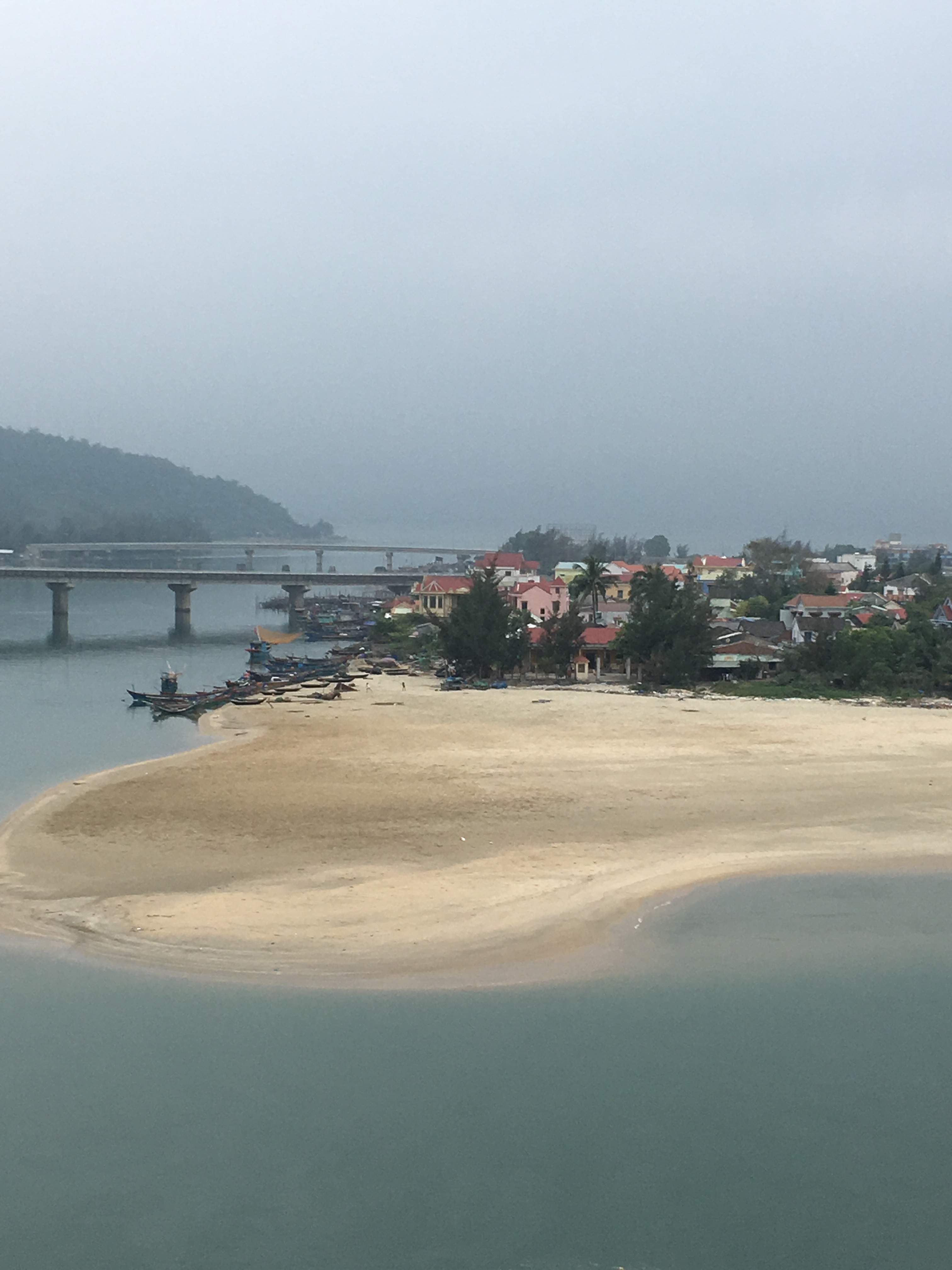
We arrived into the airport in Hanoi in the late afternoon after a 45 minute flight from Vientiane during which time we were thrown a fairly decent sandwich. On the descent, you could see the smog hanging low over the city, and the air quality was ‘very unhealthy’. After inhaling quite a lot of dust and pollution in Laos, my throat and lungs were not very happy…
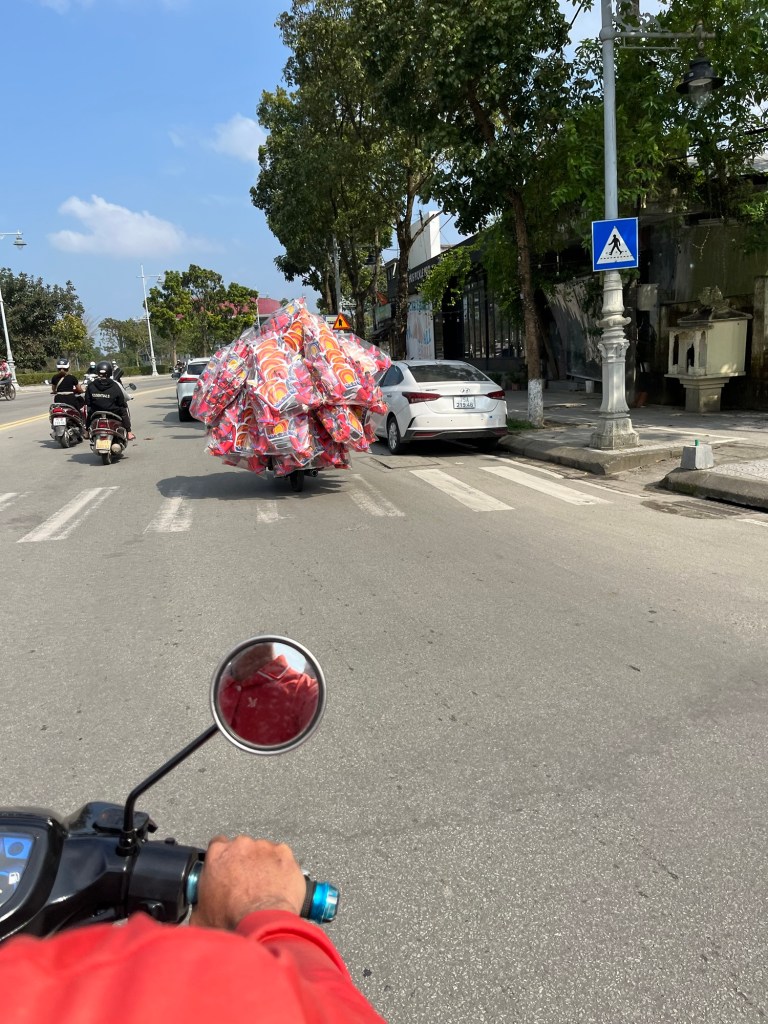
I’ve been to Vietnam before, in 2017, and in fact I am doing the exact same route with the same company. It has been interesting to see how things have changed in the last 9 years. The first noticeable difference was the number of cars on the roads. Last time they really were few and far between (due to high import taxes and lack of access to credit), with almost everyone driving scooters or motorbikes. There are so many more cars now (due to easier access to credit) and a lot of large EVs too. This makes crossing the road even more tricky as, while the scooters can weave around you, cars aren’t quite so nimble. I also felt that they are less willing to stop for pedestrians. Not that the traffic actually stops, you very much do just have to walk into the road with a sense of purpose and don’t stop until you get to the other side!!
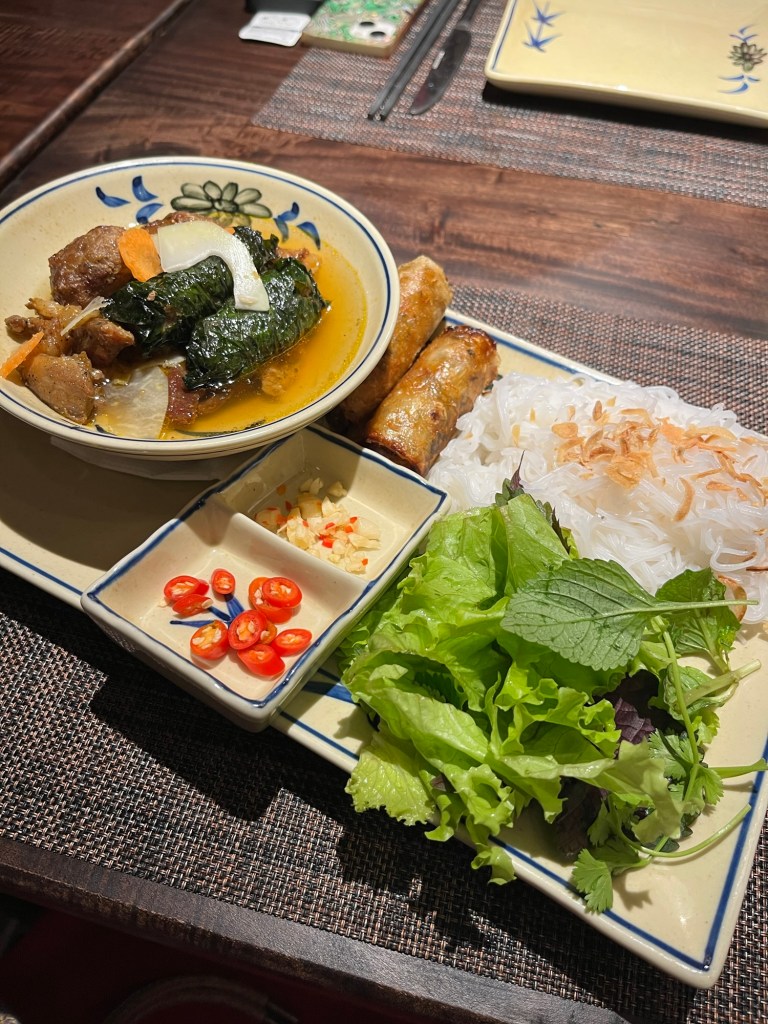
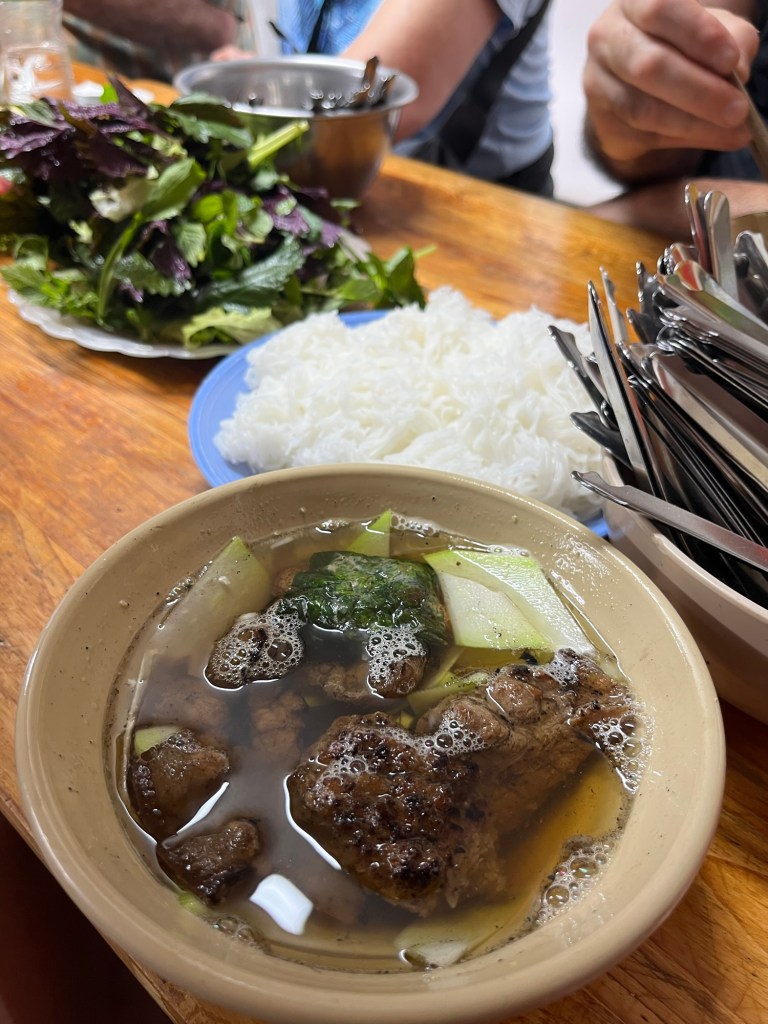
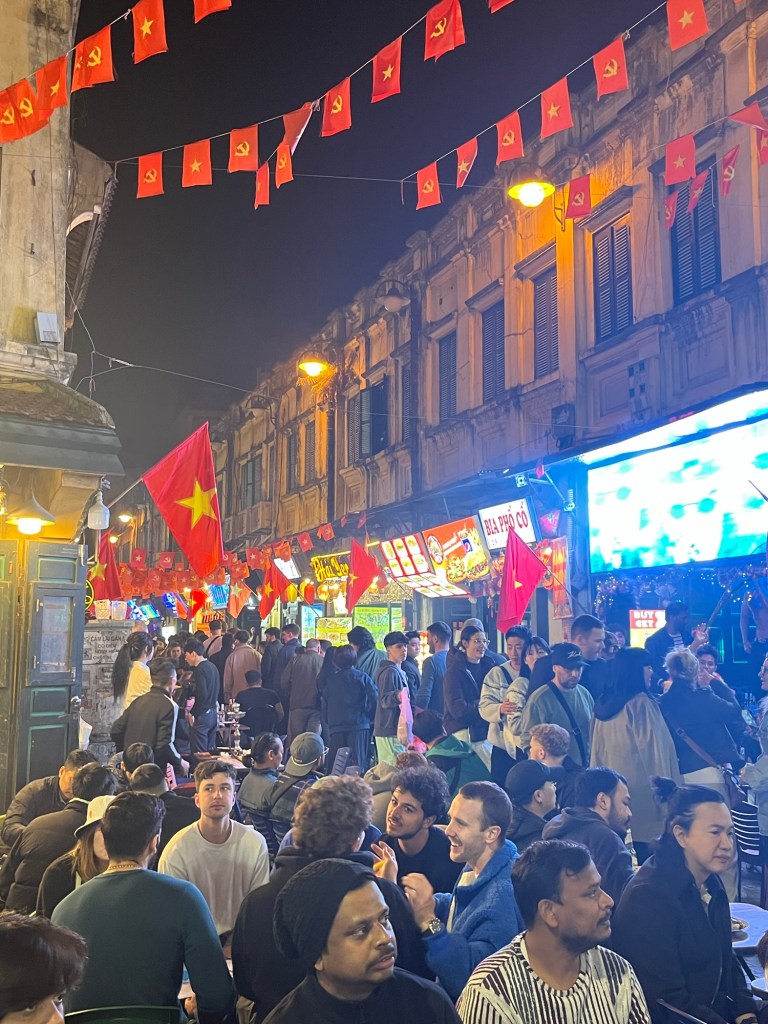
After checking into the hotel, we went for dinner (Bun Cha for me) and then for drinks on Hanoi’s Beer Street
Bun Cha – minced pork meatballs in soup with white vermicelli noodlesBeer Street, very busy
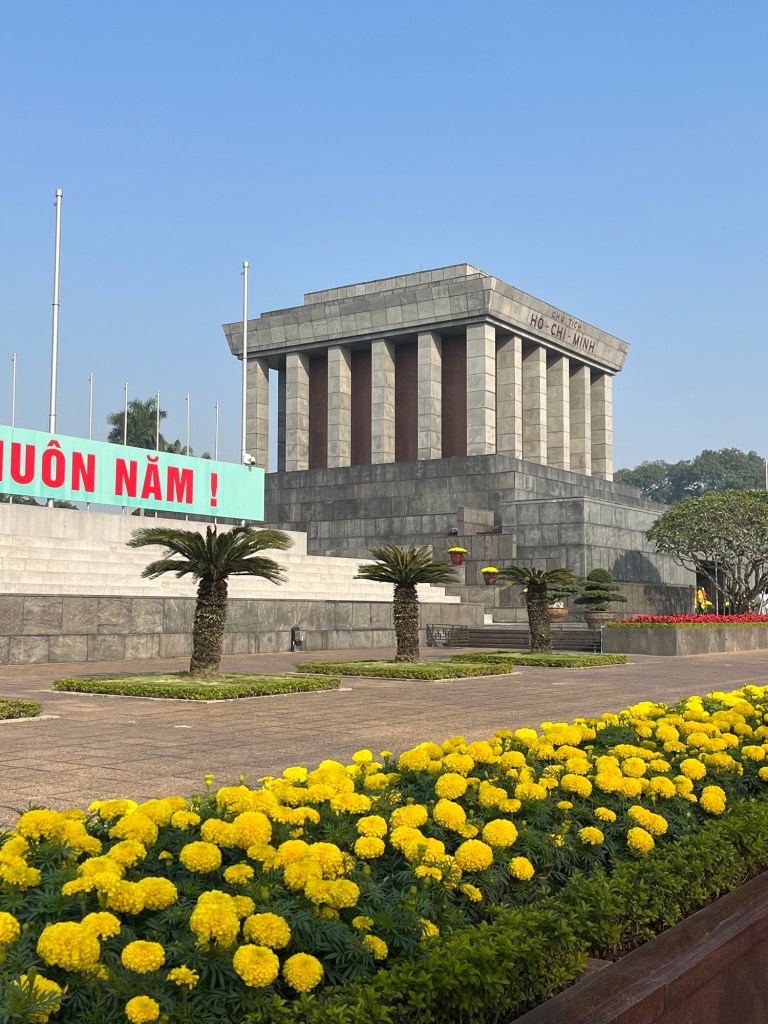
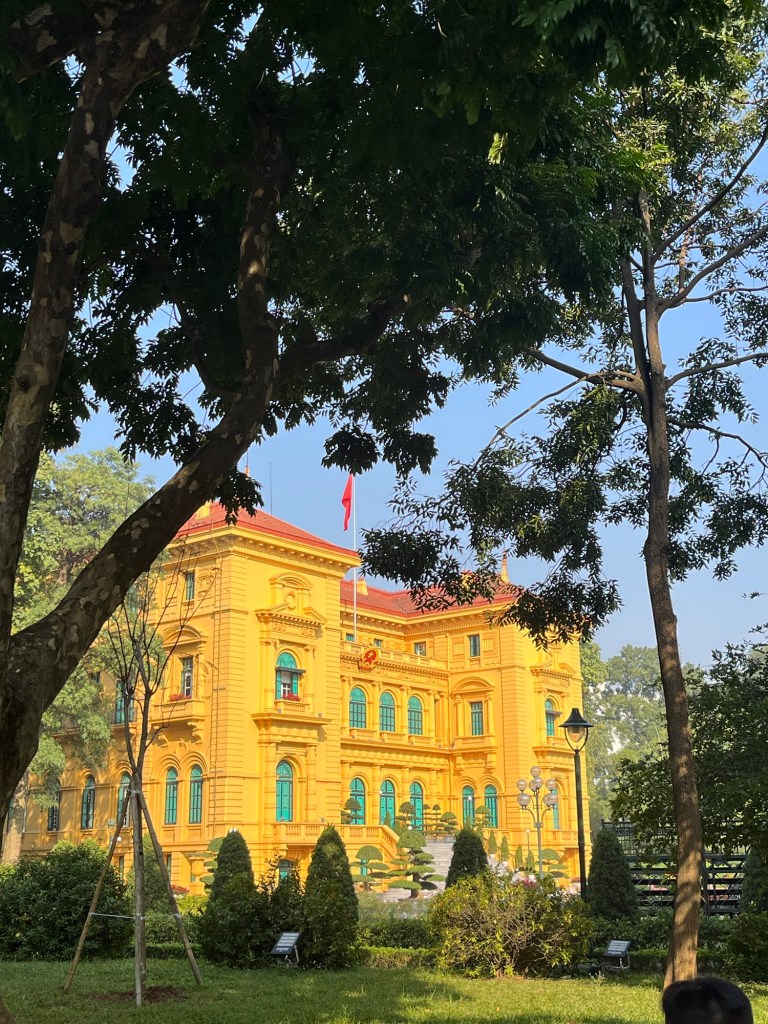
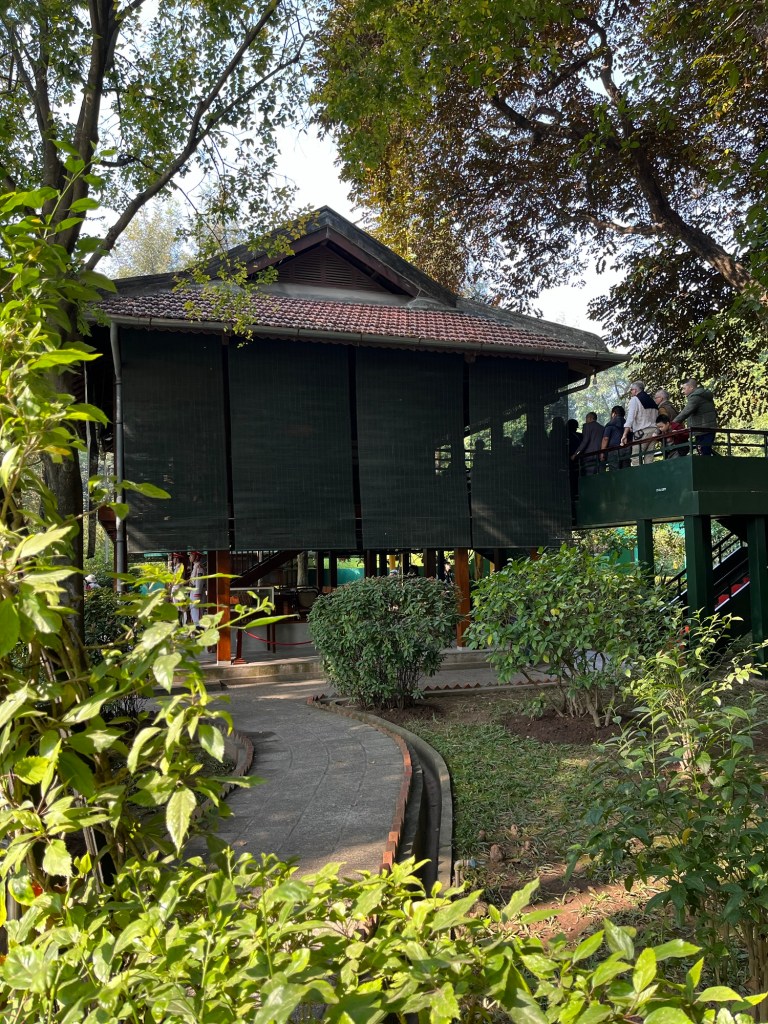
The next day started with a trip to the Ho Chi Minh Mausoleum. Despite his wishes to be cremated and scattered around Vietnam, he was embalmed for people to proceed past him every day. A bit of an odd experience if I’m perfectly honest. We also went to the palace which is alongside the mausoleum and saw the stilt house that was built for Ho Chi Minh as he preferred this than the grander presidential palace.
Mausoleum PalaceStilt House
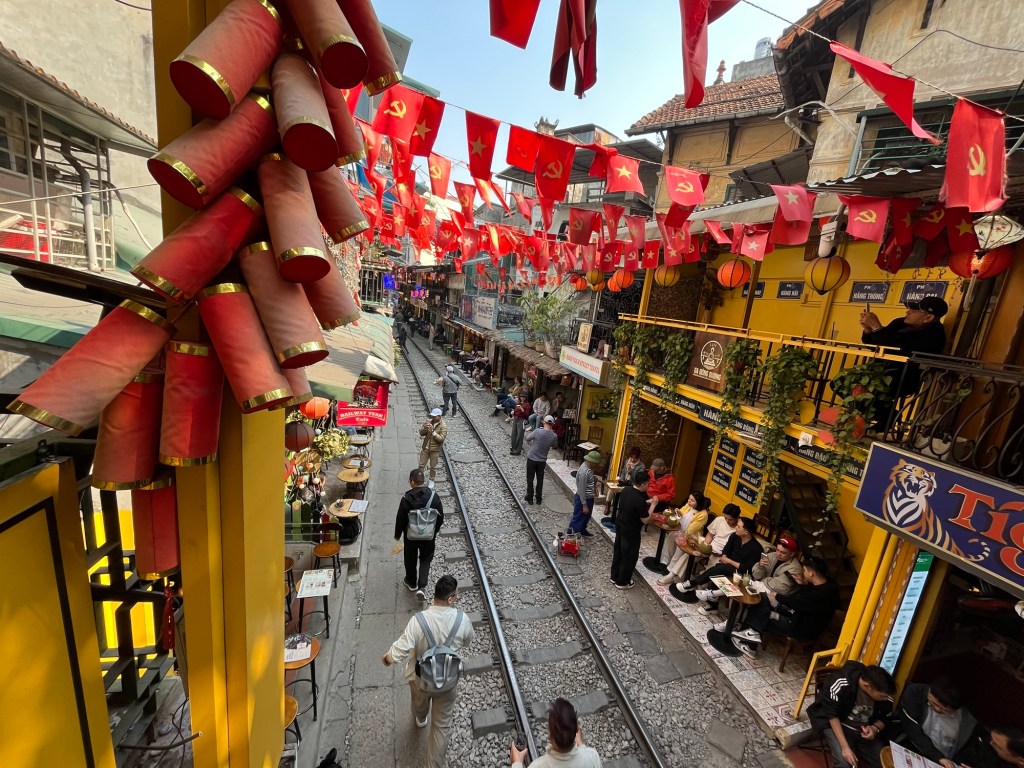
Afterwards we went to possibly one of the newer ‘sights’ in Hanoi, Train Street. This is a narrow street which the trains from Ga Ha Noi pass through on their way out of the city. It’s lined with cafes and coffee shops and has definitely become something for the ‘gram.
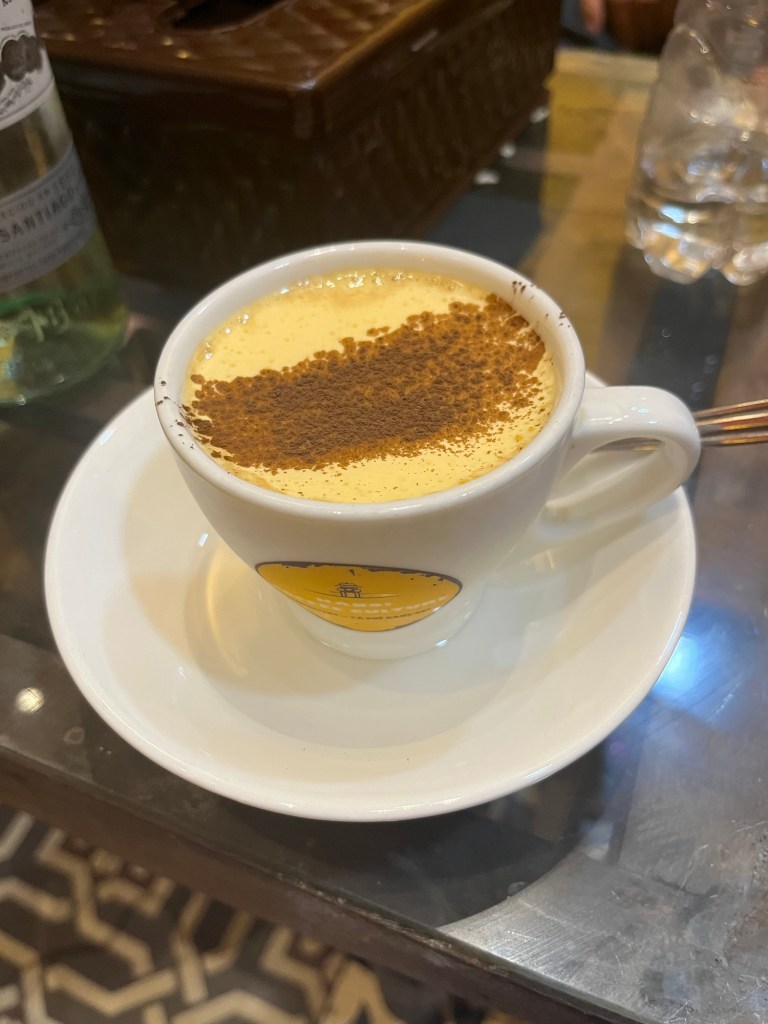
We had an egg coffee, a Hanoi specialty, whilst we waited for the train to come through. When it’s on its way, the ladies come out of all the cafes and blow their whistles to clear all the tourists off the tracks (as it’s sort of a regular street when the trains aren’t there) and then the train chugs slowly past.
Train Street, Hanoi
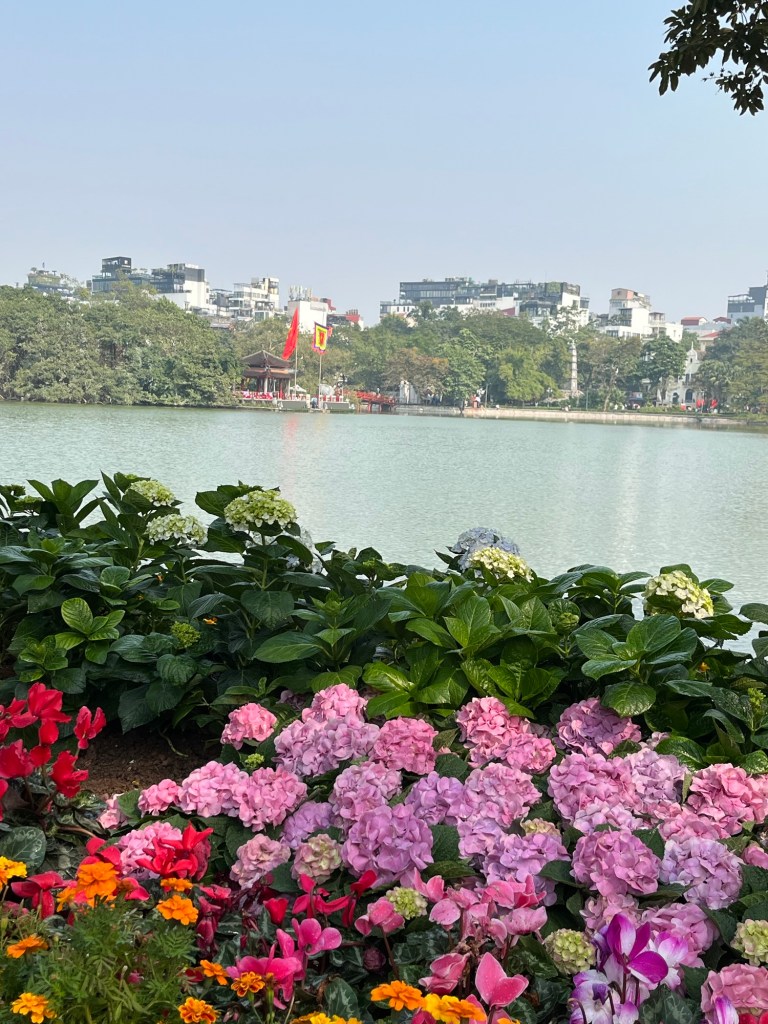
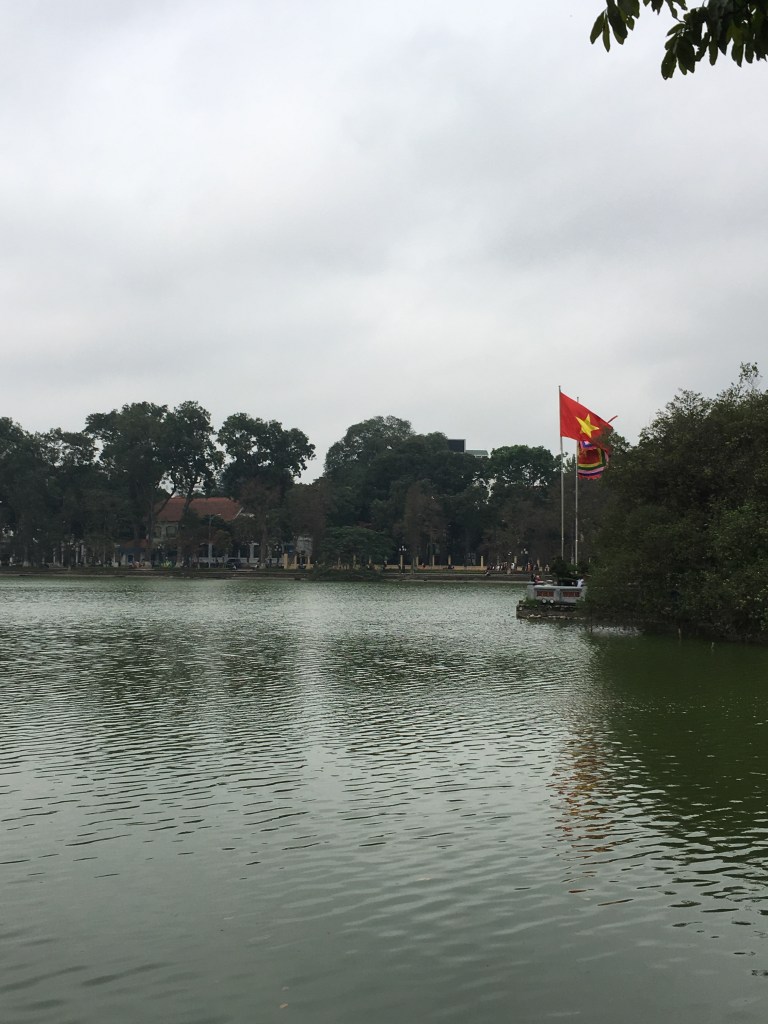
A free afternoon meant I retraced some of the things I remembered from my last trip, including a walk around Hoan Kiam lake, which had lots of beautiful plants and flowers in bloom, as well as a lunch stop at Banh Mi 25 which has become significantly more popular since my previous visit. Great banh mi though!!
Hoan Kiam Lake
In the evening we went to a Water Puppet Theatre show. Water puppets are particular to Vietnam and the puppetry was very interesting to watch even if I couldn’t really follow what was going on as it was all in Vietnamese!
This evening marked the final night of the trip for most of the group who had booked a 2 week trip from Bangkok to Hanoi (I am on nearly a month’s loop back to Bangkok), and we also met a number of new travellers who would be joining for the Vietnam leg of the trip. After dinner in a local restaurant, the Thailand and Laos crew enjoyed a final night on Beer Street to say our goodbyes.
It was a relatively early start with the new group the following morning as we headed the 4 or so hours out to Halong Bay for an overnight junk boat stay.
As we did last time, we had a stop at a workshop for disabled people, mostly women, where they are taught to sew and embroider. The artwork they produce is fantastic but as I’m not going home for 3 more months, I didn’t purchase anything.
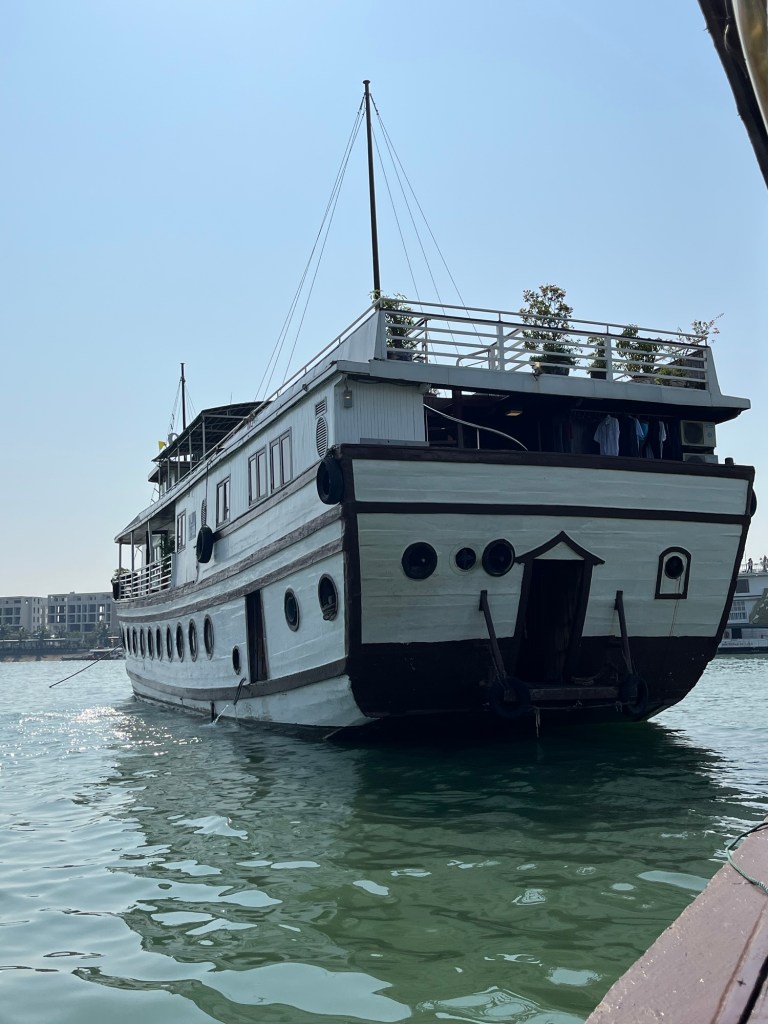
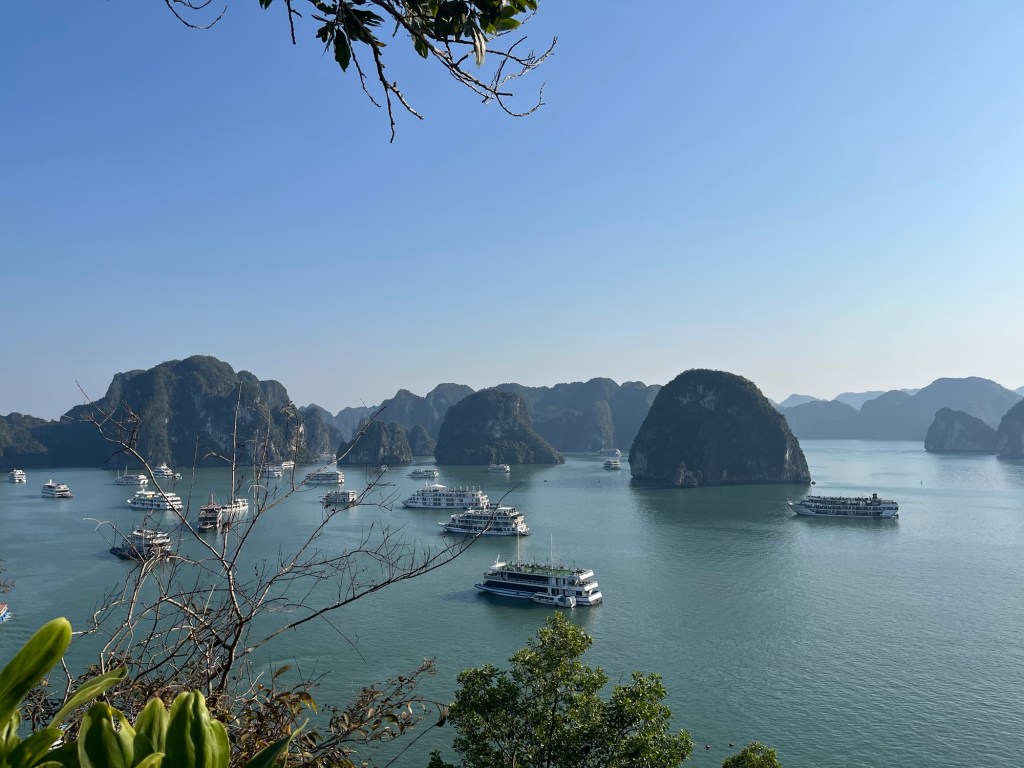
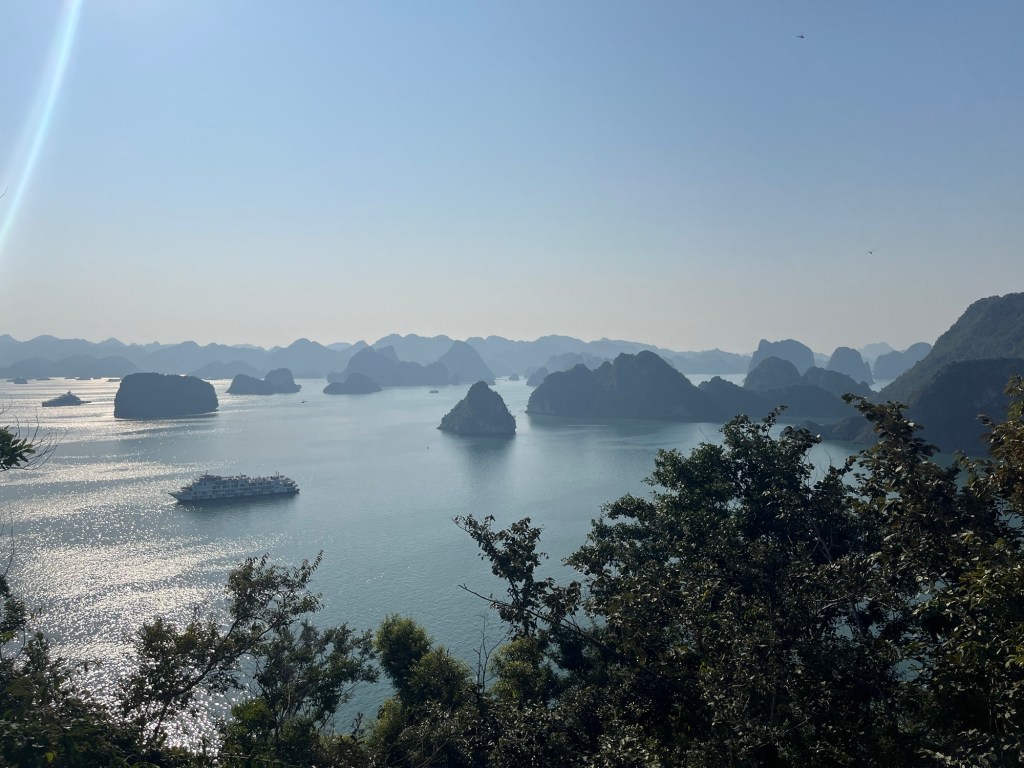
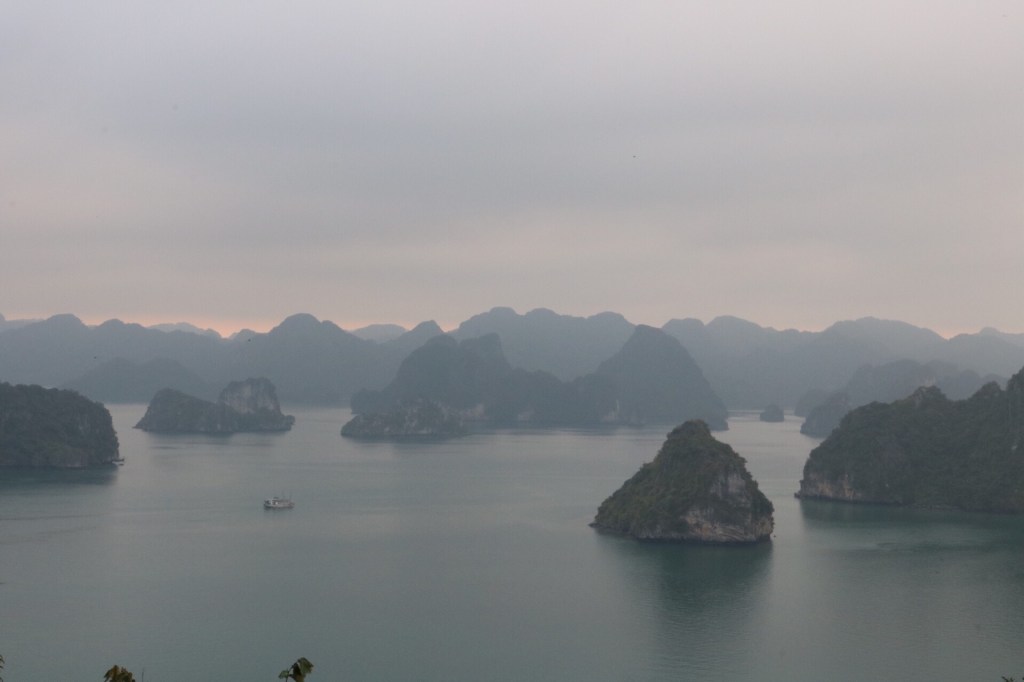
We arrived in Halong Bay (the city is increasingly resembling Gold Coast with high rises and hotels) around midday and got on our junk boat which would be home for the next 24 hours. The weather was perfect, blue sky (unlike last time) and pleasantly warm. As we set sail we were served a delicious lunch which ended up being many different dishes being brought out for us to eat – more food than we could all manage.
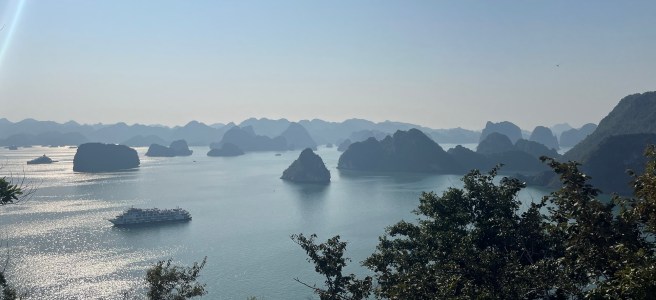
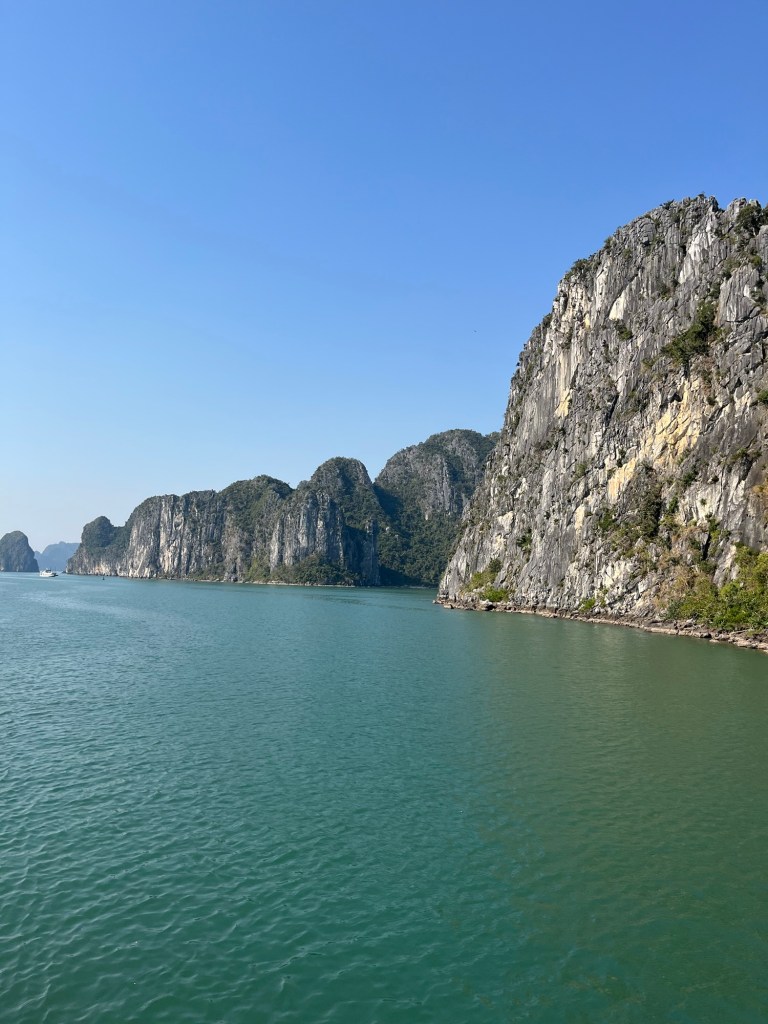
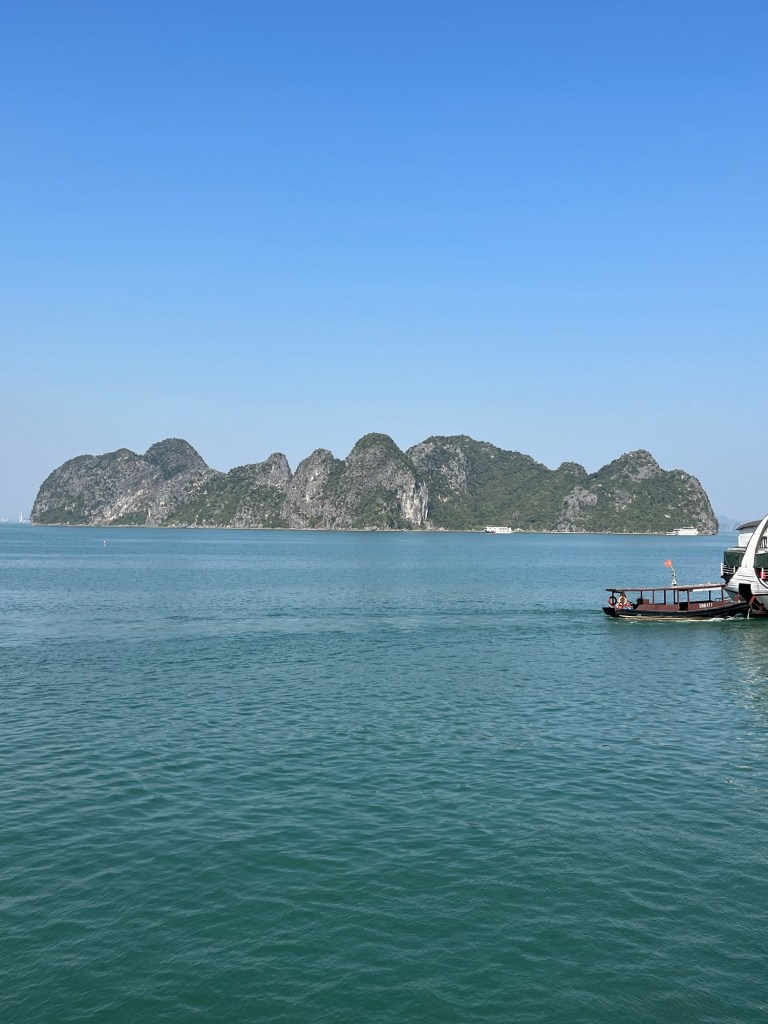
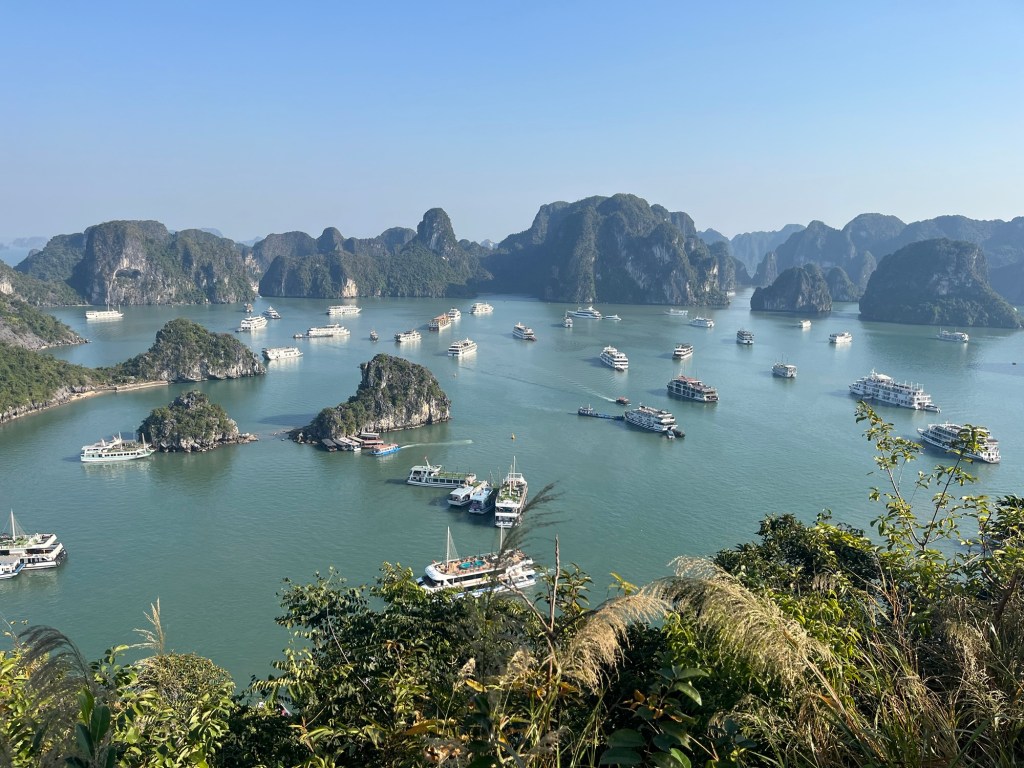
Our home for the night and Halong Bay views
We sailed through the bay and past soaring limestone karsts on our way to Ti Top, an island with a viewpoint some 400 or so steps upwards. Much much busier than last time but still worth the views
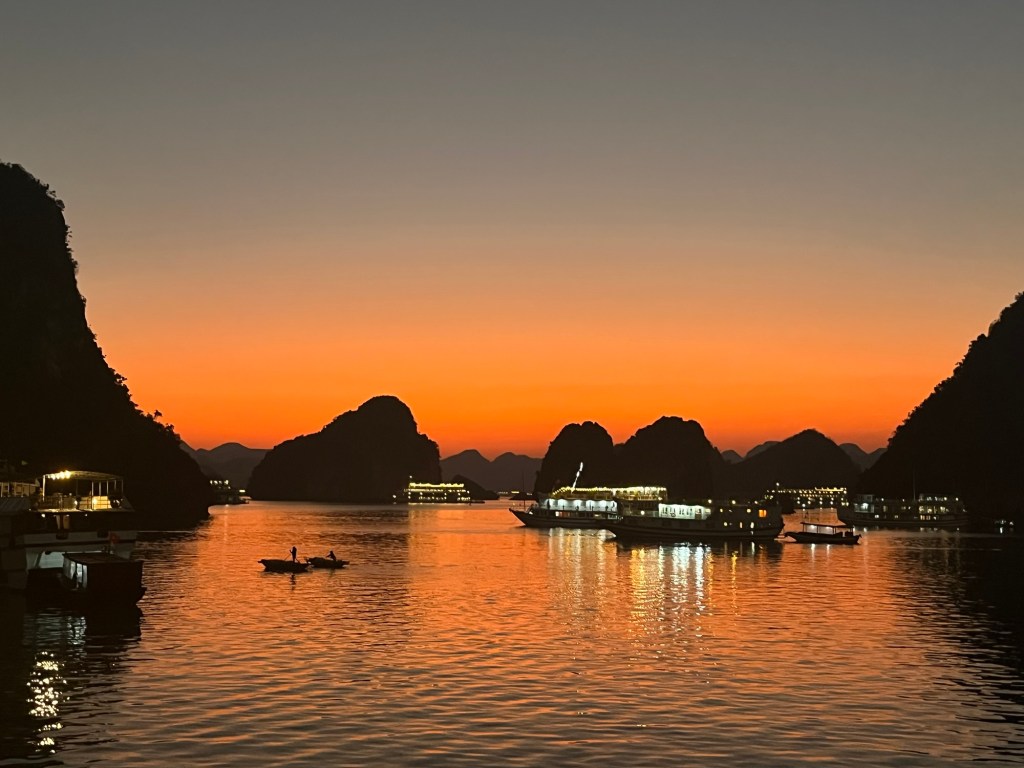
After a gentle row around a bit of a lagoon, it was back to the boat for an incredible sunset, and more delicious food for dinner.
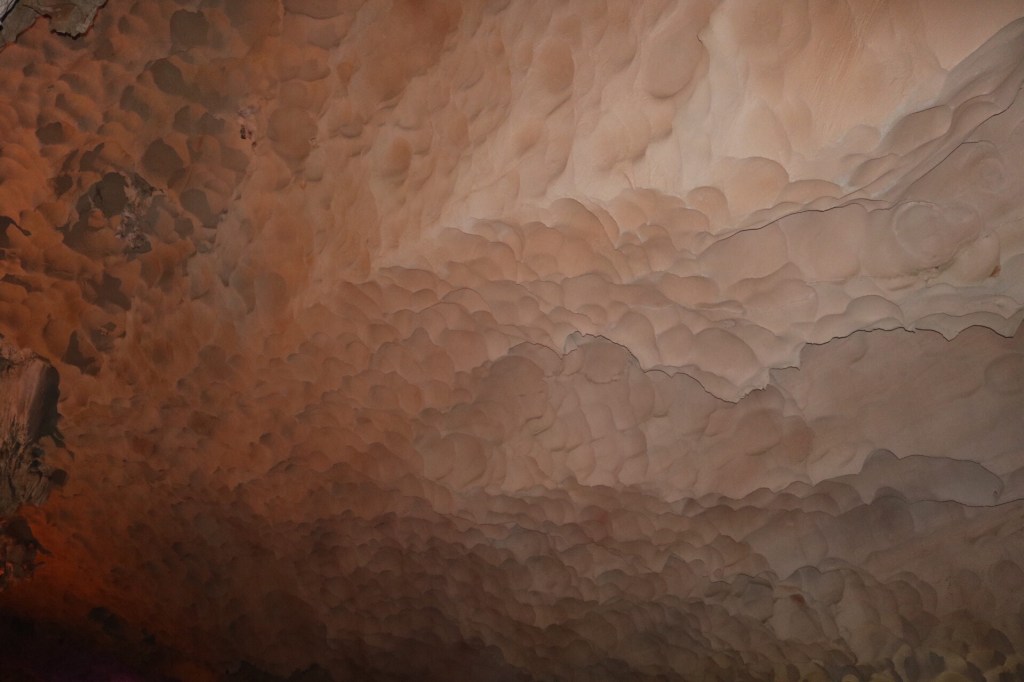
The following morning was a fairly early start to go to the caves, and then afterwards we had brunch whilst sailing back to land.
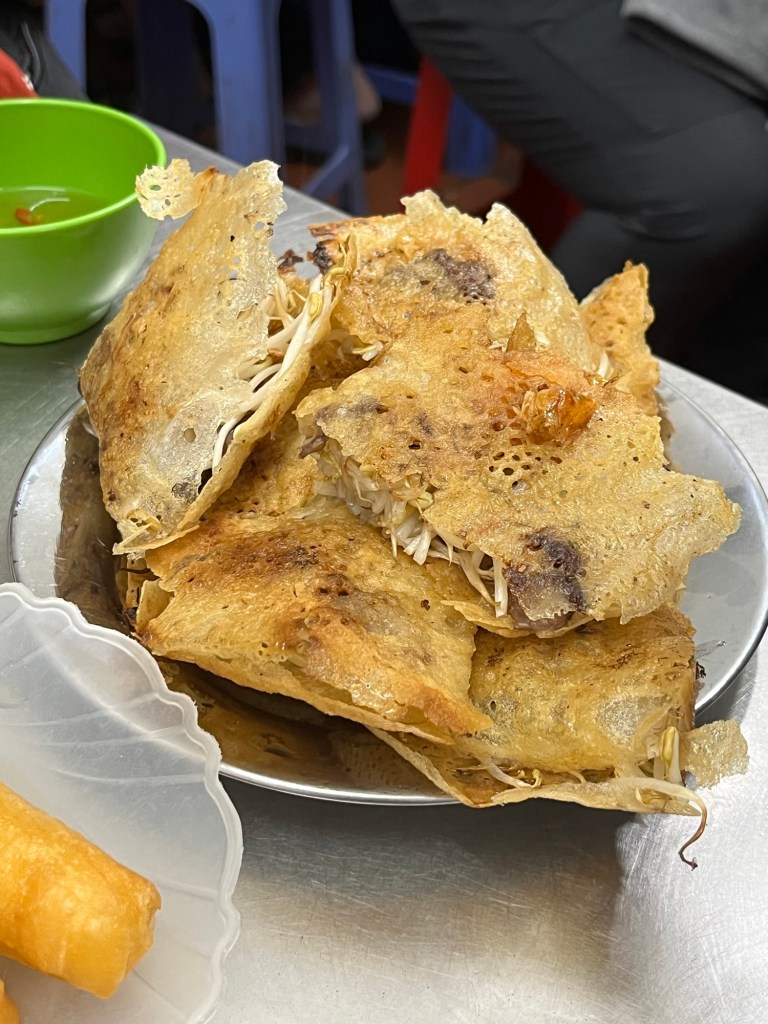
We drove back to Hanoi and arrived mid afternoon. I opted to do a food tour for the few hours before our overnight train south to Hue. Lots more delicious food and finished off with an egg coffee with an added shot of rum!!
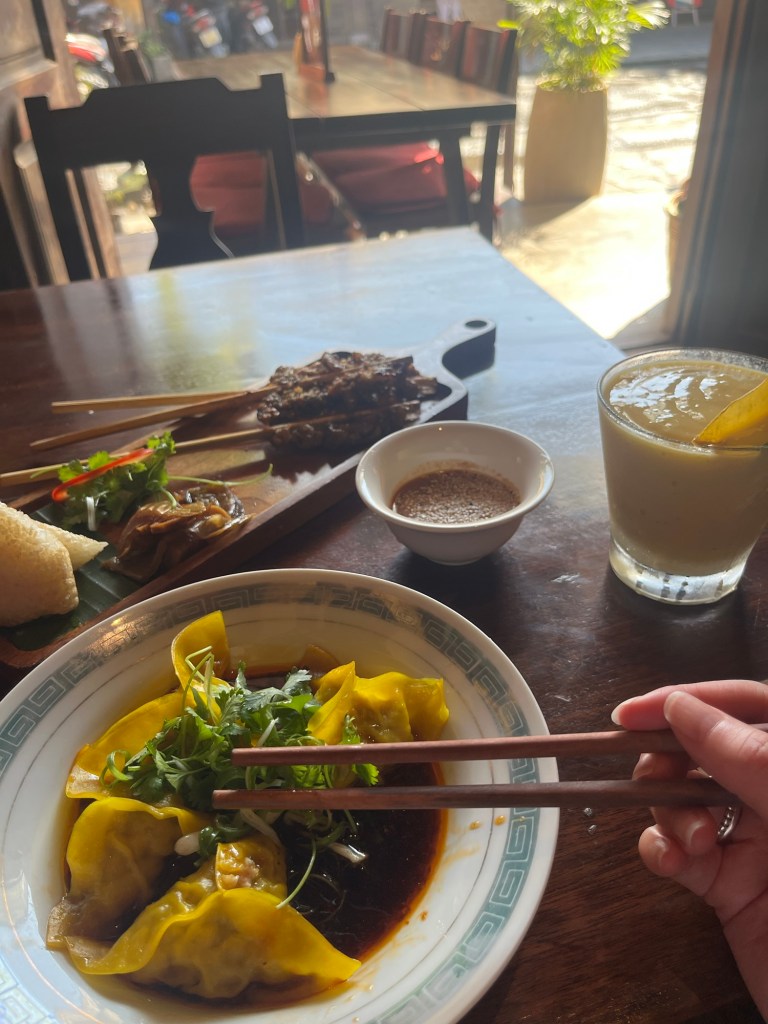
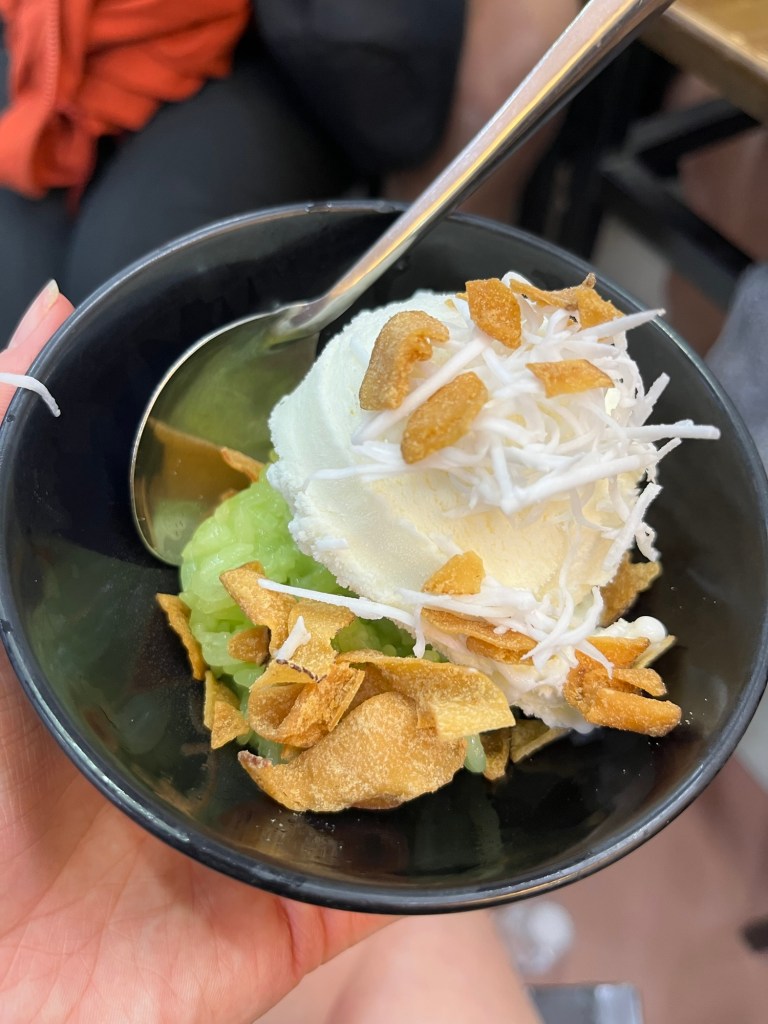
Banh xeo – stuffed crispy pancakesBun ChaGreen sticky rice and coconut ice cream Egg coffee – a Hanoi specialty
I hugely enjoyed revisiting both these places. I really like the hustle and bustle of Hanoi’s old town even if it is completely exhausting trying to cross the road! And it was very special to see Halong Bay with beautiful clear blue sky.
My first new country on this trip. It’s been on the South East Asia backpacker route for quite a while but perhaps not the top of many holiday destinations lists.
We crossed the border from Thailand at Chiang Khong, at the Thai-Laos Friendship Bridge VI. Visas are available on arrival for 40 USD (in crisp notes) plus a passport photo. I’ve now got a lovely full page visa in my passport!
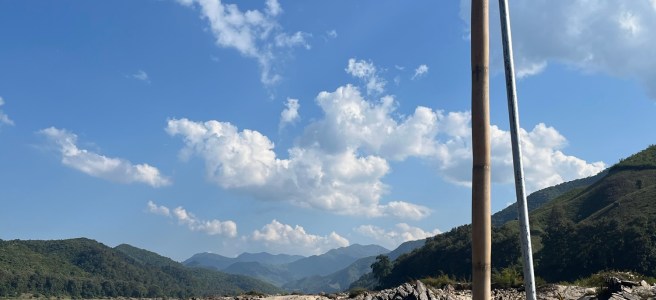
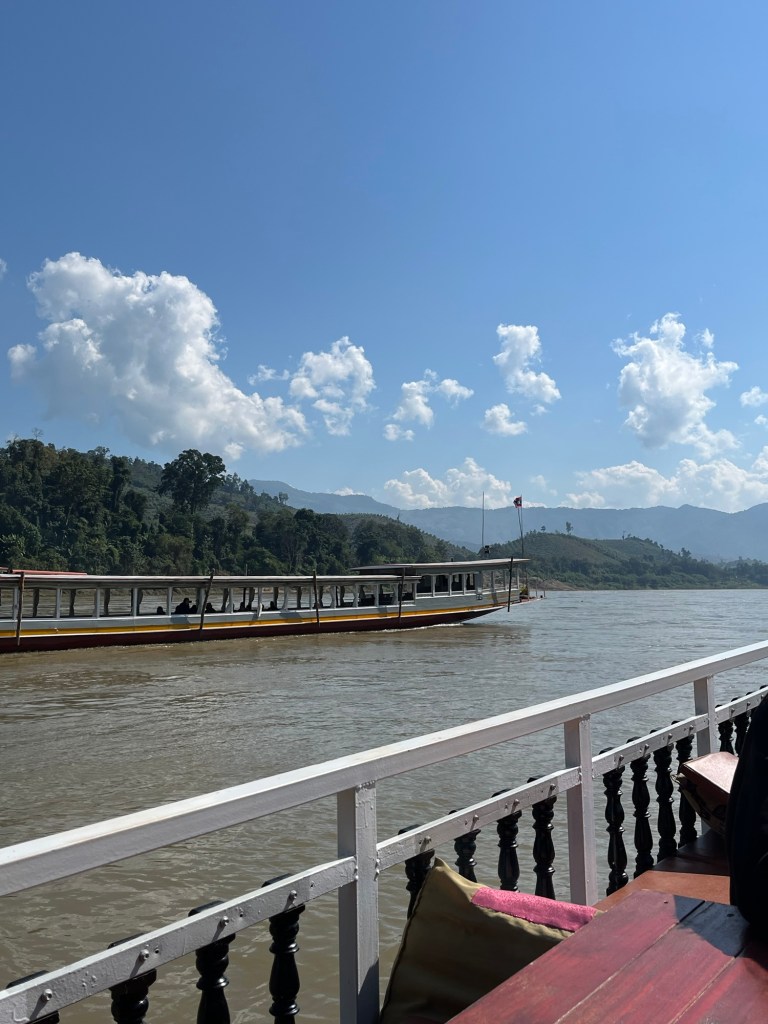
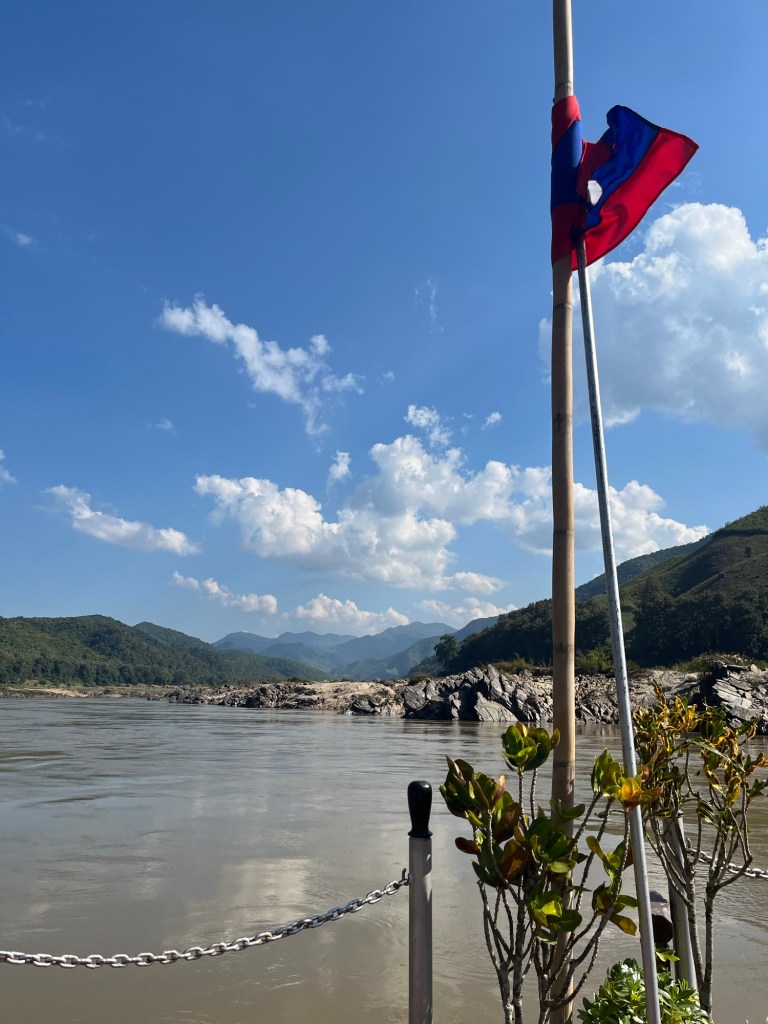
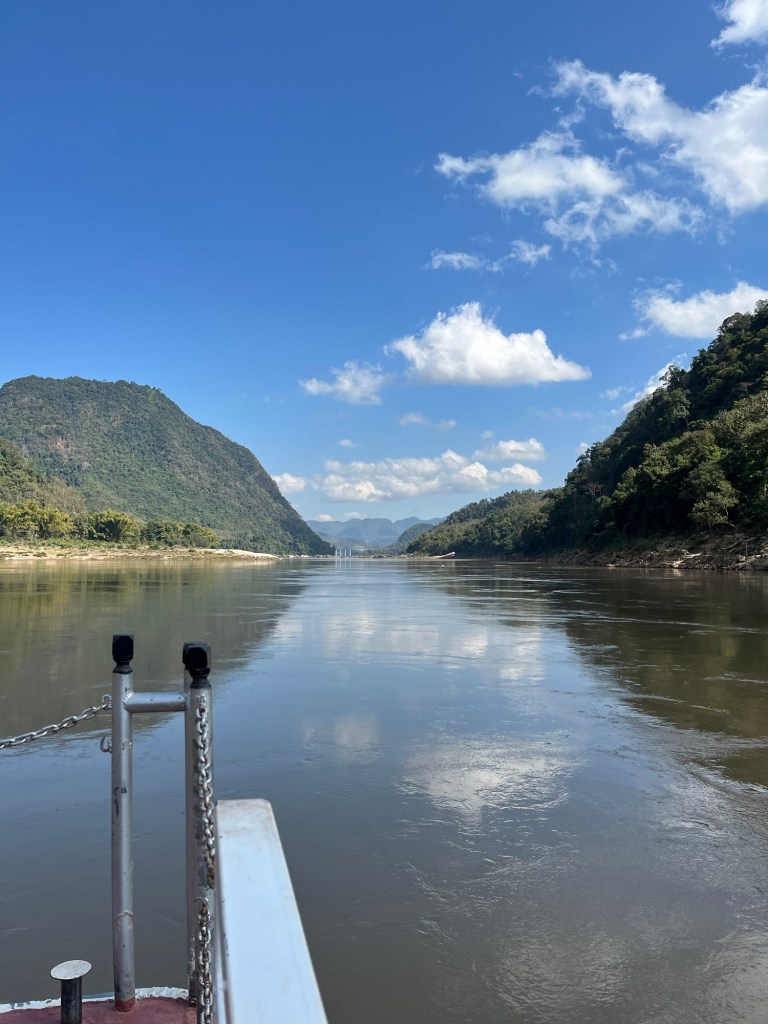
After the border formalities, we drove a short distance up the river to get on a slowboat which would be our transport for the next 2 days to take us down the Mekong River to Luang Prabang. It’s early January and winter here, though definitely a different winter to the UK! There was a chill in the air in the morning which necessitated a couple of layers, but by mid morning when the sun came out, it was very pleasantly warm.
A similar vessel to the one we were inRiver views
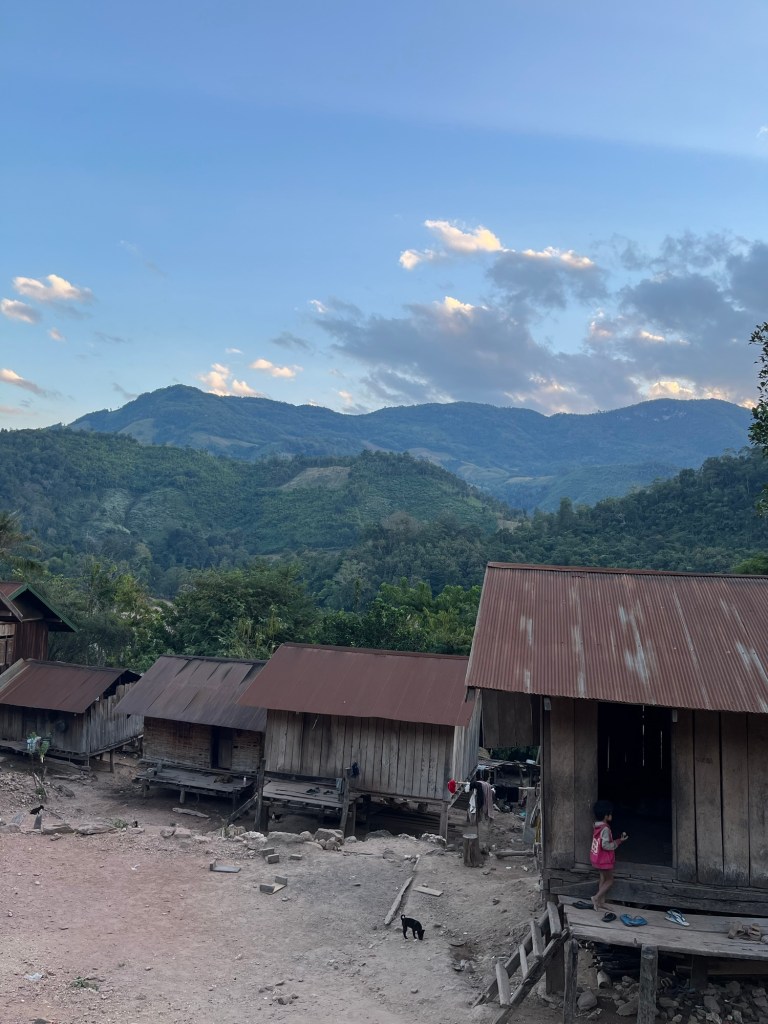
We sailed for perhaps 7 hours on the first day, to our overnight stop at a local Lao village. This was a real eye-opening experience into how people live along the river. There is no phone signal here, and whilst there are electricity wires and telegraph poles running through the village, it isn’t yet connected. Some of the houses have generators, cooking is done over an open fire, which also provides heat. There is a village water pump. The village is supported by G Adventures as a home stay stop on their tours, so there were sit-down western toilets, albeit with a large barrel of water beside for a manual flush…
The families here are large, with a lot of children running around amongst the roosters and ducks and dogs. Houses are wooden and on stilts to help with both the heat in the summer and the flooding in the rainy season. There was a school in the village so the children can get an education. Everyone seemed happy, and I suppose they know no different but it was a very rustic experience. I was also on my period at this point which, despite the western toilets, I was generally finding quite tough to deal with so can hardly imagine how the girls and women here cope. It was really good to experience the home stay and the genuine way of life when travelling as it really does put things into perspective.
We had Laotian food for dinner which was absolutely delicious and were then treated to a traditional dance performance from the girls in the village. We were also invited to have a go, there’s a lot of twirling wrists which I found surprisingly tiring!!
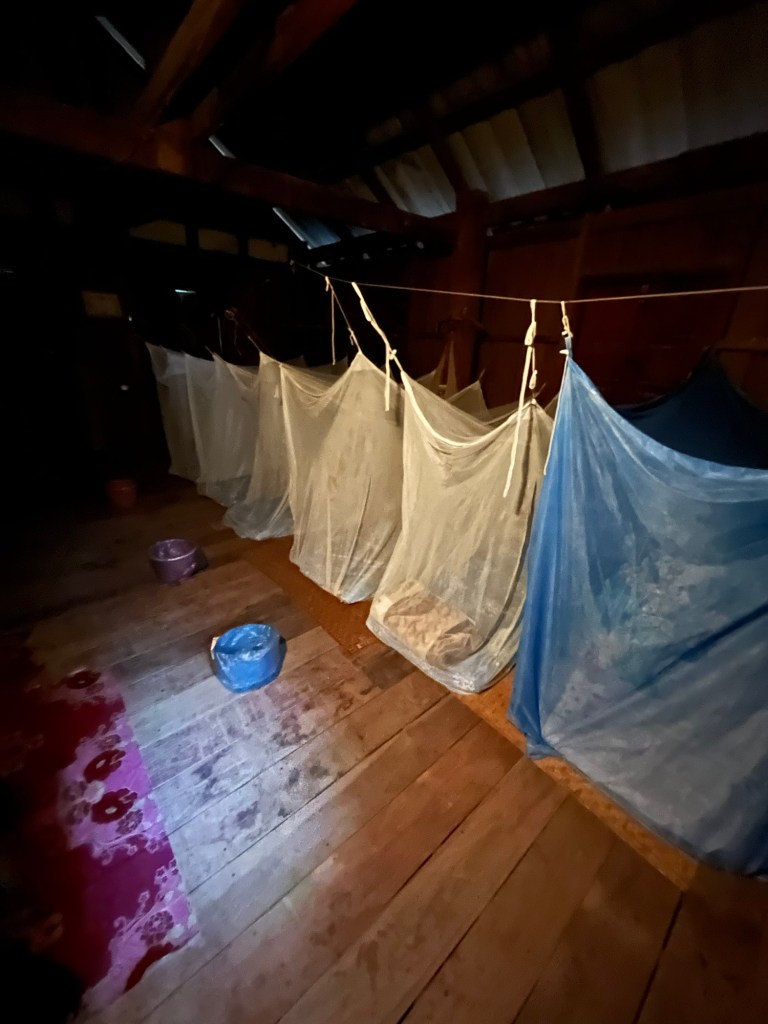
The villageFoodThe bed situation, a 2 inch mattress under a mosquito net
The next day it was back to the boat for another 7 hours after which we arrived at Luang Prabang. I hugely enjoyed sailing down the river and watching the scenery pass by. I wasn’t sure what I was expecting but I don’t think it was lush hillsides and limestone peaks. It was a very calming experience watching the world go by.
More views as we sailed down the Mekong
About an hour out of Luang Prabang are the Pak Ou caves, housing numerous Buddha statues in the caves on the riverside.
Pak Ou Caves
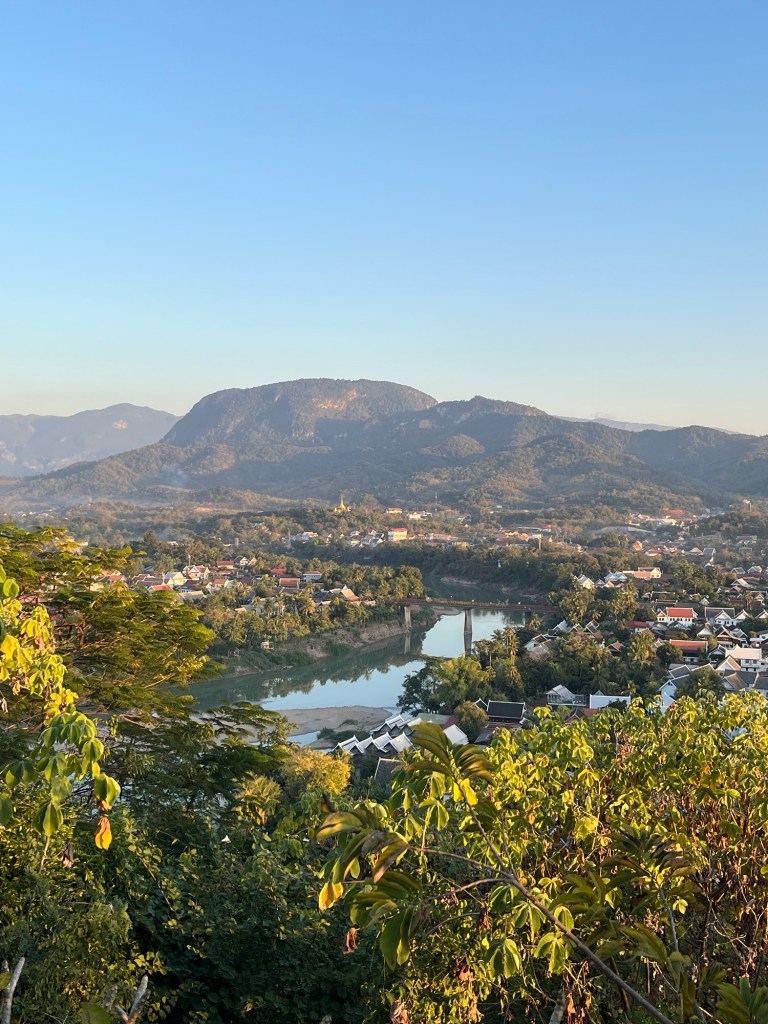
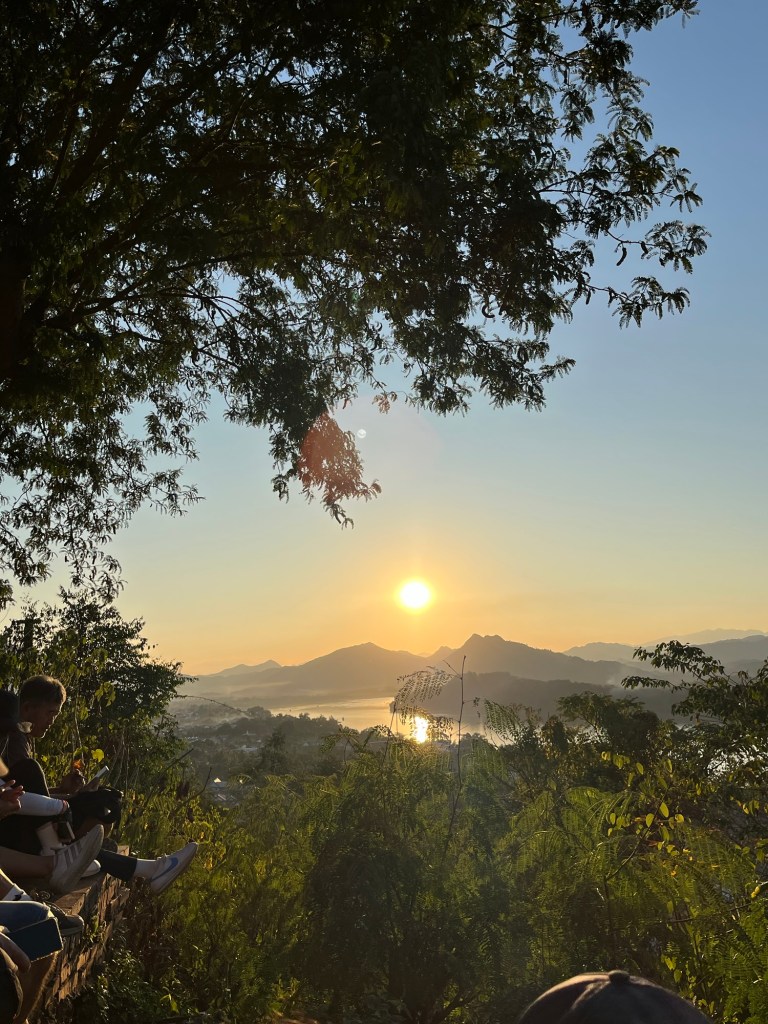
We arrived in the late afternoon for a 3 night stay in Luang Prabang, at one point the capital of Laos. Just in time for sunset, we headed up Phu Si, for views of the city and surrounding area
Views from the top of Phu Si
The night markets in Luang Prabang were perhaps the best we saw in Laos, or at least felt like they had the most local goods, and we frequented them each night we were there.
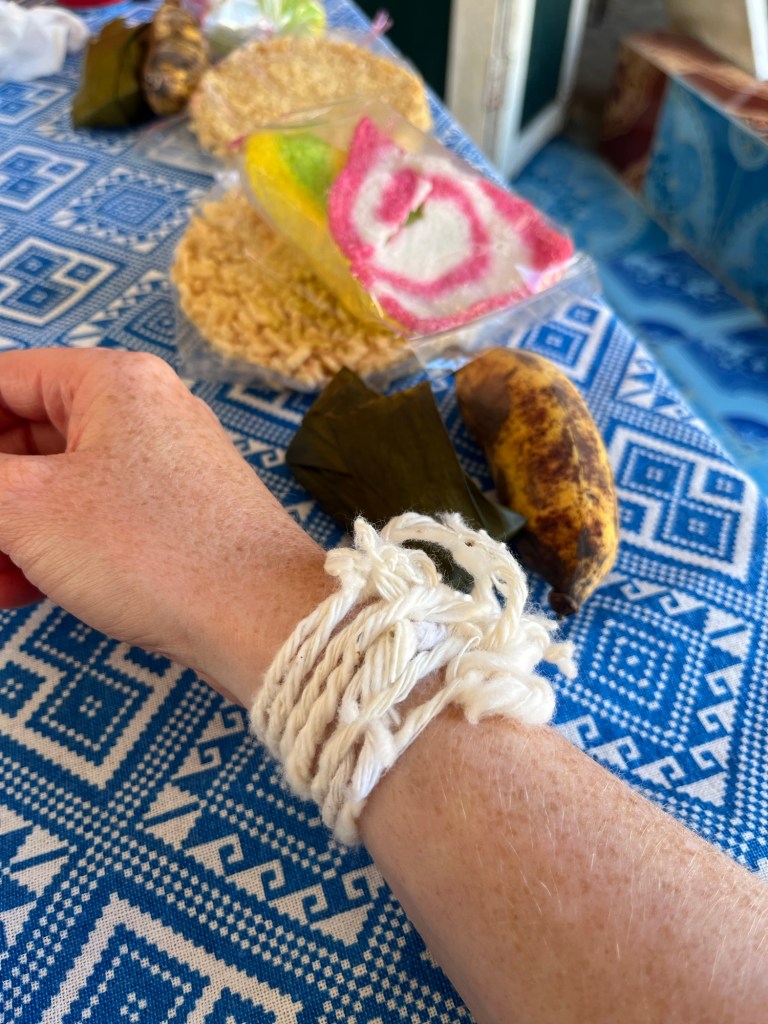
The next day we had a full day of activities starting with a tour of the ethnology museum to learn about some of the different peoples who live in Laos. We then drove out in a tuk tuk to a local community supported by G Adventures where we were received with a welcome ceremony and a number of cotton strings tied around our wrists, these provide good luck and fortune on travels and in theory shouldn’t be taken off before arriving home, but I’m not home for another 3 months…
We had lunch there and were then given a demonstration of making rice noodles and cotton weaving, before being persuaded to buy some scarves.
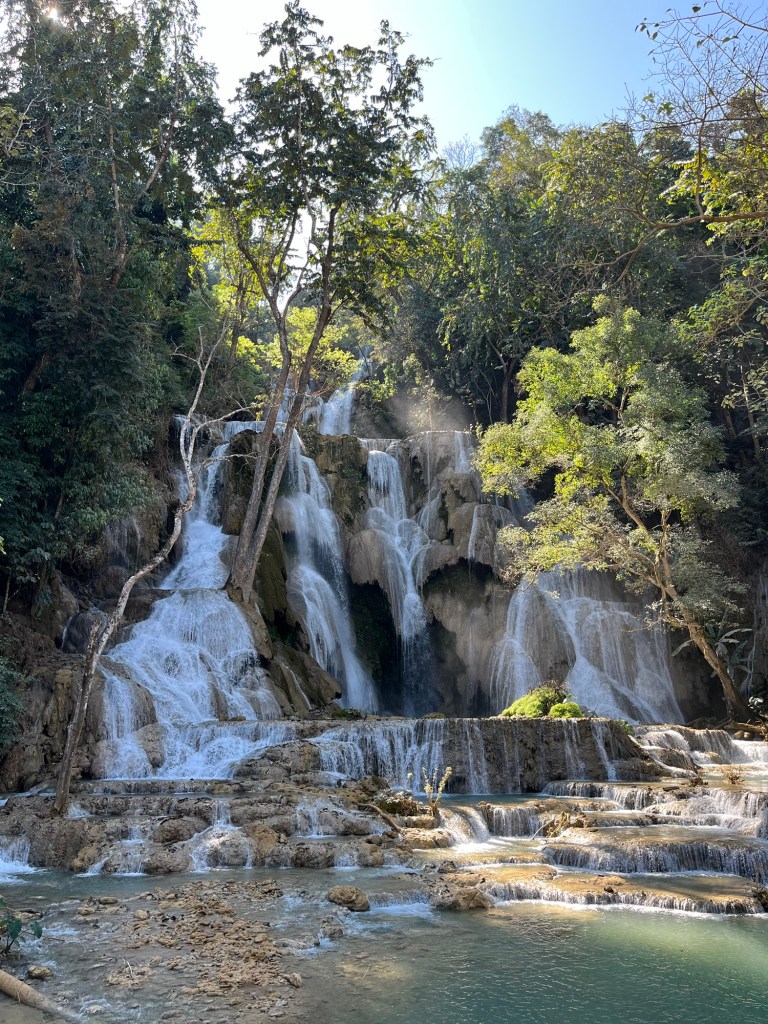
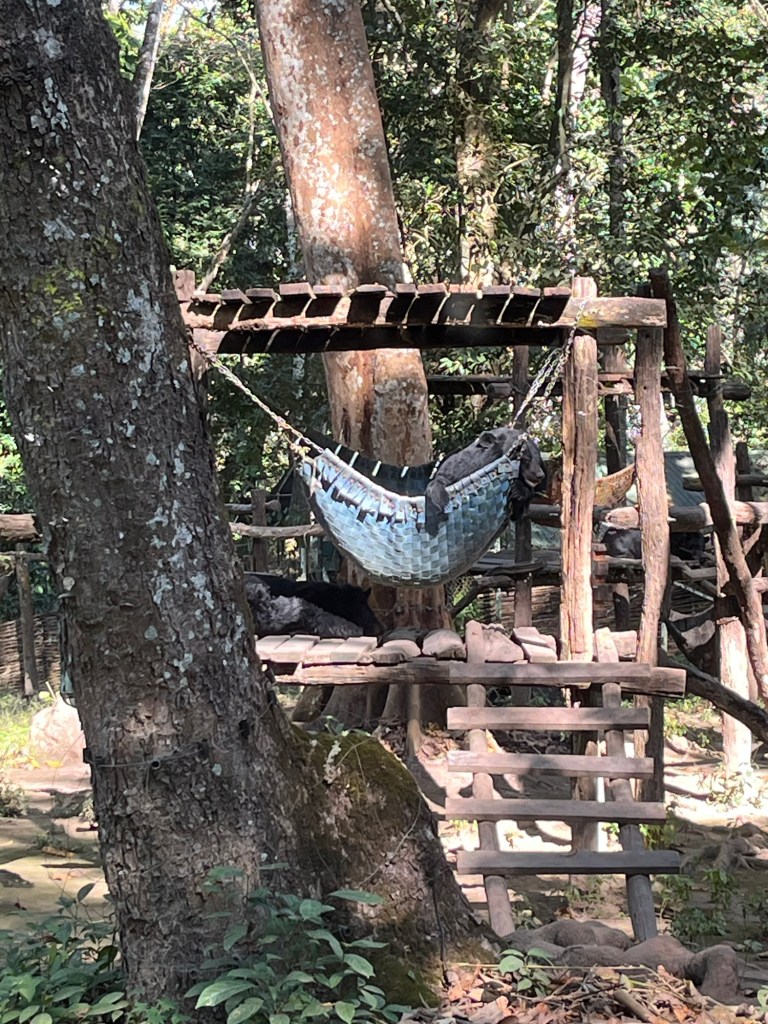
After that it was off to Kuang Si waterfalls for a paddle, and also to see some bears which have been rescued from the countryside and being cared for here.
Kuang Si FallsAt Kuang SiA bear chilling in its hammock
The following day was a free day in Luang Prabang. Laos has the dubious distinction of being the most heavily bombed country per capita in the world. During the Second Indochina war, on average a plane load of munitions were dropped every 8 minutes for 9 years as the US bombed the Ho Chi Minh trail. An enormous amount of Unexploded Ordinance (UXO) remains here and continues to have a devastating impact on people’s lives. There is a very good UXO museum in Luang Prabang which I visited to learn more about this and the efforts being made to clear the land of the ordinance.
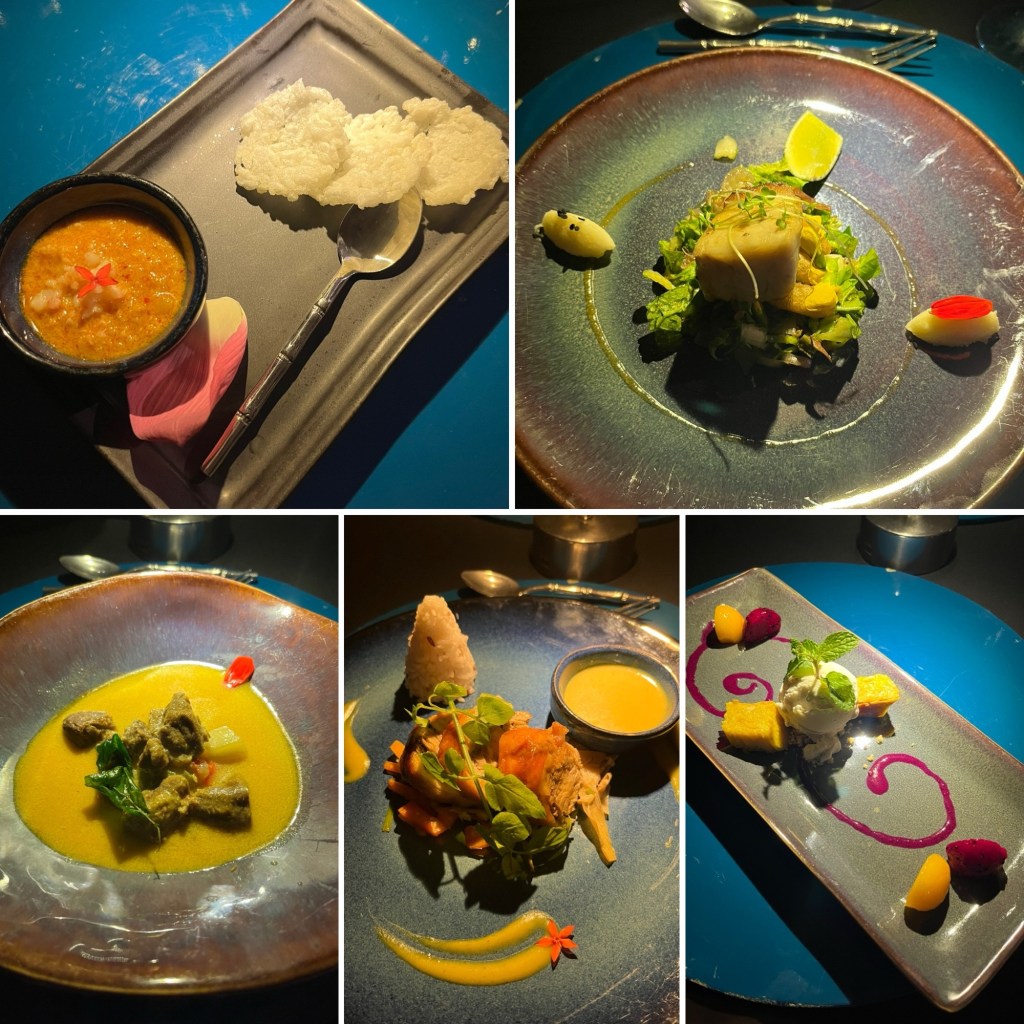
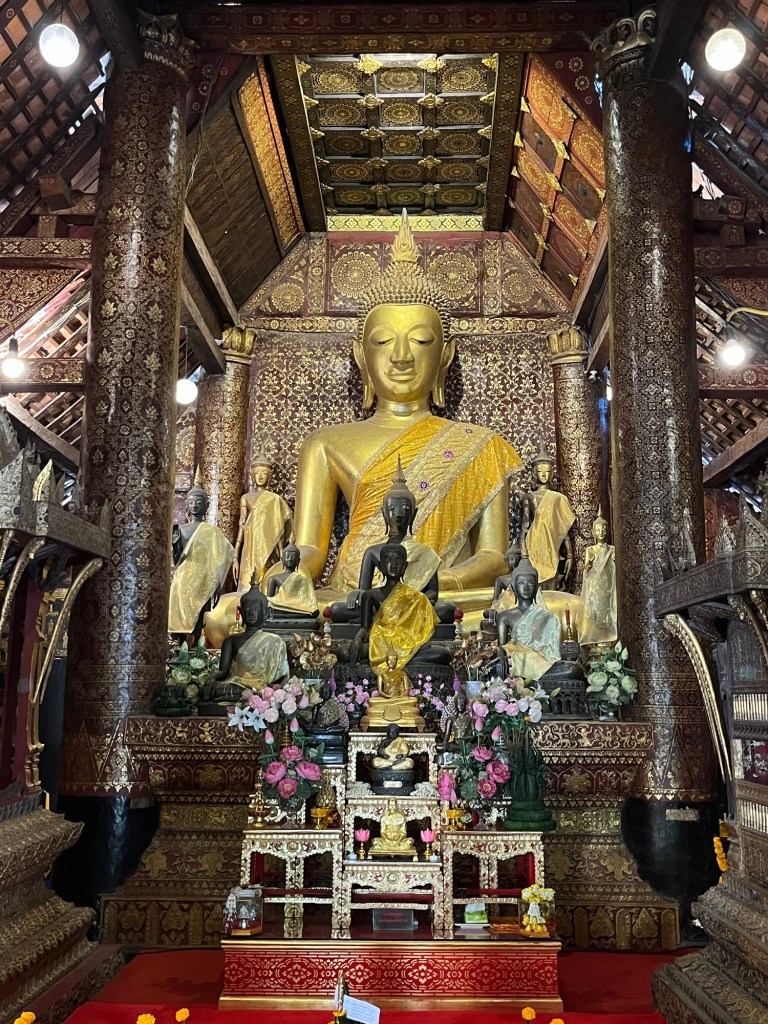
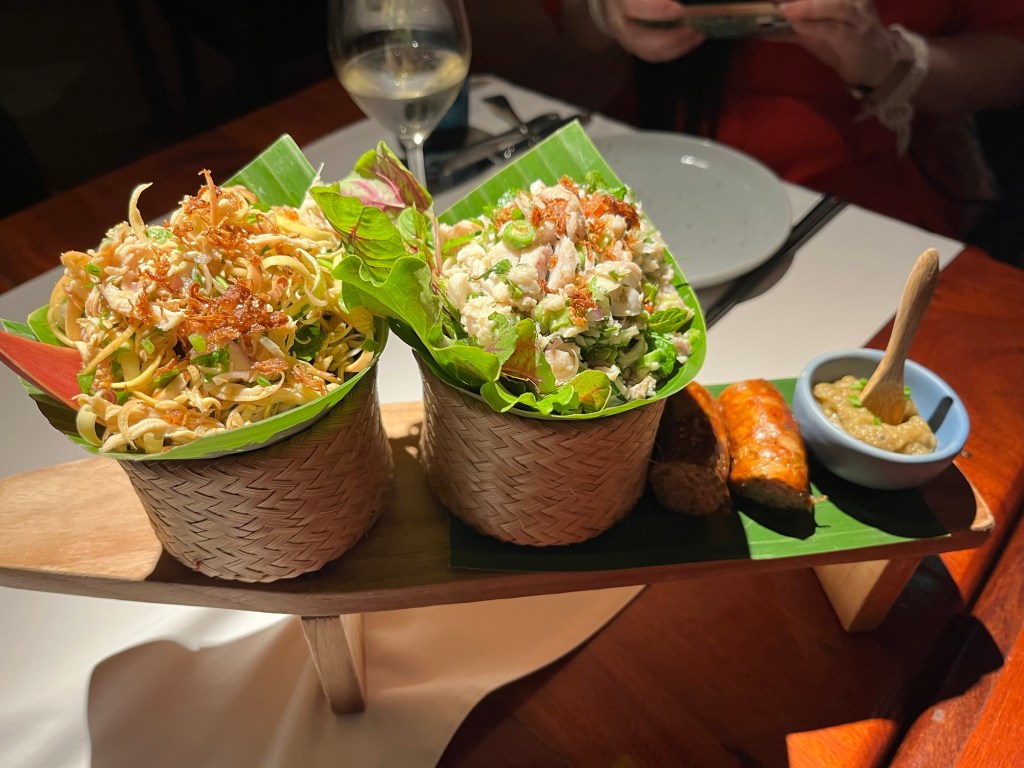
I then wandered around the old town and into Wat Xieng Thong, where despite the bus load of tourists which had just arrived, it was surprisingly peaceful. That evening a few of us went to Manda de Laos where we had a tasting menu of Lao food, and some imported wine. It was all delicious.
Wat Xieng ThongInside Wat Xieng ThongFood
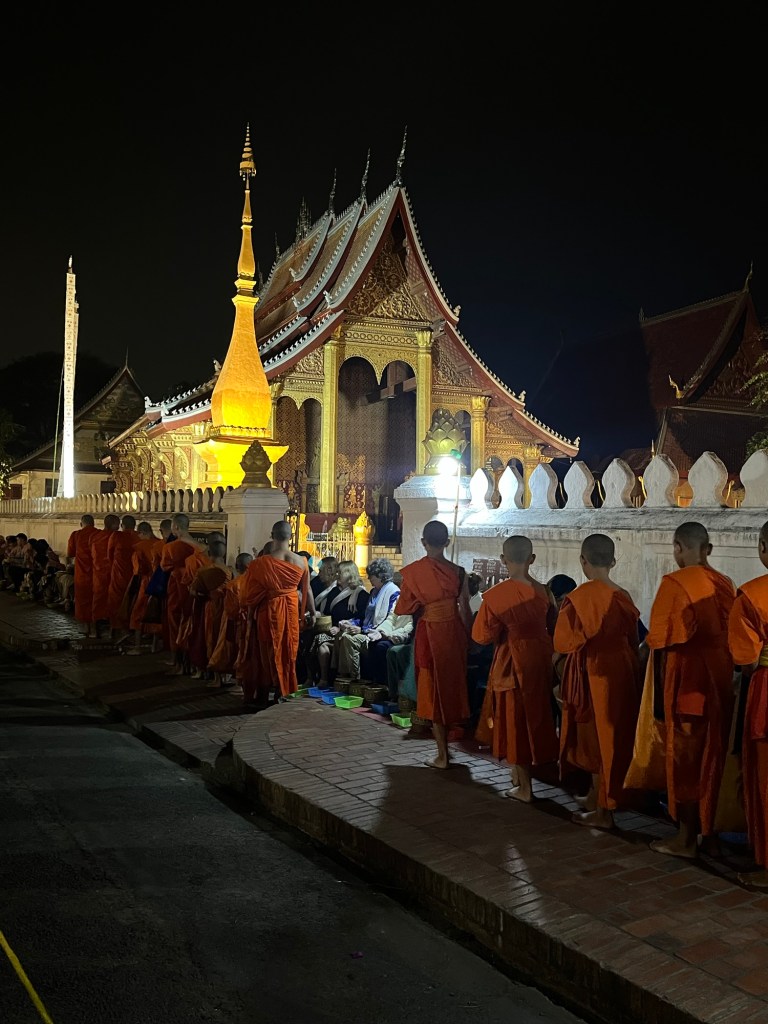
After an early start the next morning to see the daily Tak Bat ceremony where the monks proceed along the streets and townsfolk (or, increasingly, large tour groups) offer sticky rice and other foods, we set off to Vang Vieng, on a high speed train. By bus, this journey would take around 7 hours, but once we’d driven the 20 or so minutes to Luang Prabang train station, the train only takes just over an hour (thank you China…)
Tak Bat
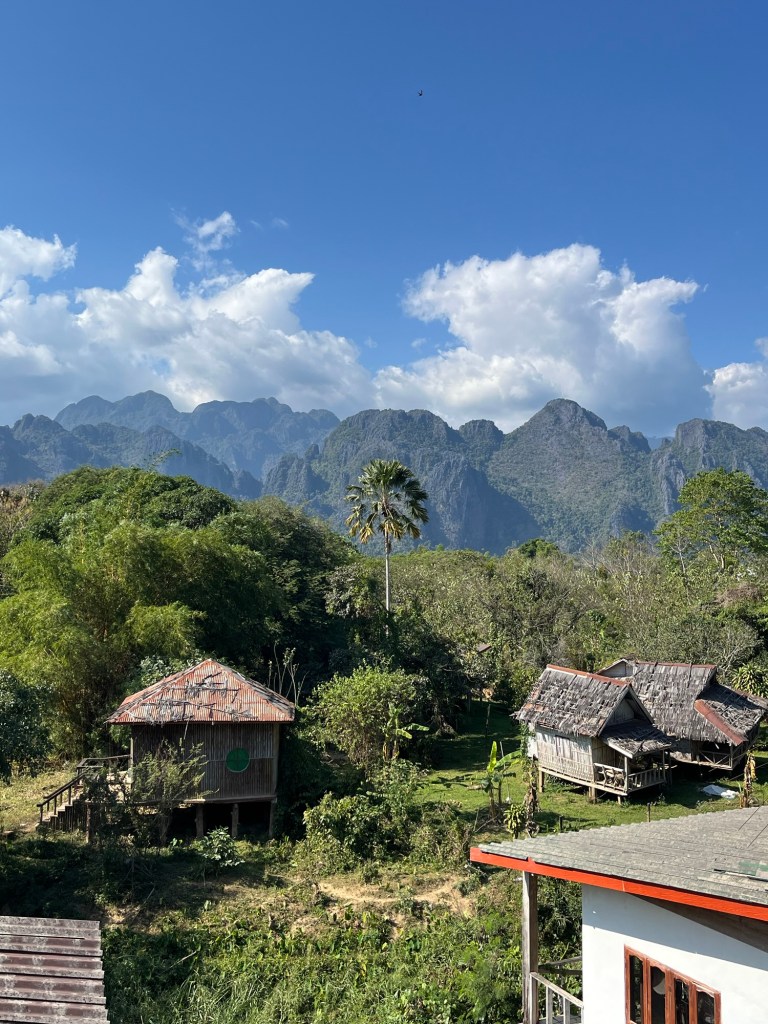
Vang Vieng used to be the party town in Laos, and to a certain extent it still is, but nowadays it is reinventing itself as an adventure destination with activities such as kayaking, rafting, climbing and hiking on the menu in the beautiful surrounding countryside . I took the opportunity to have a very chilled day and beyond a wander around town and finding a lunch spot overlooking the river, I did very little else. It was actually very nice to have a day almost to myself especially when on a long trip.
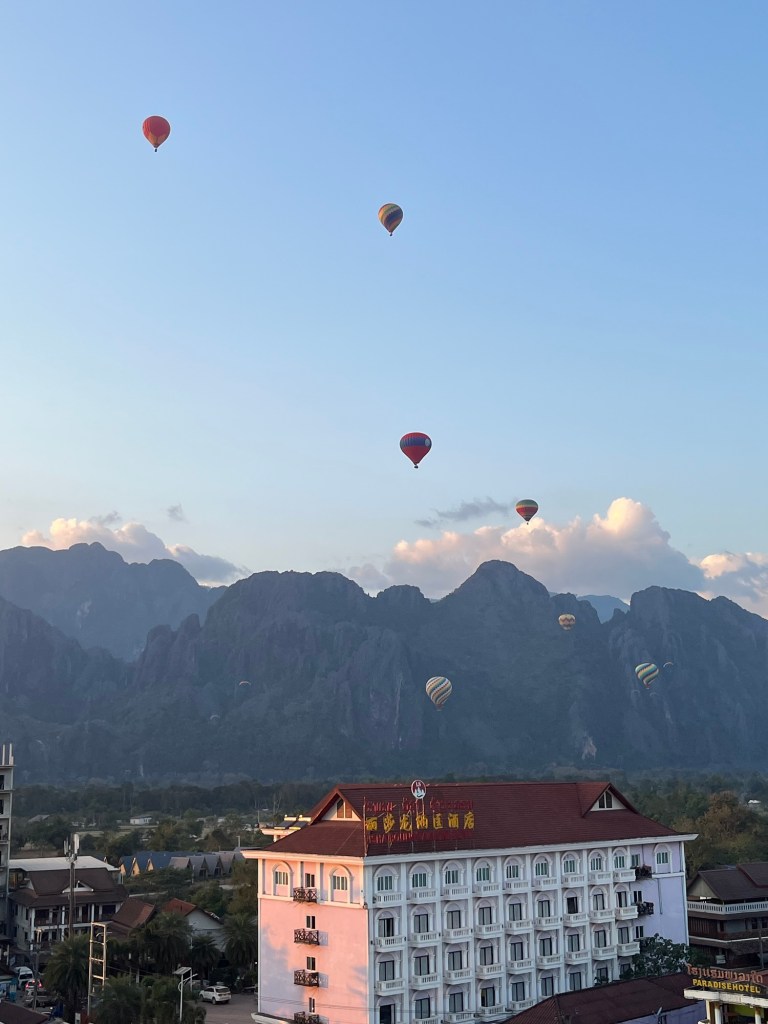
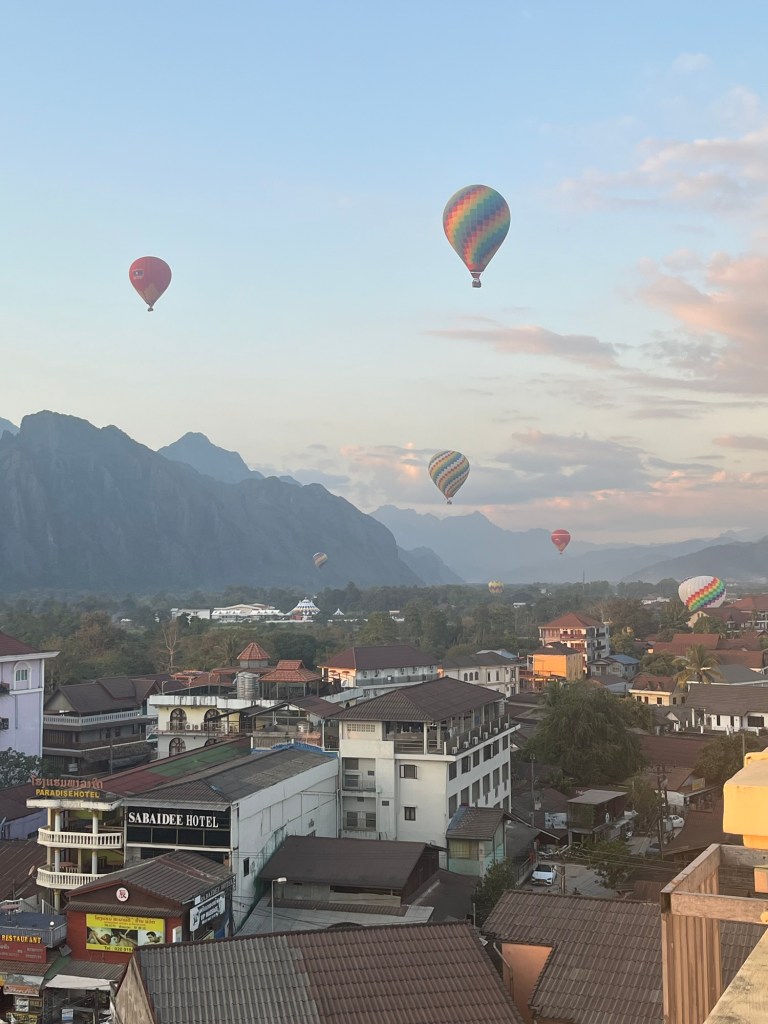
In the mornings and evenings, there are hot air balloon rides to capture sunrise and sunset, which were great to watch from the rooftop bar in the hotel.
Views in Vang Vieng
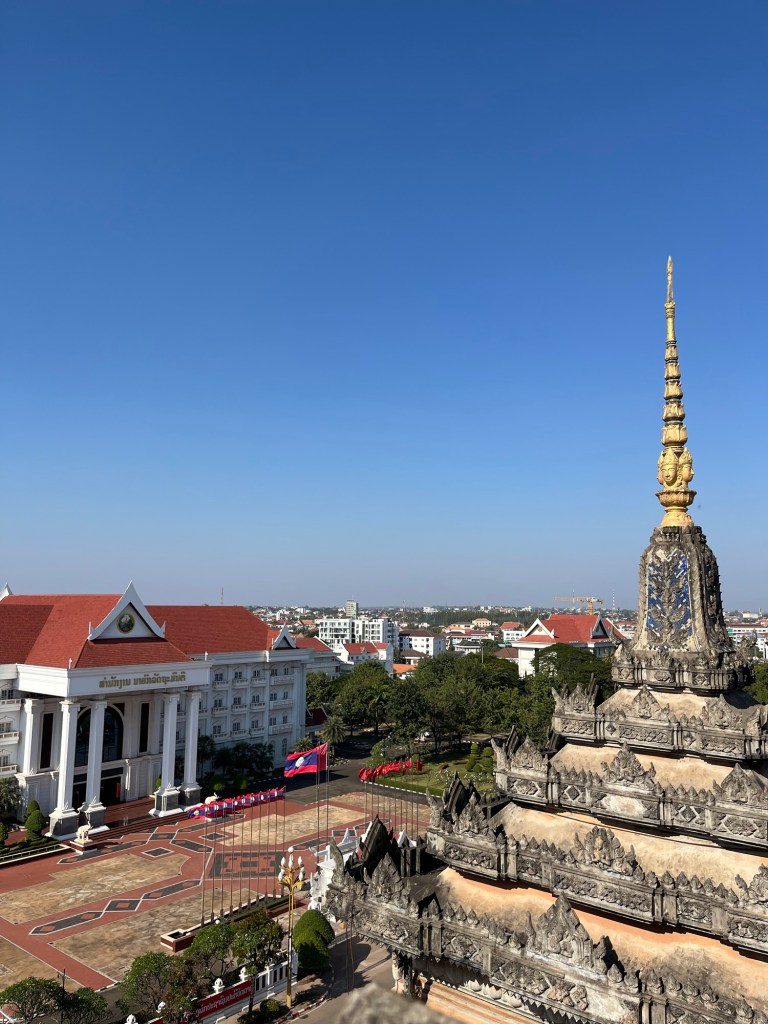
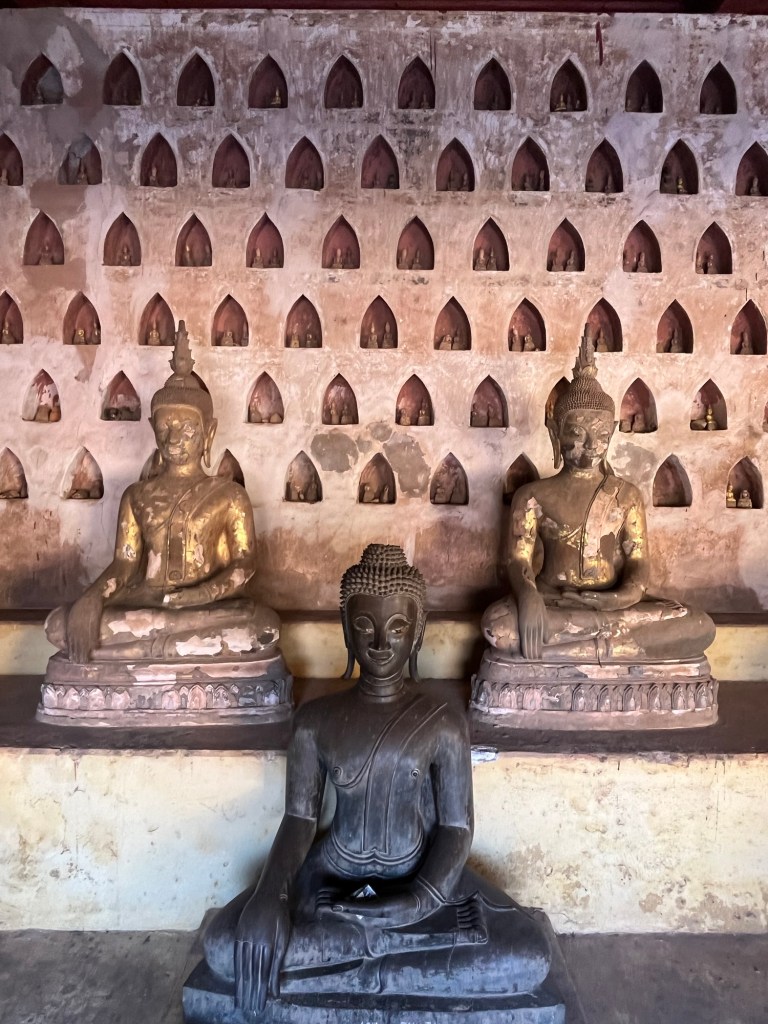
After a relaxing time in Vang Vieng, it was off to Vientiane for the last stop in Laos. Again I need to give thanks to the Chinese for building a smooth highway and we were in Vientiane in a little over 2 hours. Vientiane is the capital of Laos, and there’s a lot of construction work going on, but it’s perhaps one of the quieter capitals I’ve been to. In the afternoon we went to Patuxai, the Victory Gate, modelled on the Arc de Triomphe, and were able to climb for views of the city. I also went into another temple where all the interior walls had little insets which housed 2 small Buddhas, there must have been thousands in total in the temple.
PatuxaiViews from the top of PatuxaiLots of Buddhas
After a final evening of Beerlaos, we left the next day to fly to Hanoi, Vietnam.
I found Laos to be a beautiful and fascinating country. A much slower pace of life than its surrounding countries. Wonderful scenery, fantastic food and definitely an up-and-coming tourist destination. The slow boat down the Mekong was, I think, my favourite part. Go before the tourists take over!
I arrived into Bangkok after a 6 and a half hour flight from Perth around mid afternoon, and after a small queue for immigration, I was granted a 60 day visa. Locating my transfer was a little chaotic, the drive from Suvarnabhumi airport to my hotel in Chinatown took around an hour and a quarter, and as we approached Chinatown, the traffic almost came to a standstill.
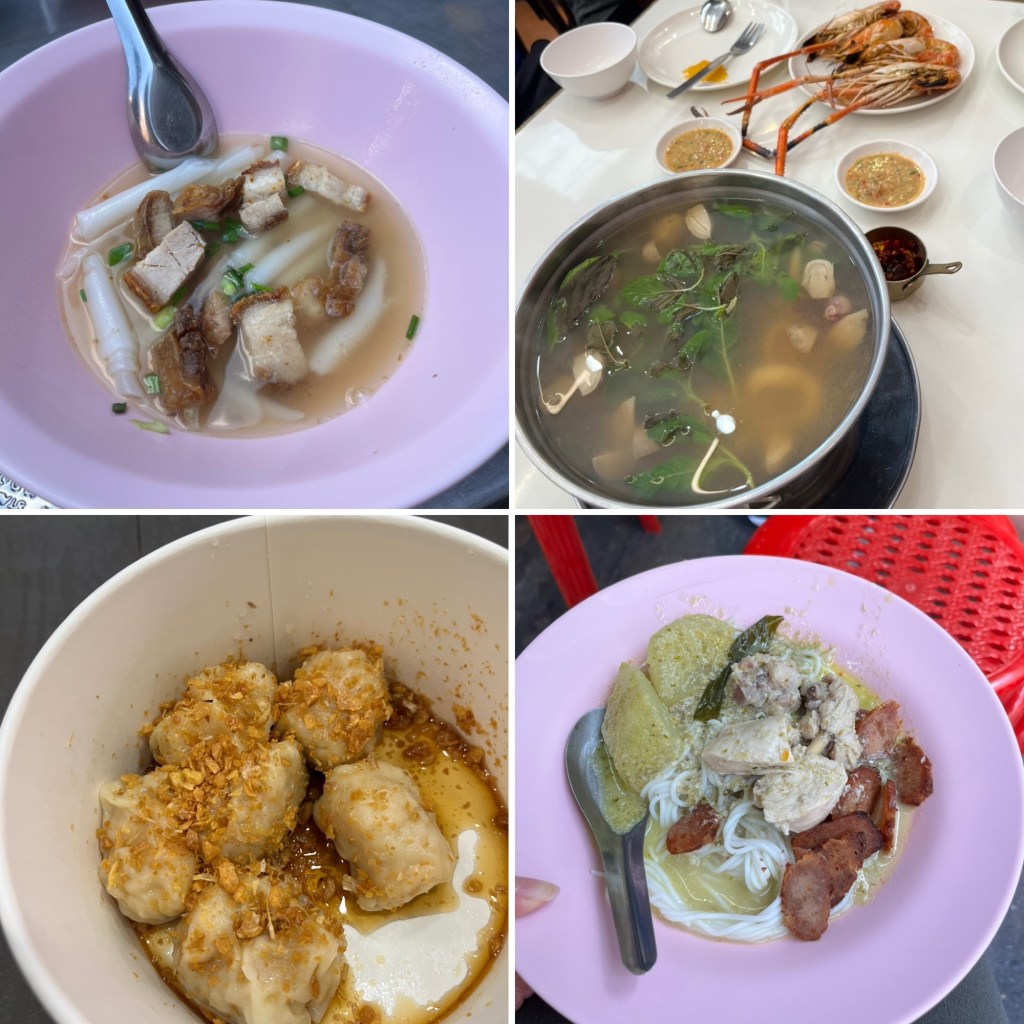
After checking in, I went in search of some food. This wasn’t difficult to find as I was staying on Yaowarat Road in the heart of Chinatown and as it was now the early evening, the street food markets were in full force. Being a little careful on my first day in Asia, I opted for some dumplings which were cooked in front of me with some flames thrown in for good measure. I spent a while wandering up and down the markets and absorbing the chaotic atmosphere which was in fairly sharp contrast to what I’d come from in Australia.
The next day I’d booked myself on a half day street food tour of Chinatown (which I’d literally booked in the taxi from the airport), which started in the late morning. We had 15 different dishes, and there was only 1 I wasn’t a fan of (a sort of unripe mango with spicy dipping sauce)!! Also we walked through the back streets of Chinatown which I don’t think I’d have had the courage to do on my own
Delicious street food in Chinatown, Bangkok
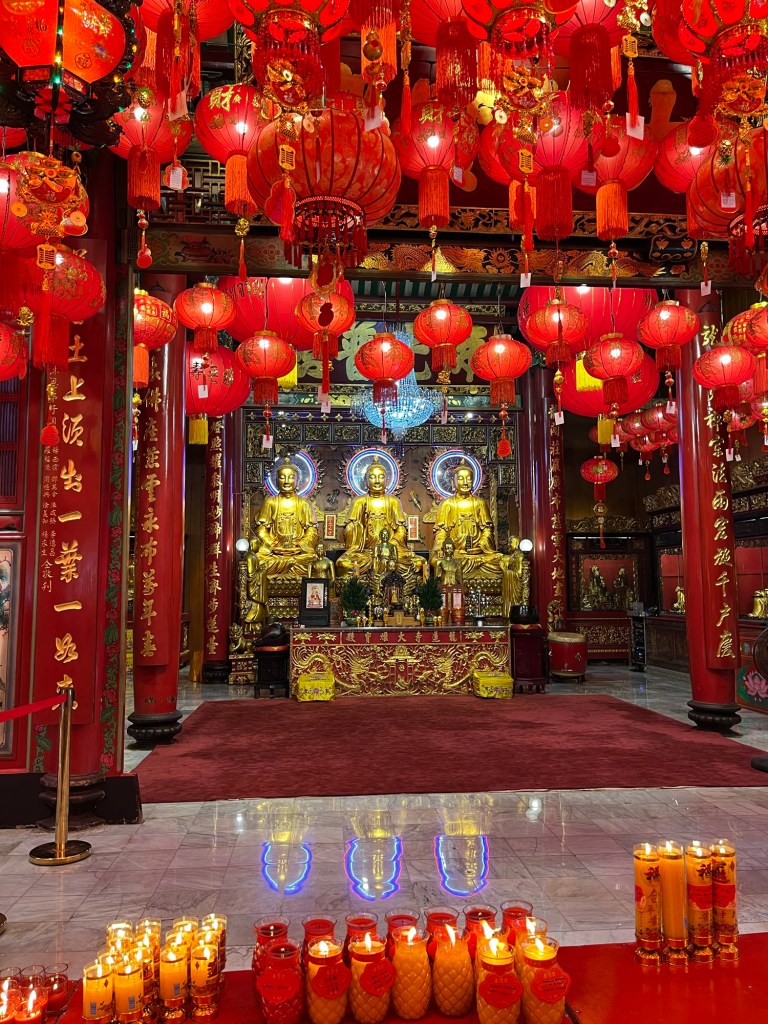
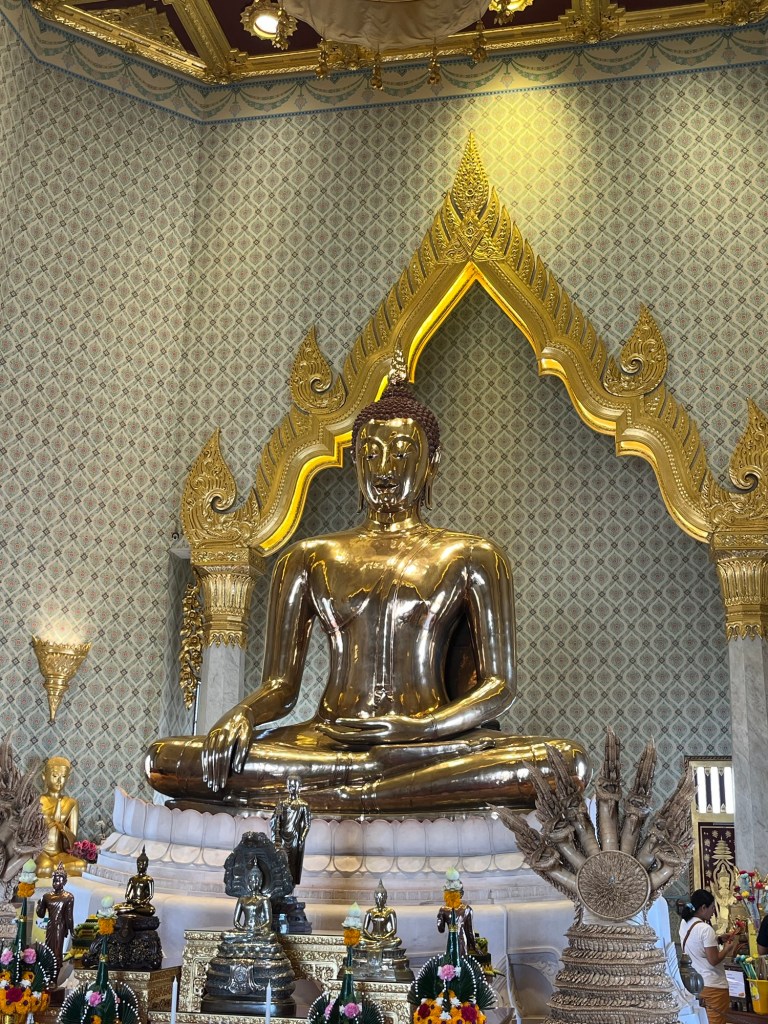
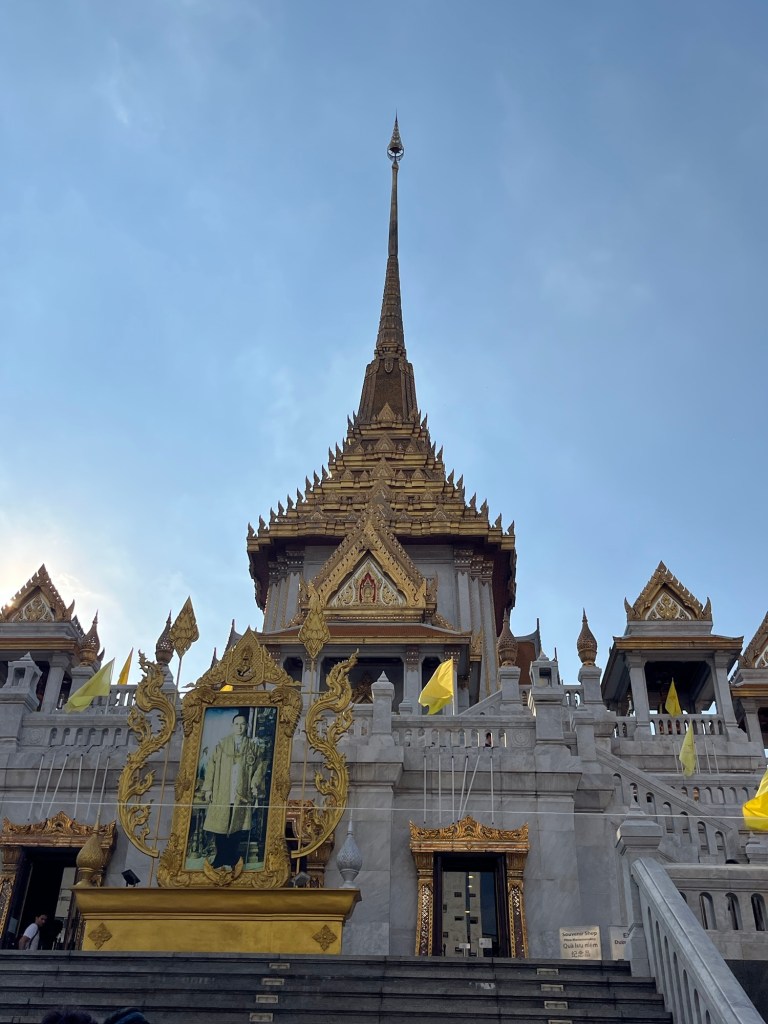
After the tour, I went to the Golden Buddha, and also to Wat Mangkon Kamalawat (a Chinese Buddhist temple). Despite it being very busy for the holidays in Bangkok, it was very peaceful in both temples.
Golden Buddha and temples in Chinatown, Bangkok
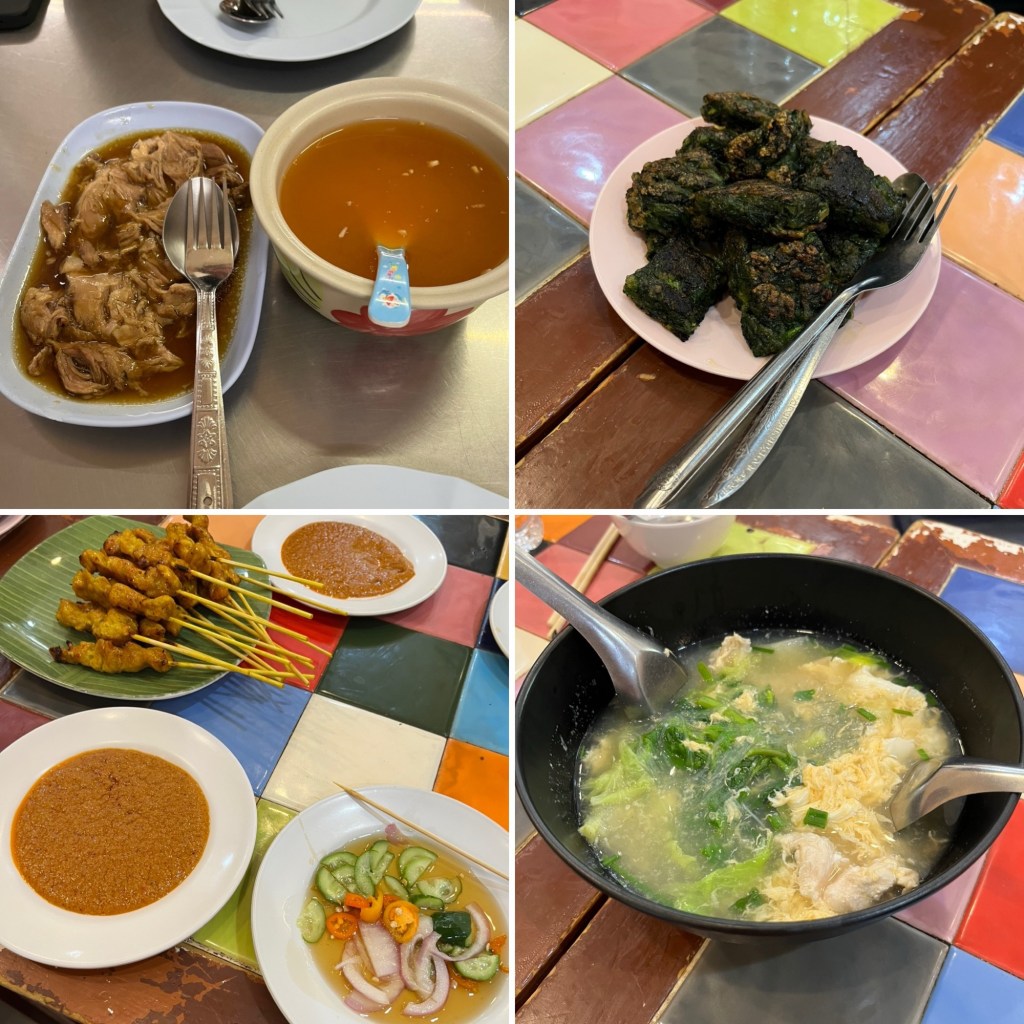
More food in Chinatown in the evening, Singapore Chicken and Rice, with delicious chicken broth, for 90 baht (about £2.20).
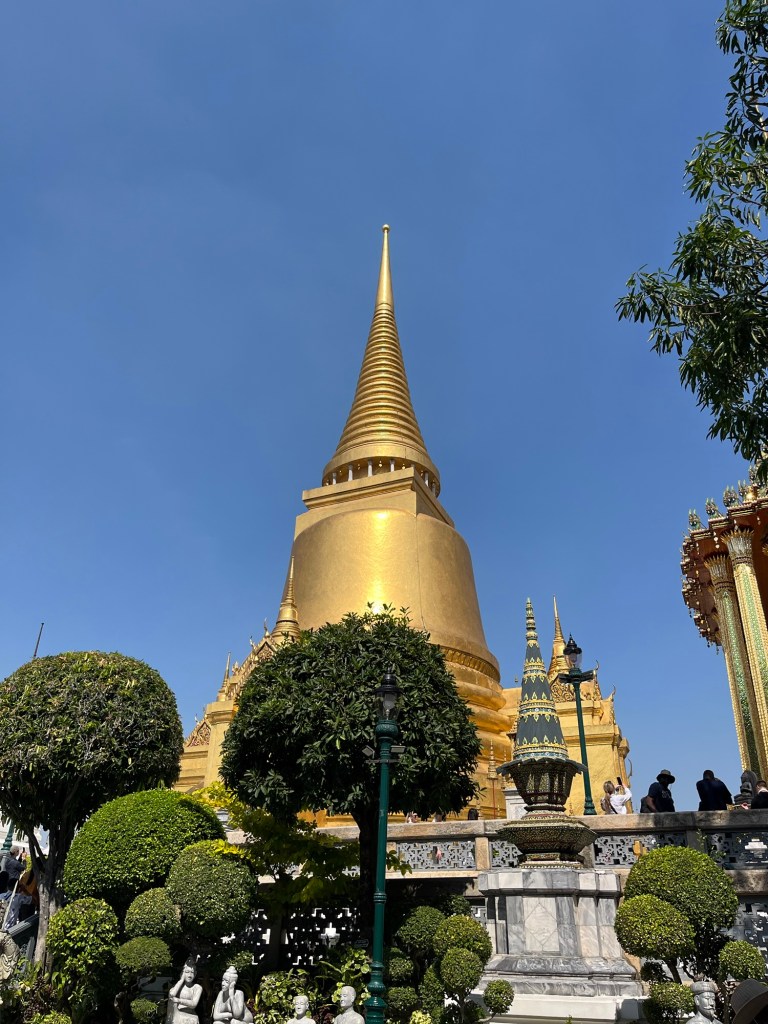
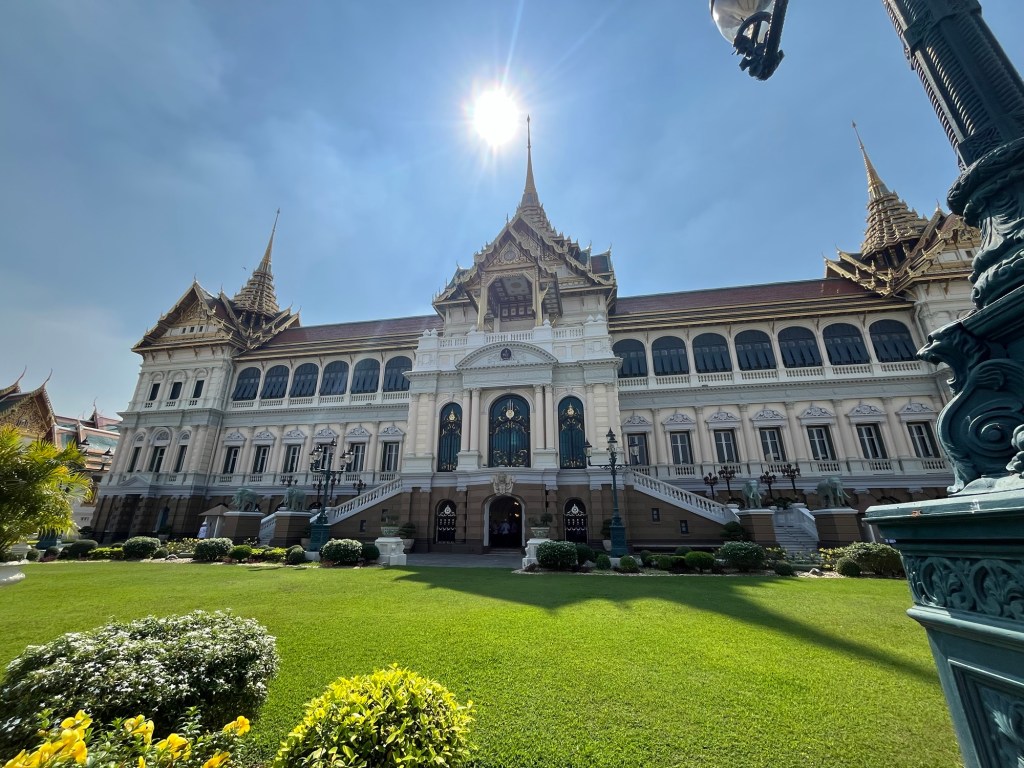
The next day, before my G Adventures tour started in the evening, I went to the Grand Palace, which I’d missed the last time I was in Thailand. I took the metro to the closest station and walked the rest of the way – quite proud of myself for navigating Bangkok public transport, (with the help of Google maps and a google search of how to buy MRT tickets – you can tap Visa/Mastercard cards at the gates, I’ve not yet seen Applepay accepted anywhere here).
As it was very close to New Year, it was very busy. Additionally, as the Queen Mother has recently died, there were lots of mourners at the palace. The Temple of the Emerald Buddha was particularly crowded which was a little overwhelming.
At the Grand Palace, Bangkok
After meeting the group in the evening – only 8 in total for the first part of this trip, 2 weeks to Hanoi through northern Thailand and Laos, the smallest G Adventures group I have been on since Peru in 2015 – we went for dinner in a local restaurant and then drinks in the rooftop bar of the hotel we were staying in.
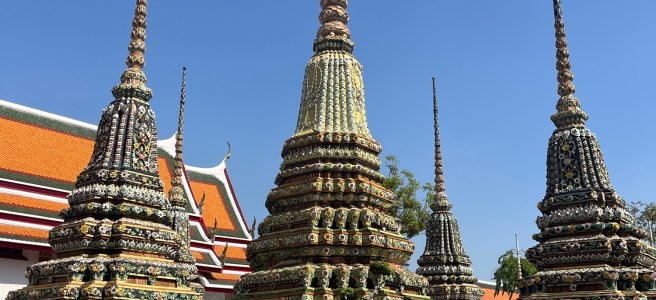
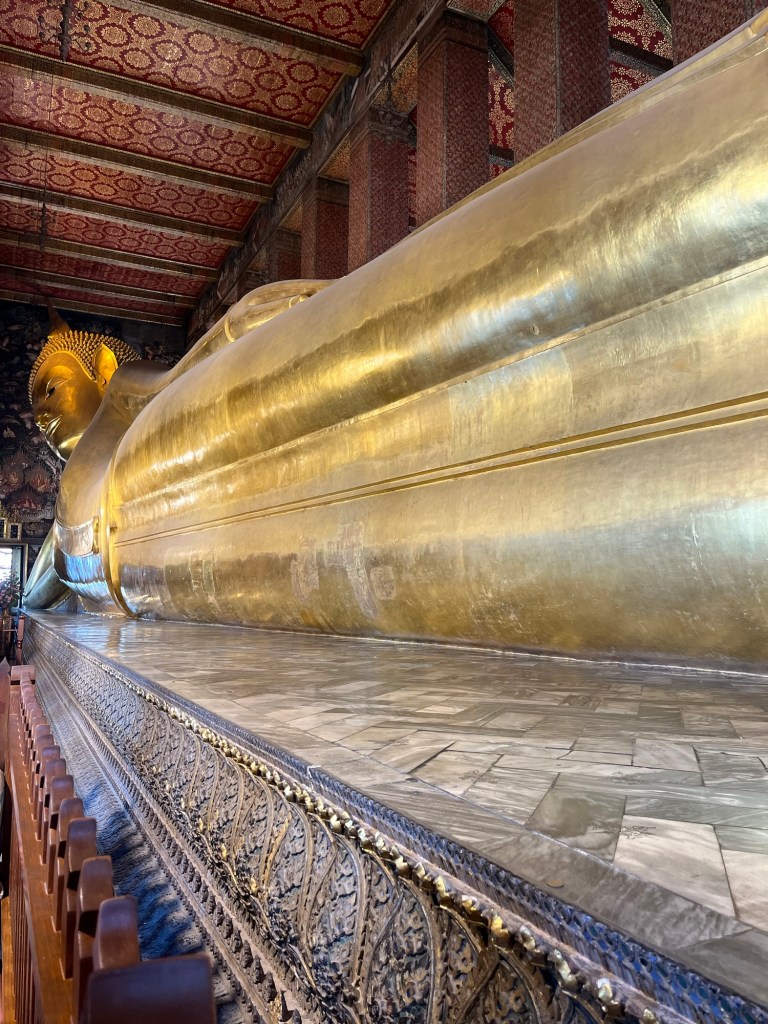
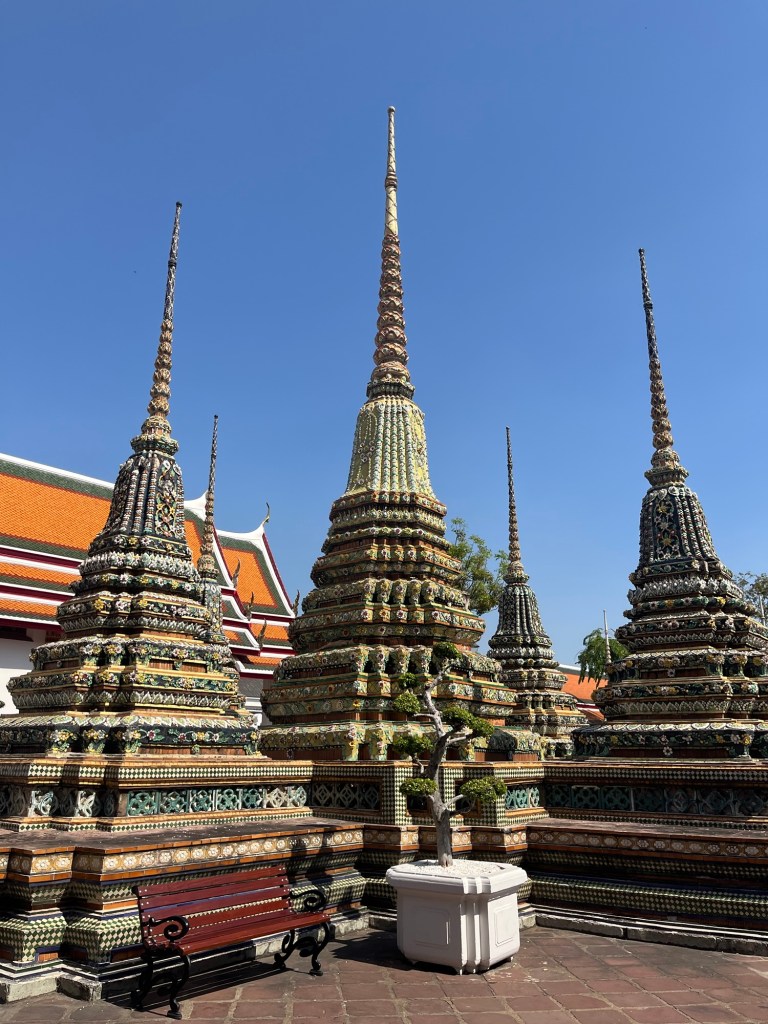
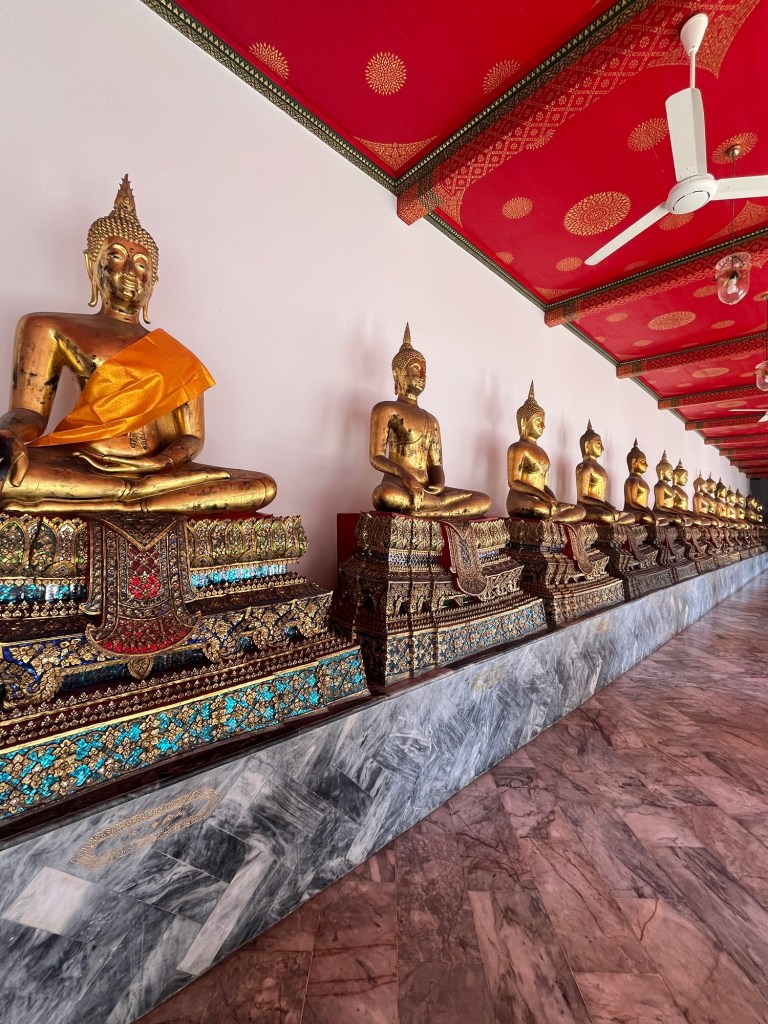
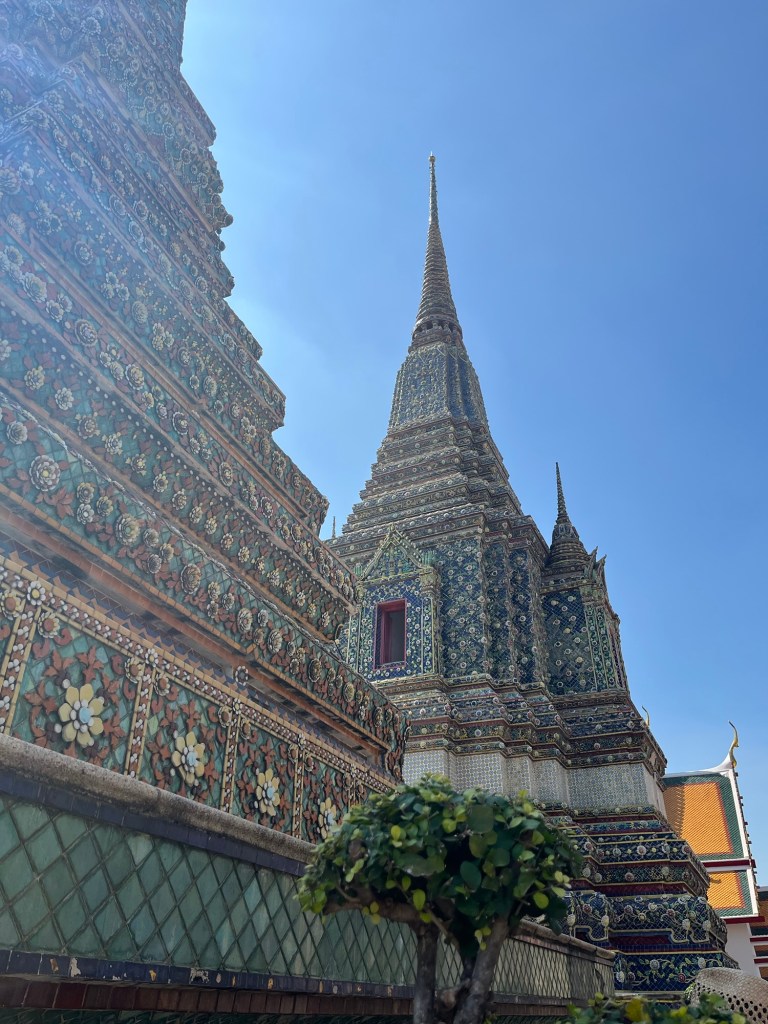
The next morning started with a longboat tour of the klongs (canals) in Bangkok which ended at Wat Po. I went to Wat Po on my previous visit to Thailand in 2019 but found I’d remembered very little of it beyond the Reclining Buddha, and I’d even forgotten how big that was!
At Wat Pho
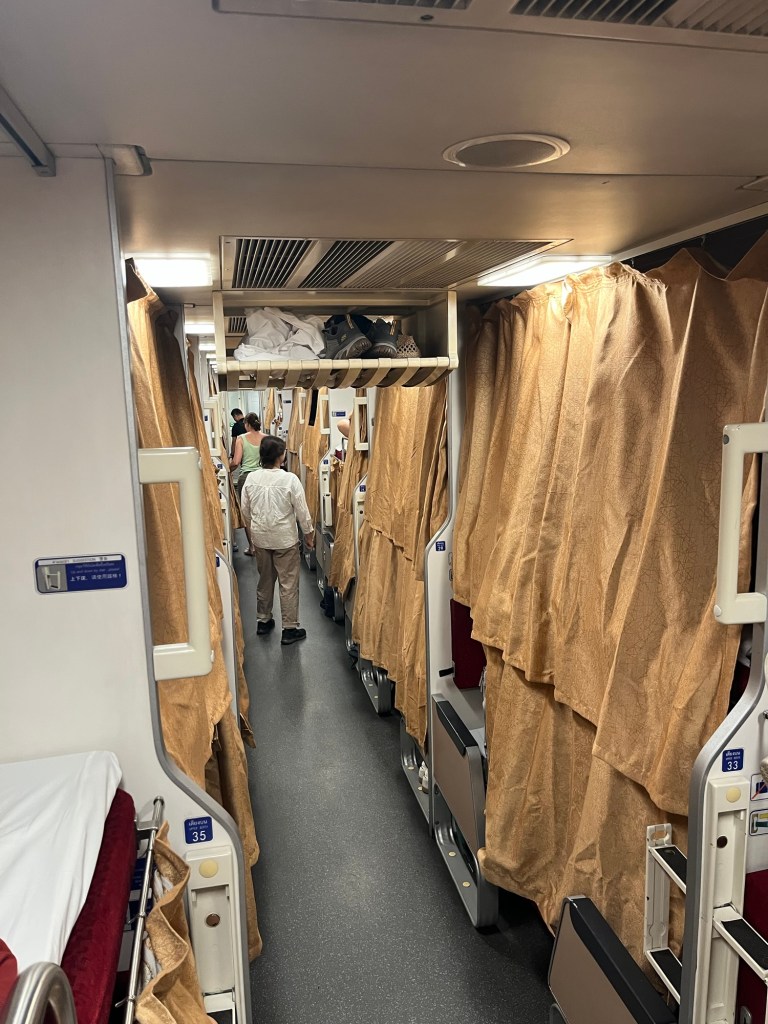
We then had a free afternoon before boarding an overnight train north to Chiang Mai. A new train station in Bangkok has been built in between my visits, the new station is very spacious and easy to navigate around. The train departed shortly after 7pm for the 12 hour journey north. The seats were very quickly changed into beds, one upper (which I was on) and one lower. There were also western style toilets which were a definite improvement on my previous overnight train here! I can’t say I got a good nights sleep though, the carriage lights were on all night and despite individual curtains, it didn’t do much to block the light.
The overnight train from my bunk
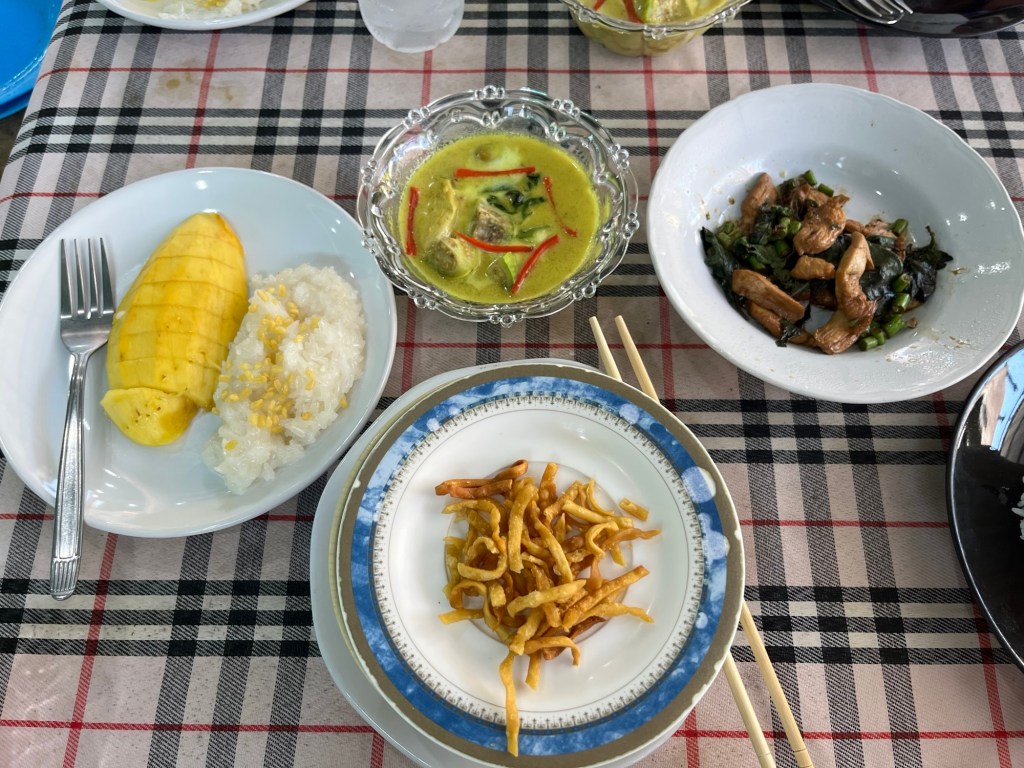
We arrived into Chiang Mai just before 8am and went for breakfast before 4 of us opted for a Thai cooking class. A great experience and some delicious food for us to eat for lunch.
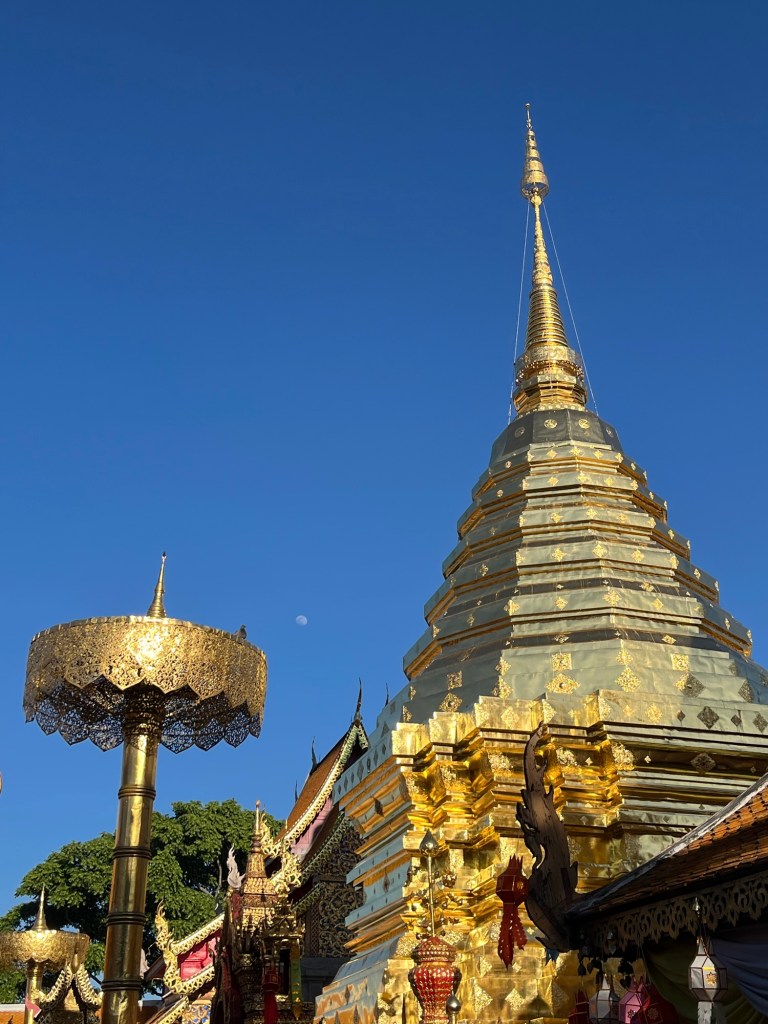
In the afternoon we had a trip to Doi Suthep temple, high on the hillside just outside of Chiang Mai. Even once you’ve driven up the windy hillside to get to it, there are still 300 or so steps to walk up to reach the temple. Again it was busy with people enjoying the holidays but there was a lovely peaceful air there
Doi Suthep temple
It was New Year’s Eve and so after visiting the night markets and watching a Ladyboys Cabaret show, we headed to the old town to watch the New Year fireworks. Definitely a different way for me to be celebrating new year!!
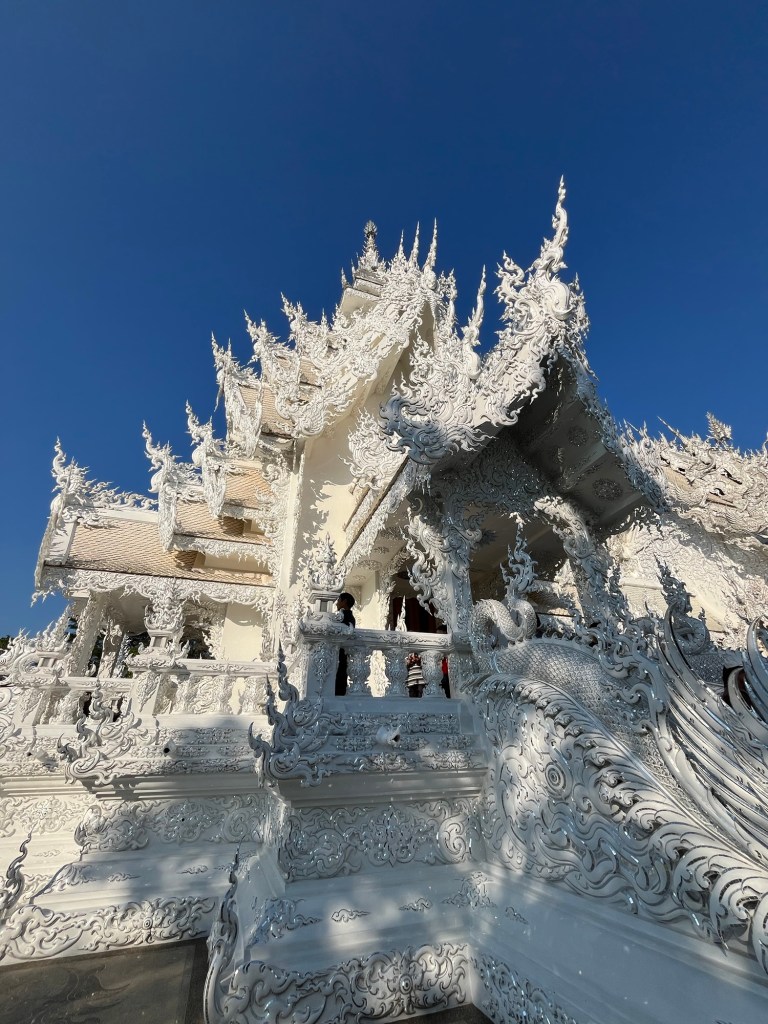
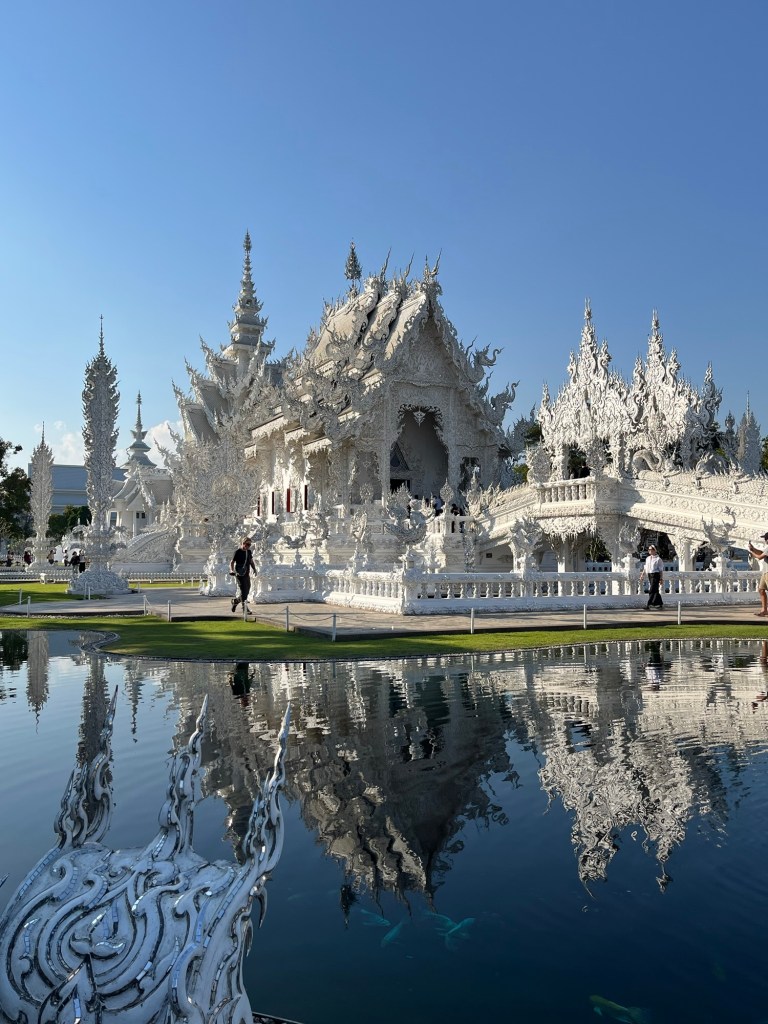
After a free morning on New Year’s Day, we set off to the border town of Chiang Khong, stopping at the White Temple in Chiang Rai on the way. A very different style of temple to others seen so far, and much more contemporary, but the contrast of the white with the sky and surroundings is spectacular
The White Temple, Chiang Rai
We reached Chiang Khong in the early evening and after dinner at a local restaurant, including exchanging some baht for Lao kip, it was a relatively early night ready for the border crossing into Laos and my first new country of this trip…
In March 2019 I went to Cuba, having been inspired by seeing some amazing photos from someone I met on previous travels.
A short indulgent interlude before I get into the trip. I’d decided a few years ago that if I was on a long haul flight over 7 hours, that I would try and go ‘not economy’ if the price was not completely outrageous. By and large, this meant going premium economy, which I did when I went to Seattle and Alaska in 2018 and Utah and Arizona later in 2019. When looking for flights, I will always have a look and see what’s available price-wise. Usually, business class is prohibitively expensive (£4k+), but I’d spotted a deal via Skyscanner from Heathrow to Havana via Mexico City with Aeromexico for £1900 return. Obviously still expensive, but very reasonable by business class standards, plus as the UK-Mexico leg was 11+ hours overnight, and long time readers will recall my inability to sleep on aeroplanes, plus with a 3-4 hour stretch between Mexico City and Havana, I was eager to grab the deal before it disappeared.
One of the many advantages of travelling business class is the swift journey through the airport – priority check-in, fast track through security and relaxing in the lounge. I did get a slightly odd look at check-in as I was travelling with a backpack and was in my smartest ‘comfy’ pants. After relaxing in the lounge with a glass of vino, the flight departed at approx 10.30pm. We were then fed an evening meal before I then spent 7 hours lying horizontal in the lovely flatbeds on the Dreamliner. I know I’m rubbing it in but it was utter bliss, and definitely helped me cope with the 6 hour layover in Mexico City which was between the hours of 4am-10am local time. Another advantage of flying business class was that I could spend that time in the business class lounge at Mexico City Airport instead of trying to find somewhere to sit in the not-enormous departure lounge..
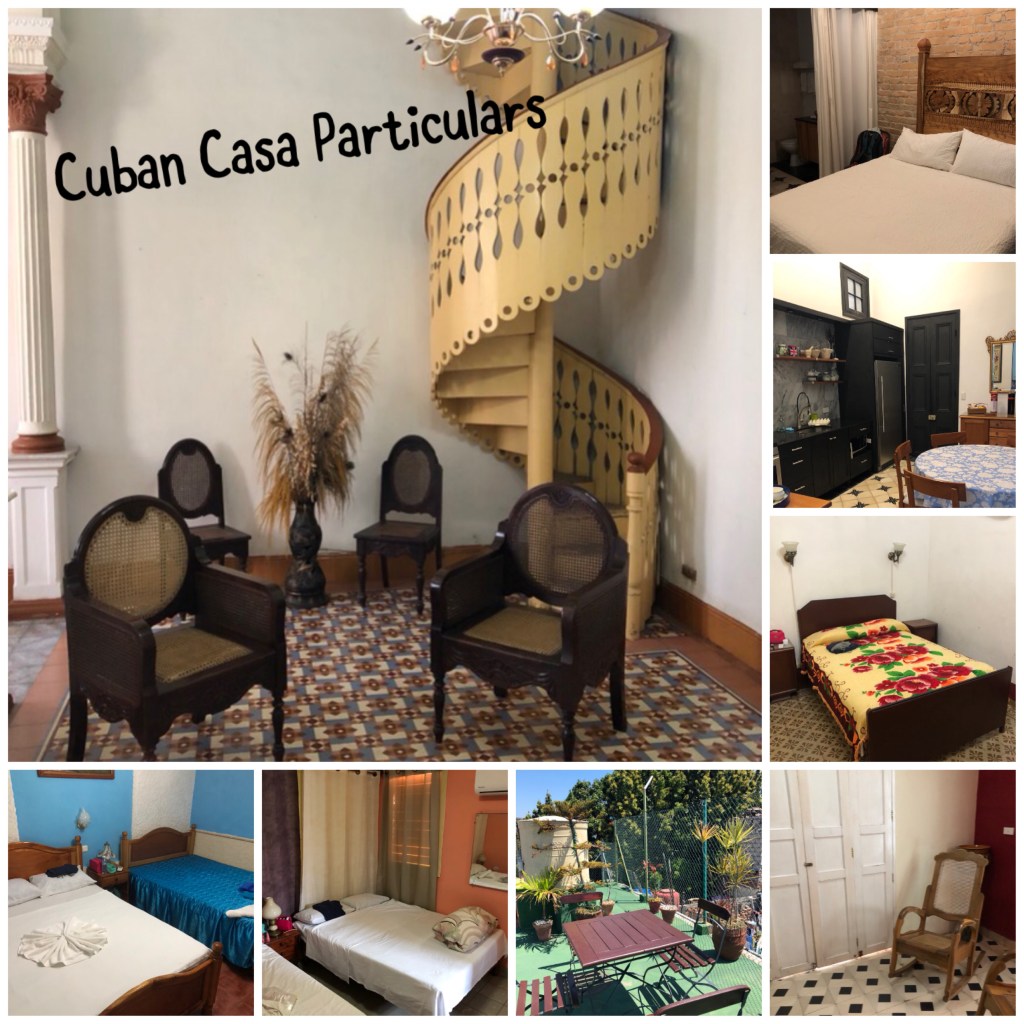
I arrived at the airport in Havana (actually a reasonable distance out of Havana) in the middle of the afternoon, and negotiated immigration successfully (I was ready to produce all the documentation that I’d been warned about but needed none of it). After changing approximately £300 for CUC (Cuban convertible currency, mainly used by foreigners, there is a second currency CUP used by the locals) I then had my organised transfer to the casa particular in old Havana. A lot of the accommodation in Cuba is in casa particulars which are nominally rooms in people’s houses, but in most of the cases that I experienced, are analogous to boutique hotels.
Some of the casa particulars we stayed in
After meeting the group in the evening and going out for our first meal (roast pork with salad and the first of many Cuba Libres), we bonded over rum on the casa terrace. I caved in at 11.30pm having had a very long day.
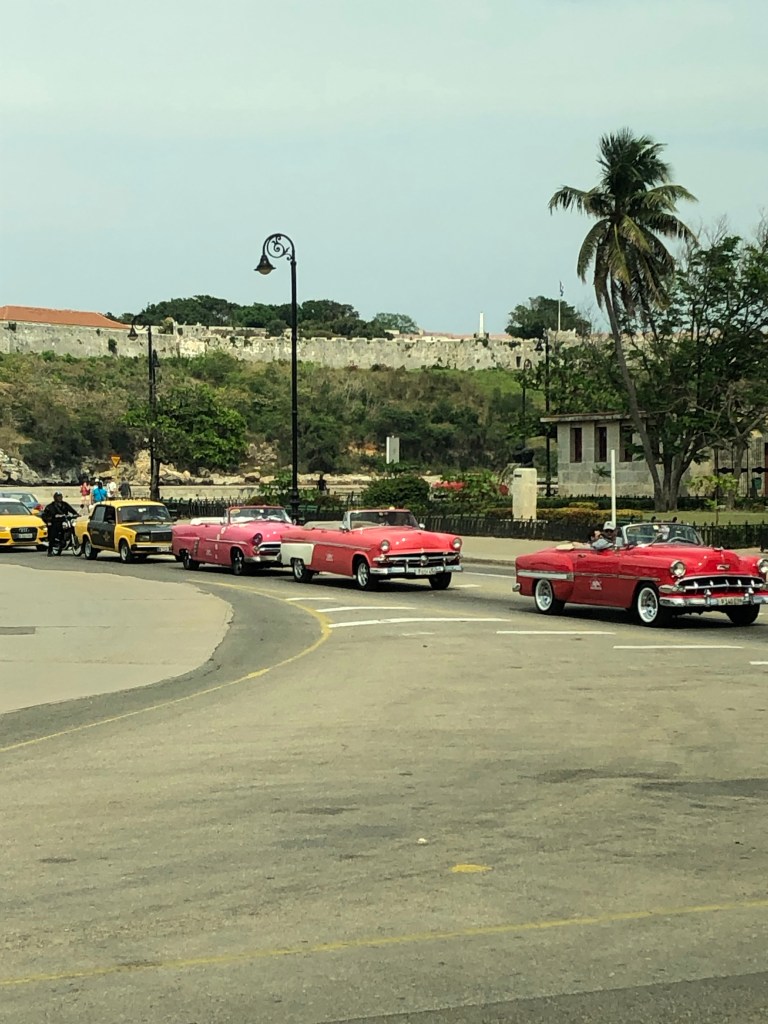
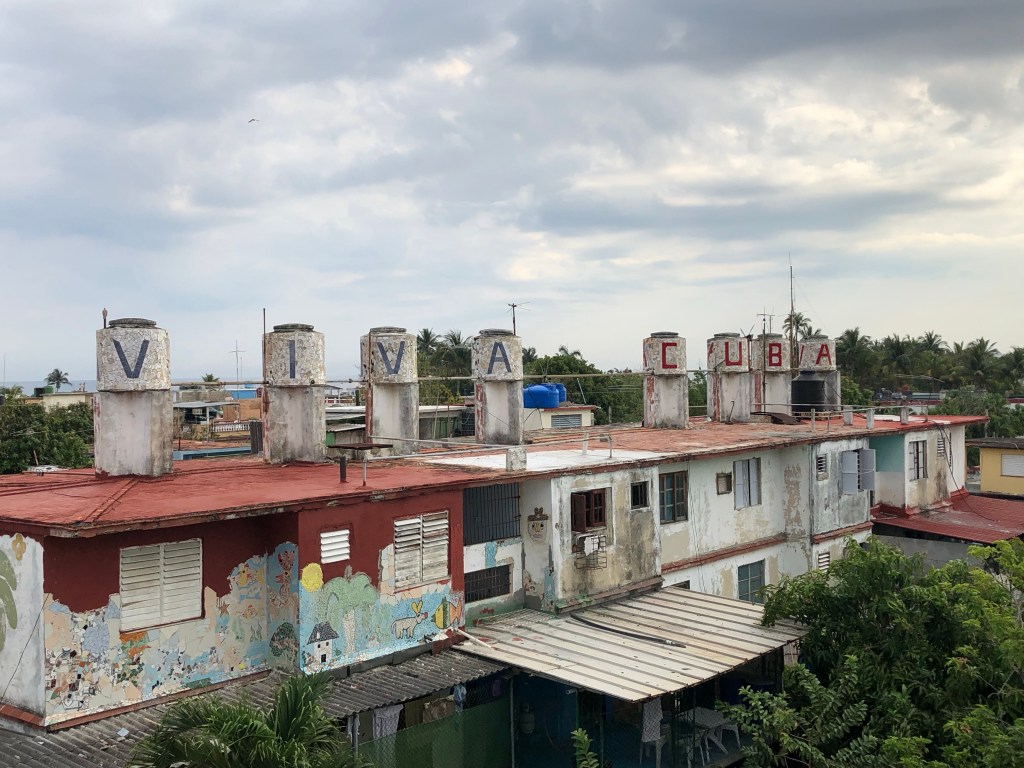
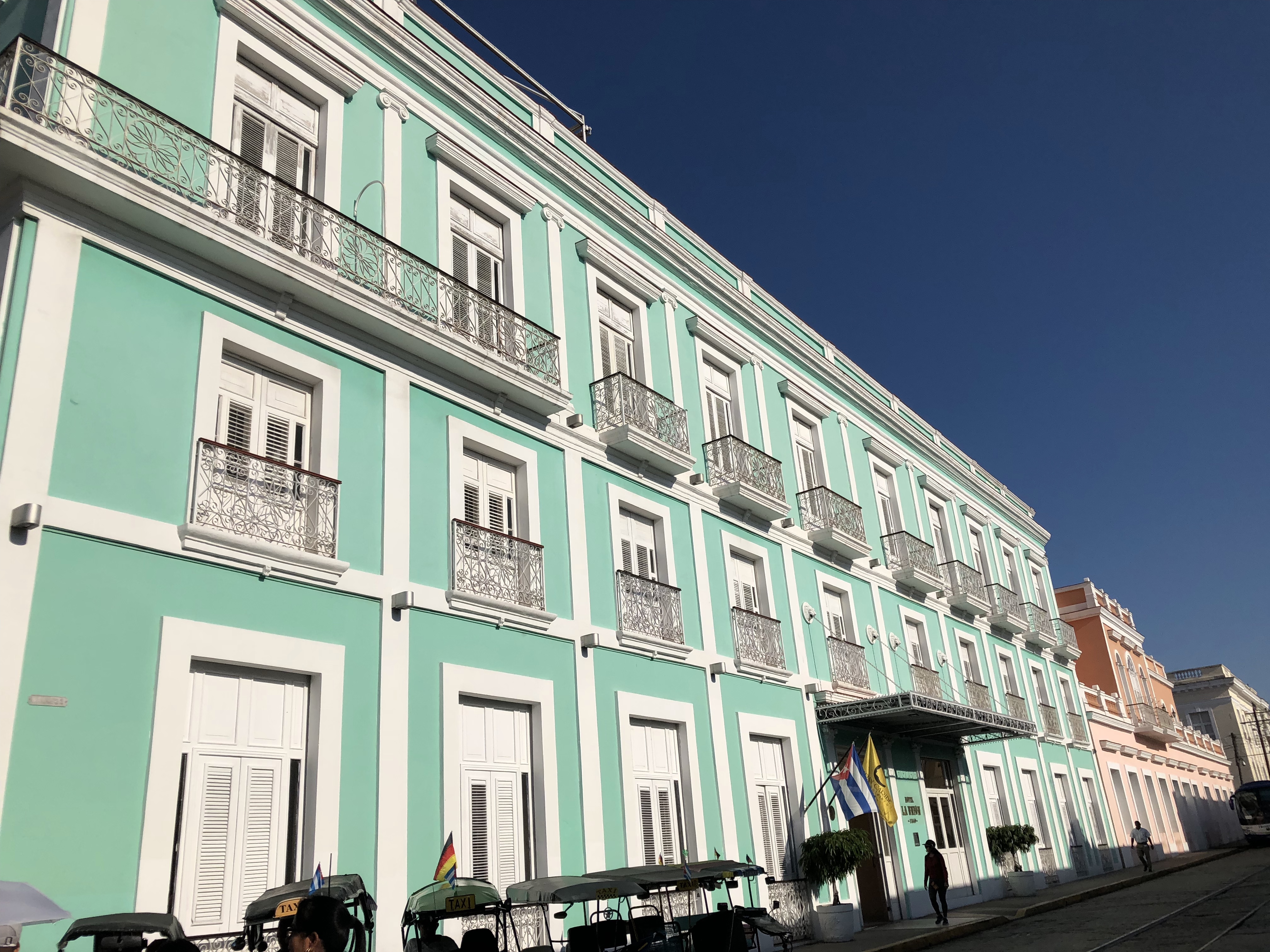
The next morning we had a vintage car tour around Havana – definitely a must-do. The vintage cars are an iconic part of Cuba and it’s so cool to be riding around in one. We went to Revolution Square, drove around some neighbourhoods and down the Malecon before ending in Old Havana where our tour guide then gave us a guided walking tour around some of the beautiful squares in Old Havana. The architecture is amazing – crumbling facades and buildings alongside some brilliant, bold, colourful ones.
Then we were treated to normal Cuban service for lunch. The longest lunch ever – we waited over an hour and a quarter from arriving to getting food – the food was good once it arrived, but it just took forever to do so!
We had what was left of the afternoon to ourselves, so I continued wandering around the streets of Havana Viejo. In the evening we went for dinner and then went to the Buena Vista Social Club to listen to some fabulous Cuban music – very enjoyable.
The next day we headed west, and after stopping at Fusterlandia in the outskirts of Havana (inspired by Picasso and Gaudí), we continued our drive out. After a baños stop and a morning Piña Colada (when in Cuba…), we carried on to a tobacco plantation for lunch (roast pork, pumpkin, rice, beans and salad). Cuba is world-famous for its cigars and it was interesting firstly to see how tobacco leaves are grown and then dried, and then to see Cuban cigars being rolled.
Looking out at Fusterlandia
Afterwards we continued our journey west towards Viñales. We stopped off to watch more cigars being rolled, and they were passed around the group. I’m not a smoker and so didn’t partake. The one thing I did notice was that Cuban cigar smoke does not linger on clothes and fabric like cigarettes do, and I actually quite liked the smell of the cigar smoke.
We arrived at the casa in Viñales in the afternoon and after a brief wander which was cut short by rain, we went for dinner (and got absolutely soaked on the way there). Tapas and cocktails, followed by a bar with Cuban dancing.
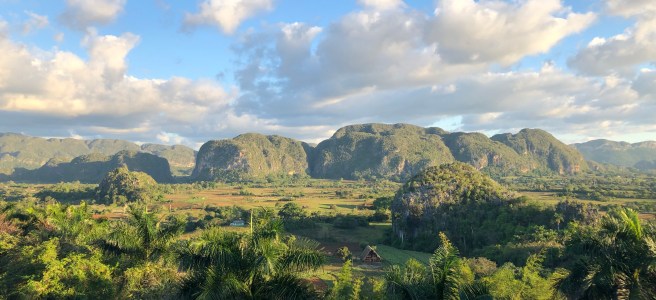
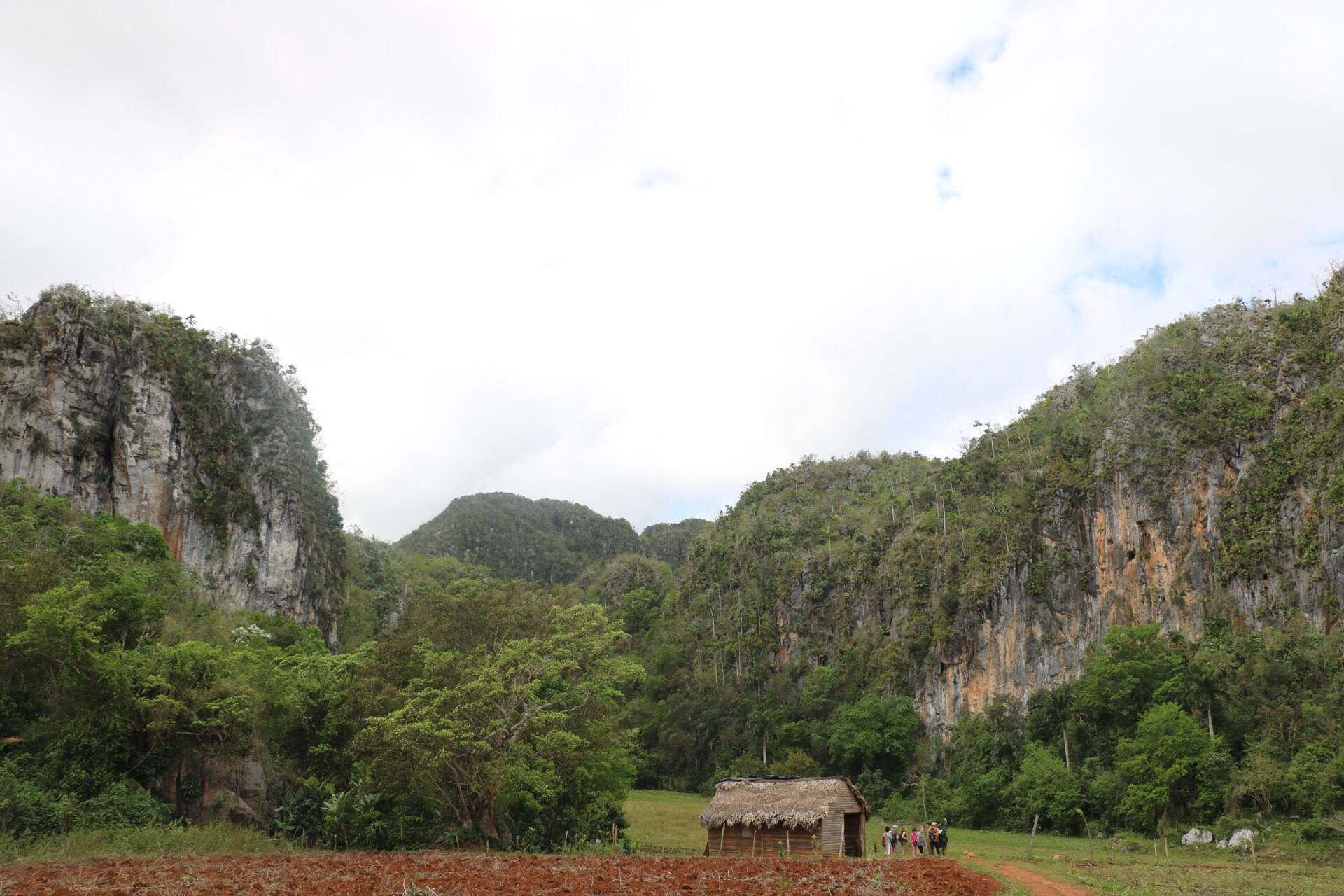
The next morning we went for a hike through Viñales Valley. It was a little cloudy and it briefly rained but the scenery is insane – like Jurassic Park. In the afternoon we had a salsa lesson which was fun (and involved more drinking) and then we played dominos – a massively popular pastime here – with more drinks.
In the evening we went to a restaurant a little way out of the town which had a great view over the valley. We then went to a bar for a dance show, and carried on drinking.
The next morning was an early start as we had a long travel day from Viñales in the west of the country, to Cienfuegos on the southern coast, towards the centre of the island. On the way out of Viñales valley, we stopped off at a wonderful viewpoint. With the blue skies it really looked like a landscape out of pre-history.
After one too many Cuba Libres the previous evening, it was a quiet journey. After lunch, we stopped at the Bay of Pigs for a refreshing swim in the sea – definitely a recommended hangover cure!!
We arrived in Cienfuegos in the early evening and went for dinner. After dinner we walked along the Malecon, which had a wifi spot and therefore large groups of people using the internet! The notion of mobile phone data hadn’t made it to Cuba, and very few of the casas had internet.
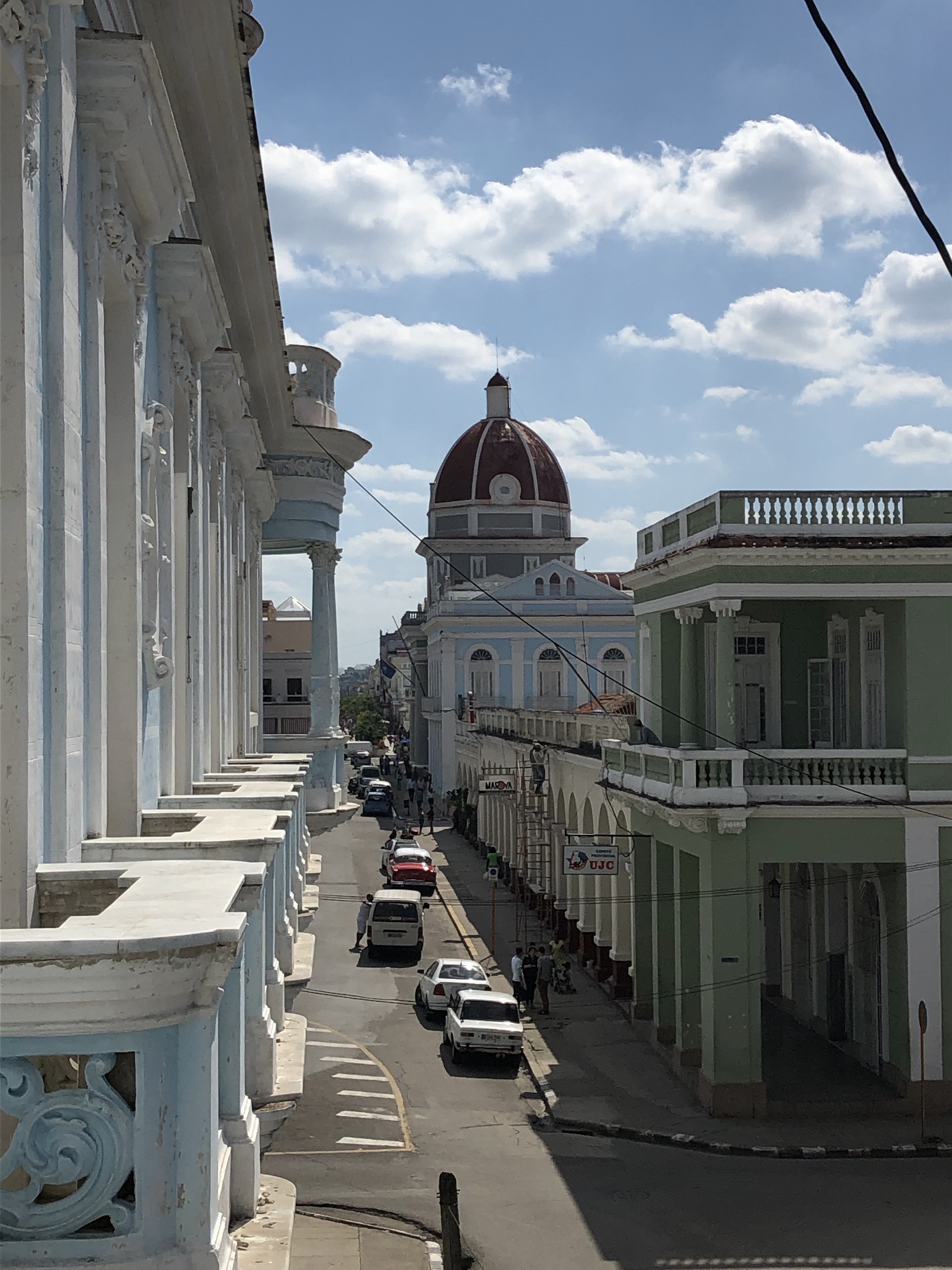
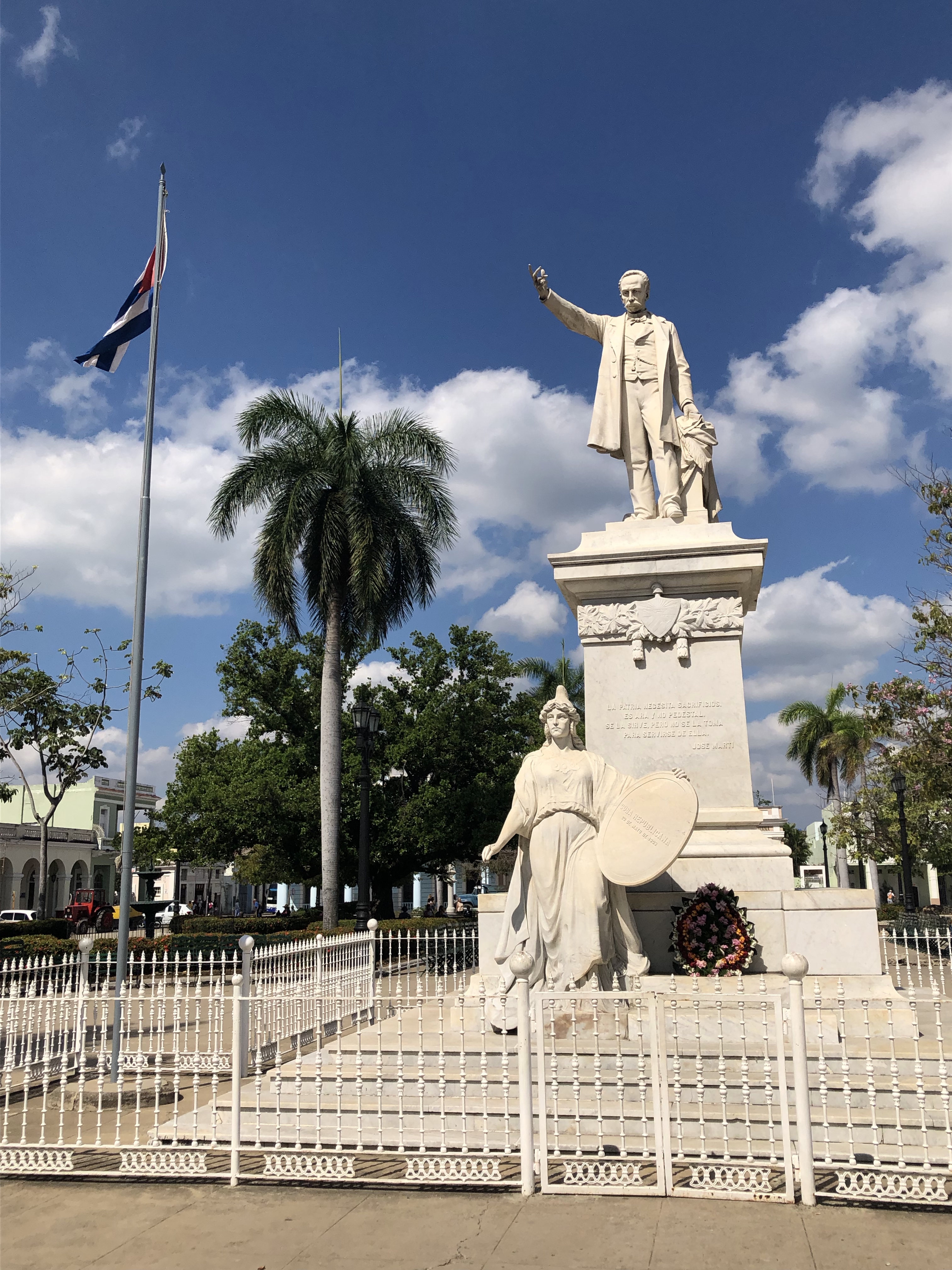
The next morning we had a walk around Cienfuegos including to the plaza major, and also went up a casa tower for a great view over the town. Cienfuegos felt much more well-maintained than other areas of Cuba and the architecture had a different feel from other areas we had already seen.
Sights in Cienfuegos
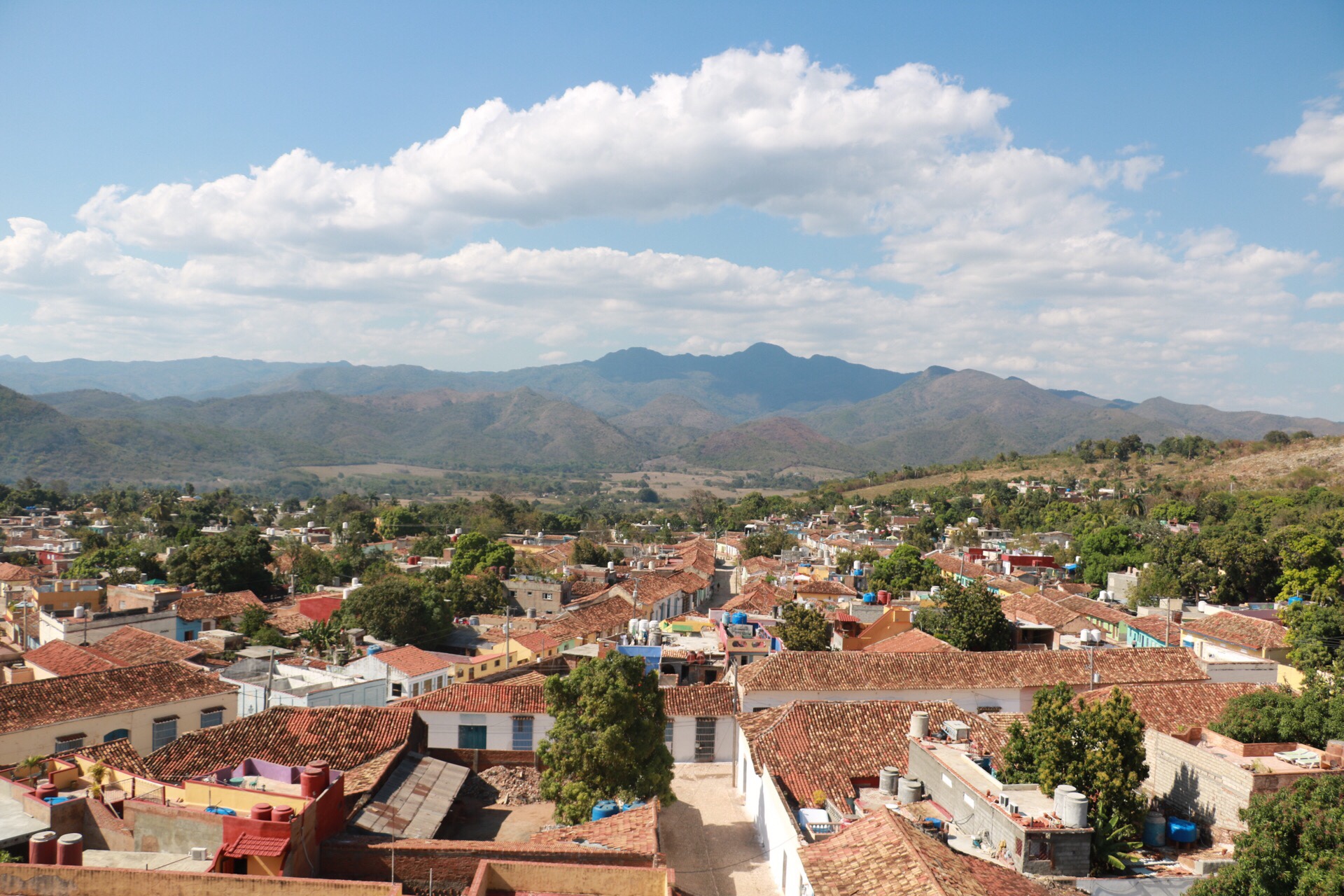
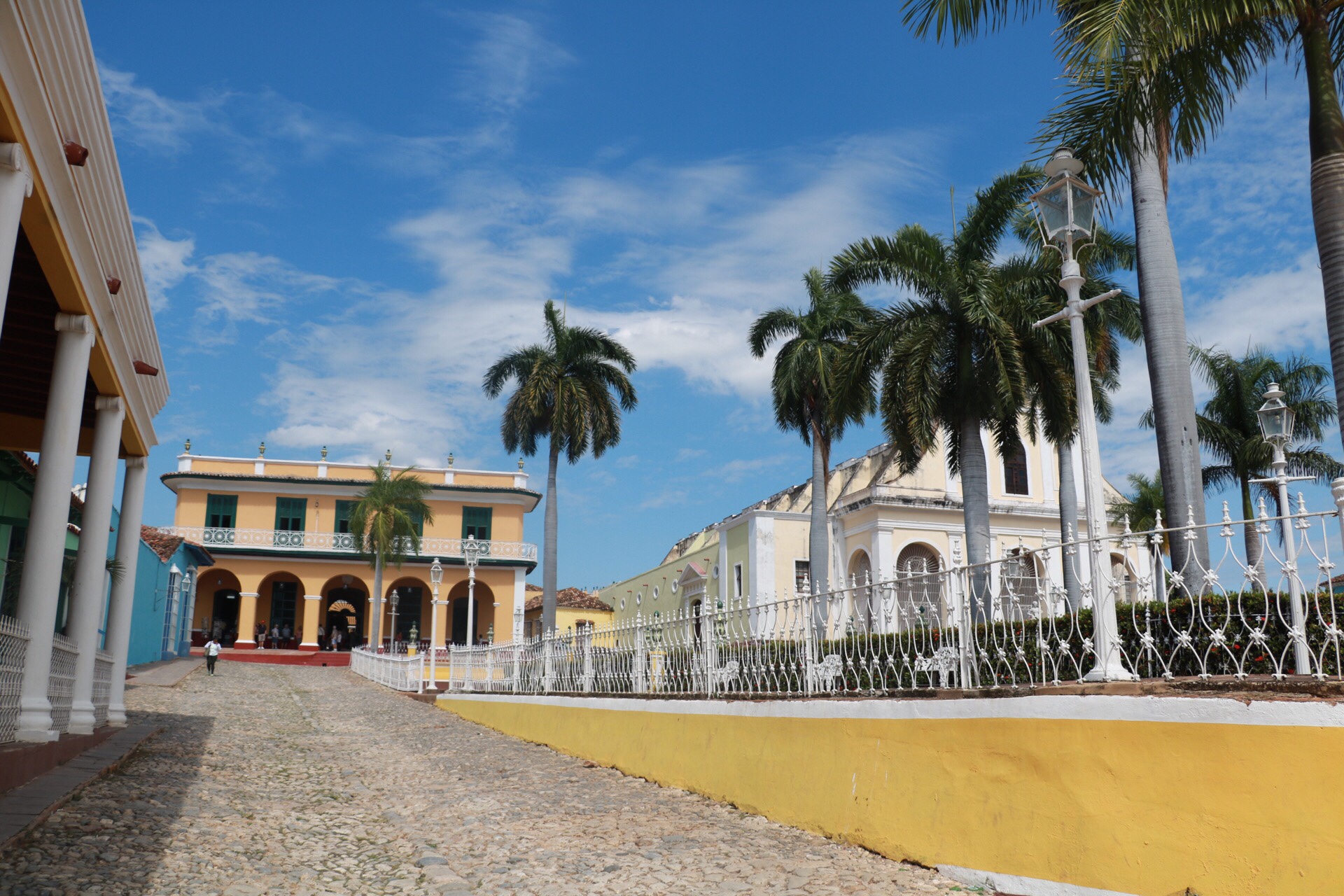
We then carried on travelling east for a couple of hours to the town of Trinidad. The heat was more intense here than the other places we had been. In the afternoon we had a wander around the old town – very colonial and Spanish-influenced. Another good view from the top of a monastery tower.
In Trinidad
In the evening, after dinner we went to watch salsa by the steps, and then went to the Cave for some Cuban raving.
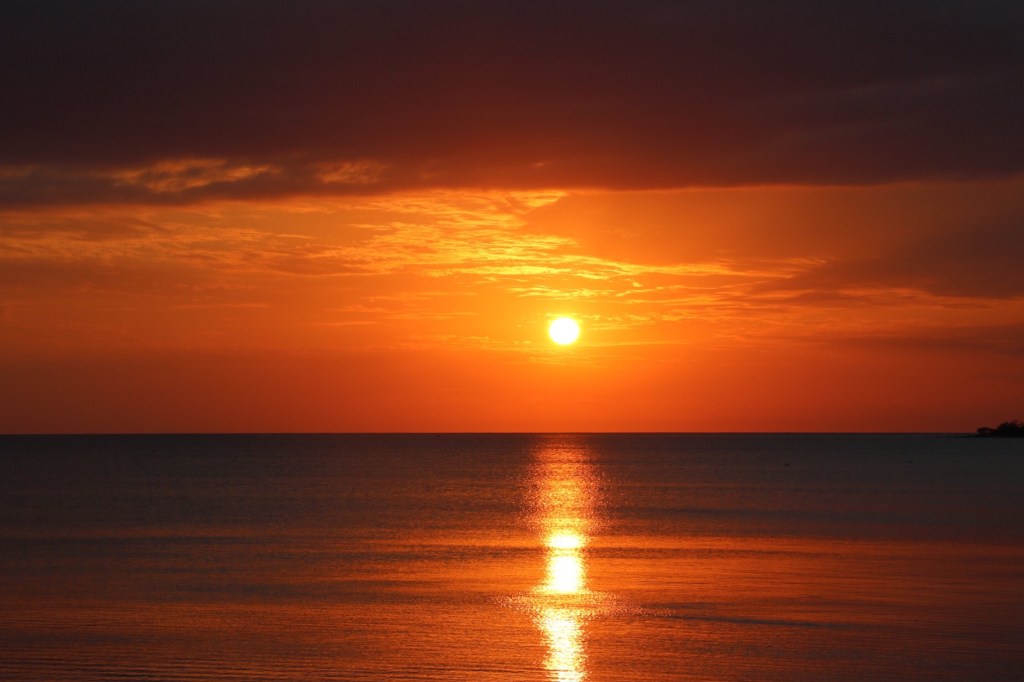
After a 2am finish, we went for a walk the next morning to a waterfall, and then went to the beach at Playa Ancon in the afternoon. A beautiful blue Caribbean Sea to swim in and some palm trees providing me with some shade to sit in. We stayed for sunset which had beautiful orangey red skies. After dinner I had an early night for a change as I was full of rum and sugar at this point!
The next day we headed back to Havana, via Santa Clara and a visit to the Che Guevara museum and memorial – an enormous statue of the revolutionist.
Back in Havana we had our final dinner of the trip at an Asian Fusion restaurant and a couple of enormous cocktails to finish me off.
So, my impressions of Cuba – a fascinating country, loved the architecture especially in Havana and Trinidad, the scenery in Viñales was spectacular. The food was ok, be prepared for menu items to not be available. There were signs that capitalism is encroaching. I didn’t go to Varaderos, which is the main ‘resort’ part of the island where the all-inclusive hotels are, but there was a lot of building going on in Havana, especially on the waterfront. I’m glad I went when I did as I can imagine it might be very different in 5-10 years.
This one was a long time ago – 5 years now, back in November 2015.
This was my first real solo foray into a non-western country, and one which I didn’t speak the language. I’d actually taken some informal Spanish lessons for a couple of months in the run up to this trip which proved invaluable, and useful for a few trips to Spain since then.
At the time I went, there were no direct flights between the UK and Peru. I had 2 viable options – via Madrid or via the US. I choose to go via the US to extend the amount of time on my trip that I could speak English, but having done this and transited through the US, I would not generally recommend this. Whilst I had booked connecting flights from London to Lima, via Dallas Forth Worth on the way out and via Miami on the way back, you always have to clear immigration in the US even when transitting which made for some slightly stressful connections and BA leaving my bag in Miami on the way back.
I don’t remember much about immigration into Peru – I didn’t need a visa, and I don’t remember it taking particularly long. I’d arrived early morning after an overnight leg from Dallas, the one thing I do remember is the hustle, bustle and chaos of the arrivals hall, finding my transfer (and another group member), and the traffic en route to the hotel being utterly insane.
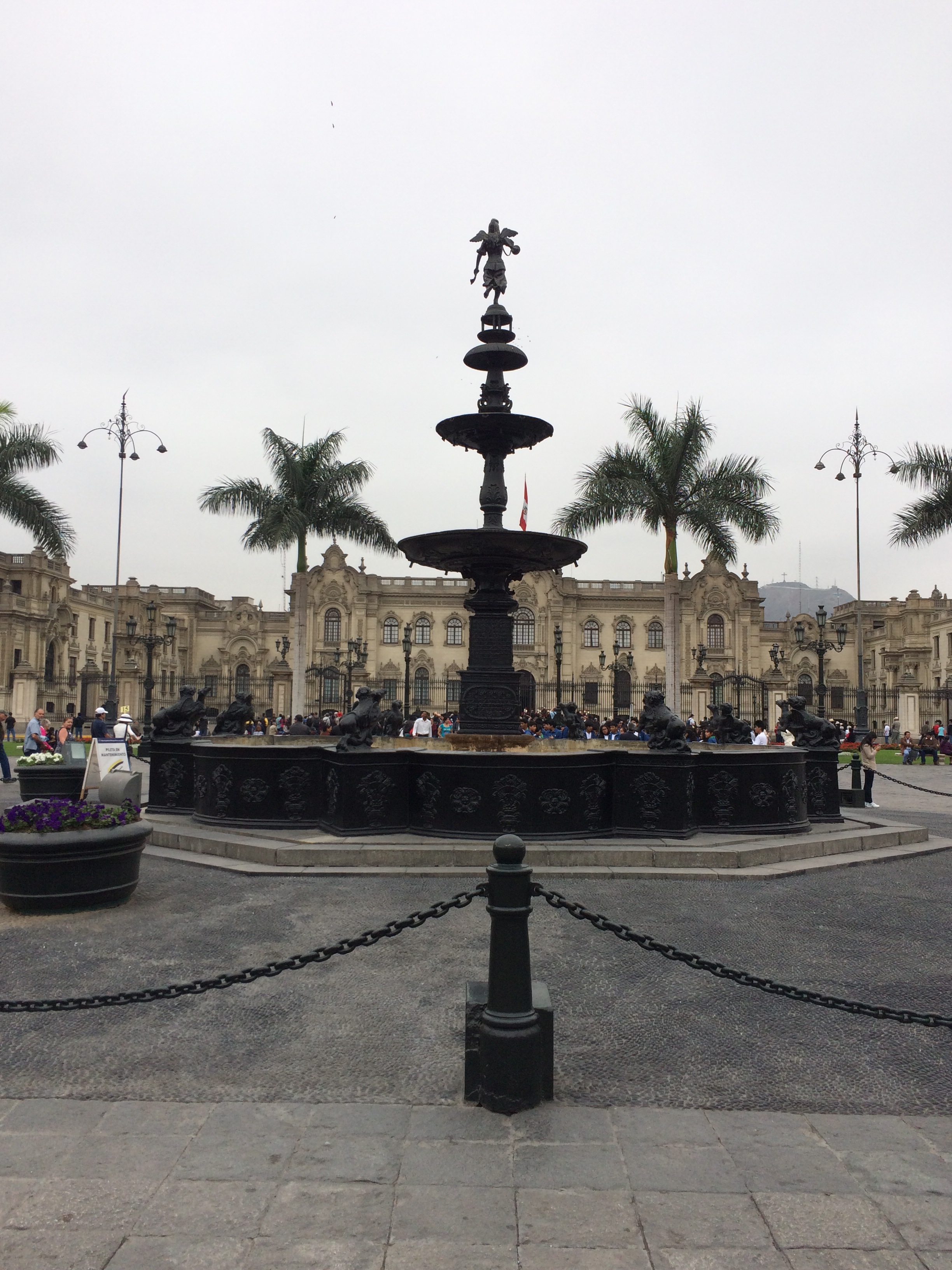
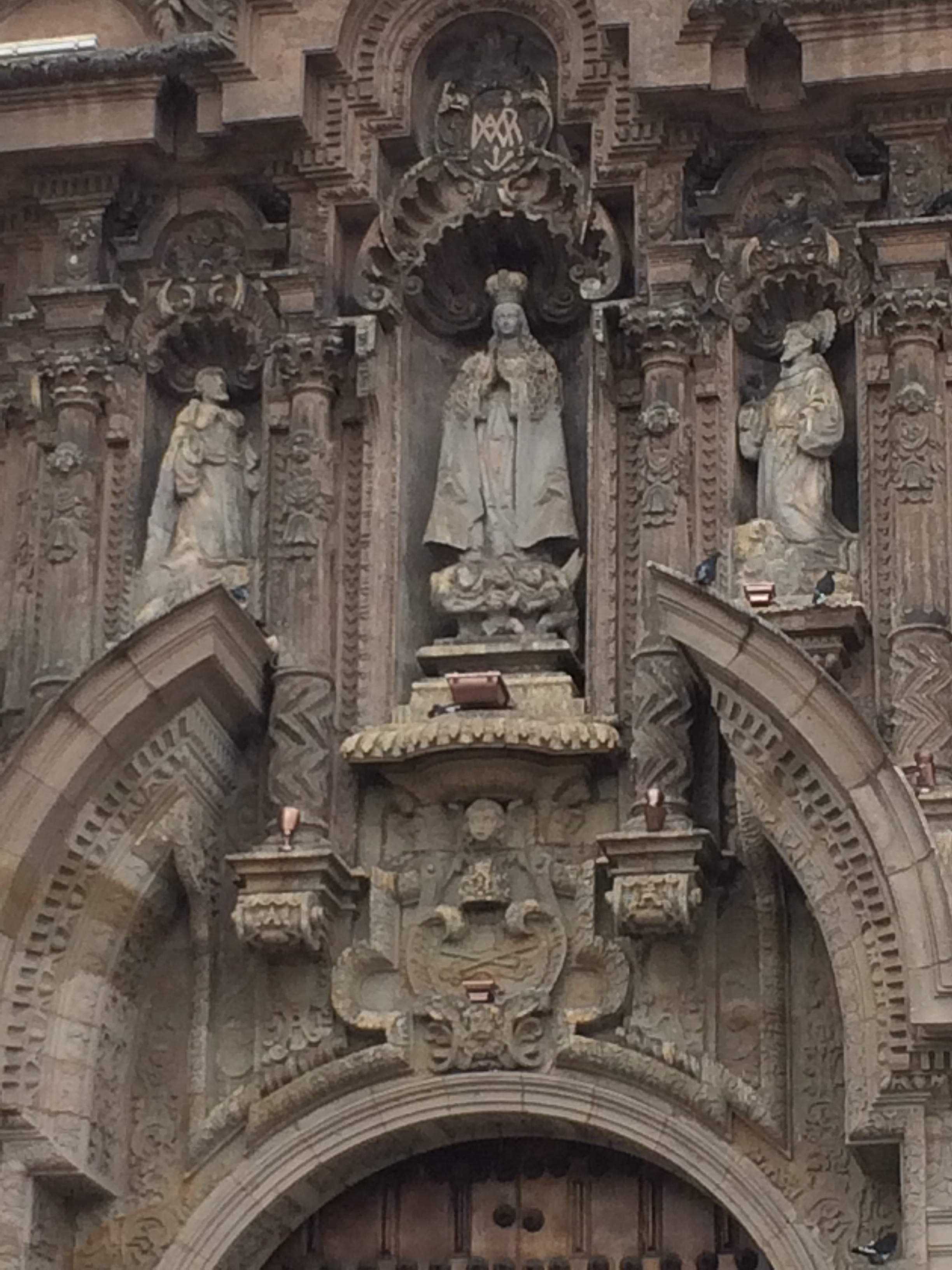
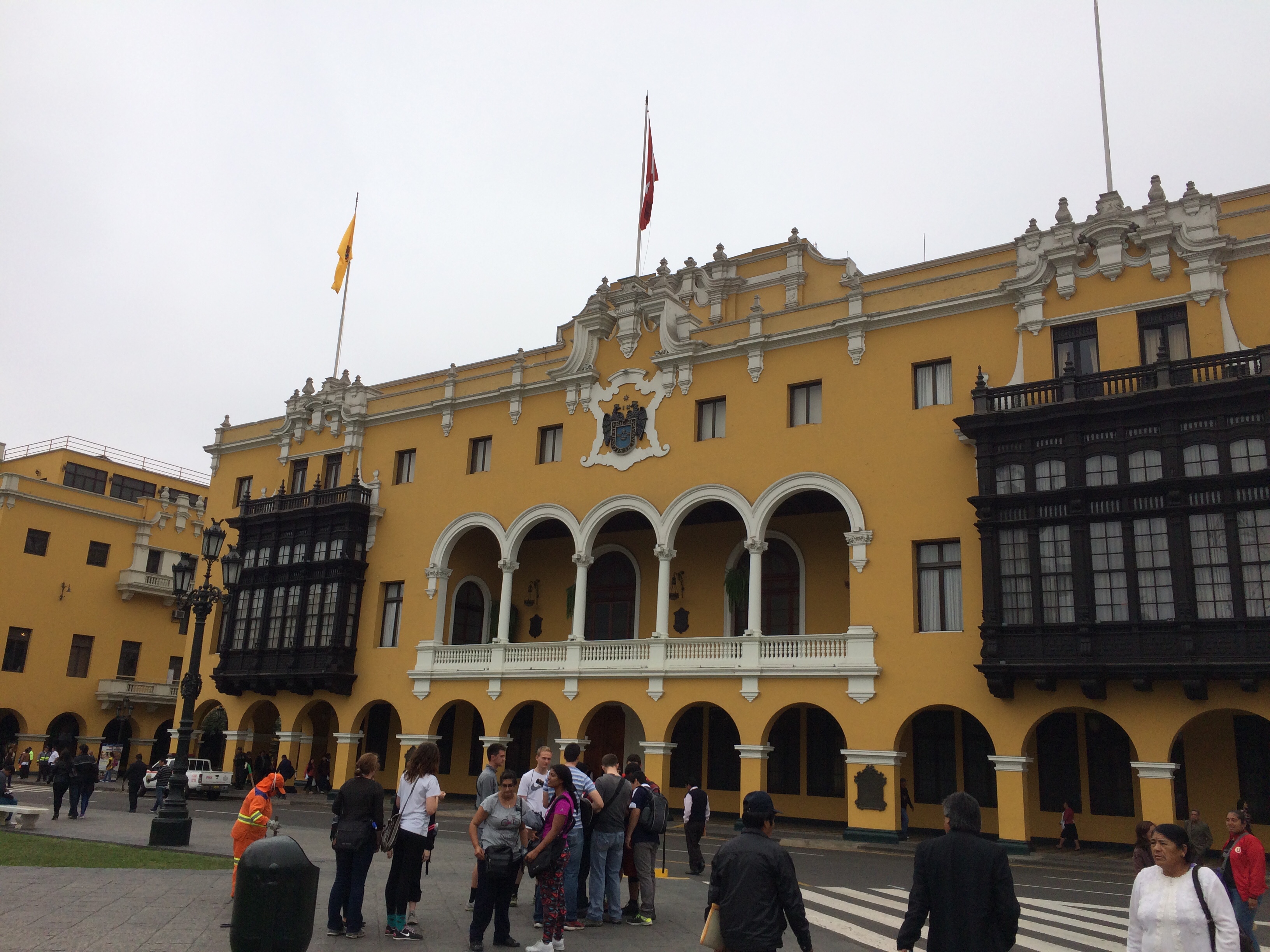
This was my second trip with G Adventures. We were staying in a hotel in the Miraflores district of Lima. Having arrived in the morning we weren’t yet able to check in. However, having arrived with someone else who was on my trip, we hatched a plan to go to the downtown area and got a taxi/paid a guy at the hotel to drive us. I’d read beforehand that whilst Miraflores was a relatively safe area, the centre of Lima was a little more dangerous and you needed to have your wits about you. I think it’s fair to say that I wouldn’t have ventured there on my own so was glad for the company. There is some amazing architecture in downtown Lima, and loads of churches and the cathedral with unbelievably ornate decoration.
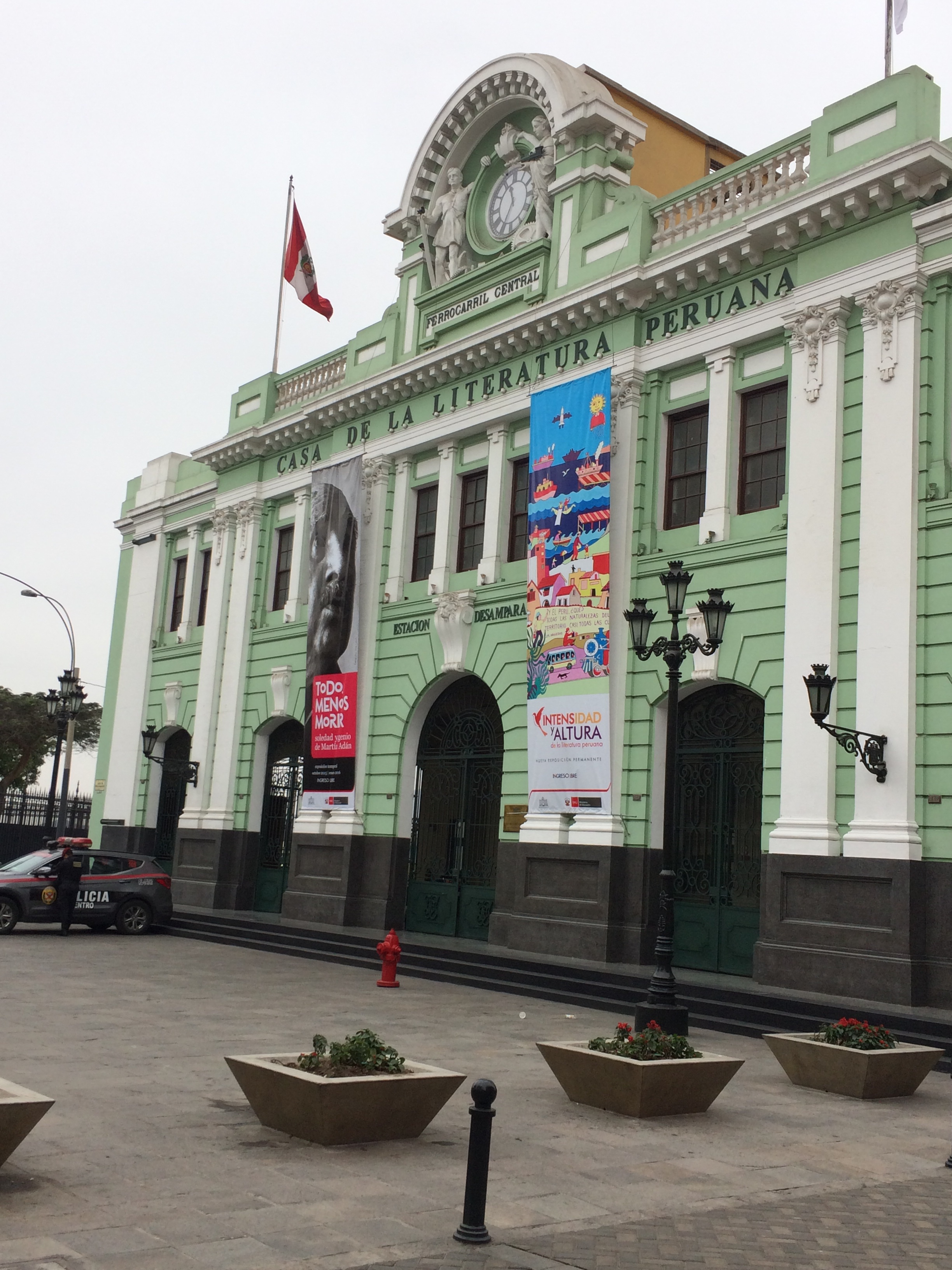
Downtown Lima
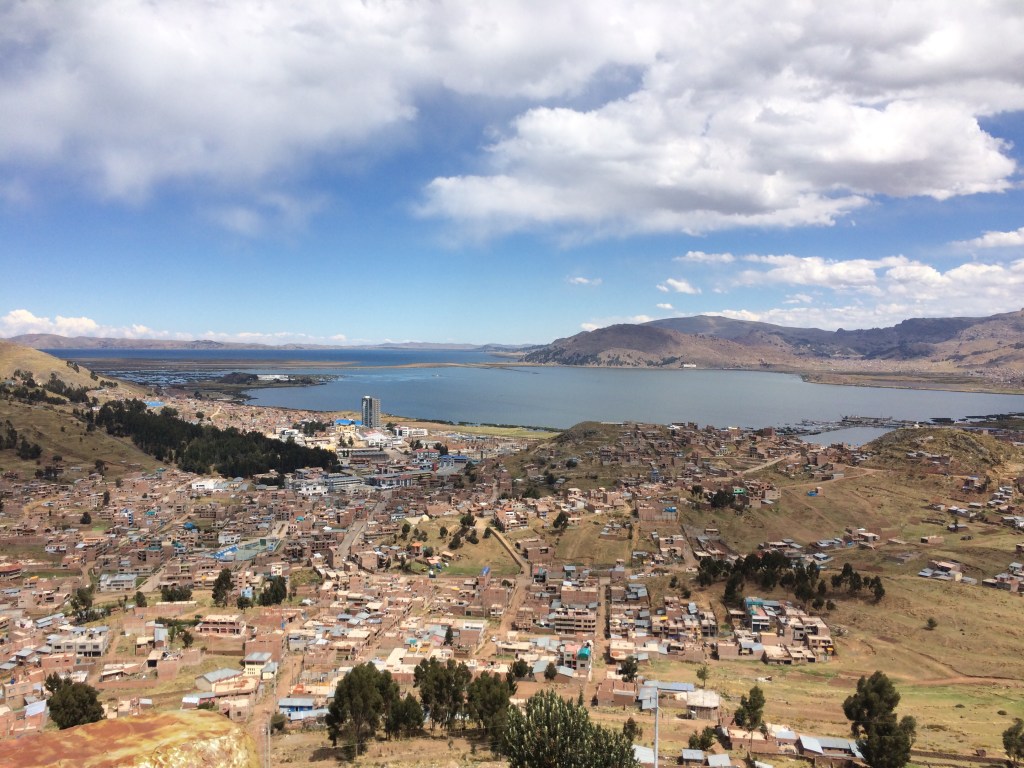
In the evening we met up as a group – there were 8 of us and we became a really close group – and went for our first dinner together. It wasn’t a late one as most of us were jet-lagged from travelling and we had an early start the next day to catch a flight inland to Juliaca. We arrived in Juliaca at altitude and travelled towards Lake Titicaca, the highest navigable lake in the world at over 12,000 feet above sea level, and the start of our acclimatisation ahead of the Inca Trail hike which would start in a few days.
Lake Titicaca
This was the first time I’d ever been at real altitude. Living in the UK doesn’t expose you to these heights, and whilst I’d done some exercise and preparation at home ahead of a 4 day hike, there was no way I could replicate the altitude. I was even more worried when we arrived at our hotel for a couple of days in Puno and got absolutely knackered walking up one flight of stairs!
We had a brief walk around Puno before dinner and drinks – though at this stage I was avoiding alcohol (unusual for me on holiday!) in preparation for our hike in a few days.
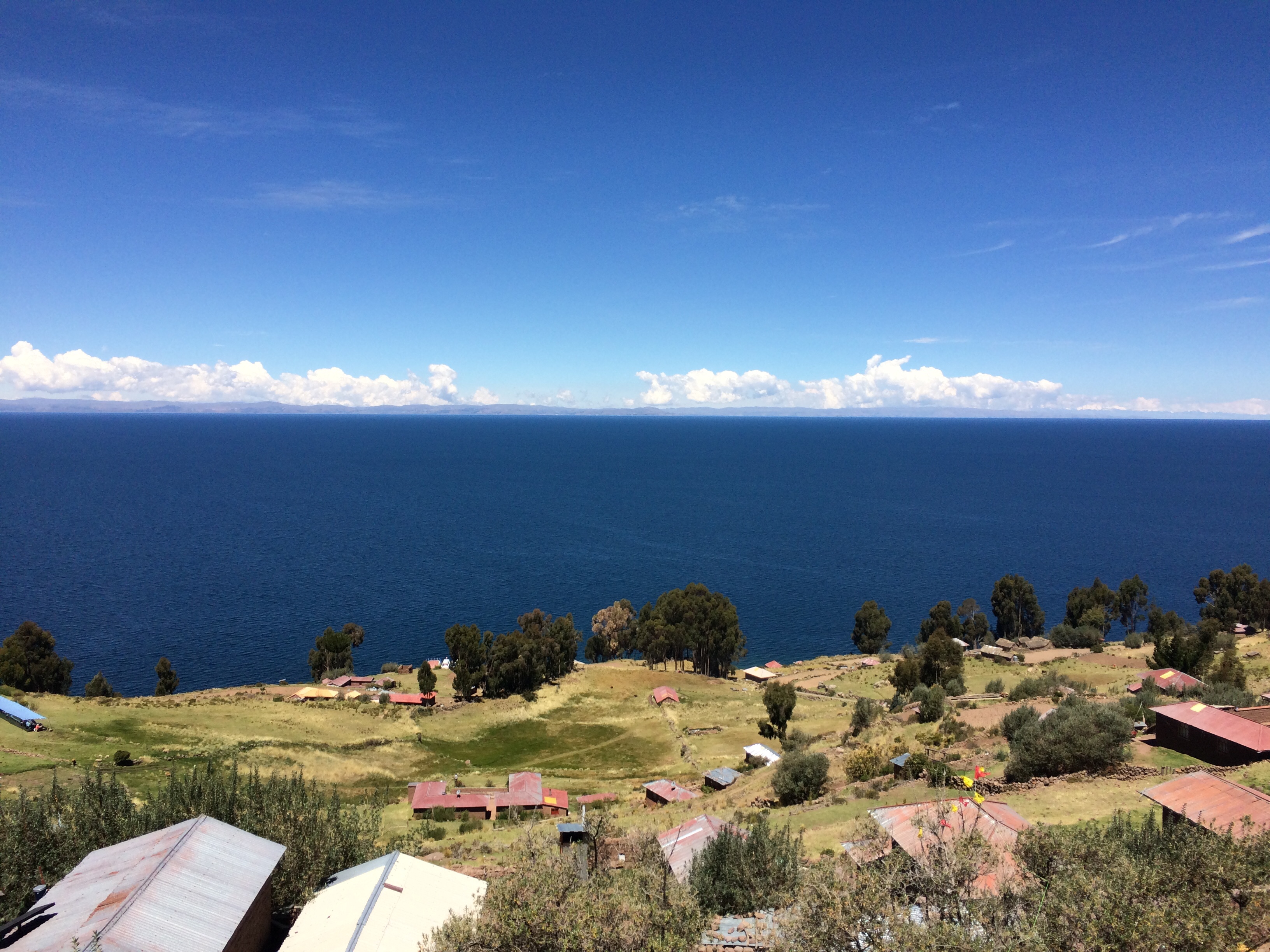
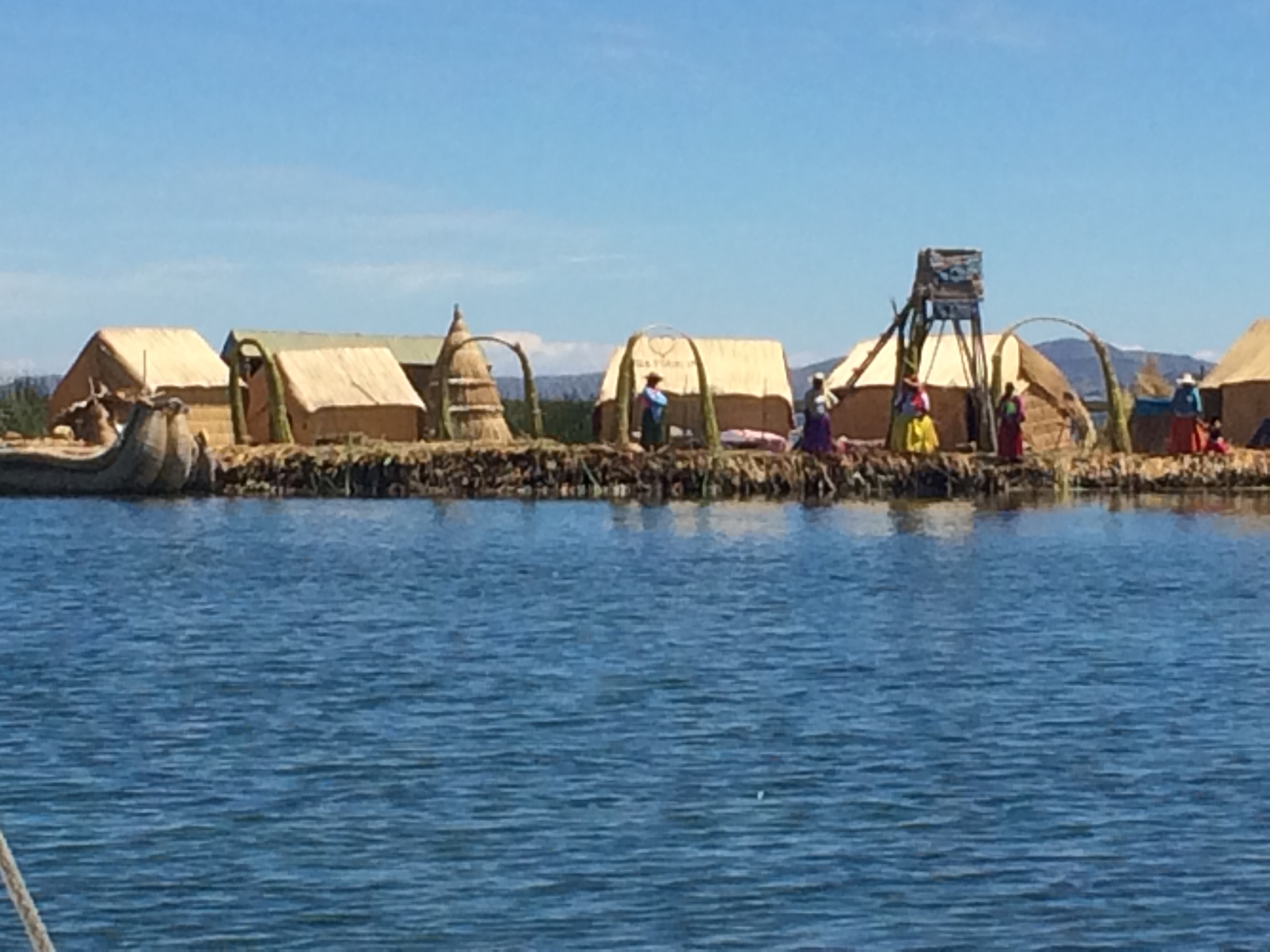
The next day we had a boat trip on Lake Titicaca and visited the Floating Islands of Uros on the lake, made of reeds, and people live here year-round. We had lunch on Taquile Island (grilled trout according to my diary!), and then in the afternoon and evening we were introduced to our homestay families where we would spend the night with local families, learning about their way of life and being welcomed into their homes. This was where it was advantageous to have learned some Spanish, though my roommate was way more fluent than I was. After a delicious dinner of quinoa soup, rice and vegetables, we turned in for the night. The next morning we helped the family with their daily farm chores (taking the sheep out to graze) and watched on as the mother soaked and prepared the quinoa (now a western health food, but a staple in Peru).
Taquile Island, the floating islands of Uros, sailing on Lake Titicaca
In the afternoon we sailed back across the lake and back to Puno for a final night before heading to Cusco on a local bus the next day. I was very impressed with the local bus – it was a double decker and we had lots of legroom and reclining seats. It was pretty much an all-day ride to Cusco, but it was super-interesting to watch the scenery go by. I had no idea what to expect from the landscape beforehand.
On the bus between Puno and Cusco
When we arrived into Cusco, the first thing we did was head to G Adventures’ hiking depot to get kitted out with sleeping bags, hiking poles and other kit for the Inca Trail hike. We would be leaving our main bags in storage at the hotel in Cusco as we’d be returning here in a few days.
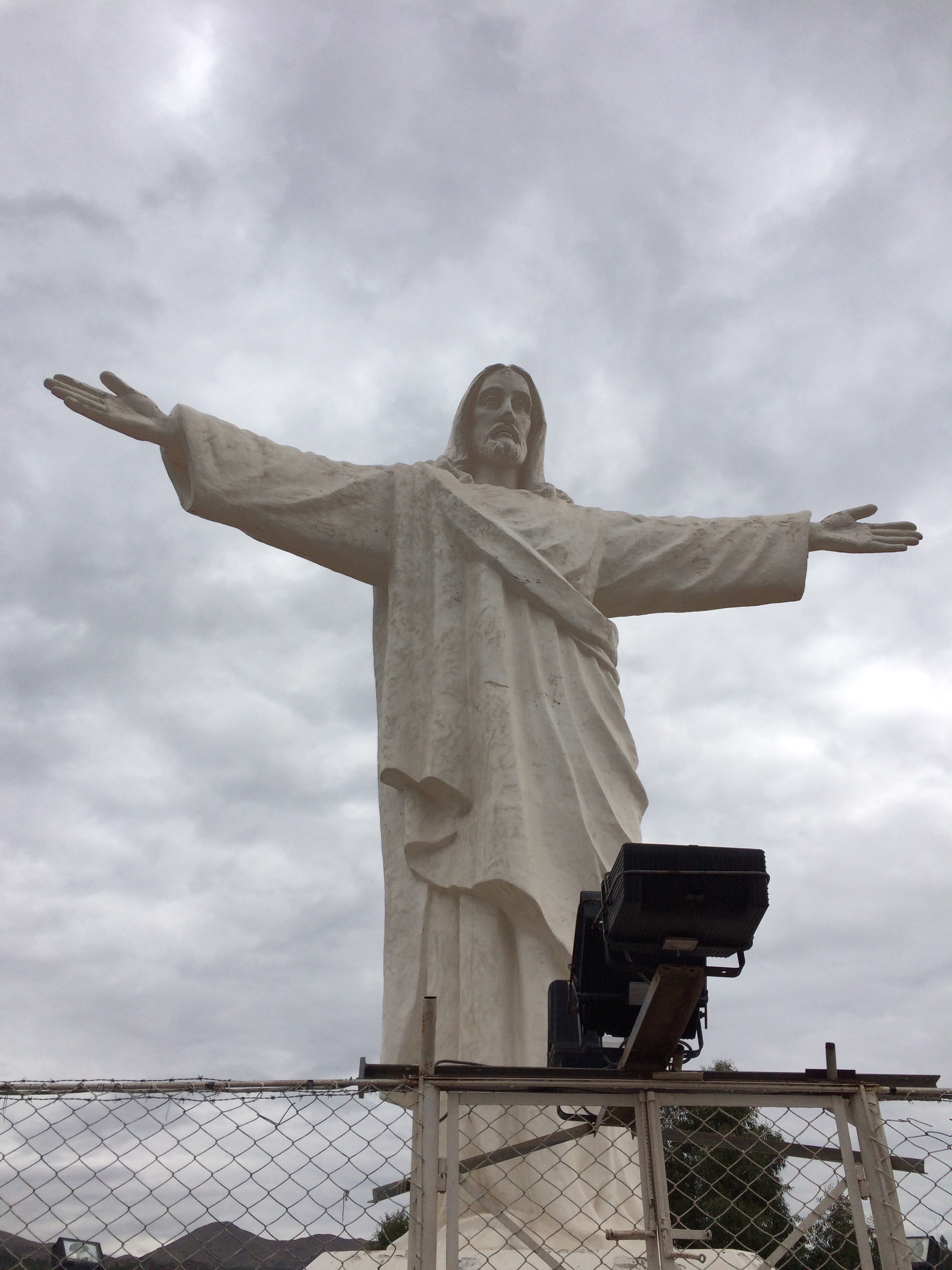
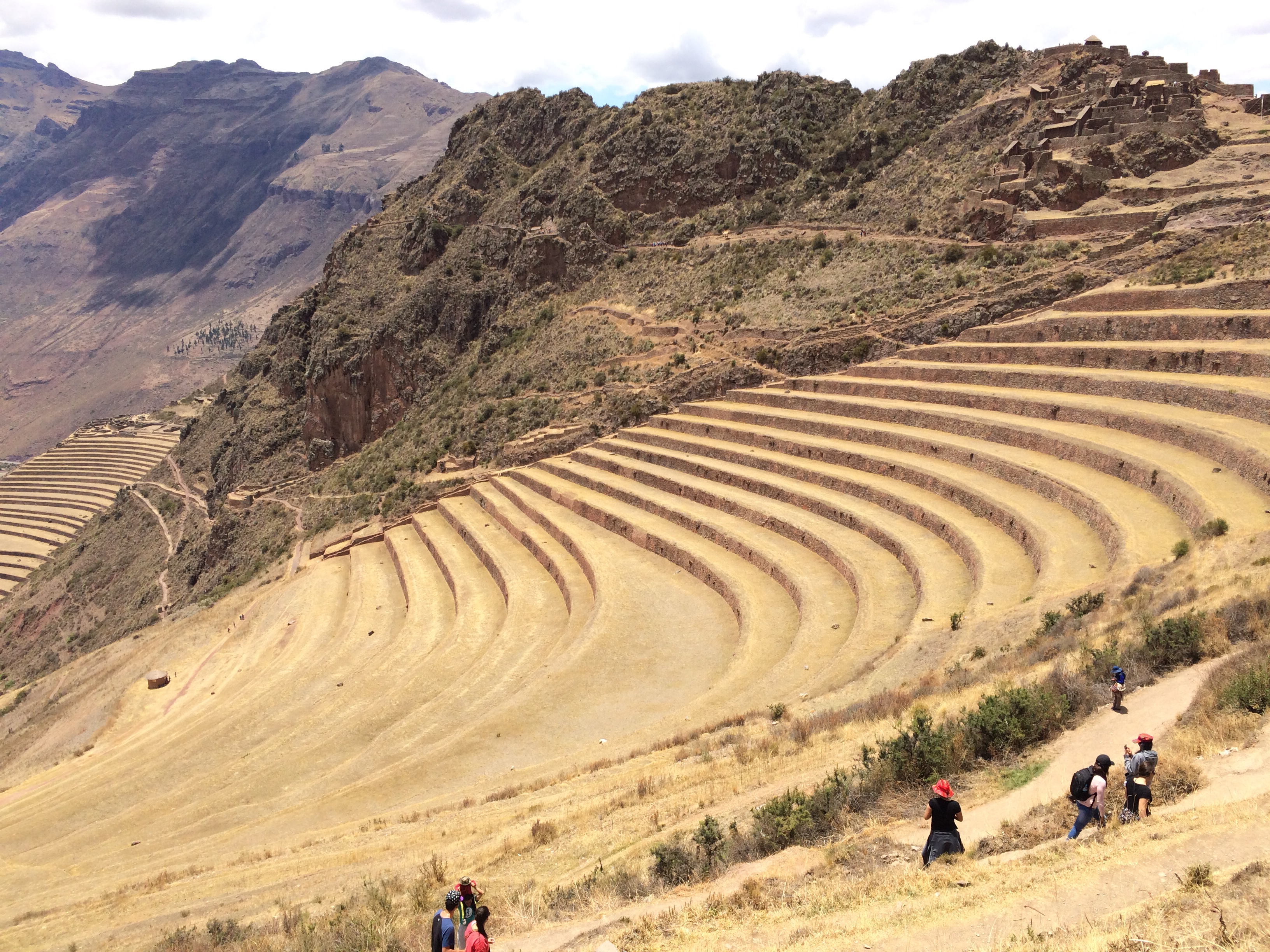
The next day on the way out of Cusco, we stopped at the Cristo Blanco statue high in the hills on the way out of Cusco. We were heading through the Sacred Valley and stopped off at various spots, including at a women’s weaving co-operative, at Pisac which has some great Incan terraces, and at a wonderful restaurant which is supported by G Adventures for some more delicious food.
Cristo Blanco outside Cusco; at the weaving co-operative; terraces as Pisac
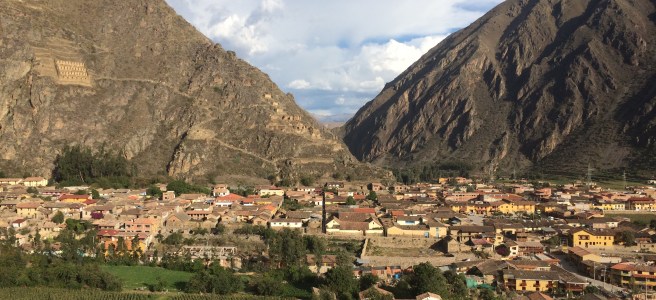
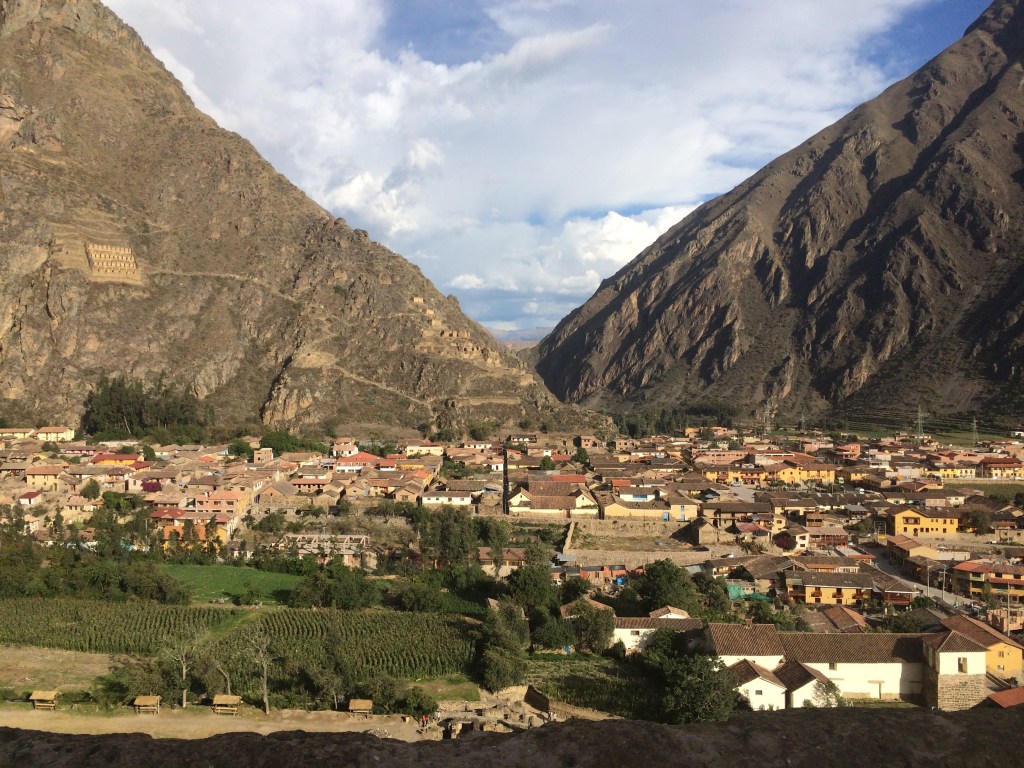
We ended the day in Ollantaytambo where we hiked briefly into the ruins – a spectacular view over the town and mountains from the ruins. After carbing up with a pasta dinner, it was an early night and an early start the next day to Kilometre 82 and the start of our 4 day hike to Machu Picchu. We got all our gear, met our porters who would be carrying food, tents, most of our stuff. We were also given snack packs to sustain us through the hike.
Ollantaytambo
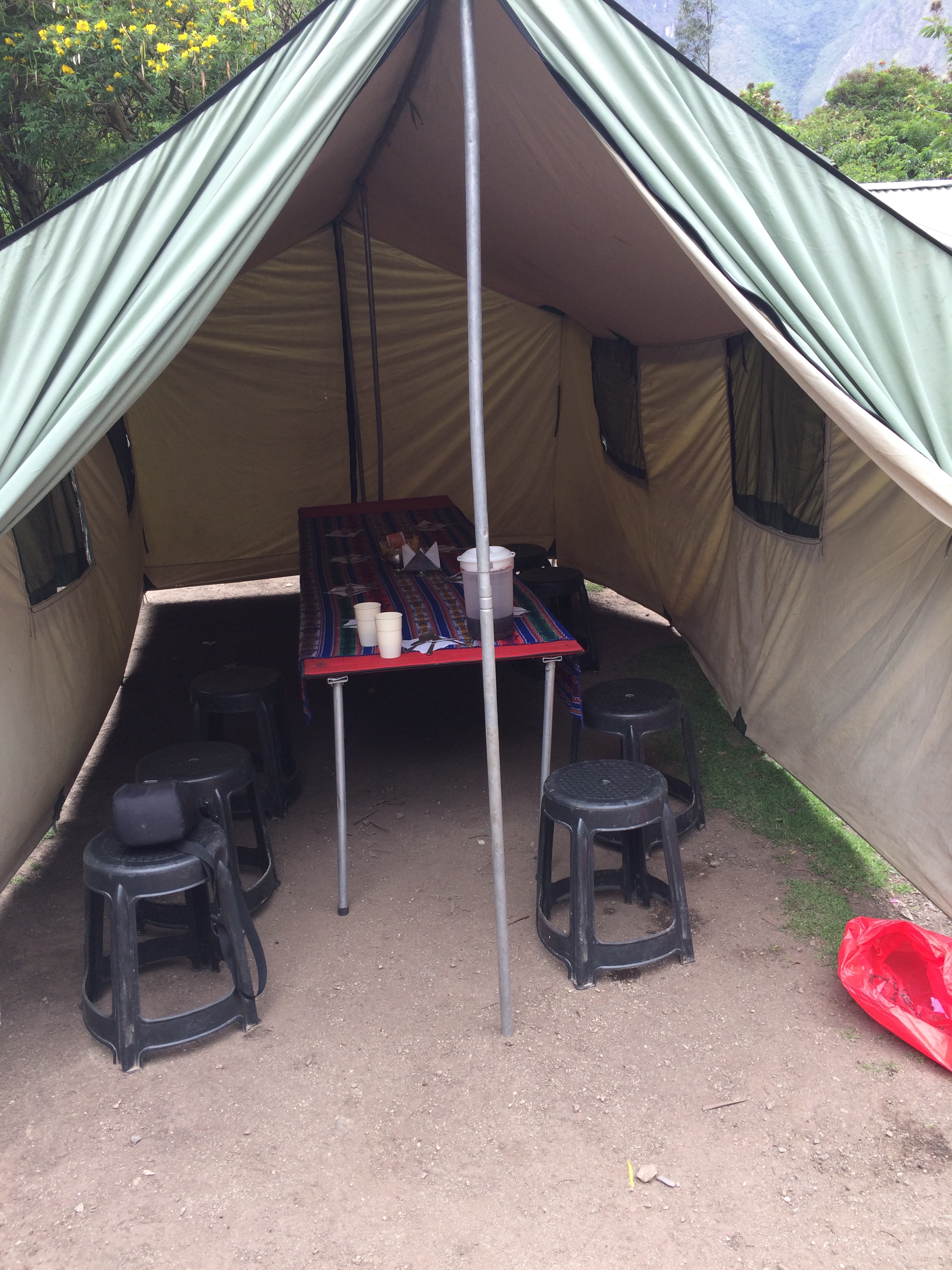
The first day of the hike is relatively gentle (certainly compared to what was to come on day 2), and it was absolutely beautiful. We also really lucked out with the weather. After a couple of hours we stopped for lunch. Again I had no real idea what to expect with the food but it was beyond anything I could have imagined – we had asparagus soup, fried trout, and jelly for dessert – all ideal for sustaining hiking, and the jelly was a very welcome surprise. At every meal stop we were also able to fill up with water which was obtained from nearby streams and boiled for sterilisation.
Hiking and our food tent
After lunch we headed off hiking again. You have to have a permit to hike the Inca Trail, which manages the numbers of people on there at any one time. This was arranged for me with the trip I’d booked. As you can imagine, this is a very popular hike so you would need to book well in advance. I’d booked this trip in February 2015 for a late November departure. We arrived into our first camp in the late afternoon. Our tents had already been set up by the porters so I took off my hiking boots and relaxed for a while before dinner.
Day 2 involved walking up hill for about 5 hours as we reached the highest point of the hike at Dead Woman’s Pass (13,800 feet above sea level). There were times during the hike uphill where I could only make it literally 10 steps before needing a break due to the thin air. And whilst munching on coca leaves helped slightly, it was still very hard, but very rewarding work.
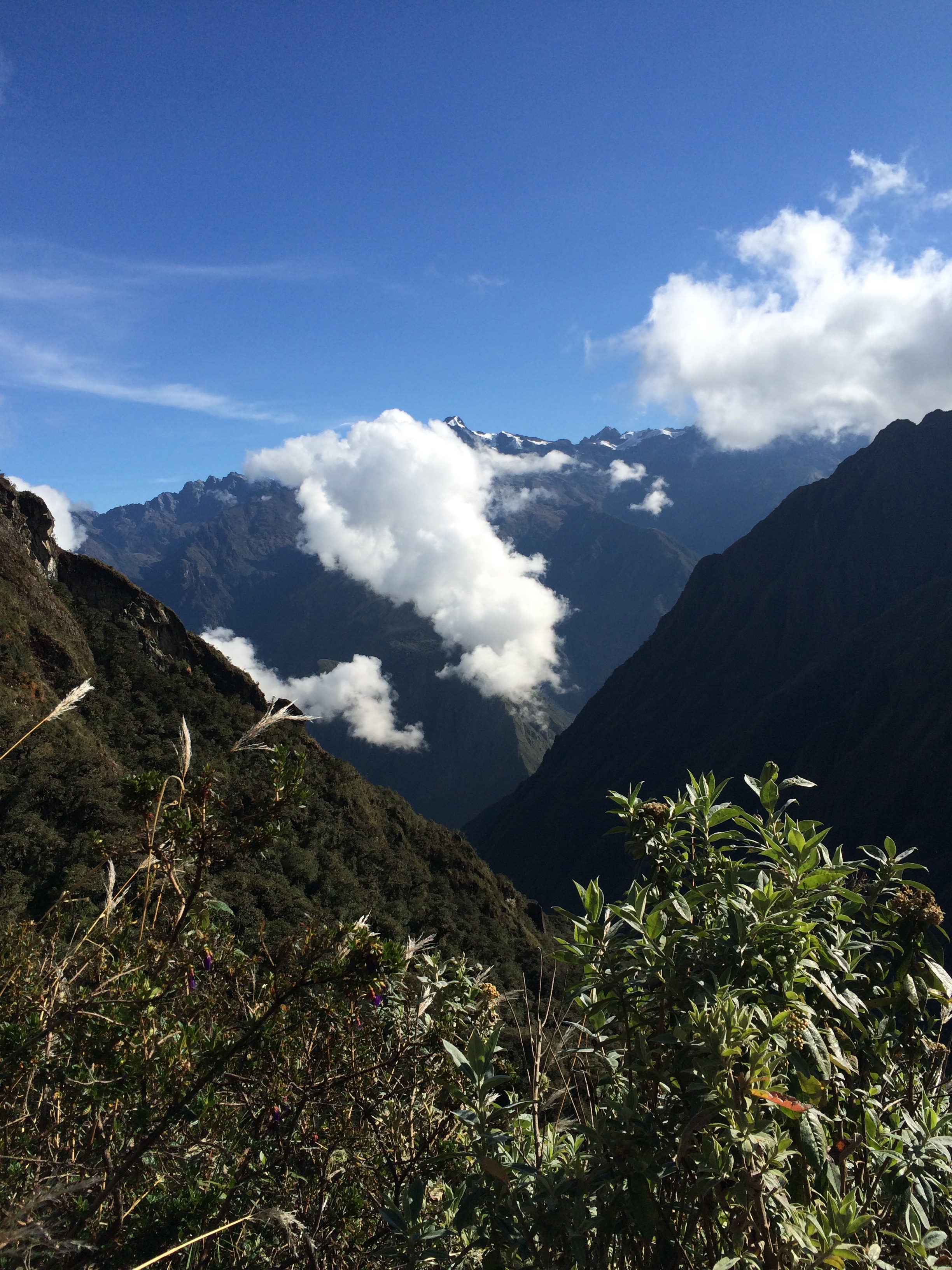
Looking back down the valley that we’d hiked up; exhausted at the top of Dead Woman’s Pass; hiking amongst the clouds
After a 3 hour walk downhill we arrived at the campsite for the second night where again our tents had already been erected and we were able to relax before another delicious and nourishing dinner. In the evenings we would sit out chatting and stargazing. It was approaching a full moon whilst we were there, you do get amazing views of the night sky here.
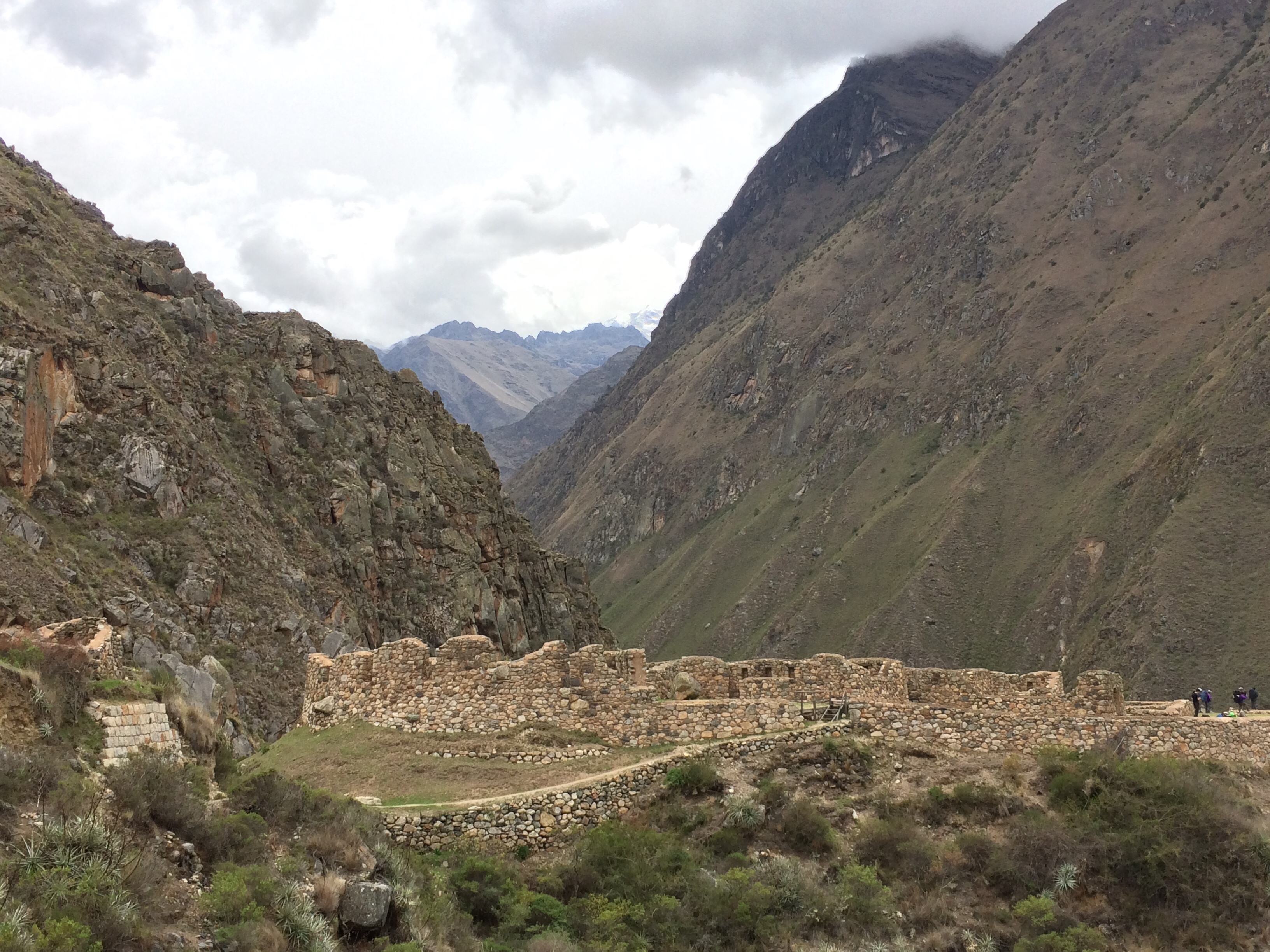
Day 3 was a long day of hiking – around 9 hours in total, but not quite as steep as day 2. We passed several Incan ruins which we were able to explore. We were also walking above the clouds at several points which was really awesome.
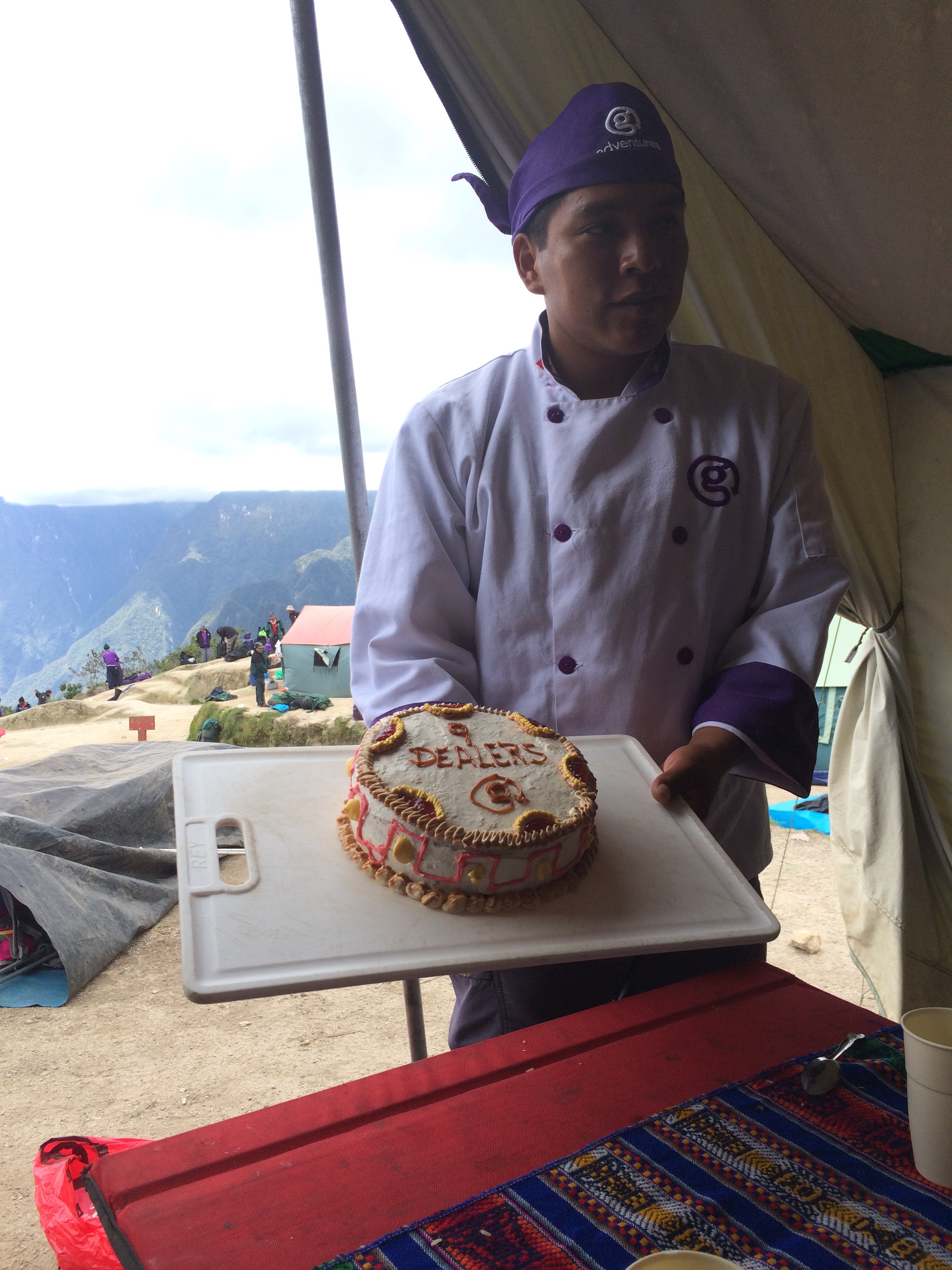
At lunch on day 3, our chefs had prepared a cake for us which was a huge surprise. the porters are truly amazing people who do this trip several times a month.
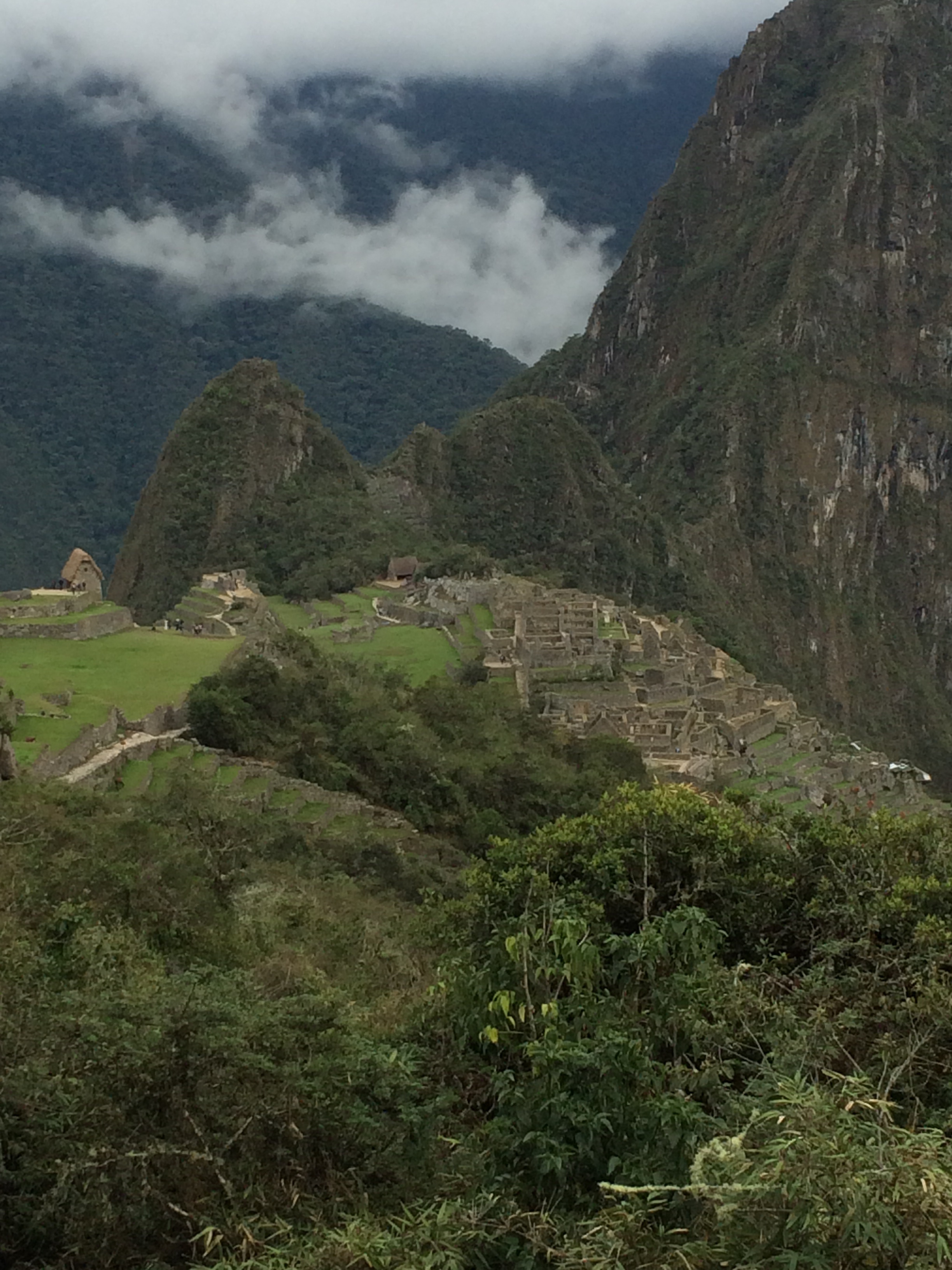
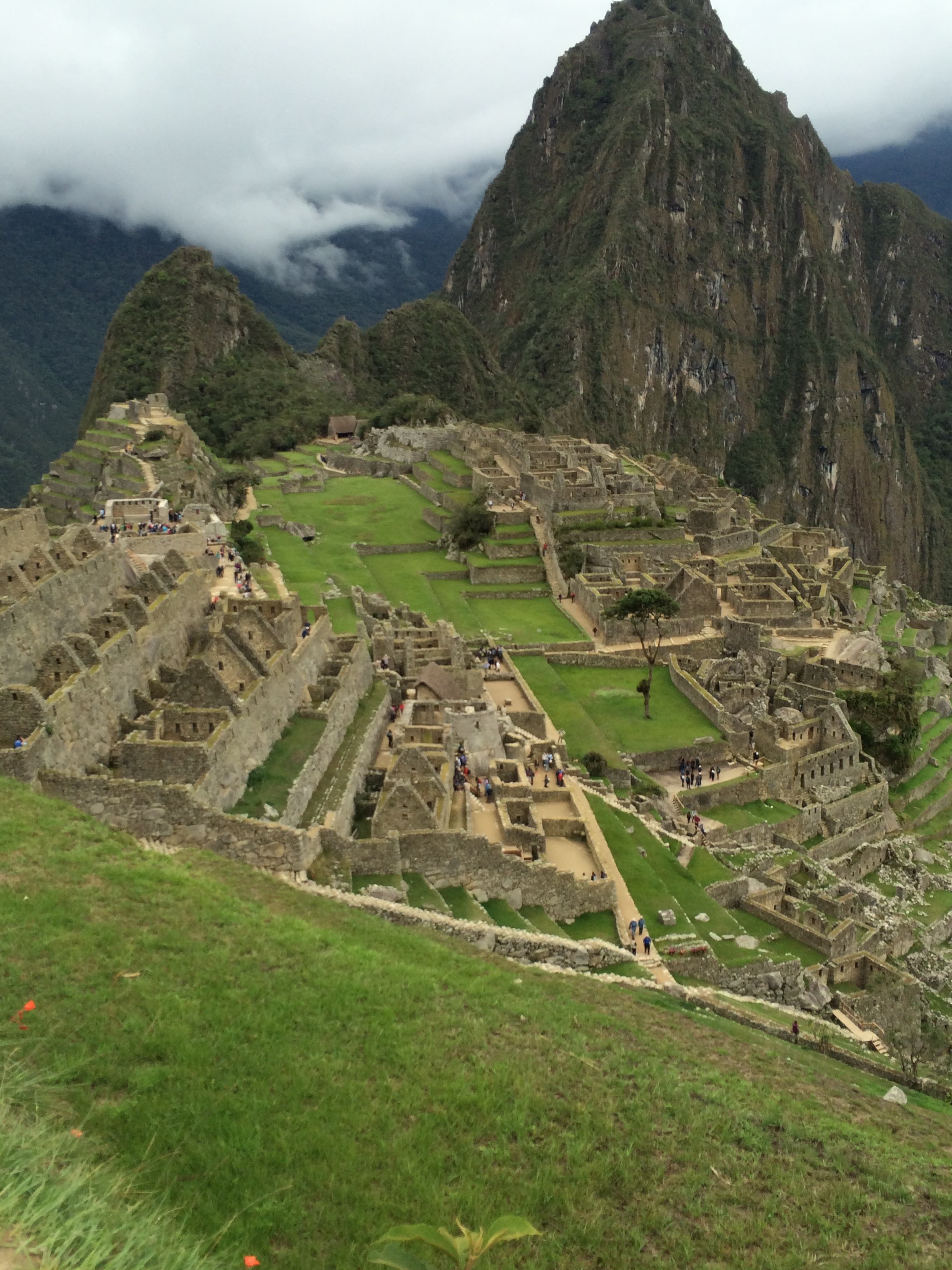
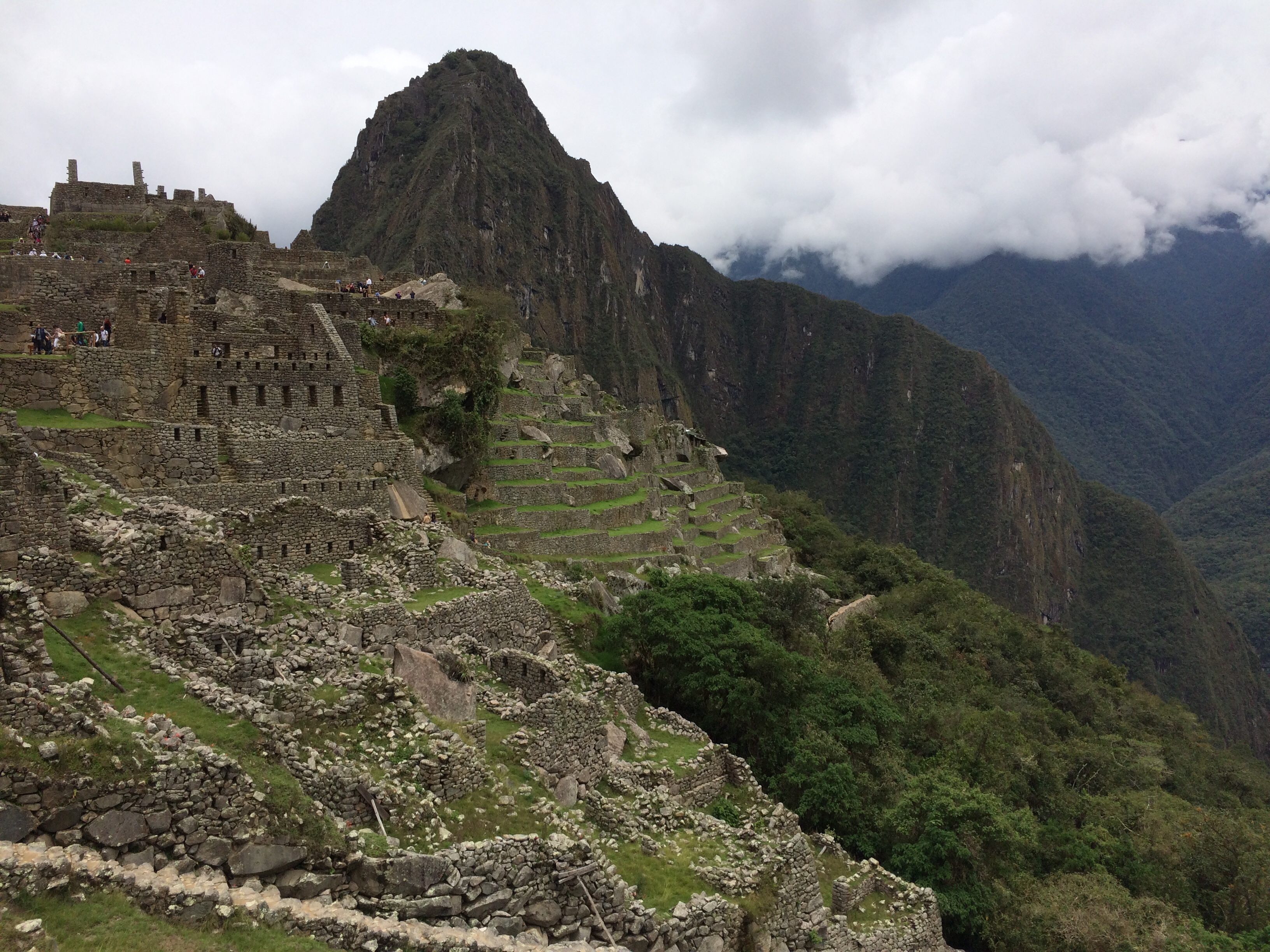
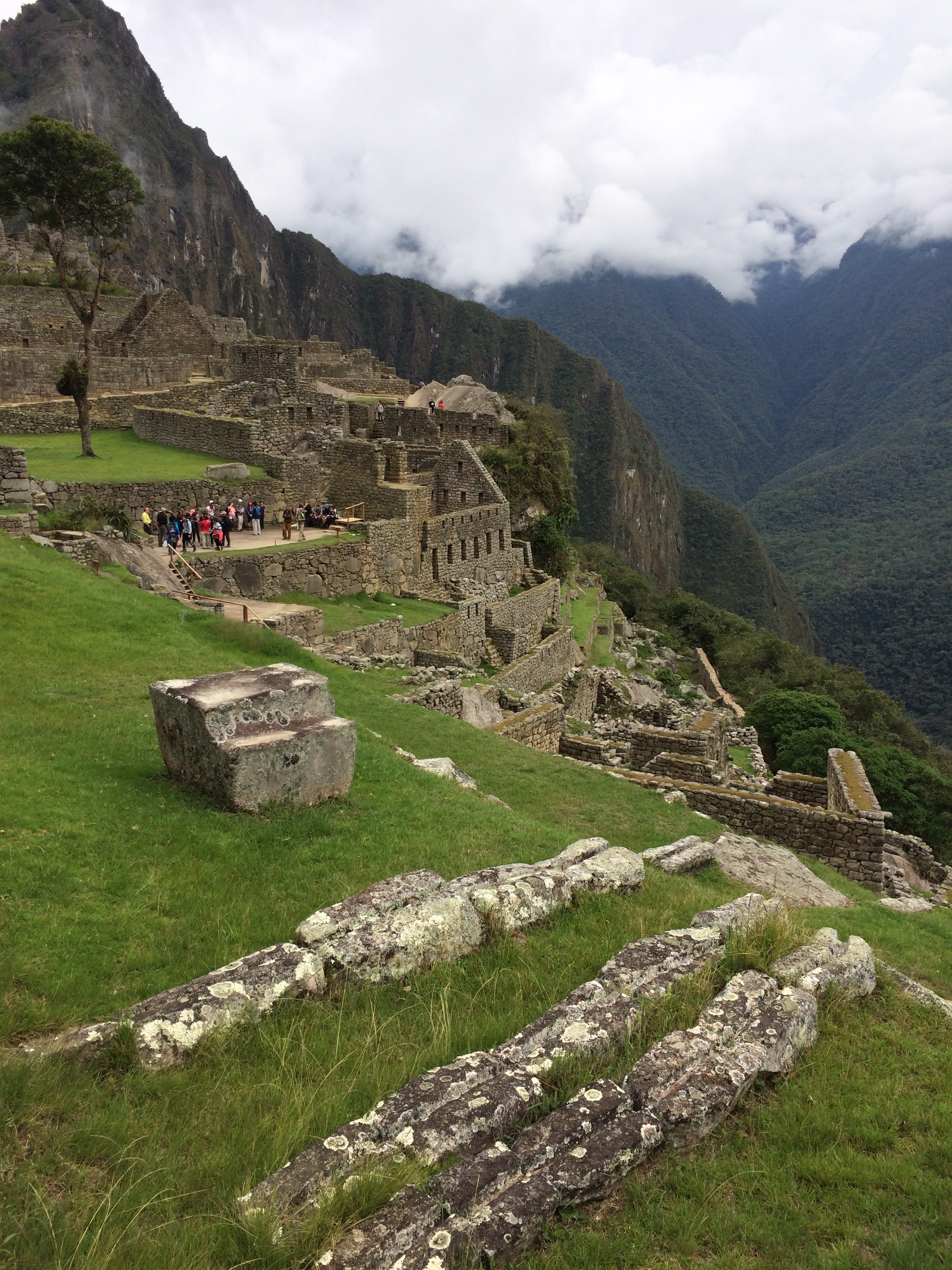
After an early night on day 3, it was an early morning for the final 5km into Machu Picchu. We were woken at 3.30am and headed out in the dark at around 5.30am. After climbing up a near-vertical wall, we arrived at the Sun Gate at around 7am and after getting down to the main citadel, we almost had the place to ourselves as only the early day-trippers from Aguas Calientes were arriving.
A cake for lunch; first view from the Sun Gate; Machu Picchu
After reuniting with others in the group who didn’t do the Inca Trail hike, we briefly freshened up in the bathrooms (actual flushing toilets after a couple of days of squats and holes in the ground) and then had a guided tour of Machu Picchu. It’s so awesome to walk amongst the ruins, and large parts of it are very well preserved.
After the tour, we took the bus down the winding road to the town of Aguas Calientes where we had lunch, wifi and a well-deserved beer before heading on the panoramic train back to Ollantaytambo, and then a bus back to Cusco.
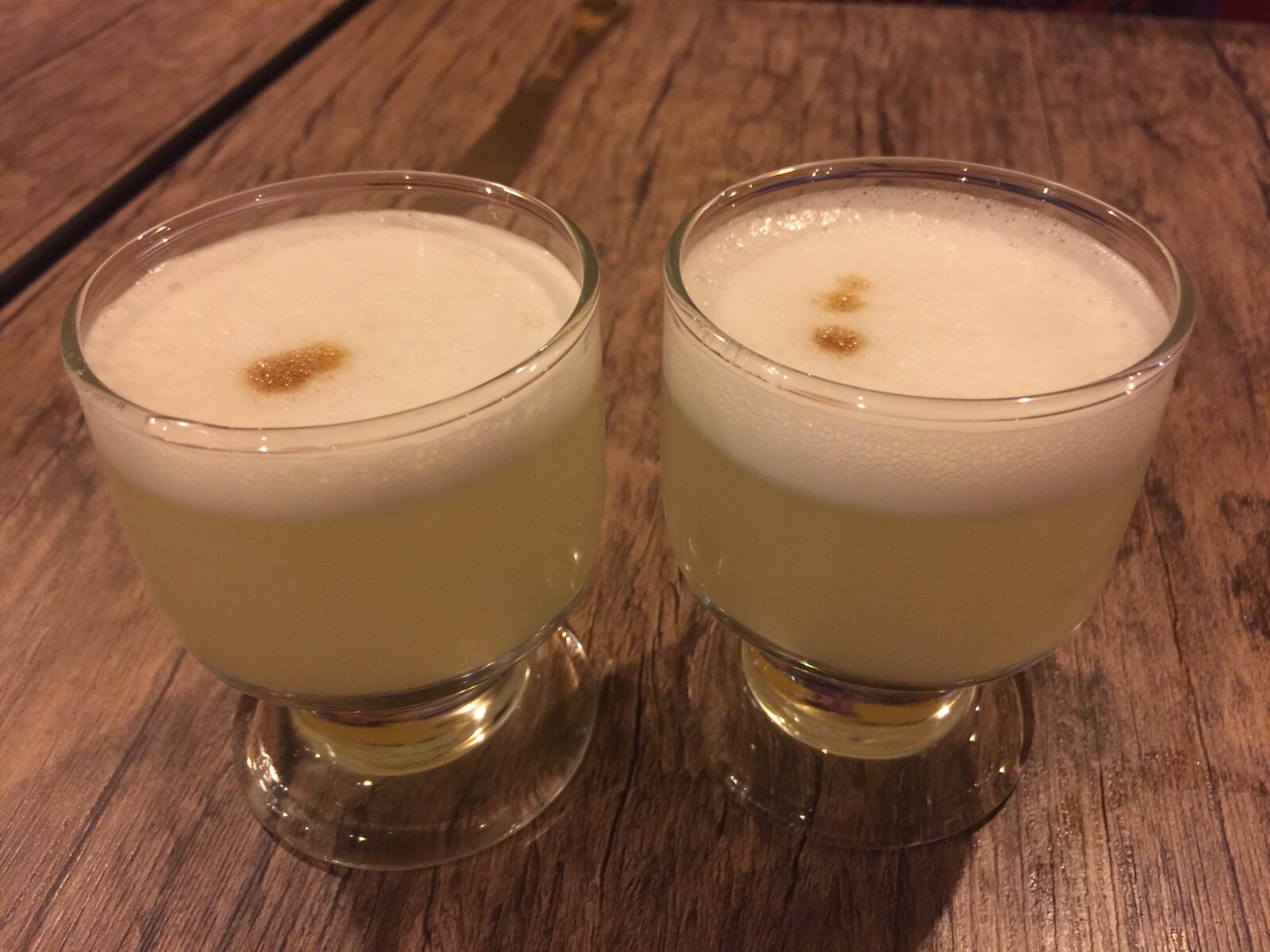
Back in Cusco I had the longest shower I was able to take in the intermittently hot/cold/dribble/gush of the shower head, as is usual in Peru. We then headed out for a celebratory dinner and Pisco Sours in Cusco. Definitely a night to let your hair down and celebrate a great hike.
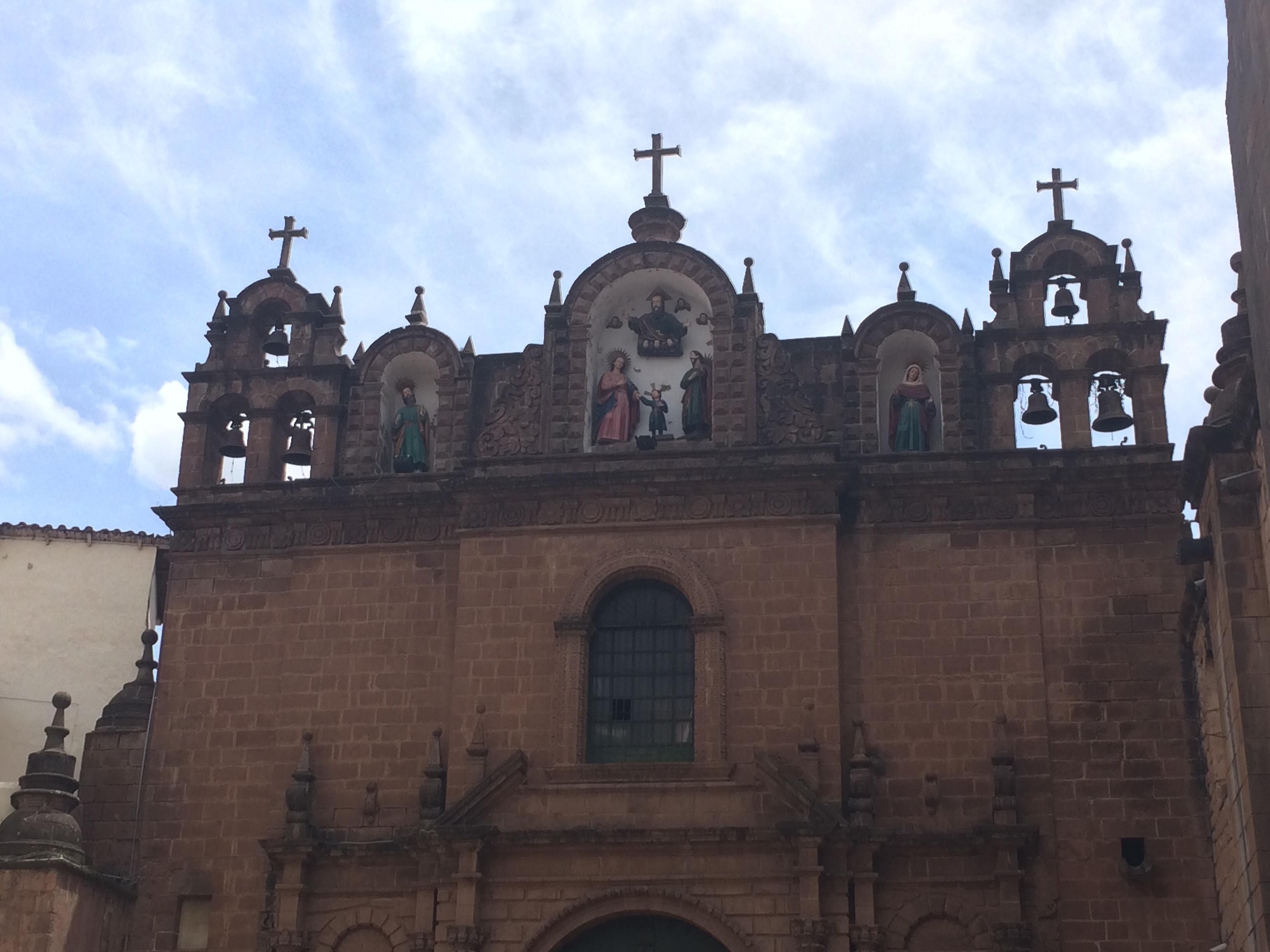
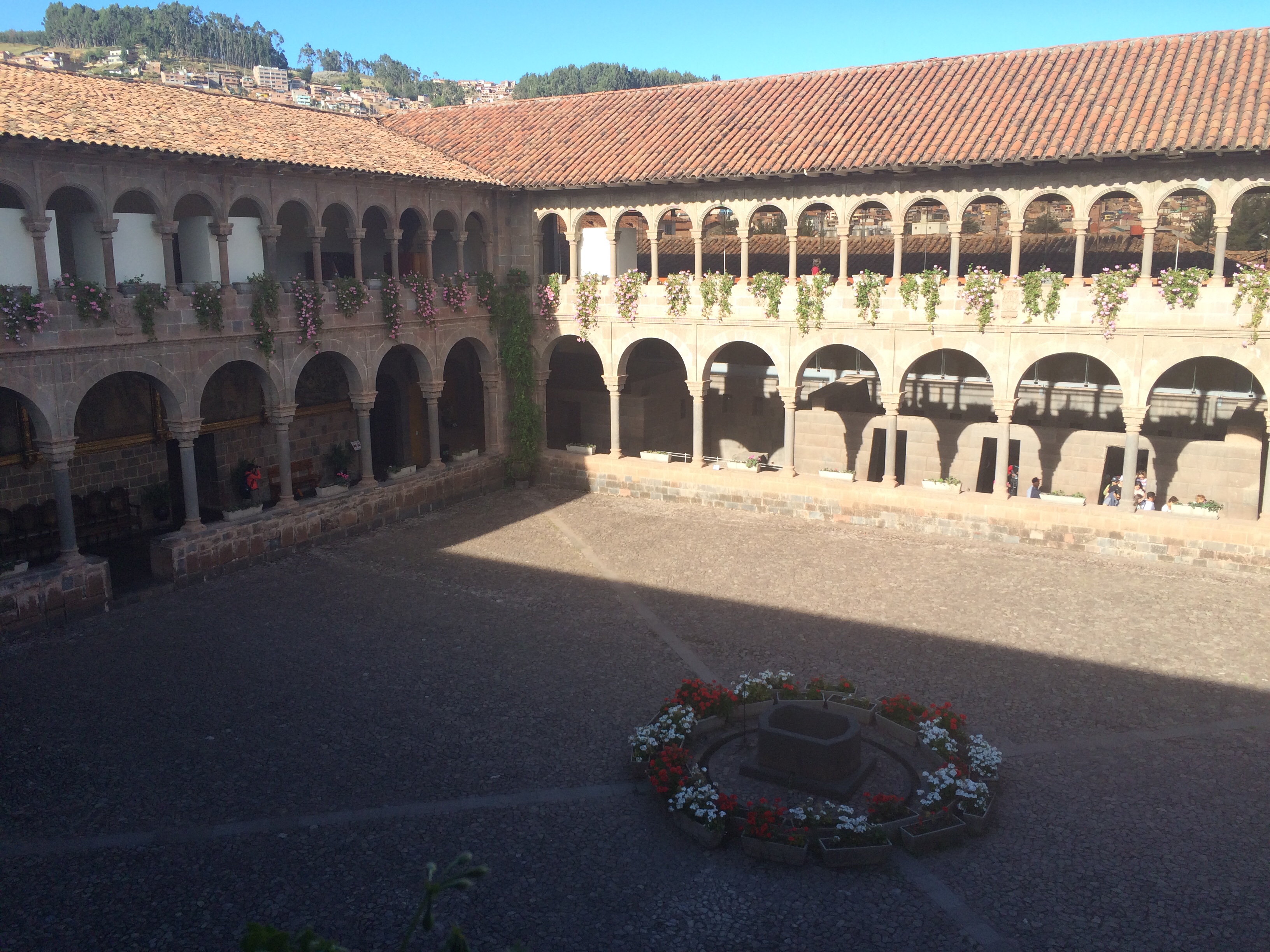
The final part of the trip had meant to be a trip into the rainforest. However at the time of our trip there was some unrest in Puerto Maldonado and so we ended up staying in Cusco for a couple of extra days. Cusco has a lot of history, a lovely cathedral, and we enjoyed a cooking class including sampling the Peruvian delicacy of ceviche (cured raw fish).
Sights of Cusco and Pisco Sours
We flew back to Lima for a final night before I flew home to a rainy UK (sans my bag which eventually made it a couple of days later). This was one of my favourite trips for many reasons. My first real time in a different culture, the food was so delicious (I think Peru and Vietnam are tied first in my favourite food experiences), the scenery was epic, the people on my trip were so lovely and to have the opportunity to hike the Inca Trail is something I will never forget.
It’s actually over 3 years since I went to Vietnam, better late than never in writing up about it! This trip was March 2017.
I had a direct flight from London to Hanoi with Vietnam Airlines, an extremely reasonable flight price of around £450 return if I remember rightly. After a 12+ hour flight, I landed at 4.30am local time, and after swiftly clearing immigration (British citizens didn’t – at time of travel – require a visa for stays under 15 days) I had quite a long wait for my bag as it was basically the last one round the carousel – always a slightly worrying time! I’d arranged a transfer to my hotel in central Hanoi, and after arriving at the hotel at around 6.30am I took myself off to bed. Top tip, especially when travelling somewhere where accommodation is cheap by western standards – if you are arriving somewhere first thing in the morning, book a hotel room for the previous night so you can check in and either get some kip for a few hours, or freshen up before you start exploring. The hotel I was staying in was approx £30 per night which was worth every penny to be able to crash for a few hours.
As it turned out, I was absolutely knackered, the product of being in a job I didn’t enjoy (part of the reason I’d gone on sabbatical the year before), and at the time I’d actually just been successful in interviewing for another job in the same company which I would start shortly after returning from this trip. Much less stress and a better work/life balance, but that isn’t the topic of this blog, and as such I pretty much slept through the entire day. Fortunately I’d arrived a day early to join the trip so I didn’t miss out on that much, and it gave my body clock a chance to adjust.
After a long sleep, I awoke refreshed on the second day and after breakfasting in the hotel, I set off exploring Hanoi. One thing I had been warned about prior to this trip was that attempting to cross the street in Hanoi would be an interesting experience, certainly if you waited as you would in the U.K. for a break in the traffic, I’d still be stuck on the wrong side of the street now! It is a little unnerving basically having to walk out into traffic but, unbelievably, it works. Most people in Vietnam ride scooters as the taxes on (usually imported) cars are prohibitively expensive, and they are used to adjusting their speeds for pedestrians. After building up confidence to cross the street, I made my way to Hoan Kiam Lake and walked around it, enjoying the early morning sights including the locals enjoying some early morning yoga/meditation along the shores.
Hoan Kiam Lake, Hanoi
After some more wandering to a temple and to the market, I headed back to my hotel for some much needed air-con. After a short break from the heat, I ventured back outside and grabbed lunch – a delicious Bánh Mì from Banh Mi 25, one of the top-rated places for Bánh Mì in Hanoi. Bánh Mì are a delicious fusion sandwich, a baguette-style bread roll filled with pate, grilled meat, cucumber and pickled veg, and an absolute bargain with a Bánh Mì and bottle of water costing the equivalent of 75p!
In the afternoon I walked to the Ho Chi Minh mausoleum complex and around the botanical gardens before retreating back to the hotel. In the evening I met the rest of the group (a G Adventures trip) and we headed out for dinner.
An early start the next morning as we headed to Halong Bay. It was a 4 hour drive punctuated by a stop at a project which creates employment for disabled people by teaching them crafts and needlework which is then sold. A very interesting idea.
We arrived at Halong Bay and boarded our overnight junk boat in time for lunch. As we set sail through the bay, the limestone karsts that we passed through reminded me a little bit of Milford Sound. I’ve since also been to Khao Sok in Thailand which was very reminiscent of Halong Bay. We sailed through the bay in the afternoon, stopping off in a couple of places including Ti Top Island where we climbed up 400 steps to take in the views.
Halong Bay
We had dinner on the boat, all freshly made on board and plate after plate of delicious food was served up. After enjoying the stars with a couple of drinks, I retreated to bed. Another early start the following morning with breakfast at 7am before we visited a Sung Sot Cave, the largest cave in Halong Bay, which had this amazing, wave-like ceiling.
Sung Sot Cave, Halong Bay
We then headed back to land and late morning got off the boat and headed on the 4 hour journey back to Hanoi. We were taking the overnight train south to Hue but had a few hours spare before then, so I went on a street food tour. If you haven’t already gathered, I absolutely loved the food in Vietnam. I think it’s the best food I’ve had anywhere, and certainly the cheapest. We wandered the streets of Hanoi, sampling lots of delicious food before ending up in Hanoi Food Culture where we had the Vietnamese speciality of egg coffee (or egg chocolate in my case as I’m not a coffee drinker)
Egg chocolate – an alternate version of the Vietnamese speciality egg coffee
We boarded the train in the evening, around 9pm. We were travelling in first class which comprised of 4-berth bunks with shared toilets/squats at the ends of the carriages. Second class was 6-berth bunks, followed by soft seats and hard seats (as you might recall from the Top Gear Vietnam special). I took a top bunk. The journey itself was very loud and the train was very shaky, and I don’t remember sleeping too much. The overnight train I’ve since been on in Thailand was a much more comfortable ride.
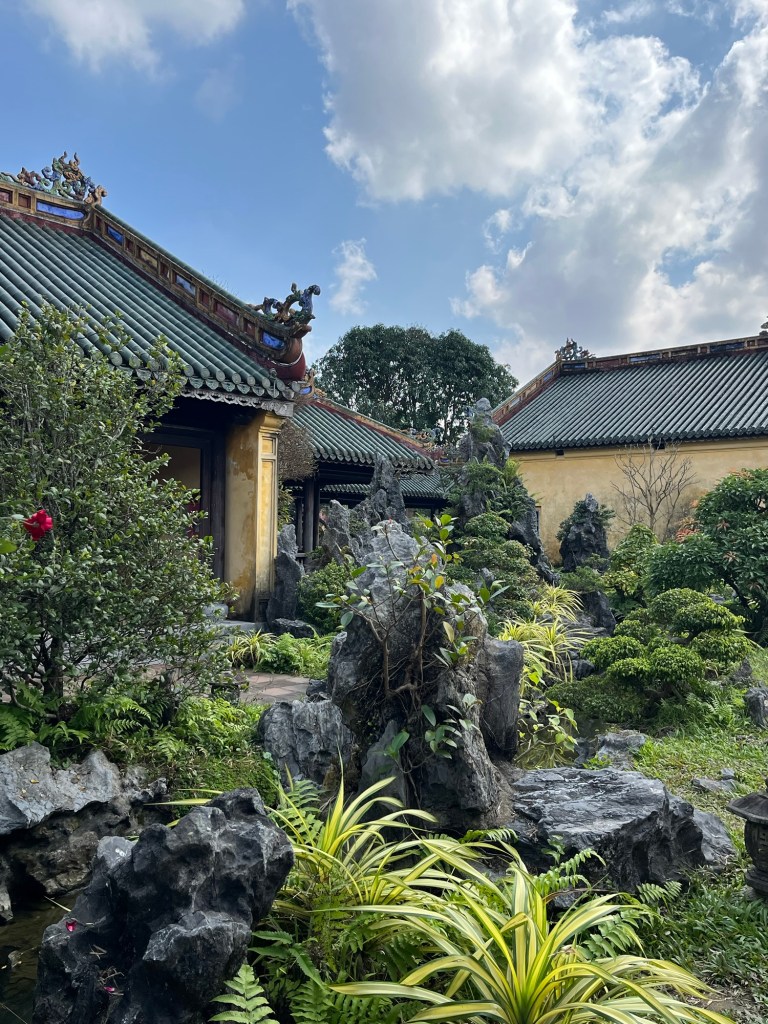
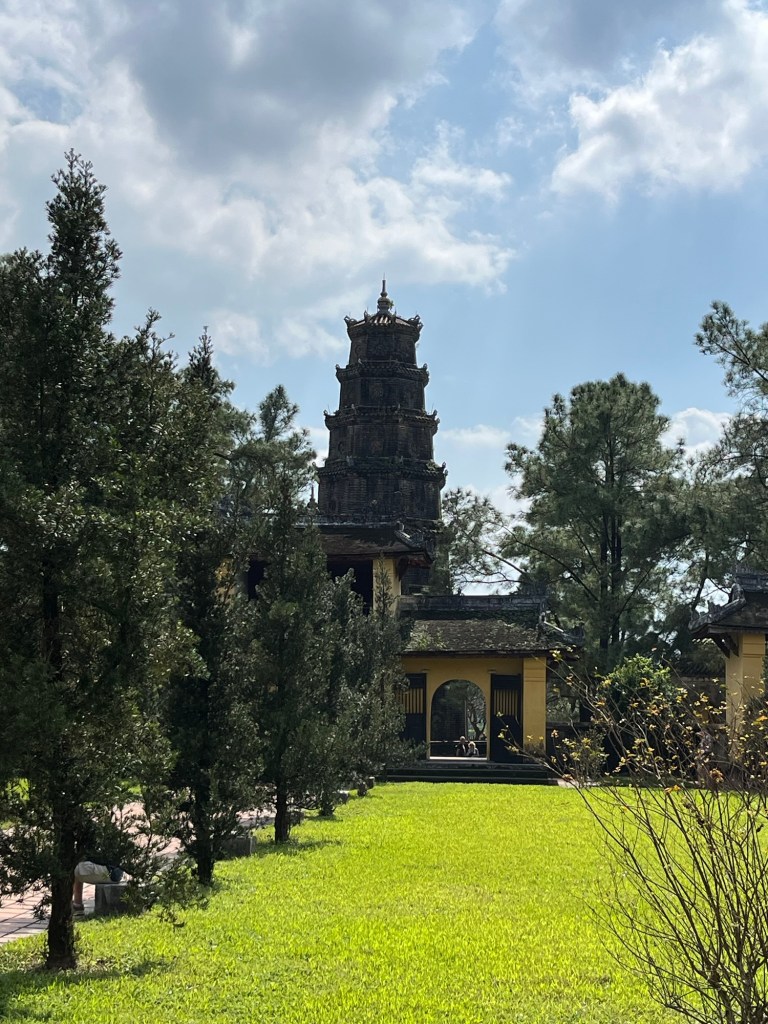
We arrived in Hue at 10.30am the next morning. It was noticeably hotter and more humid. Despite arriving early, we were able to check in to our hotel where I promptly showered before heading out for a quick wander before we went on our included trips in the afternoon. I ventured for a walk along the Perfume River before retreating to the air con ahead of our afternoon tours. Firstly we went to the Tien Mu Pagoda:
Tien Mu Pagoda, Hue
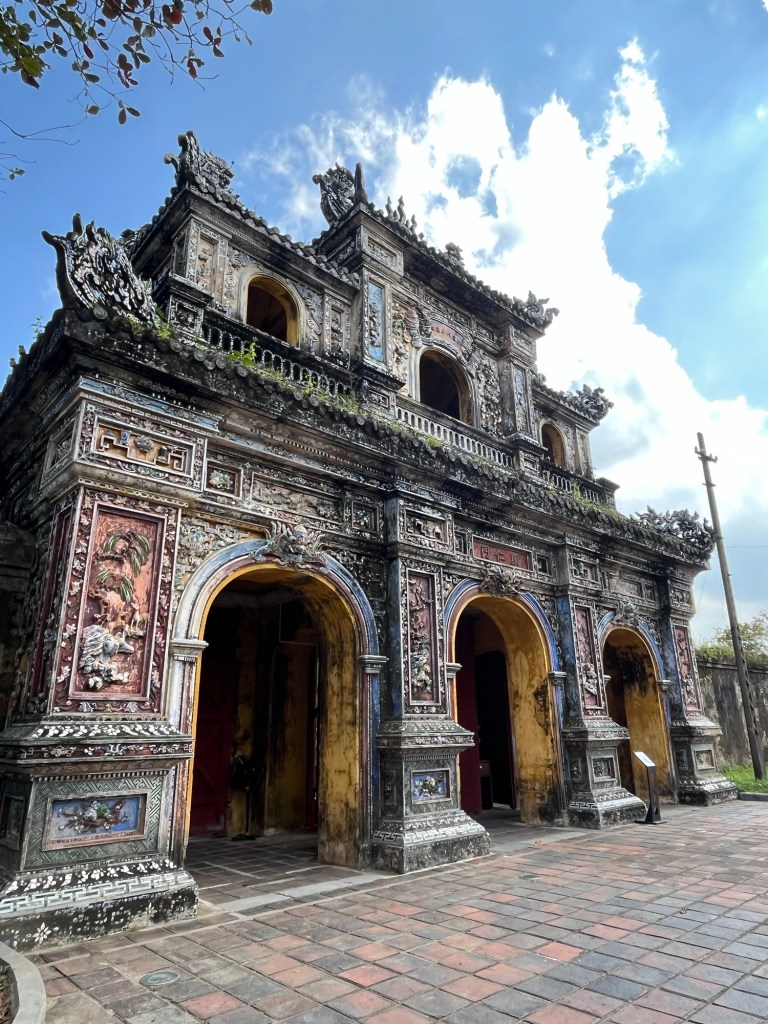
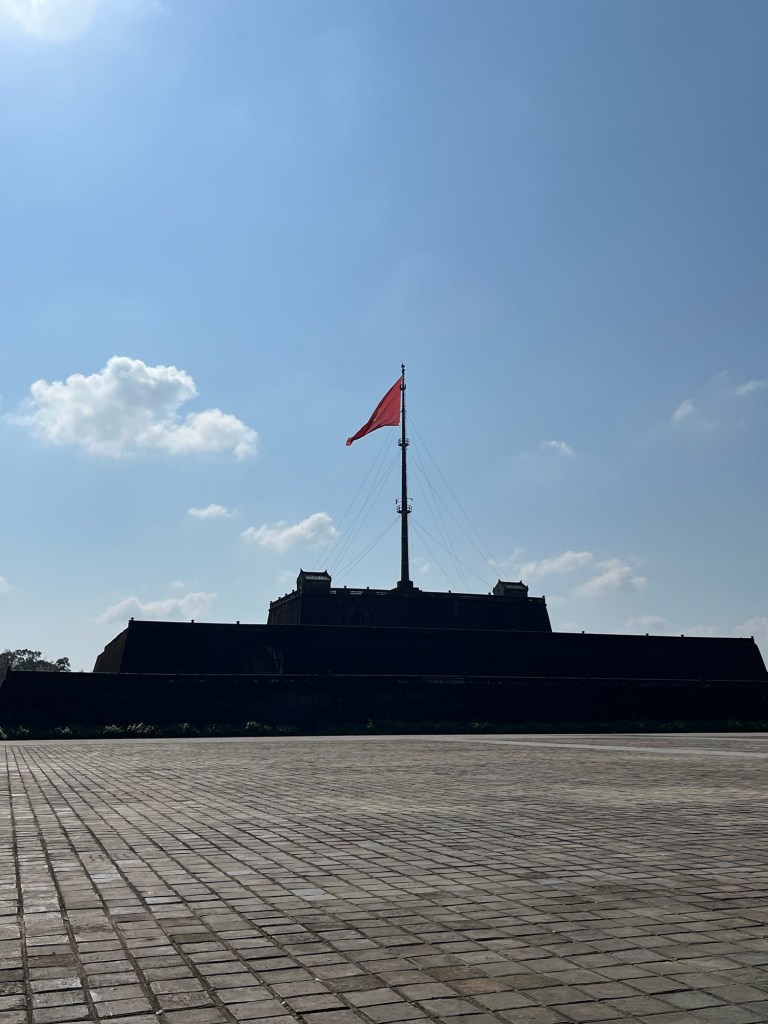
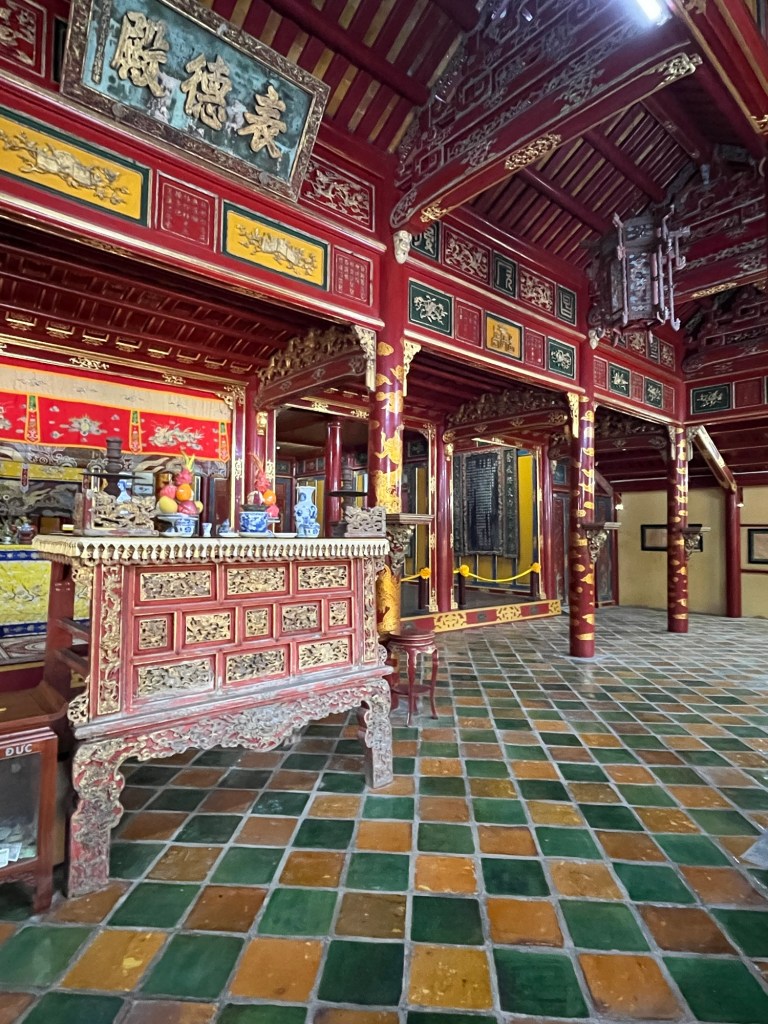
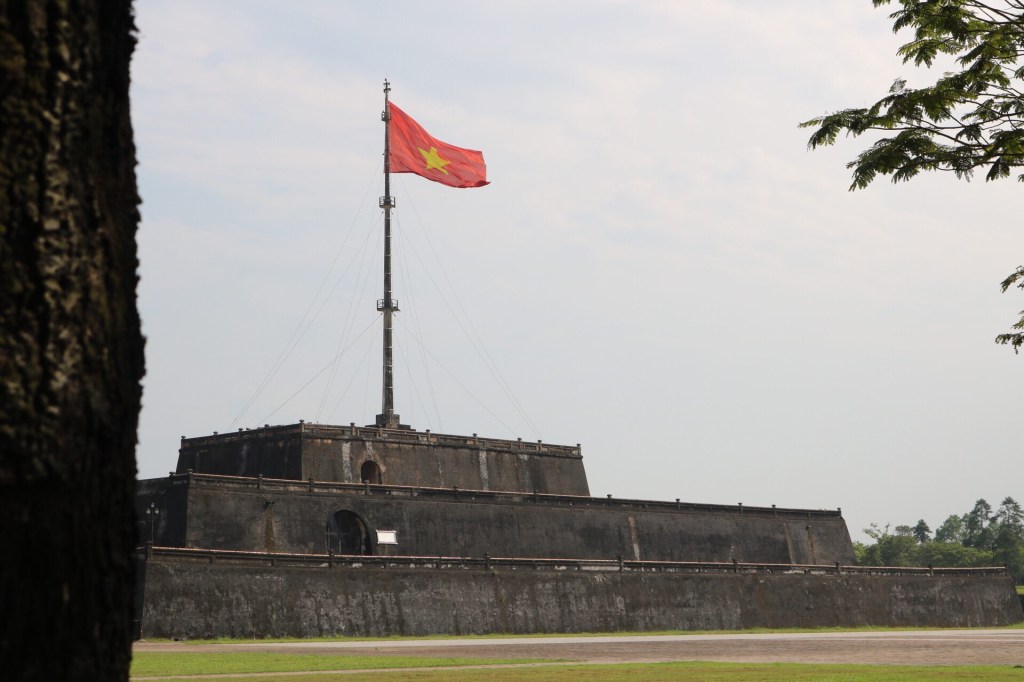
We then went to the main attraction in Hue, the Imperial Citadel. An imposing collection of buildings, and much, much larger than I imagined. The citadel was built in the early 1800s and was targeted during the Vietnam War. You can see the bullet holes from the Vietnam War in some of the walls.
Imperial citadel, Hue
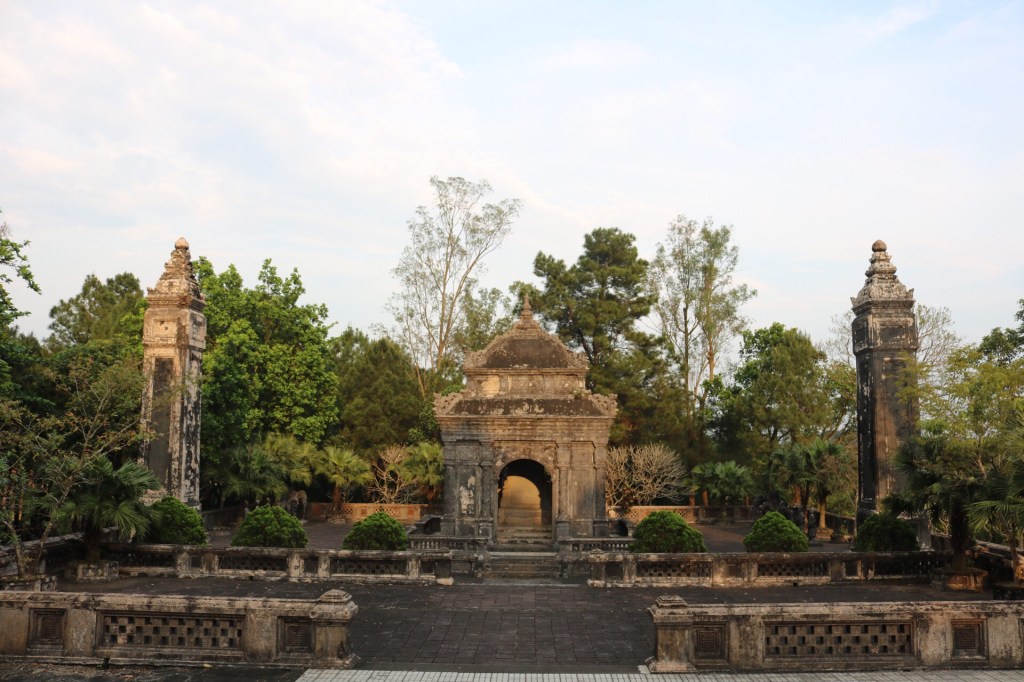
We also squeezed in a visit to the Royal Tombs on an busy sightseeing afternoon.
At the Royal Tombs, Hue
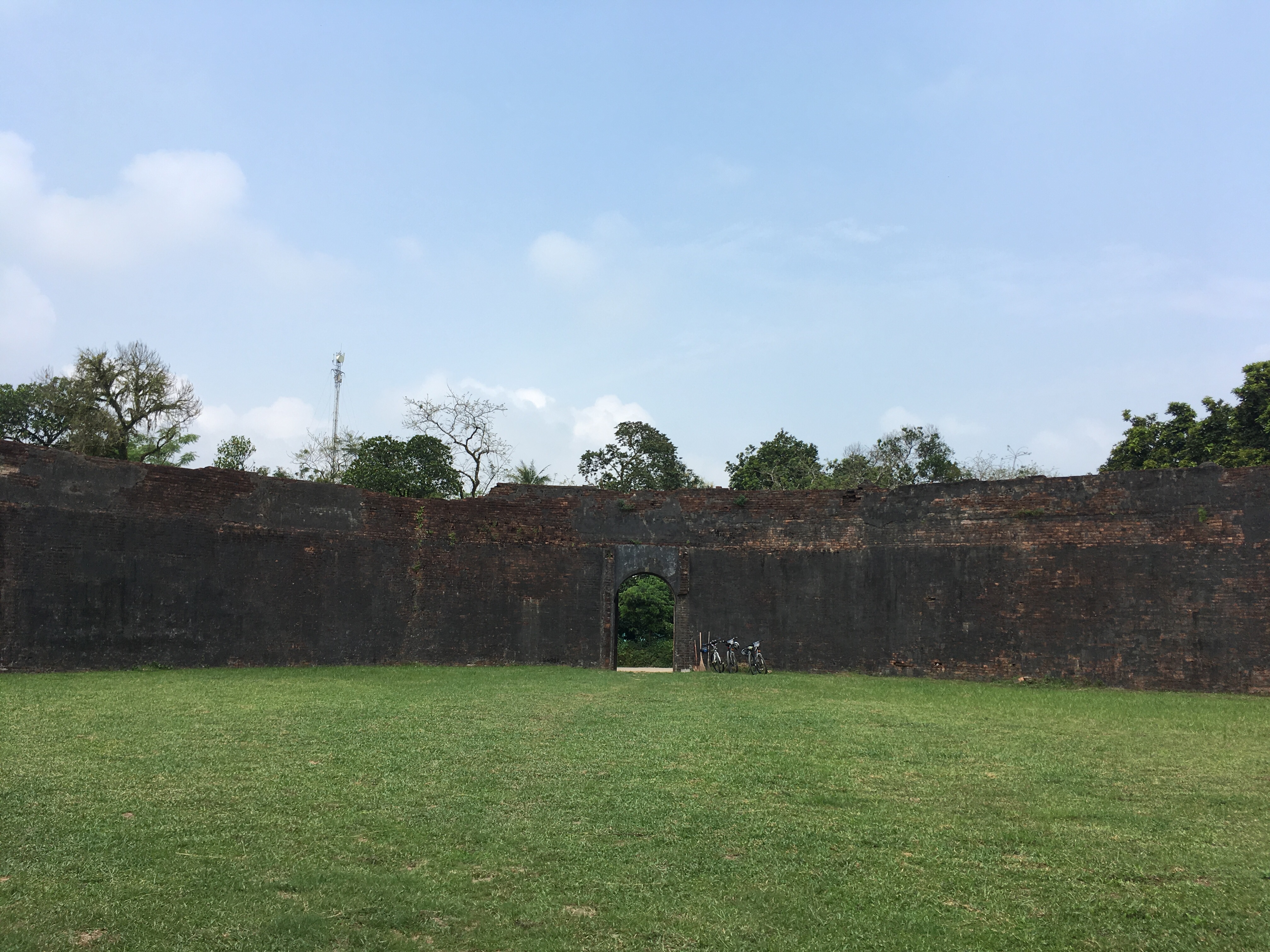
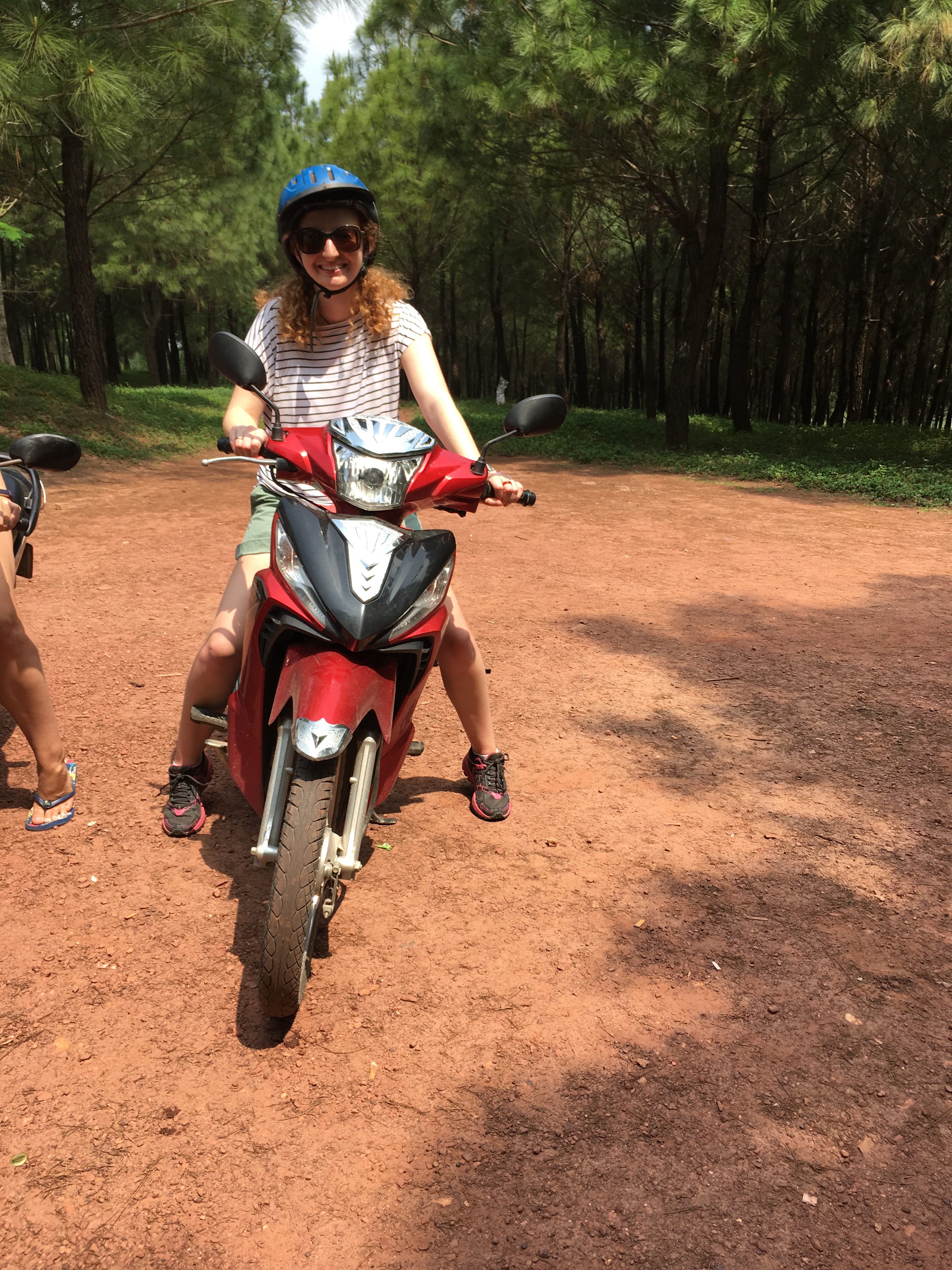
The next morning I did a motorbike tour (as backseat passenger!) – an absolute must-do in a country where motorbikes/scooters are the primary form of transport. We were taken out to the countryside outside of Hue, seeing rice fields, monasteries and a colosseum where elephants and tigers once fought. We had an included vegetarian lunch at the monastery which was, once again, absolutely delicious.
Colosseum; Biker pose; River views
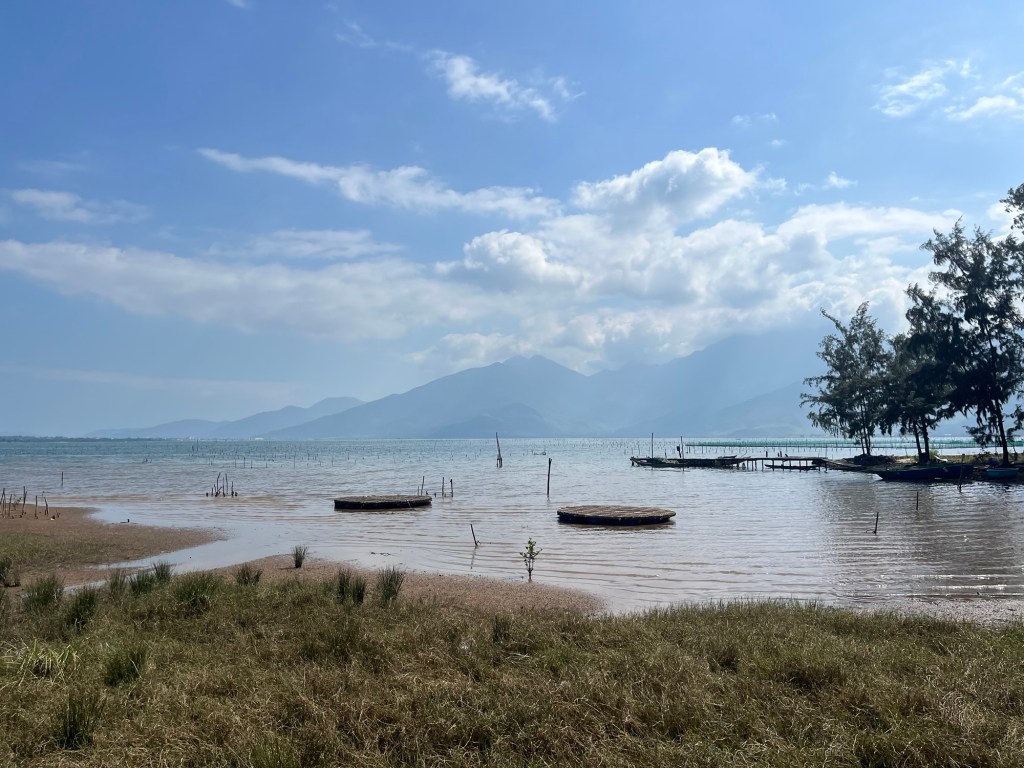
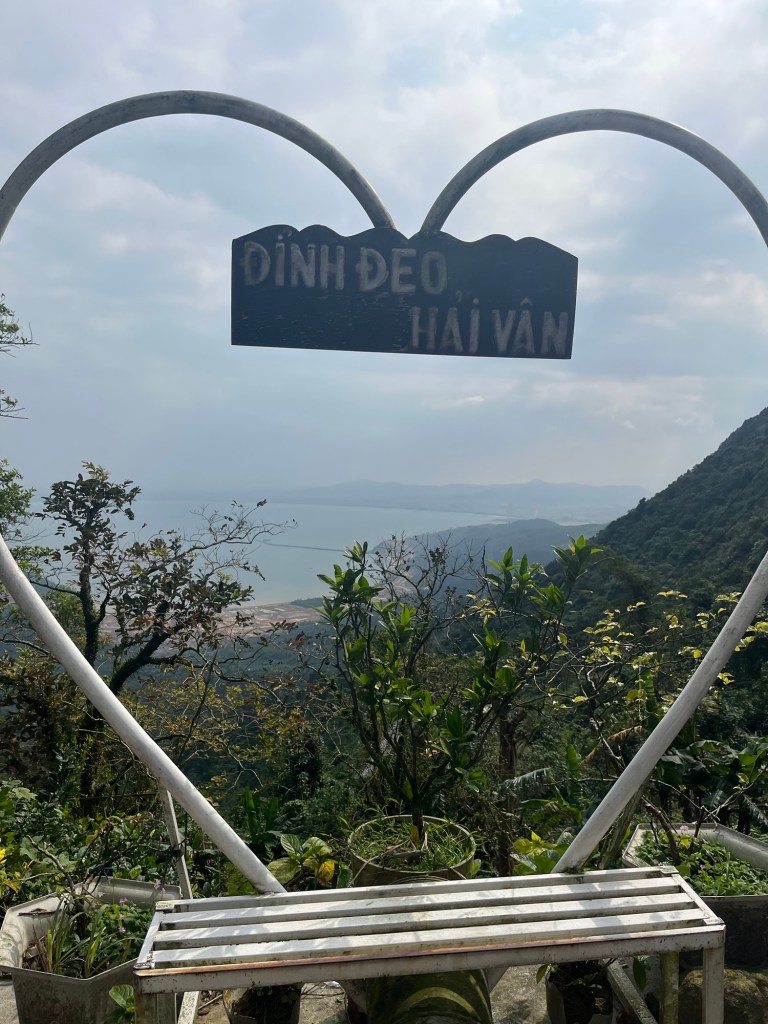
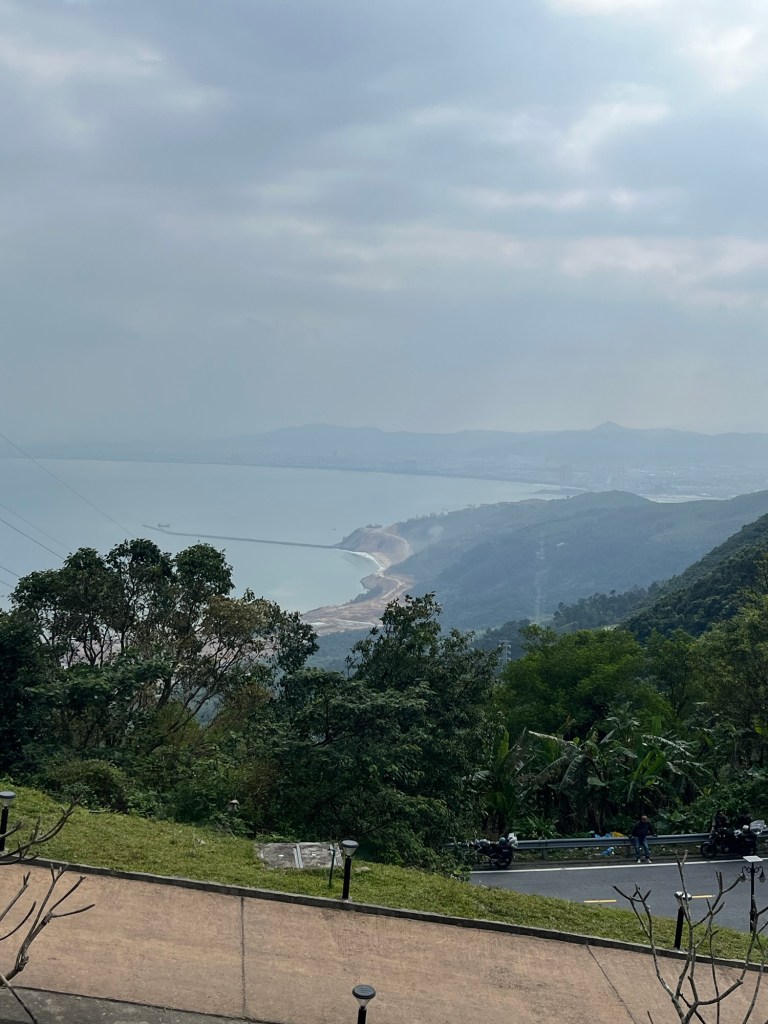
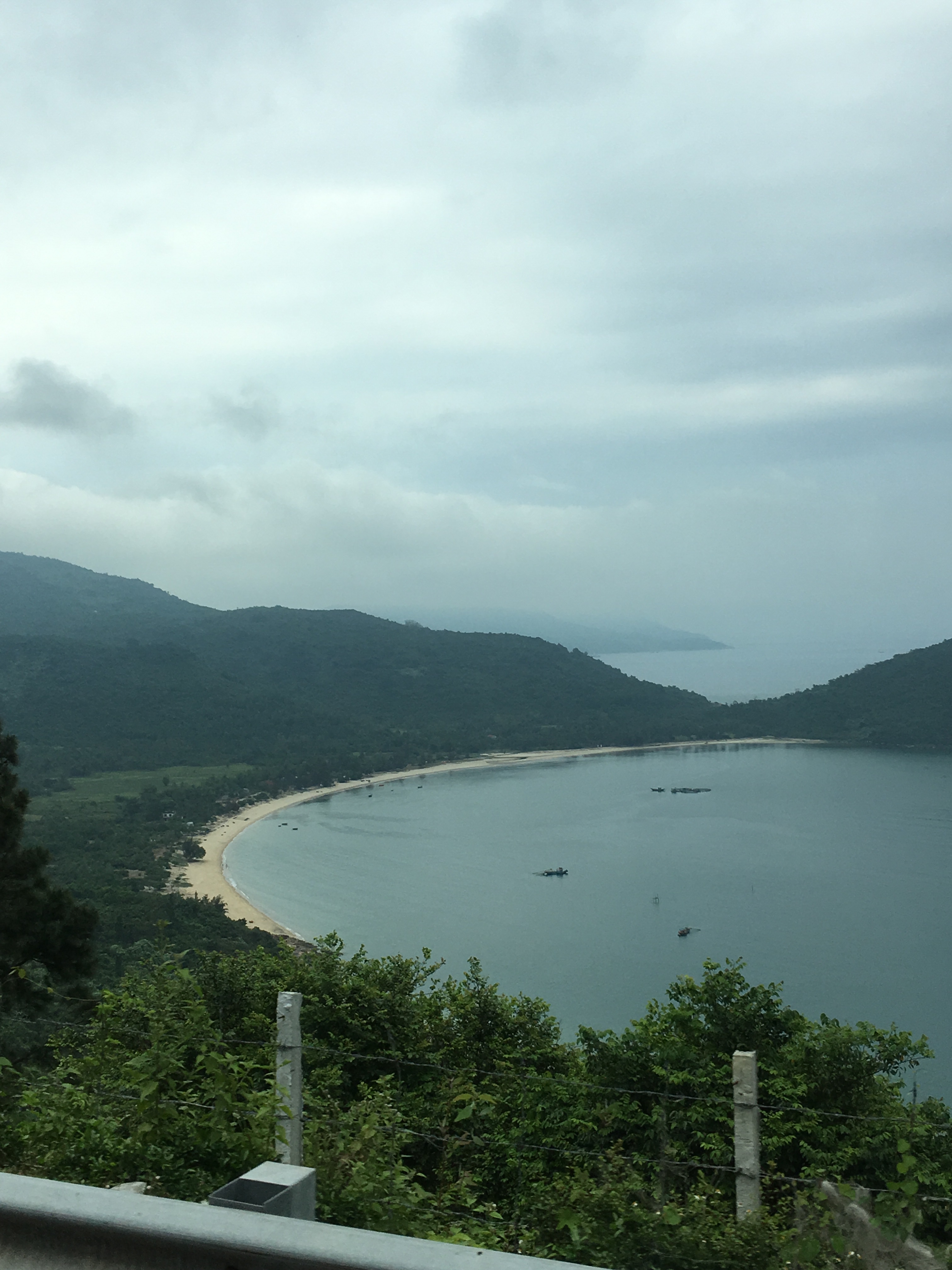
We arrived back in Hue after lunch and then headed south over the Hai Van Pass towards Hoi An. Unfortunately it was a bit cloudier than ideal which didn’t make for the best photos, but we still saw some great views.
Views on the drive to Hoi An.
We arrived in Hoi An in the late afternoon. Our guide took us on a brief orientation tour as we had 3 nights here to explore. We bumped into Jack Whitehall and his dad filming their Netflix travel series whilst we were wandering down tailors row – an unexpected sight! Hoi An is famous for getting cheap tailoring which can be ready in as little as 24 hours, but I didn’t partake on this occasion.
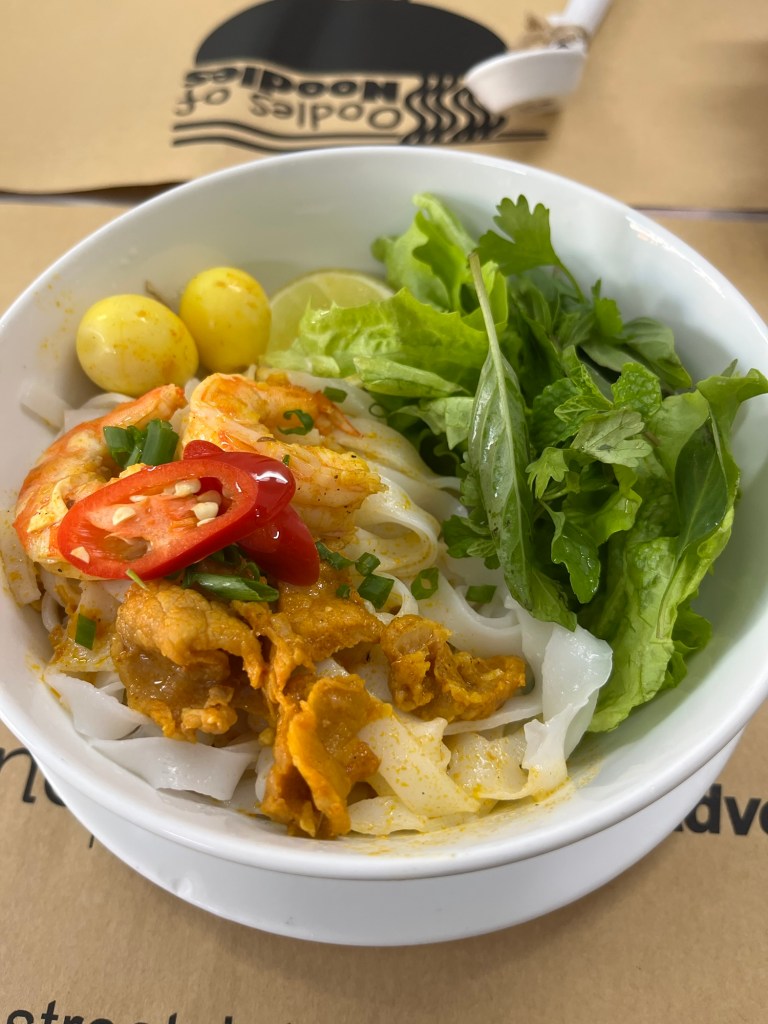
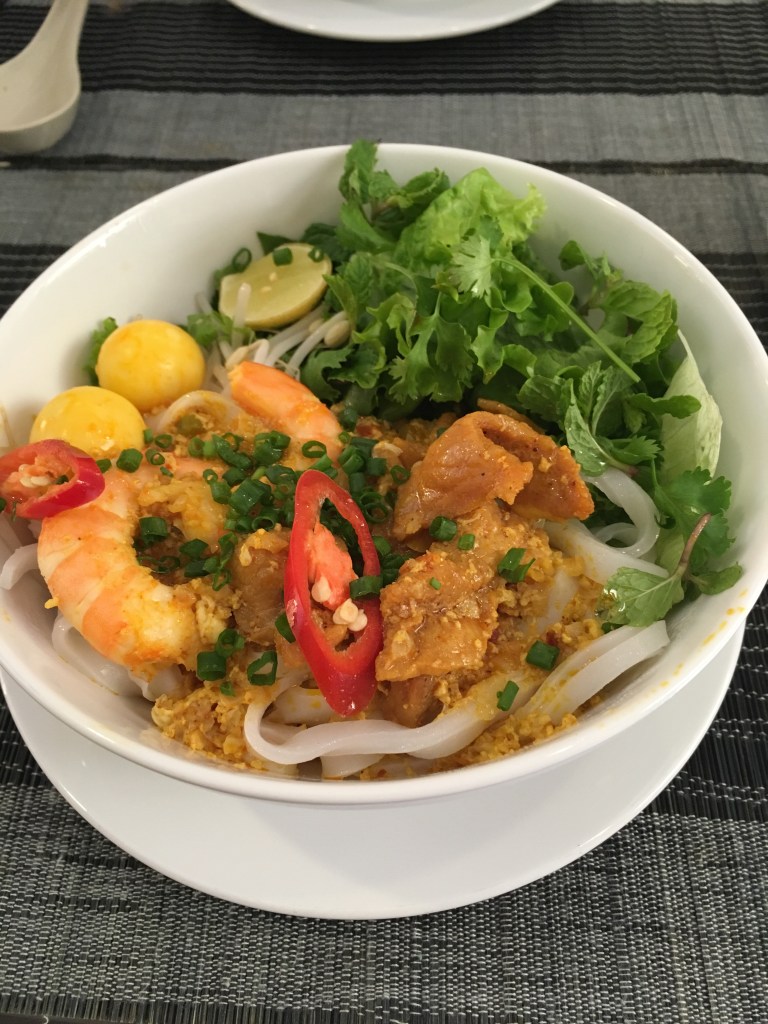
The following day we had an included excursion in the morning to Planeterra’s project here, Oodles of Noodles. This project taught local kids both the skills of cooking in a professional environment, as well as some English language. We learned to make rice pancakes, and then enjoyed a delicious bowl of noodles for lunch:
Lunch at Oodles of Noodles, Hoi An
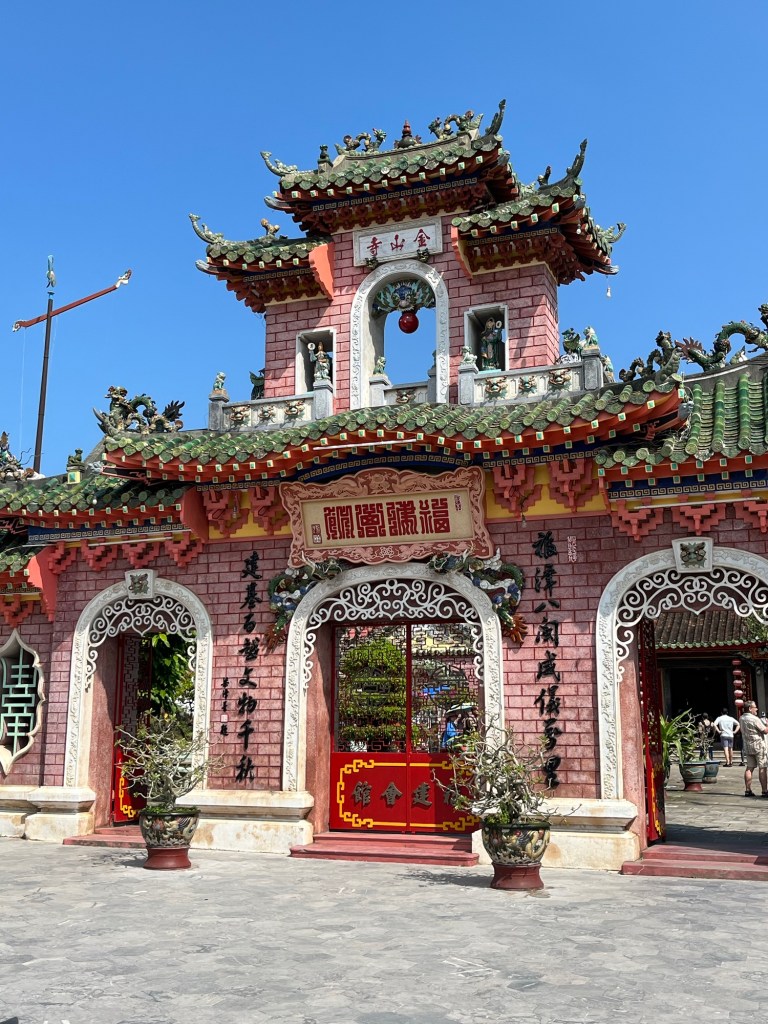
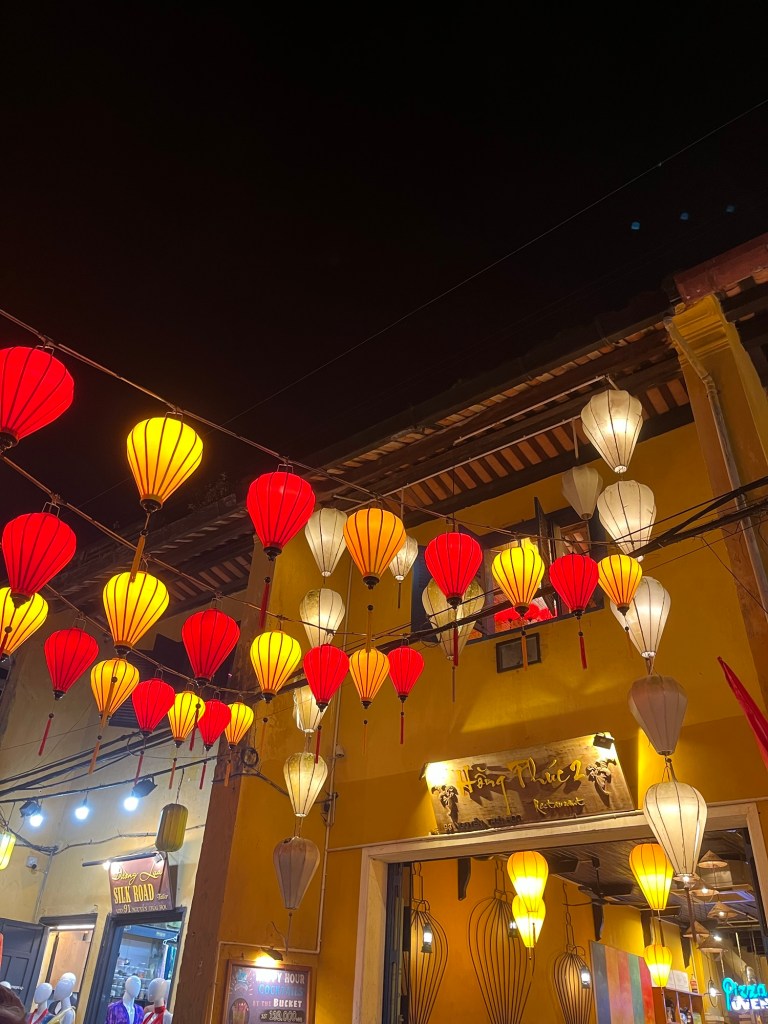
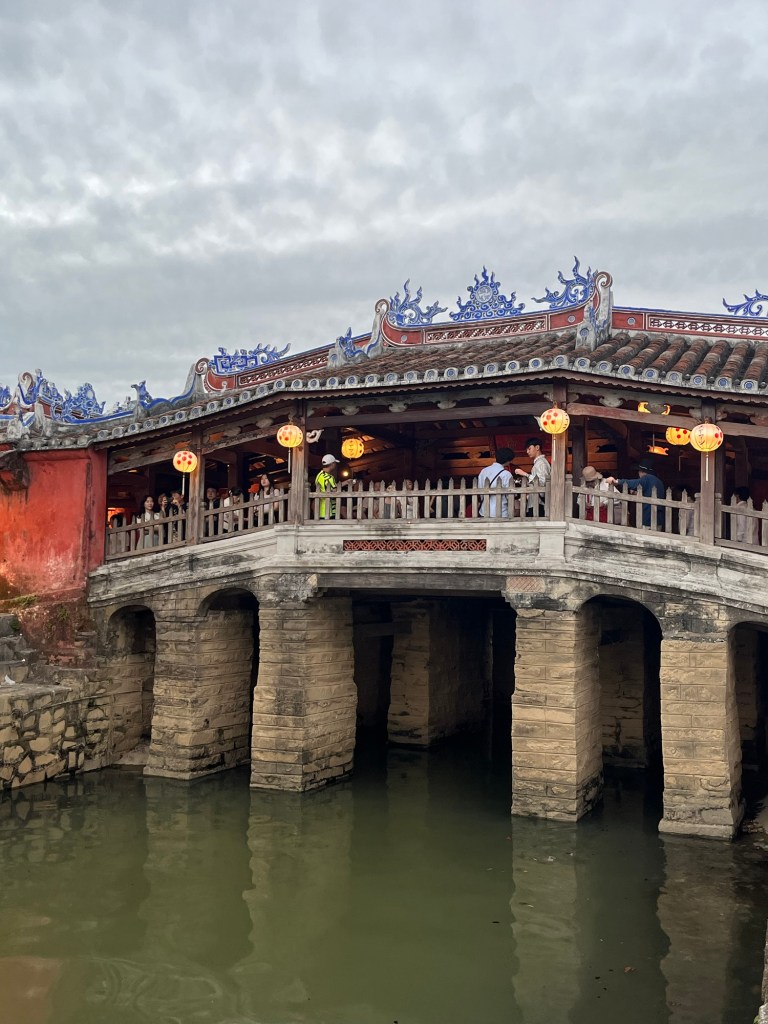
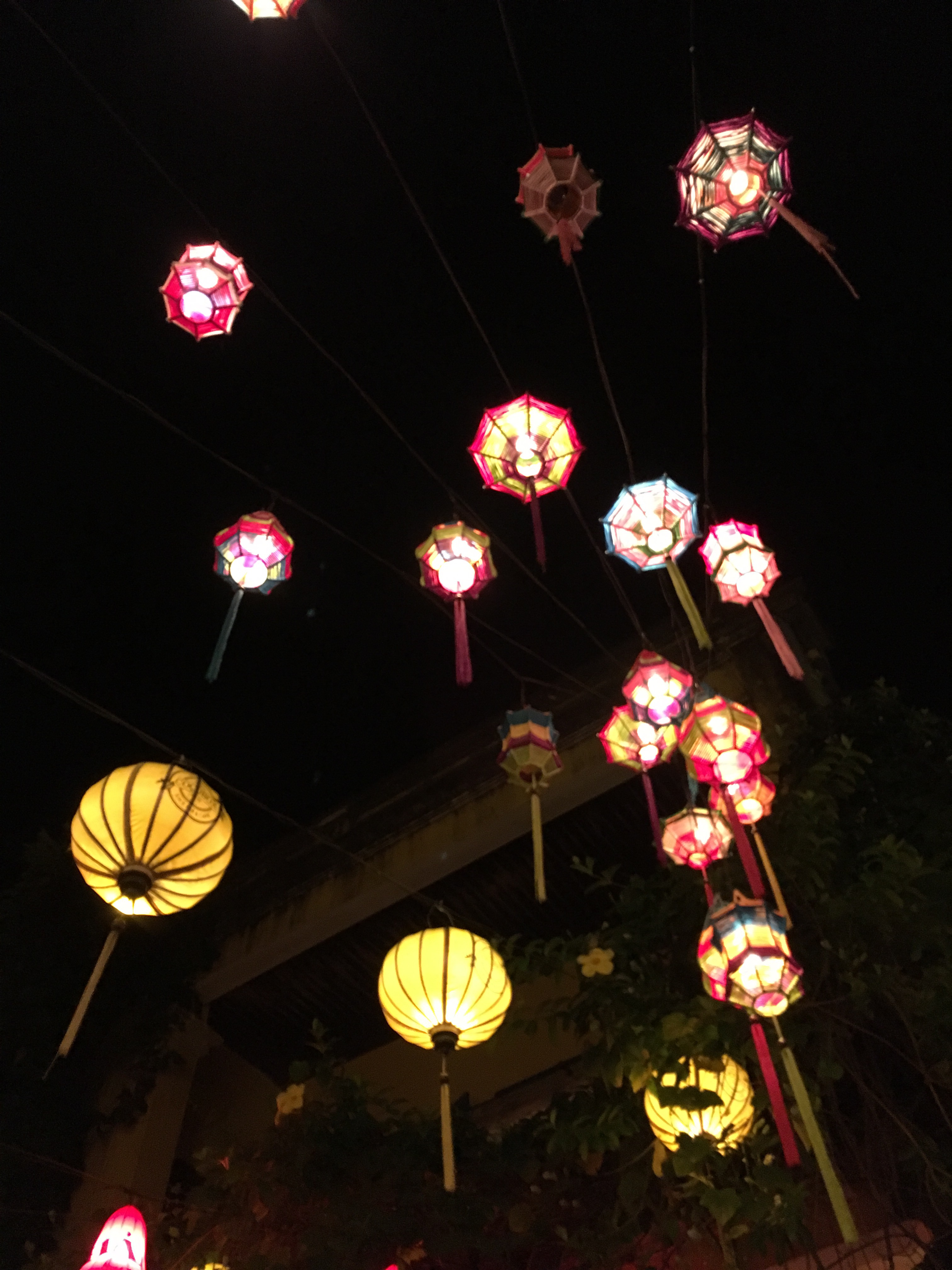
We had a free afternoon where I enjoyed walking around Hoi An old town. Sincerely the prettiest place I’ve ever been.
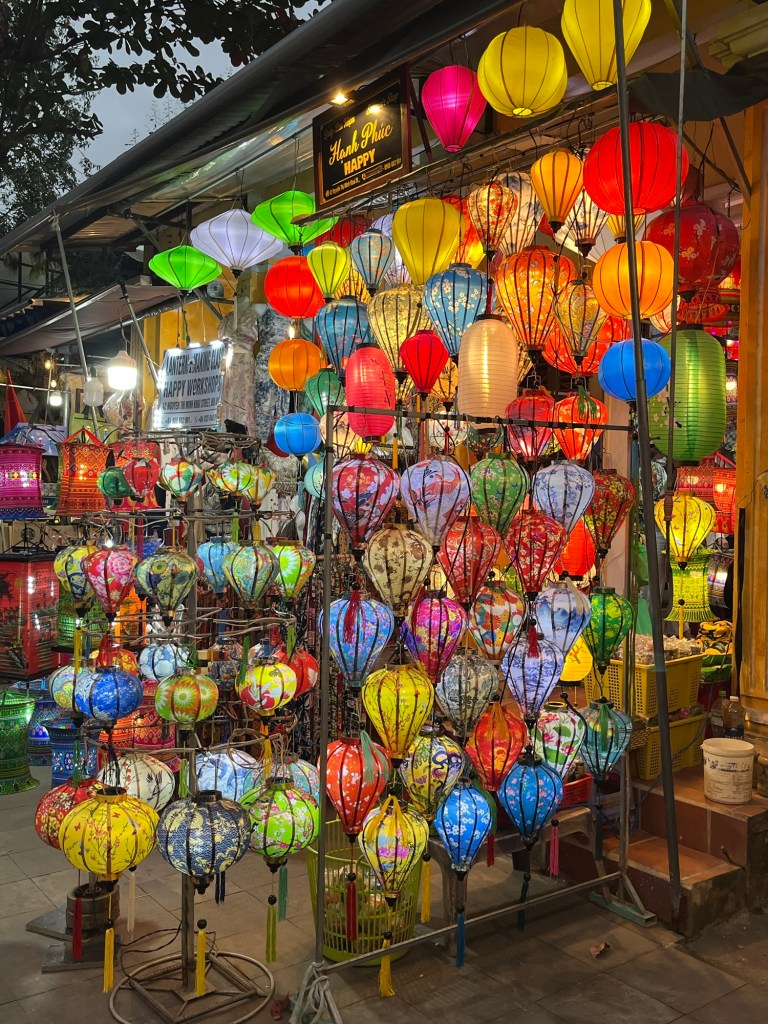
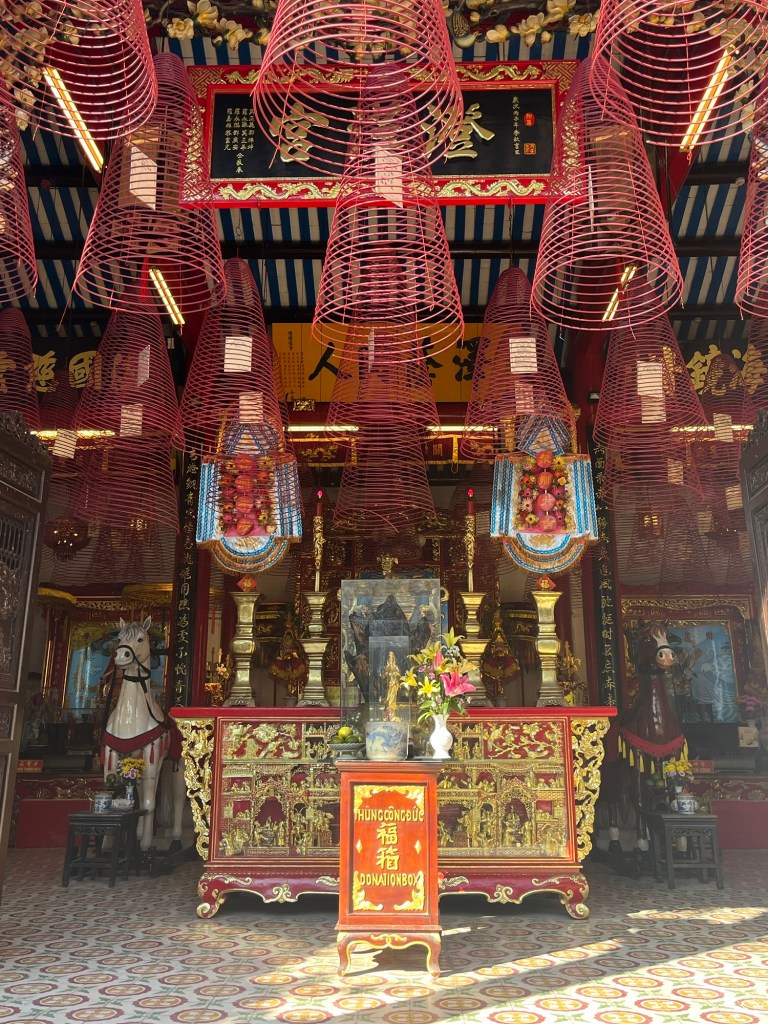
Sights of Hoi An, the prettiest place I’ve ever been
The next day was a free day. The weather was a bit dodgy, grey with the occasionally downpour but still very warm, so after a relaxing morning at the hotel, I went for a hot stone massage in the afternoon. £20 for a 90 minute massage was an absolute bargain, even if I was a bit sore the following day! In the evening we enjoyed a walk (and some bargains) in the night markets.
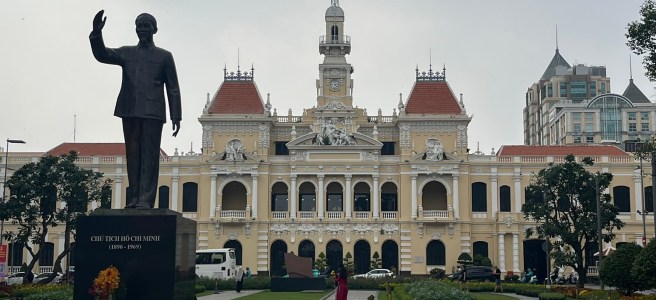
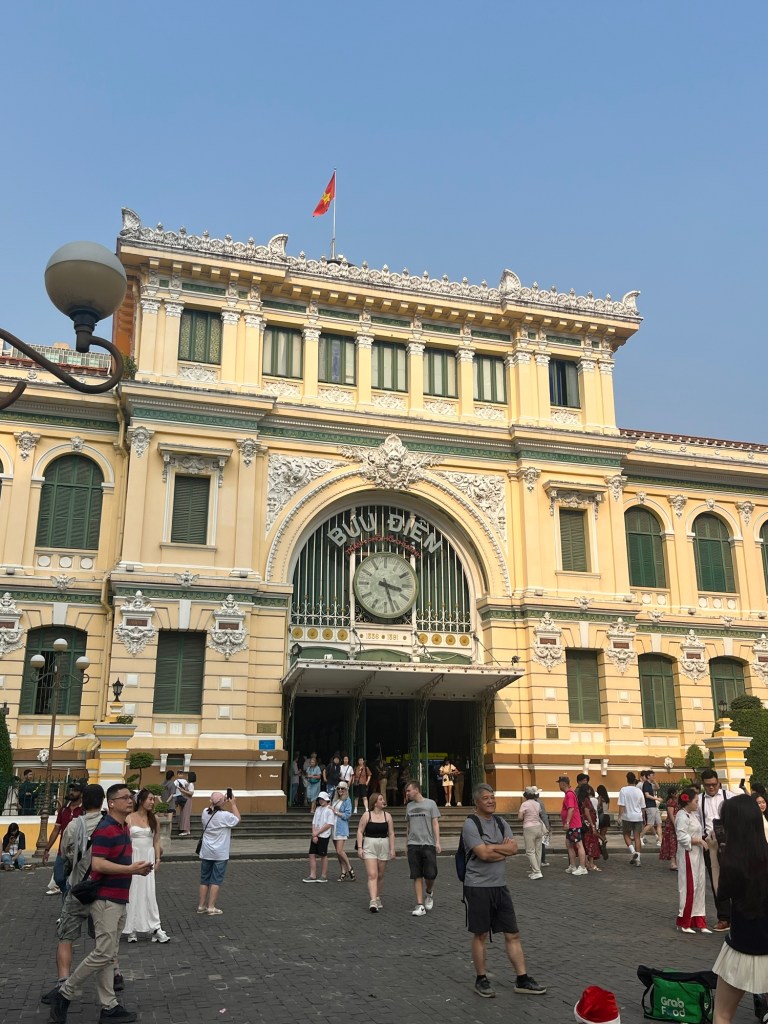
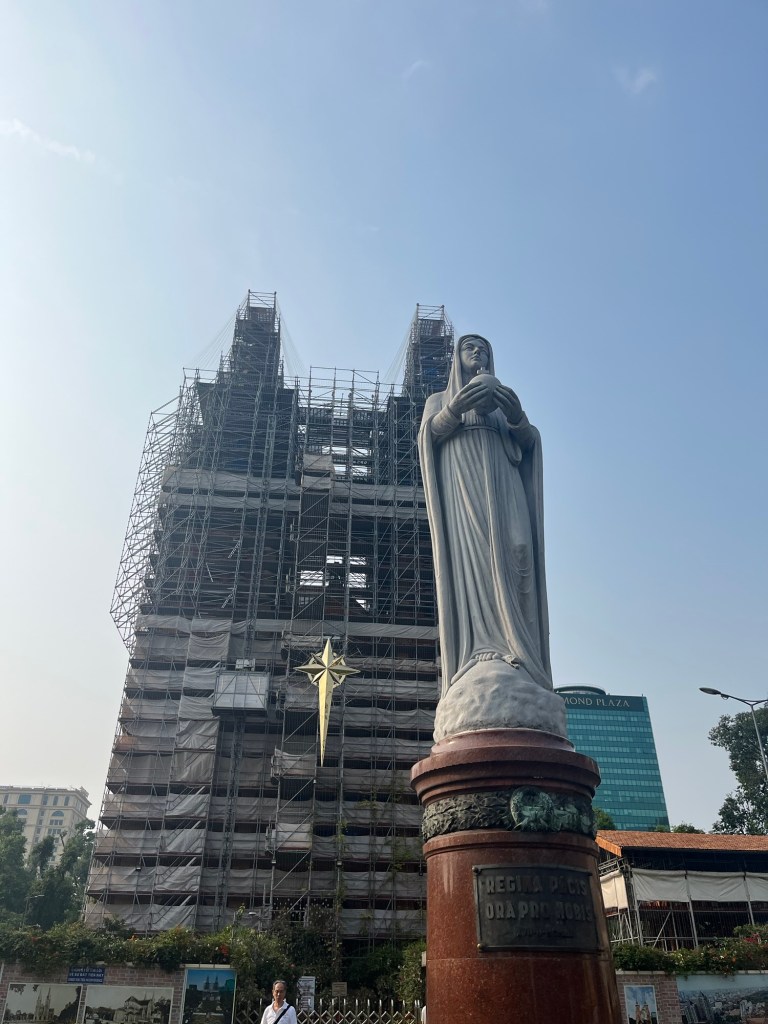
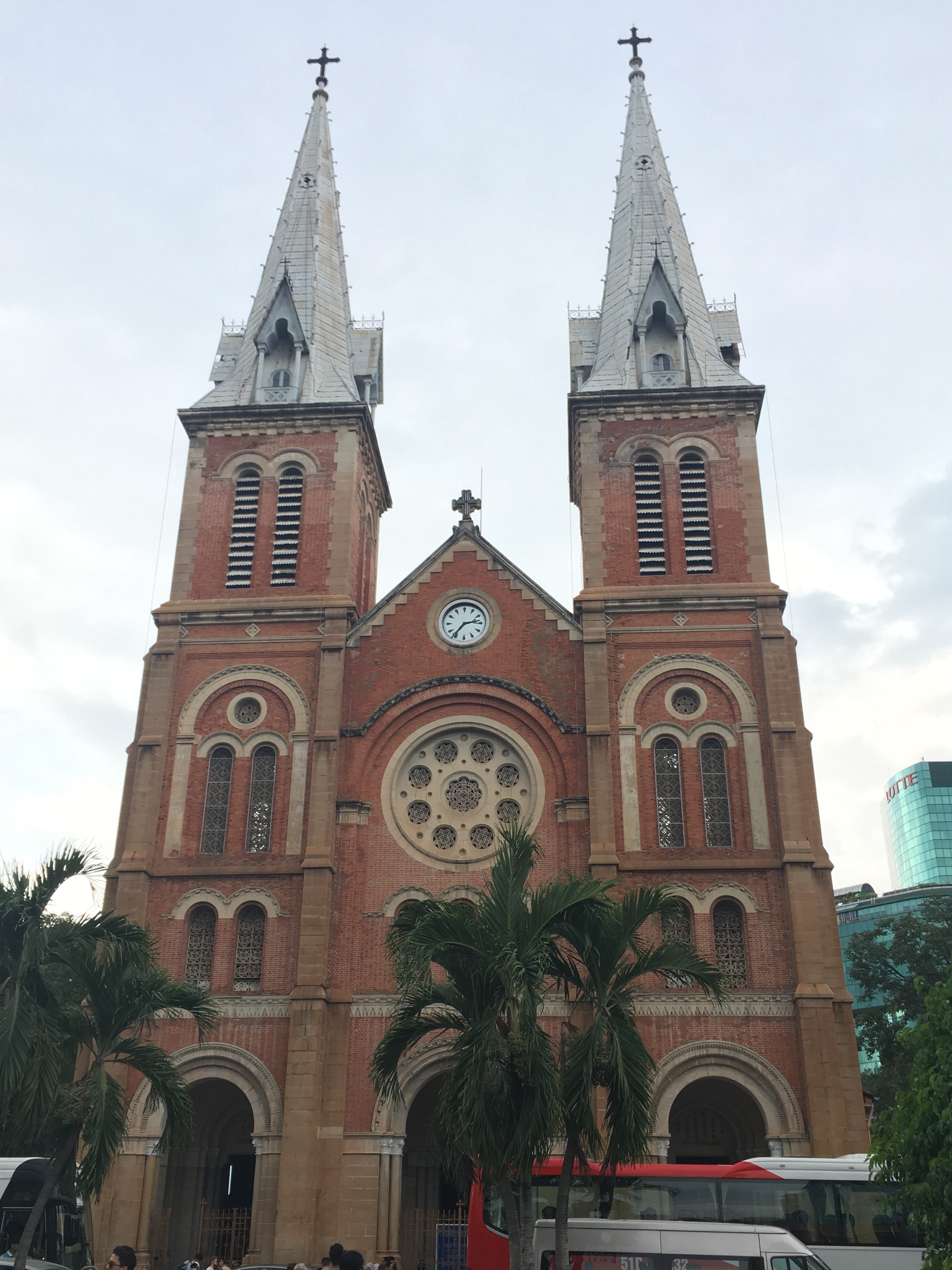
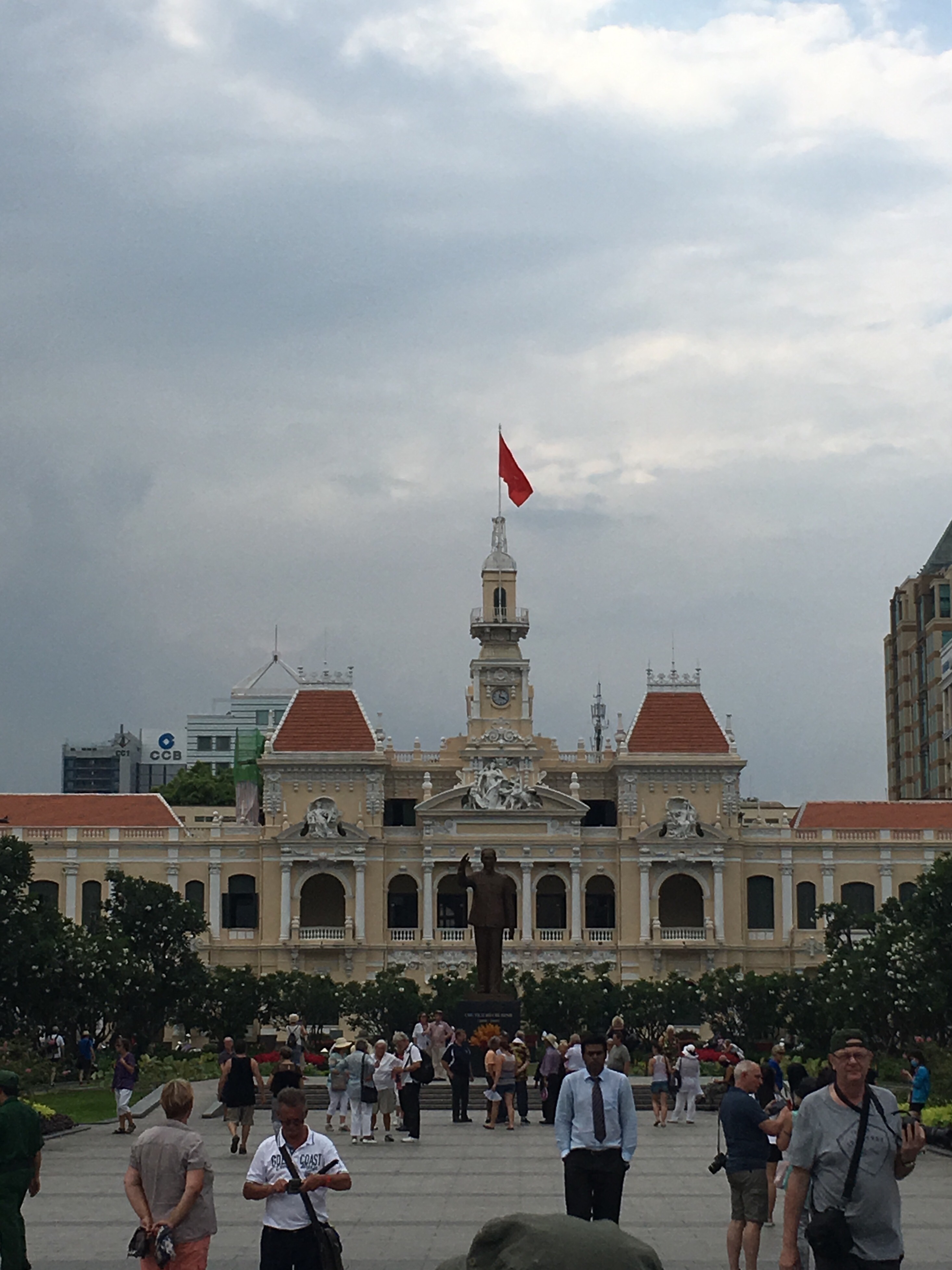
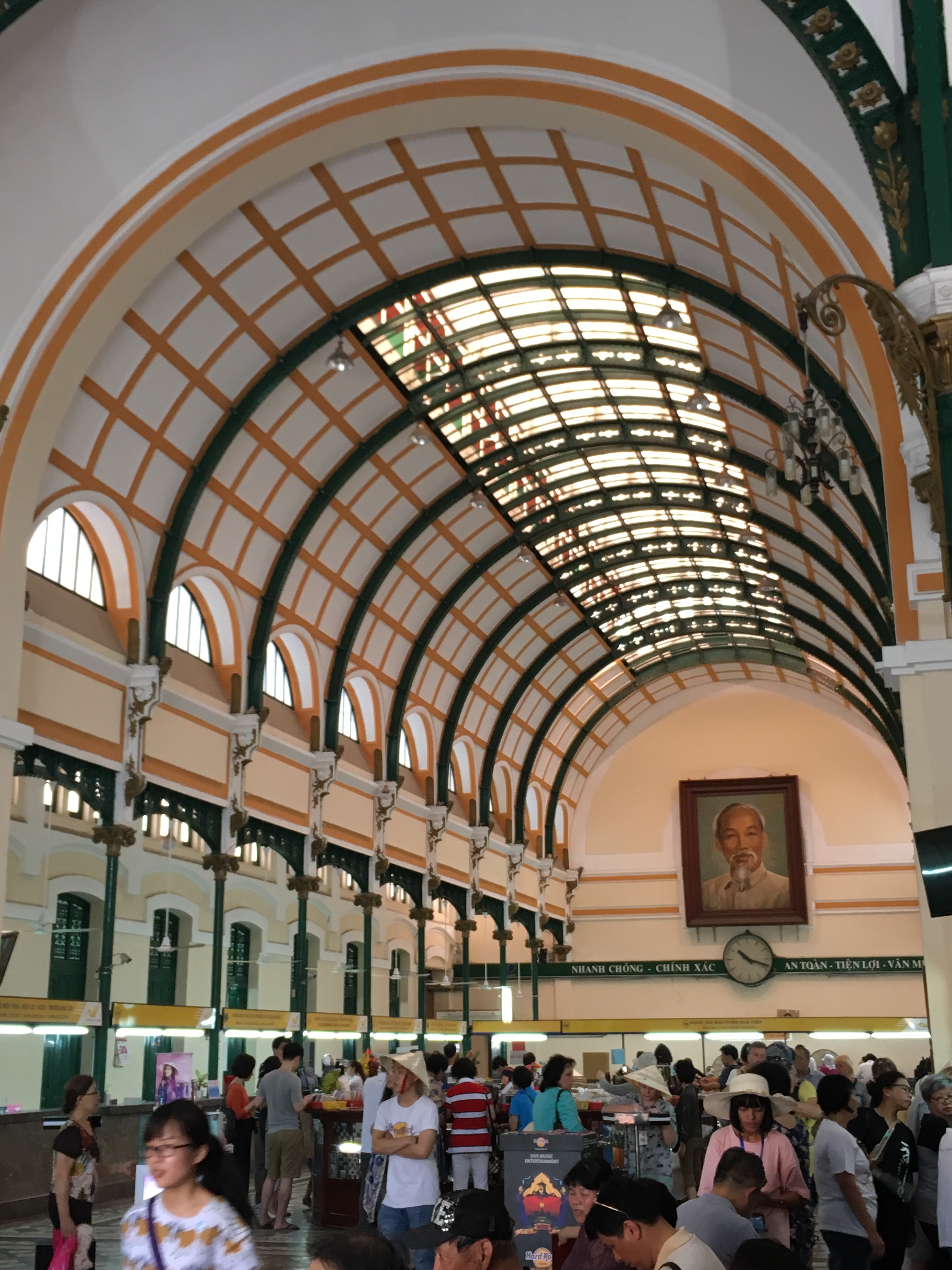
The next morning was an early start for a flight from nearby Danang to Ho Chi Minh City (HCMC), formerly Saigon. Even hotter and more sticky than Hue. After checking in to the hotel mid morning, and then going for lunch to have pho (finally!), we then had a free afternoon. Ho Chi Minh City has some pretty spectacular architecture, including many remnants of the French colonial era:
Notre Dame Cathedral, HCMC; City Hall; The Post Office, HCMC
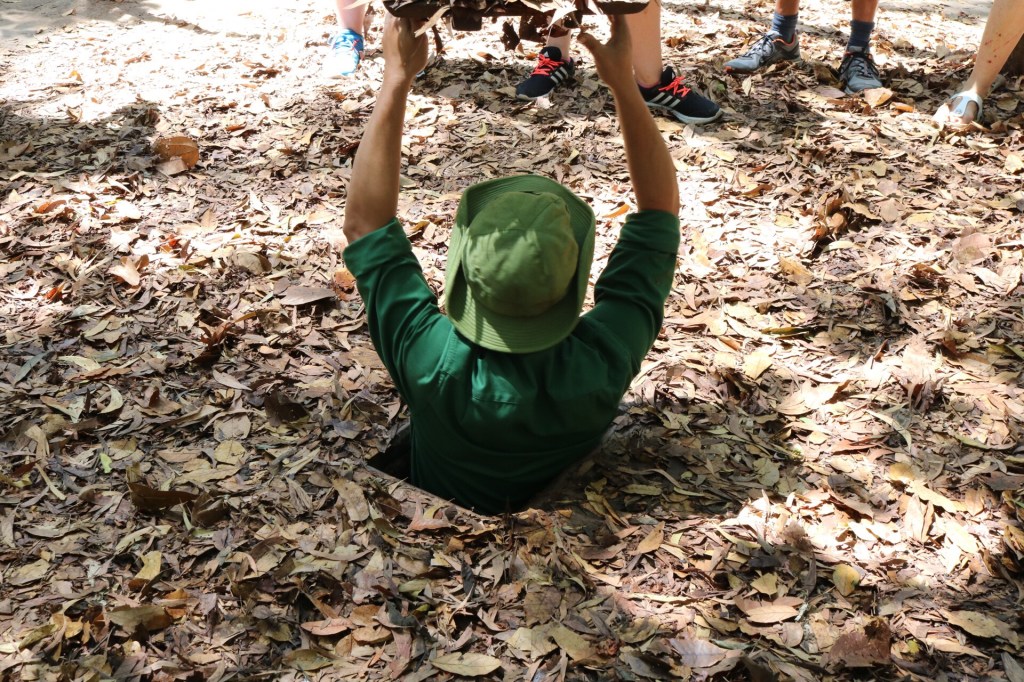
The following day we had an included trip out to the Cu Chi Tunnels, a network of tunnels built by the Viet Cong outside of Saigon during the Vietnam War. It was fascinating to learn about the guerilla tactics used by the Viet Cong, and amazing to see the size of the tunnels, which were utterly minuscule.
Cu Chi Tunnels, barely big enough for a body to fit through
We came back to HCMC for lunch and then had a free afternoon. I decided to go to the War Remnants museum which is is a sobering affair. Be warned – there are some very graphic pictures of the effects of the chemical warfare. It was also horrifying to learn that people still live with the effects having been exposed at the time, but also because some of the effects can be passed on to offspring. A sobering reminder of the legacy of war, and well worth a visit.
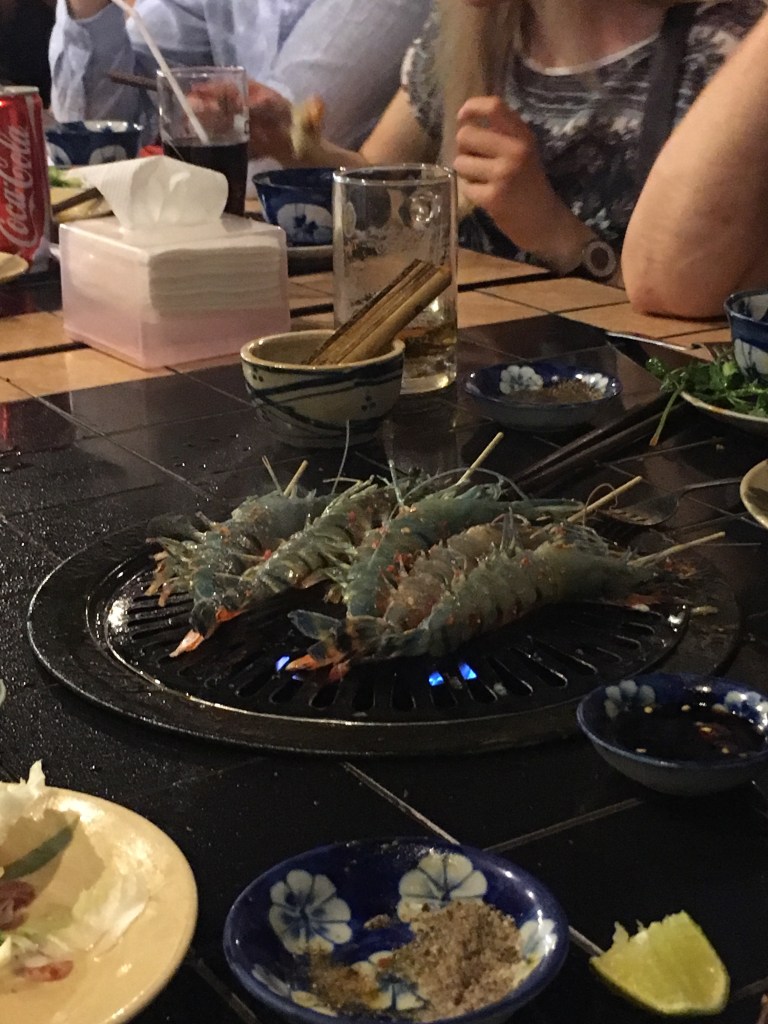
That evening was our final group dinner before I left the following day. More delicious food, this time Vietnamese barbecue.
Vietnamese BBQ – cook your own dinner!
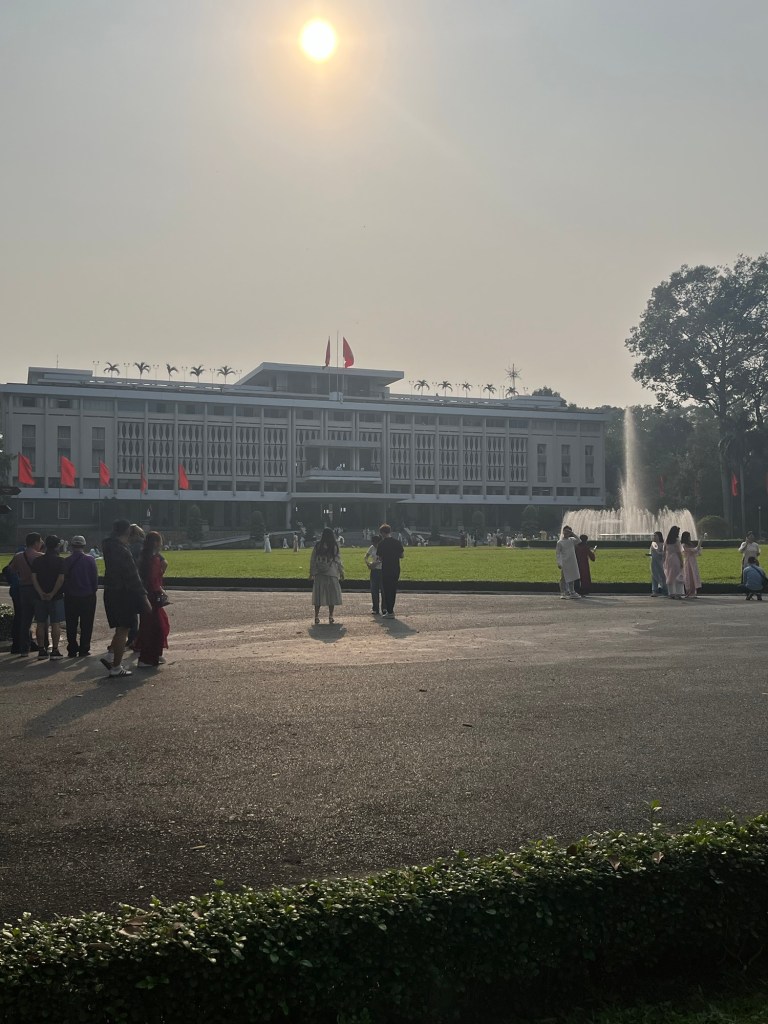
I had most of the next day free before an evening flight back to London via Hanoi. It was extremely hot and sticky again, and after a walk in the morning to the Reunification Palace and a failed attempt to find the Jade Emperor Pagoda, I retreated back to the hotel and air con and a shower before heading to the airport in the late afternoon.
So, what were my impressions of Vietnam? Genuinely part of the reason I went was after I’d seen the Top Gear Vietnam show, it looked a beautiful and fascinating country. A few people I’d met on my previous travels had also been and talked about what a wonderful country it is. And it certainly was. Everyone was friendly, I didn’t feel afraid walking around by myself, a solo female traveller (albeit on a group tour). It was very cheap – obviously I’d paid for the trip and accommodation/transport beforehand, and so all I had to buy whilst there was food, drinks, excursions and souvenirs. I was there for 10 days and spent less than £150 – and that included a $40 motorbike trip and a £20 massage. The absolute best food I’ve had anywhere I’ve been either before or since (with Peru close behind). And a fascinating, and devastating, recent history. Would absolutely recommend, and when I do go back again to South East Asia, I wouldn’t think twice about going back.