Asahikawa, Furano and Sapporo

Asahikawa is the second largest city in Hokkaido, but doesn’t even get a mention in my Lonely Planet guidebook, which didn’t fill me with the greatest confidence about the city!! We arrived too early to check in so had a wander around the massive Aeon mall that is attached to the JR Station at Asahikawa.

We had a free afternoon after check in. It was cold with a bracing wind, I wandered up and down the main pedestrianised street, past shops, izakayas which were already busy, and a surprising number of statues of women in various states of undress…

We went to a small jingisukan restaurant in the evening. Jingisukan is essentially a do-it-yourself lamb barbecue which originated in Hokkaido, and is a Japanese translation of Genghis Khan.
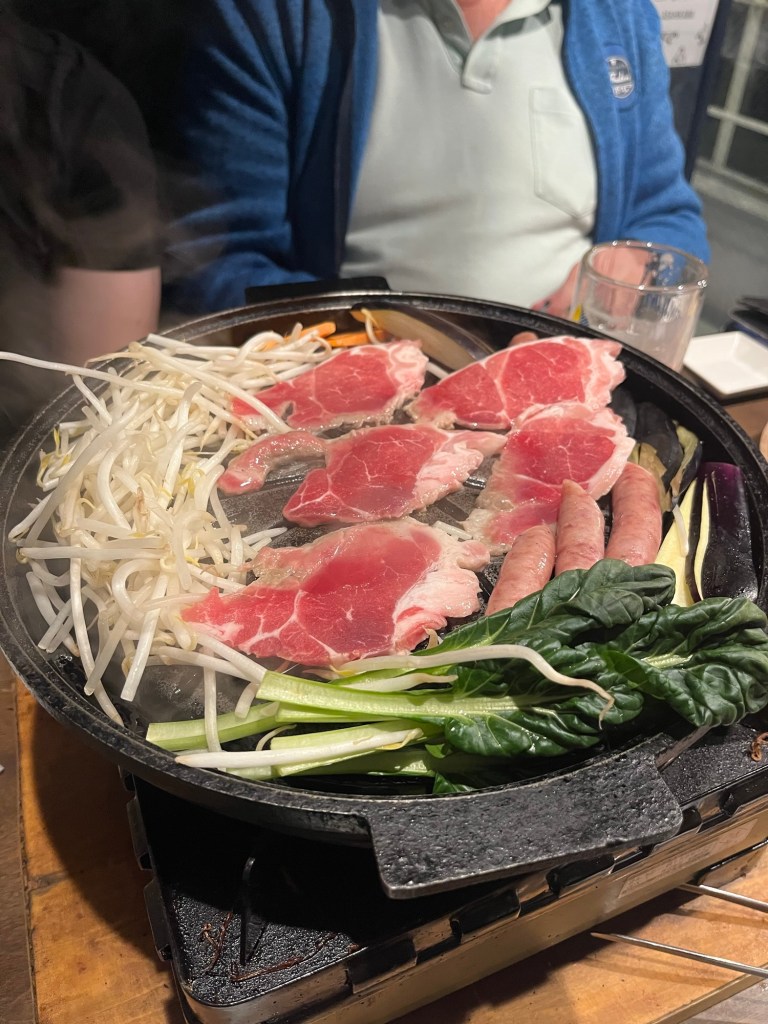
Lamb barbecue with bean sprouts, greens and other veggies

The following day we started with a visit to an Ainu museum to learn about the indigenous Ainu peoples who have been in Hokkaido for thousands of years. They have only very recently been formally recognised as indigenous peoples in Japan so it was really interesting to hear about how the museum is helping to preserve their culture and educate others on their history and traditions. We had a delicious lunch of salmon, soup, and grape jelly for dessert from our Ainu hosts.

After lunch it was off to another sake museum, and for some more tastings. Still not sure I like sake…

We also visited a wood working centre, which is a key industry in and around Asahikawa. Lots of very cool, and very expensive, furniture designs.

Ramen for dinner that evening, followed by karaoke, which is ubiquitous in Japan. Now, I can’t sing, but there’s something about singing in a booth in Japan with some people I’ve only met a few days ago which makes it pretty enjoyable. Probably because if I make a fool of myself, I’m likely to never see them again anyway!!

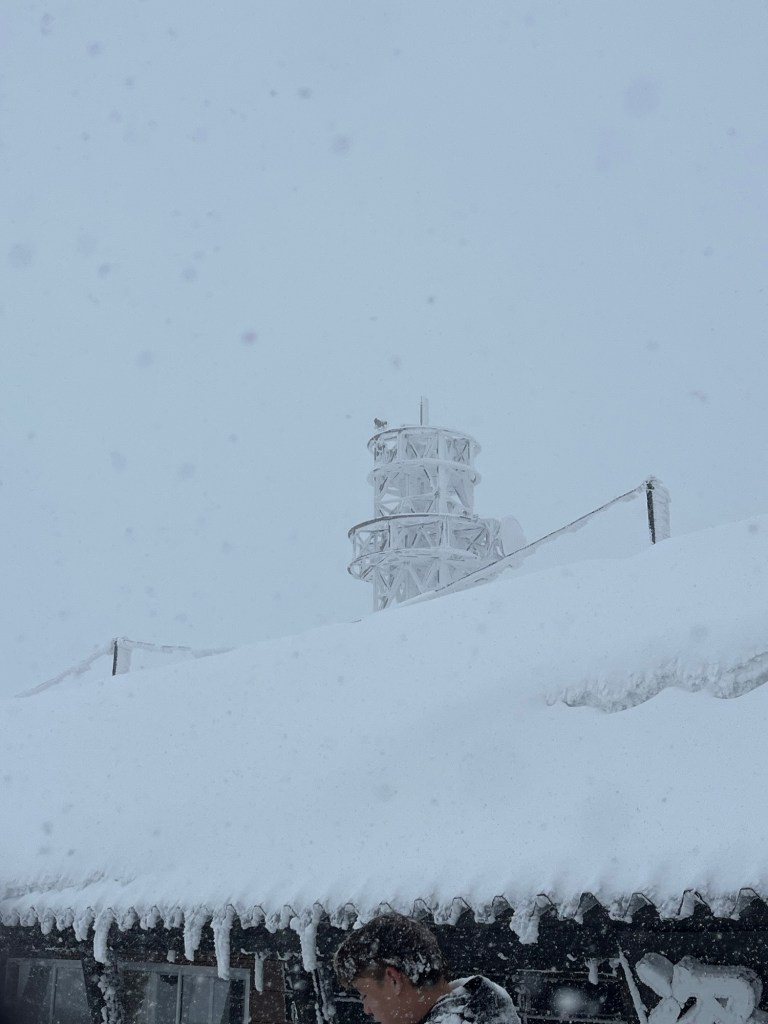
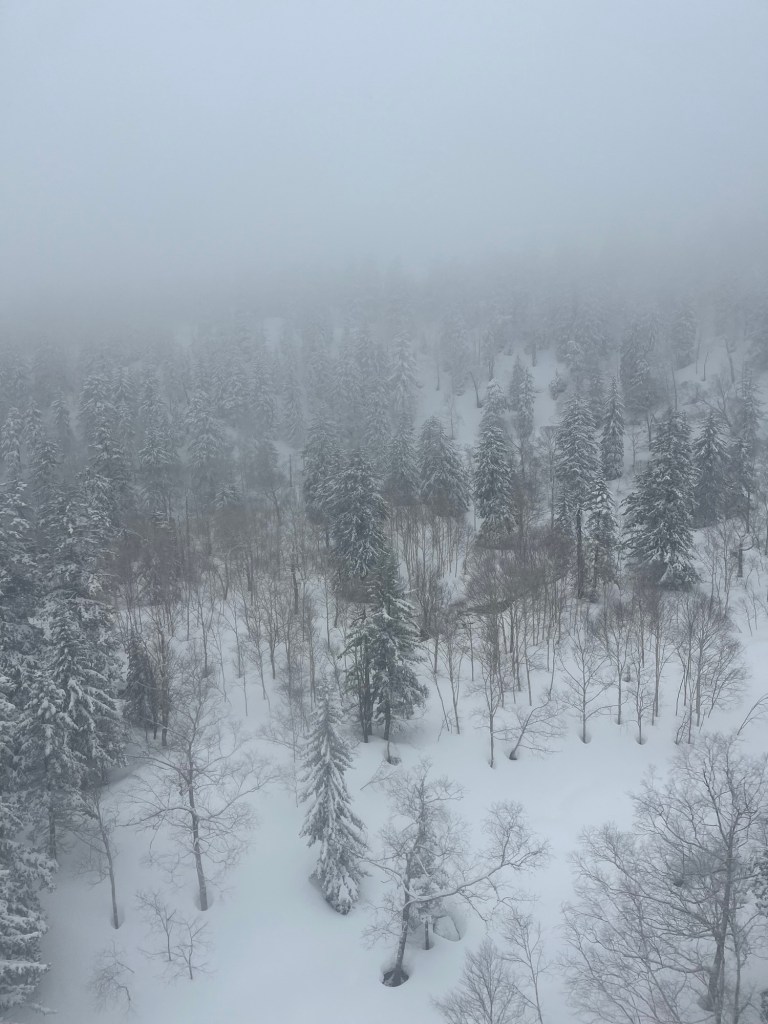
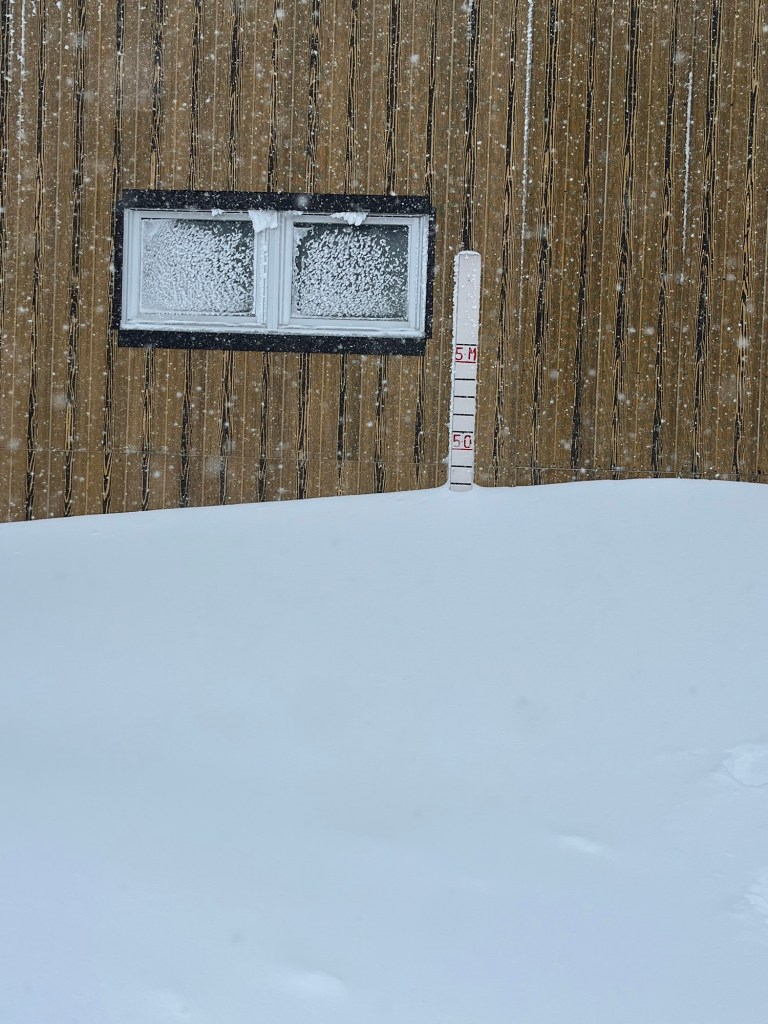
The next day we headed out of Asahikawa, to Mount Asahi and the Asahidake Ropeway (cable car). As we headed out of Asahikawa, it started to snow. And as we drove up towards the ropeway station, the snow got heavier and the road got whiter and whiter until you could barely see where the road was. We did take the cable car up the mountain but instead of the glorious vistas, we got heaps of snow, a blizzard and a bit of a white out! I’m actually not sure I’ve ever seen this much snow in person so despite not seeing the views, it was still pretty awesome to be in a bit of a snowstorm.
I was quite cold at this point, and very glad of the coat and thermal trousers I’d bought earlier on in Japan! We went to a small restaurant for lunch, a lovely warming bowl of beef stew, which reminded me of home!

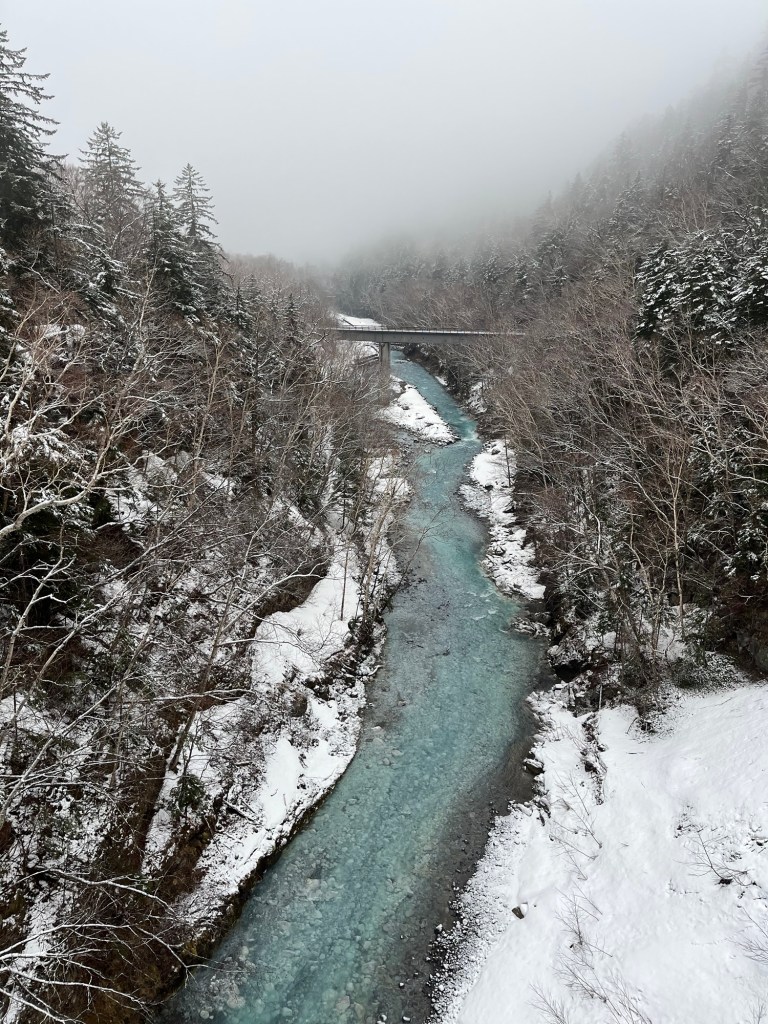
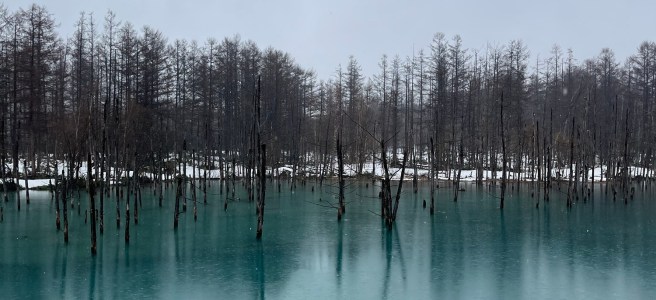
After lunch we visited the Blue Pond, which despite the snow and clouds, was surprisingly blue. We also went to a nearby waterfall at Shirogane, again with some unexpectedly blue colours given the weather.
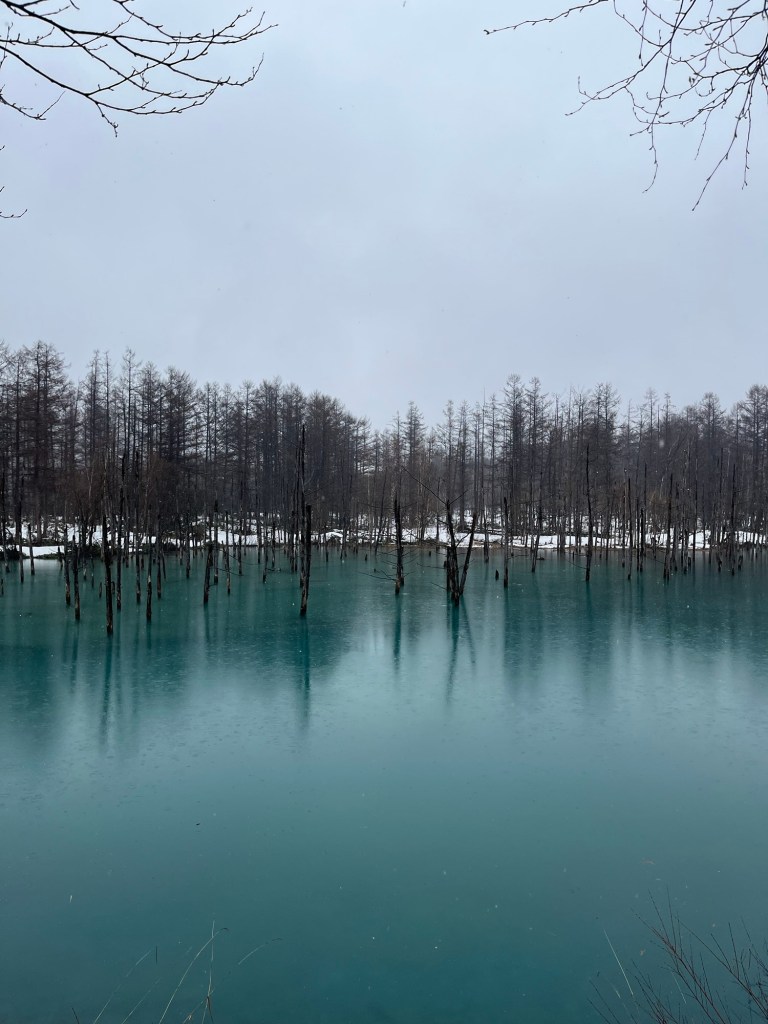
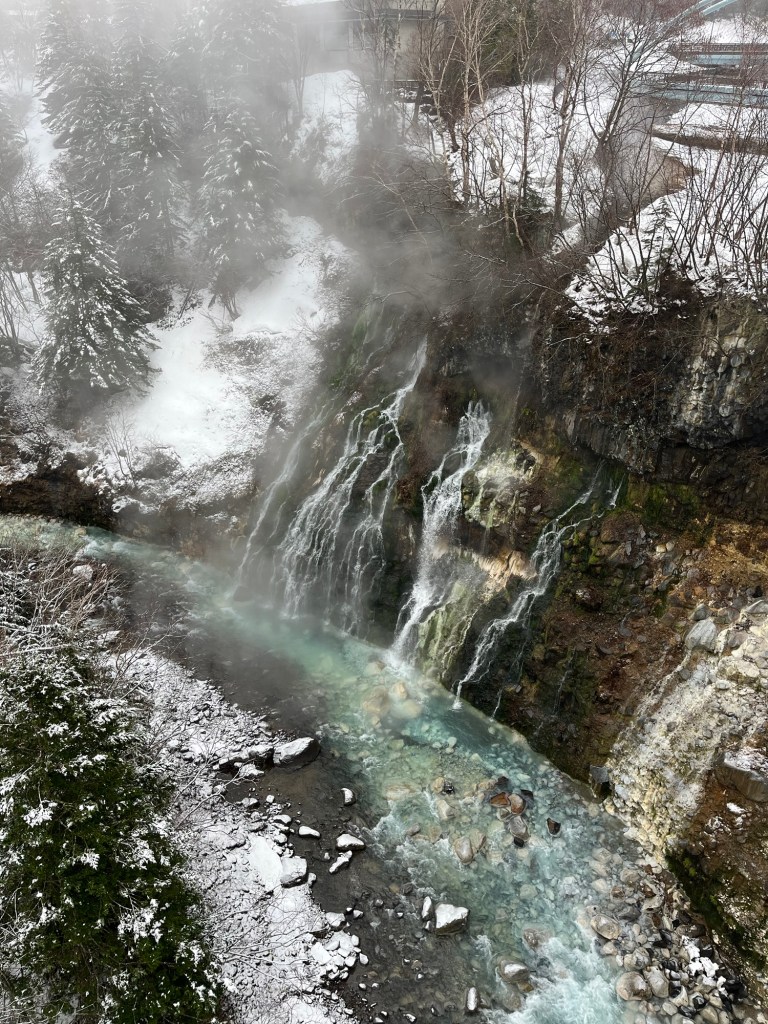
We then headed to Furano, which is an area known for cheese and wine production. We made our own mascarpone which we then had for dinner at the hotel along with some biscuits, local strawberries and local wine. The hotel we stayed in at Furano had an onsen so later in the evening I squeezed in a final soak on my Japan trip as I suspected the hotel for the final couple of nights in Sapporo wouldn’t have any baths. I’ve really enjoyed the onsens on this trip. An extremely relaxing and peaceful way to spend time.

The next day we headed to Sapporo on the train. The weather was such a contrast to the previous day – lovely blue sky, and very spring-like, though still quite chilly. When we got to Sapporo, we had lunch at a cafe at Hokkaido university and then spent some time in the university museum which was extensive and had lots of interesting exhibits. Not all of it in a language I could understand so Google Translate came in very handy!
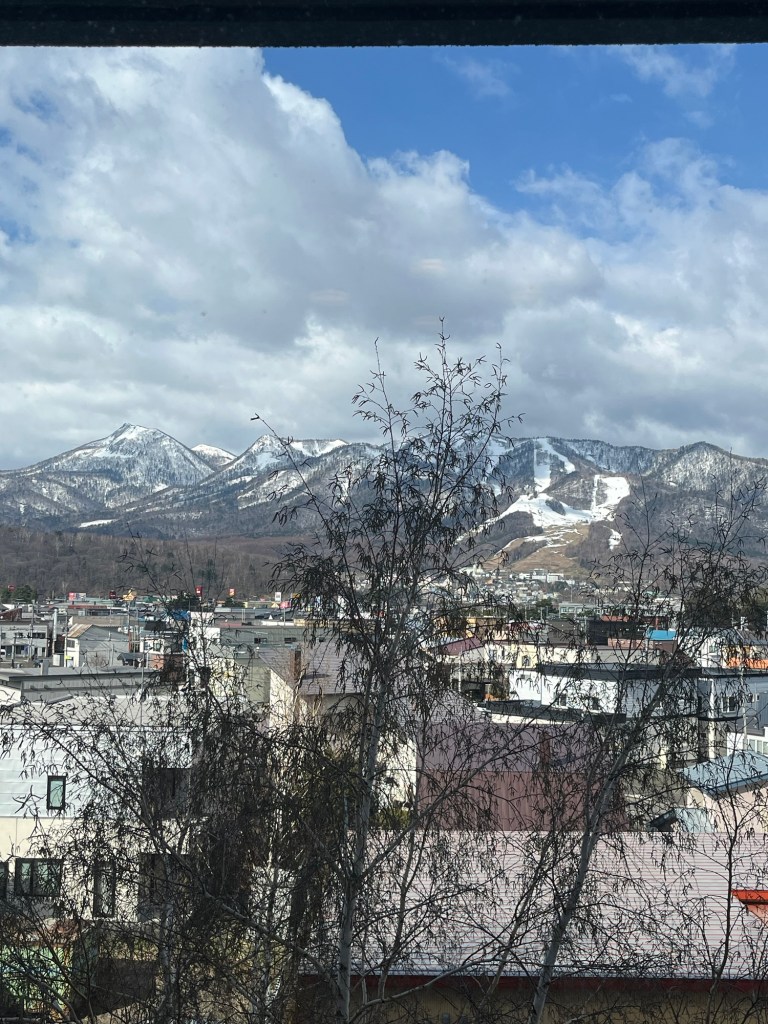
En route to Sapporo

We had a free afternoon so I walked around Sapporo – an easy city to navigate due to its grid street pattern. It also has underground walking subways which must be very useful in the depths of winter when it’s very cold. As we walked into the subway for the first time, it did look a little dystopian as it is very quiet, and with everyone walking in an orderly fashion on the left. But I thought it was really ingenious, as it connects directly with all the buildings above at street level, and there are even shops and restaurants at the subway level too. Almost like an underground city.

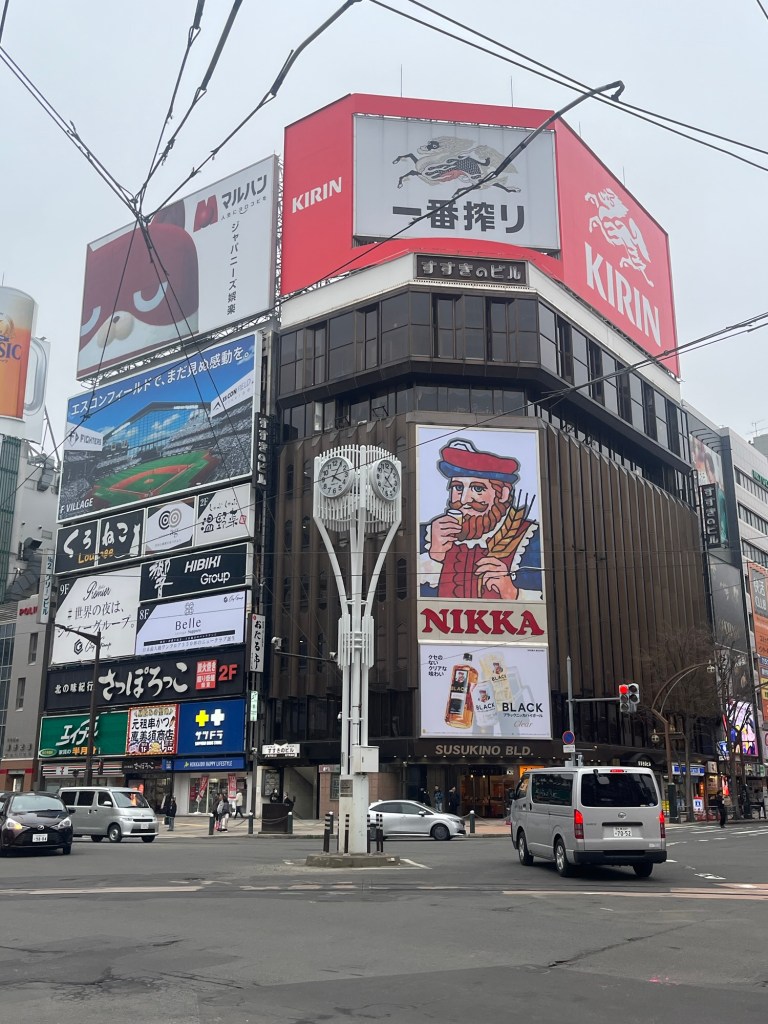
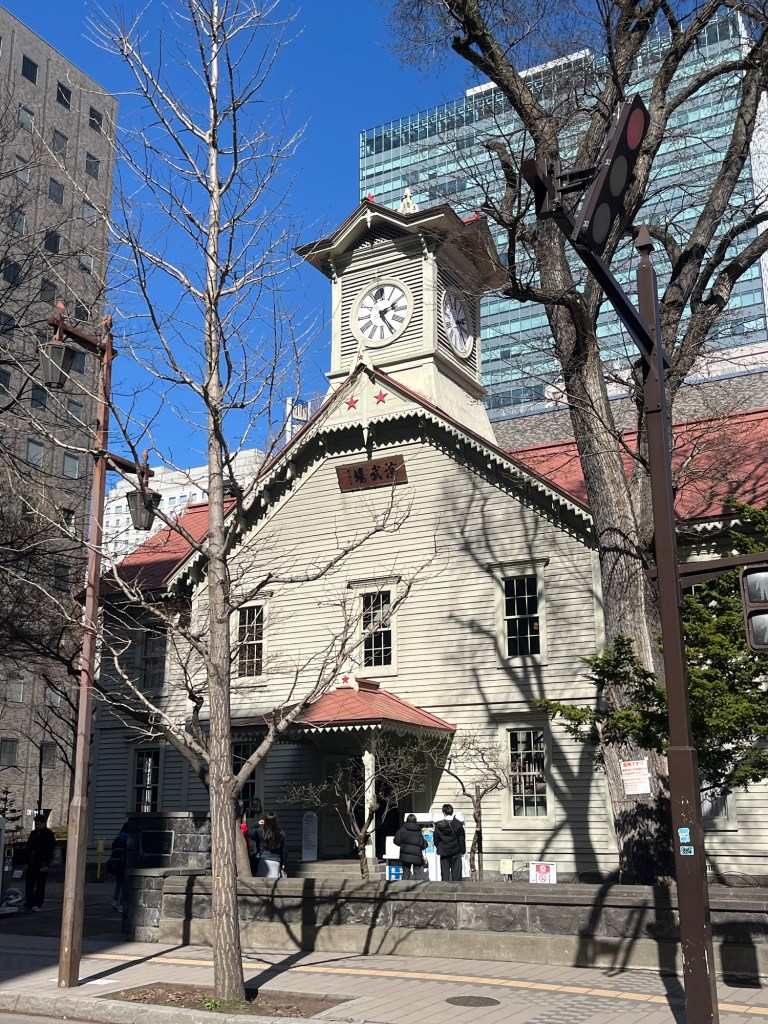
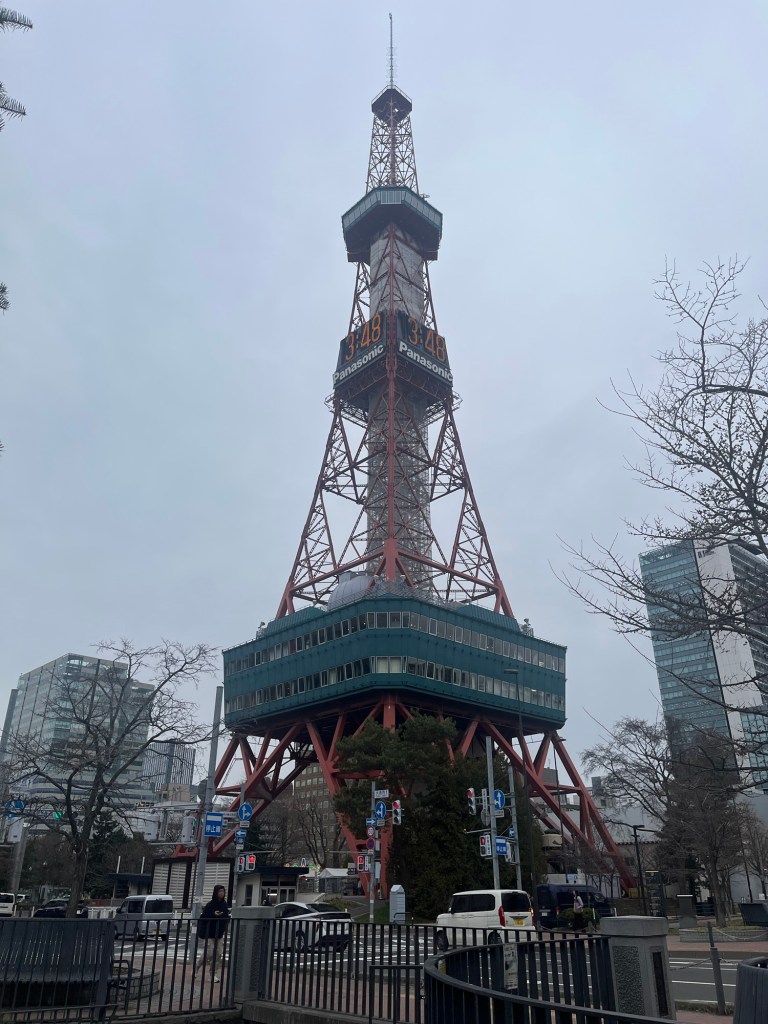
I used the subway to walk about half an hour downtown towards the Susukino area, stopping along the way at the Clock Tower, the TV Tower, and Nijō Ichiba market. Sapporo is quite a nice city for a wander, though in the late afternoon it was getting increasingly cold so I headed back to the hotel.
We went to an izakaya (a Japanese pub) for dinner. There was an extensive menu of small dishes that we had including yakitori, sushi, ramen and rice. The izakaya was small and full of people, which made for a bustling environment, I’m really glad I experienced one during my trip.

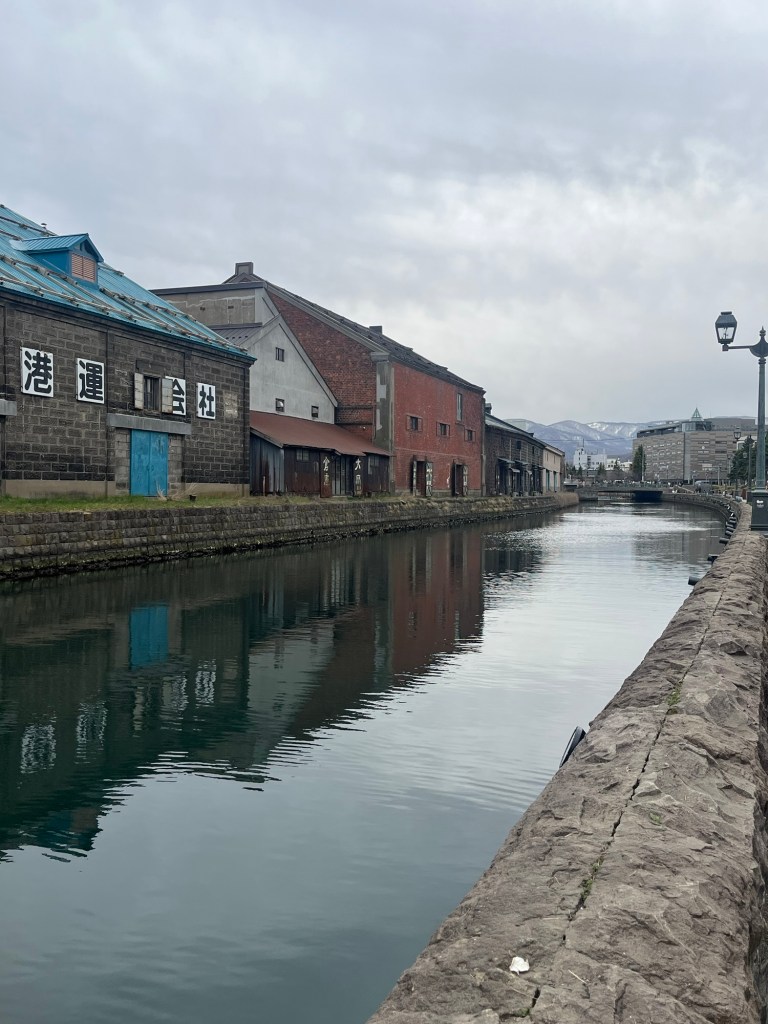
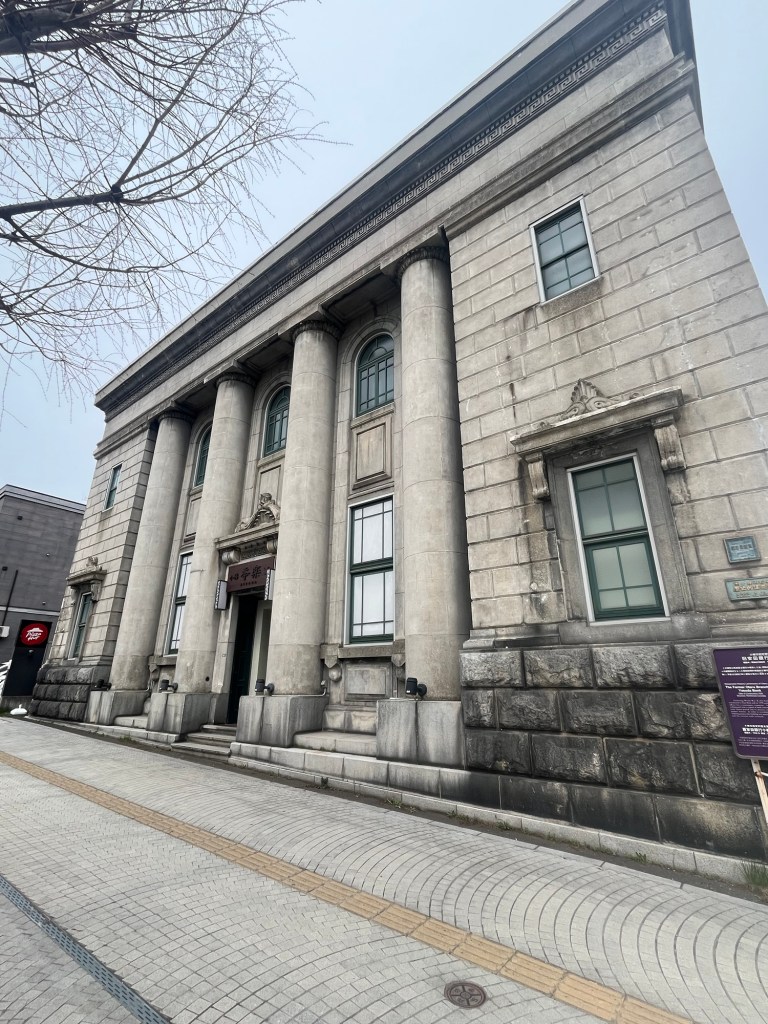
The next day we headed out on the train to the nearby port city of Otaru. Formerly, Otaru was a financial capital of Hokkaido, due to the port and the coal that was exported from here. There are some very impressive buildings here that were all previous banks and financial institutions which grew up around the port. Nowadays, most have been repurposed into shops and eateries. The canal has also been restored and because of the coal history and the redevelopment, it did slightly remind me of Cardiff.
We returned to Sapporo in the afternoon and had our final dinner of the trip that evening. Another jingisukan, this time on a bigger scale at the Sapporo Bier Garten. We rounded off the evening with another karaoke session.

This was the final day of the Intrepid trip, and the following day I had a travel day back to Tokyo in readiness for my flight home the next day. Sapporo New Chitose Airport is about a 40 minute train ride outside of the city, but is very straightforward to get to. There wasn’t heaps to do once through security though…

I was flying to Tokyo’s Haneda airport and needed to get to Narita airport for my flight out the next day. The road distance between the 2 airports is about 55 miles (88km). Whilst it is possible to get trains (with changes) between the 2, I opted for a limousine bus (aka a coach) which leaves regularly from all terminals at Haneda to all terminals at Narita. You can buy a ticket from the machines in the arrivals hall which helpfully have an English language option. Transport in Japan can be a little overwhelming but I was honestly pleasantly surprised by how much was available in English. And the internet, particularly Google Maps and Reddit, were extremely useful tools in helping me figure stuff out when I was on my own.

Overall I’ve really loved Japan, I’m so pleased that I headed north in addition to the more well-trodden route through southern Honshu, and I’m fairly certain I will go back one day.
Noboribetsu and Lake Shikotsu

Our luggage had been sent from Hakodate to Asahikawa, our destination in 2 days time, so we were operating out of our smaller bags for a couple of days.

We took a train from Hakodate along the coast to Noboribetsu and then a bus to Noboribetsu Onsen which is a small town full of onsen resort hotels. It had a bit of a ski resort feel to it despite there being no skiing in this area.

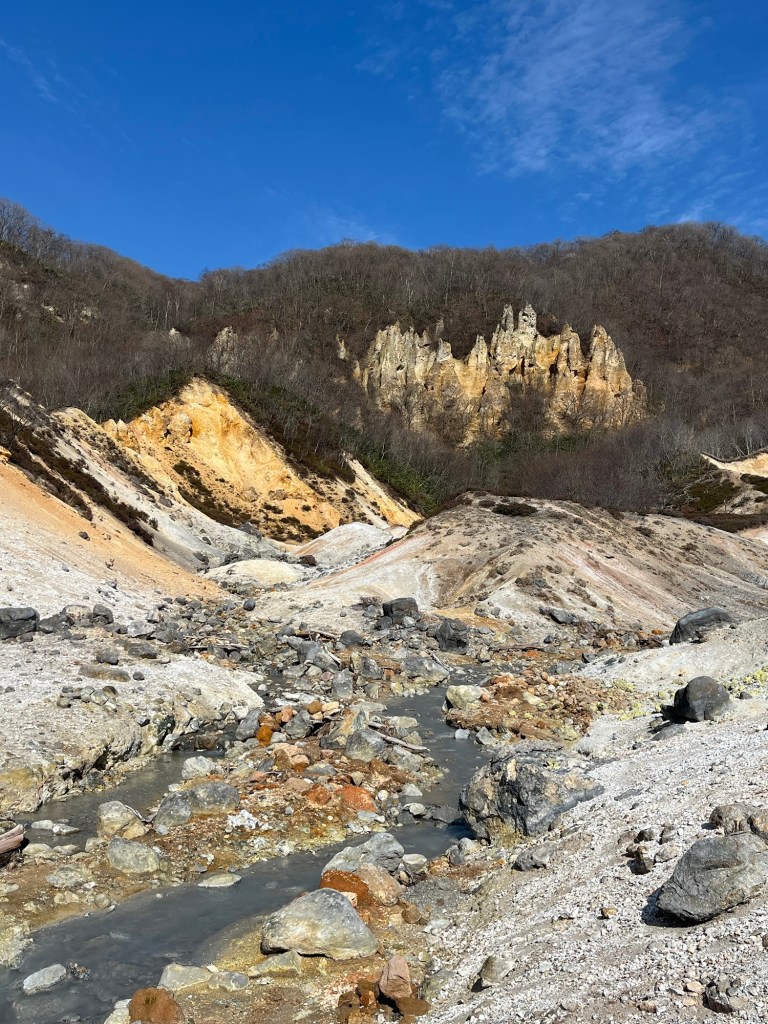
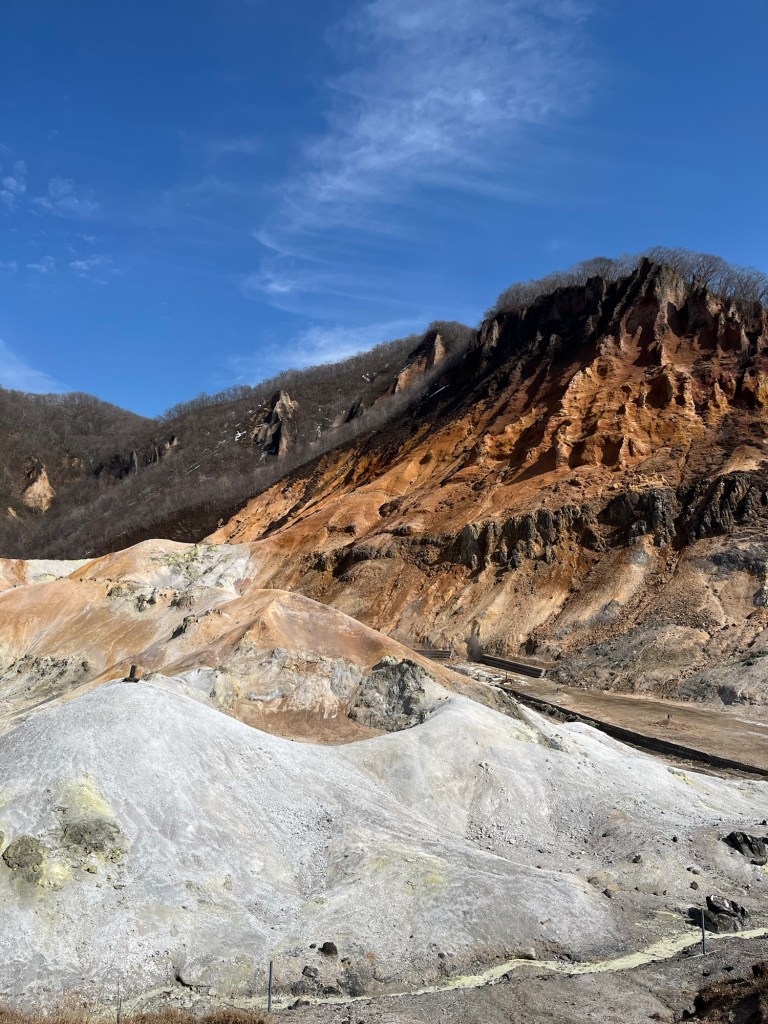
When we arrived, we walked to Hell Valley, which is a steaming landscape and the source of the hot water for the onsens in this town. The colours really reminded me of Wyoming.

After that we returned to the hotel and I very much enjoyed the onsen. It was late afternoon and pretty quiet so I had a long soak in the various baths. It’s so peaceful and meditative.

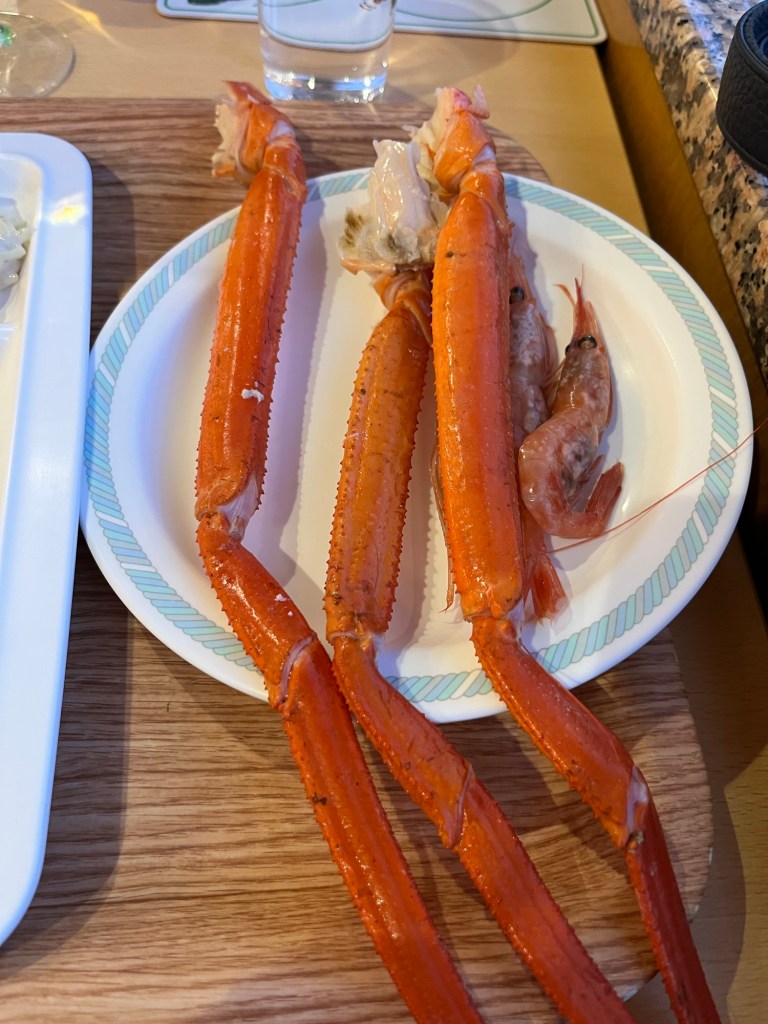
We had a buffet dinner which had lots of seafood including as many crab legs as you could eat!!

This was round 2!!

I ended the day with another soak in the onsen, something I could definitely get used to!

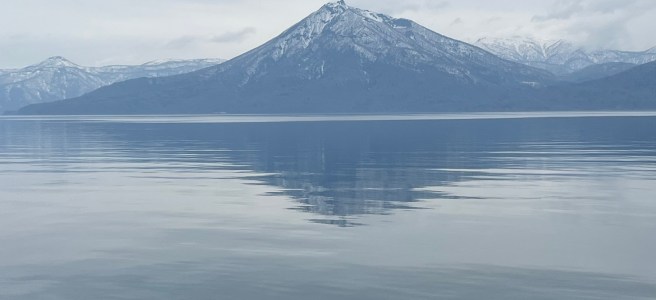
The following day started with a bus, a train and another bus to Lake Shikotsu, the deepest lake in Hokkaido. There were vast mounds of snow still on the ground, having been cleared into piles. The trees had yet to burst into life after a long winter. It had a bit of a desolate feeling as we travelled, especially as it was quiet too.

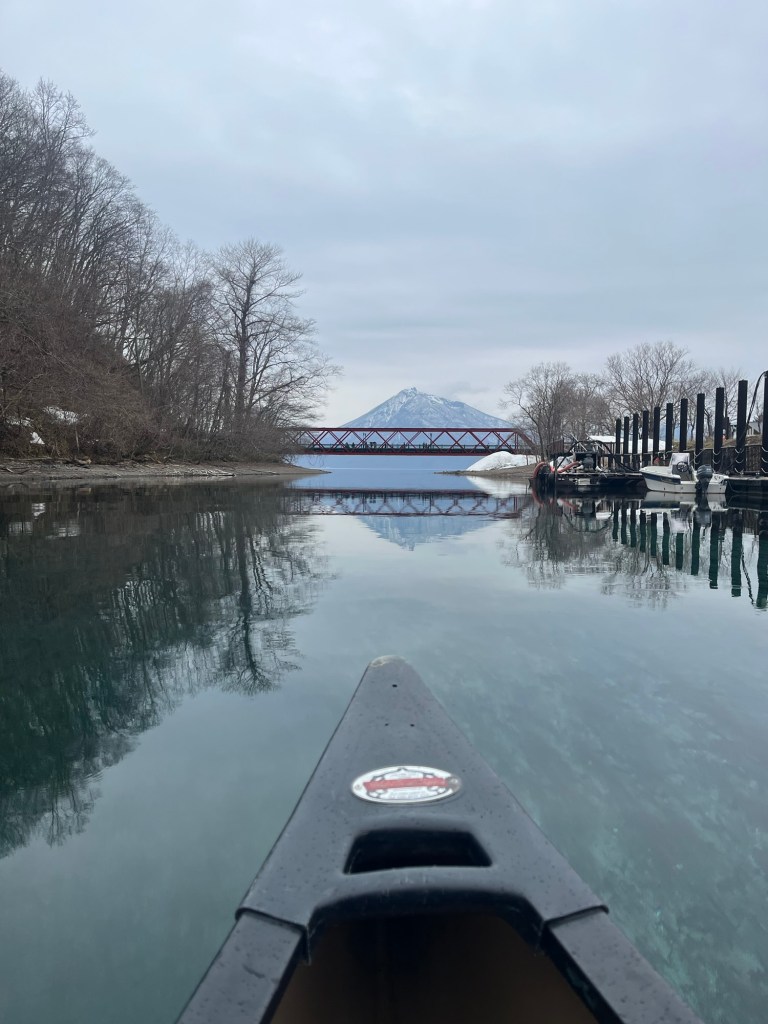
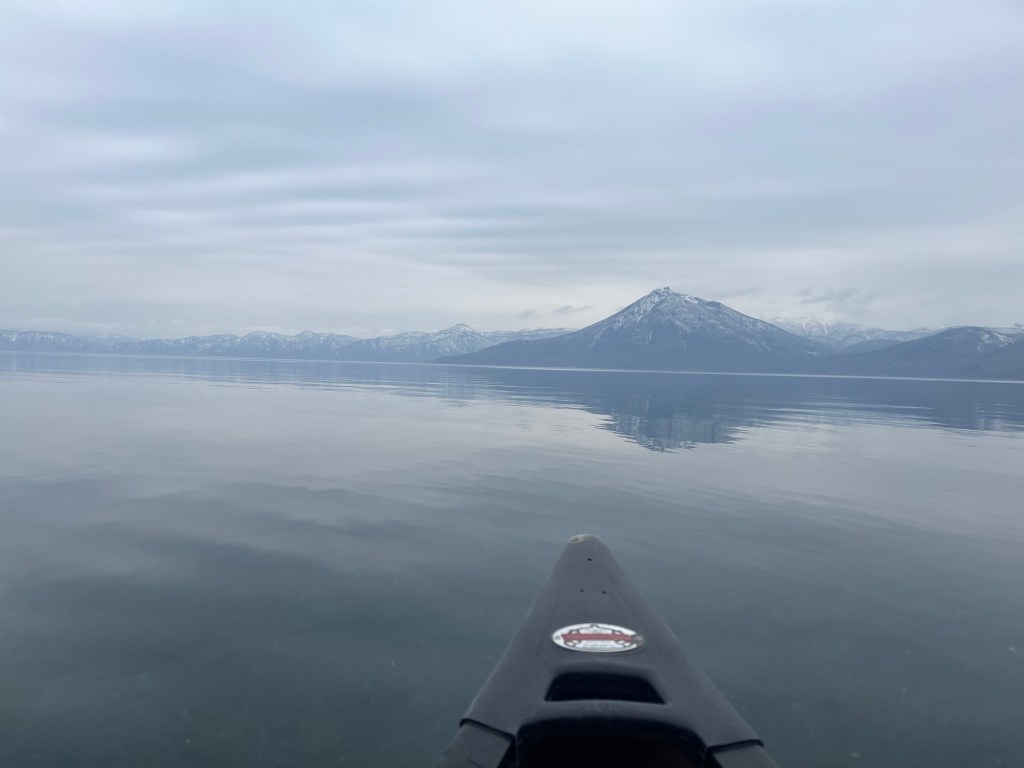
We had a canoeing excursion on the lake, we were so fortunate that the lake was calm this afternoon. The next day a storm had blown in and it was decidedly choppy!

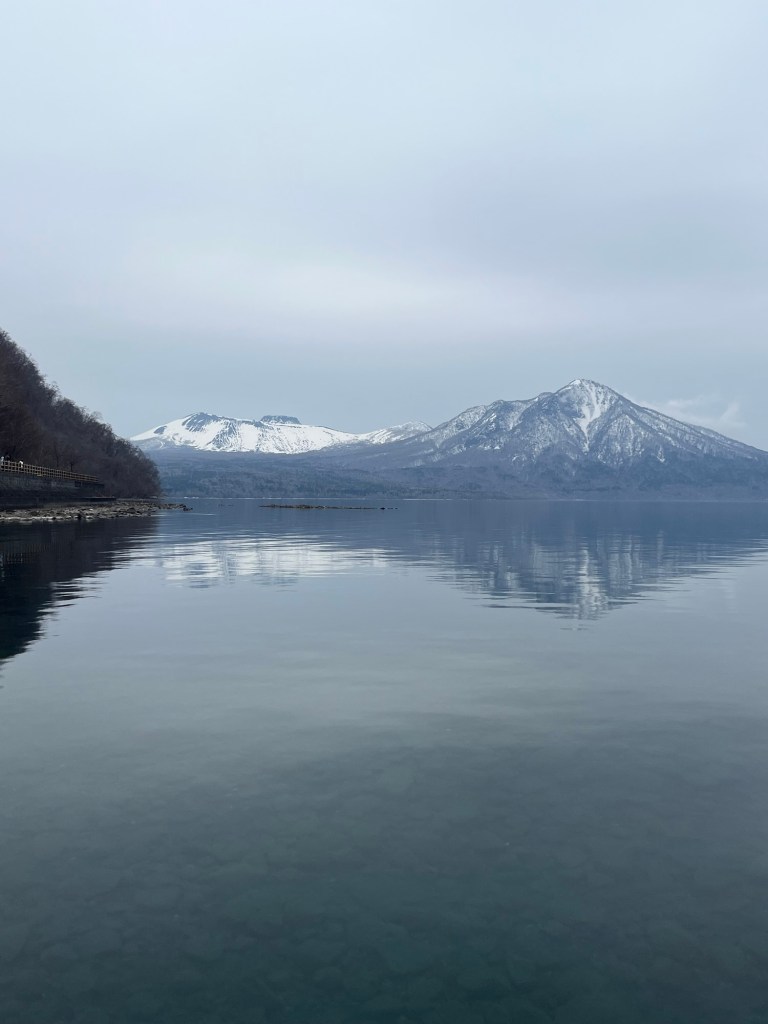
Canoeing into the serene lake and marvelling at the landscapes, the surrounding mountains with dustings of snow, was just so idyllic.

It was, however, decidedly cold, and I was grateful for the additional clothes I’d bought in Japan – thanks Uniqlo and Muji!!

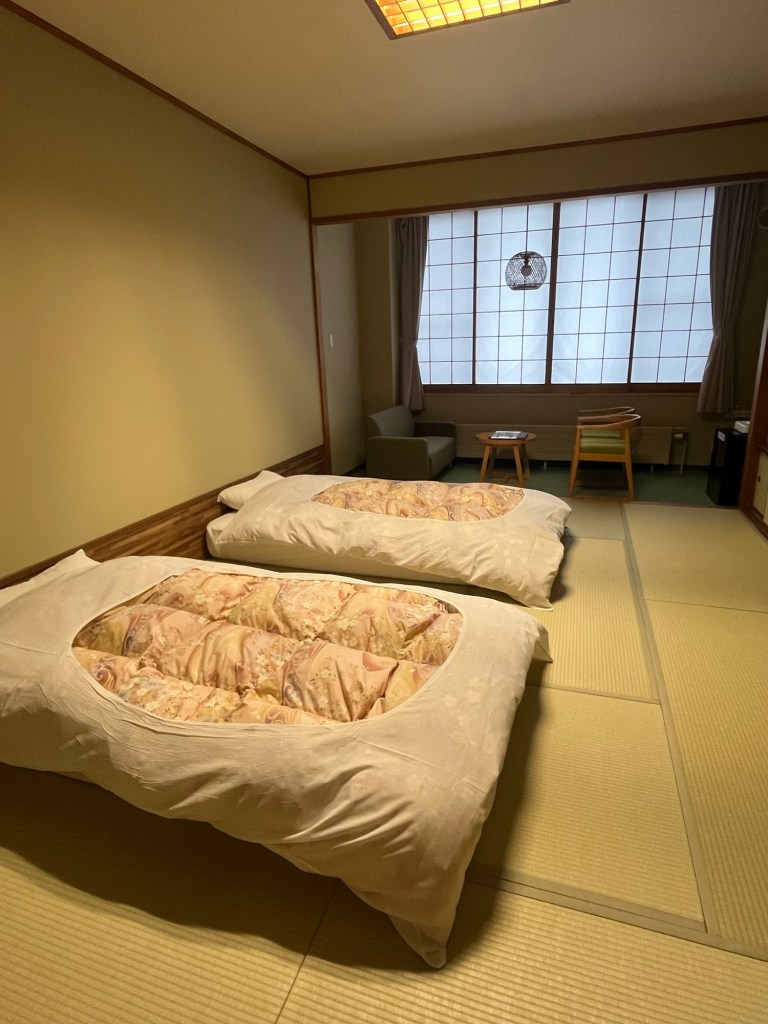
We stayed at a ryokan on the lake this evening, with another onsen. Ryokans are traditional Japanese inns and have futons and tatami mats in the rooms, and the only bathing and showering facilities are in the onsen. What a good excuse for another long and relaxing soak…

I really enjoyed these couple of days. It felt more off the beaten track than even Aomori or Hakodate, certainly compared to the first half of my Japan travels. It is the off season, so it was very quiet, but that really added to the peaceful ambience. I’ve also discovered that I really like onsens!!

Next, to Asahikawa, the coldest city in Hokkaido…

Aomori and Hakodate

Back to Tokyo for the second part of this trip, and to meet my new group. A very small group this time, just 2 others plus the guide. As the others were both men it meant I got my own room without paying for it – result!!

We joined the Monday morning crush on the Tokyo subway to get to Tokyo station to catch another Shinkansen which will whizz us the near 700km / 435 miles north to Aomori in just over 3 hours.

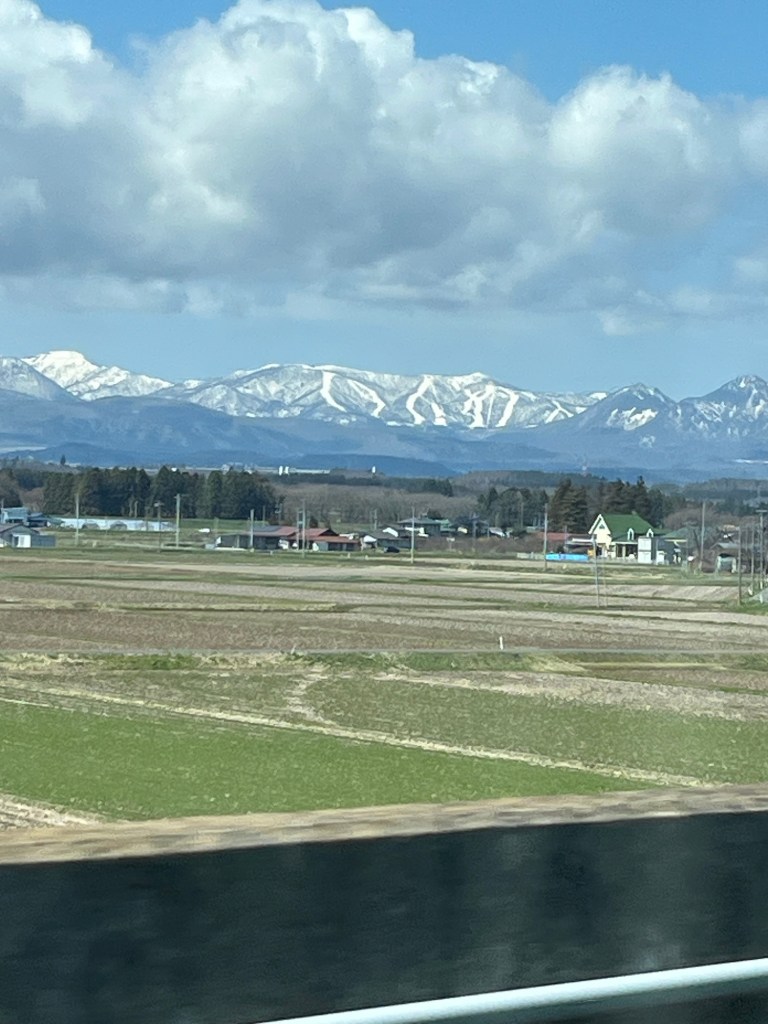
The scenery changed and we said goodbye to the blossoms as we hurtled north, passing rice fields and, later, snow capped peaks.

A slightly exciting moment as the train came to a sudden halt just outside of a station and all the power went off. There had been an earthquake out to sea and the train stopped for about 15 minutes as the tracks were checked. All was fine and we carried on and still arrived in Aomori by lunchtime.

Certainly a change in temperature here compared to my first week or so in Japan. And indeed to the last 5 months of my travels. I was very glad for the coat I’d bought when I got to Tokyo. In Aomori it was cold enough for me to buy some thermal lined trousers, a hat and some gloves, which I would be extremely grateful for in a few days time…

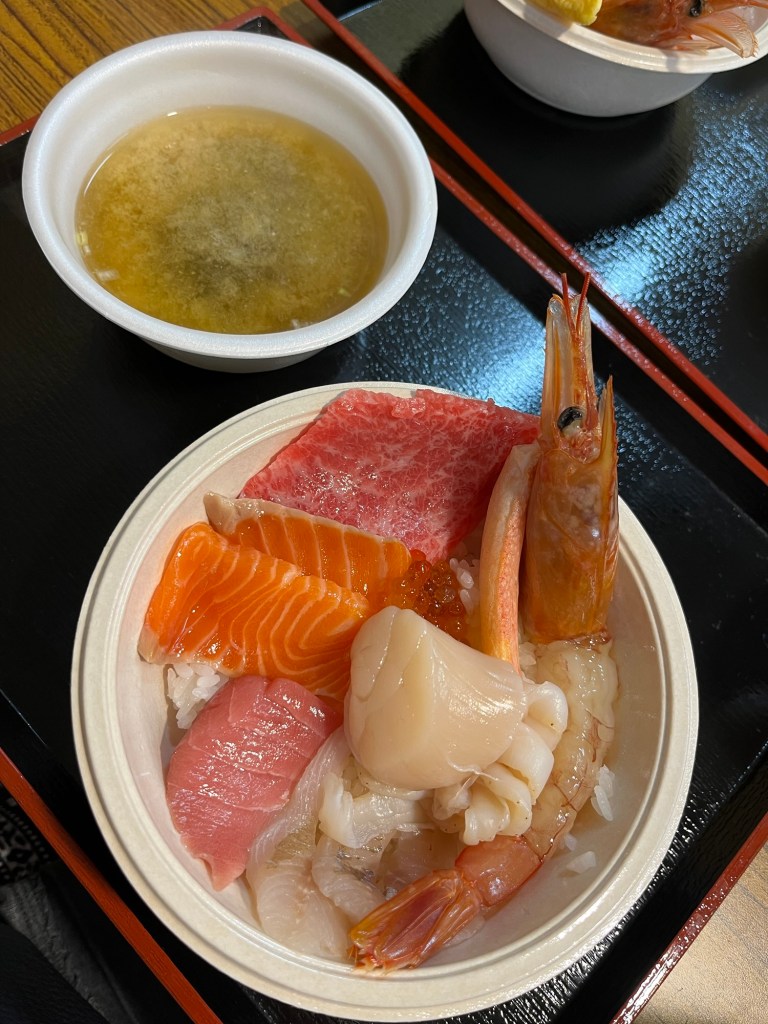
The northern part of Honshu, and Hokkaido, has amazing seafood, and for lunch we went to Aomori Nokkedon, a fish market where you can create your own rice bowl lunch by buying some tickets and exchanging them at the various stalls as you go round the market. Some of the freshest sashimi I’ve ever had, absolutely delicious.

In the afternoon we went to the Sannai Maruyama archeological site, which preserves how the Jōmon peoples lived in this area 5000-6000 years ago. It’s still being excavated and it was very interesting to see what has been found and how these people lived.

That evening we had more seafood for dinner, and there was some live music at the restaurant, using a traditional Japanese shamisen – a 3-stringed instrument. There was also a chap in traditional costume who got us all up dancing in a line around the restaurant, surprisingly exhausting!!

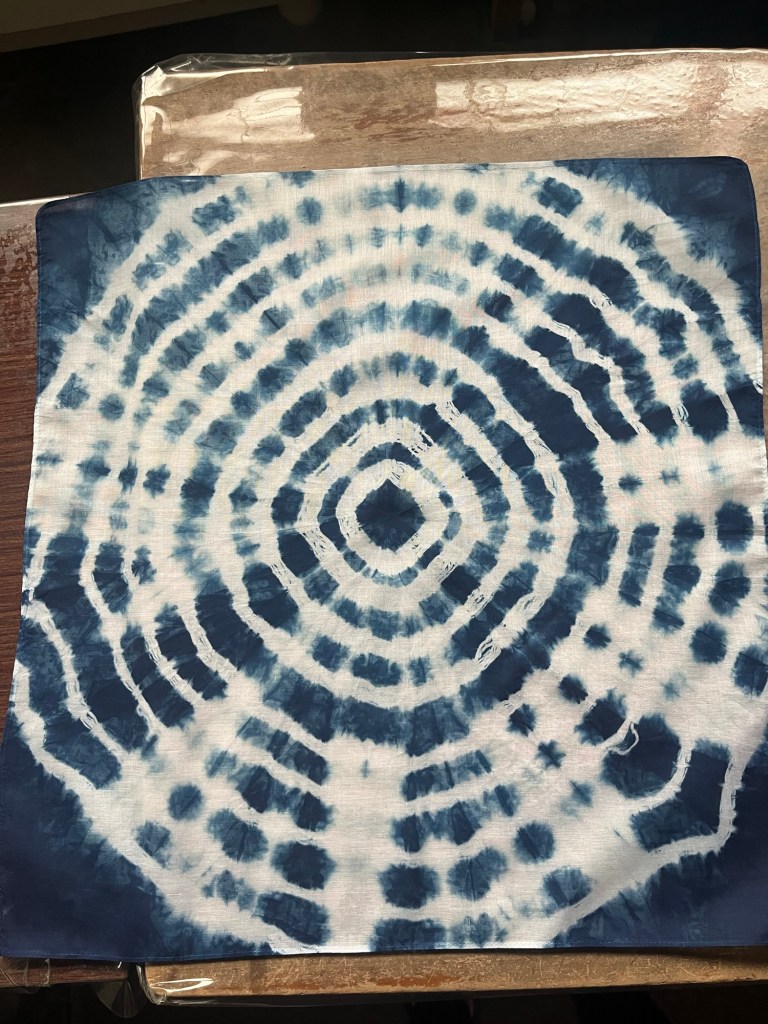
The next day we headed to nearby Hirosaki on the train for the day. We started at an indigo-dyeing workshop, which is one of the traditional crafts in this area. The place we went to had these great big vats of indigo dye stewing away. I opted for tie-dye and I was much happier with my attempts here than at the previous tie-dyeing in Thailand.
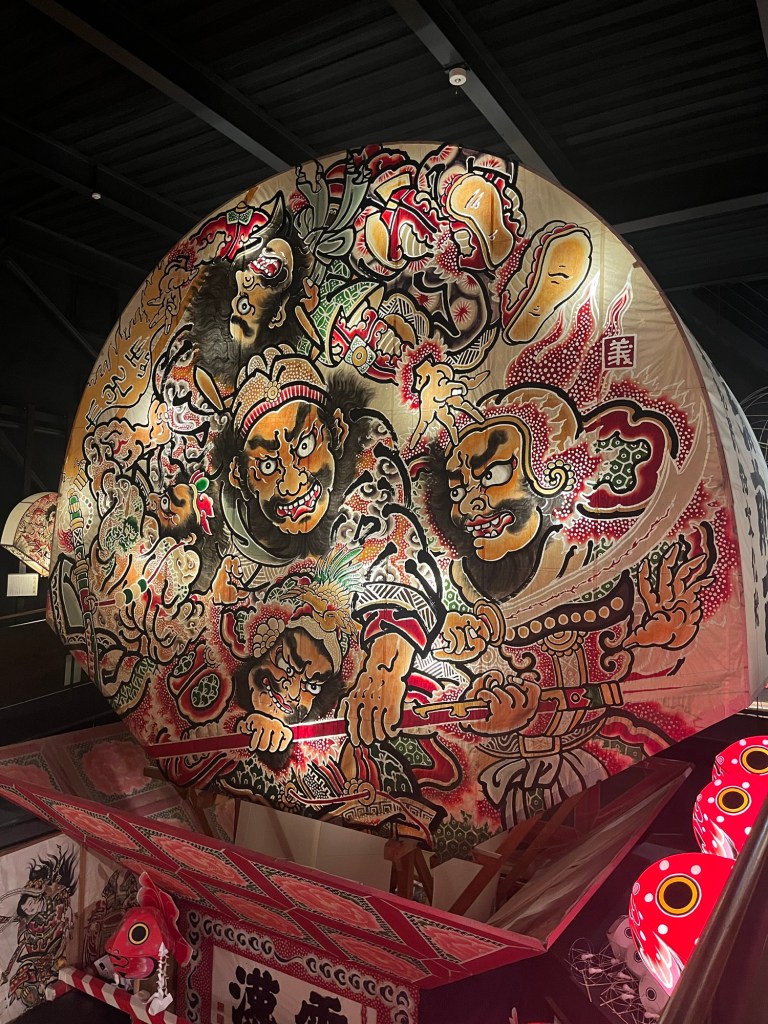
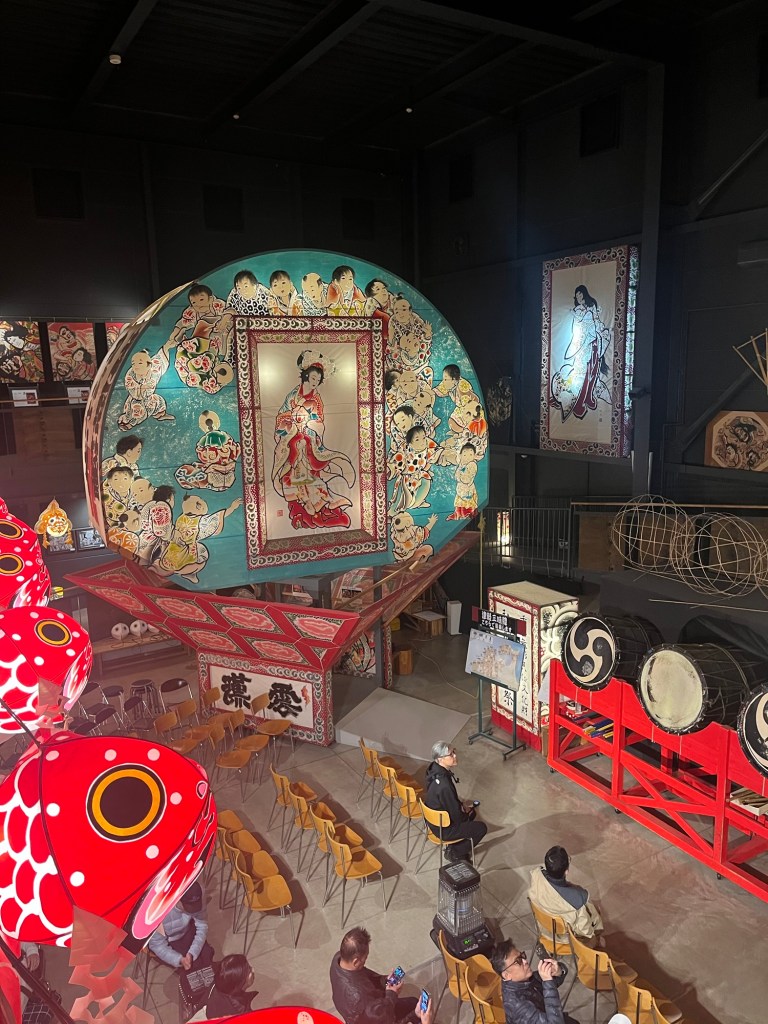
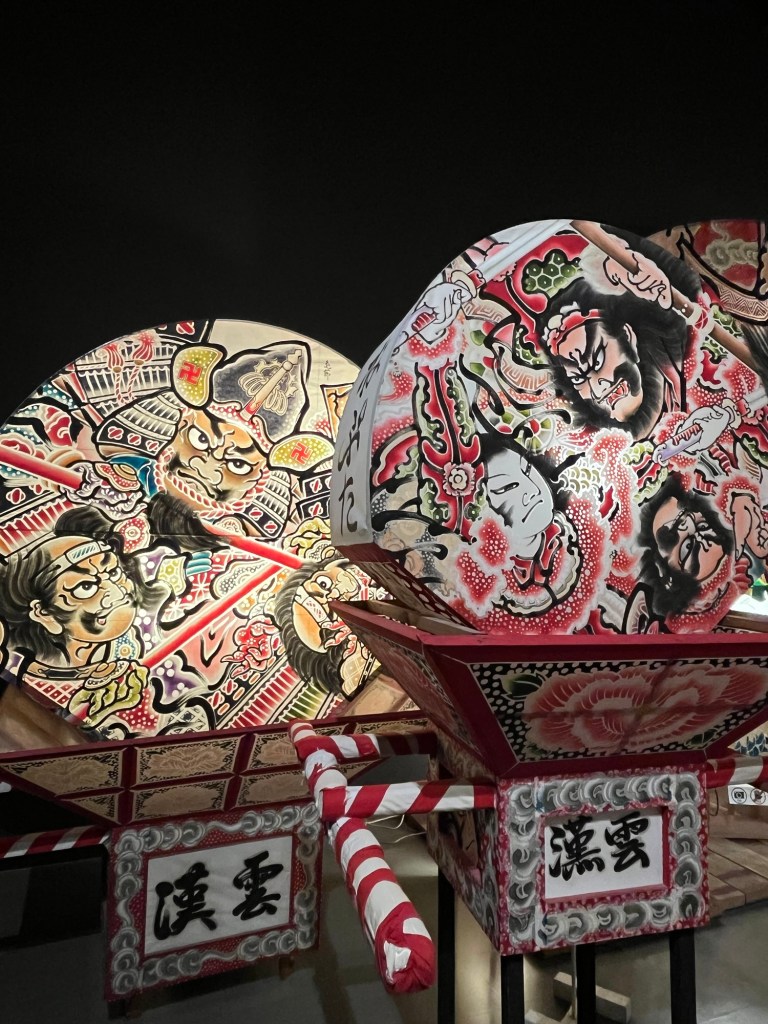
We then went to the Tsugaru-han Neputa museum which contains these enormous lanterns which are used every August in the Nebuta Matsuri festival, which must be a lot of fun. The lanterns are beautifully decorated but I couldn’t get over how big they were!

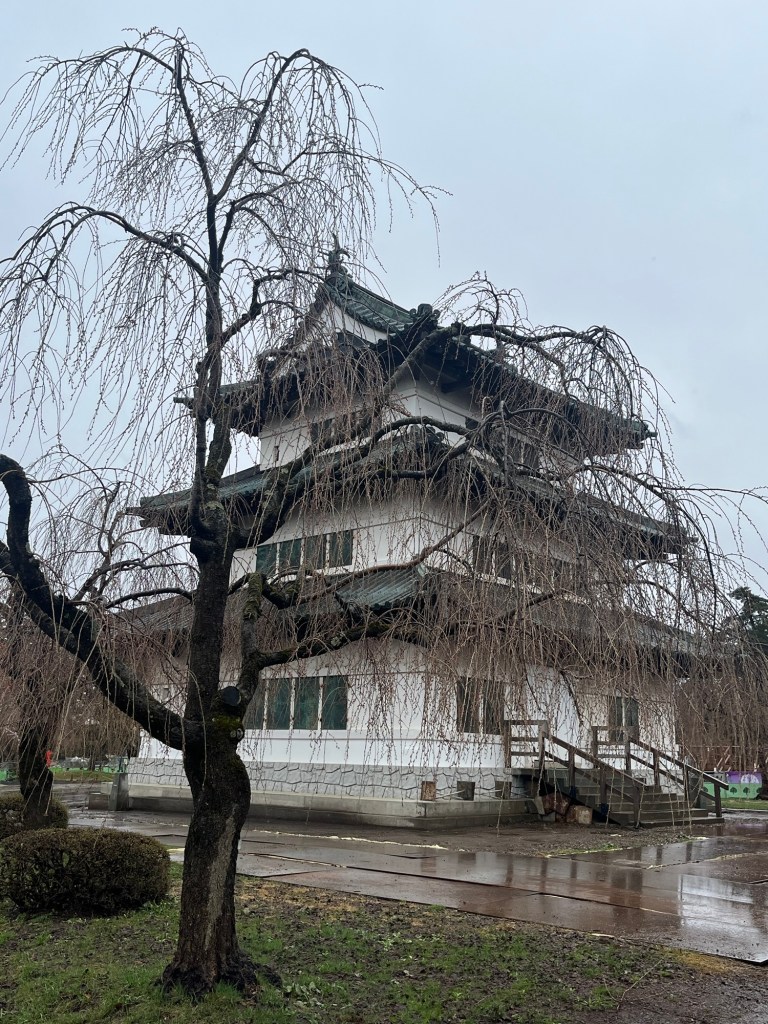
After a warming bowl of soba noodles in a cafe for lunch, we then had a brief wander around the outside of Hirosaki Castle, which is under renovation for the next 8 years (I think!). As part of the renovations, they’ve actually moved the castle from its original position whilst the ground is being reinforced. Pretty surreal to think this building has been moved!

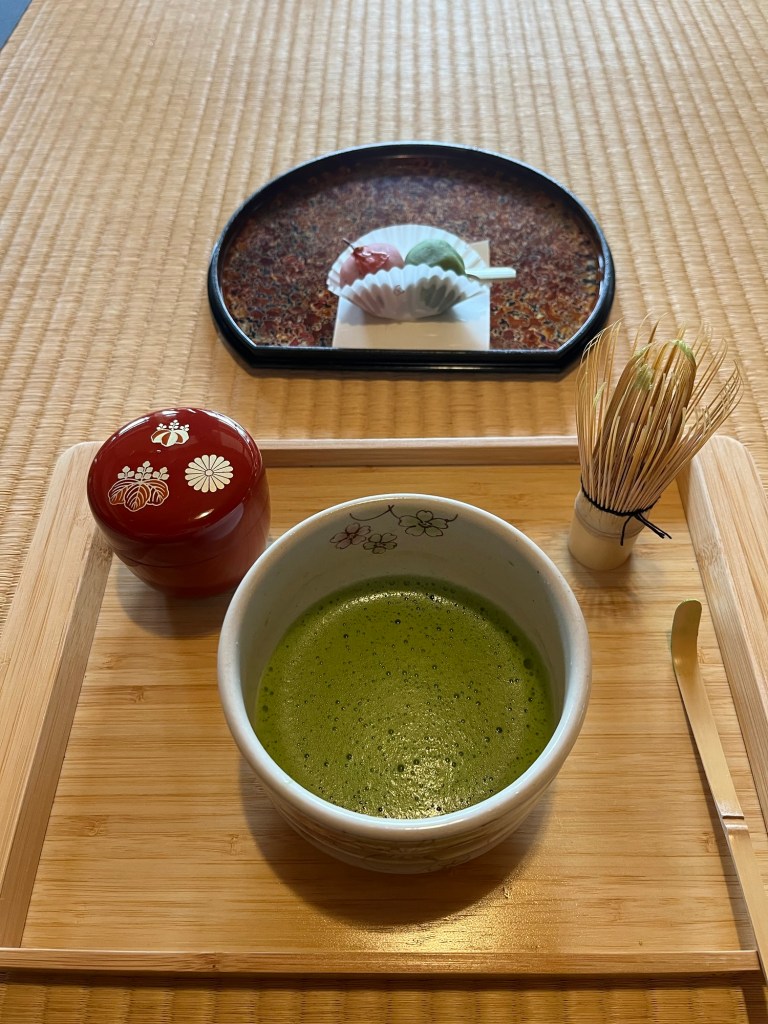
We also had a traditional Japanese tea ceremony, kneeling on the tatami mats, and being very calm and precise in making the tea and drinking it. A very serene experience.

Back to Aomori in the late afternoon, and a yakitori dinner.

The next morning was my final Shinkansen of this trip as we made the 1 hour journey under the sea from Honshu to Hokkaido and to the current northern terminus of the Shinkansen at Hakodate. Work is ongoing to extend to Sapporo in the next few years, at which point it will probably be faster to take the train from Sapporo to Tokyo rather than fly, by the time you’ve factored in hanging around at an airport, which is a bit mad really.

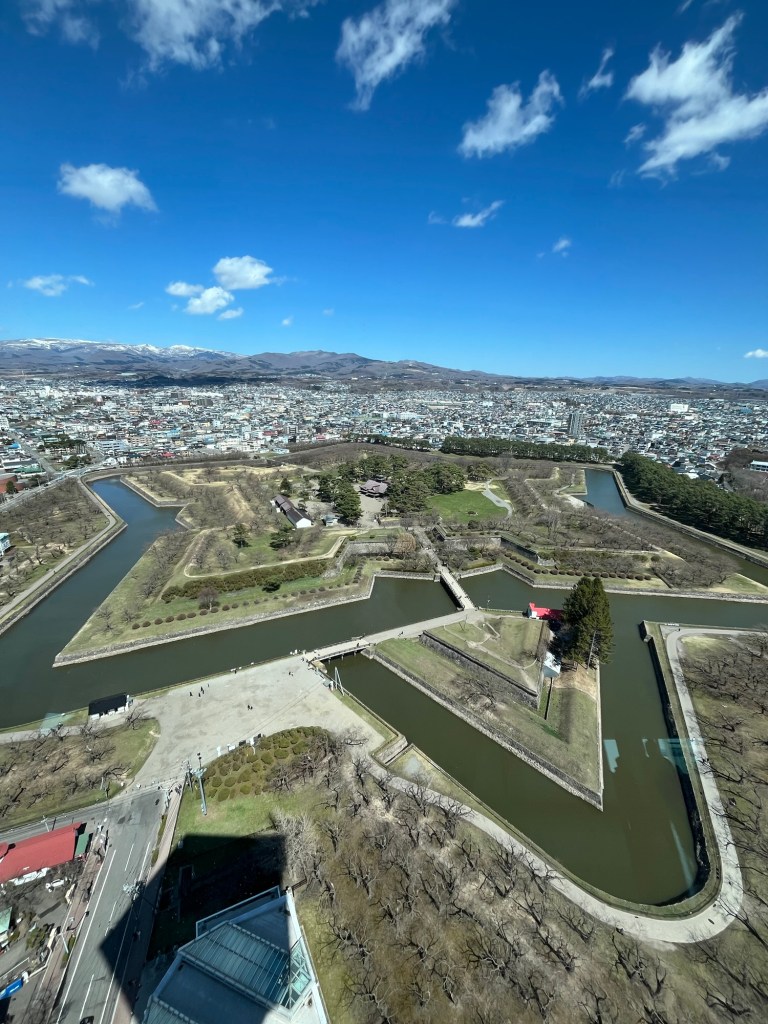
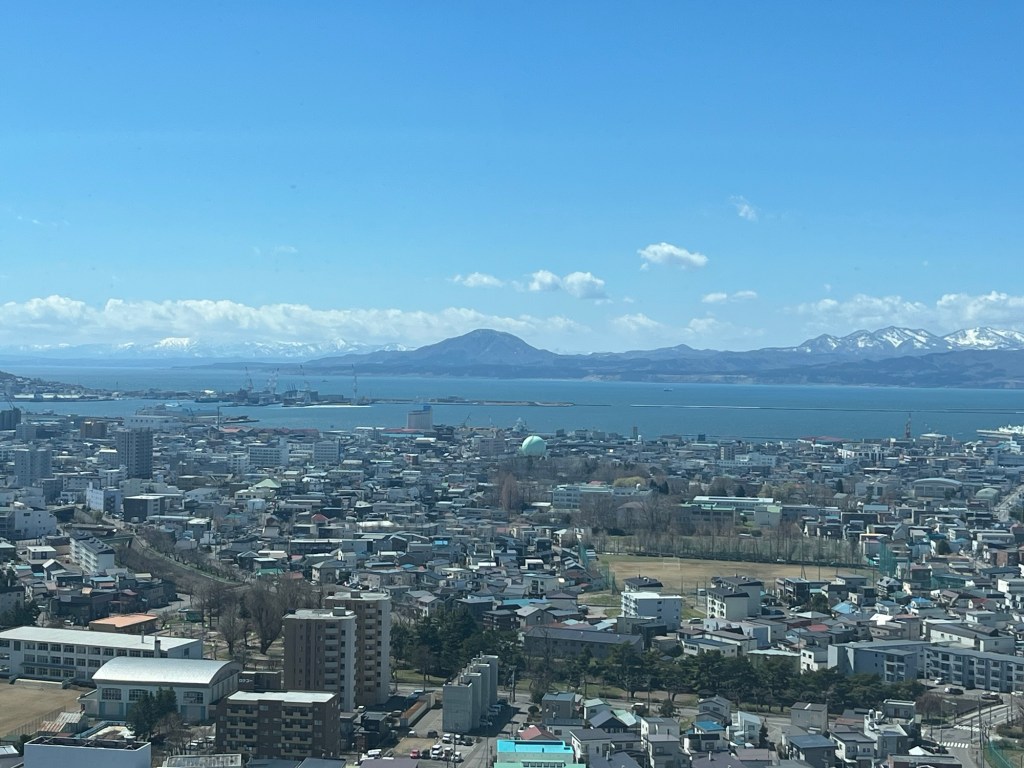
We were in Hakodate by mid morning and dropped our bags at the hotel. We took a tram to Goryokaku Tower and went to the observation deck where you get great views over the city, and of Goryokaku fort directly below. The fort is in a star-shaped design and apparently influenced by European designs. In a couple of weeks, the cherry blossoms will be bursting forth, outlining the fort in beautiful pink blossoms.

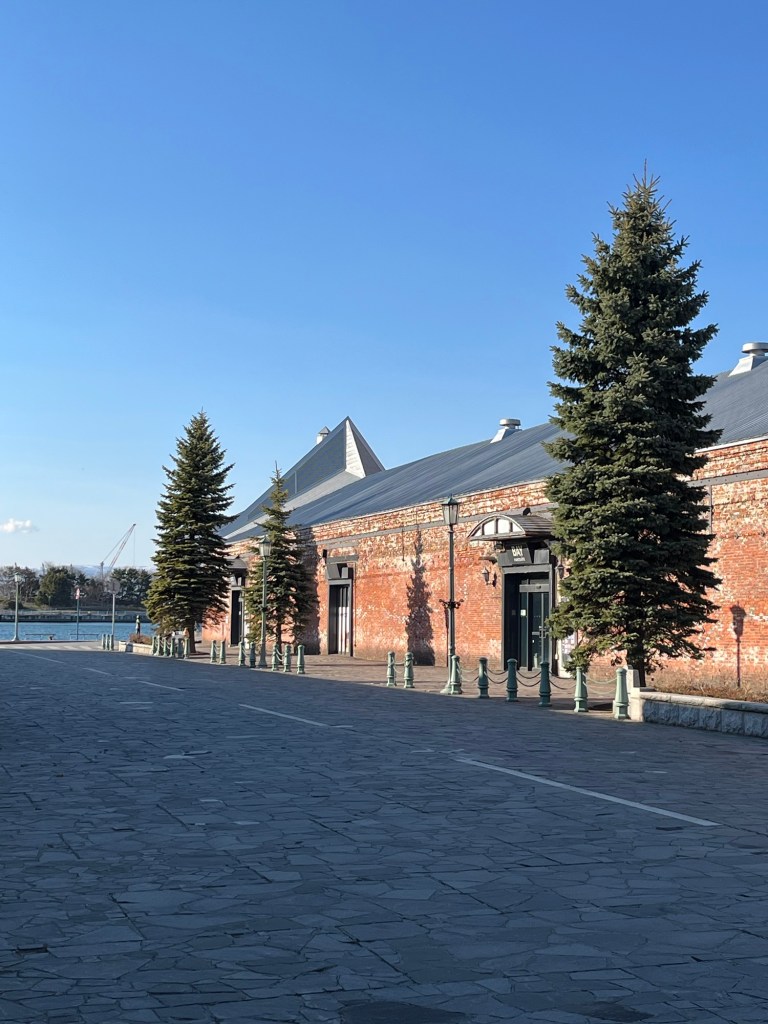
We had some free time after lunch and I wandered around part of the historic port of Hakodate, to the red brick warehouses which now house an assortment of shops and restaurants. As we were on the coast, it was quite breezy, and the architecture here is very European, it made me feel quite at home!

Red brick warehouses, Hakodate

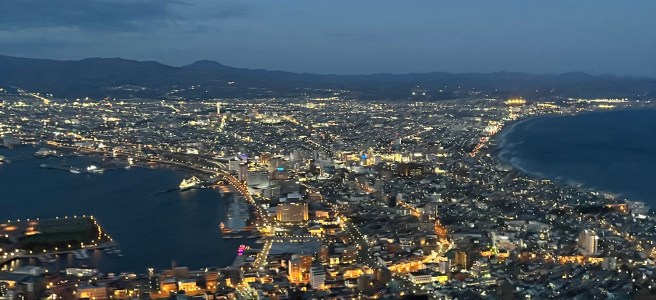
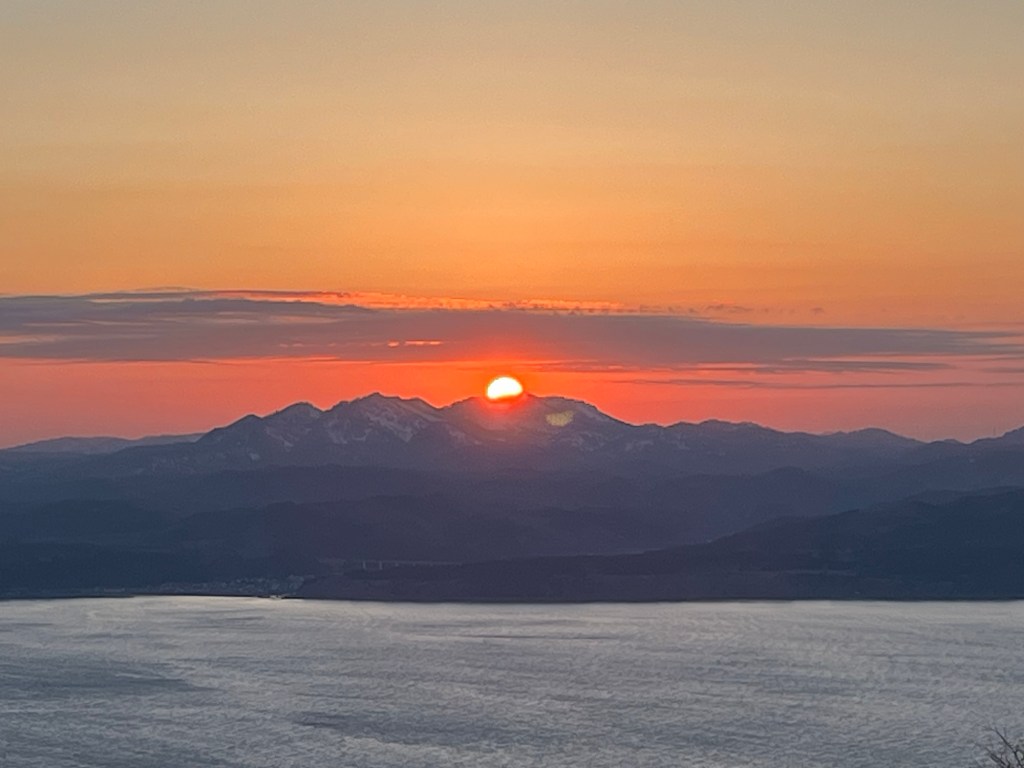
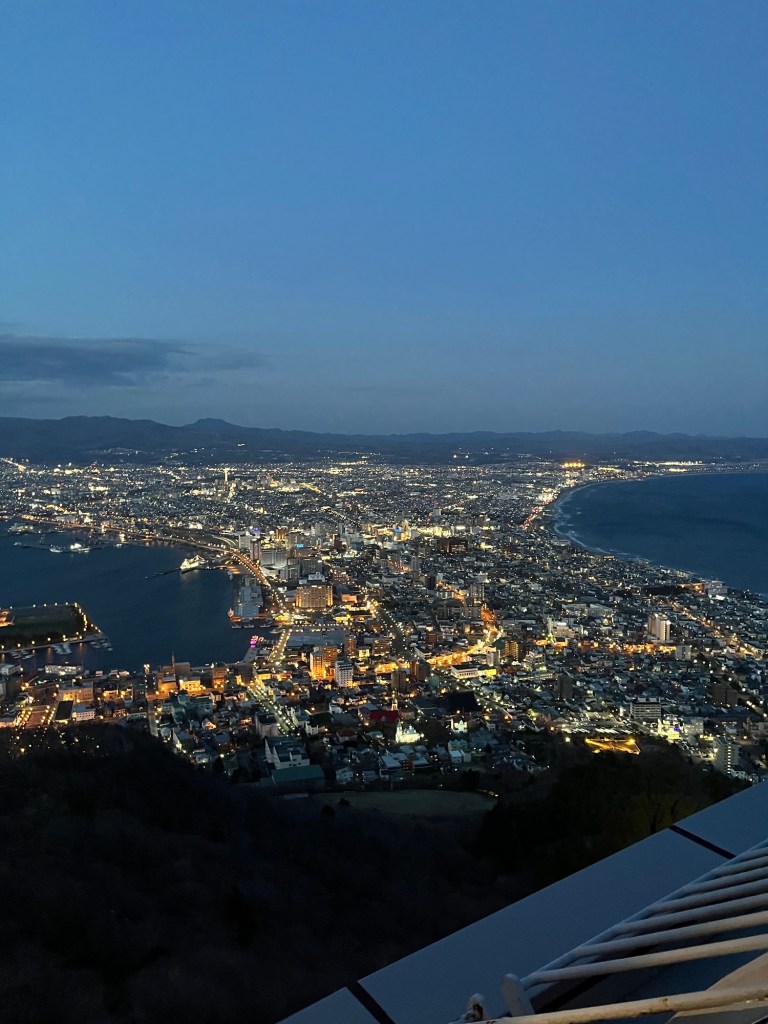
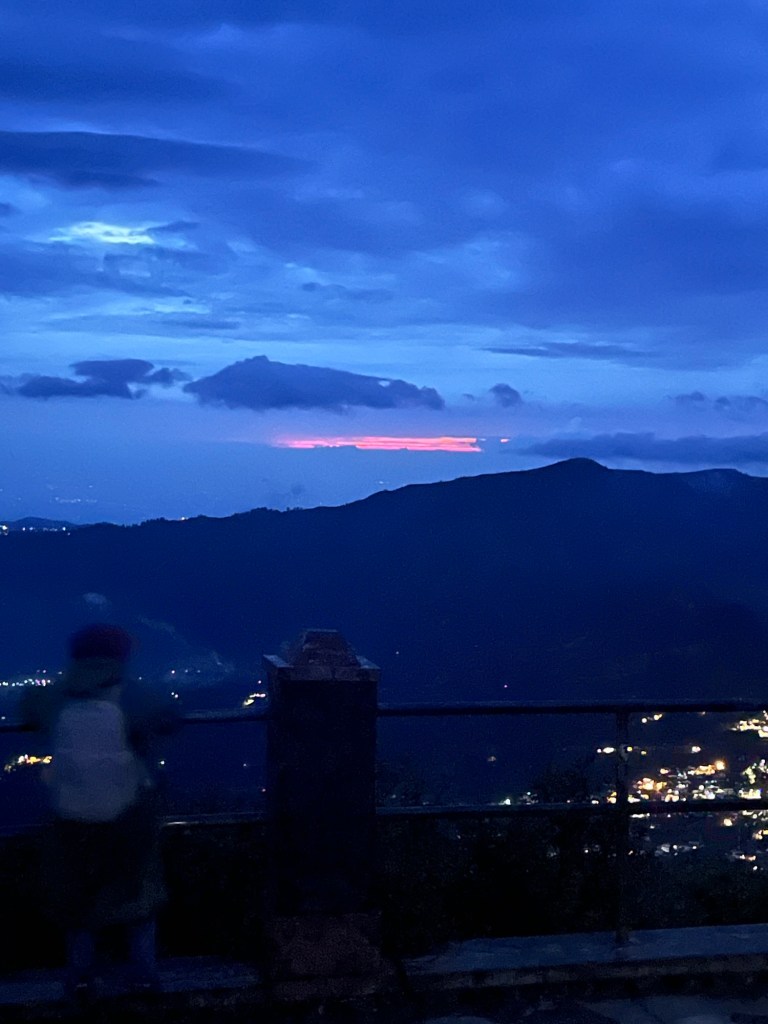
In the evening after dinner we went to the Hakodate Ropeway (cable car) and timed it perfectly to get to the top in time for sunset. We, and hundreds of others, then hung around for about half an hour for it to get properly dark as you then get great views of Hakodate lit up at night. After getting our photos we then tried to beat the rush back down in the cable cars and called it a night.

I’m already really glad I decided to come north on this trip. It’s a lot quieter than the traditional tourist route though southern Honshu, but has spectacular scenery and great food. Next up, a couple of days in onsen territory…

Hiroshima and Osaka

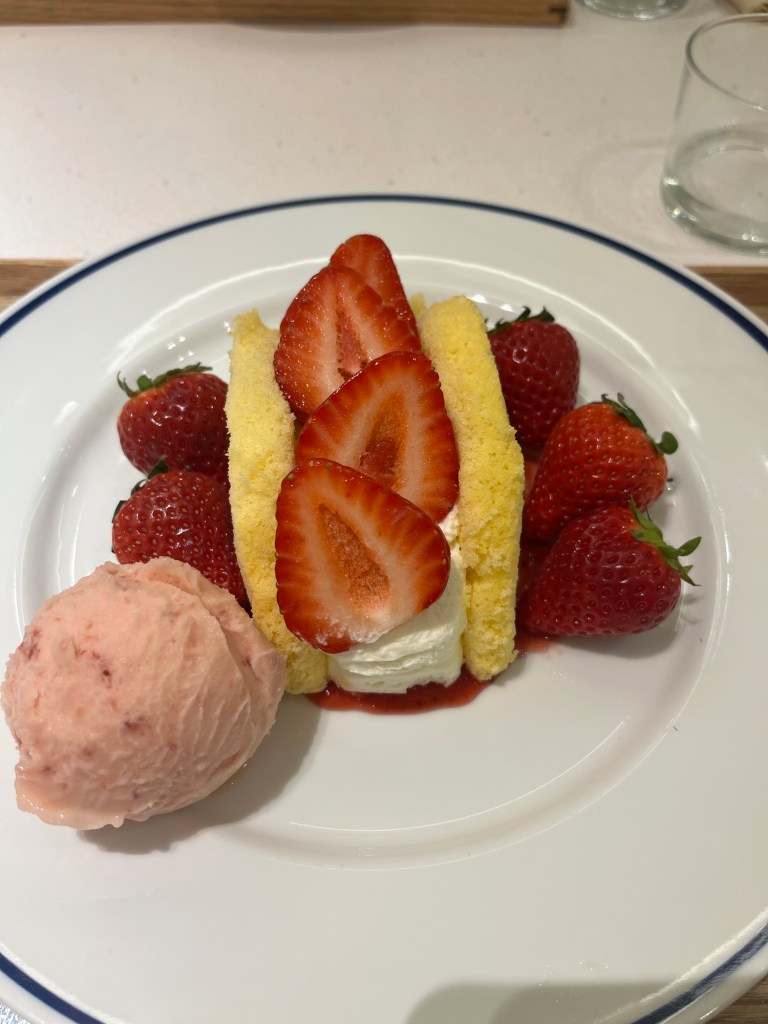
Back on a Shinkansen the next day towards Hiroshima. We arrived at lunchtime and made use again of the amazing facilities at the station. Most of the stations we’ve been to have large shopping malls/department stores attached to them with food courts and restaurants. I ended up having dessert for lunch. A strawberry sandwich cake with delicious fresh strawberries and strawberry sorbet. Absolutely no regrets.

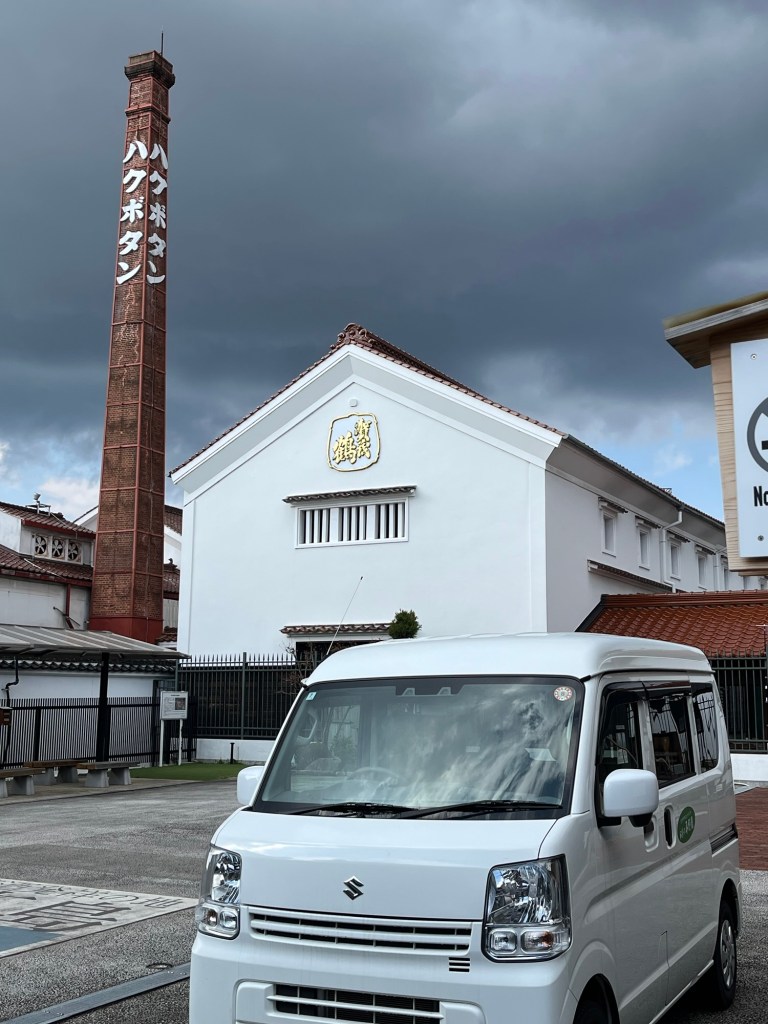
In the afternoon we hopped on a local train to Saijo, which is famous for its sake brewing. There are several sake breweries (distilleries?) in this town, and most are open for tastings. As I mentioned in my Kyoto post, I’m not entirely sure I like sake, but I’m continuing to try it!!

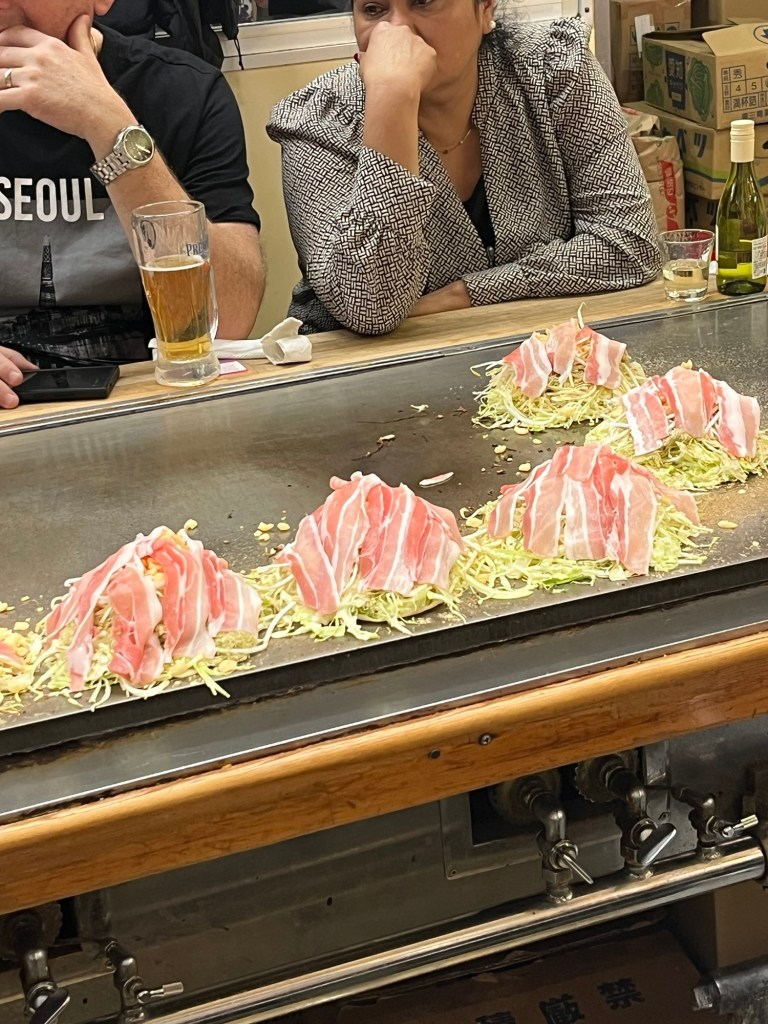
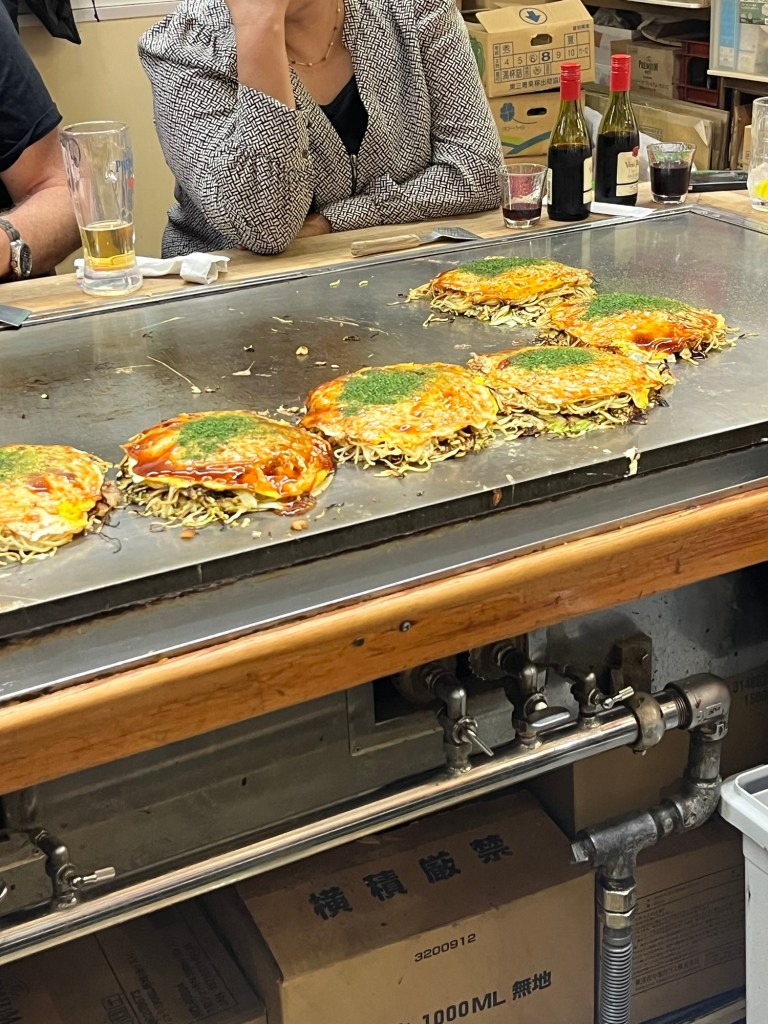
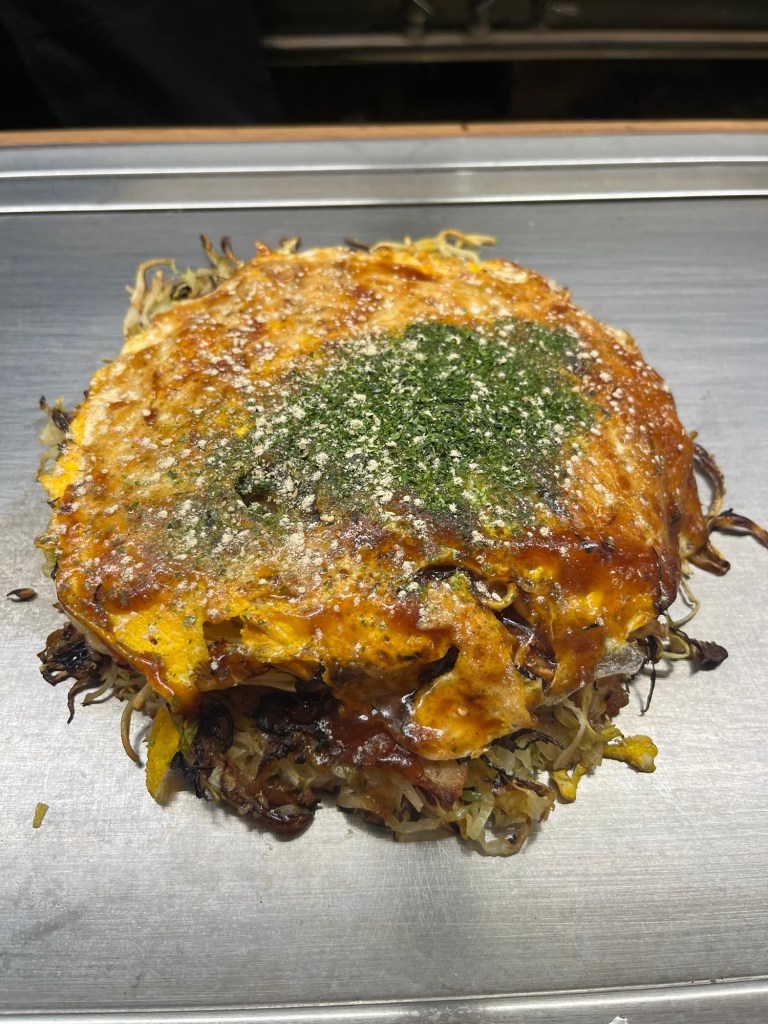
Back to Hiroshima and to check in to the hotel before dinner. Hiroshima is famous for its okonomiyaki – the cabbage pancakes which I had at the home stay in Kawane. We went to what seemed to be an okonomiyaki centre where lots of separate vendors were serving okonomiyaki which is cooked right in front of you. It’s a great spectacle to watch your dinner being cooked. I was a bit worried about the large size of the okonomiyaki but I managed to polish it all off with a couple of beers.

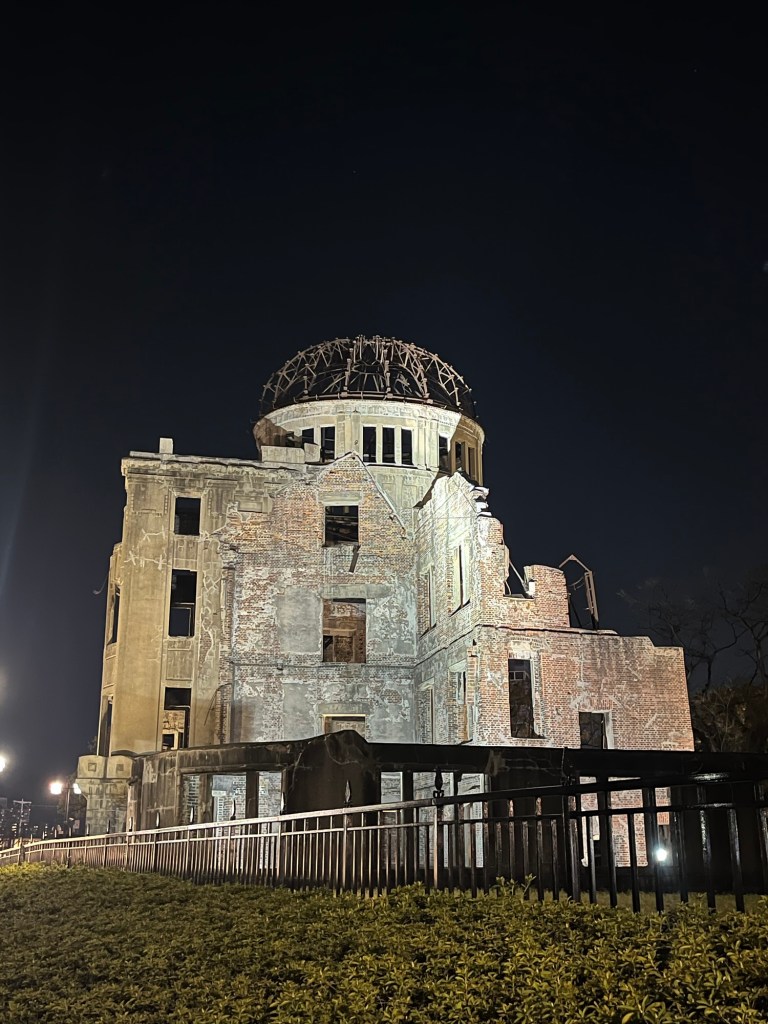
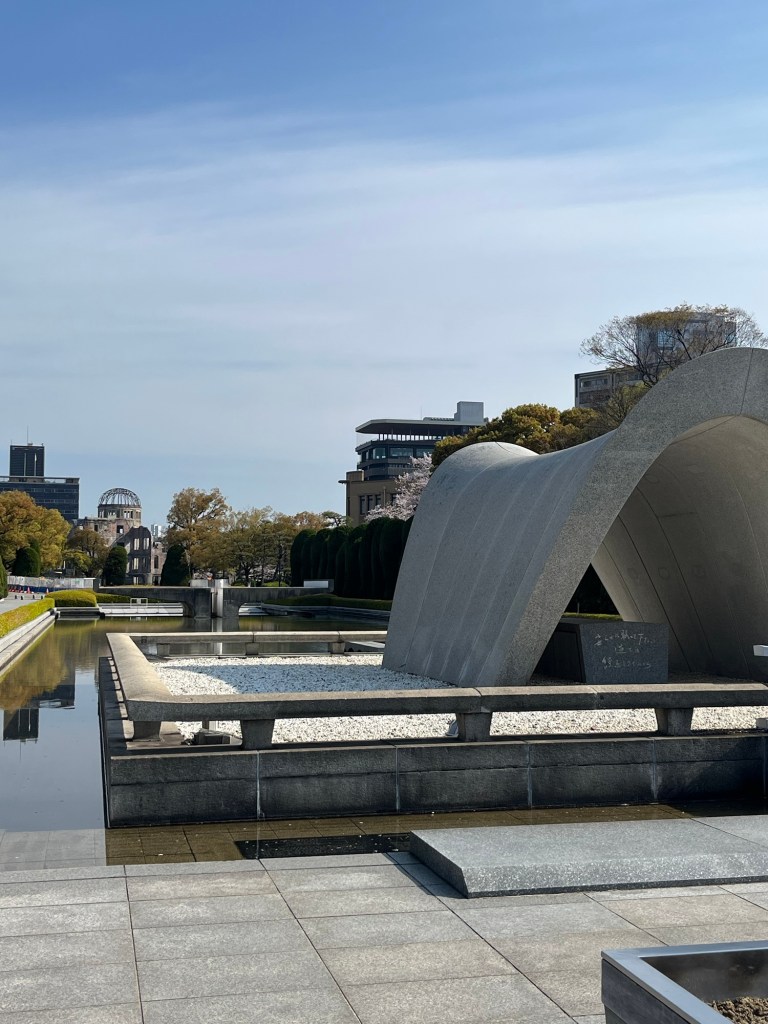
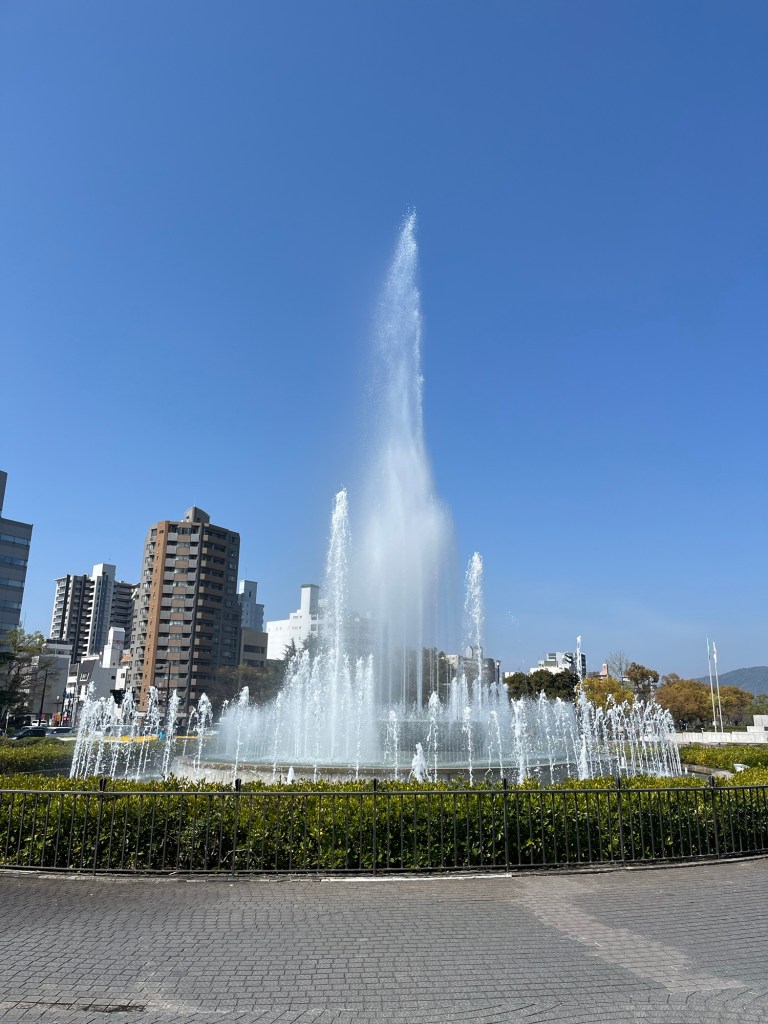
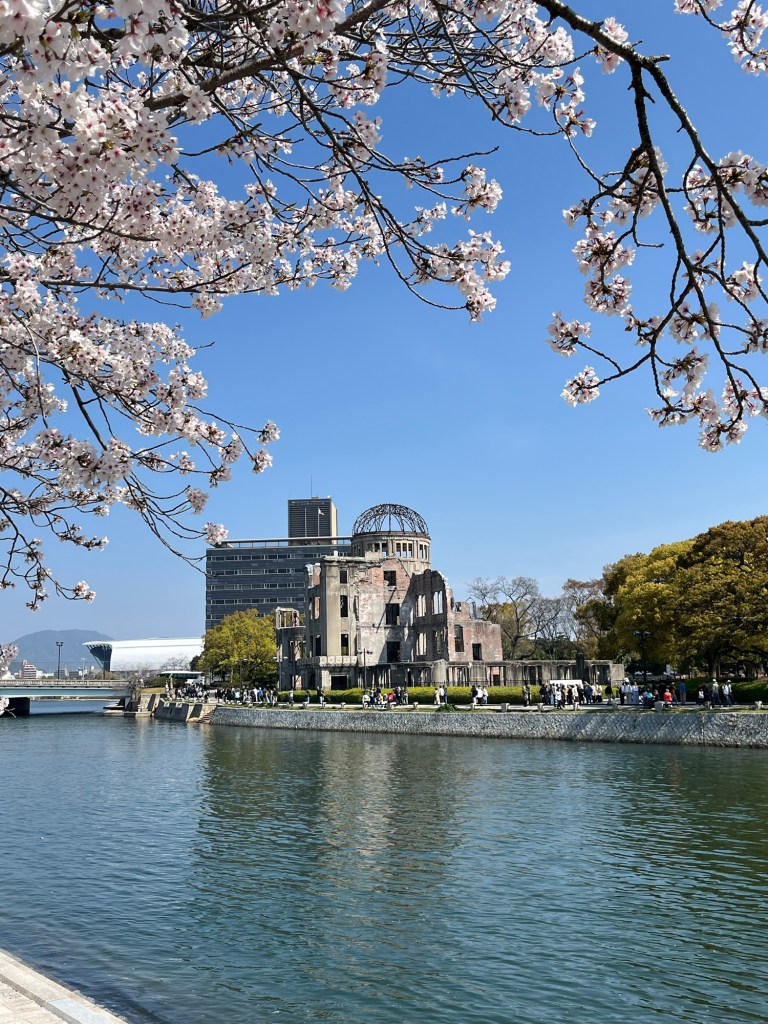
After dinner we walked back to the hotel via the peace park and the A-Dome, which is lit up at night. The atomic bomb went off directly above the building now known as the A-Dome, which ended up preserving the structure of this building when everything else in the vicinity was destroyed.

We started the next day with a visit to the Peace Memorial Museum, a must-do in Hiroshima. We learned about the devastating impacts of the bomb on Hiroshima, and on the people who survived the initial blast who subsequently became ill, in some cases years afterwards. It was a very sobering visit.

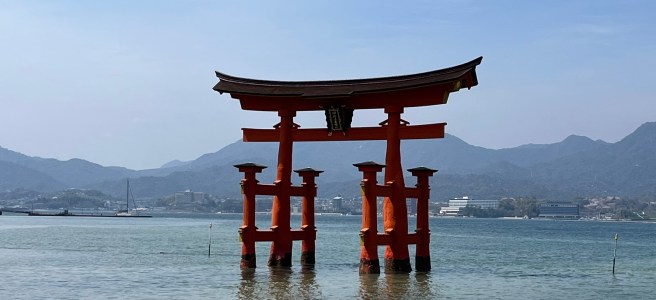
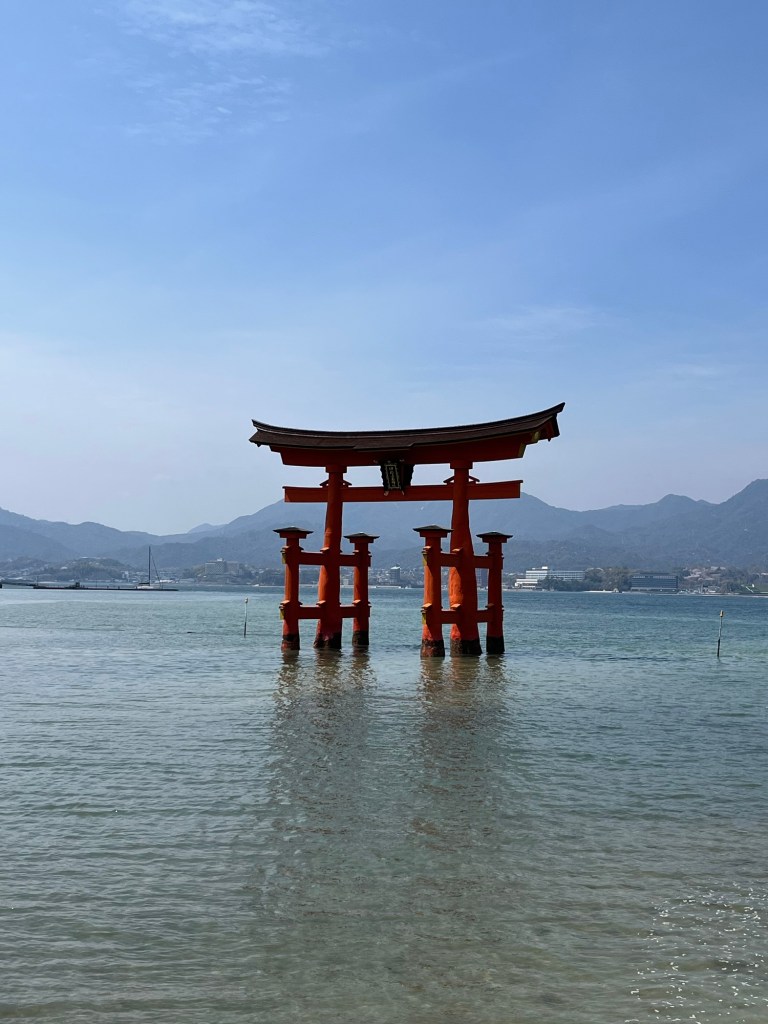
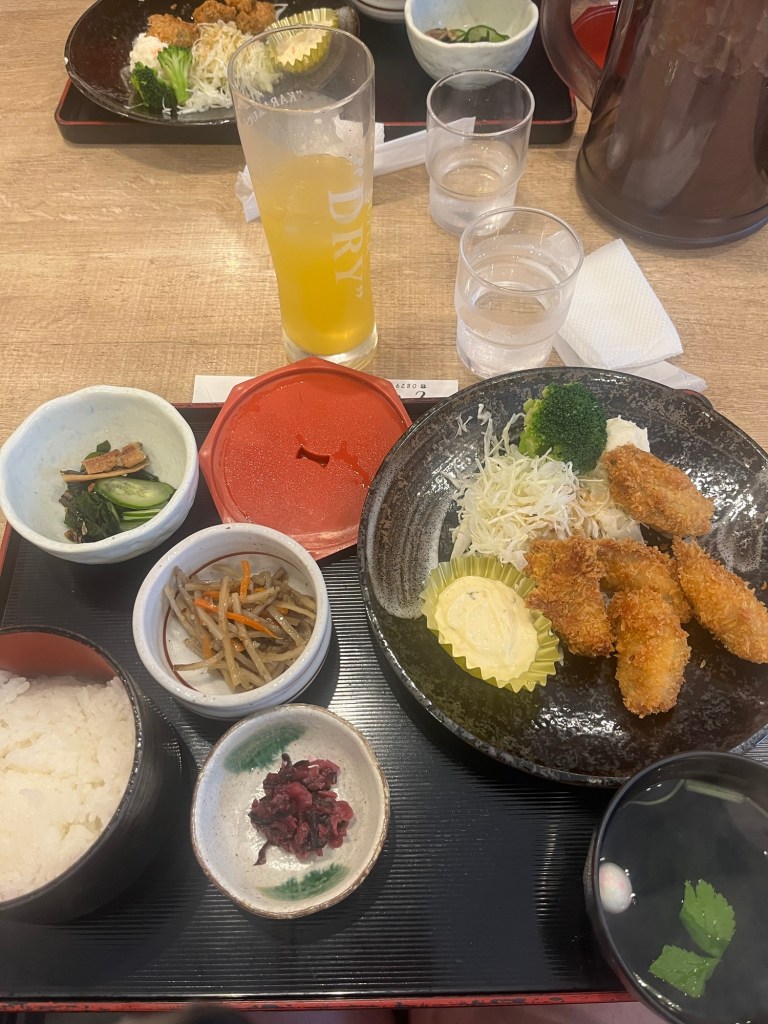
We then took a train and a ferry to the nearby island of Miyajima, which had a ‘floating’ torii gate (certainly when the tide is in). The sun was out and it looked idyllic. Deer roam around the town and were stealing food so we opted for an indoor lunch – deep-fried oysters which were really good.

After some time wandering around the town and the souvenir shops in the afternoon, we got back on the ferry and train back to Hiroshima. A few drinks in a pub definitely catering to tourist groups, and then a delicious bowl of ramen to round off the day.
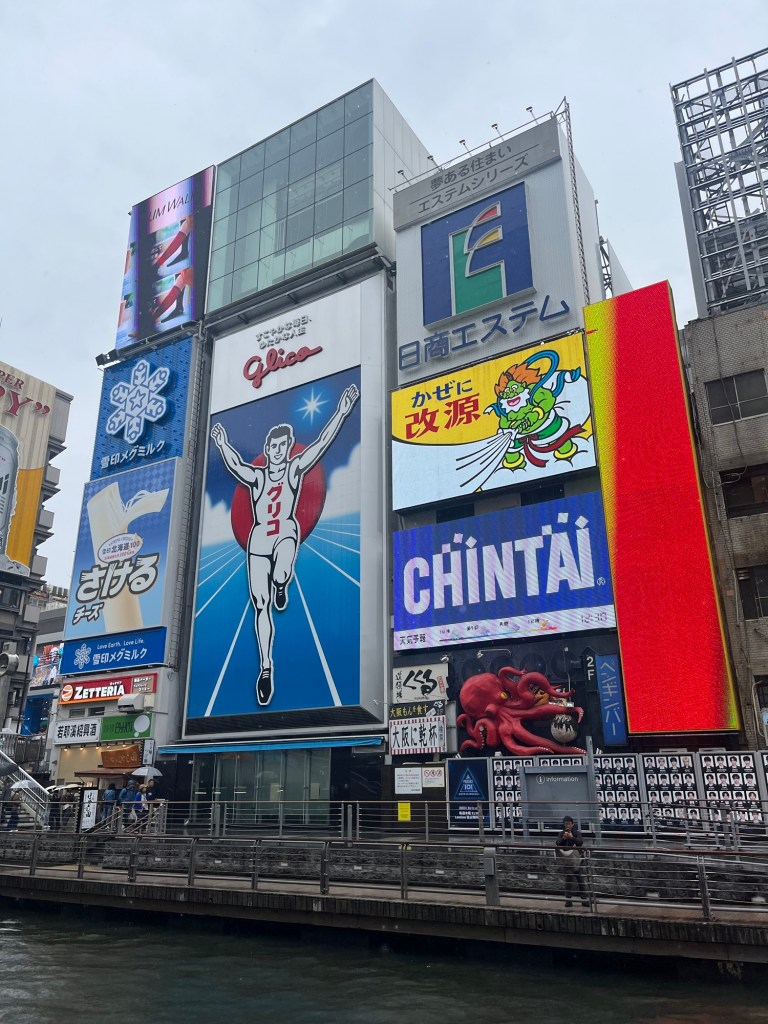
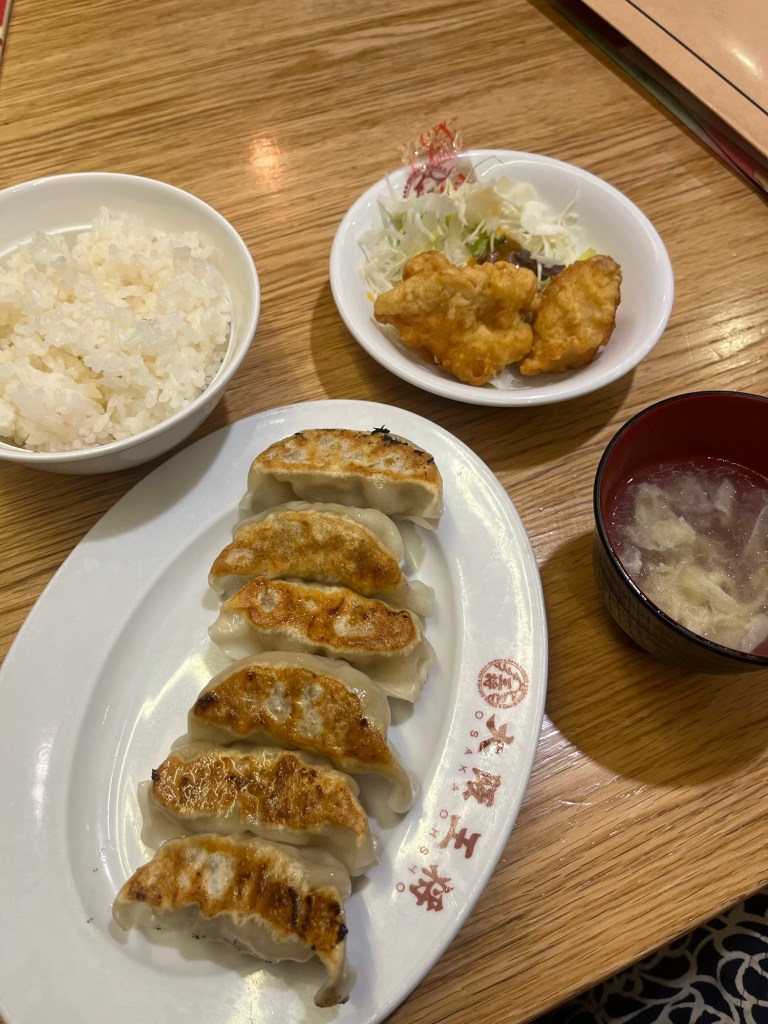
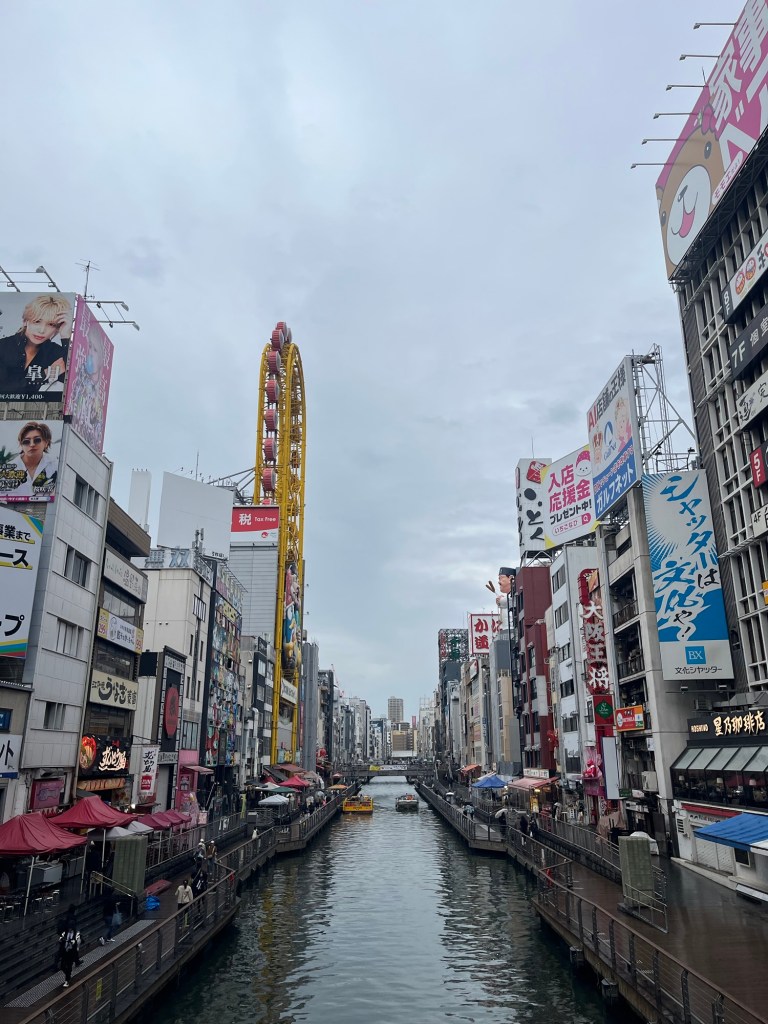
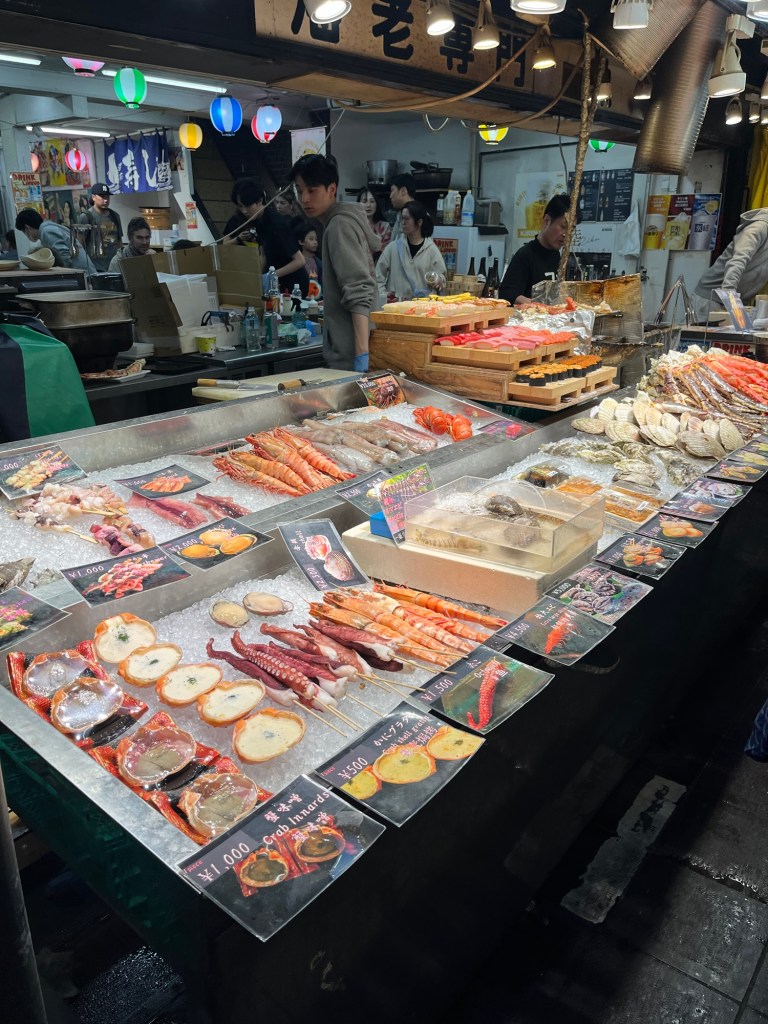
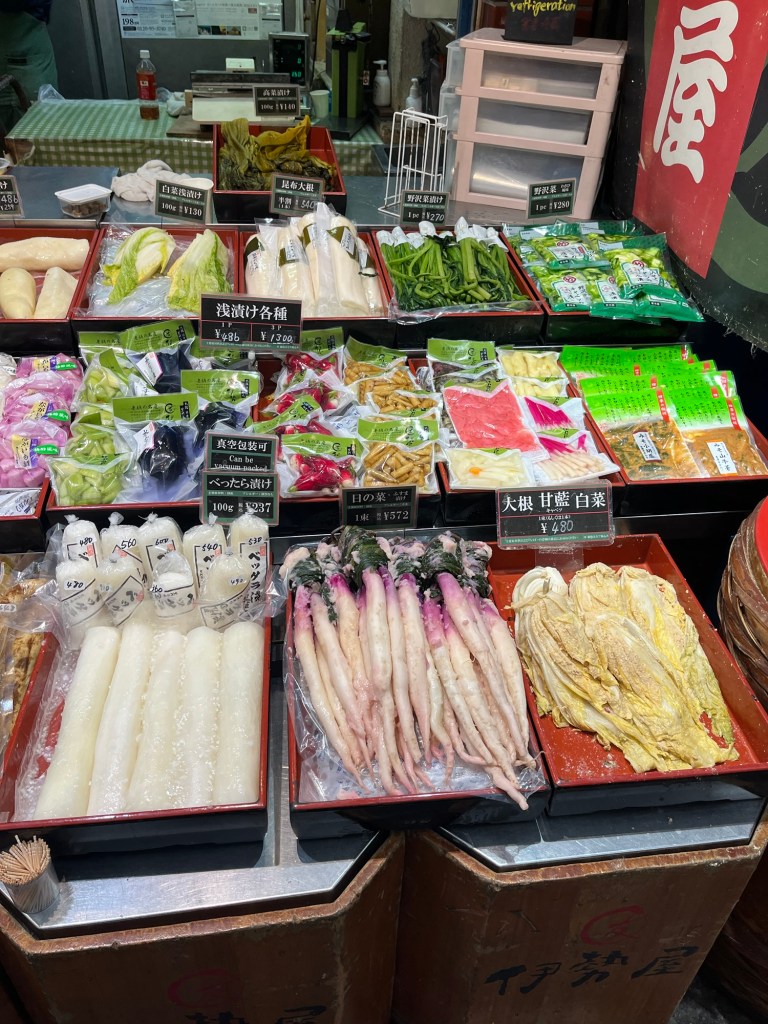
Another day, another Shinkansen. This time to Osaka. Again we arrived before lunchtime, and after dropping our bags at the hotel, we headed out in the rain to the Dotombori area. This area has restaurants and bars with slightly outlandish facades, it reminded me a bit of downtown Las Vegas. Gyosa for lunch out of the rain, and then a walk through Kuromon Market which has loads of street food stalls. Japanese street food etiquette is a little different to elsewhere as you don’t eat and walk at the same time, you buy your food and stand by the vendor to eat it and then dispose of any waste in their bin.

We also went into a gaming arcade and had a quick go at Mario Kart which was a lot of fun!

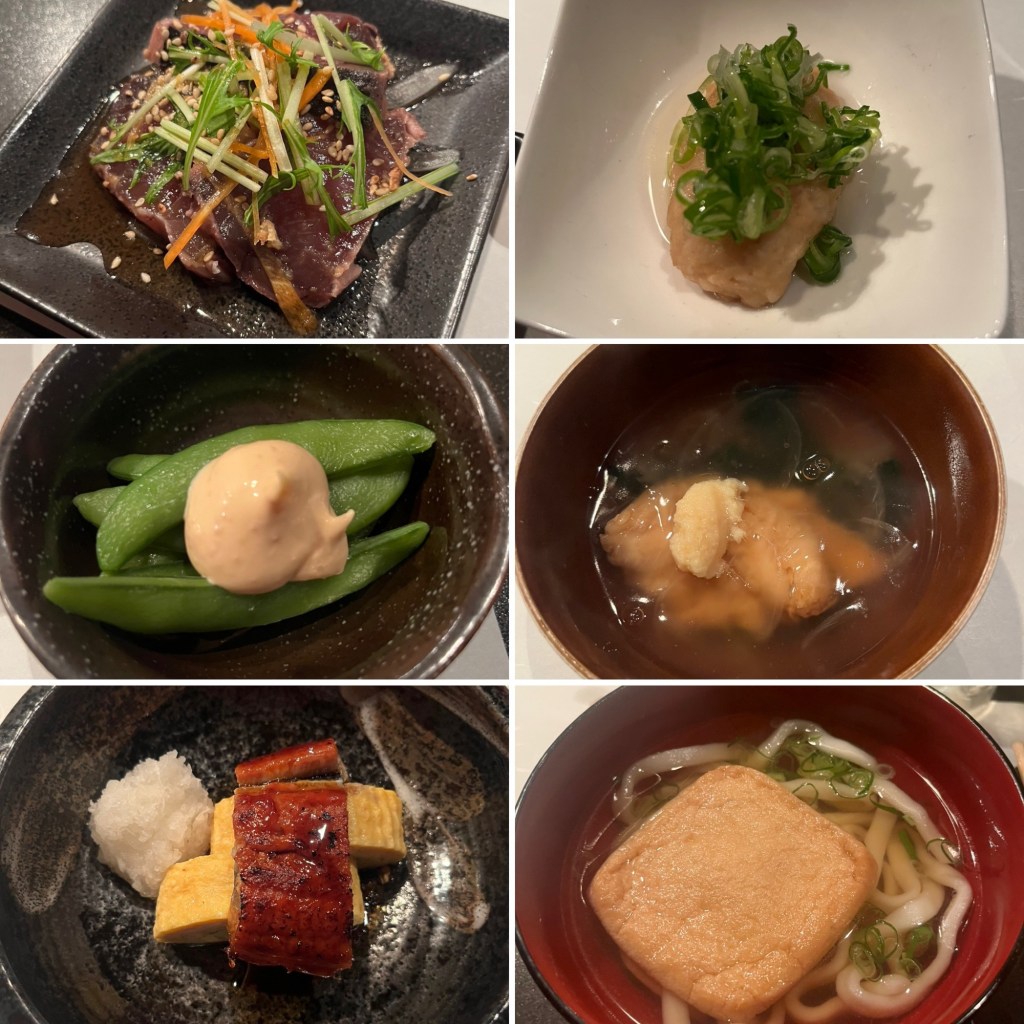
This evening in Osaka was the final night of the first part of my Japan trip. We had a lovely group dinner at a small restaurant and had a Japanese tasting menu – a kaiseki. So much food!! And it was all delicious.

We rounded off the night with karaoke – has to be done in Japan!

Next is was back to Tokyo to meet the much smaller group for the second part of my Japan adventure.

Kyoto

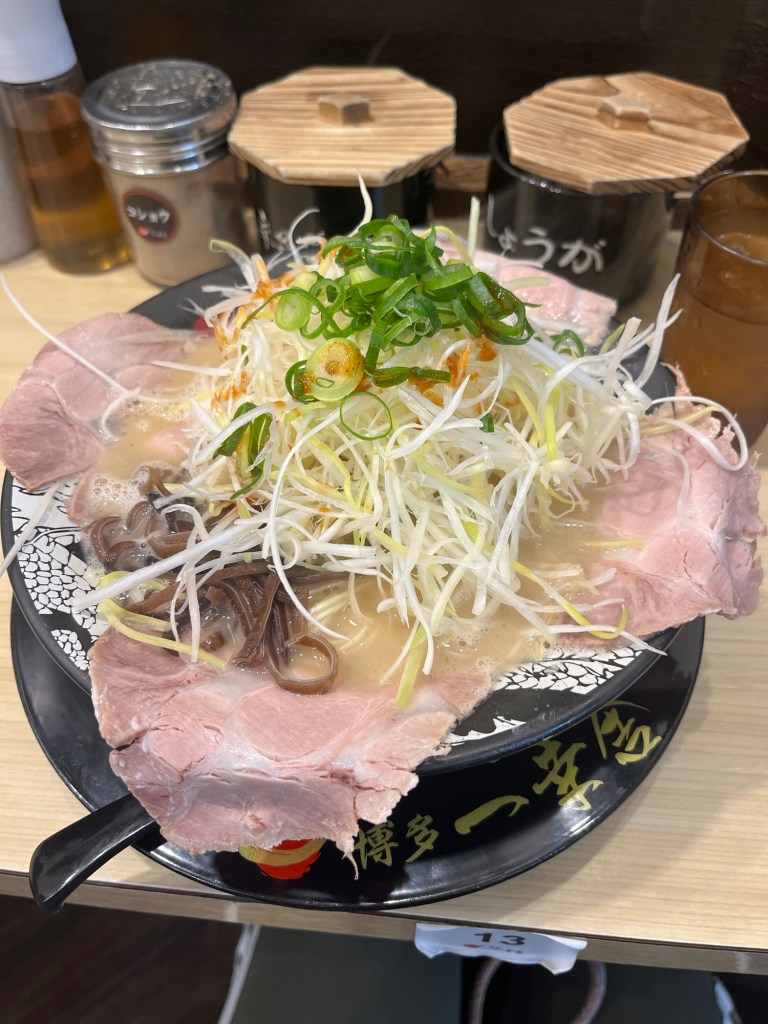
A bus and 4 trains from Kawane and we arrived into Kyoto at lunchtime. The train station in Kyoto is absolutely massive, like an airport really, and it has quite a spectacular roof. We went for lunch at a shopping centre attached to the station where there was a ramen floor with lots of small restaurants, holding probably no more than a dozen people each. You ordered from a screen and waited your turn to be seated.

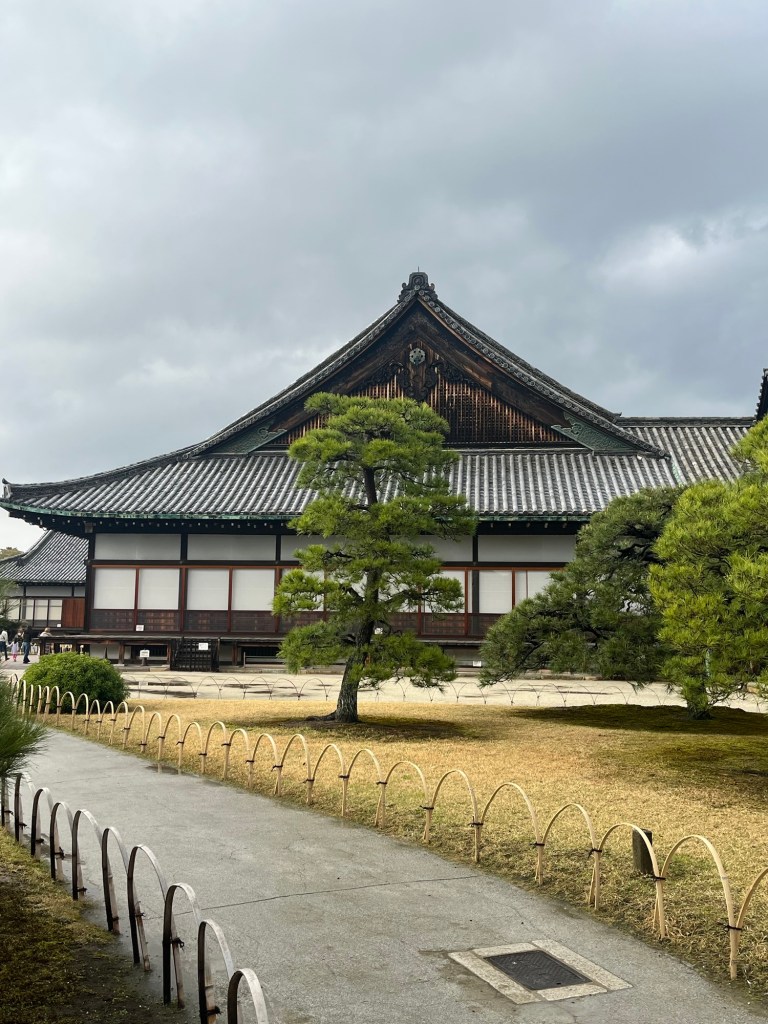
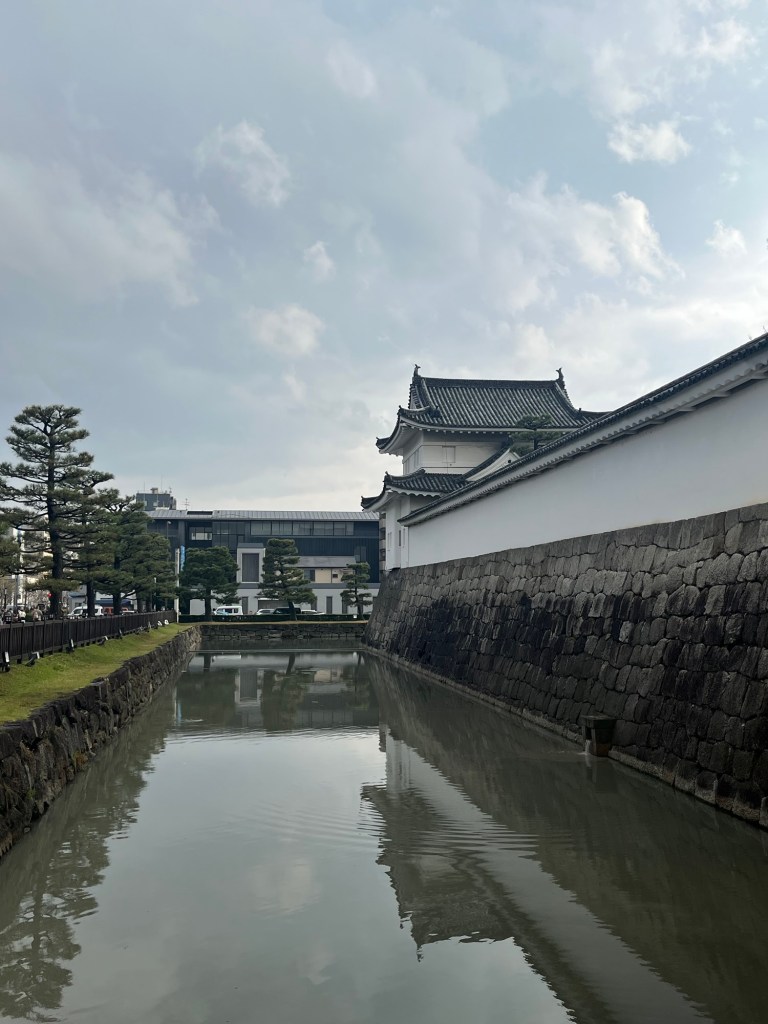
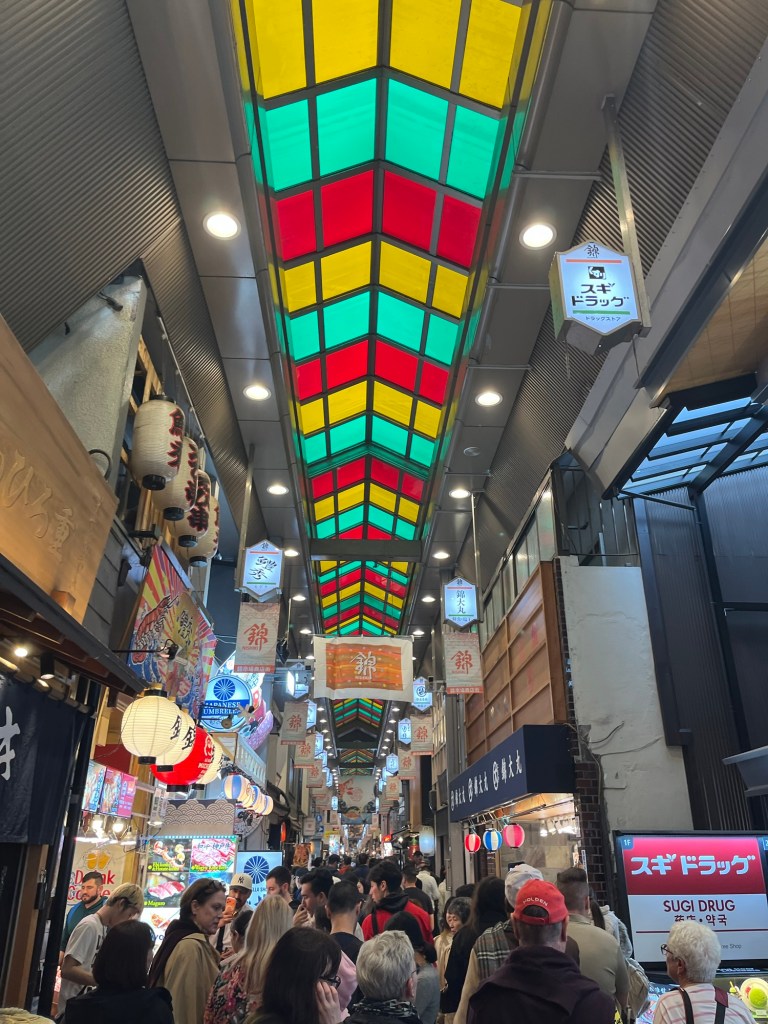
After refuelling we headed to the hotel and had some free time. It was, sadly, raining but I couldn’t just sit in the room so my roommate and I went for a little walk to nearby Nijō-jō Castle. Inside there are these incredible paintings of trees and animals, including leopards which the artists had never seen in real life and were drawing based only on hides. They also have ‘nightingale corridors’ which sound like nightingales as the floorboards creak as you walk along, which was to deter intruders. Really cool. Unfortunately we hadn’t quite given ourselves enough time before both the castle closed and we were meeting up with the rest of the group for a walk through Nishiki Market on our way to dinner.

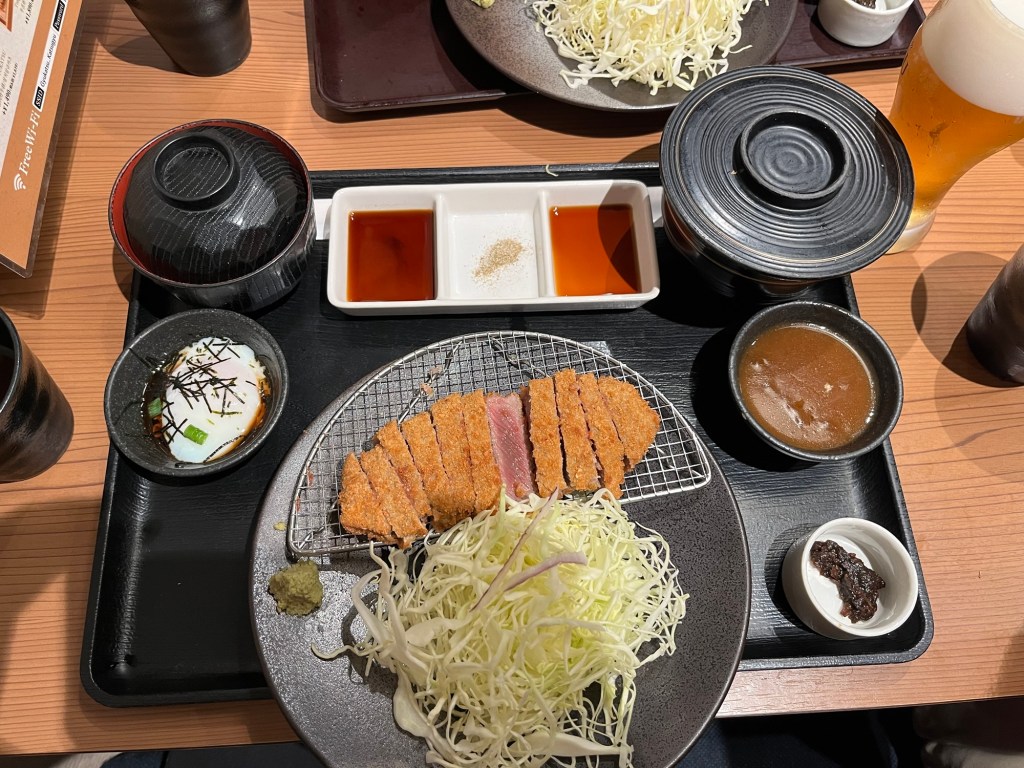
Our leader on this tour is a bit of a foodie and is taking us to lots of different places to try as many different types of Japanese food as possible, which I am extremely grateful for. Tonight we went Gyukatsu Kyoto, for breaded katsu beef steak (gyukatsu), which you can then cook to your own liking on the table in front of you.

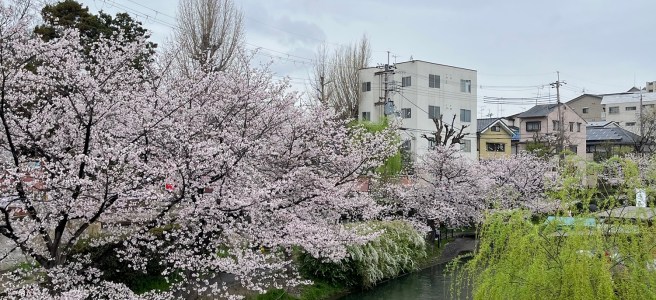
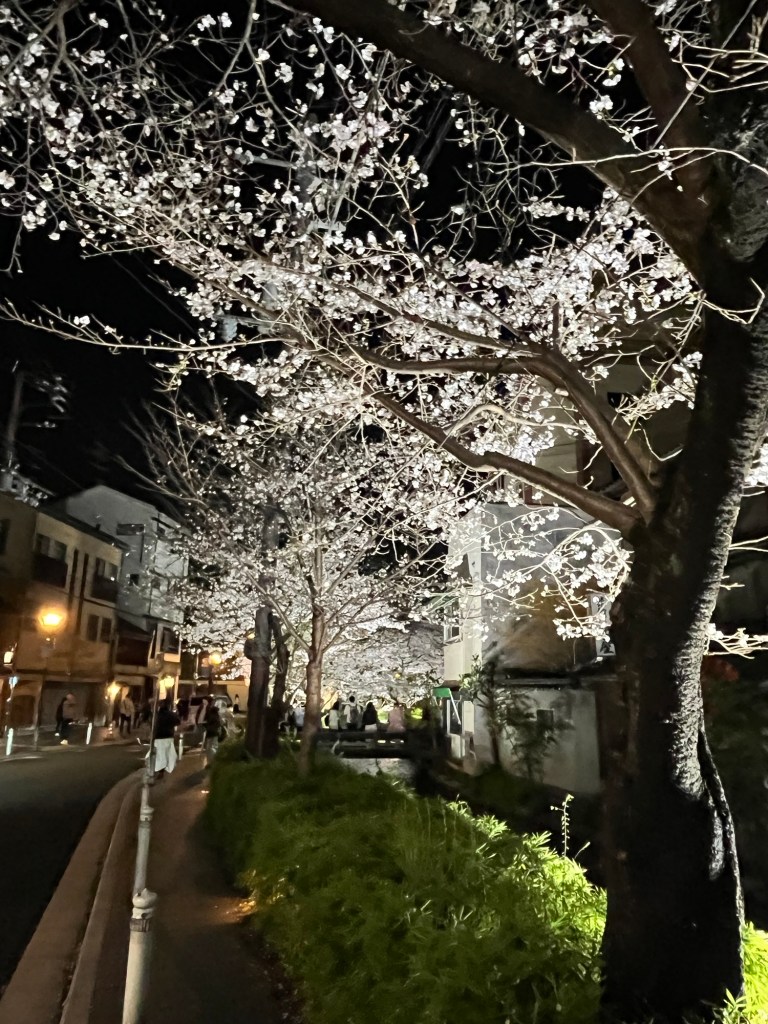
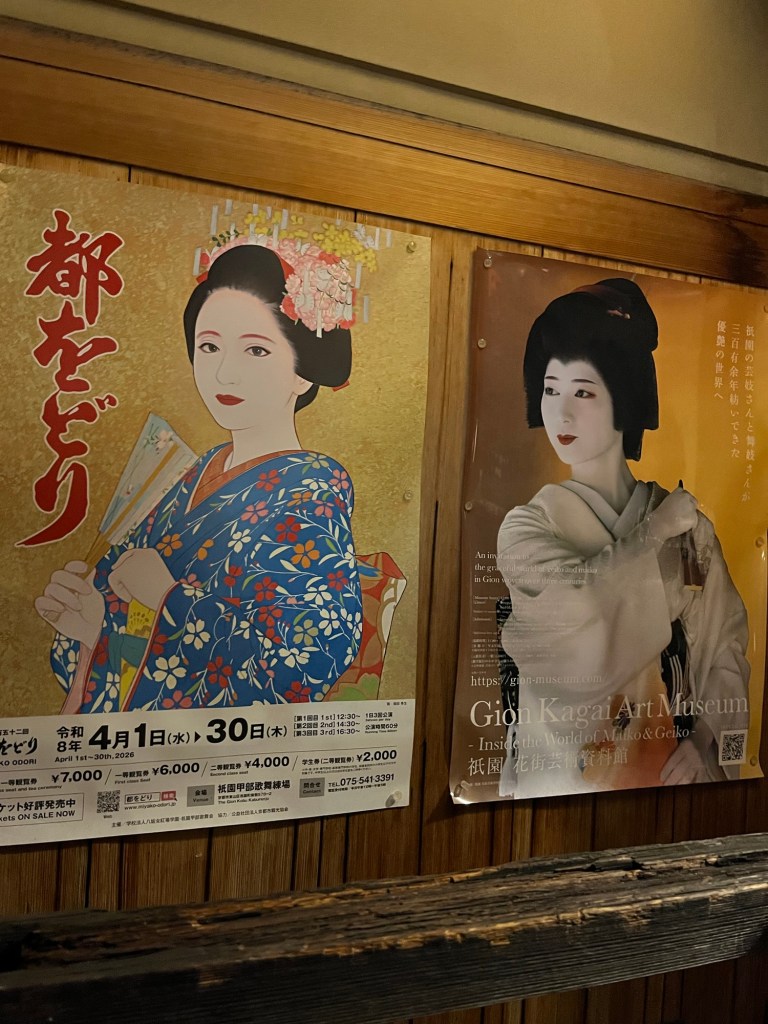
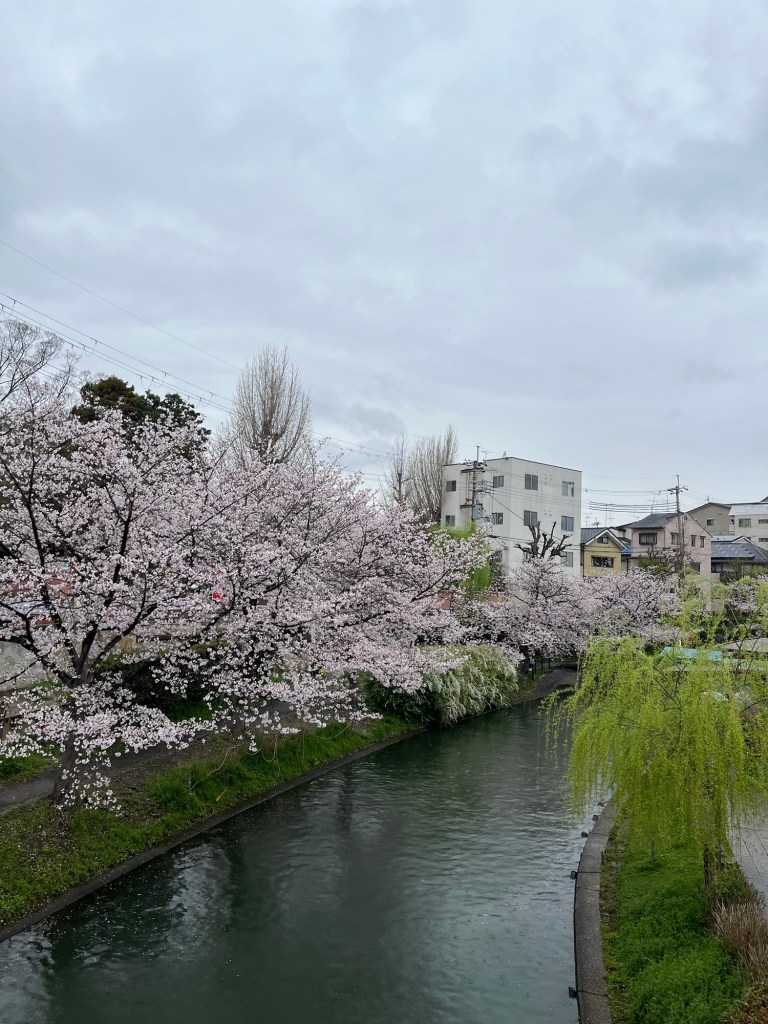
After dinner it had just about stopped raining and we walked past more cherry blossom-lined streets, into the Gion district which is where Geiko and Meiko’s (geishas) work. However, due to tourists being too intrusive, you no longer see them wandering around the streets so we didn’t see any in person. The evening finished with a drink on a rooftop bar with great views over the city.

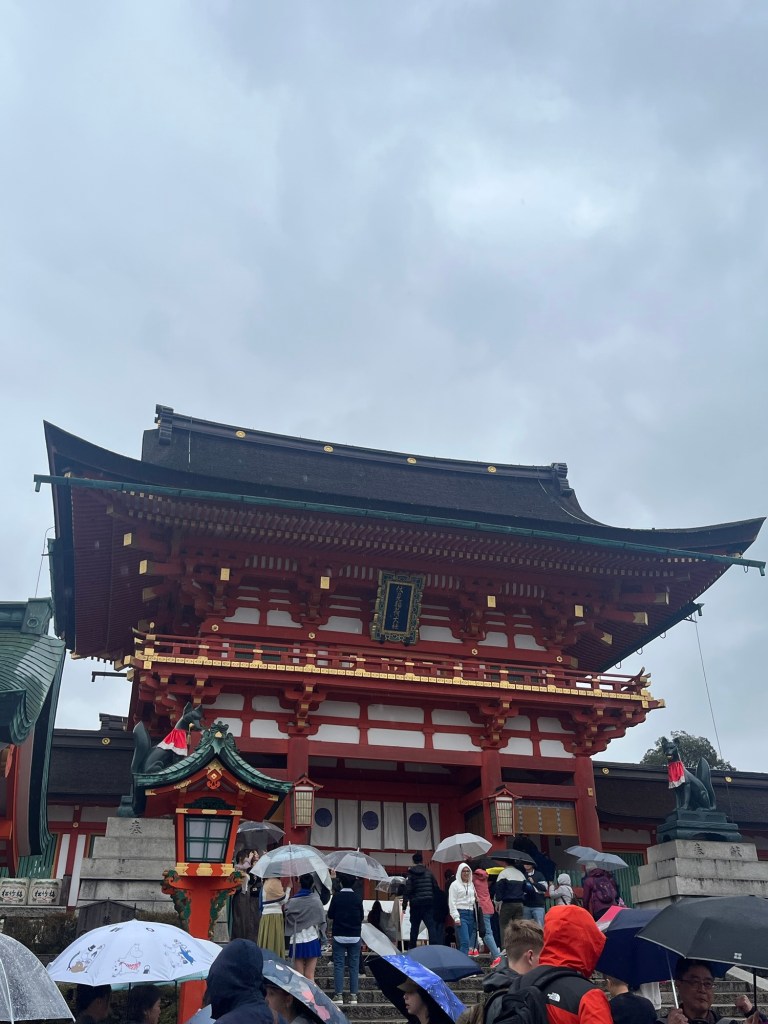
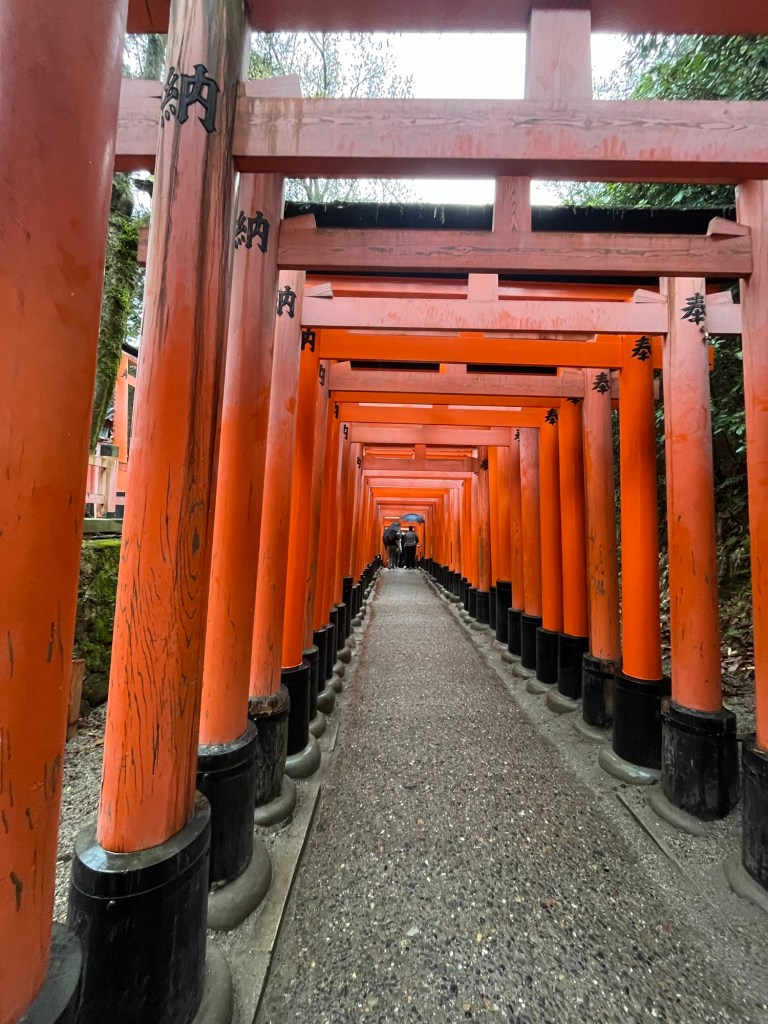
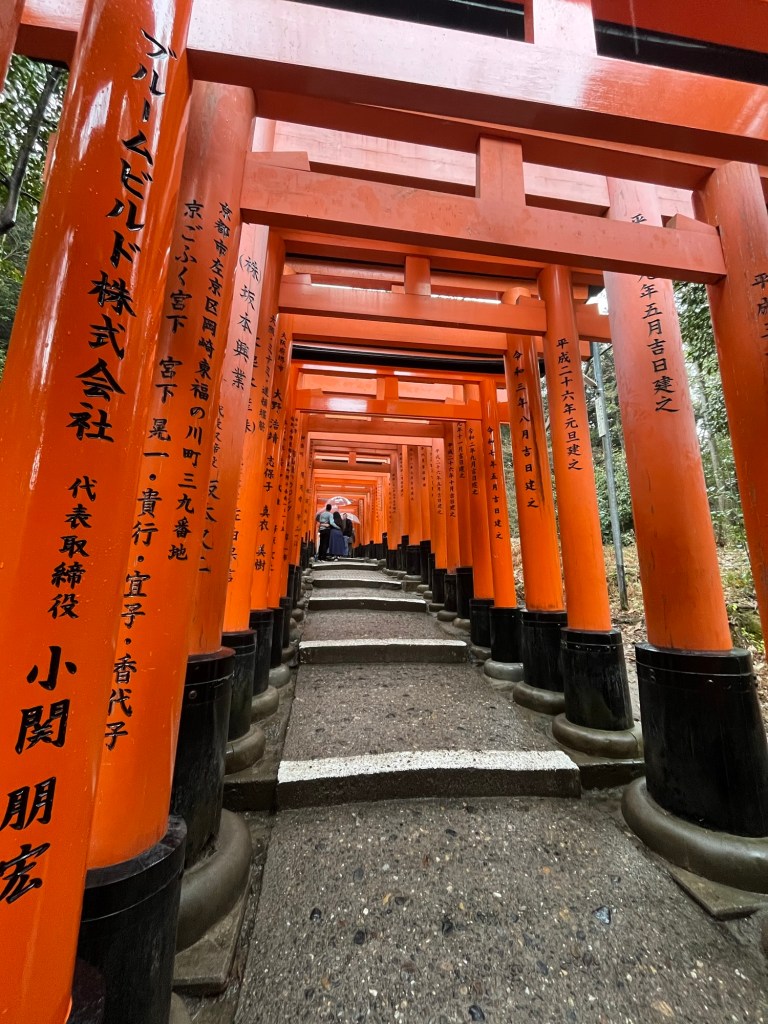
The next day was a reasonably early start (sadly still in the rain, the poncho came in handy) to take the train out to Fushimi Inari Taisha shrine. This shrine is dedicated to Inari, the god of rice, and has hundreds of scarlet red/orange torii gates which look so picturesque. The writing on them looks really cool as well, though apparently it is just the names of people and companies who have sponsored each of the torii gates!! It’s a good idea to get there early as it was very busy despite the rain. The torii gates create a long walkway up the hill and the further up you get, the fewer people you encounter.

We went to a sake museum after this, to escape the rain and learn about how sake is made. We also had a tasting afterwards of 3 different sakes. I’ve actually never had sake before, and if I’m honest, I’m not entirely sure I like it. I preferred the more fruity ones, there was quite nice melon-y flavoured one, but I think I’ll stick to wine given the choice!

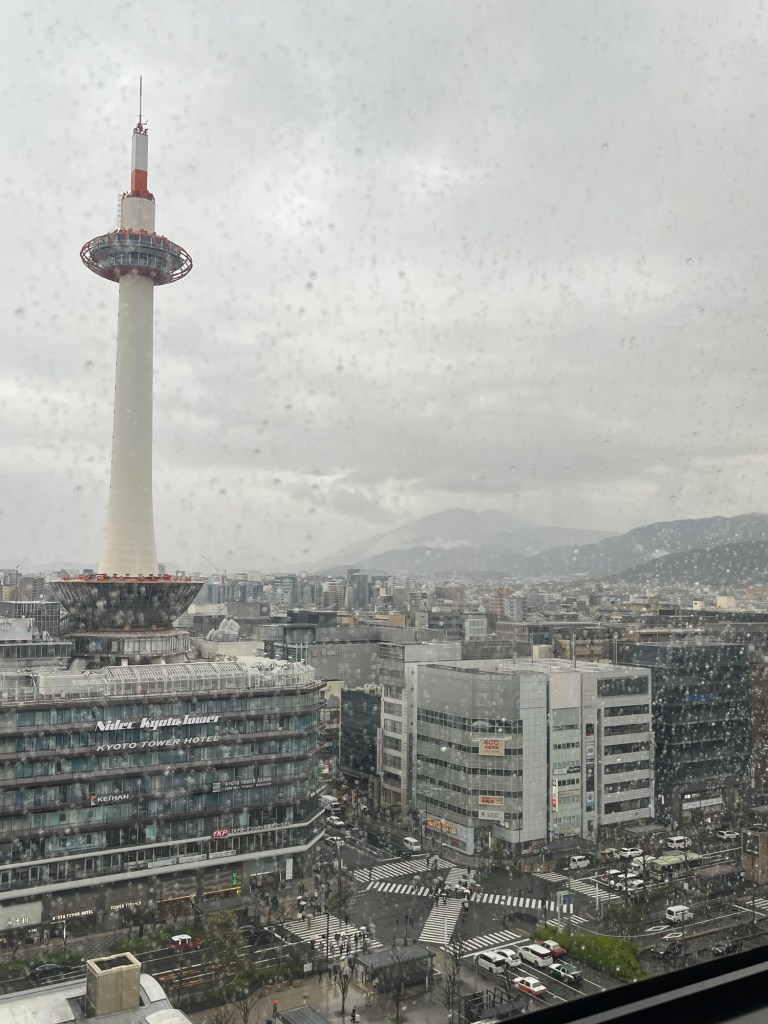
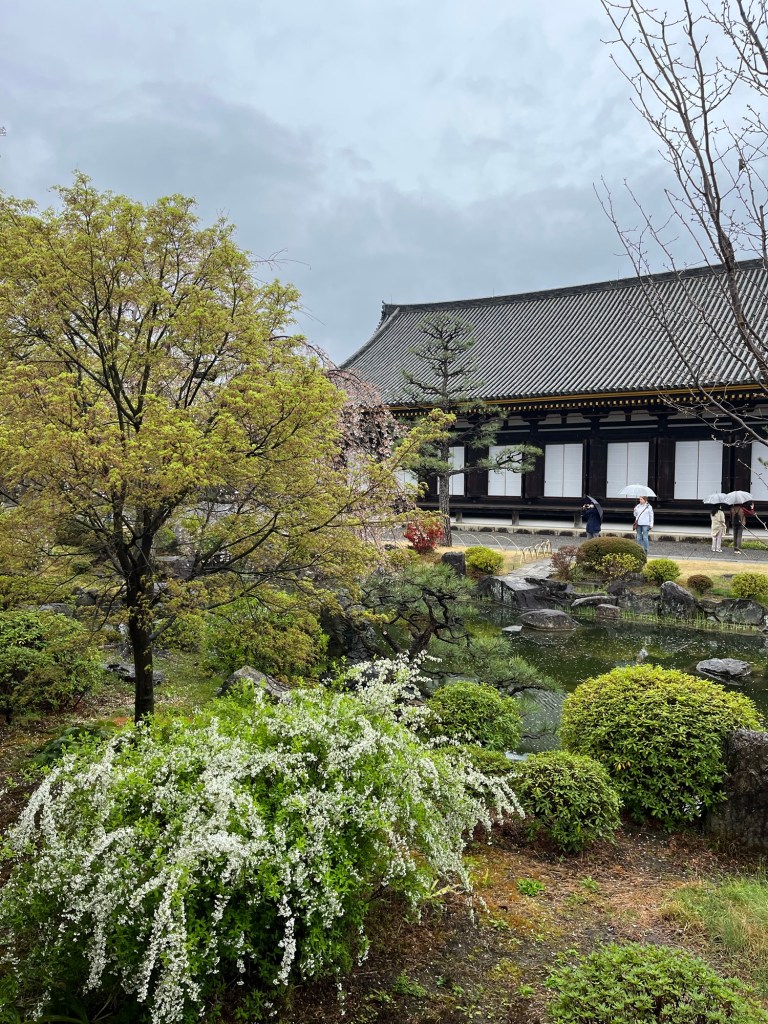
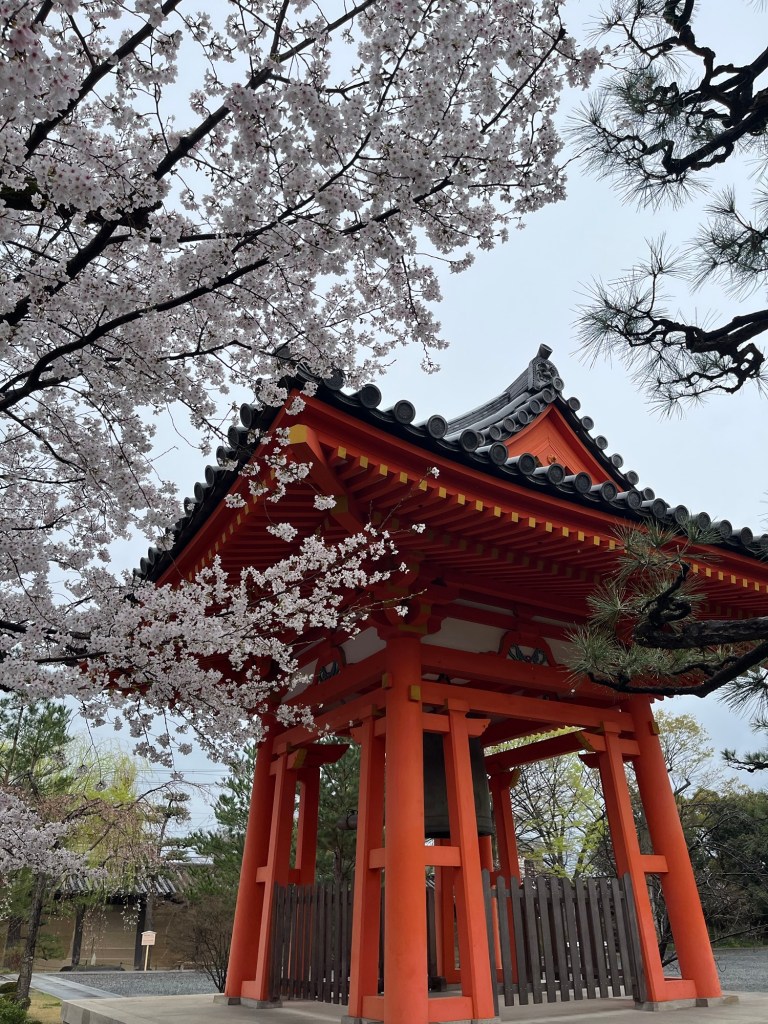
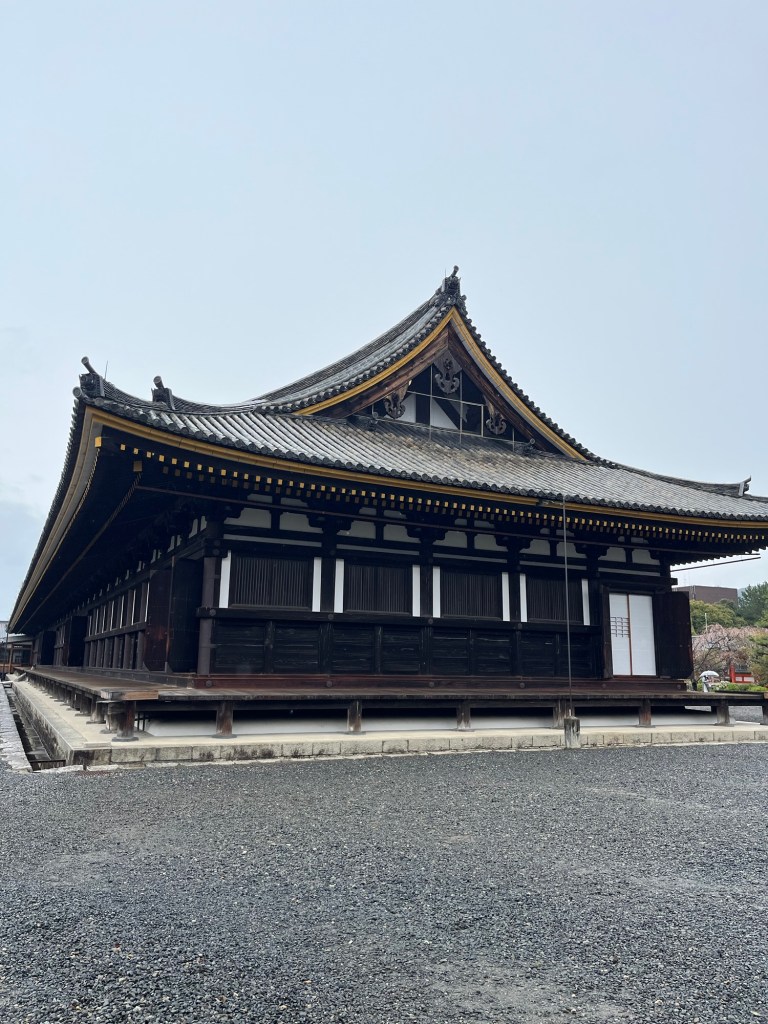
After lunch in a food hall in the basement of Kyoto tower, we had a free afternoon. It was still raining, and whilst most of the group retreated back to the hotel, I went to visit Sanjusangen dō, temple containing 1000 Buddhas. It’s really quite the sight as you walk into the main hall where all the Buddhas are lined up in neat rows, the length of the room. No photos inside but outside in the gardens, the blossoms are out so armed with my poncho and brolly, I wandered though the gardens for some photos.

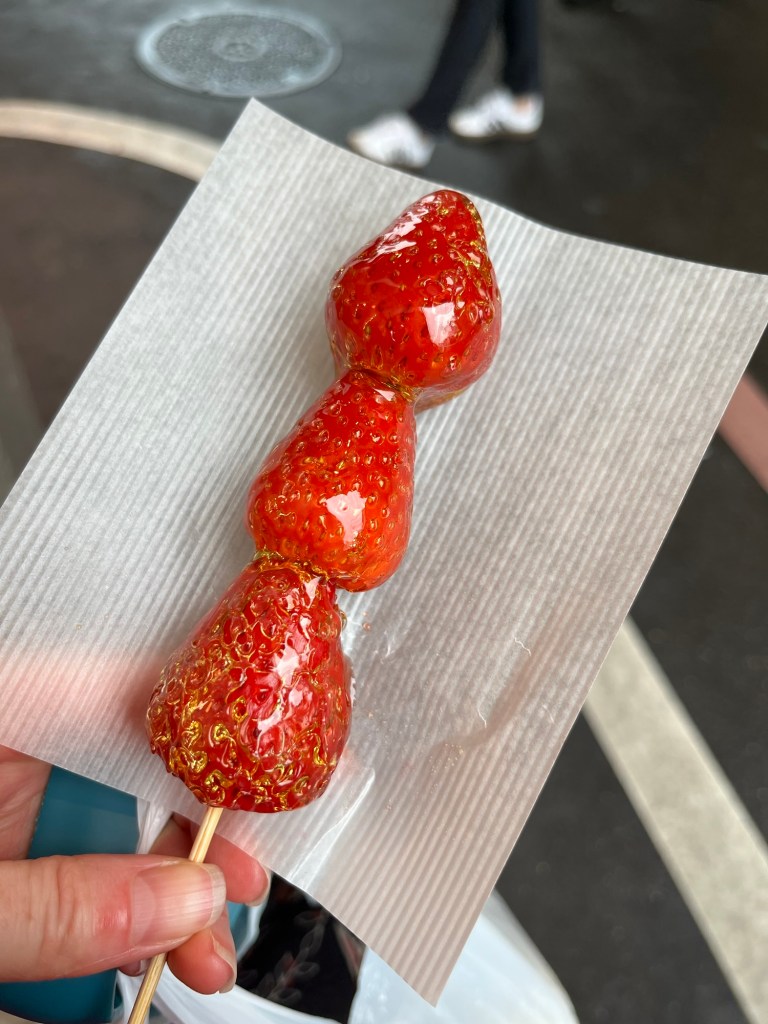
On the way back, I made a pit stop in Nishiki market for some candied strawberries. It’s strawberry season here and these strawberries were so sweet even after cracking the sugar-coating. Delicious!

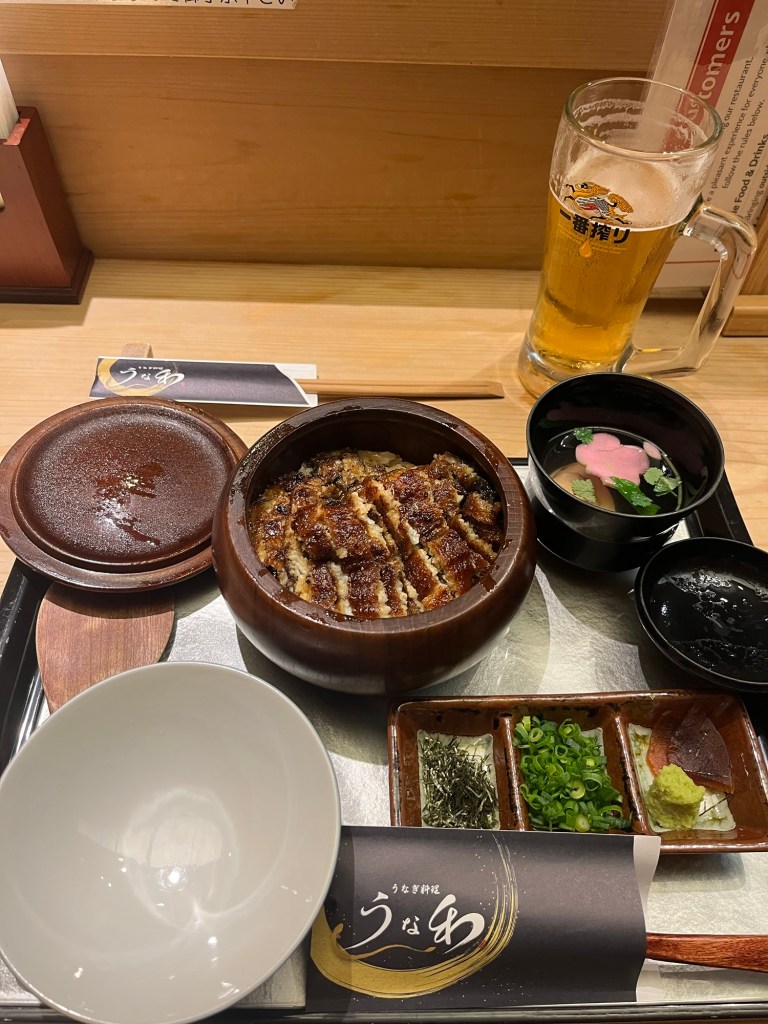
That evening for dinner I had eel, cooked over charcoal. This was my first time eating eel and I’d imagined it would have a texture similar to squid, but it was much more like a white fish in texture. I really enjoyed it. The restaurant, like most I’ve been to in Japan, is very small, often sitting at counters, and maybe holding slightly too over a dozen people in total.

This was our last evening in Kyoto – an all too brief visit as there is so much to do and see here. I already feel like I will come back here one day to see more. Kyoto is a big and busy city but I really liked it.

Tokyo and Kawane

Japan, the final leg of this part of my travels, and somewhere I’ve wanted to visit for a very long time. The flight from Hong Kong was just about 4 hours, and I’d arrived to Narita airport, east of Tokyo, in the evening. This immigration queue has beaten Hong Kong for the longest on my trip but it moved very efficiently. I would definitely recommend filling out the online arrival immigration and customs form in advance of arrival as it saves a lot of time, though you can still fill out a paper form at the airport.

As I was arriving into Narita in the evening, I had booked an hotel close to the airport as I didn’t want to try and navigate the Japanese rail system to get me into Tokyo late at night. This was definitely a good decision after a long travel day as I got into my hotel room after 9pm.

After a decent nights sleep, a bath, and a play with the fancy Japanese toilet, I was refreshed and ready to figure out how to get the 40 or so miles (65km) from Narita to my hotel in the Ueno area of Tokyo.

I headed back to the airport to get the Skyliner train to Ueno station, and then took a local JR train to the station nearest my hotel. Google maps has been so helpful here for public transport, and I have been surprised at how much of the transit system signage and audio announcements are also in English. Some of the stations are a little overwhelming as there can be several different types of trains which all require different tickets. But the internet is my friend, and with the help of Reddit, Google Maps and Google Translate, I made it to my hotel about 2 hours after I’d left which I was pretty pleased with.

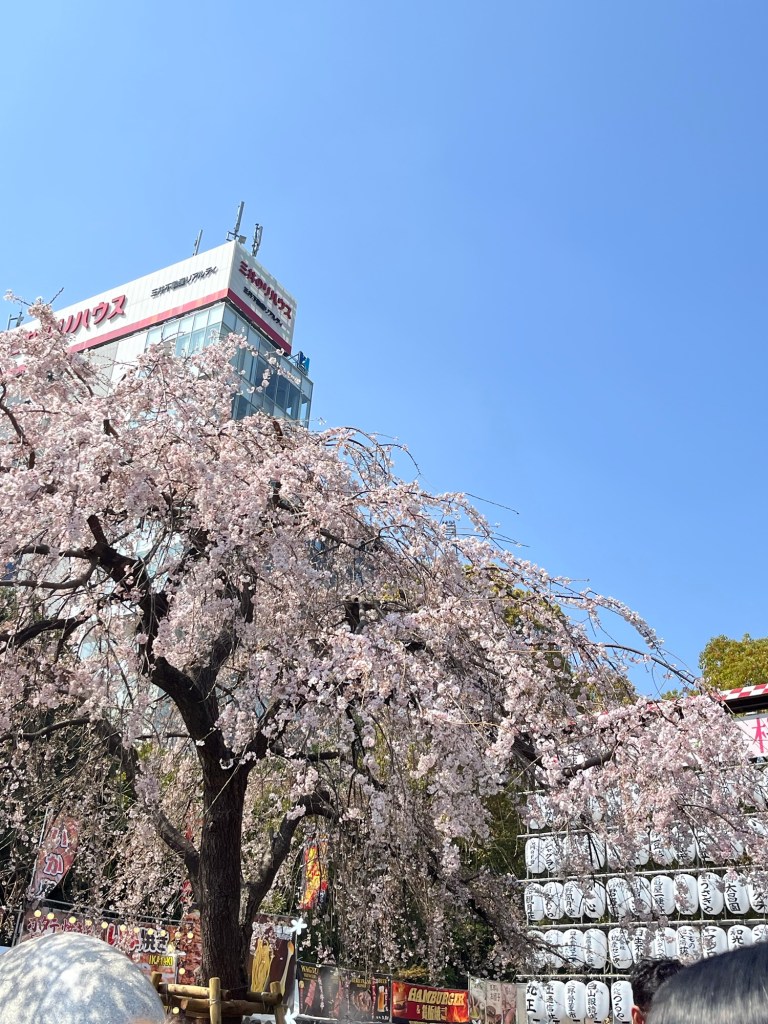
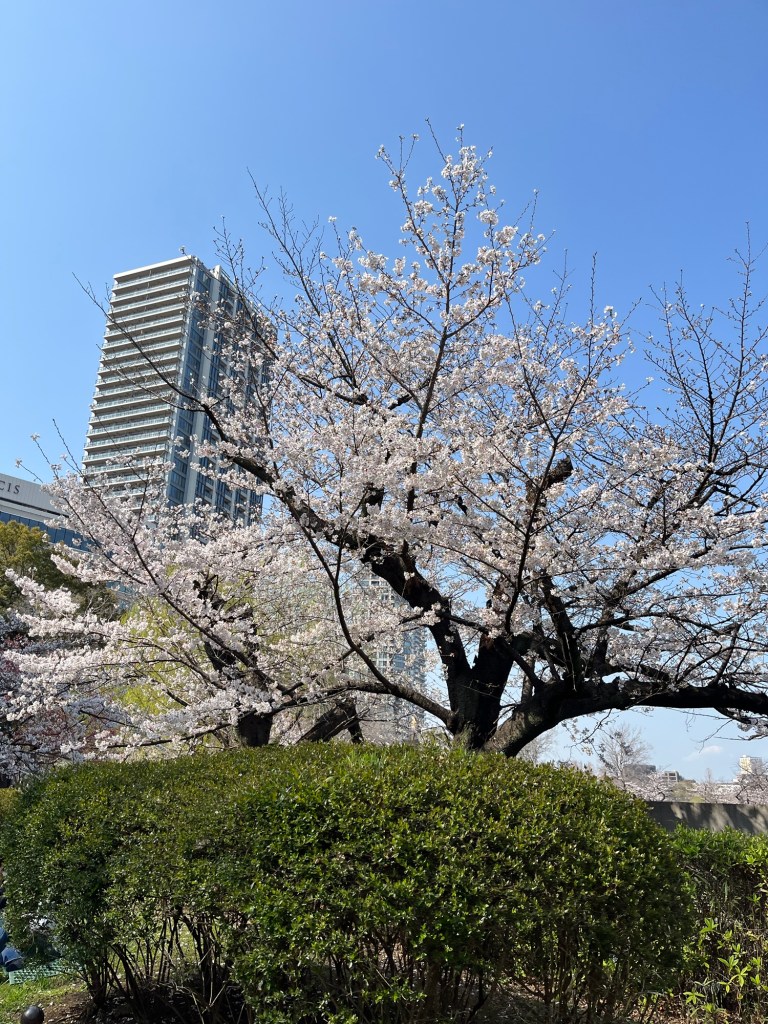
I was too early to check in so after leaving my bags, I walked to nearby Ueno Park, which had helpfully been advertised at me on Facebook the previous evening, telling me they had a Sakura festival on. It was a Saturday and the park was extremely busy, mostly because the Sakura (cherry blossom) was in full bloom in Tokyo at the end of March which I understand is early. Despite it being very busy, it was very orderly to walk up and down to view the cherry blossoms as you are directed to walk on the left and everyone complies. In coming to Japan at this time of year (late March) I was keeping my fingers crossed that I would be able to see cherry blossoms and I was successful on day 1!!

I grabbed a sandwich from 7-Eleven – everyone says that the food in Japanese 7-Eleven’s is amazing and they are not wrong! The best sandwich I’ve had since I left home.

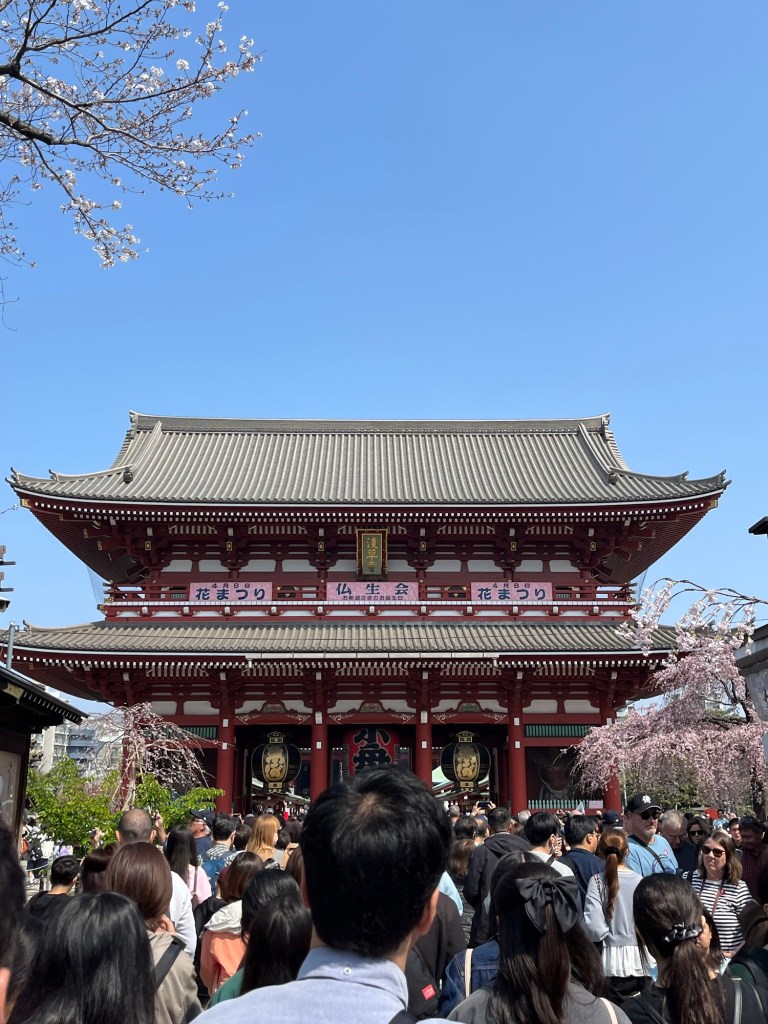
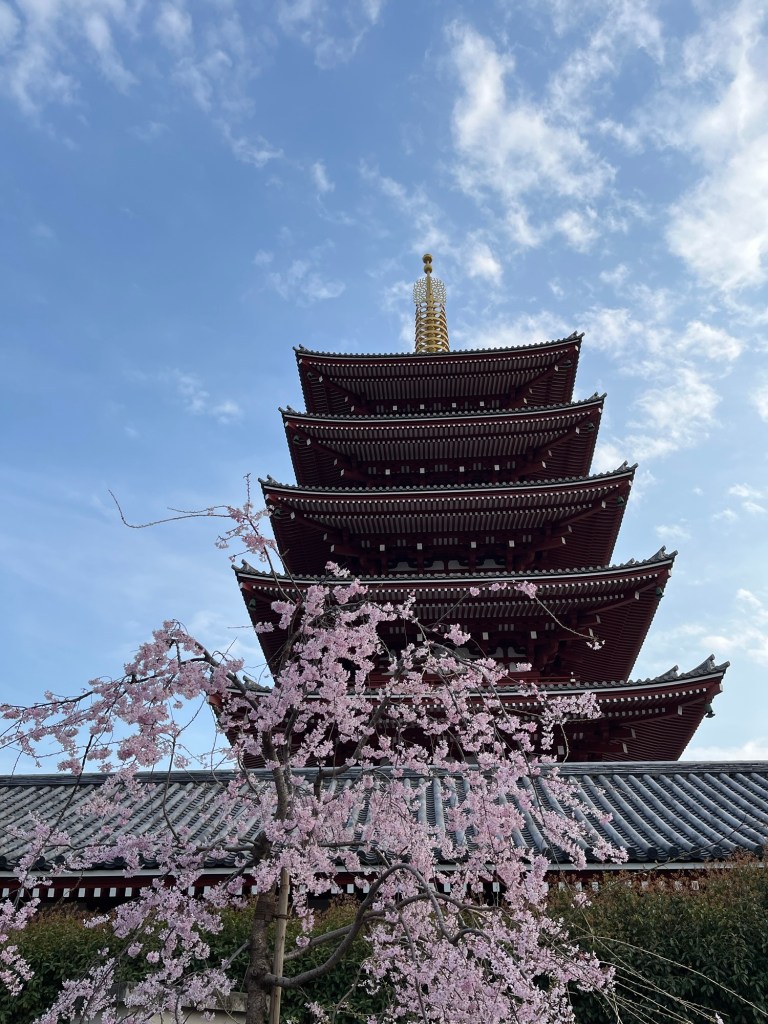
After checking in at the hotel, I still had a couple of hours until the welcome meeting for the trip I’m doing in Japan with Intrepid. I walked to Sensō-ji temple, through the narrow streets of Matsugaya and Asakusa. It was extremely peaceful as I walked, despite it being busy on a Saturday afternoon. Everything is orderly, walking on the left, and everything is immaculately clean. Someone was even hosing down the road near a construction site. It somewhat puts the current state of the UK to shame.

After meeting the group in the evening, we went for a group dinner at a small yakitori place, where helpfully the menu was available in English and we could order on tablets.

The next day we started with a visit to nearby Asakusa and the Sensō-ji shrine (again!) though this time we approached through all the little stalls and shops which were already heaving with tourists at 10am on a Sunday morning.

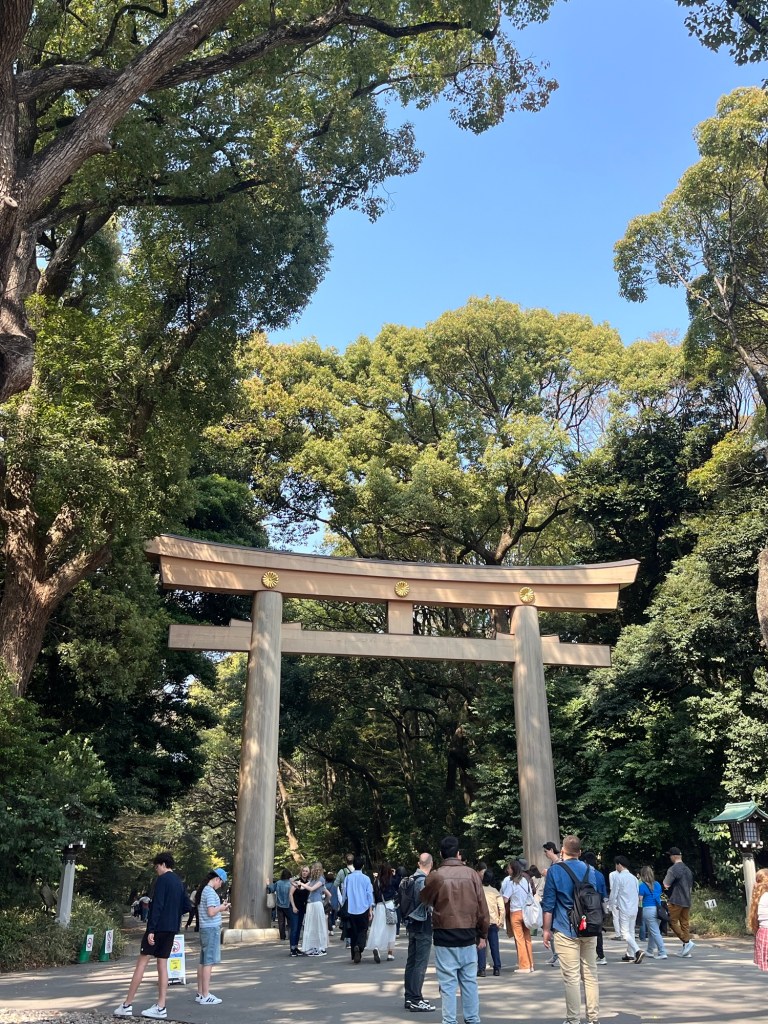
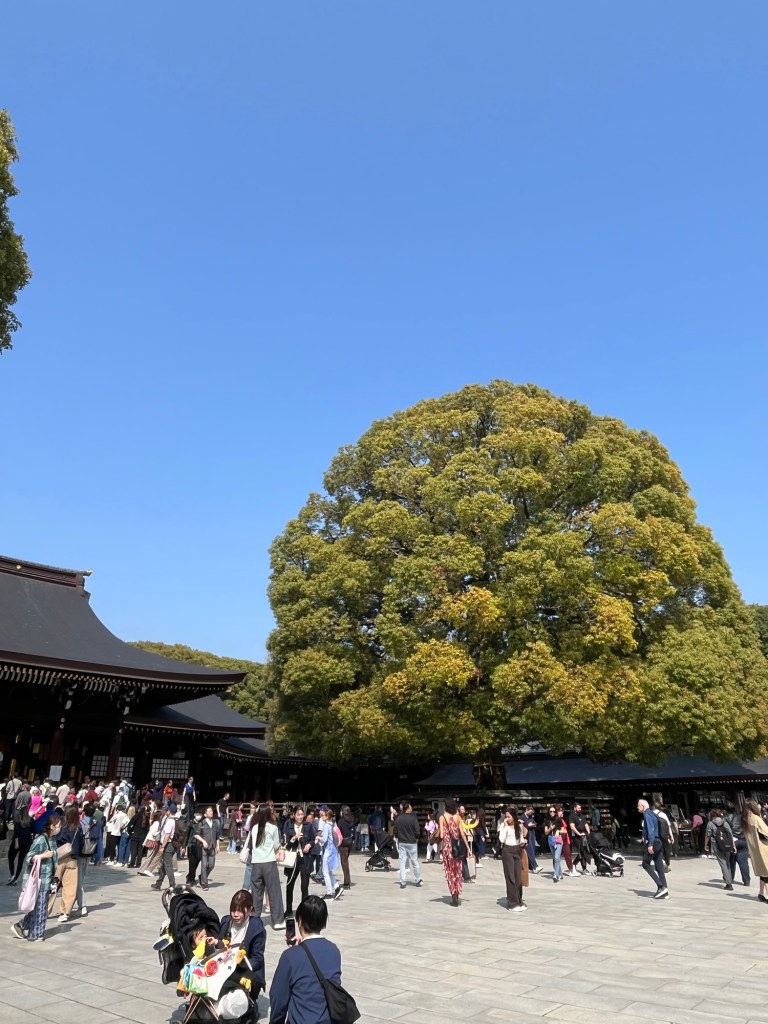
After having an early lunch of tempura and udon noodles, we headed across the city on the metro to the Meiji Shrine, in the Harajuku district. Harajuku is a very busy shopping area, but the Meiji Shrine, which is in a forested area, is a peaceful retreat from the hustle and bustle.

Afterwards we also went to experience the Shibuya Crossing, an extremely busy pedestrian crossing at a crossroads which maybe something of a self-fulfilling prophecy given everyone seems to go there to experience how busy the crossing is!!

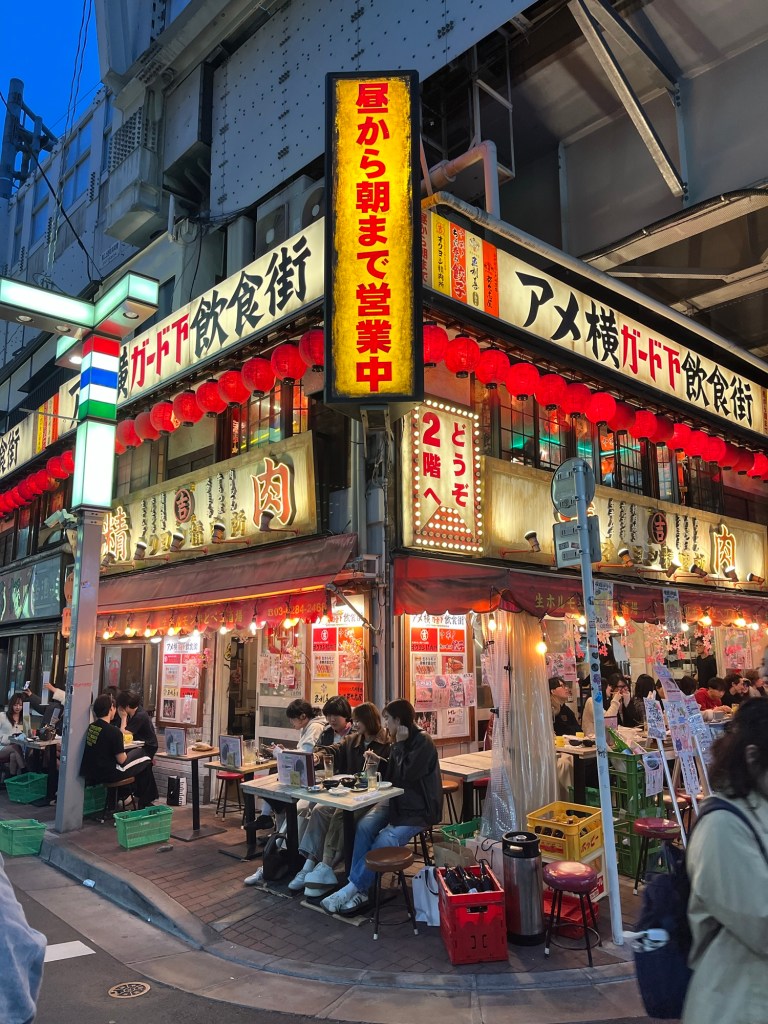
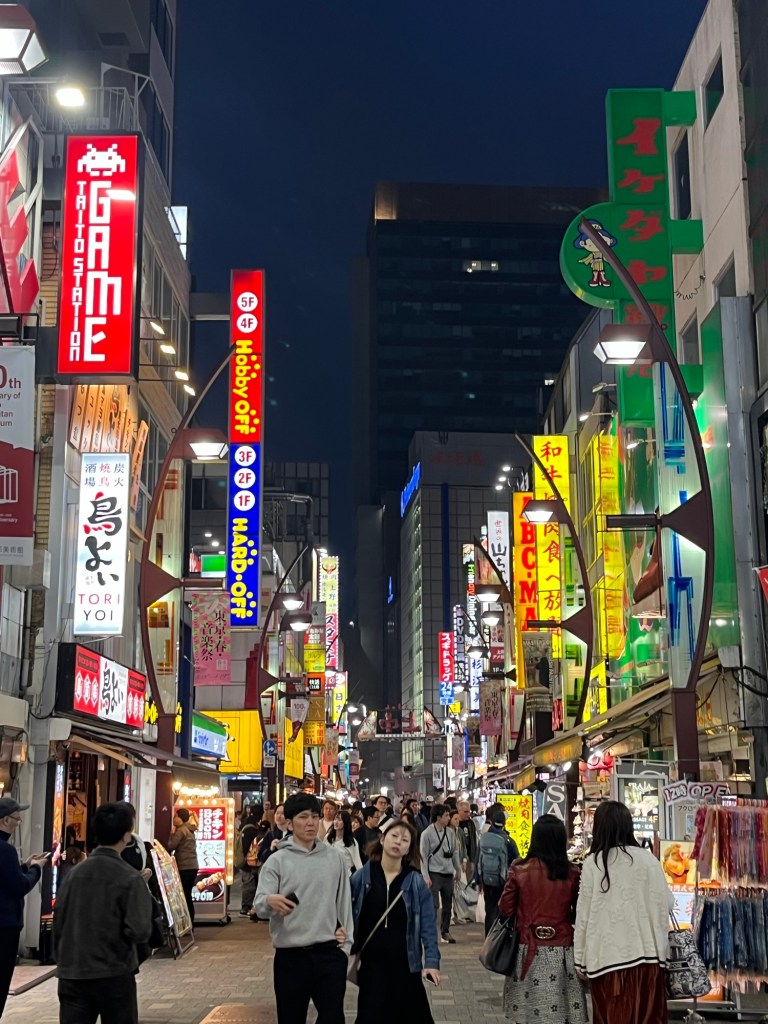
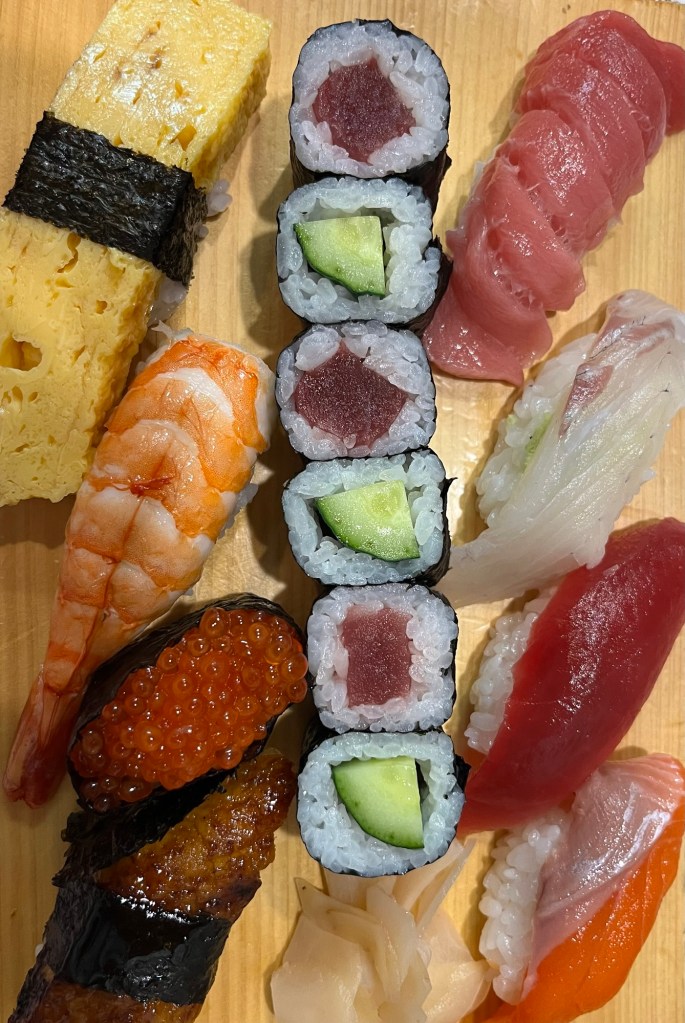
Dinner that evening was in the Ameyoko Market area, where I had a plateful of sushi and a beer for £12.

The next day we left Tokyo and headed to a homestay in Kawane. 4 trains (including a Shinkansen) and a local bus later, we arrived for lunch at a small restaurant run by 2 local women where I had a delicious bowl of curry soba noodles.

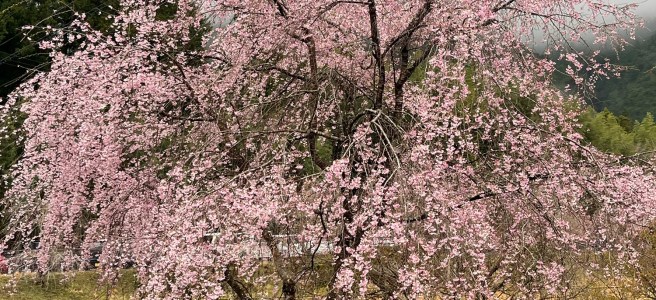
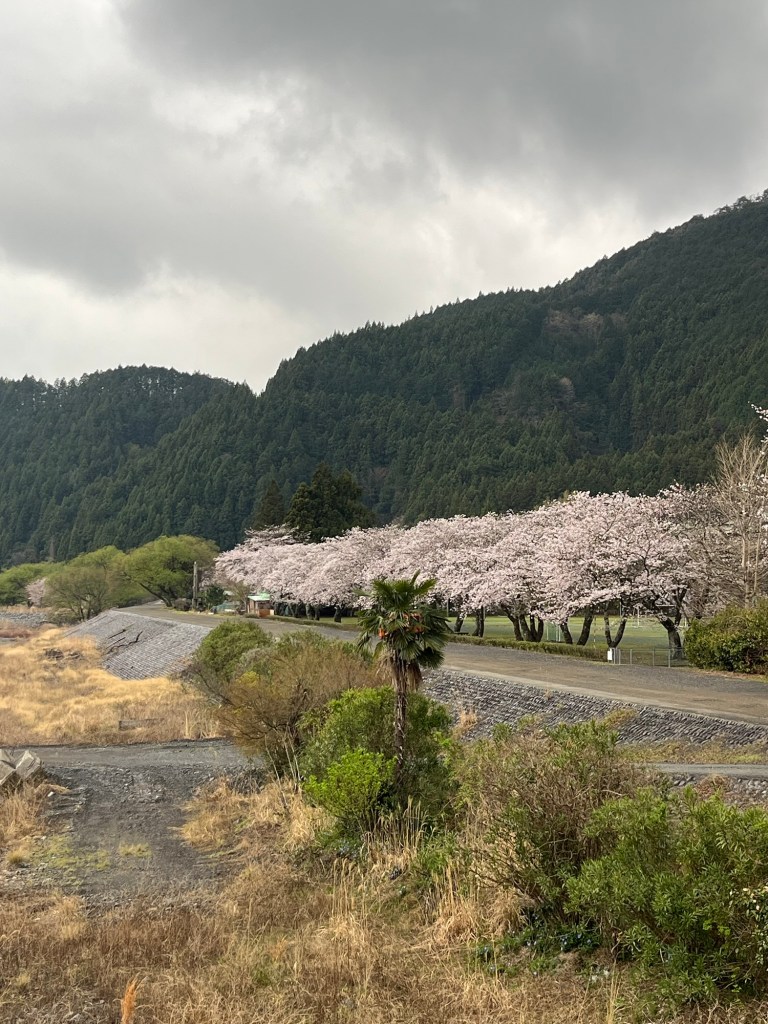
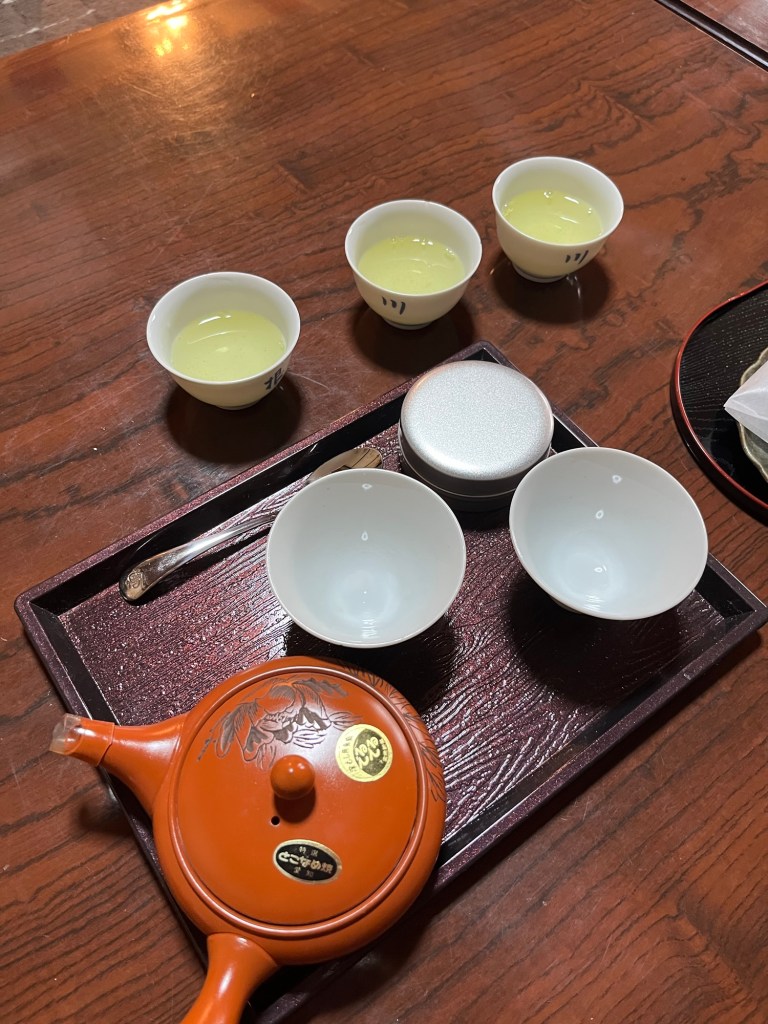
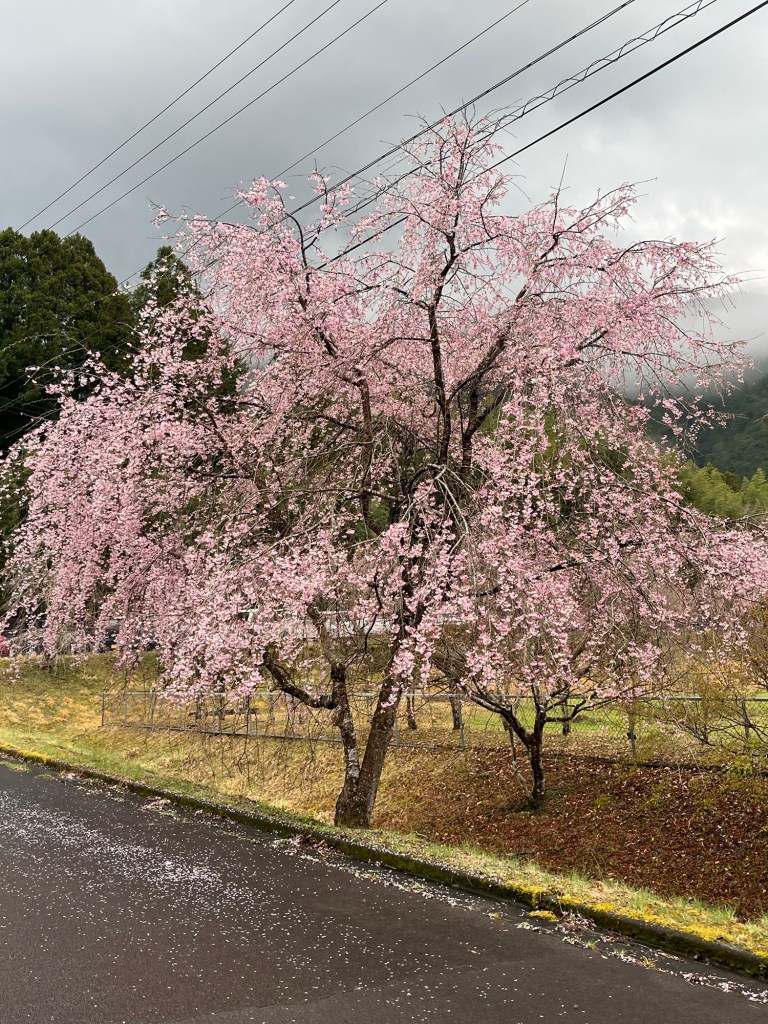
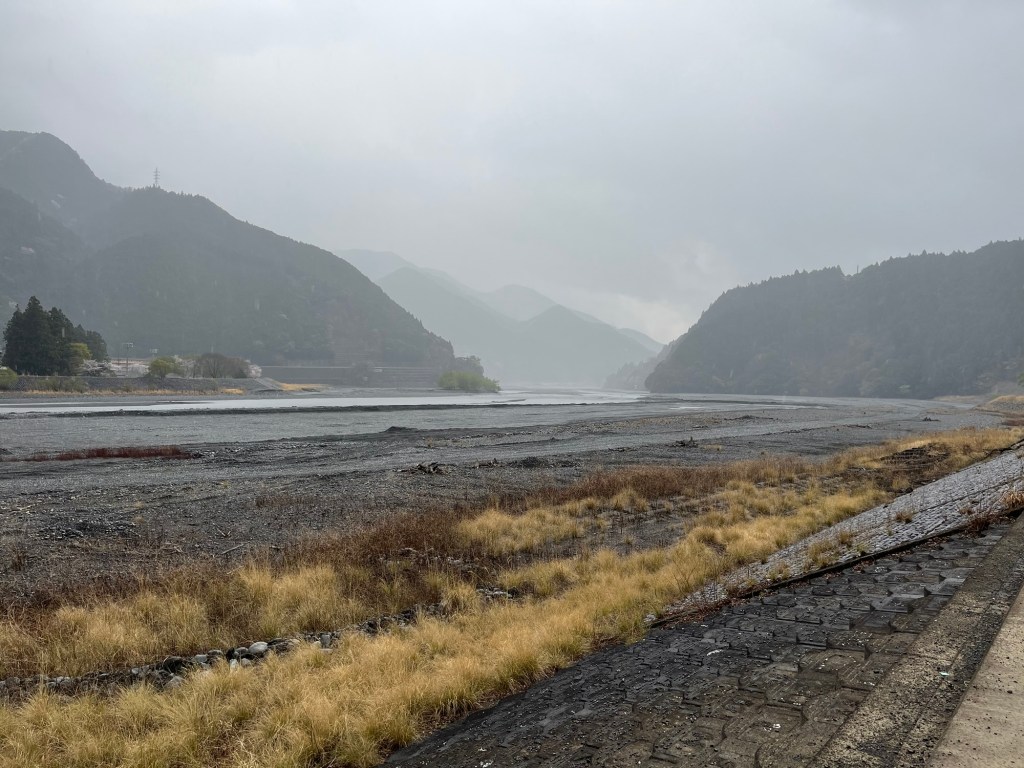
We went to a local tea farm in the afternoon and learnt how to properly brew green tea (turns out I’ve been doing it wrong for a long time…), before meeting the families who we would be staying with tonight. We went to walk around some cherry blossoms which were just beautiful. I could honestly fill an entire day just wandering and looking at them. Daffodils and tulips were also out, and this area in a river valley was so picturesque. It reminded me a little bit of parts of the South Island of New Zealand with wide river beds and forested valley sides.

Before dinner we went to an onsen (hot springs) which was so relaxing, though one of the pools at 44C was a bit too warm for me! I have more onsens included later on this trip and I’m already looking forward to them.

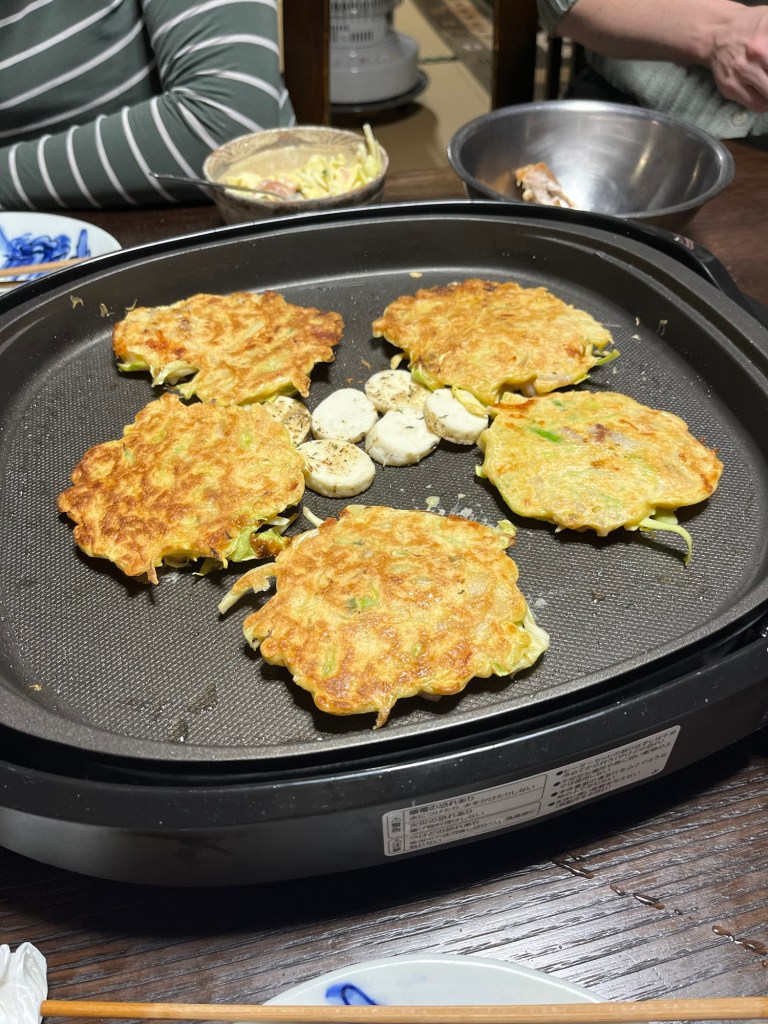
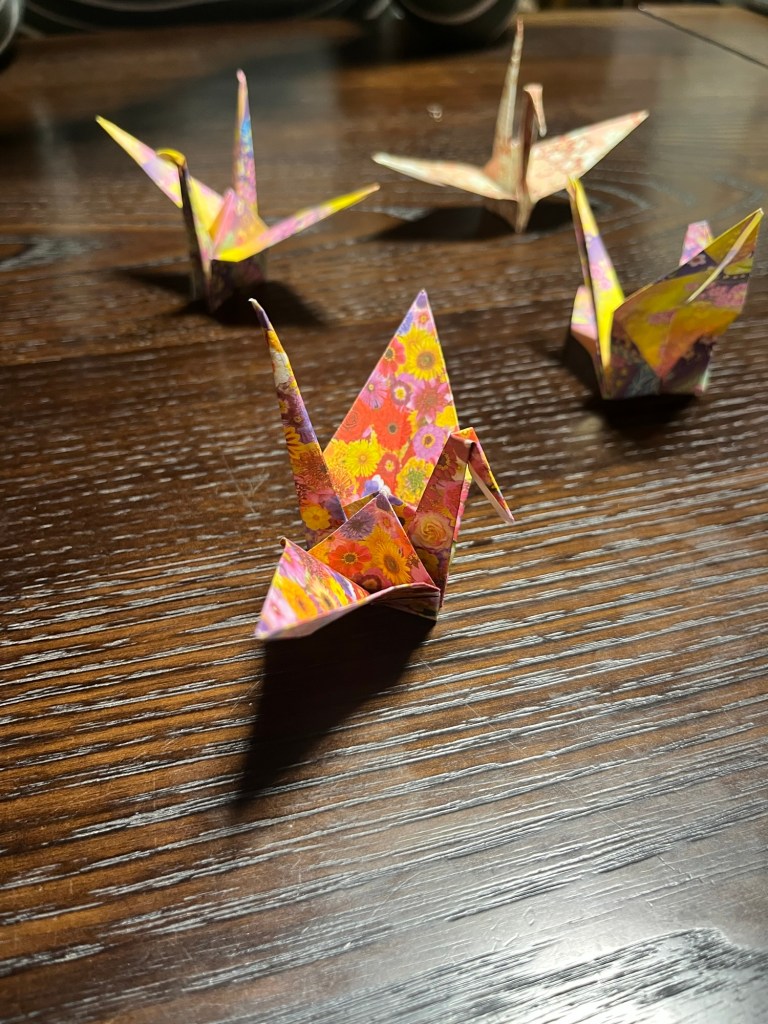
In the evening with our family, we cooked okonomiyaki pancakes (grated cabbage, bacon, cheese, eggs – delicious) and had chicken wings. We also learnt how to make the Japanese origami cranes, I was quite proud of my efforts! Google translate was super-helpful in allowing us all to communicate and getting this glimpse into rural Japanese life was really special.

We had an early start the next morning for the reverse of the bus and 4 trains to our next stop in Kyoto…

Bali

We caught the ferry to Bali from Ketapang in the east of Java. The ferry ride was about an hour, a calm sea despite the torrential rain that joined us on our journey.

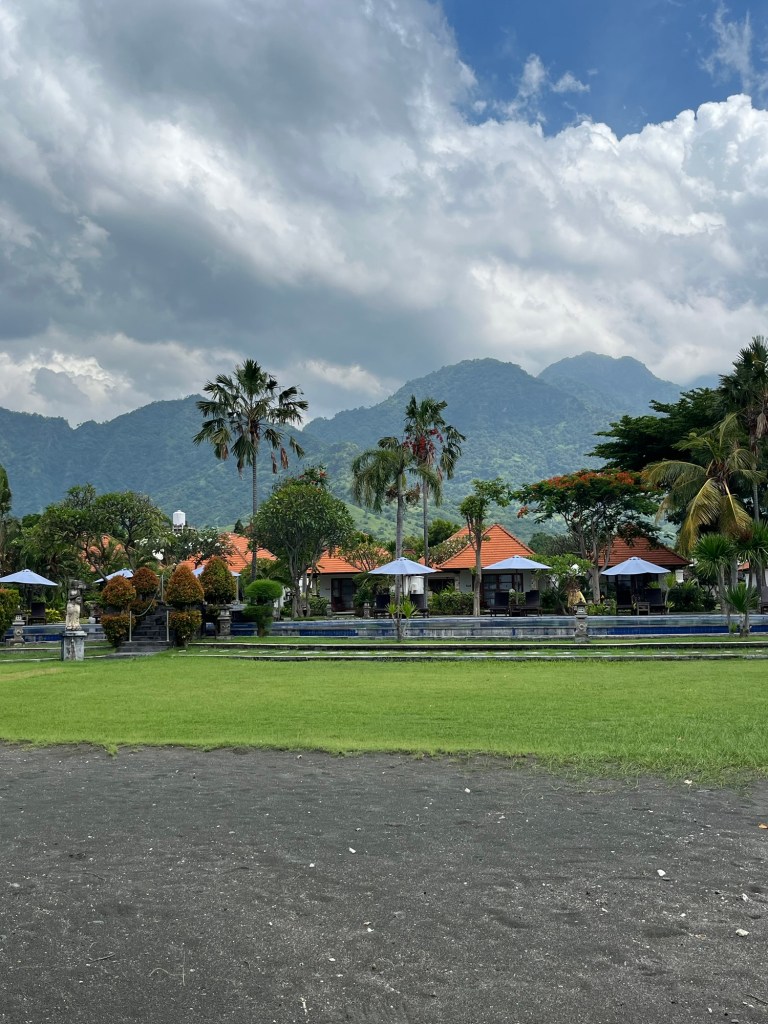
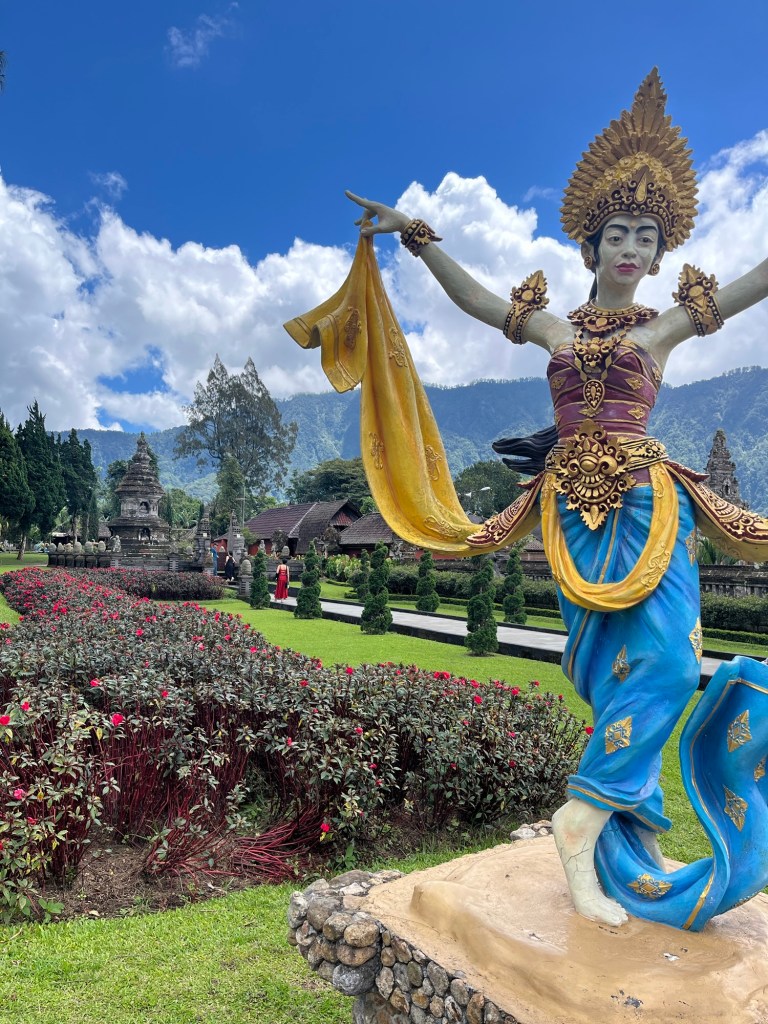
Once on Bali we drove for about an hour to our home for the next 2 nights in Pemuteran on the northern coast of Bali. We were staying in a lovely, quiet resort with cute bungalows and a lovely pool. Dinner in the hotel restaurant that night with some local Balinese rosé wine which wasn’t too bad if I’m honest! We were also treated to some local Balinese dancing, lots of twirling of hands and bending back the palms, which is quite tricky when you try to do it!

The next day was a free day. I chose to do a cooking class in the morning, where we learned how to cook some local dishes including moringa soup which we’d had at Seloliman and was delicious, fried tempeh, chicken curry, and Dadar Bali, which is green pandan leaf pancakes stuffed with a coconut sugar filling, for dessert. My challenge when I go home is to source some moringa leaves in the UK!
The next day we headed to our stop for the next 3 nights in Ubud. Ubud is in the centre south of Bali and is something of a jungle oasis. The island of Bali isn’t huge but the terrain means winding roads up over peaks in the centre of the island and so it took us several hours, and a couple of pit stops.

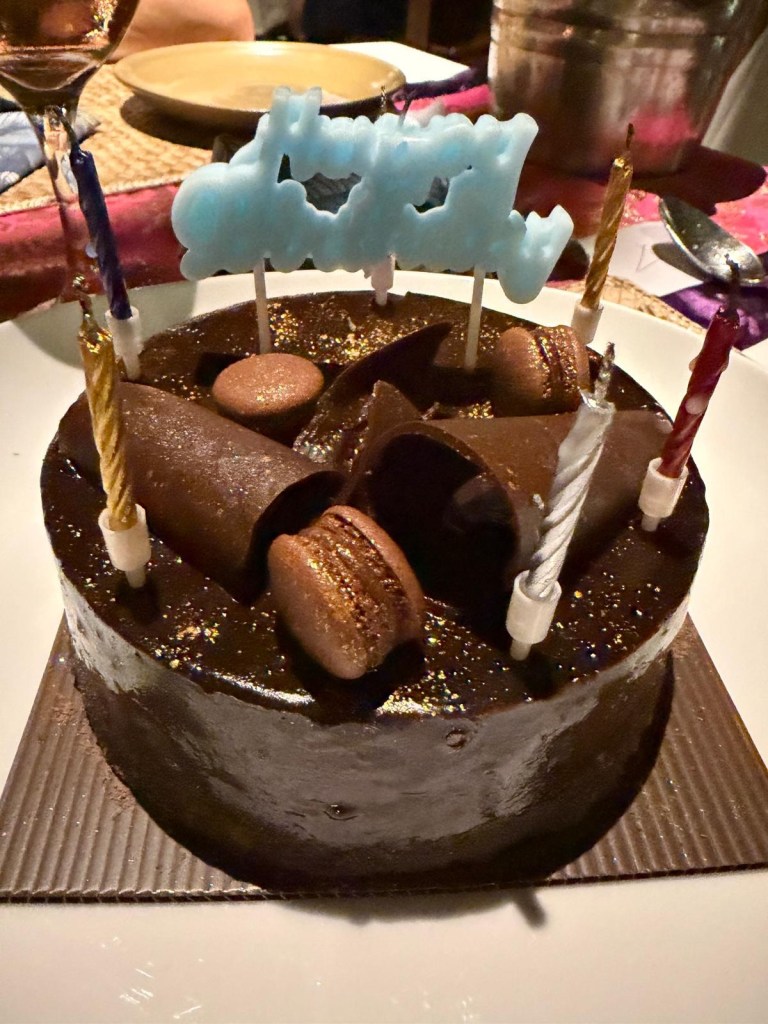
Whilst I’d booked this trip through Java and Bali as one 3 week trip, it was actually 2 trips of 2 weeks from Jakarta to Ubud and then 1 week around Bali. The first part of the trip ended in Ubud and we had a final dinner with the group which sort of doubled up as a pre birthday celebration as it was my birthday the next day. There was cake!
With absolutely no conscious planning on my part, my birthday ended up being a free day in Ubud. I booked myself a spa package with a Balinese massage, body scrub and citrus bath as a treat, and very relaxing it was too!

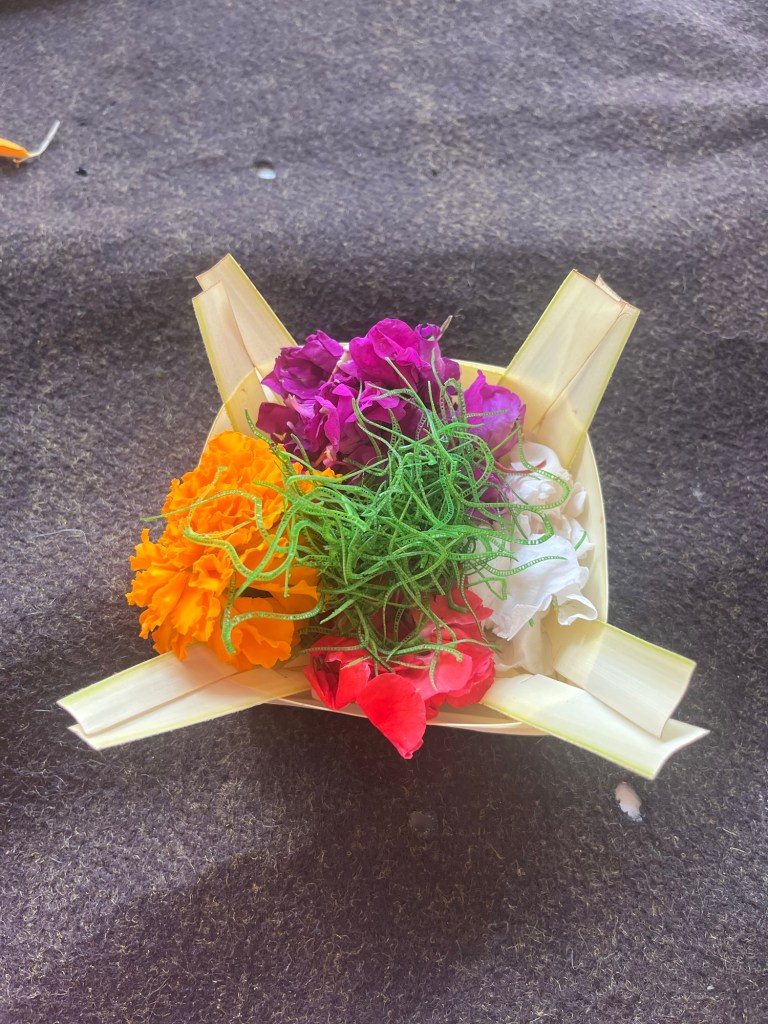
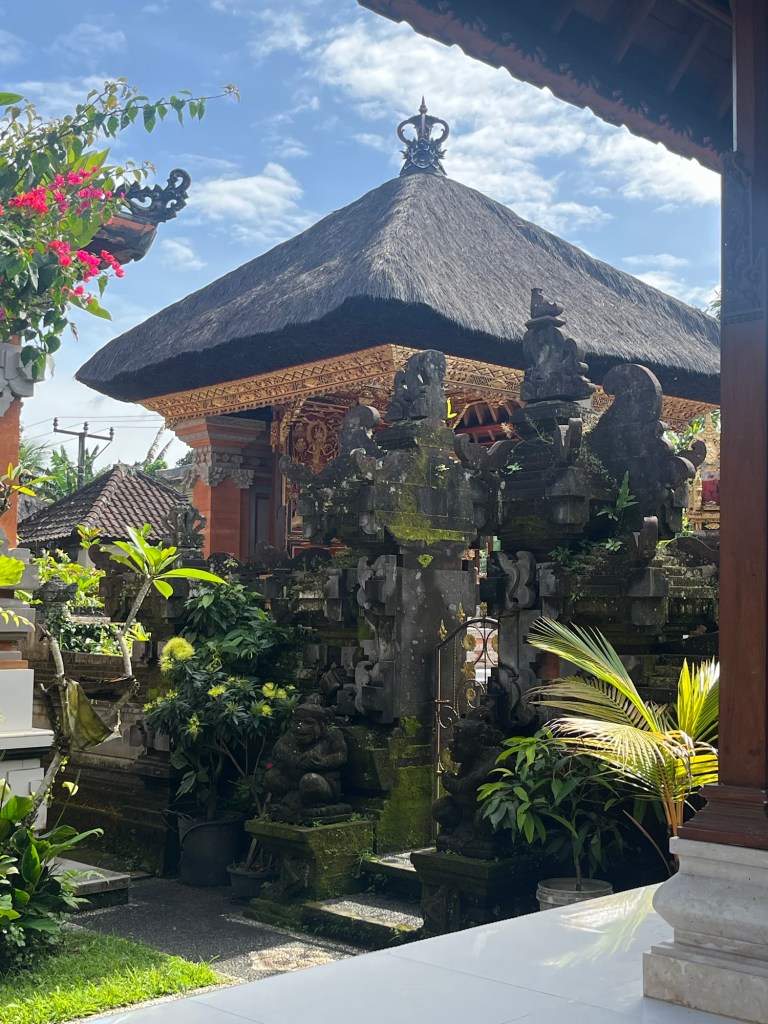
We met the new group that evening (only 3 of us out of the 9 on the first trip carried on through Bali) and the following day we had a guided walk around a village on the outskirts of Ubud. We stopped at a local house and made a traditional Balinese offering. These are made daily, both at home and at shops, hotels, restaurants, for gratitude and balance between good and evil. You see them everywhere around Bali, they are usually accompanied by a burning incense stick.

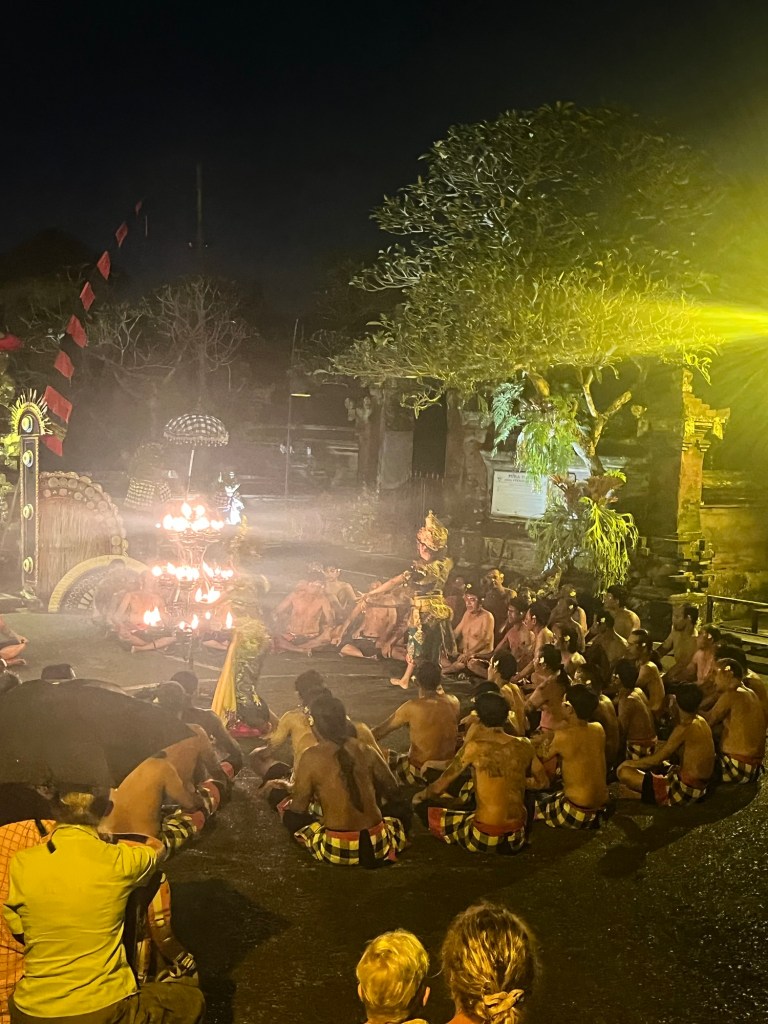
That evening we went to a traditional Kecak dance performance. This was a real spectacle, the ‘music’ is provided by what must have been at least 50 men chanting throughout. It was quite hypnotic. There was also traditional dancing, and fire.

Kecak dance

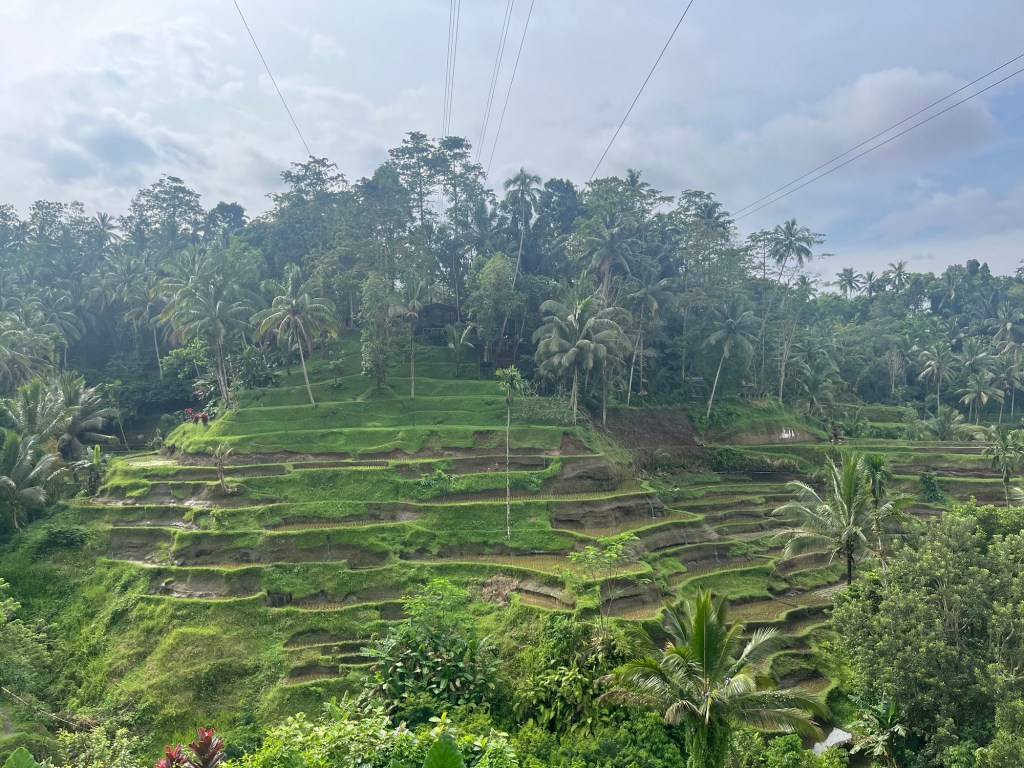
The next day we left Ubud, via some very picturesque rice terraces. Pretty sure people come here for shots for the ‘gram… We also had a cycling trip on the way – 15km almost entirely downhill. I’m not a confident cyclist, I’ve only been on a bike 3 times in the last 20 years and 2 of those were in Indonesia in the last fortnight. The heavens opened after 5km and I, along with a couple of the others, bailed and went the rest of the way in the minibus. Everyone else seemed to enjoy it though!

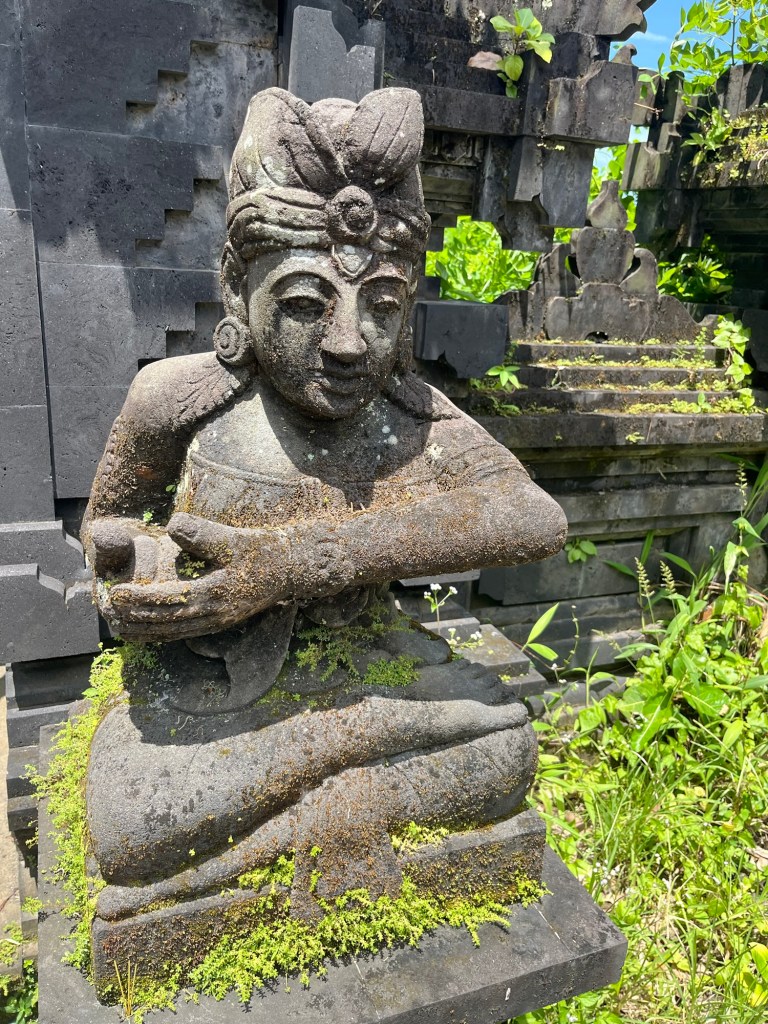
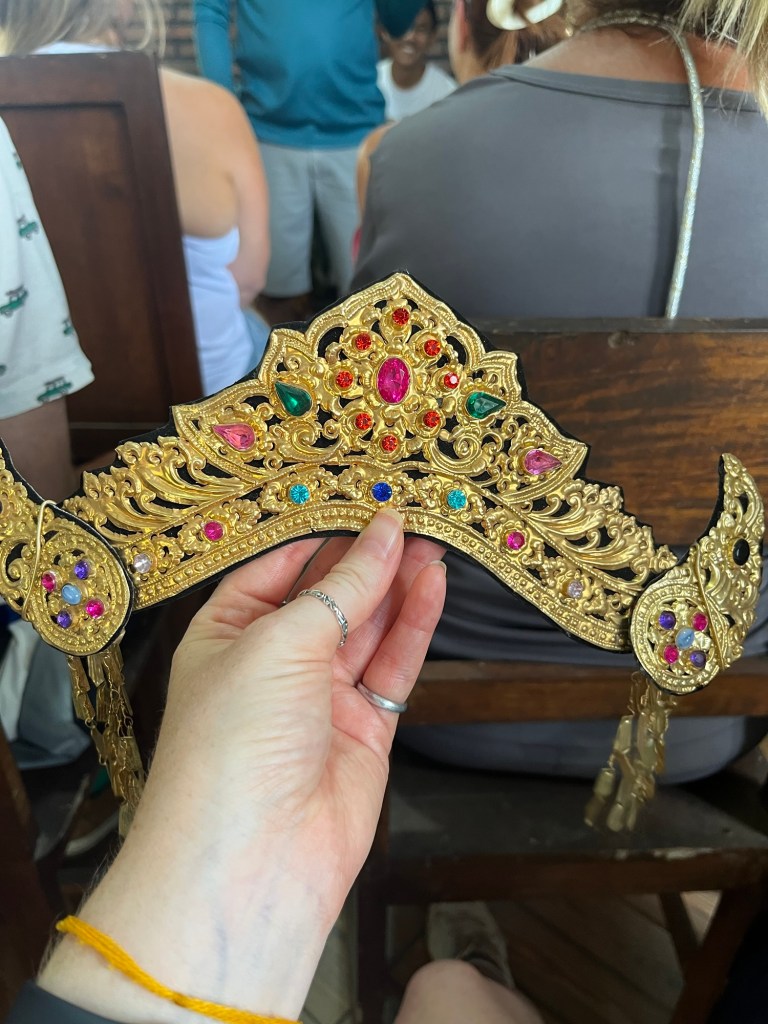
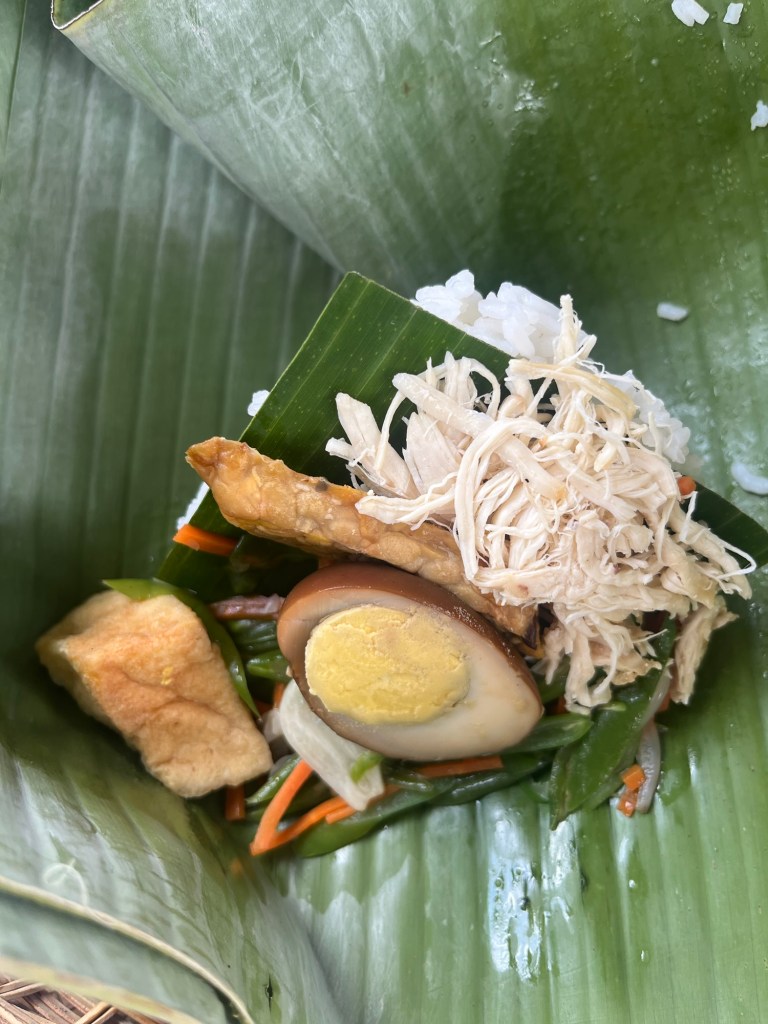
We ended the day in a small village called Undisan. The following morning we had a guided walk around the village, seeing the temples, and some local crafts including making these beautiful, delicate ornate head pieces out of bronze sheets. We ended the walk with a traditional bungkus lunch which is what the workers in the rice fields would eat – delicious chicken, veggies, tempeh, tofu and rice.

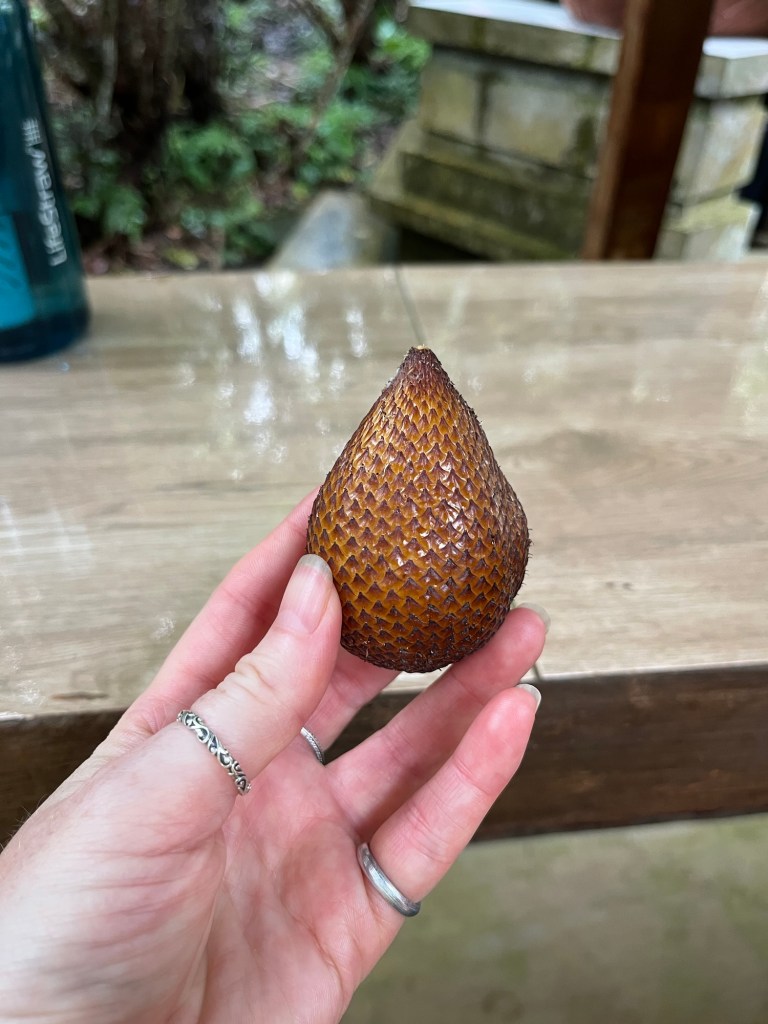
After lunch we headed to Sibetan Village, where we would be staying in home stays with the local villagers. One of the things I really enjoy about these kind of trips is getting off the beaten track, away from the usual tourist hotspots, to see a bit about what life is really like in these places. This village grows a lot of salak (snake fruit, so called because of how the skin looks). We were greeted with a glass of salak juice which was very refreshing, and later tasted some salak wine and liquors…the flavoured versions were more palatable than the neat liquor!

In the evening we went to a local restaurant and enjoyed some more delicious food, along with more salak for dessert.

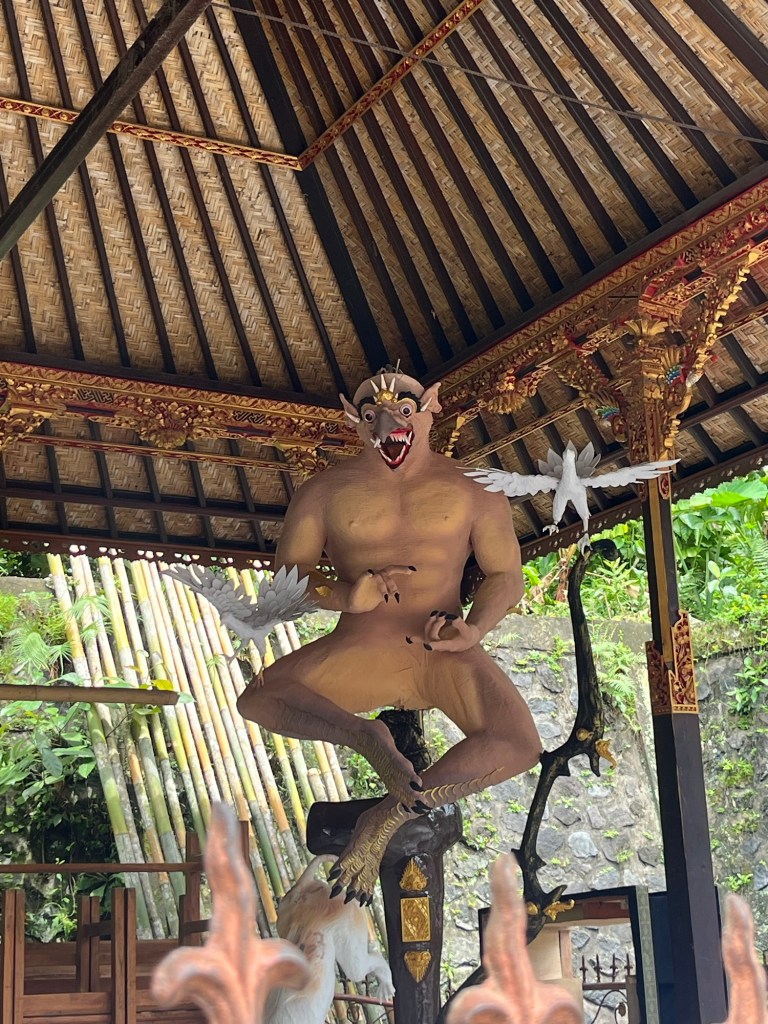
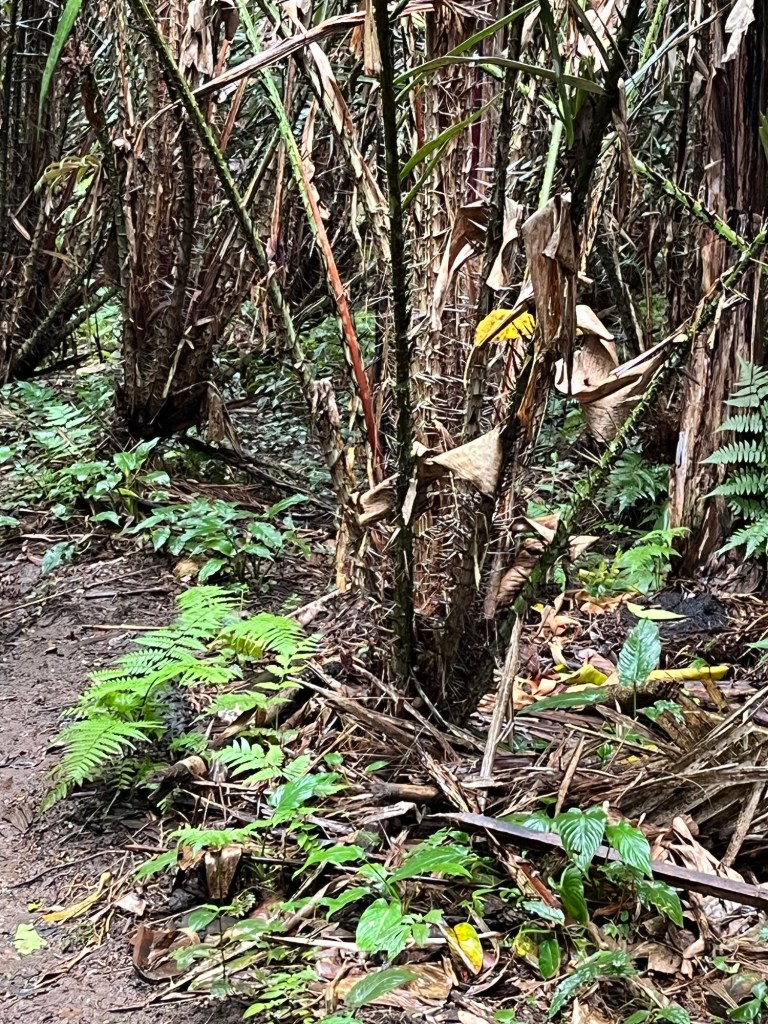
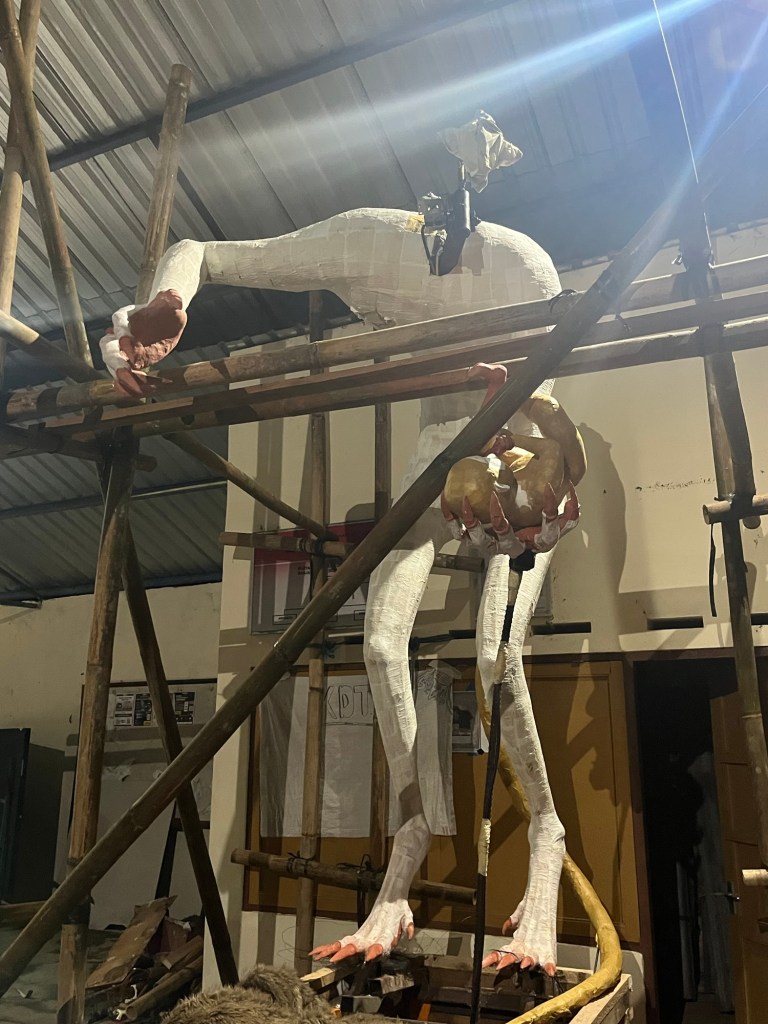
In the morning we had a walk around this village, learning about salak and other plants that grow here. I’ve really enjoyed the walks around the villages and seeing everything that grows – a lot of plants that I have as houseplants at home! As I was travelling in the run up to Balinese New Year (Nyepi), we also saw lots of ogoh ogoh statutes under construction. The villagers make these and then parade them though the towns and villages on the eve of Nyepi before burning them to purify before the new year. This was also really cool to see and learn about.

After lunch we journeyed towards our next stop near to Mount Batur. An early rise (3am) the next morning for another attempt at a sunrise hike. Would I be third time lucky on my current travels at seeing a sunrise having gotten up so early?!

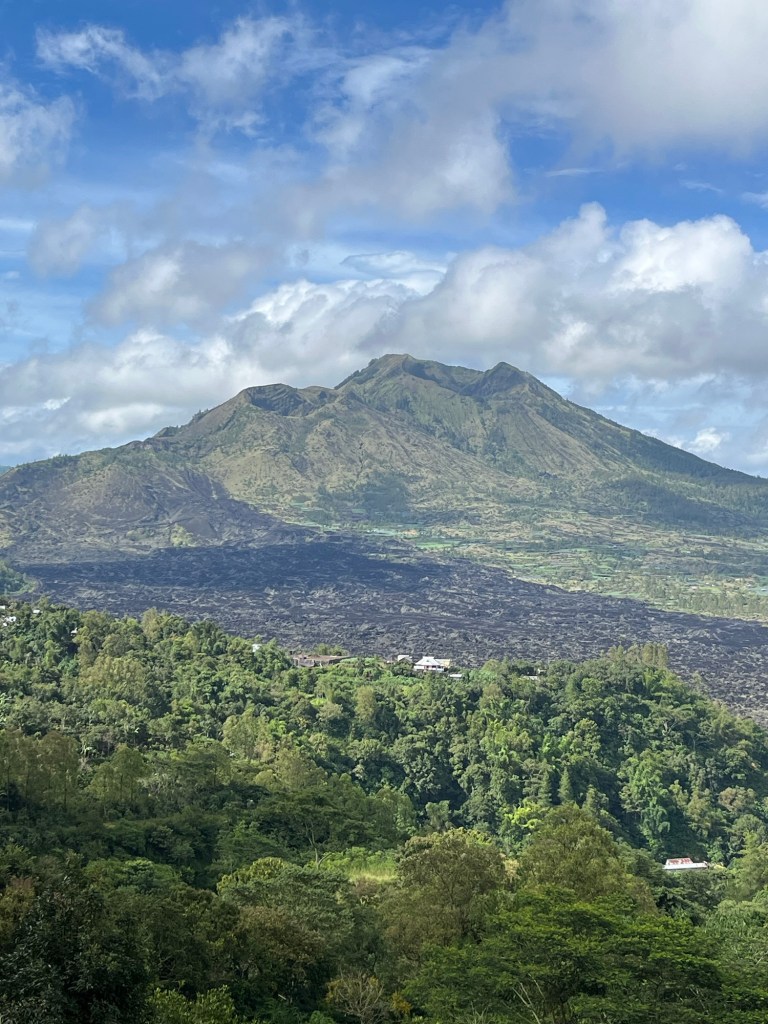
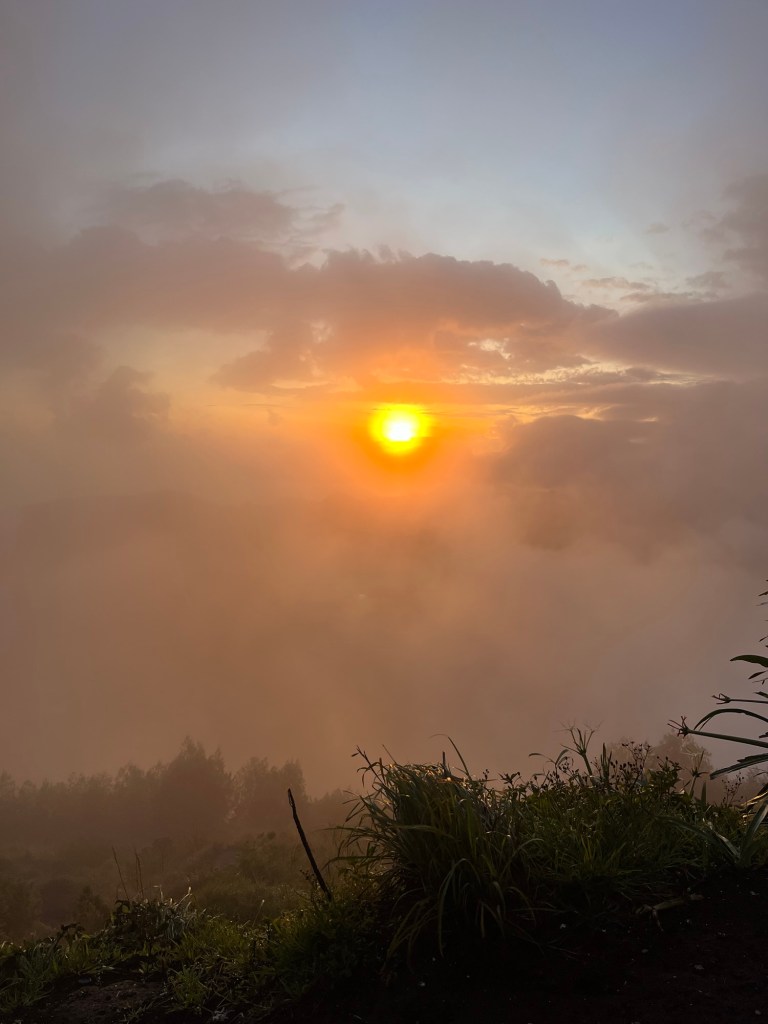
We drove to the foothills of the volcano, as far as the road goes, and then started the hike. It was completely pitch black and even with head torches, I found it quite difficult to see what I was doing. We walked upwards with some breaks for around an hour and 40 minutes. We waited at the top, literally in the clouds which were blowing over, but eventually we saw the sun, and a small cheer erupted from everyone gathered on the mountain. We watched for around half an hour or so as the sun kept disappearing and reappearing behind the clouds. After failed sunrises at Angkor Wat and Mt Bromo, I’m very glad that finally a very early wake up was really worth it!!

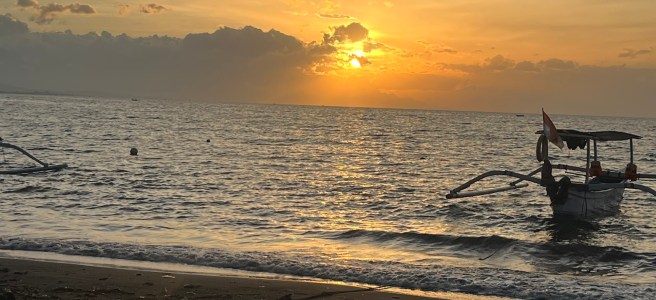
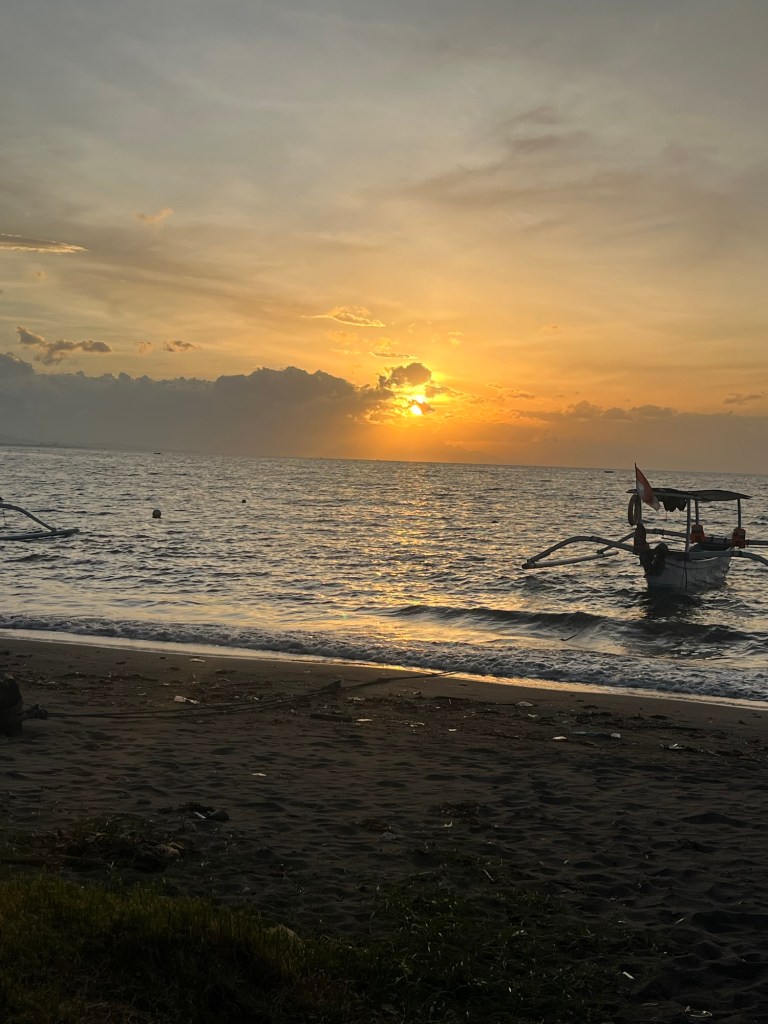
We were back at the hotel for breakfast and a shower, and then headed off back to the north coast, to Lovina, for 2 nights. After lunch at a local cafe which provides employment for deaf people (a great initiative), we had free time for the rest of the day. I mostly spent it resting in the air conditioning though I did make it to the beach for sunset.
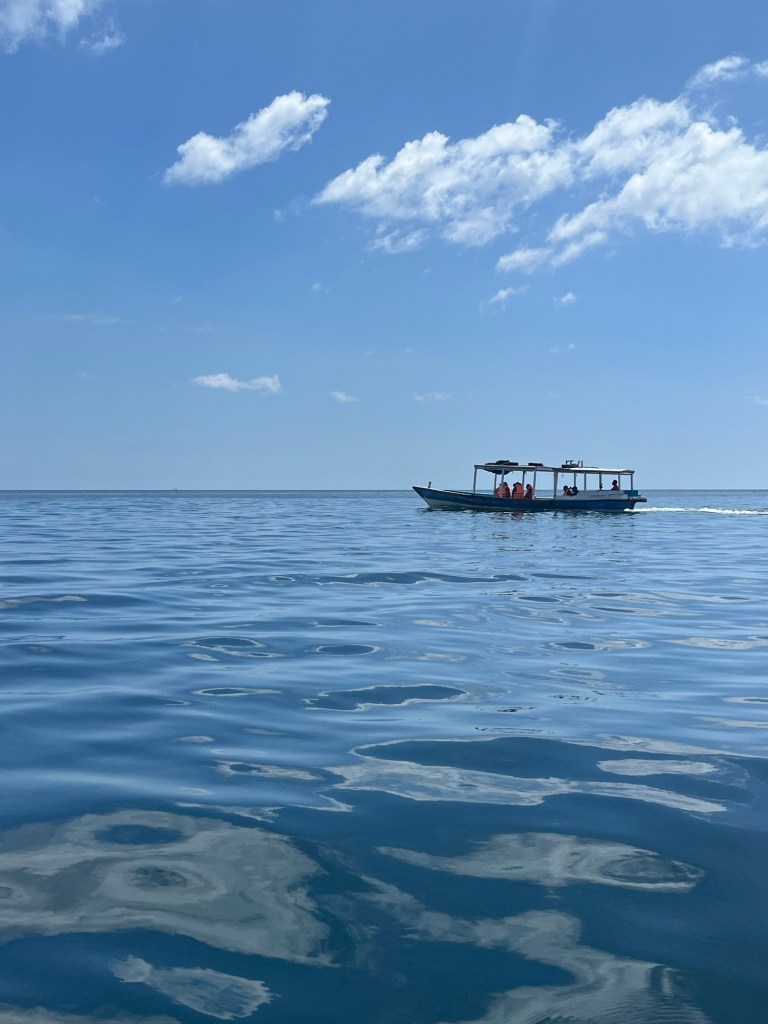
We had a full day of activities the next day, starting with a drive back to the north west of the island, past Pemuteran where we stayed on our first couple of days in Bali, to Menjangan Island where most of the group did some snorkelling, and I stayed on the boat. We were moored over a coral reef that was quite shallow and I could see quite a lot of fish zooming in and out of the reefs. Certainly more than I would have seen without my glasses if I had snorkelled (I’ve learnt this from prior experience!)

We had lunch on the island and on the way back, we stopped off for a soak at Banjar Hot Springs which was very much like having a warm bath. Apparently bathing in these springs can make you look years younger but I’m not quite sure about that…

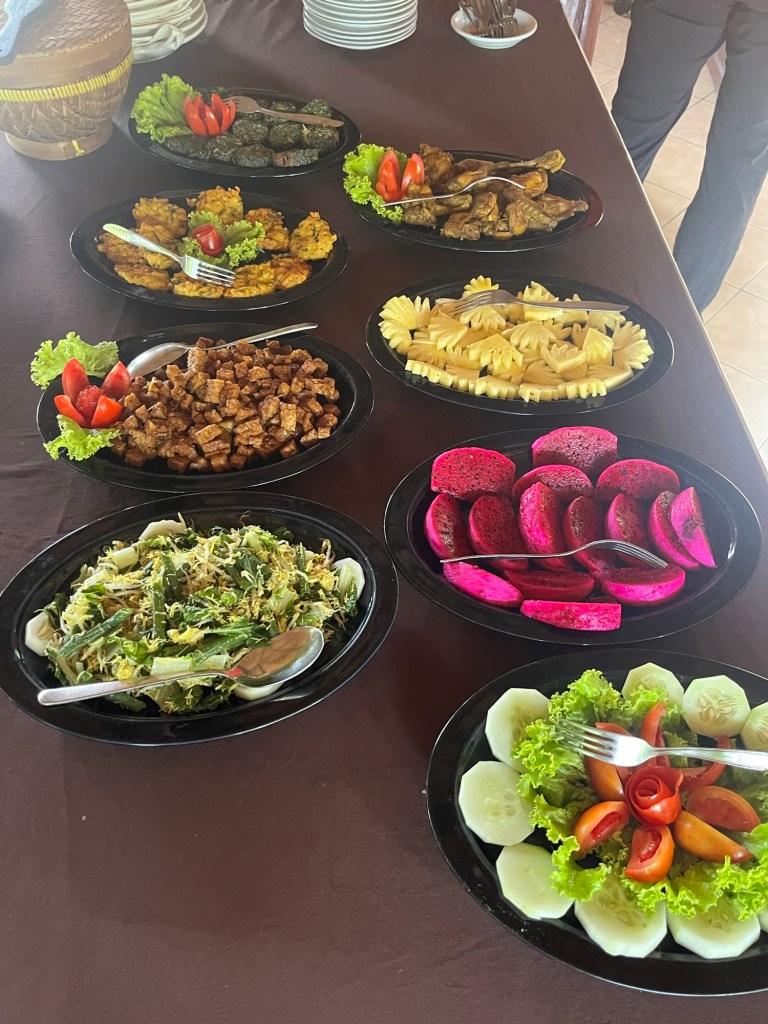
That evening we had dinner at a local restaurant with some more delicious Balinese cuisine. The corn fritters were a winner for me, but all of it was fantastic.

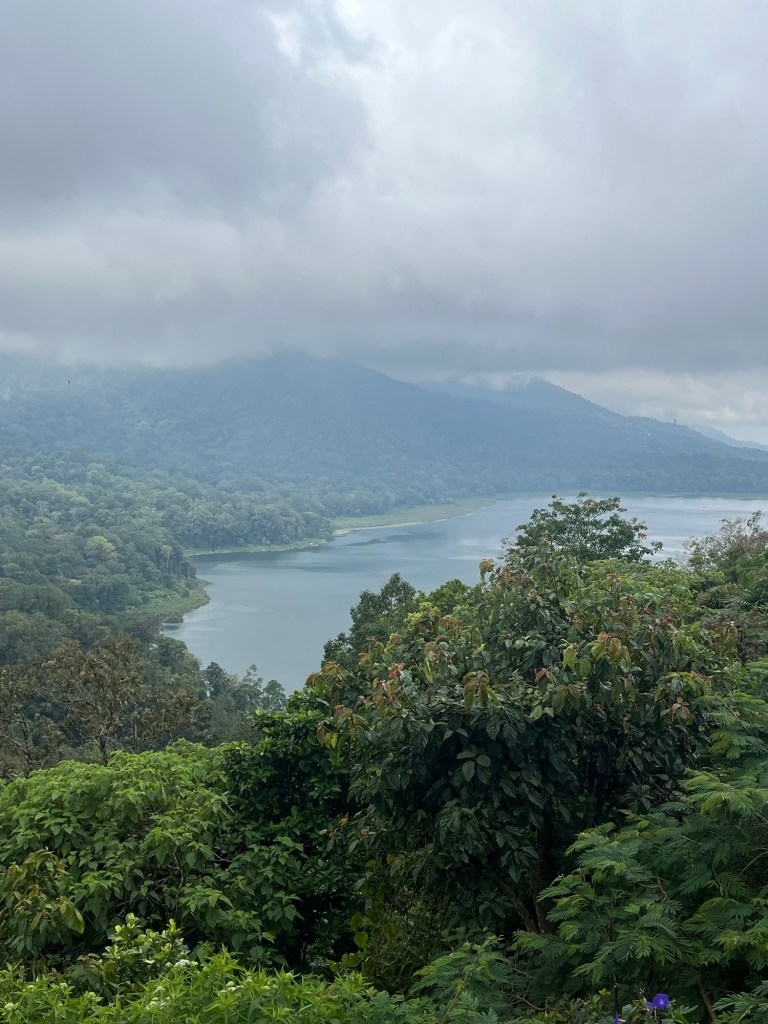
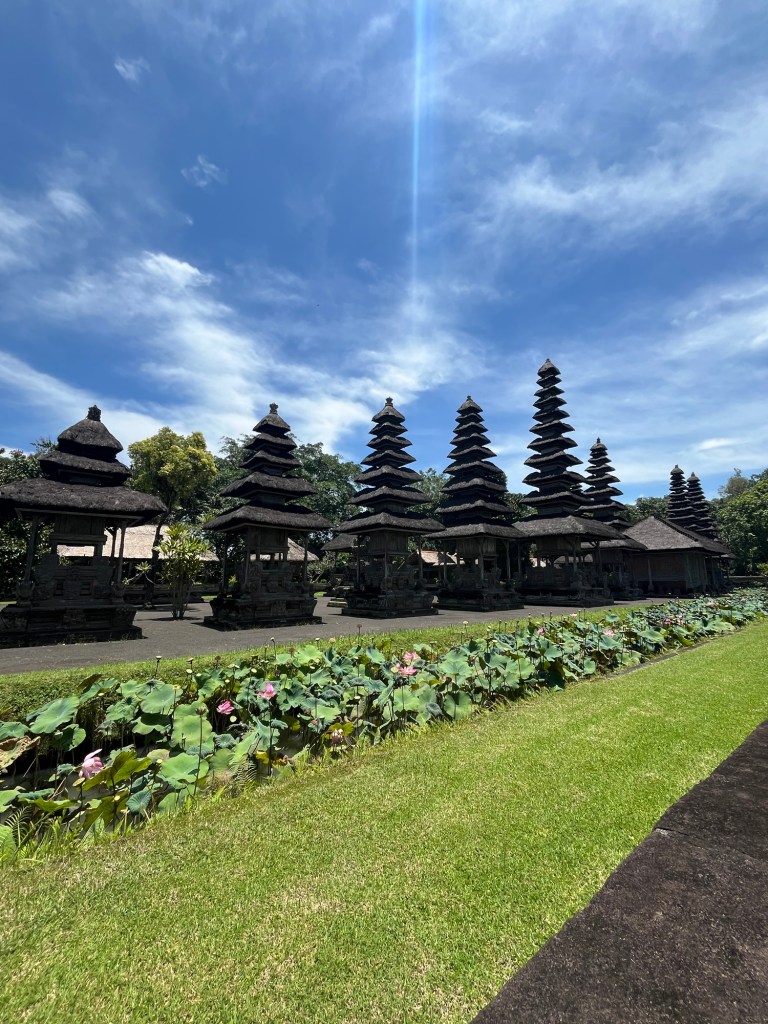
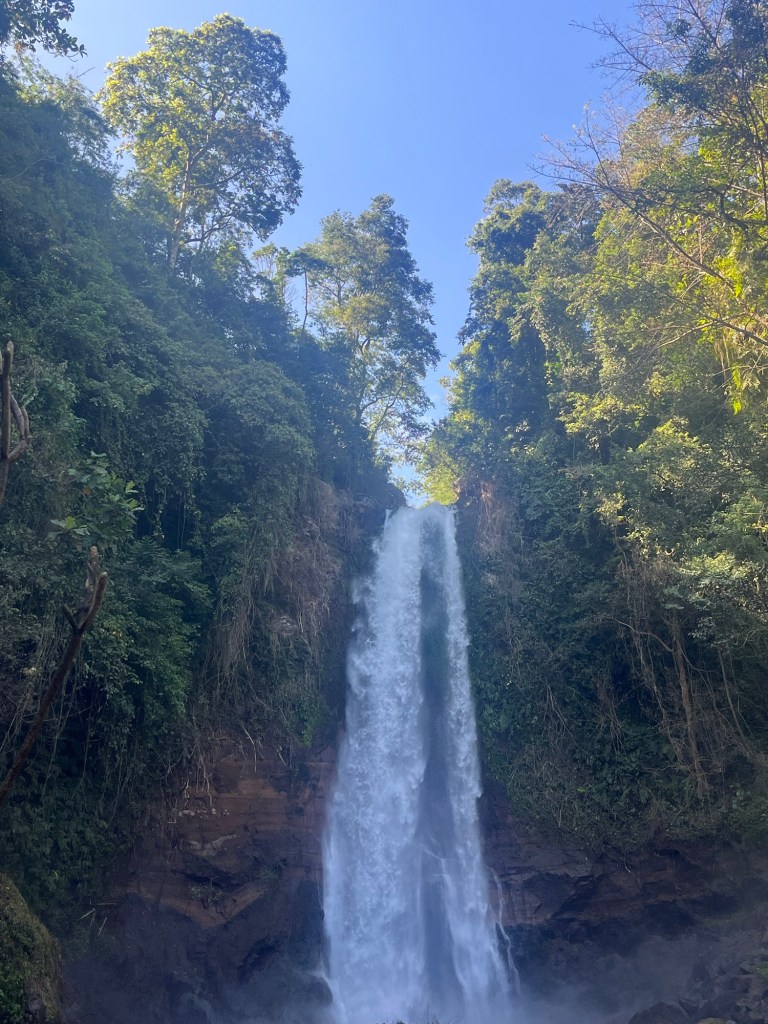
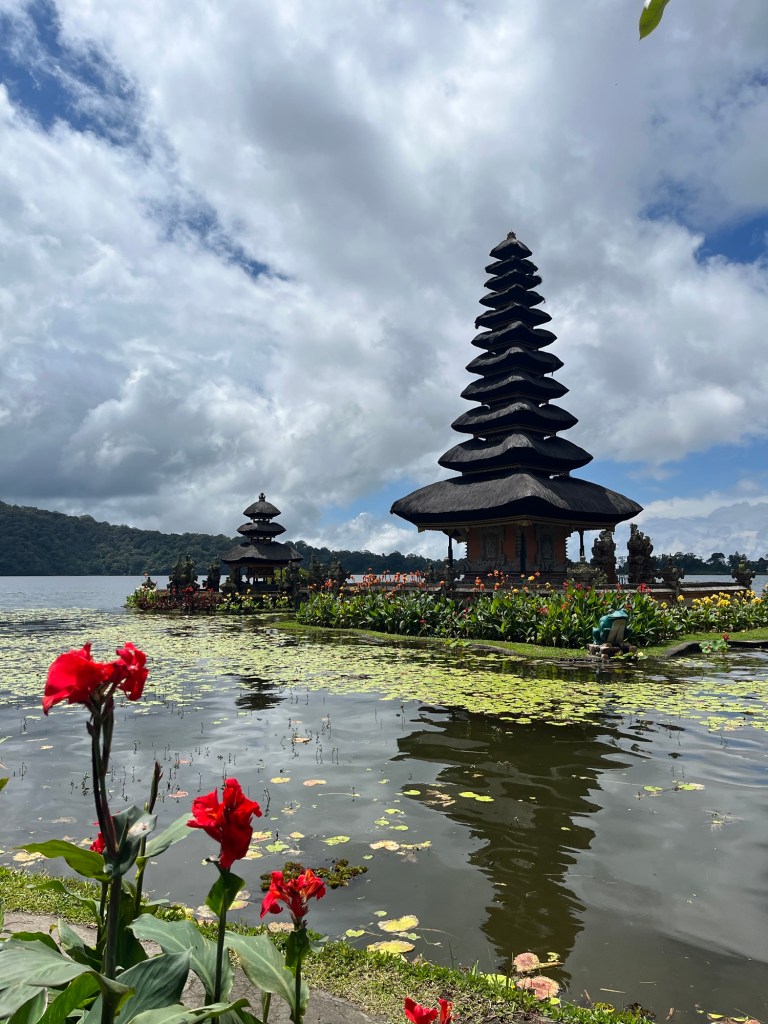
The next day was our last full day on the trip, and my final full day in Indonesia after almost 3 weeks. We headed south east across the island, to Sanur. We stopped along the way at Gitgit Waterfalls, where we were the only people there, and later at Pura Ulun Danu Bratan temple, which is on the edge of a lake and has some beautiful gardens.

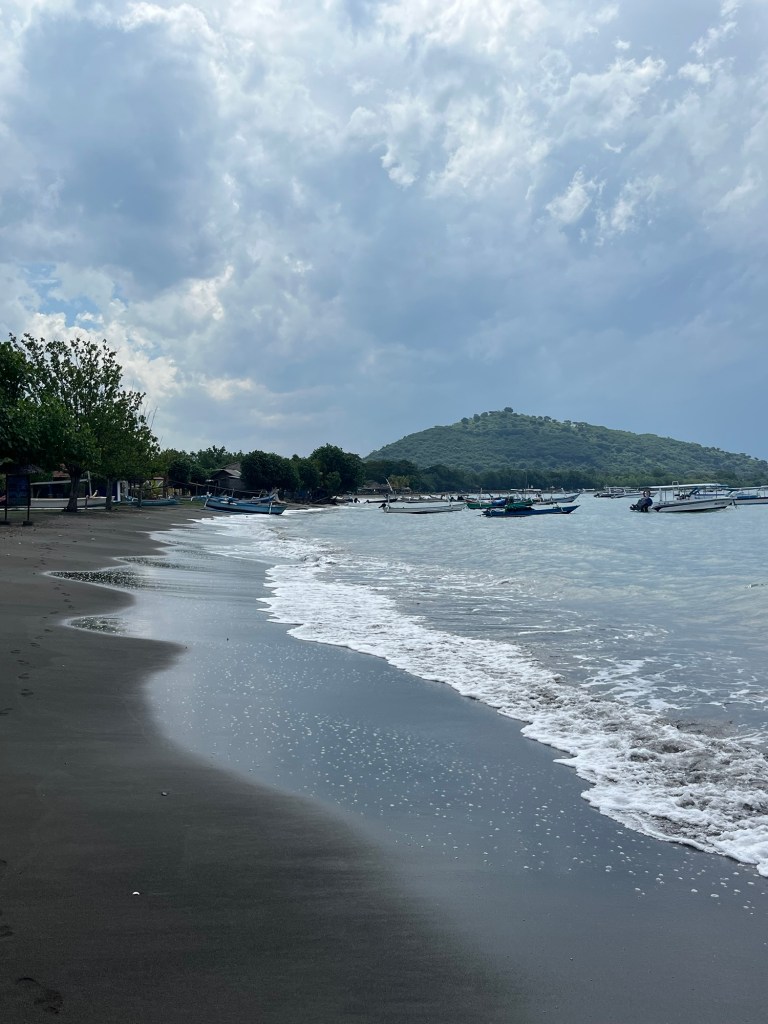
We arrived in the beach side resort town of Sanur in the late afternoon. I had just enough time for a walk up and down the beach before our final dinner.

Before I arrived here, I wasn’t sure I was going to like Bali. My impressions were probably based on the resorts on the south of the island, Sanur, Kuta, Seminyak – just another beach holiday destination. I was very pleasantly surprised by how much I enjoyed it, in particular the villages and seeing the local life, as well as Ubud, which was touristy but had a nice, laid back vibe to it. Disclaimer it is still low season, not loads of tourists, and perhaps I’d feel differently at other times of the year. But the people are so very friendly, and I remain obsessed with the rice terraces.

Now back to Singapore to stay in one place for the longest time since Adelaide in mid December!

Java

After barely 24 hours in Singapore (I’ll be back in a few weeks to explore properly), I took the short flight over to Jakarta, on the island of Java in Indonesia. Having managed to pay for my e-visa online in advance after filling out the online arrival card prior to departure, it was a straightforward entry into the country through the e-gates, though sadly no stamp in my passport! It’s also possible to get a visa on arrival at the airport for 500,000 rupiah (£22).

My arrival transfer to the hotel in Jakarta was a little hairy. I was fairly sure the driver was nodding off on the way, a well timed cough on my part seemed to wake him up!

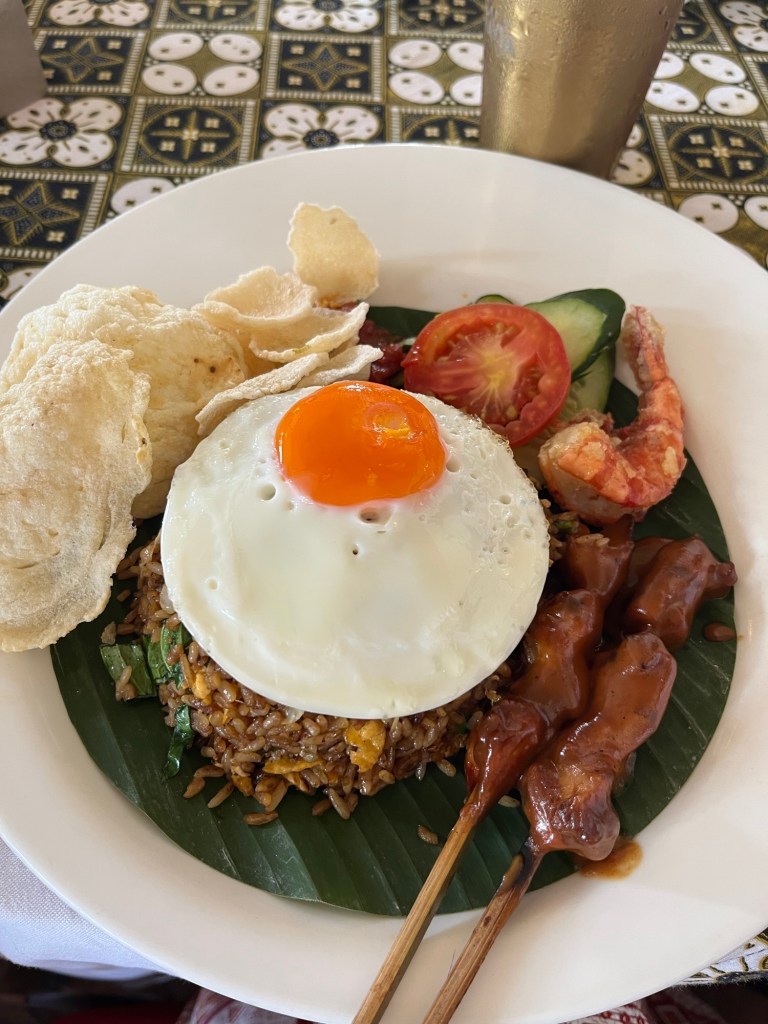
This trip, through both Java and Bali, is also with Intrepid Travel. We started that evening with the usual welcome spiel and then dinner at a restaurant next door. I went straight in with the Nasi Goreng (fried rice), one of the dishes Indonesia is known for.

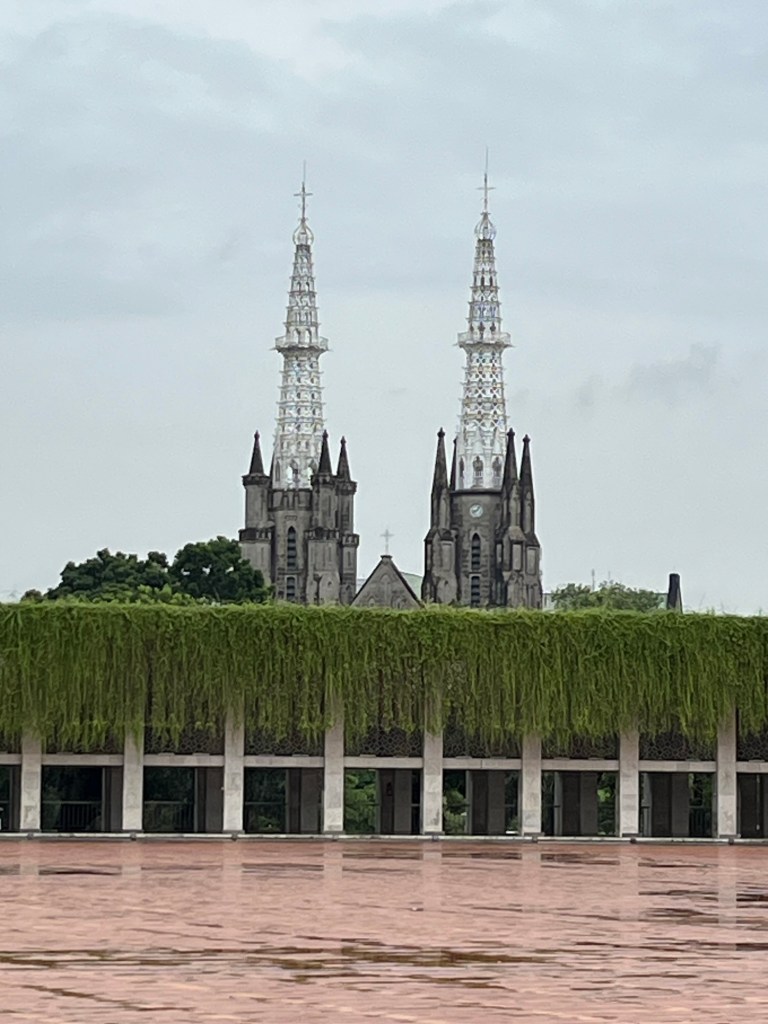
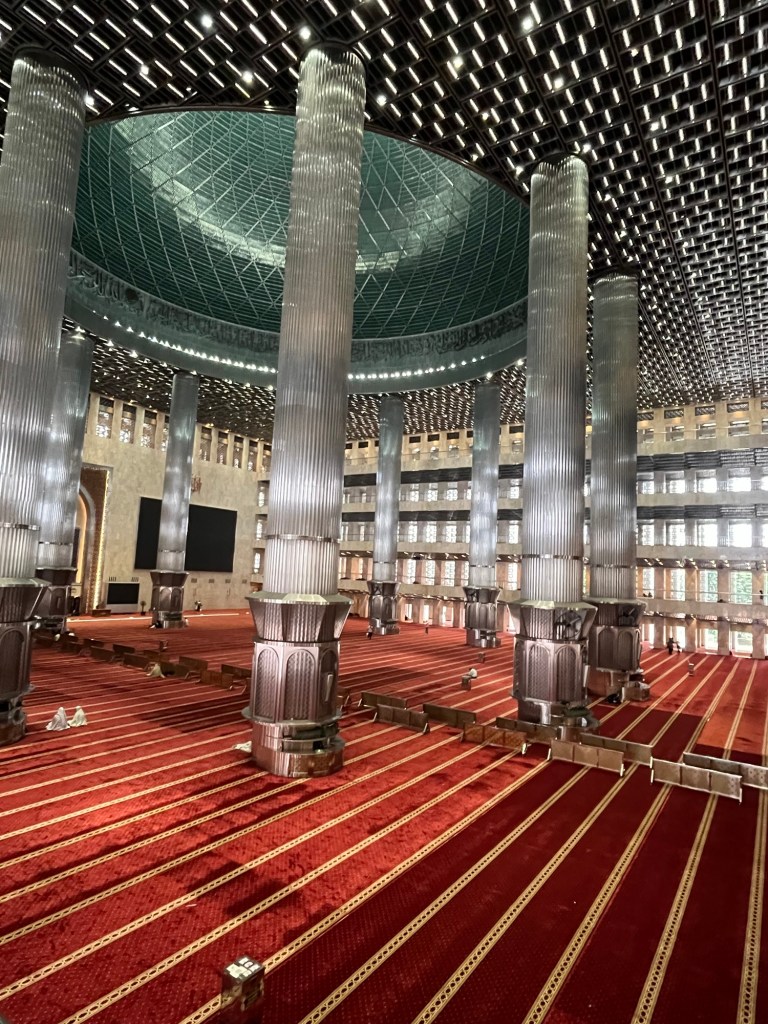
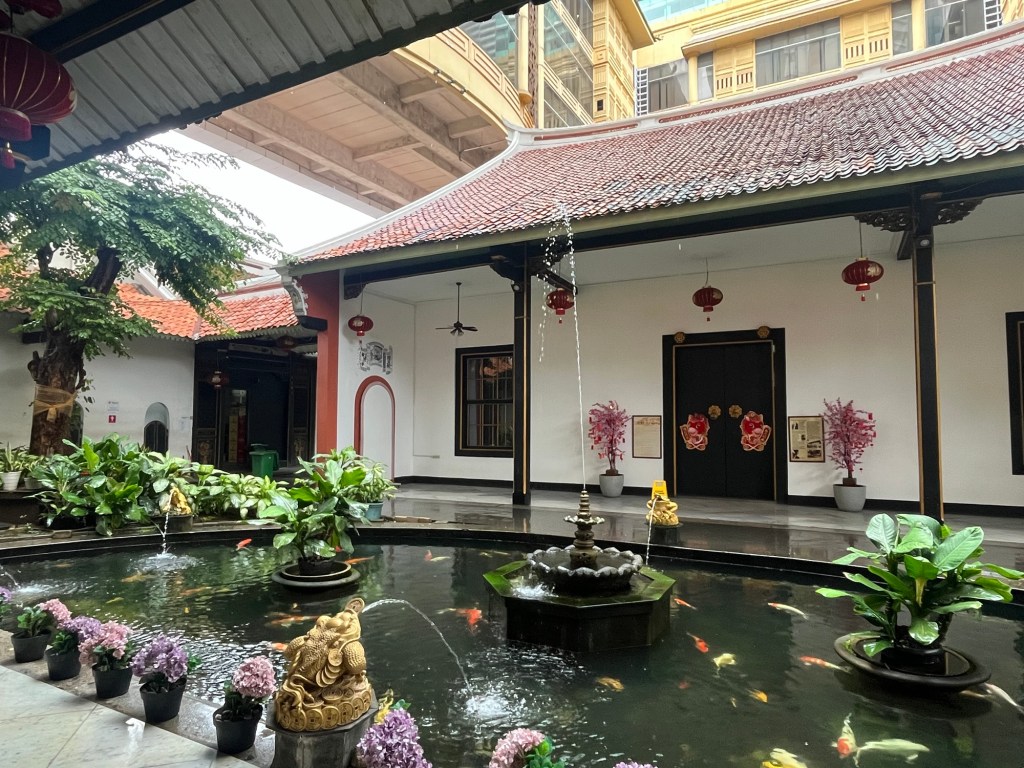
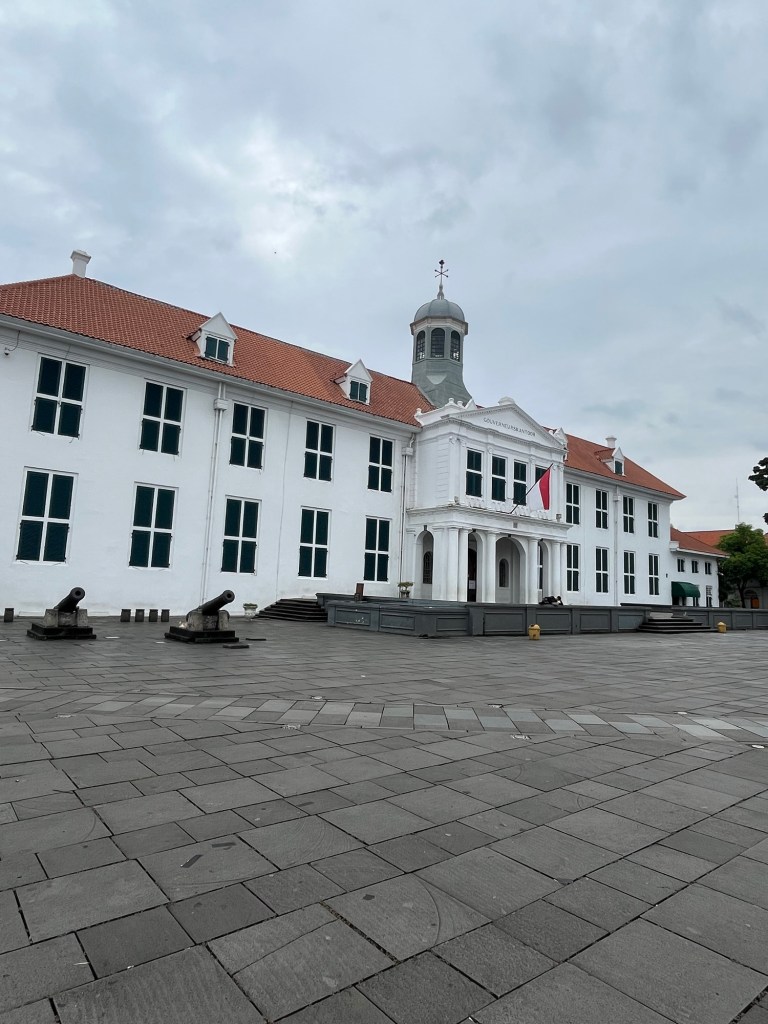
The next day we had a tour around some sights in Jakarta, including the Istiqlal Mosque which can hold 200,000 people, and is also across the road from Jakarta’s cathedral; an old Chinese Mansion House, a wander around Chinatown, the port area and finally in Fatahillah Square before lunch (more nasi goreng) at Cafe Batavia. You could certainly see the Dutch influence in the architecture here.

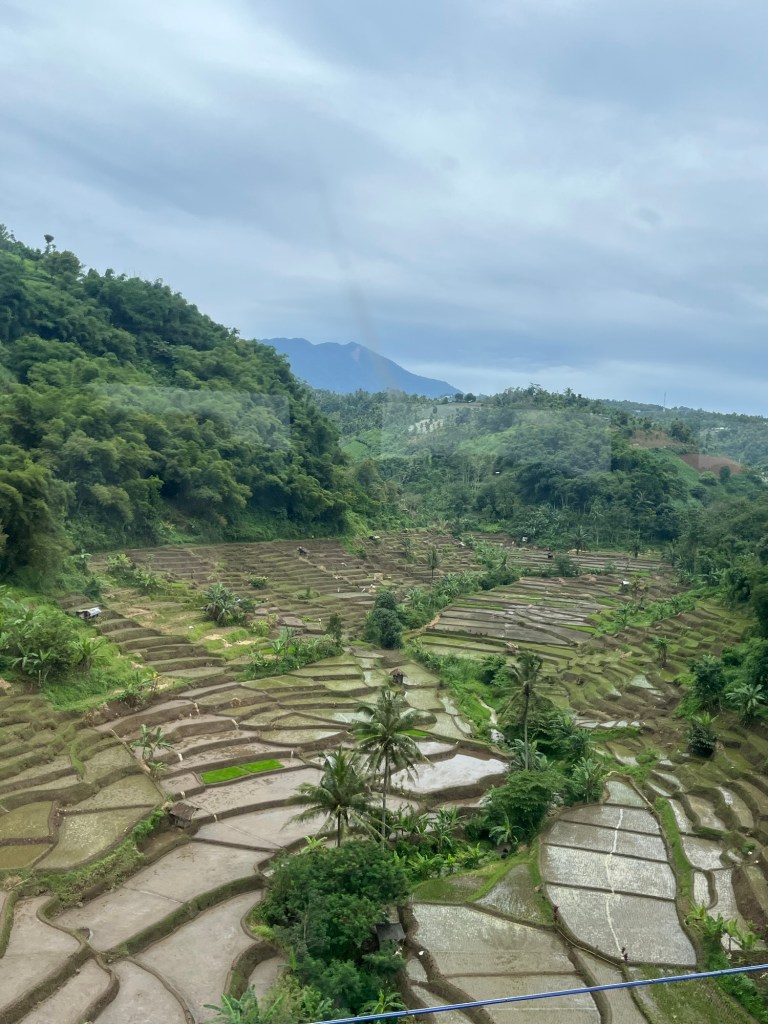
The following day we started our journey across Java with a very comfortable train journey, approximately 4 hours to Bandung. The scenery was spectacular once we got out of Jakarta, with lush green fields, rice terraces and soaring volcanic peaks.

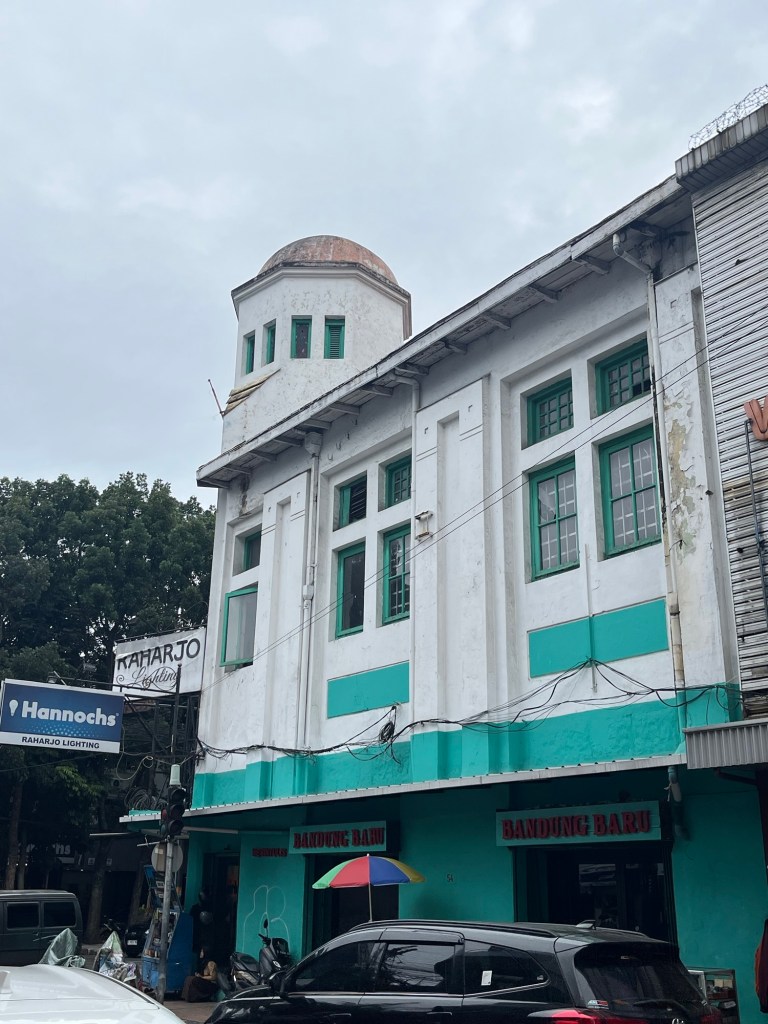
When we arrived in Bandung, we went to a local restaurant for lunch – I am travelling during Ramadan, a lot of restaurants are closed during the day – before having a walking tour of Bandung. Quite a lot of art deco buildings here.

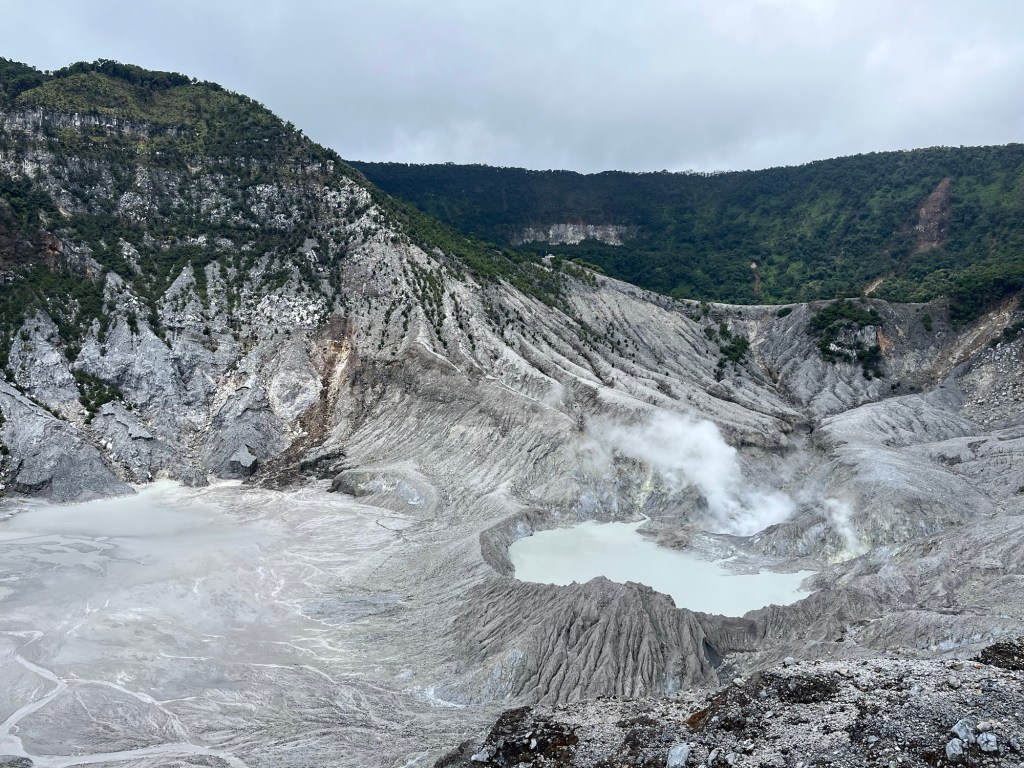
The next day we went to Tangkuban Perahu, the largest volcano in West Java which also has the great advantage of being able to drive right up to the rim! Some pockets in the crater were gently bubbling away as a reminder that we are on the Ring of Fire. Long time readers may recall my love of plate tectonics and volcanoes from prior travels and I really enjoyed this excursion.

Tangkuban Perahu volcano

We also visited a tea plantation and some hot springs, both of which were deserted through a combination of Ramadan and it being low season.

We went for dinner on Braga Street in downtown Bandung in the evening where we were served our alcohol in teapots, nominally due to Ramadan, though this hasn’t happened anywhere else in Indonesia.

The next day we were back on the train and heading to Yogyakarta. The travel took most of the day with the train journey being 7 hours through more beautiful scenery. Not as many volcanoes in Central Java but still plenty of rice terraces, and more lush greenery.

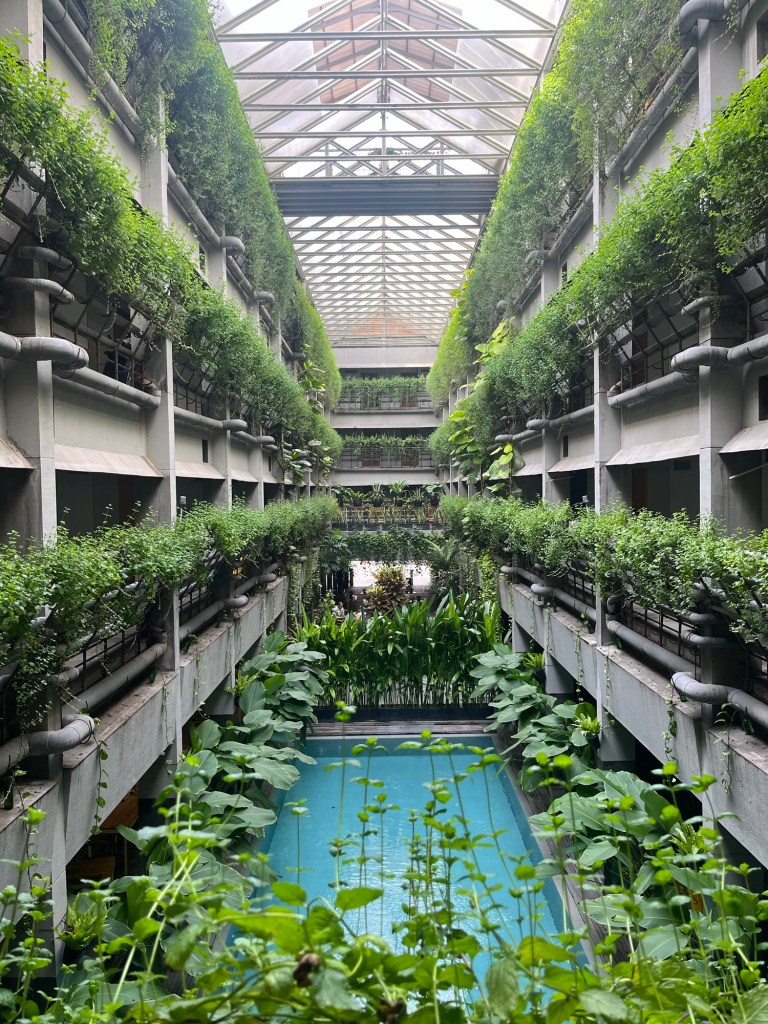
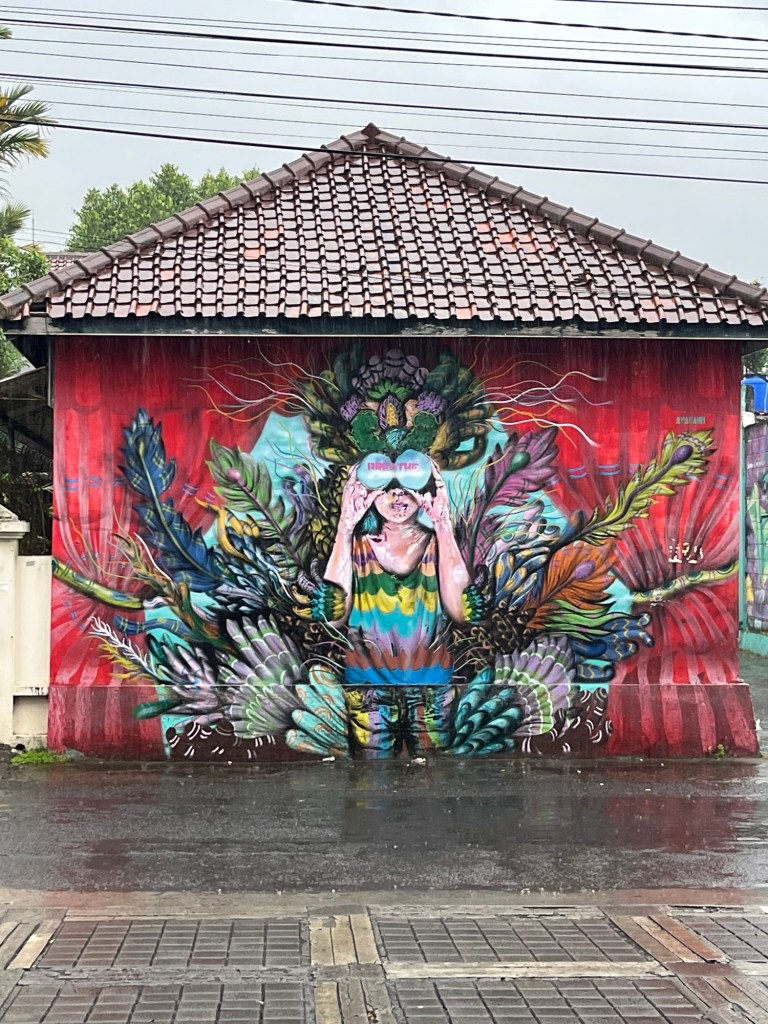
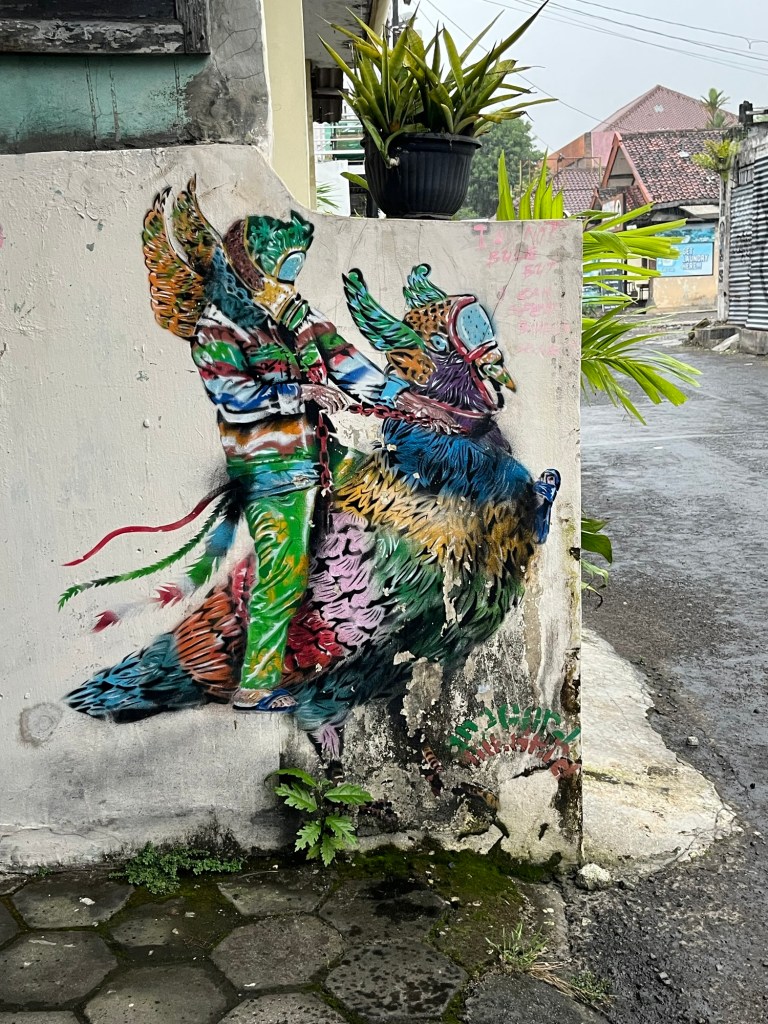
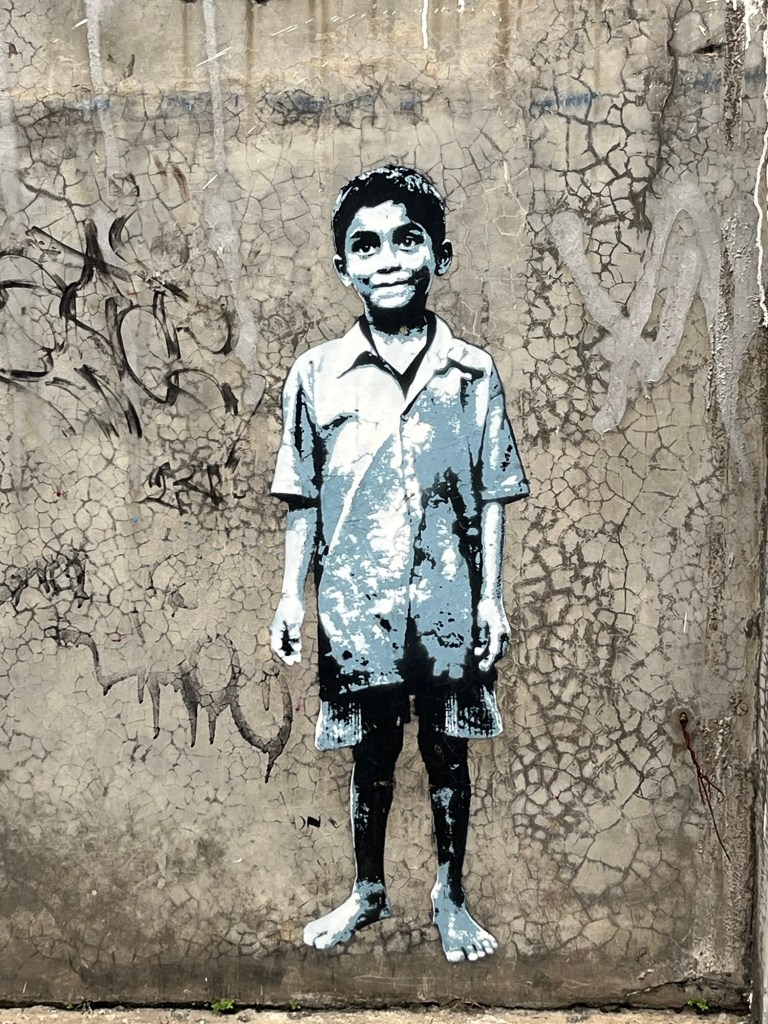
Yogyakarta was the first place in Indonesia that I’d seen Westerners. Definitely a sign of low season. We stayed in a lush (both literally and in the Welsh sense of the word) hotel which was covered in greenery, very close to Prawirotaman Street where there are lots of restaurants and bars. This area of Jogja (as the locals call it) also has lots of street art in the narrow alleyways.

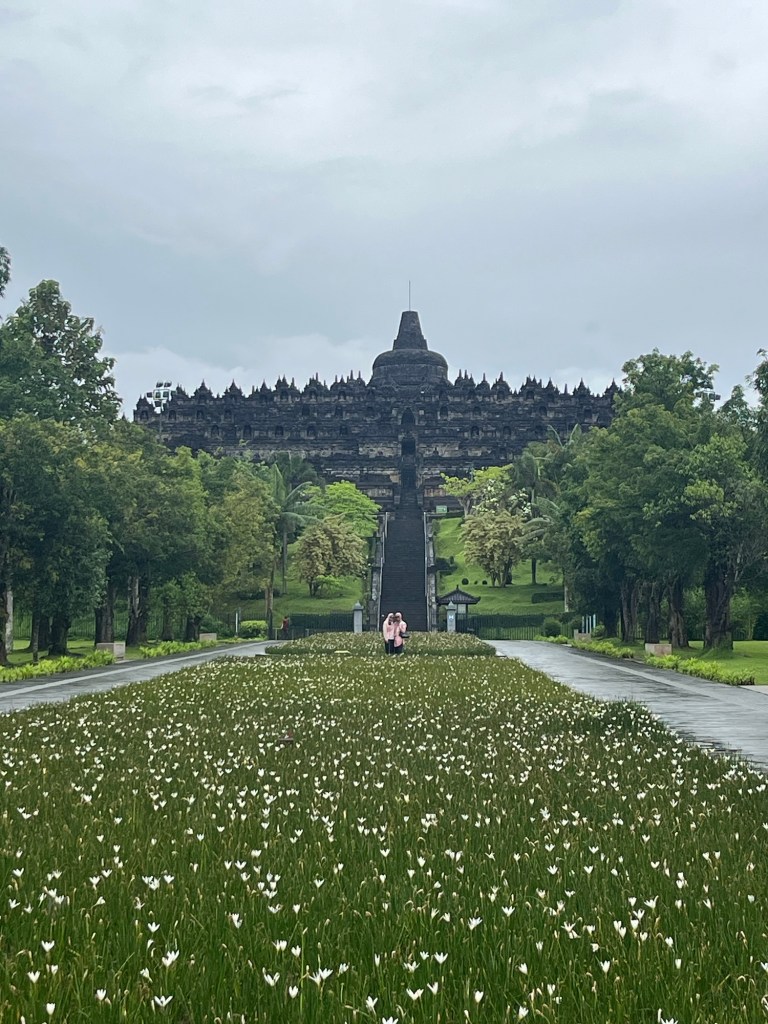
We were staying 3 nights in Jogja and on the first full day we had a trip out to Borobudur temple, the largest Buddhist structure on earth (I do feel I’ve heard variants on this at various temples throughout Southeast Asia…). A very interesting-looking structure and different to other temples I’ve seen recently. It poured it down throughout this trip but it did mean I finally got to use the plastic poncho I brought with me!!

Borobudur temple

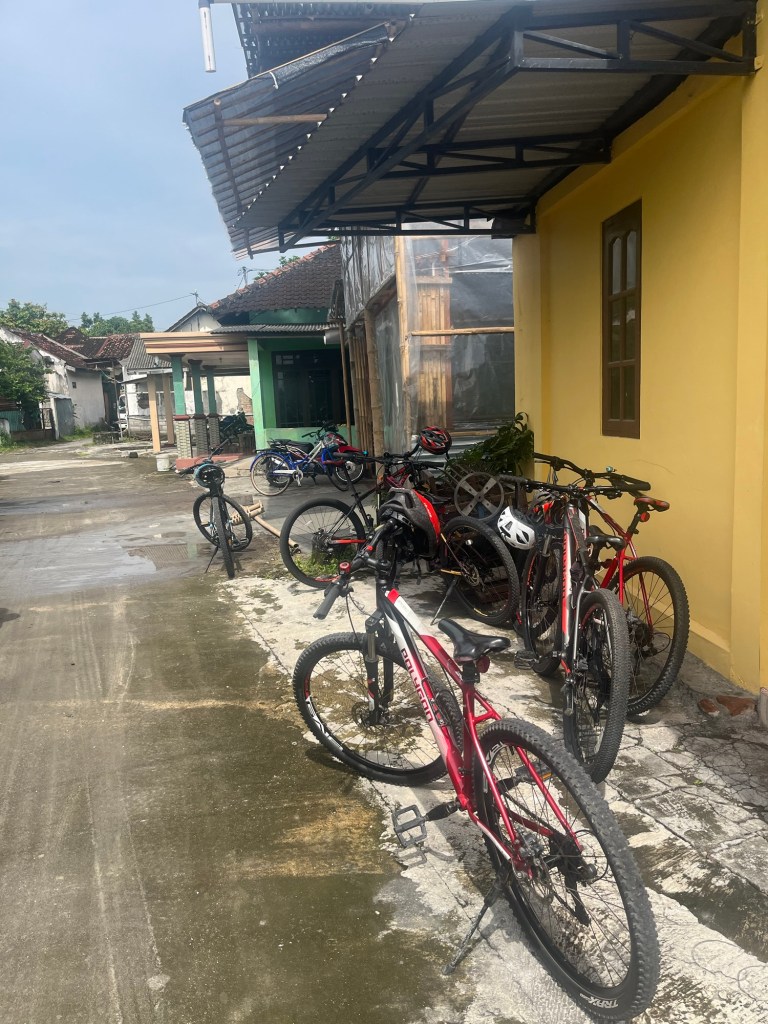
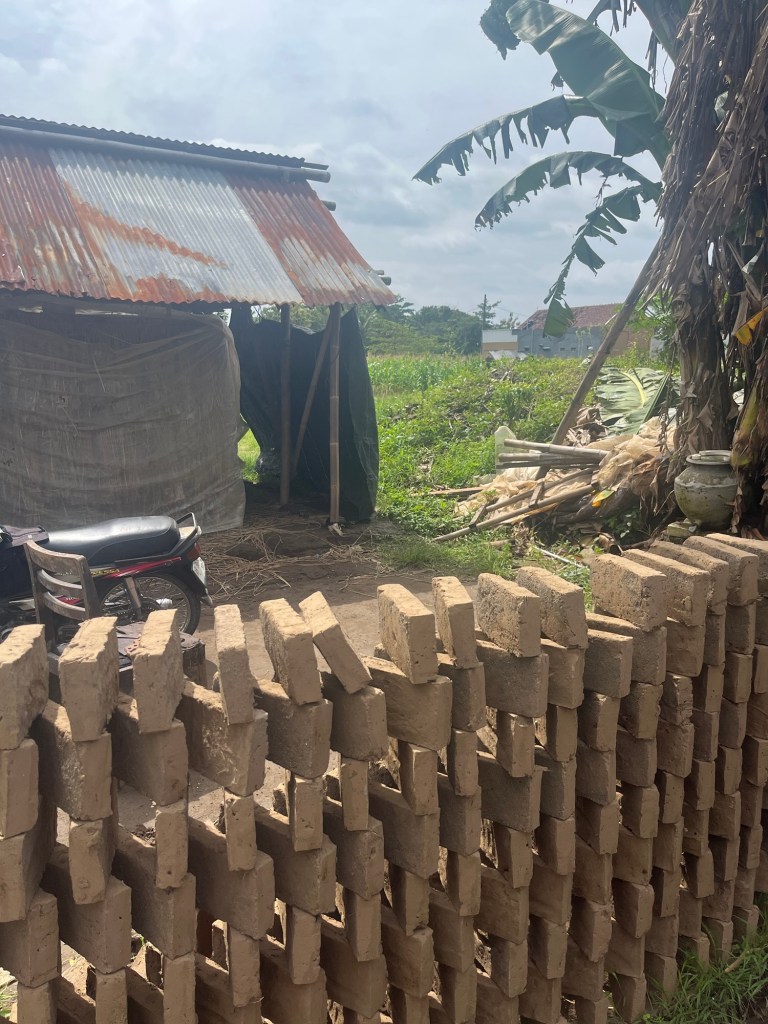
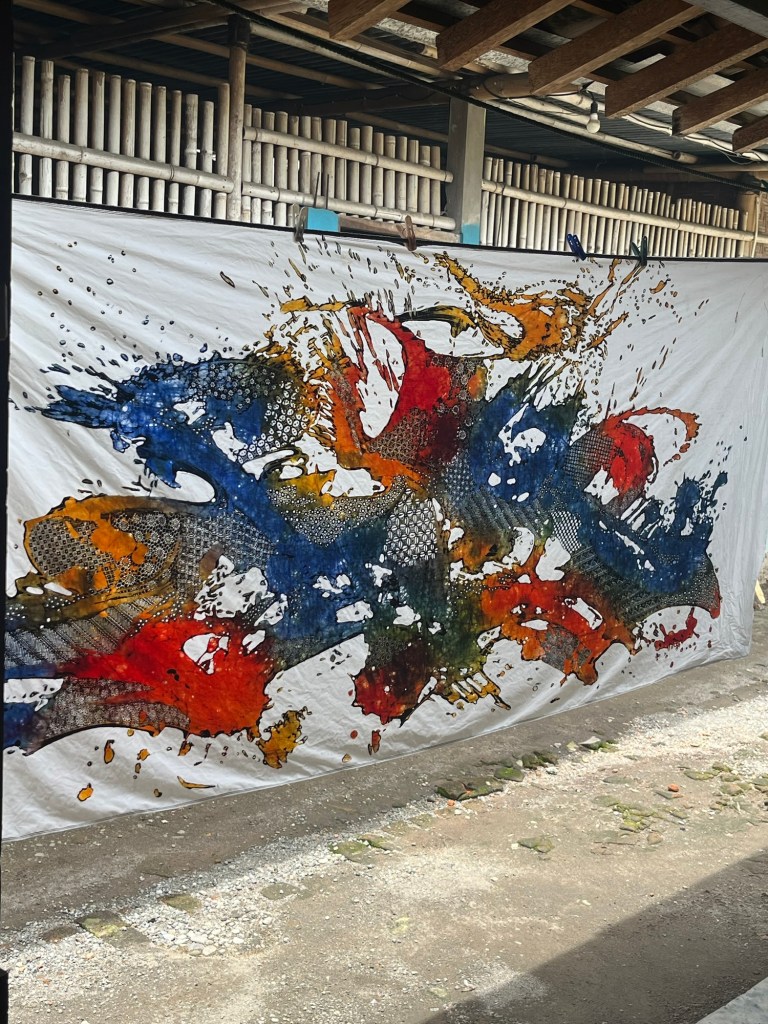
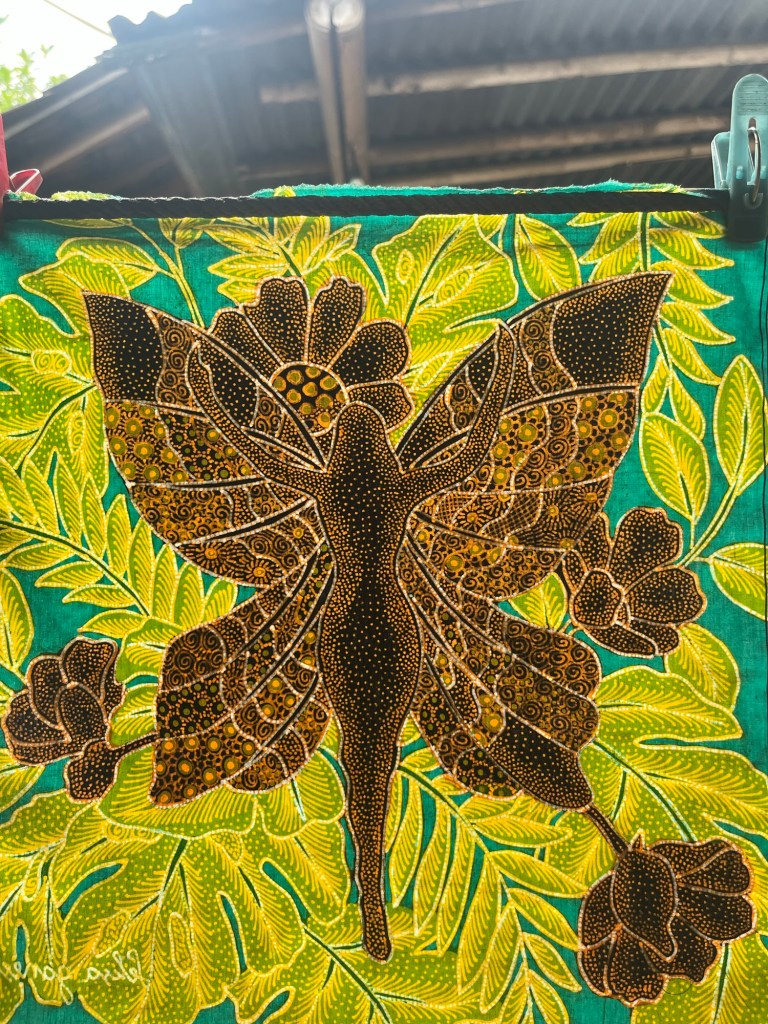
The following morning we had a bike ride out into the countryside, learning about local activities including making tempeh and brick-making from mud, pigeon racing, and batik printing. We all agreed that this was one of the highlights of the trip so far.

A chilled afternoon for me as the heavens opened again.

We left the following morning to continue our journey eastwards, again on the train. We stayed this evening at Seloliman Nature Reserve. It’s an educational centre which teaches the locals about plants and nature, and they grow a lot of their own food. We had a delicious dinner and a peaceful evening.

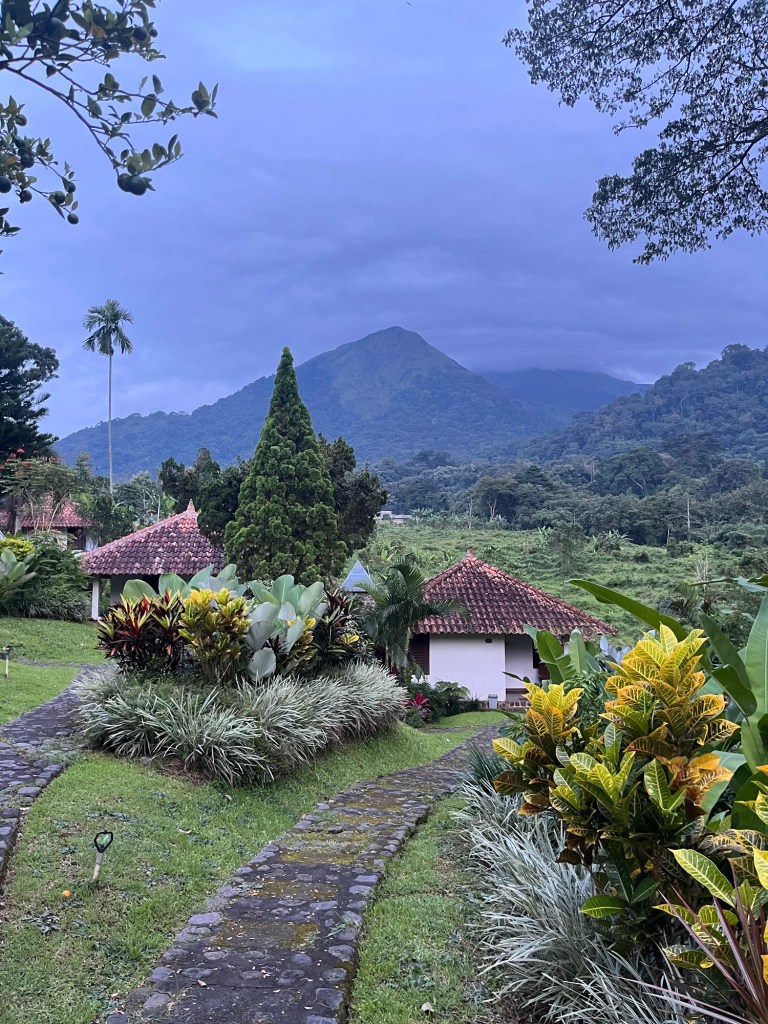
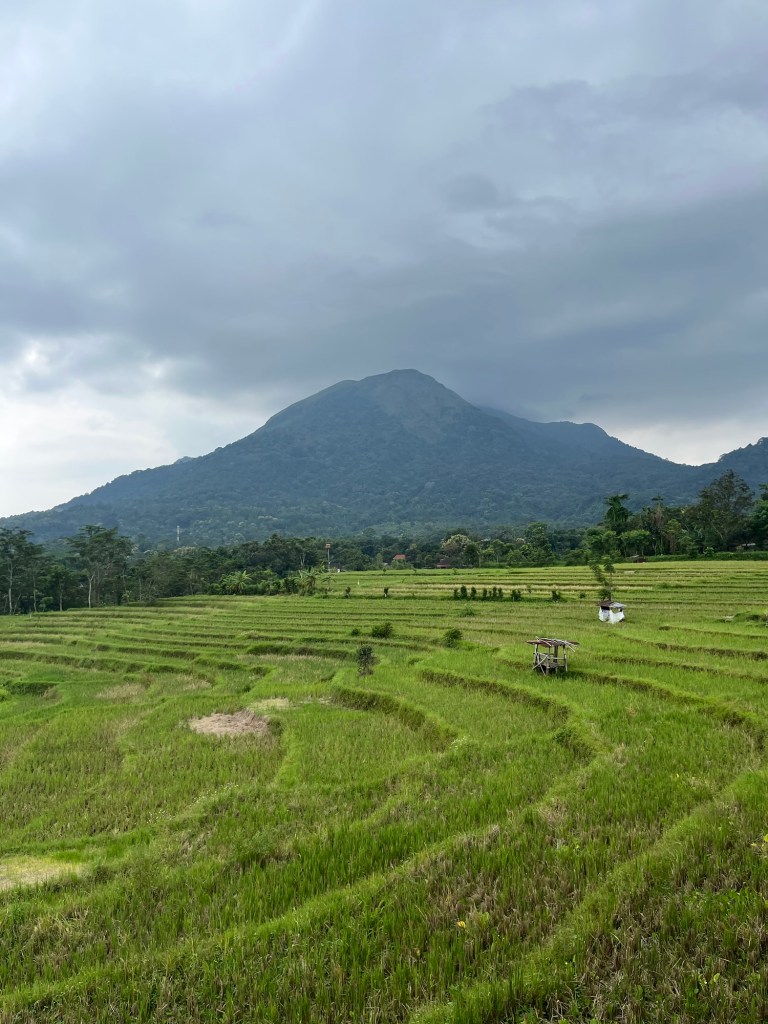
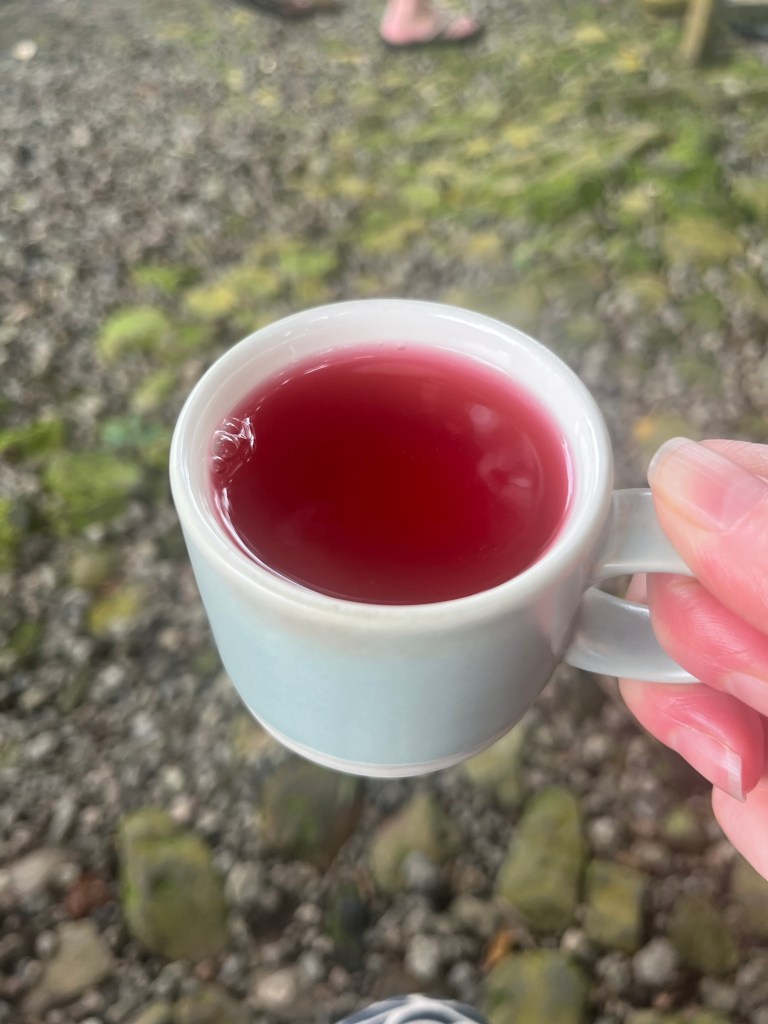
We enjoyed a walk around the nature reserve and local village in the morning. The village sits at the slopes of a volcano, and the fertile soil means that rice terraces are abundant. We had lunch at the reserve and a delicious herbal tea made with herbs and spices from their gardens. At the last moment, secang wood is added which turned the tea a vibrant red colour.

In the afternoon we headed towards our next stop close to Mount Bromo, as we would have a very early start the next day. Mount Bromo is the most active volcano in East Java, and it seems that tourists generally get up in the middle of the night (2.30am in our case) to drive up to a viewpoint in time for sunrise. As we were at altitude (around 7,000 feet), it was much cooler – the coldest I’ve been since I left the UK nearly 4 months since – and I can finally say I’ve worn everything I’ve brought with me!! We were in 4 wheel drive jeeps which were very necessary up the winding mountain roads and across the sand in the caldera.
We arrived at the viewpoint in plenty of time and there was already a sliver of red sky in between the clouds. However, about 10 minutes before sunrise, we were cloaked in cloud, so sunrise was sadly something of a non-event…

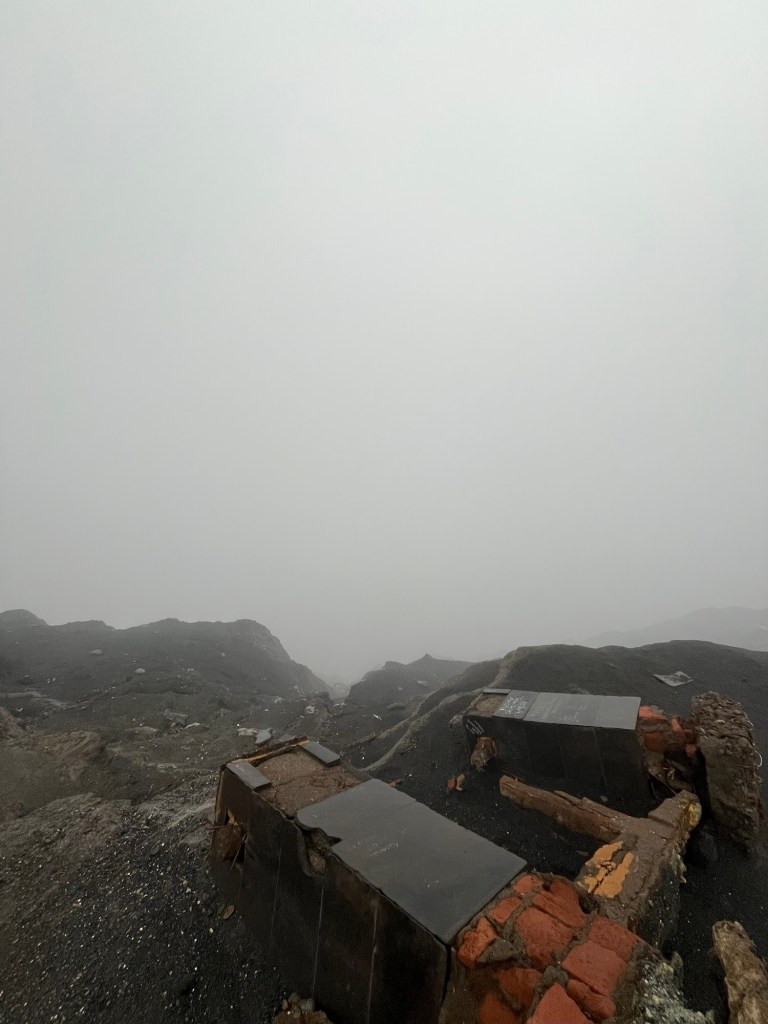
Afterwards a few of us took the opportunity to do the 30 minute or so climb up to the rim of Mount Bromo, which remained shrouded in a combination of cloud and steam from the volcano itself. It’s a bit of a scramble up some loose volcanic soil to start with but then there is a staircase of around 200 steps up to the crater. I didn’t hang around too long as the cloud was a bit wet, and a got a couple of burning lungfuls of sulphur.

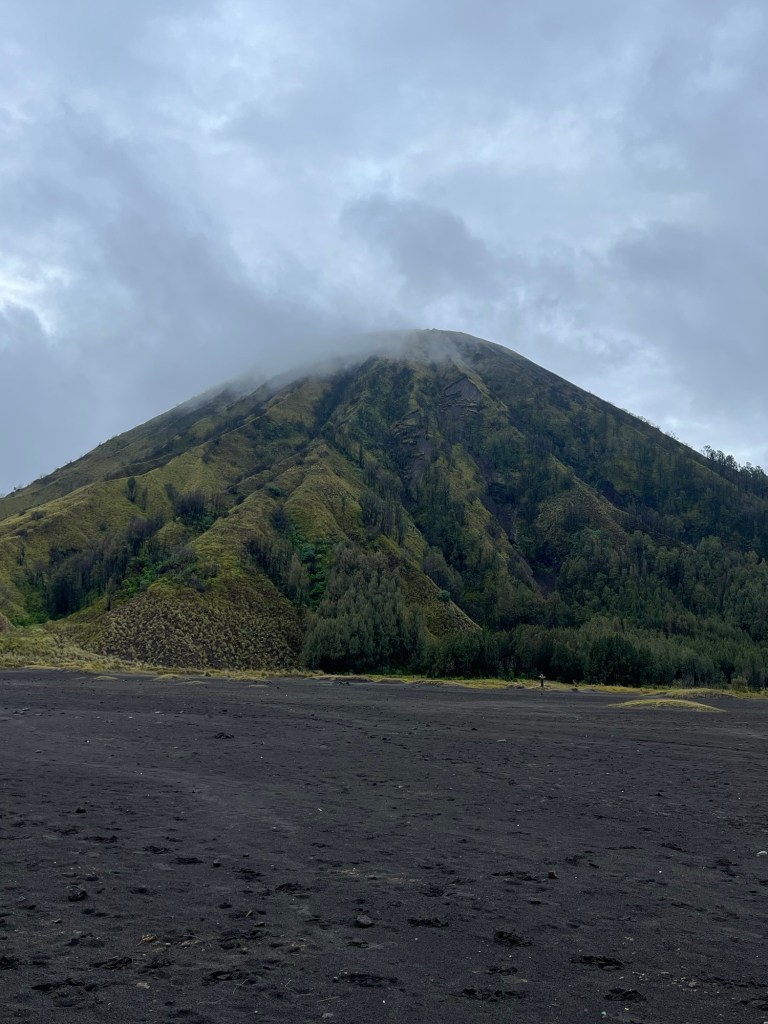
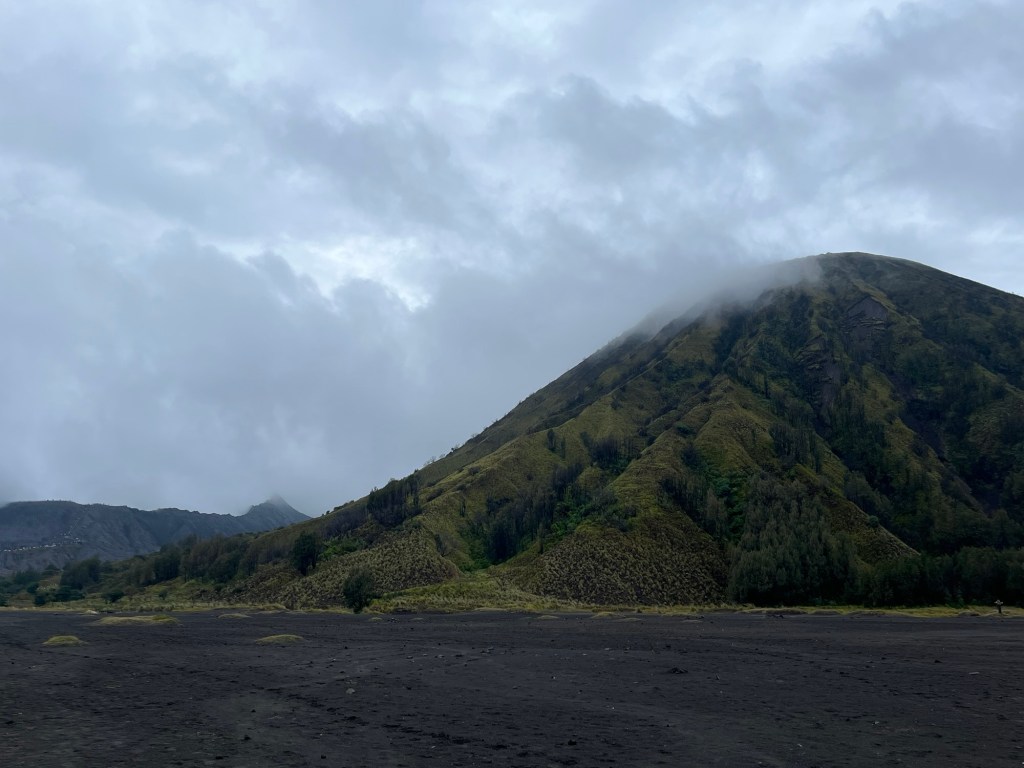
By the time we’d climbed back down, the cloud over its neighbour, Mount Batok, was clearing. This volcano last erupted over 400 years ago so its slopes are covered in green vegetation, unlike Bromo which erupted 10 years ago and so its slopes are covered in the lava flow. The visual contrast between Batok and Bromo is cool to see.

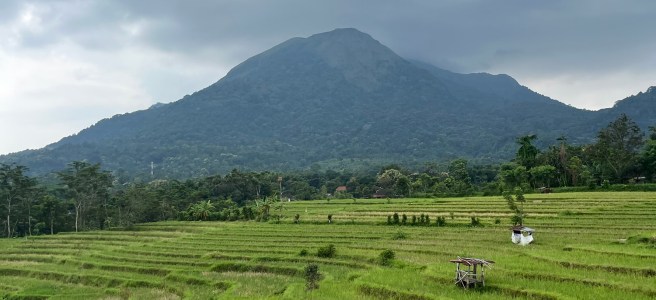
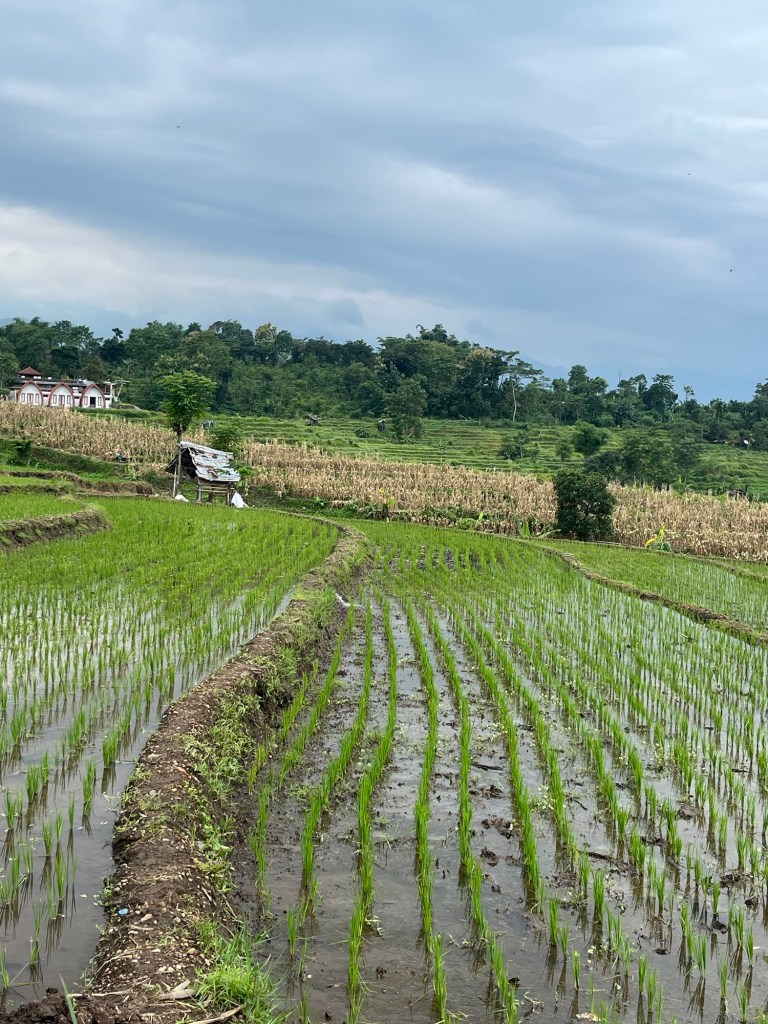
We then drove back to the hotel for breakfast. On the way back, we could see what we couldn’t see on our way to the volcano in the morning…all the terraces for rice and vegetable growing. Some of the terraces were so steep into the hillsides that it was quite incredible to me that they could be farmed at all! Whilst they are clearly important agriculturally to this area, they are also so beautiful to look at. I have become a little bit obsessed with the terraces as we’ve travelled across Java.

After breakfast we got on our last train of this trip, further east to Kalibaru, which puts us in a good position for the ferry to Bali the next day.
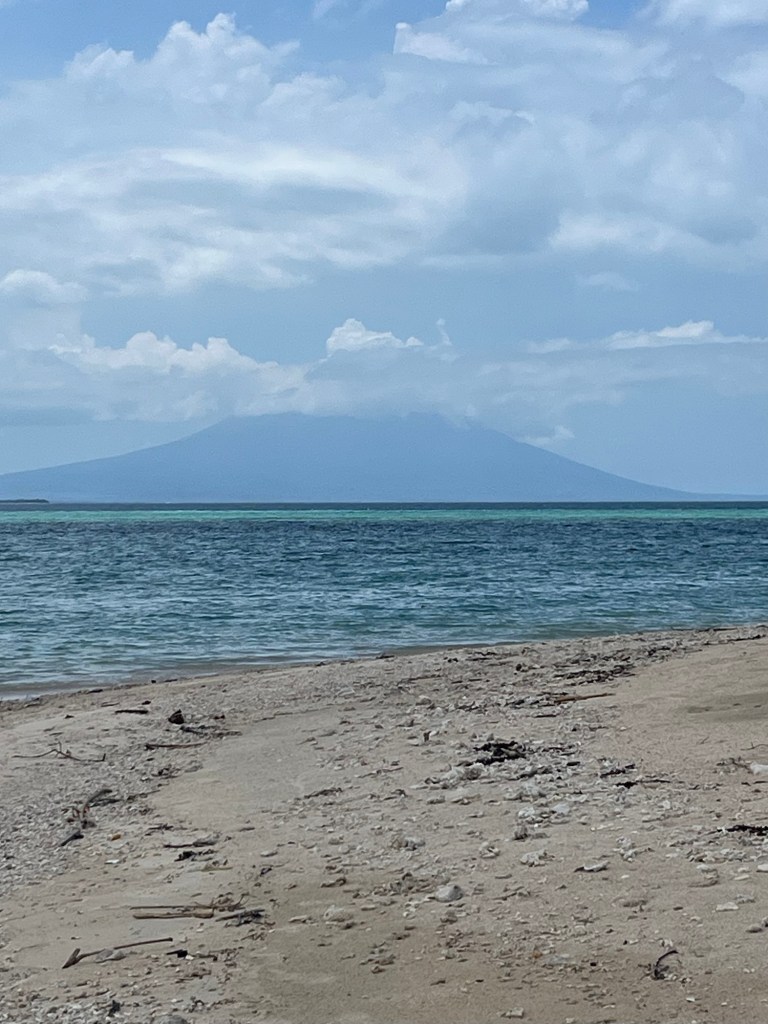
After a slightly shaky start (I didn’t love Jakarta, it’s a massive city and where we stayed wasn’t great for wandering around), I’ve really enjoyed Java. I think the scenery here, with all the lush green vegetation, rice terraces and volcanoes, is my favourite from my winter of travelling. The Javanese people are all very friendly and welcoming, and despite the rain (it is the rainy season after all), it has been a very enjoyable place to visit.

Now onto Bali…

Malaysia

After our final night in Trang, we drove south to the Malaysian border at Bukit Kayu Hitam. A fairly straightforward land border crossing, a scan of all our luggage and a 90 day tourist visa granted – though I will only be here for a week.

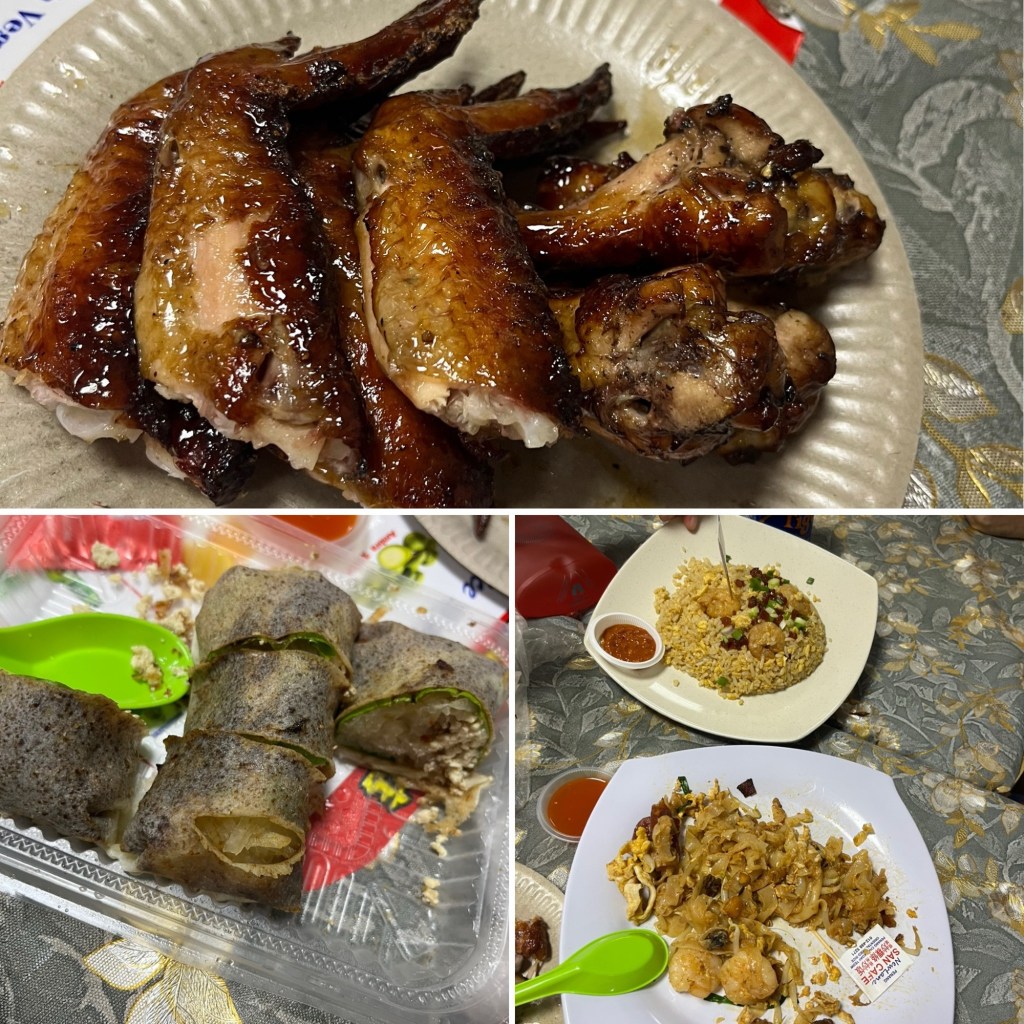
We continued to George Town in Penang and arrived in the late afternoon. After settling into the hotel, we had a brief orientation walk before heading to a hawker centre for some Malaysian street food and a beer.

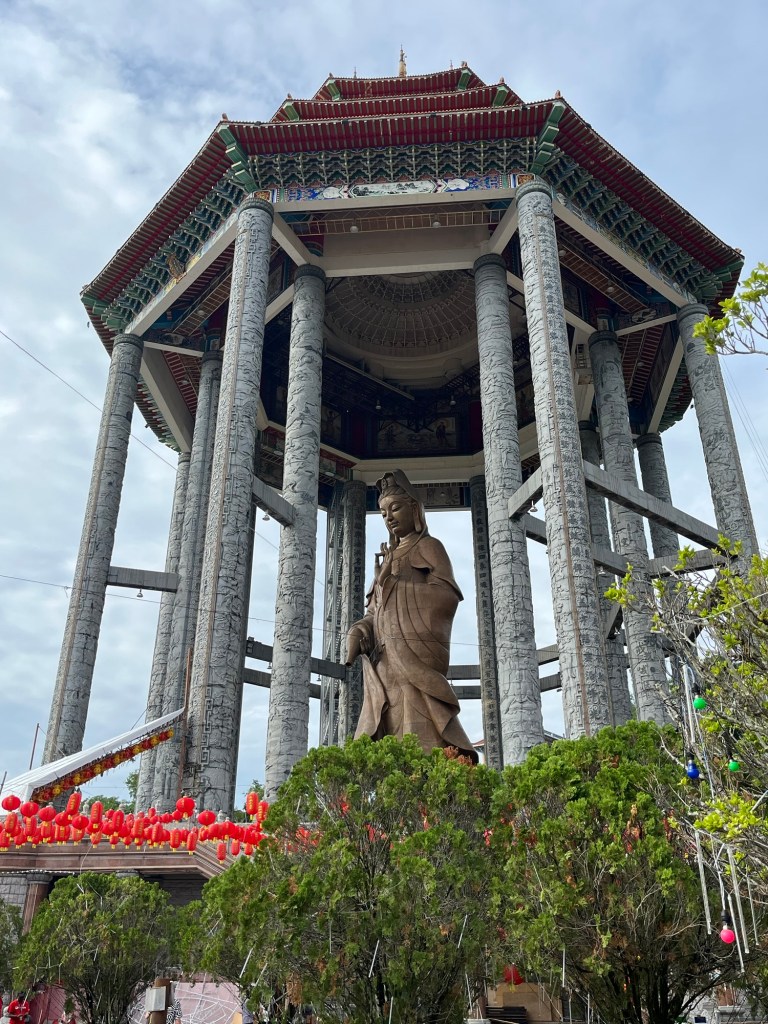
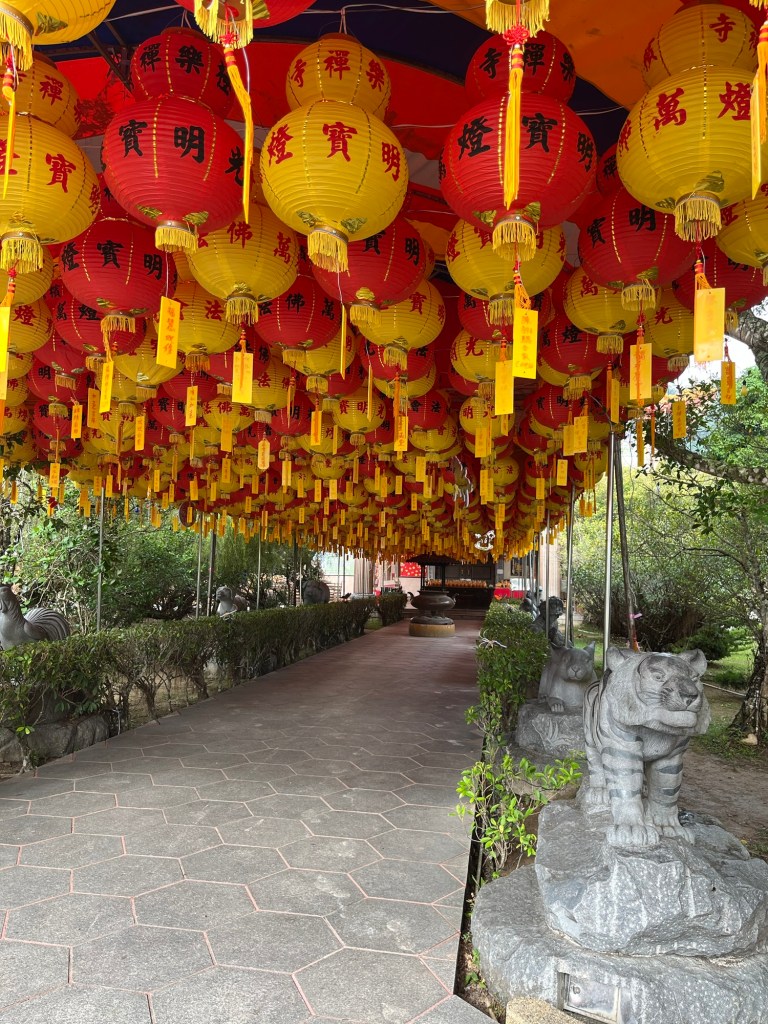
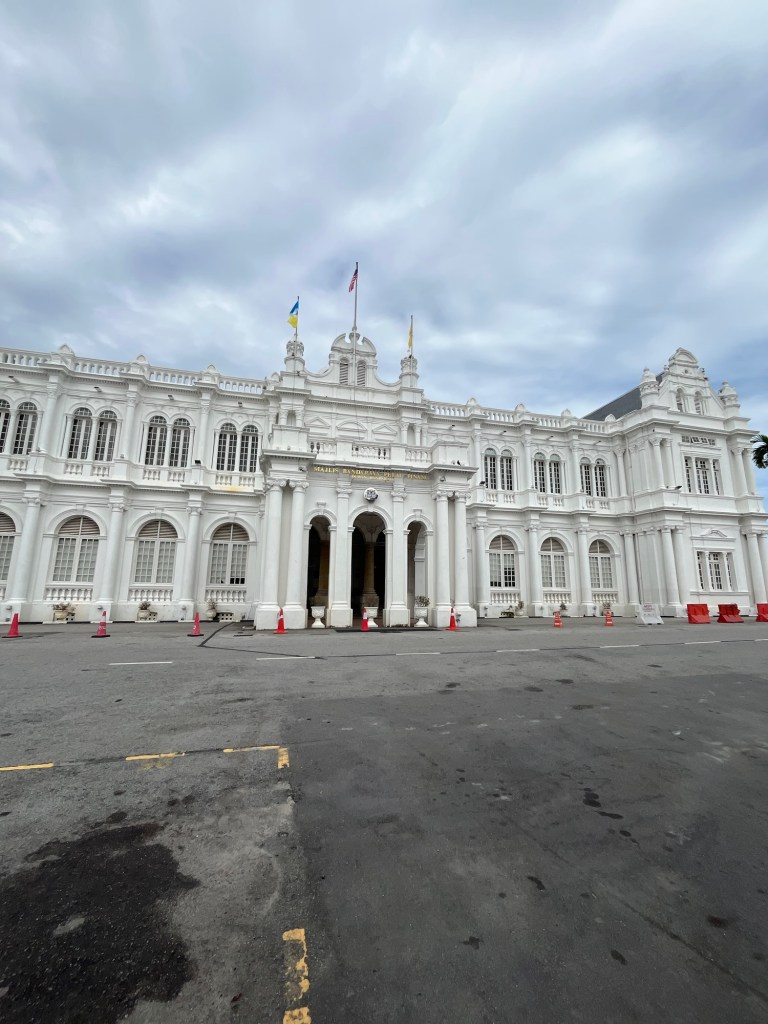
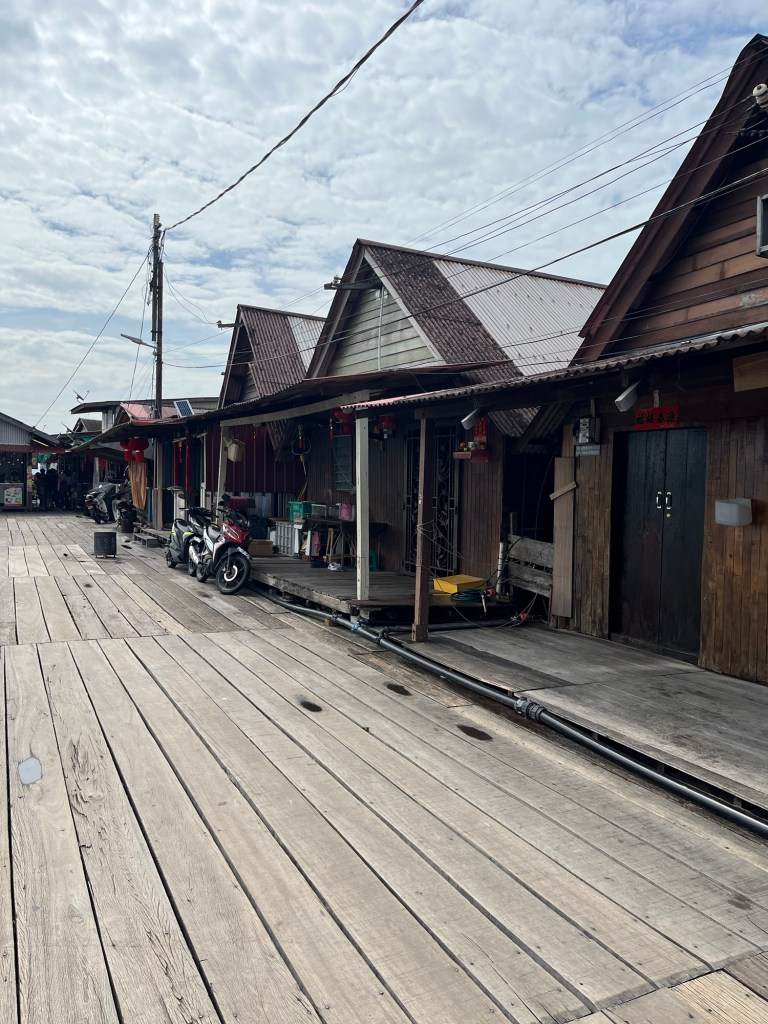
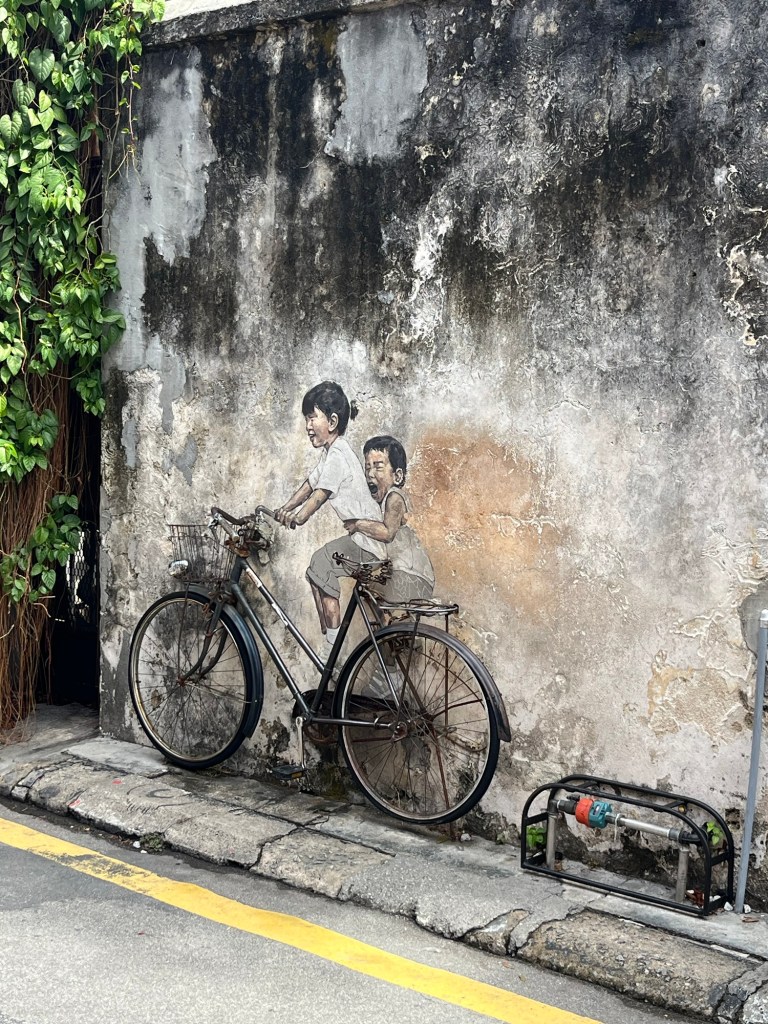
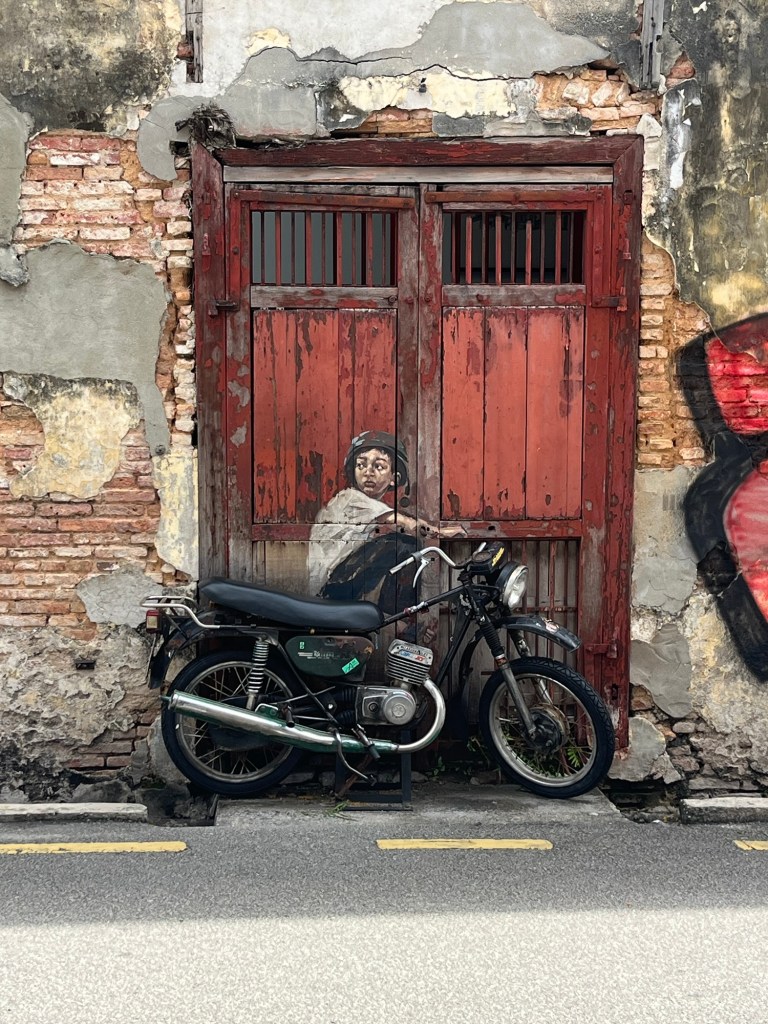
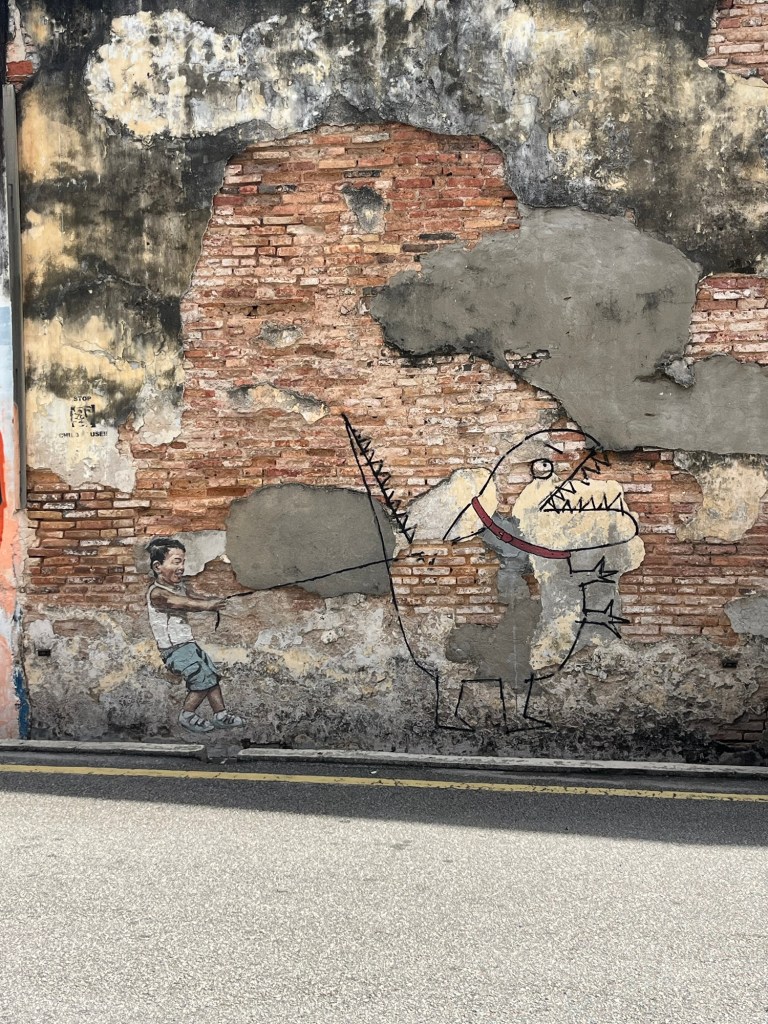
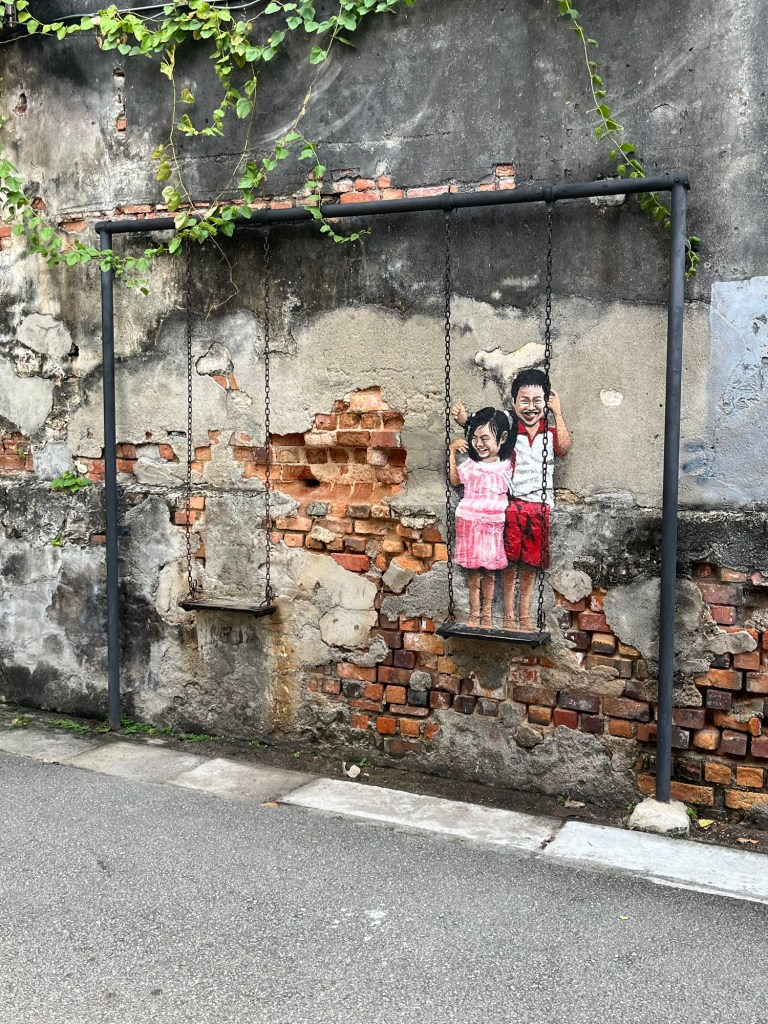
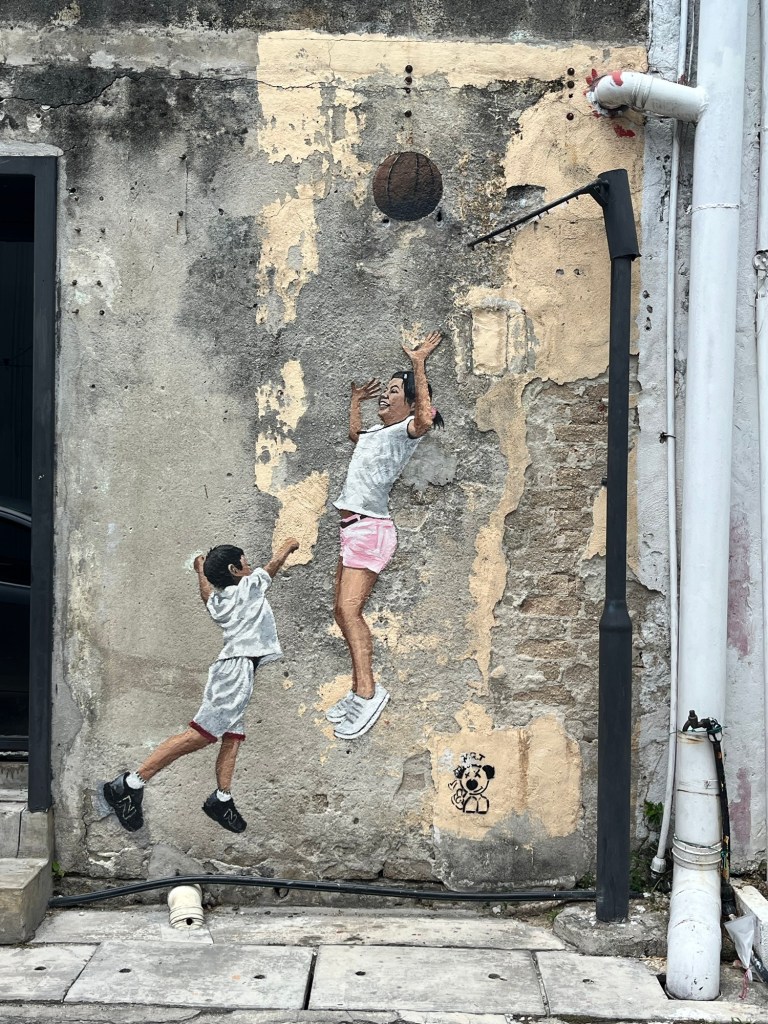
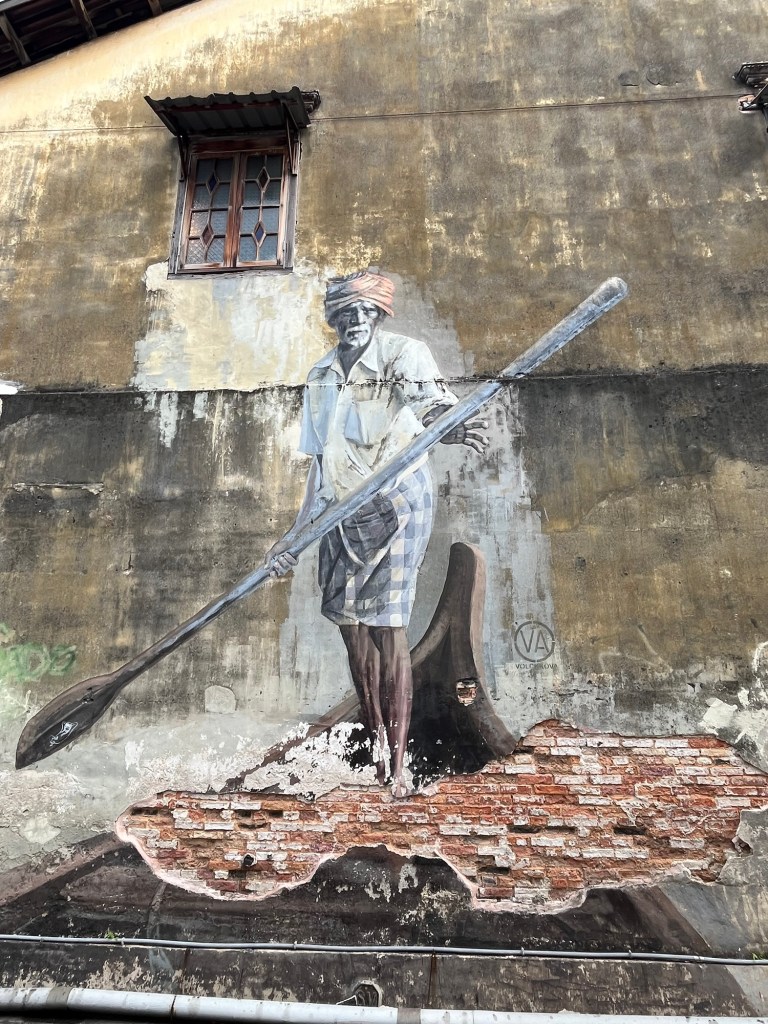
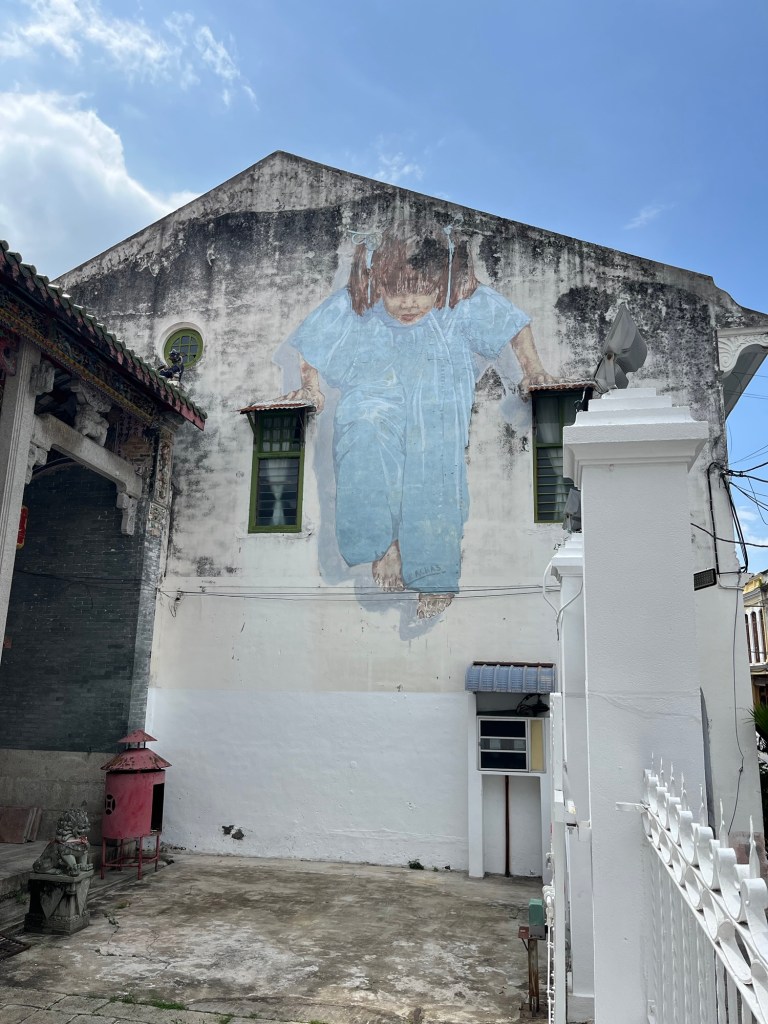
The next day started with a journey out to Kek Lok Si temple in the hillside above George Town. Afterwards we headed to the old town and saw the town and city halls (very British style) as well as a clan jetty and some street art on Armenian Street.

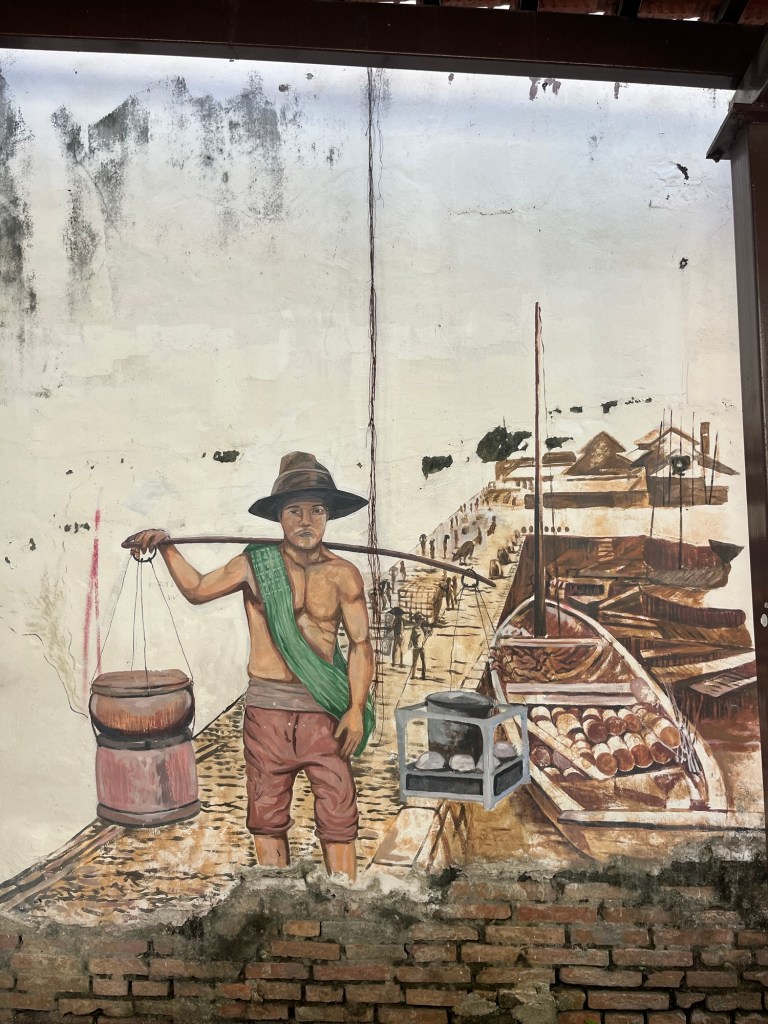
It was very humid on this day. After finding lunch in some air conditioning, a few of us then set out on a street art tour of the old town. There is so much street art here, some are on the main streets, some in little, narrow alleys and despite it being lunar New Year’s Eve, it wasn’t too busy.
We headed back to the hotel in the late afternoon and had some dinner across the road. The restaurant was pretty busy as a number of places were closed for lunar new year. We ended the night on the rooftop of the hotel as fireworks were going off in celebration of the year of the horse.
I really enjoyed George Town, the old town had a lovely vibe to it and I’d definitely recommend you come here if you’re visiting Malaysia.

The next day was a travel day to Kuala Lumpur. Back in 2004 as a shy and naive 19 year old, I had 2 nights in KL (as the locals call it) on my way to a working holiday in New Zealand. I stayed in a hotel on Jalan Alor in Bukit Bintang and was so scared I did not leave the hotel room. Thankfully my confidence has improved in the intervening 20 or so years…

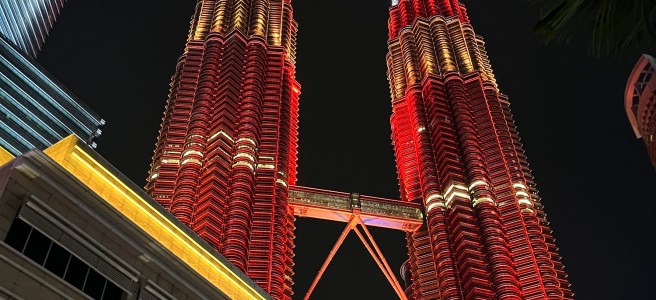
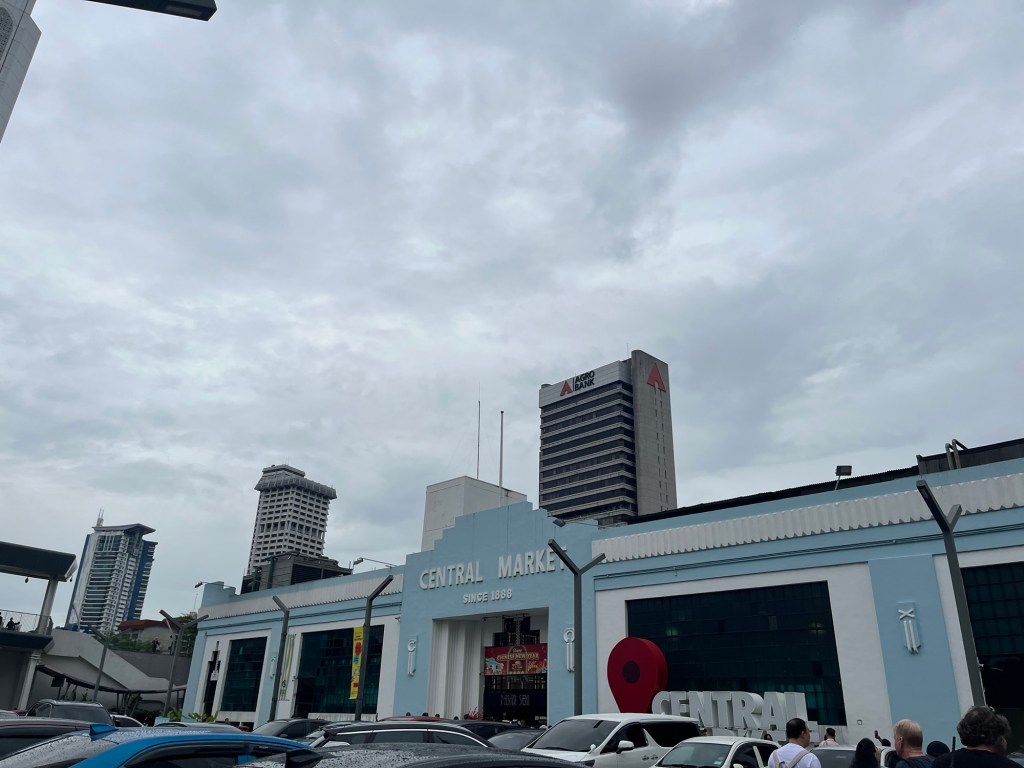
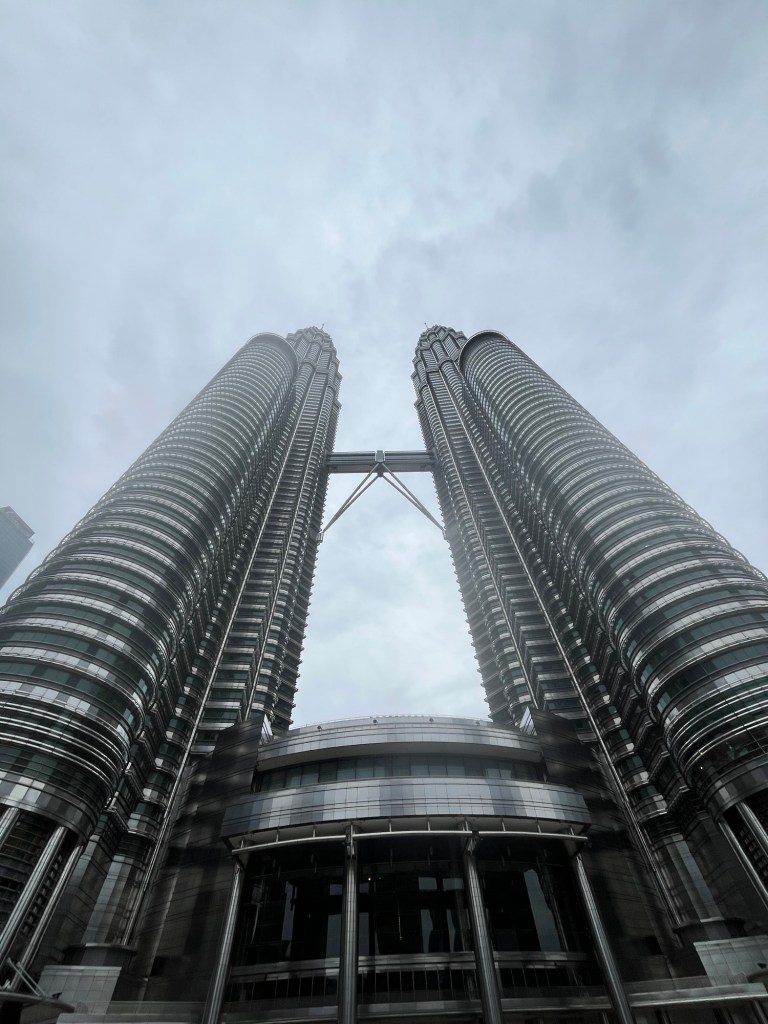
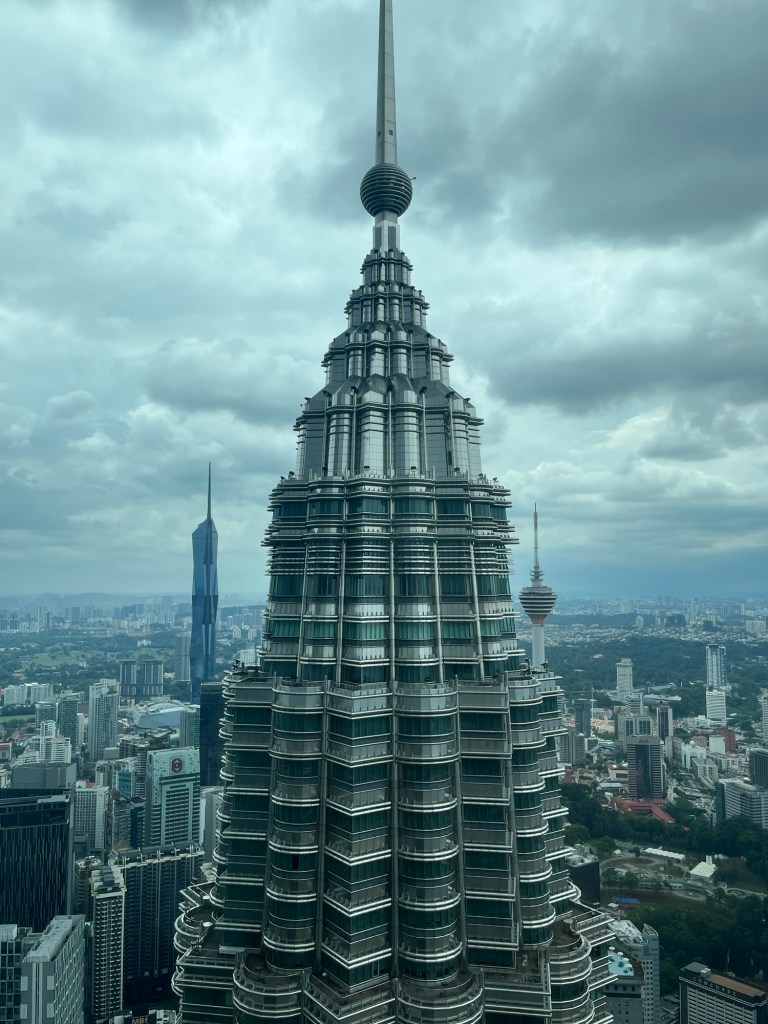
Our hotel was on the edge of Chinatown. We arrived mid afternoon and headed to the Central Market for a late lunch. We were also lucky enough to see a lion dance which is traditional to see being performed in the streets at lunar new year. We then headed to the Petronas Towers and then took the Bukit Bintang walkway, an air conditioned walkway between the towers and a large mall about a kilometre away in Bukit Bintang.

In the evening I managed to meet an old university friend for a coffee and cake, and to try and catch up on the 18 or so years since we last saw each other! One of the things I love about travel is meeting up with friends from around the world and although we met at university rather than travelling, without my current travels I’m not sure when we would have seen each other in person again.

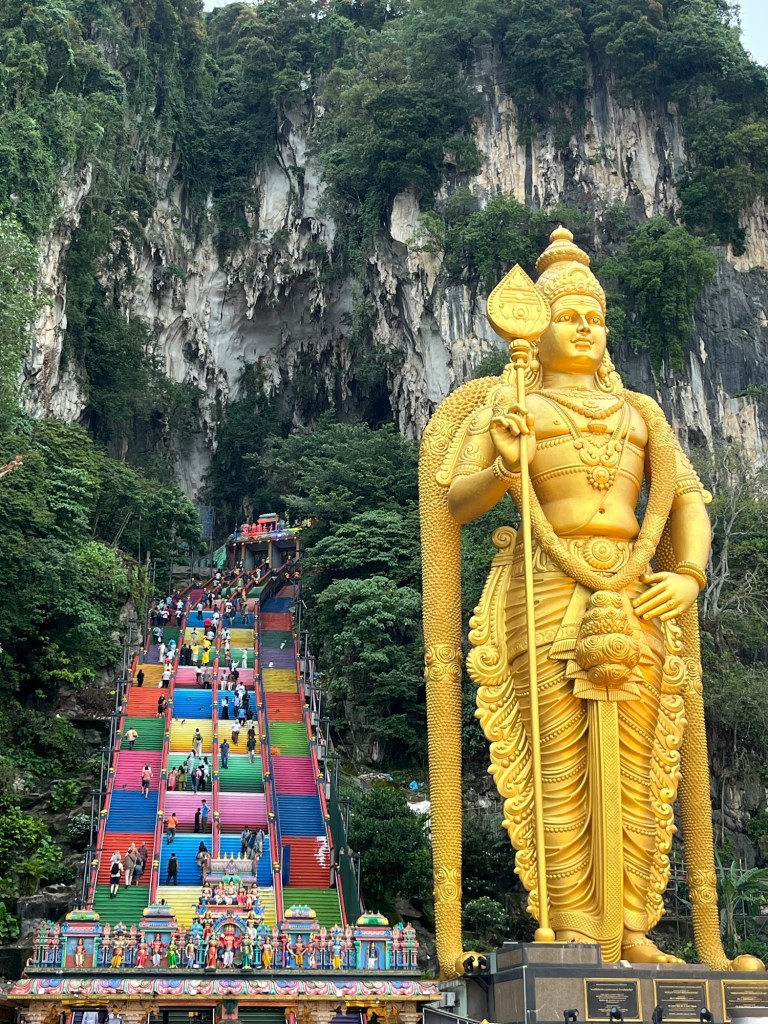
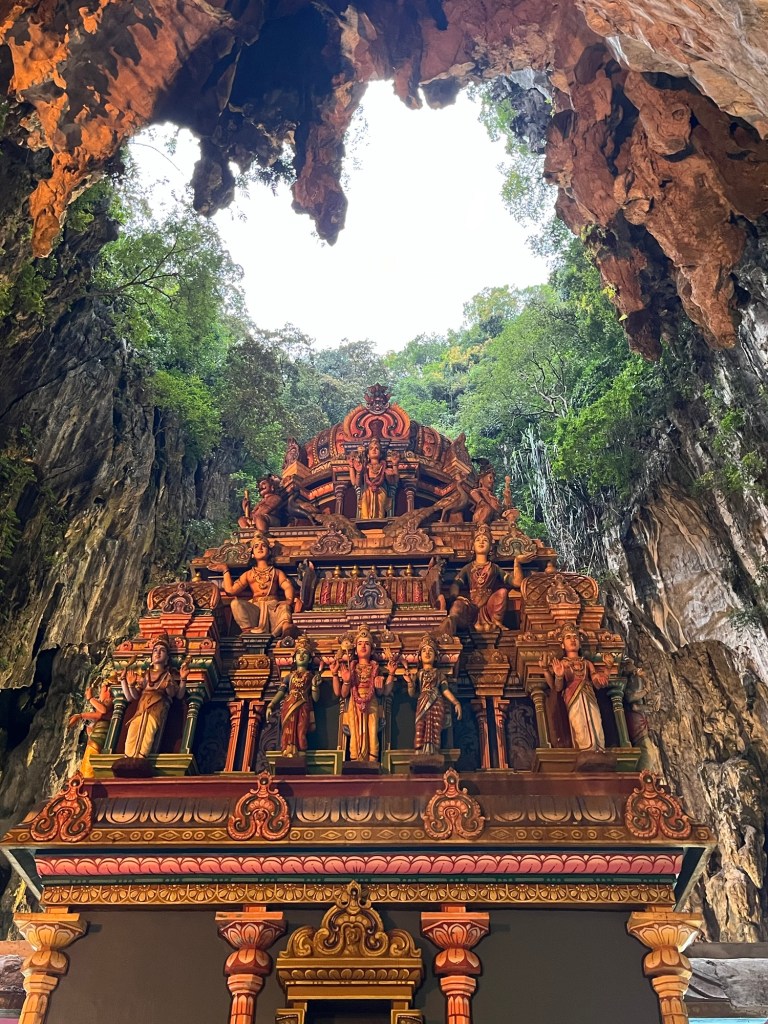
We had a free day in KL the next day. Most of the group started the day with an early morning trip to Batu Caves. Going early (we were there by sunrise at 7.30am) meant we missed the crowds and the heat, and most of the monkeys which roam in this area. It’s a bit of a climb up the nearly 400 colourful steps, and at the top is a cave containing a Hindu temple.

We were back at the hotel for a late breakfast and afterwards some of us meandered around the sights in Chinatown, which was all decorated with red lanterns for new year.

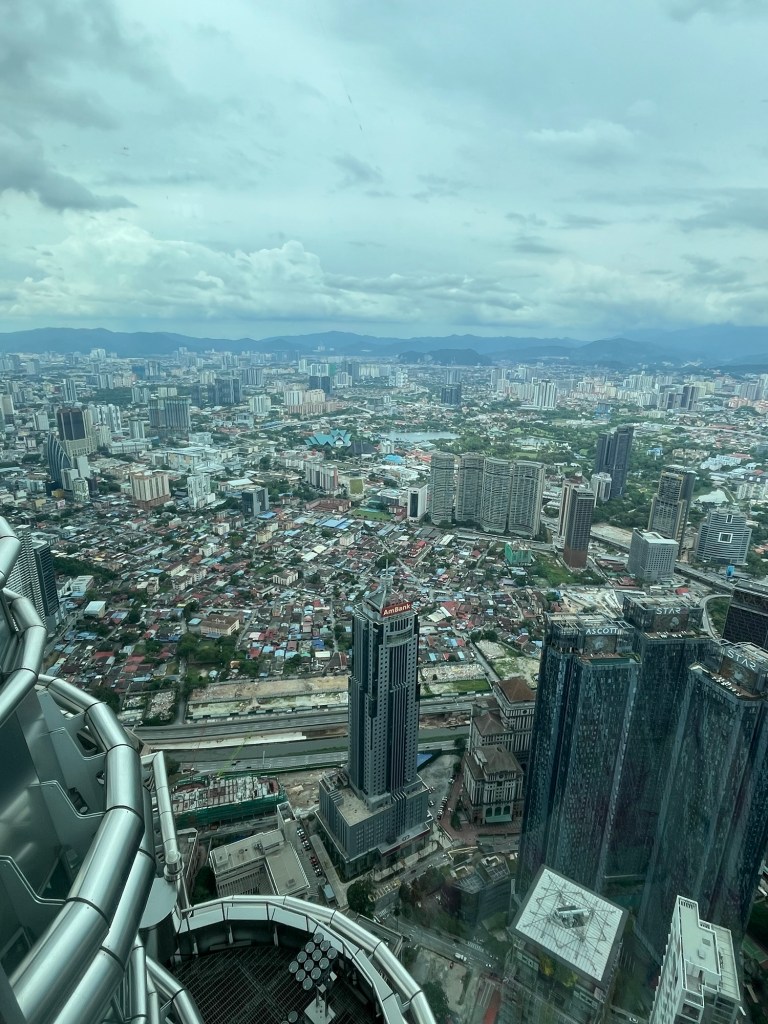
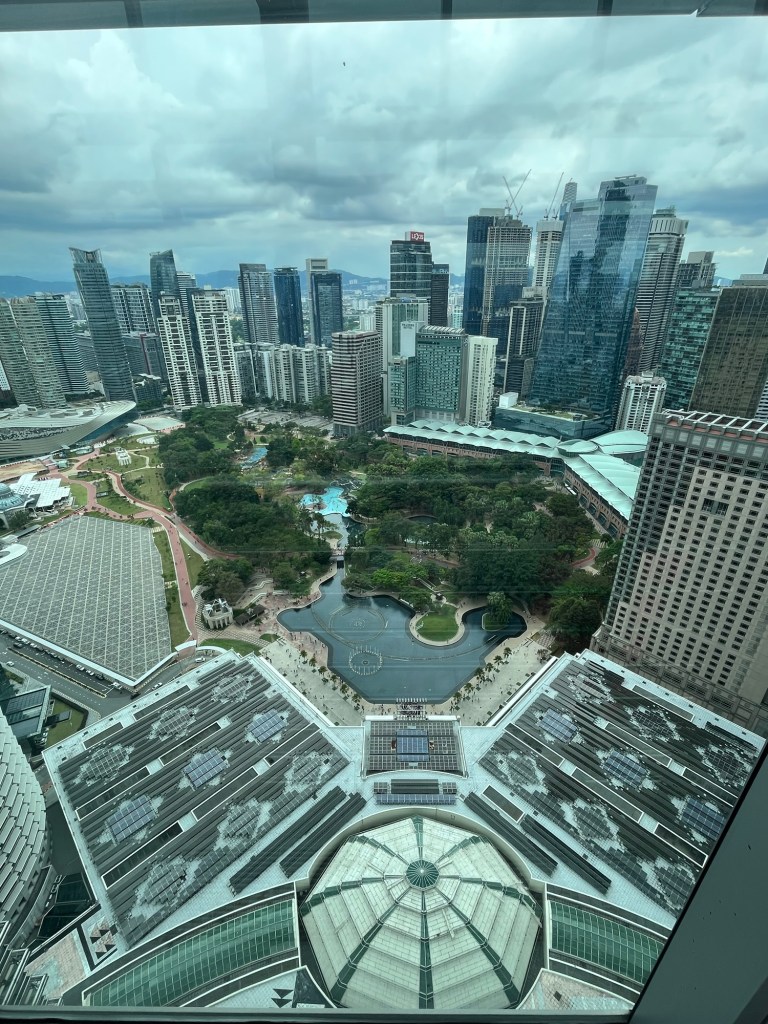
I had booked to go up the Petronas Towers in the afternoon, something I’d intended to do 22 years ago so was very pleased to finally get there on this trip. I find these towers to be so very elegant and it was cool to be on the sky bridge which, fun fact, is not actually connected to the 2 towers! It is constructed to sway in the wind and so the bridge can move slightly in and out of both towers. Some excellent views to be had from the skybridge and the viewing platform.

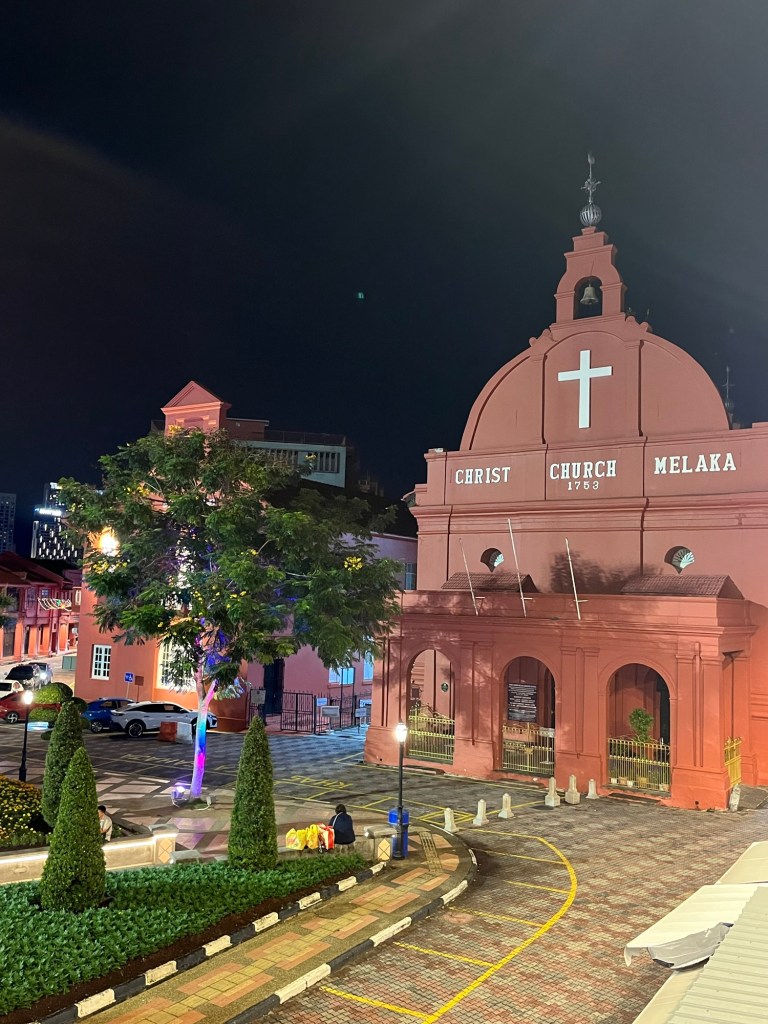
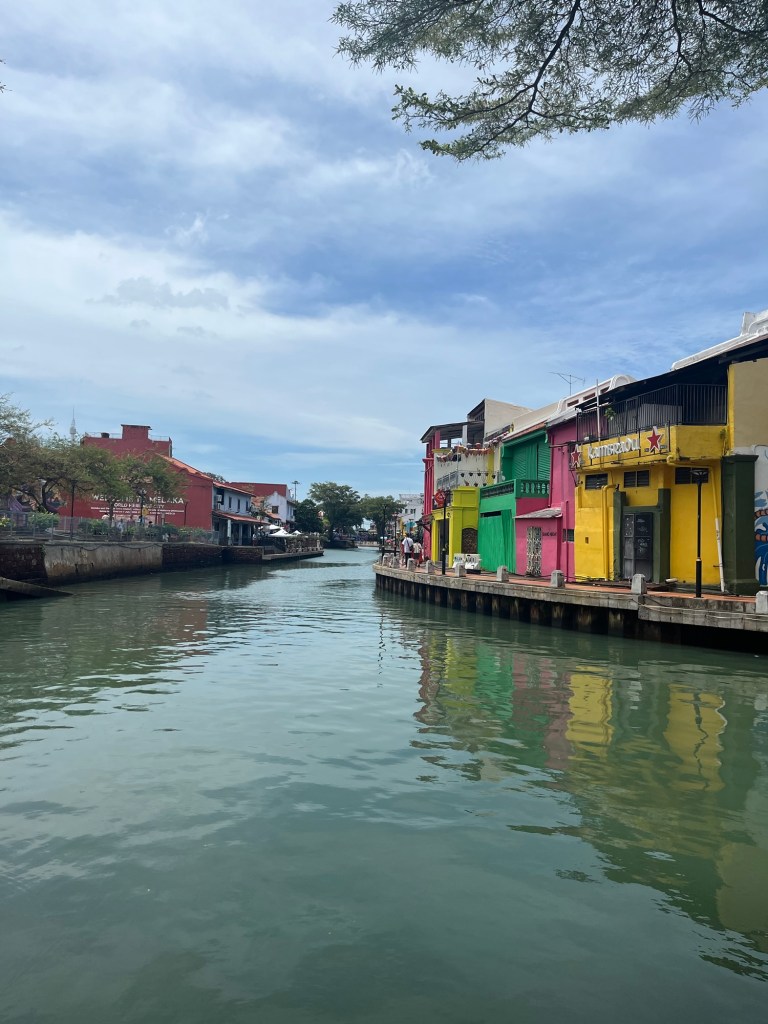
The next day we were off to our final stop in Malaysia, Melaka, also sometimes written as Malacca. Like George Town, Melaka is also a UNESCO World Heritage Site. I found it more crowded the George Town (maybe because of the timing of the new year holidays), but there’s lots of pretty buildings and more street art to be seen.

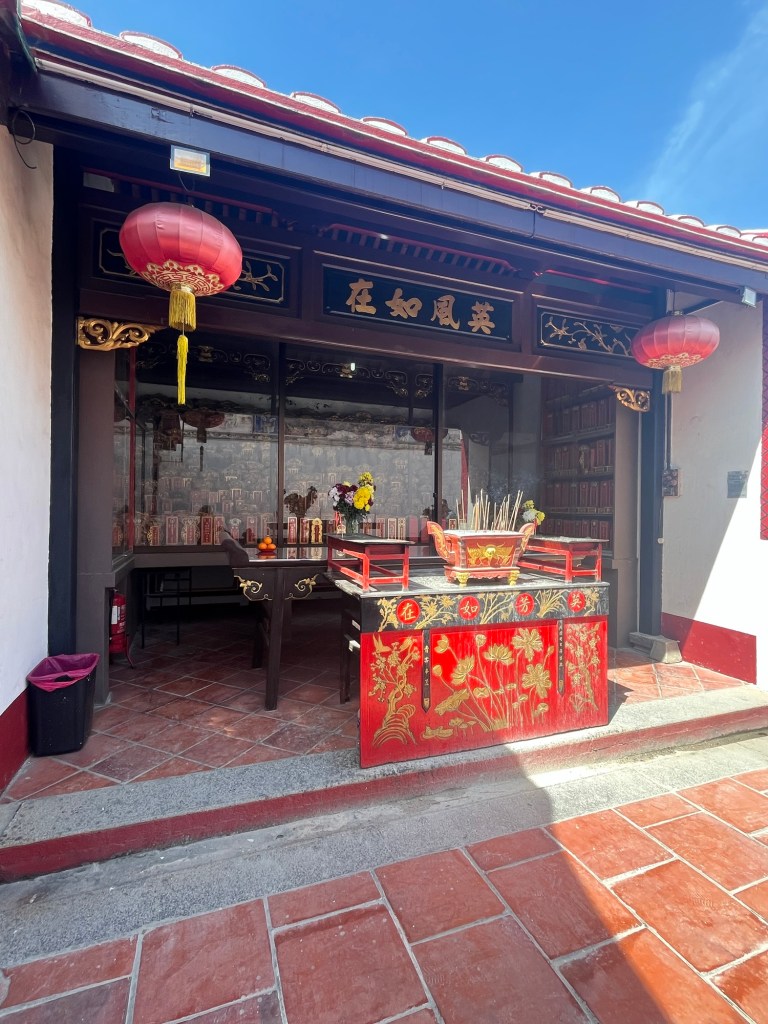
We had 2 nights in Melaka and on our full day we started with a trishaw tour (like a rickshaw but with 3 wheels). We saw a number of sights in the old town including the Christian churches, mosques and Chinese temple.

After a lovely lunch along the river, my roommate and I meandered the streets in the afternoon, had a McFlurry and headed to some air conditioning in the hotel before our final evening in Malaysia. A group of dinner followed by drinks at a bar along the riverfront.

This trip in Malaysia was focused on the cities rather than the natural scenery. I enjoyed the sights and art in George Town and Melaka and it was so great to meet up with my old friend in KL, as well as finally getting to the Petronas Towers.

Next up, 24 hours in Singapore before onwards to Jakarta…

Bangkok to Trang

After feeling at my most ‘race across the world’ getting to and from a few days R&R on Koh Samet (via a minibus and ferry), I was back in Bangkok, this time in Banglamphu. This area of Bangkok contains the famous, or infamous, backpacking area around Khao San Road. I’d stayed in this area on my previous trip to Thailand in 2019 and back then we did spend a lively evening on Khao San Road. However, this time, that didn’t happen. Partly due to age, and mostly due to elections being held which prohibits the sale of alcohol from 6pm the day before the election for 24 hours.

I did, however, spend time wandering around Rambuttri, which has a lot of restaurants and cafes, and found a good (western) lunch spot for smashed avo and sourdough.

The next trip I’m doing is with Intrepid Travel, who I’ve only travelled with once before. 12 of us in the group, from a wide range of countries. We met up the first evening as usual for introductions and dinner.

The following morning started in now-familiar fashion for tours starting in Bangkok – a Khlong boat trip and a visit to Wat Pho. My third time at both! Wat Pho certainly less busy than at New Year, and if I do come back to Bangkok again, I can probably skip it!

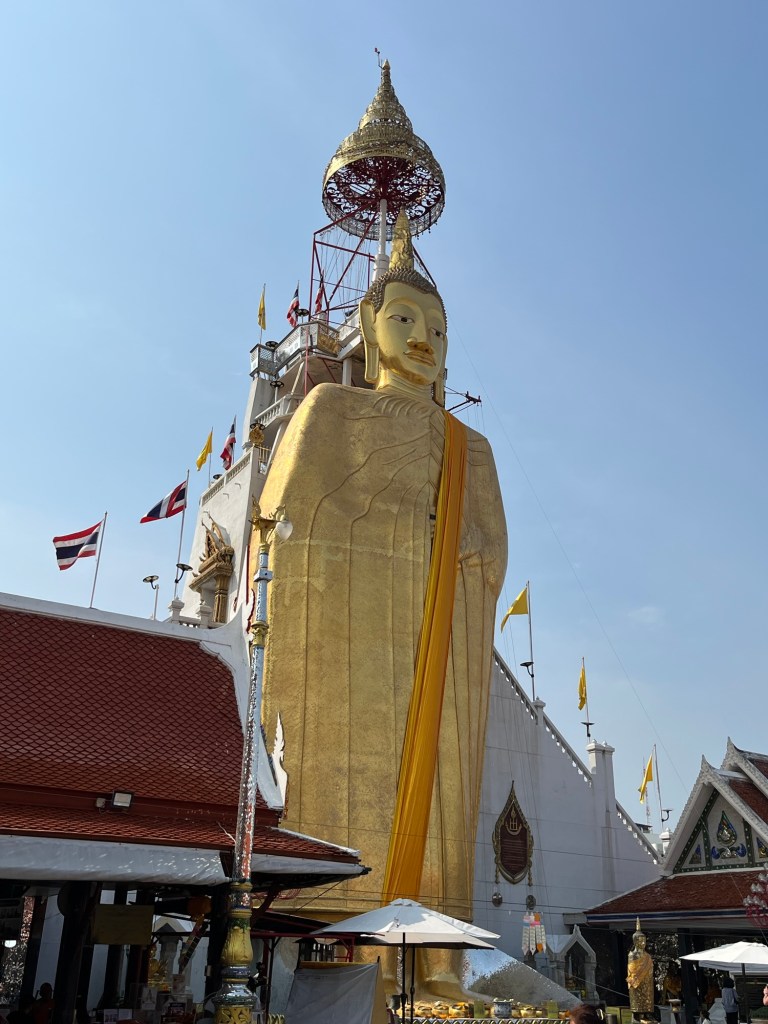
We had a free afternoon before our overnight train south. Along with a few others, I went to Wat Intharawihan which has the tallest standing Buddha in Bangkok. The statue itself is quite flat, and so a different presentation to others seen so far. And despite being in a relatively touristy area, it was quiet and peaceful here.

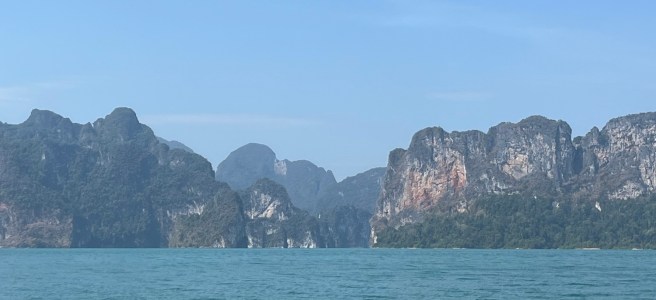
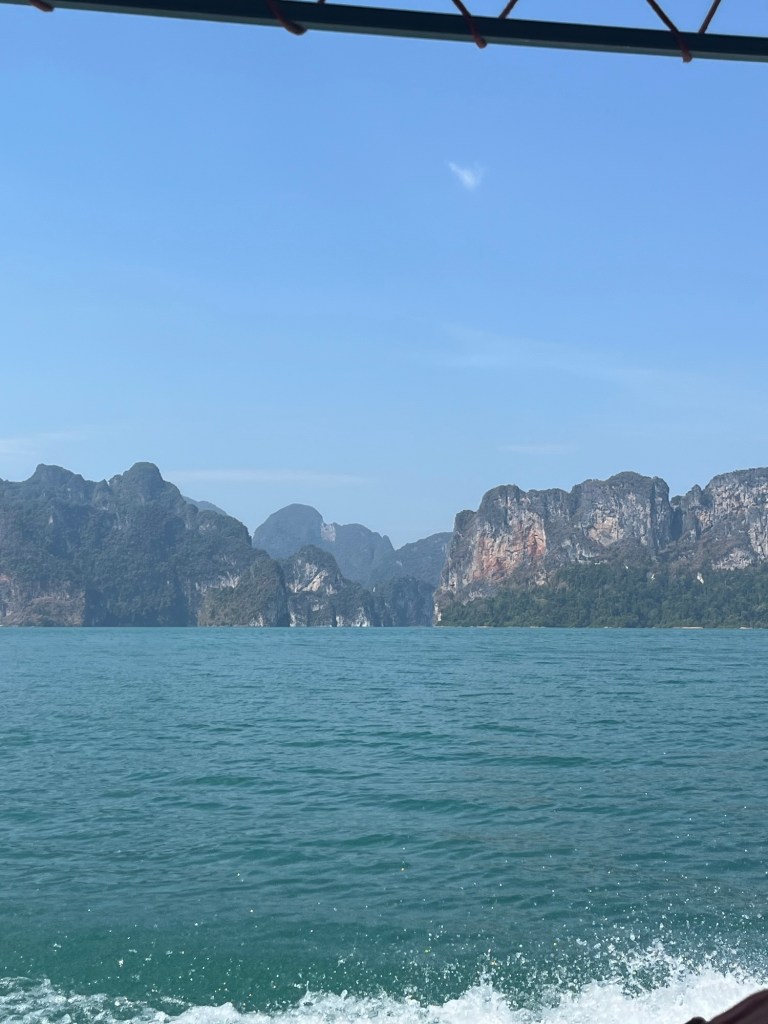
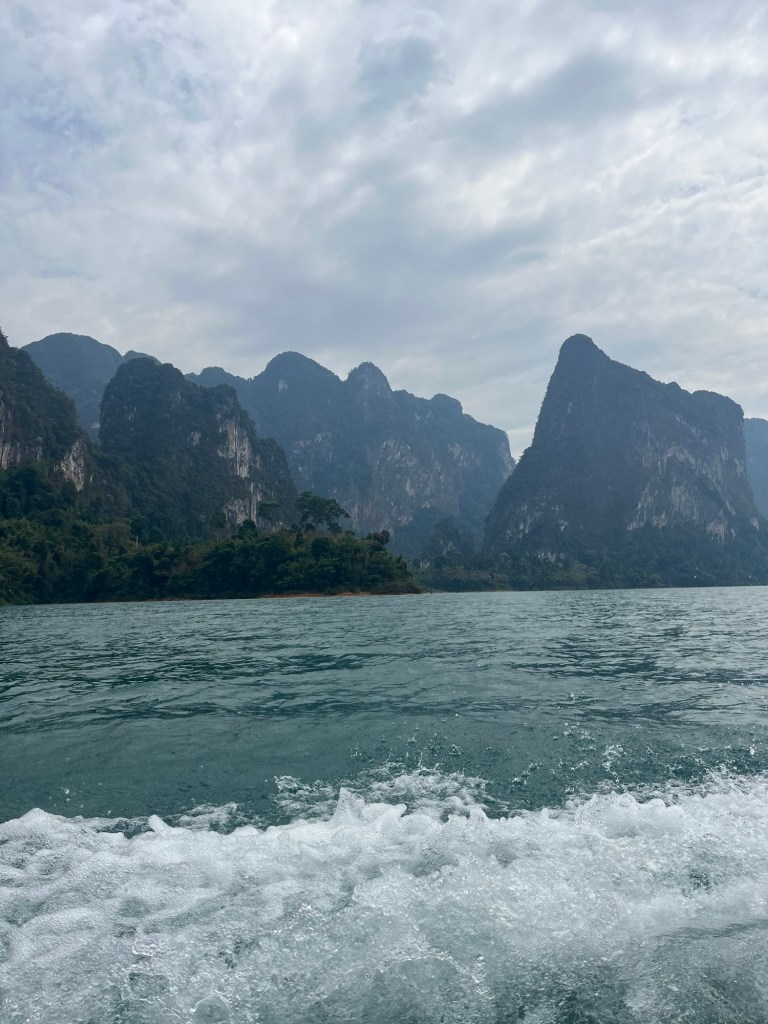
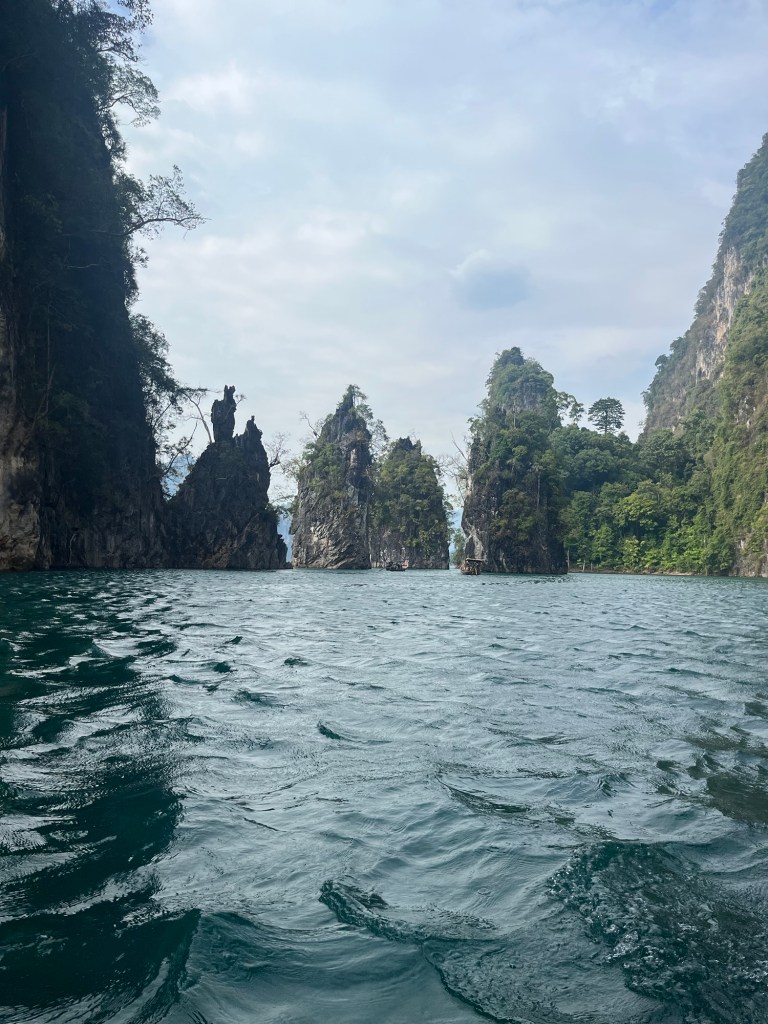
The overnight train south was an older model than the one I’d taken to Chiang Mai a month or so ago. Narrower bed up top, 2 seatbelts strung vertically being the only barrier to me not rolling out of bed, and the less said about the toilet, the better!! But it got us south to Surat Thani bright and early the next day. After breakfast at a cafe by the station, we set off on the couple of hours drive to our hotel for the next few nights in Khao Sok. This area of the country has huge limestone karsts, not dissimilar to the scenery in Vang Viang and Halong Bay. We arrived at the hotel shortly after 10am and were able to check in. We spent the day relaxing by the pool and enjoying the scenery as we had a full day of activities on the lake in the national park the following day.

The next morning we drove about an hour to Khao Sok National Park, and to the Cheow Lan Lake. We boarded a longboat to sail across the lake to one of the floating restaurants and activity hubs where we did some kayaking before enjoying lunch. After lunch we were back on the longboat for more scenic cruising and a short hike through the rainforest before returning to shore. I’ve been to Khao Sok on my previous travels and it didn’t disappoint, the scenery is stunning here.

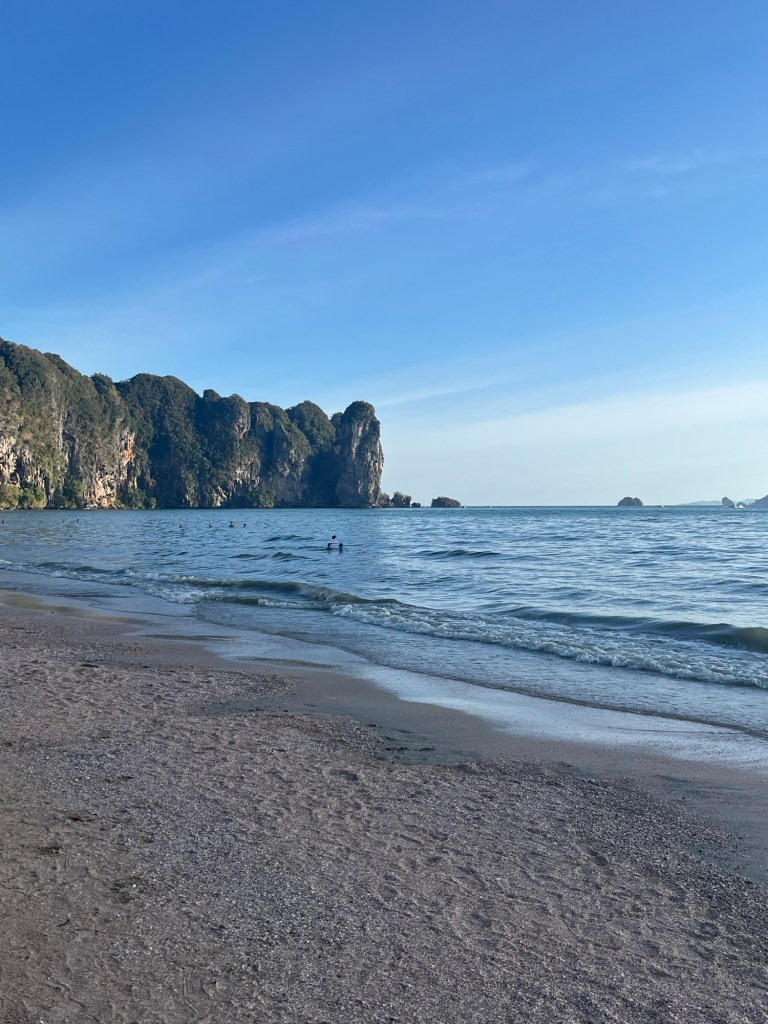
The next day we continued to head south to Krabi. More kayaking, this time through mangrove forest and through some caves, before lunch. We continued to Ao Nang in the afternoon. The weather in this part of Thailand is increasingly hot and as we had a walk to the beach in the late afternoon, the temperature actually reminded me of the 40C heat in Adelaide…though there may have been another reason for my overheating. Dinner that night was at a seafood restaurant and unfortunately I was beginning to feel unwell before the food arrived. After feeling increasingly green through dinner, I headed back to the hotel room and did not leave it for 36 hours…

My one photo in Ao Nang, Krabi

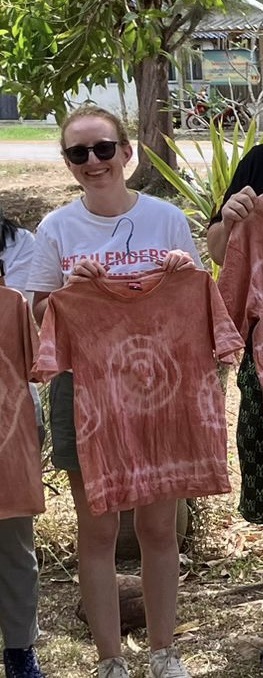
Thankfully we had 2 nights in Ao Nang and I was feeling much better by the time we left to continue south to Trang province. We stopped at a local village, Baan Mod Tanoy, where we learned about the village life in a predominantly Muslim area, and got the chance to do some Batik tie-dying, we all have our souvenir T-shirts to take home. Another local lunch, which was delicious even though I avoided the seafood!! We headed to our hotel at Pakmeng Beach where I was still taking it relatively easily so whilst the others in the group went to explore the beach (significantly quieter than Ao Nang), I rested in the air conditioning. It has become much more humid and tropical as we head south.

This was my last full day in Thailand as we headed to Malaysia the following day. It’s been almost 3 weeks since I arrived back to Bangkok from Cambodia and I’ve covered the length (if not quite the breadth) of the country in that time. Thailand is a fascinating country with lots to see and a great culture to try and immerse yourself in. A bit of a trek from the UK but a great winter sun destination for those looking to avoid the worst of the winter!

Onwards to Malaysia…