Our luggage had been sent from Hakodate to Asahikawa, our destination in 2 days time, so we were operating out of our smaller bags for a couple of days.
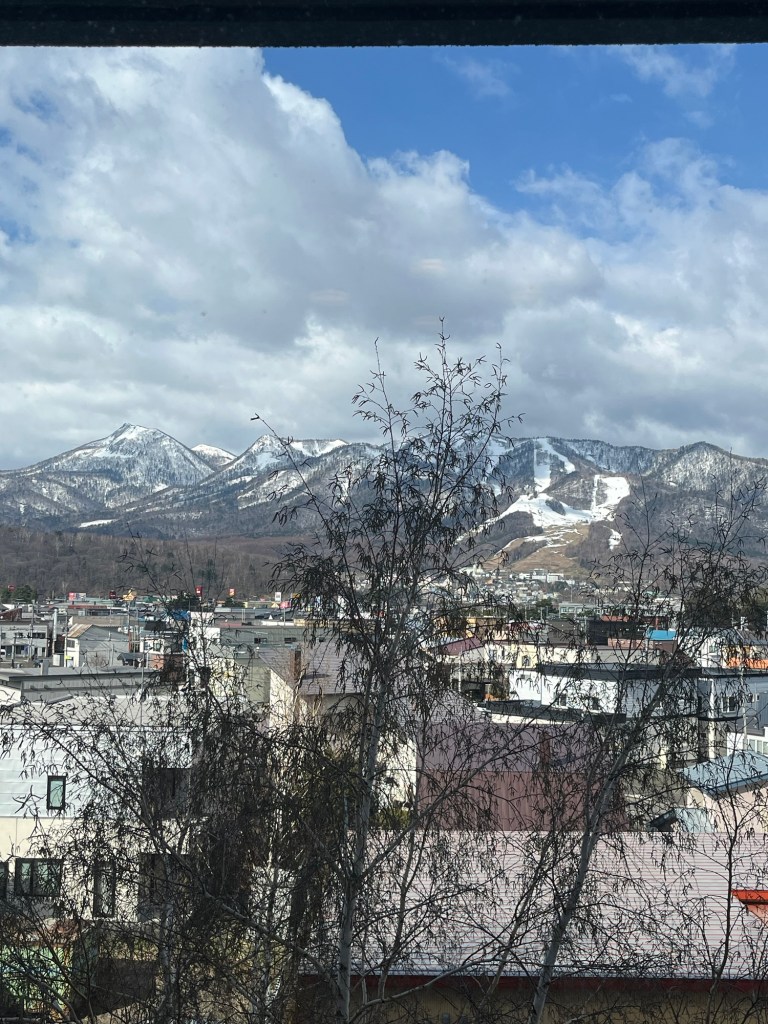
We took a train from Hakodate along the coast to Noboribetsu and then a bus to Noboribetsu Onsen which is a small town full of onsen resort hotels. It had a bit of a ski resort feel to it despite there being no skiing in this area.
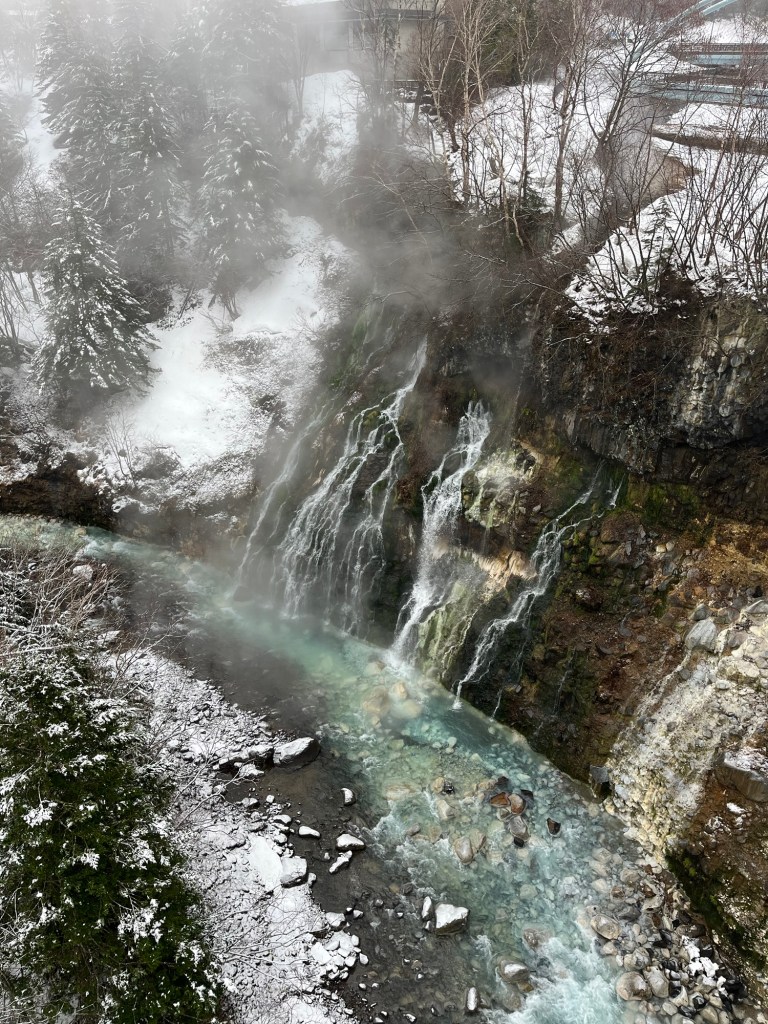
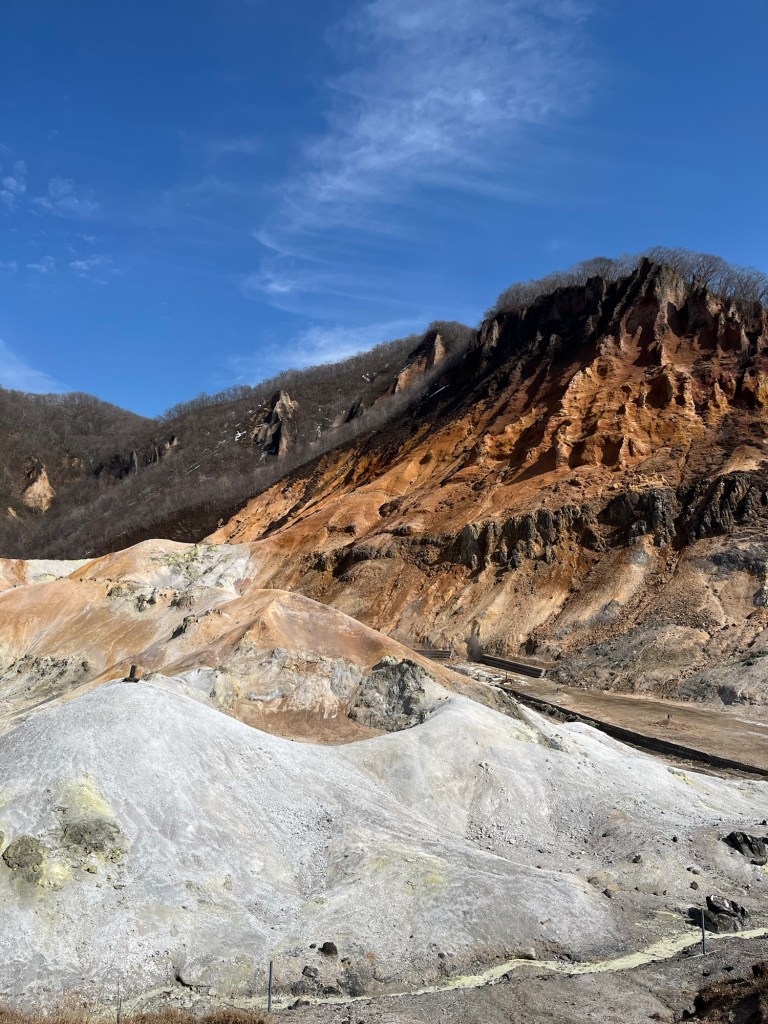
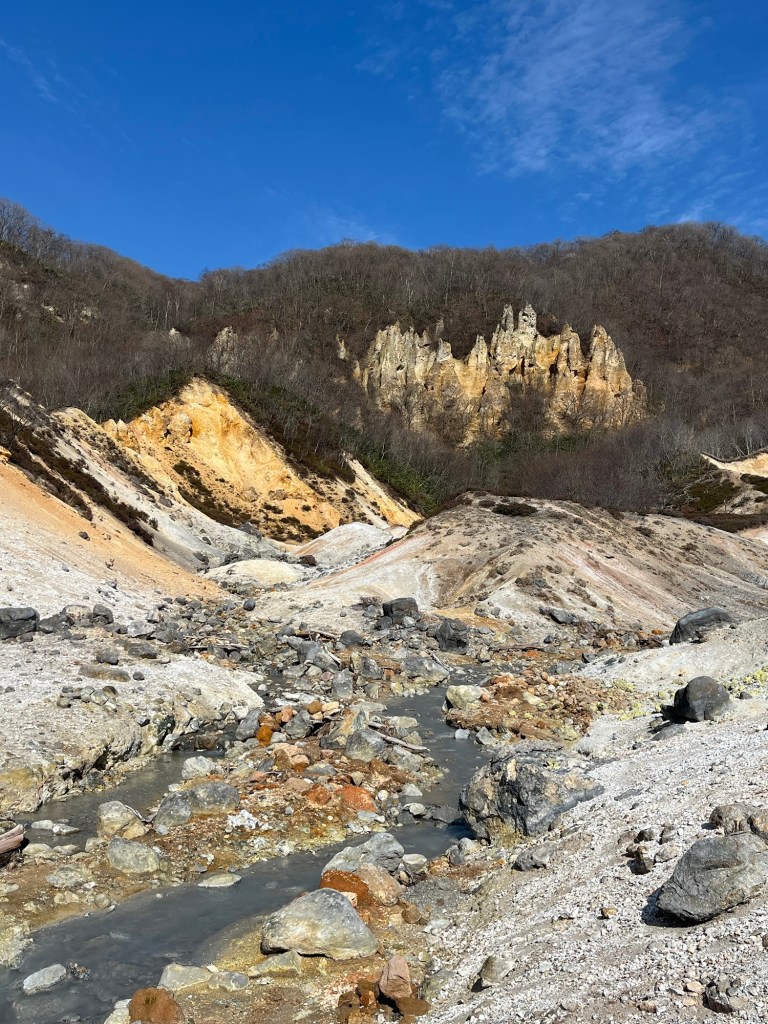
When we arrived, we walked to Hell Valley, which is a steaming landscape and the source of the hot water for the onsens in this town. The colours really reminded me of Wyoming.
After that we returned to the hotel and I very much enjoyed the onsen. It was late afternoon and pretty quiet so I had a long soak in the various baths. It’s so peaceful and meditative.
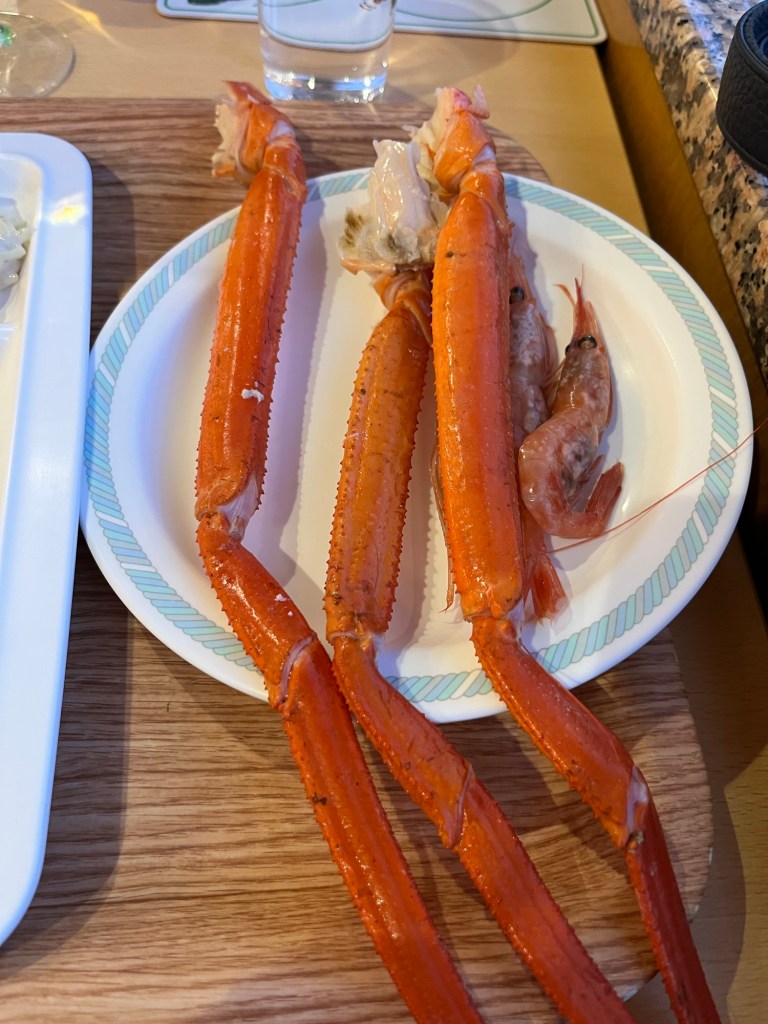
We had a buffet dinner which had lots of seafood including as many crab legs as you could eat!!
This was round 2!!
I ended the day with another soak in the onsen, something I could definitely get used to!
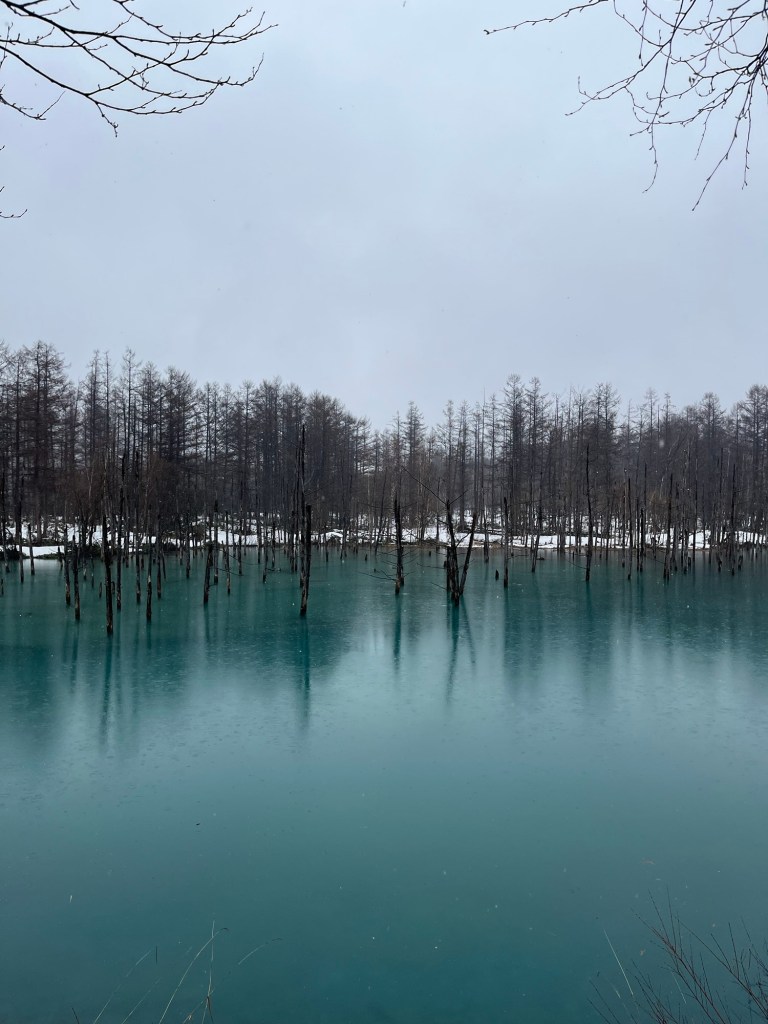
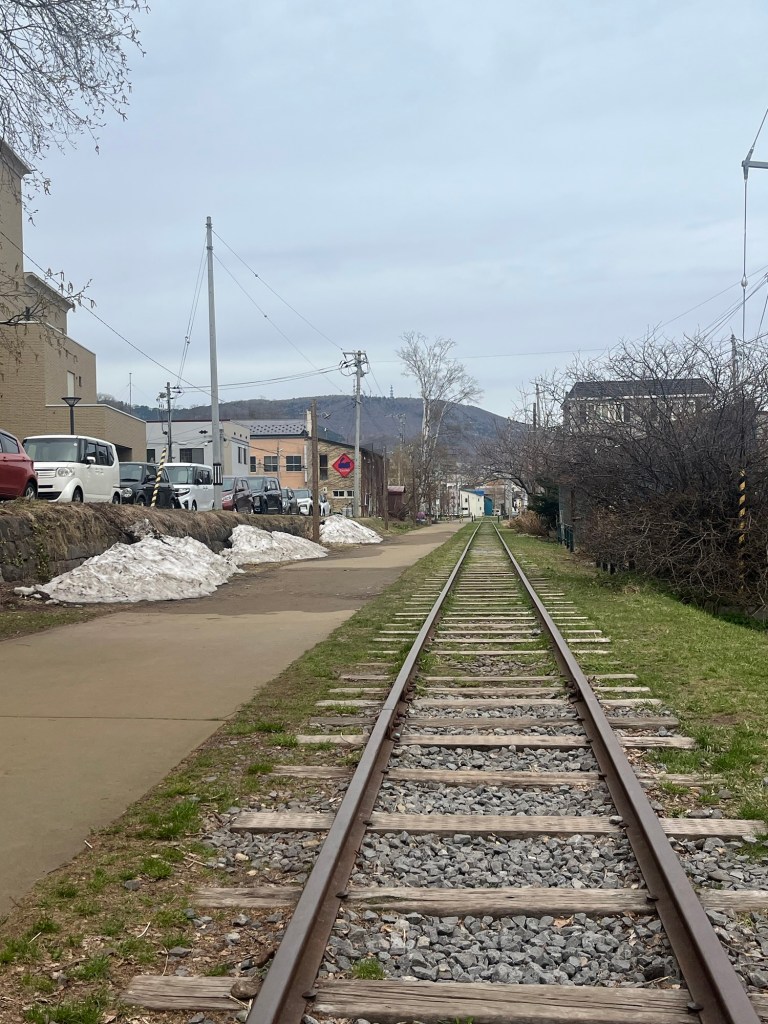
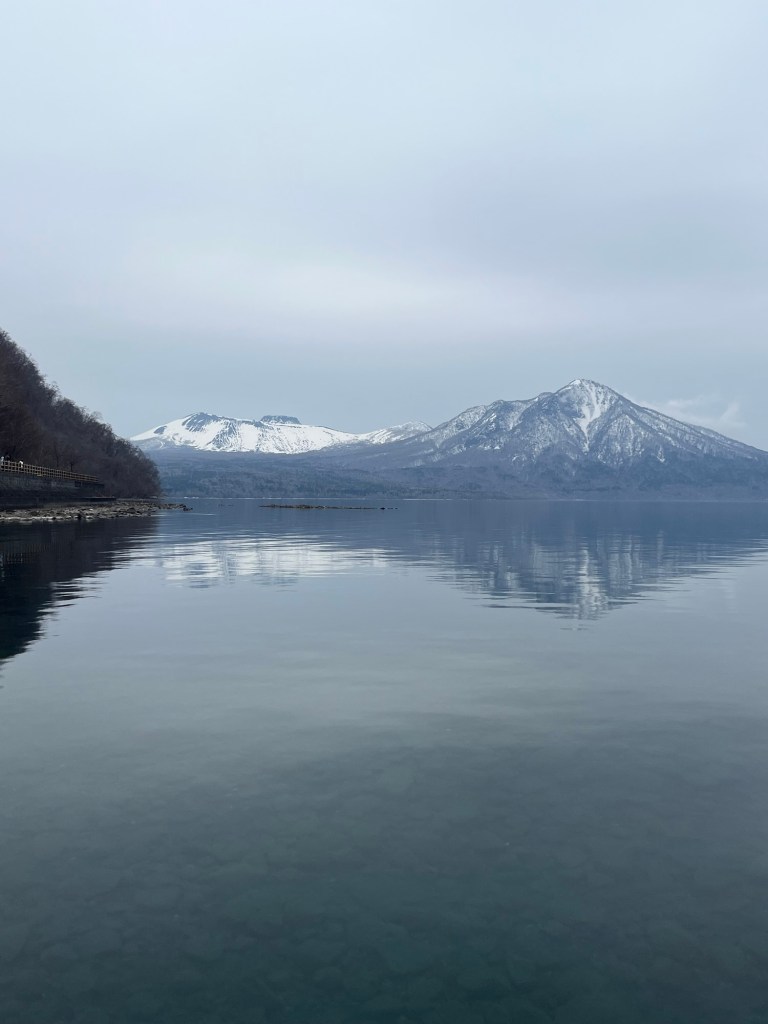
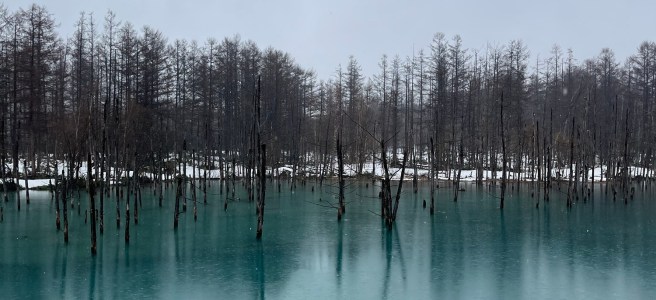
The following day started with a bus, a train and another bus to Lake Shikotsu, the deepest lake in Hokkaido. There were vast mounds of snow still on the ground, having been cleared into piles. The trees had yet to burst into life after a long winter. It had a bit of a desolate feeling as we travelled, especially as it was quiet too.
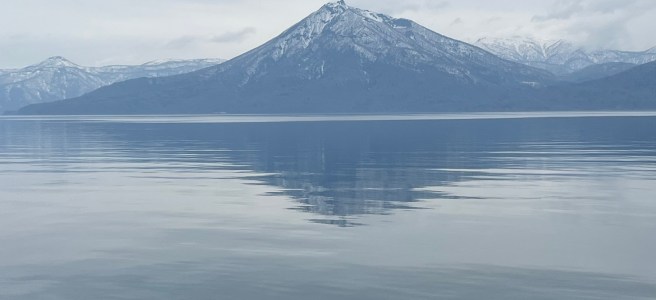
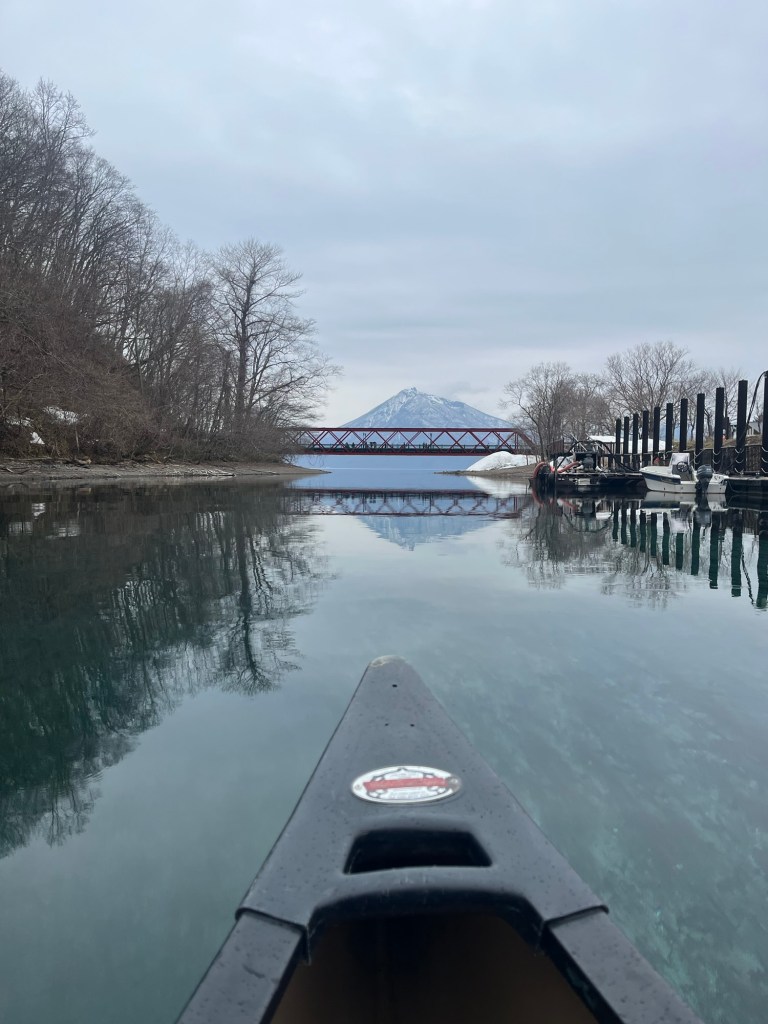
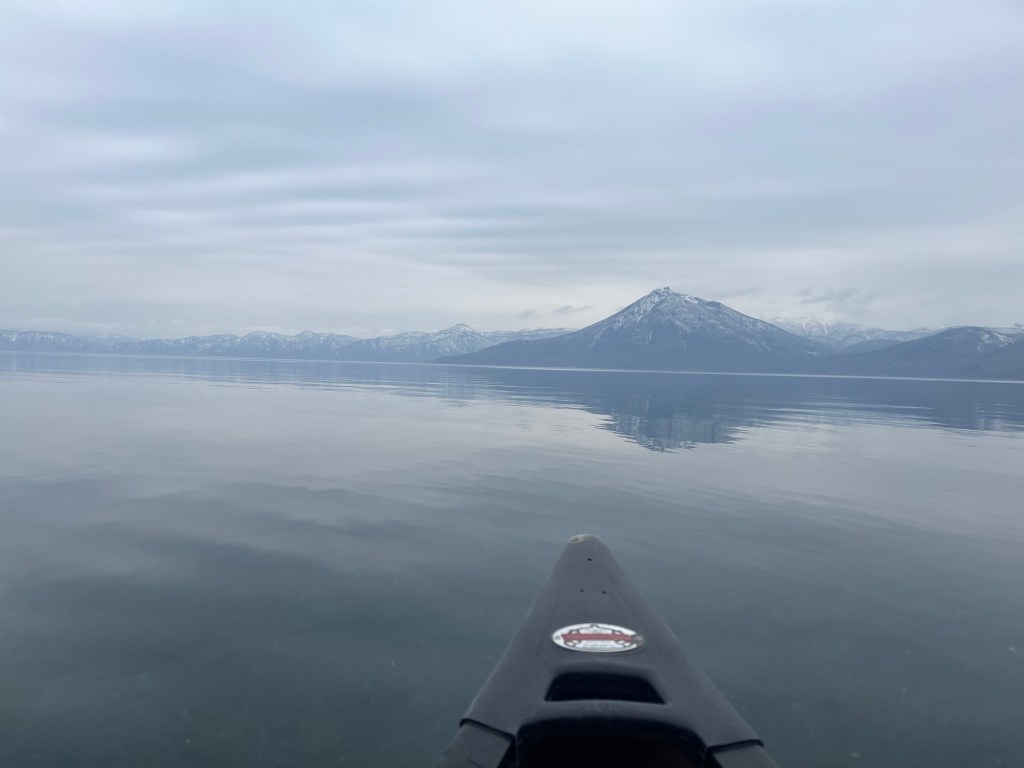
We had a canoeing excursion on the lake, we were so fortunate that the lake was calm this afternoon. The next day a storm had blown in and it was decidedly choppy!
Canoeing into the serene lake and marvelling at the landscapes, the surrounding mountains with dustings of snow, was just so idyllic.
Lake Shikotsu
It was, however, decidedly cold, and I was grateful for the additional clothes I’d bought in Japan – thanks Uniqlo and Muji!!
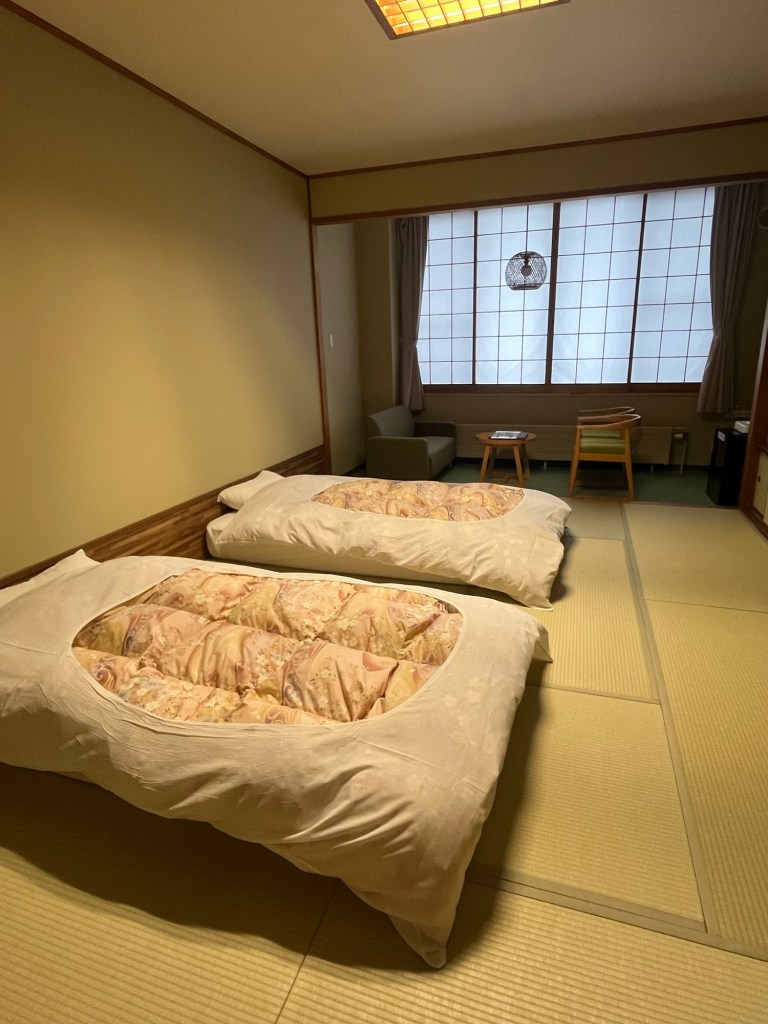
We stayed at a ryokan on the lake this evening, with another onsen. Ryokans are traditional Japanese inns and have futons and tatami mats in the rooms, and the only bathing and showering facilities are in the onsen. What a good excuse for another long and relaxing soak…
I really enjoyed these couple of days. It felt more off the beaten track than even Aomori or Hakodate, certainly compared to the first half of my Japan travels. It is the off season, so it was very quiet, but that really added to the peaceful ambience. I’ve also discovered that I really like onsens!!
Back to Tokyo for the second part of this trip, and to meet my new group. A very small group this time, just 2 others plus the guide. As the others were both men it meant I got my own room without paying for it – result!!
We joined the Monday morning crush on the Tokyo subway to get to Tokyo station to catch another Shinkansen which will whizz us the near 700km / 435 miles north to Aomori in just over 3 hours.
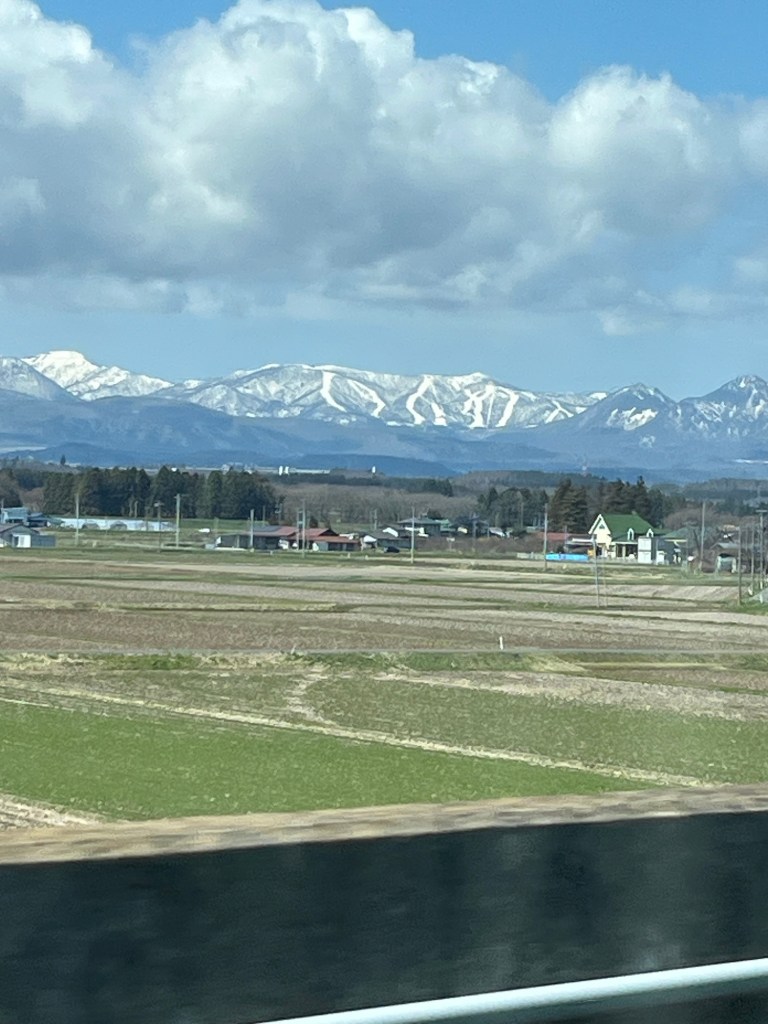
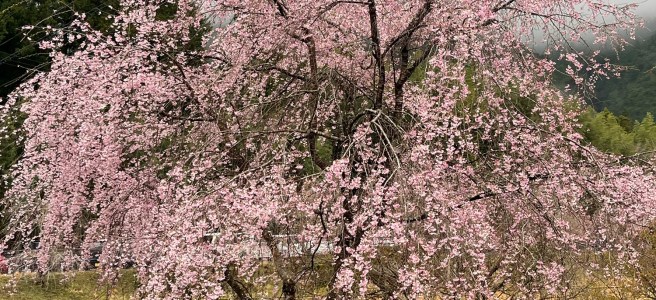
The scenery changed and we said goodbye to the blossoms as we hurtled north, passing rice fields and, later, snow capped peaks.
A slightly exciting moment as the train came to a sudden halt just outside of a station and all the power went off. There had been an earthquake out to sea and the train stopped for about 15 minutes as the tracks were checked. All was fine and we carried on and still arrived in Aomori by lunchtime.
Certainly a change in temperature here compared to my first week or so in Japan. And indeed to the last 5 months of my travels. I was very glad for the coat I’d bought when I got to Tokyo. In Aomori it was cold enough for me to buy some thermal lined trousers, a hat and some gloves, which I would be extremely grateful for in a few days time…
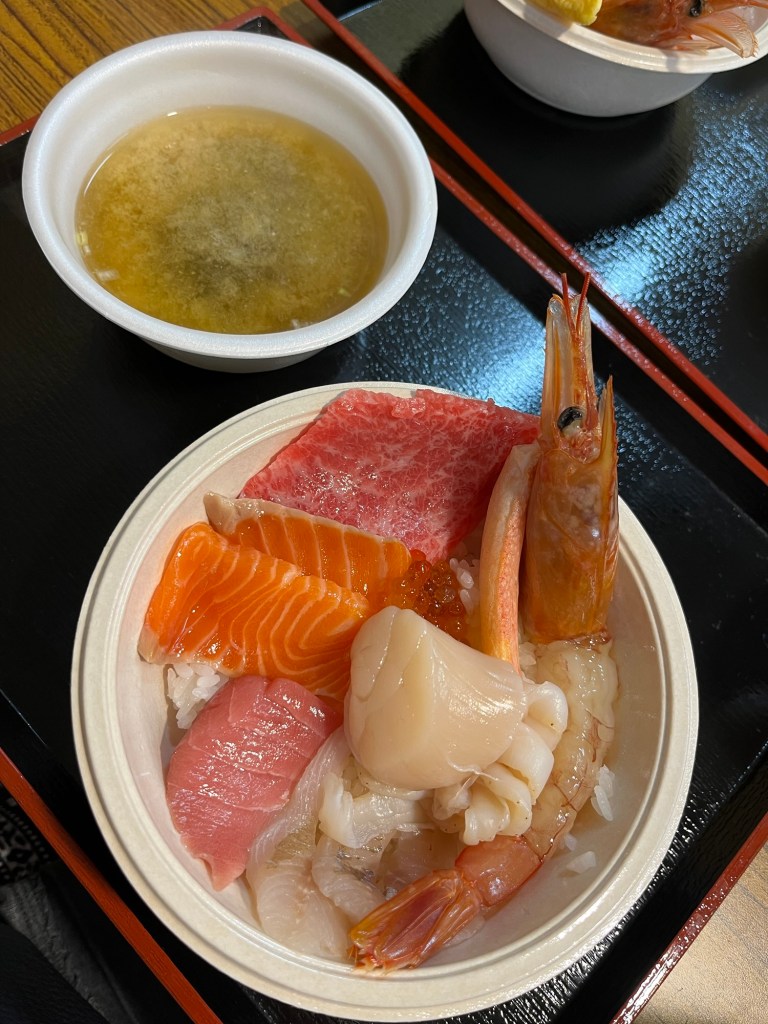
The northern part of Honshu, and Hokkaido, has amazing seafood, and for lunch we went to Aomori Nokkedon, a fish market where you can create your own rice bowl lunch by buying some tickets and exchanging them at the various stalls as you go round the market. Some of the freshest sashimi I’ve ever had, absolutely delicious.
In the afternoon we went to the Sannai Maruyama archeological site, which preserves how the Jōmon peoples lived in this area 5000-6000 years ago. It’s still being excavated and it was very interesting to see what has been found and how these people lived.
That evening we had more seafood for dinner, and there was some live music at the restaurant, using a traditional Japanese shamisen – a 3-stringed instrument. There was also a chap in traditional costume who got us all up dancing in a line around the restaurant, surprisingly exhausting!!
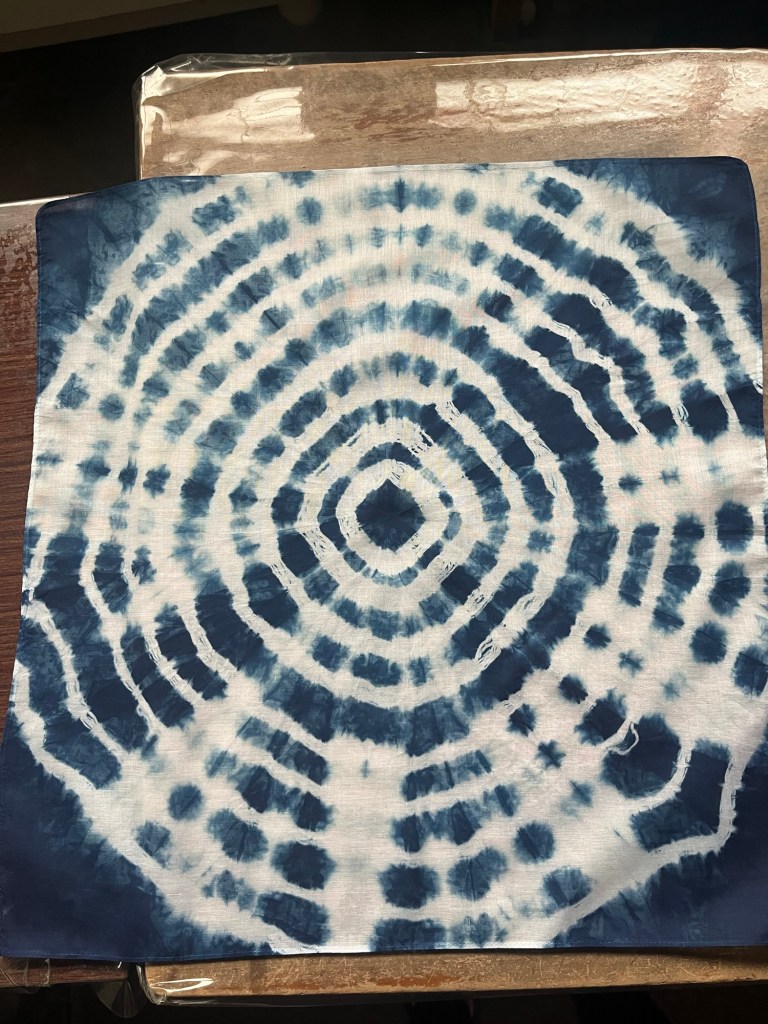
The next day we headed to nearby Hirosaki on the train for the day. We started at an indigo-dyeing workshop, which is one of the traditional crafts in this area. The place we went to had these great big vats of indigo dye stewing away. I opted for tie-dye and I was much happier with my attempts here than at the previous tie-dyeing in Thailand.
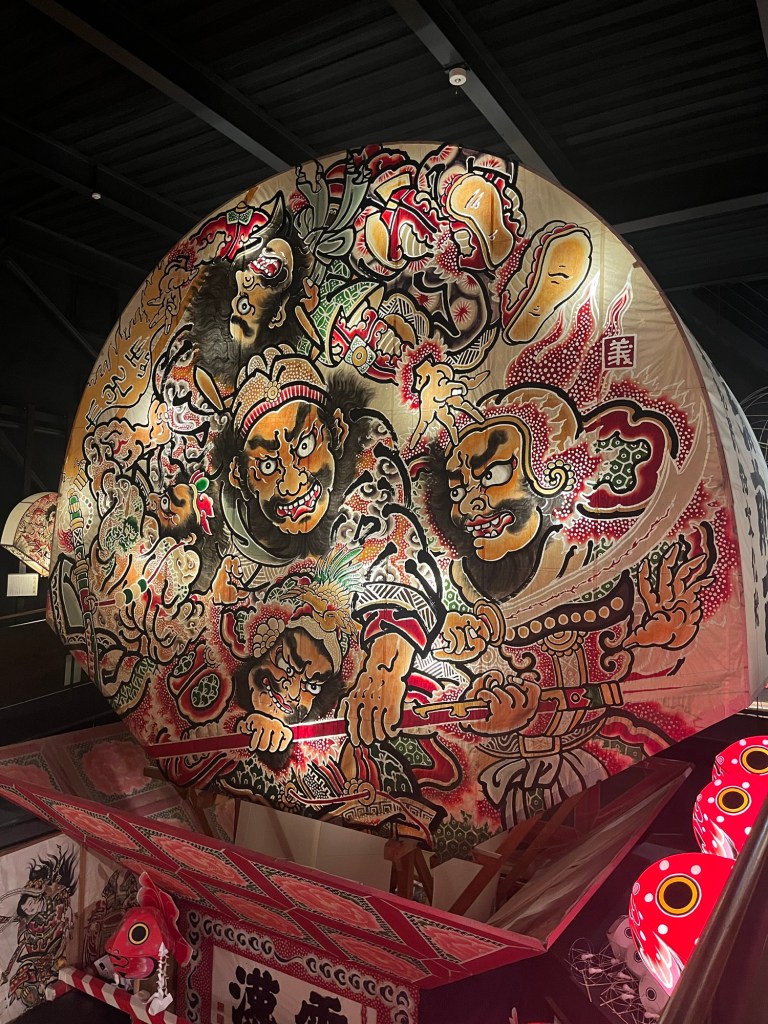
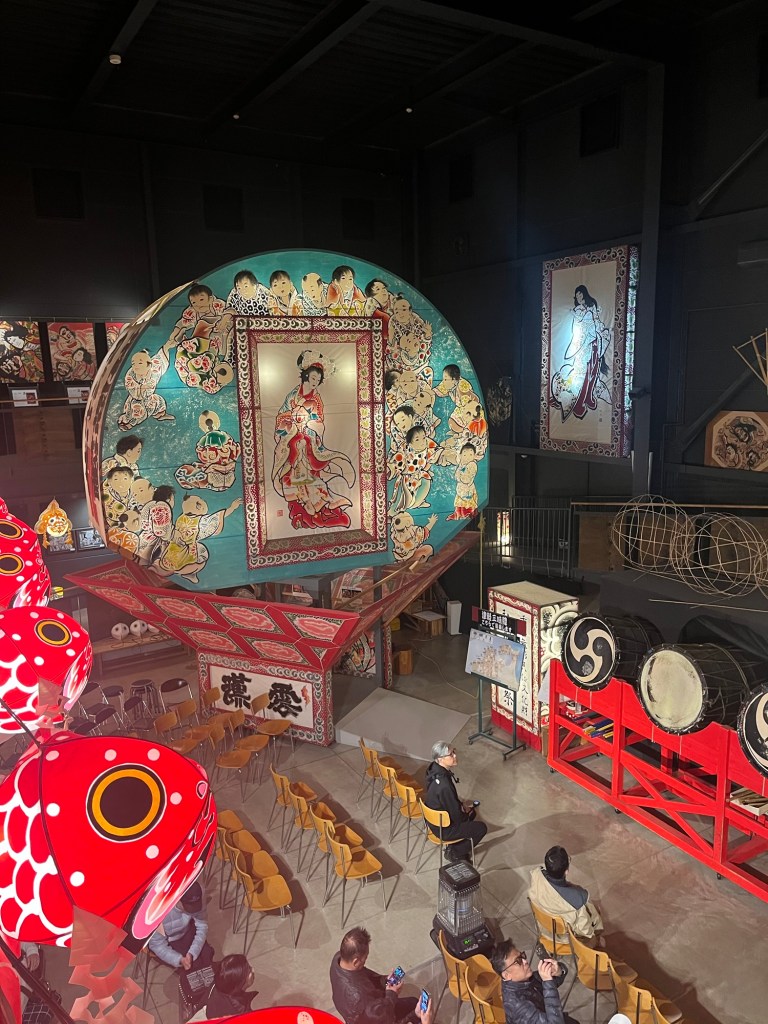
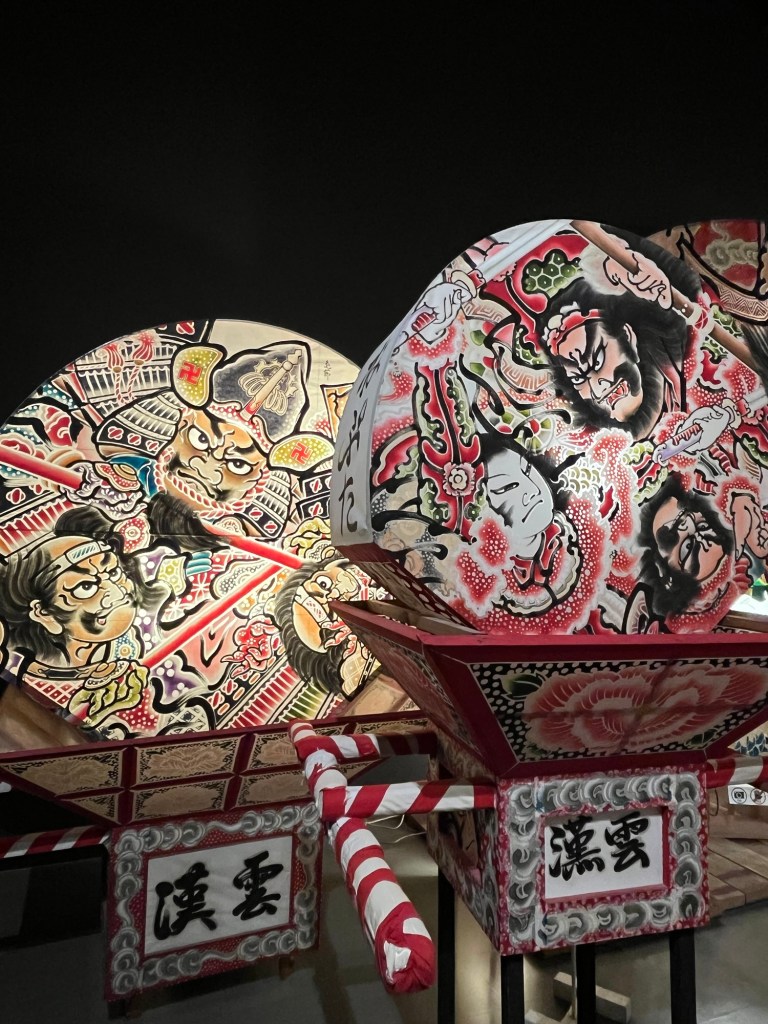
We then went to the Tsugaru-han Neputa museum which contains these enormous lanterns which are used every August in the Nebuta Matsuri festival, which must be a lot of fun. The lanterns are beautifully decorated but I couldn’t get over how big they were!
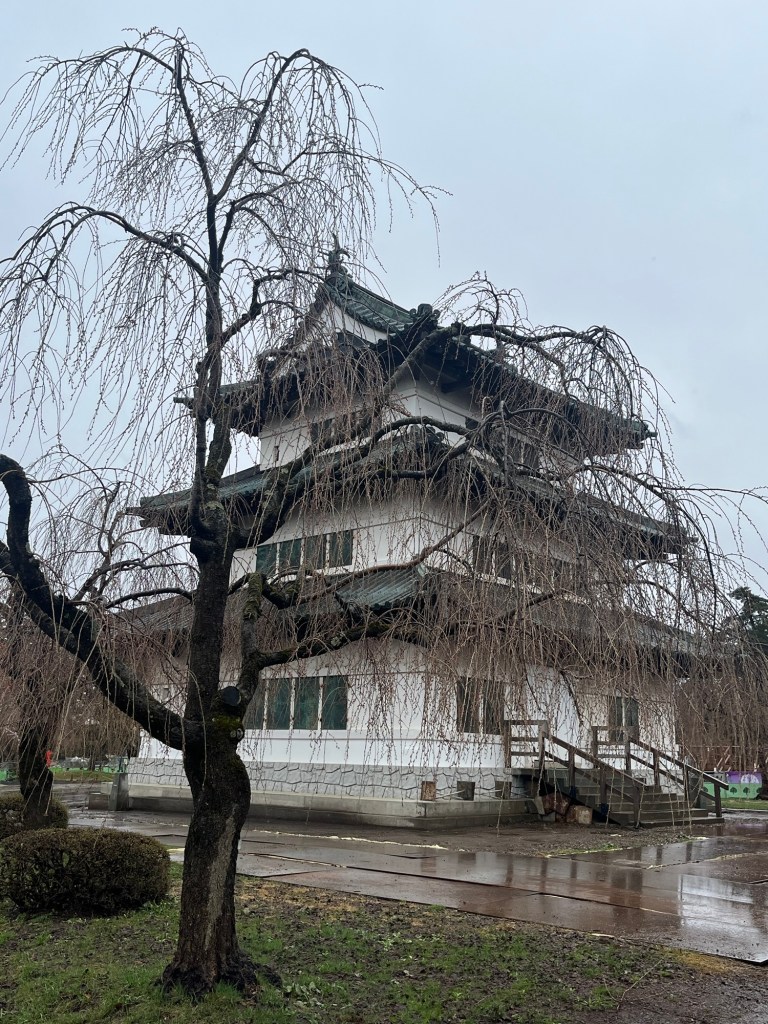
After a warming bowl of soba noodles in a cafe for lunch, we then had a brief wander around the outside of Hirosaki Castle, which is under renovation for the next 8 years (I think!). As part of the renovations, they’ve actually moved the castle from its original position whilst the ground is being reinforced. Pretty surreal to think this building has been moved!
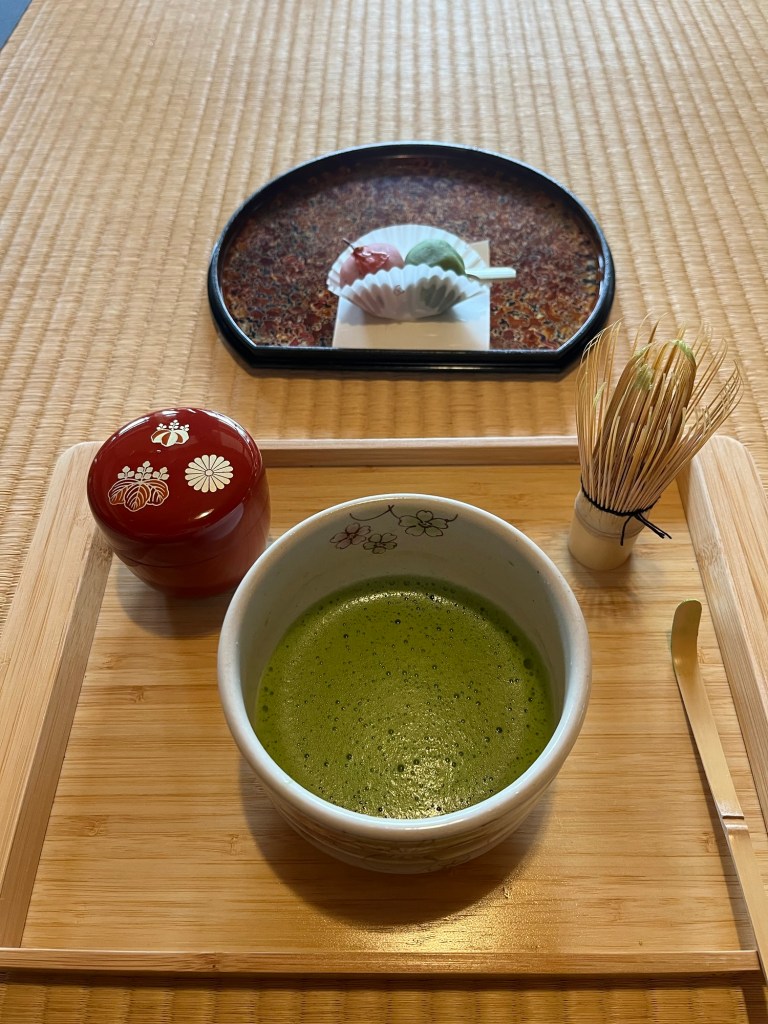
We also had a traditional Japanese tea ceremony, kneeling on the tatami mats, and being very calm and precise in making the tea and drinking it. A very serene experience.
Back to Aomori in the late afternoon, and a yakitori dinner.
The next morning was my final Shinkansen of this trip as we made the 1 hour journey under the sea from Honshu to Hokkaido and to the current northern terminus of the Shinkansen at Hakodate. Work is ongoing to extend to Sapporo in the next few years, at which point it will probably be faster to take the train from Sapporo to Tokyo rather than fly, by the time you’ve factored in hanging around at an airport, which is a bit mad really.
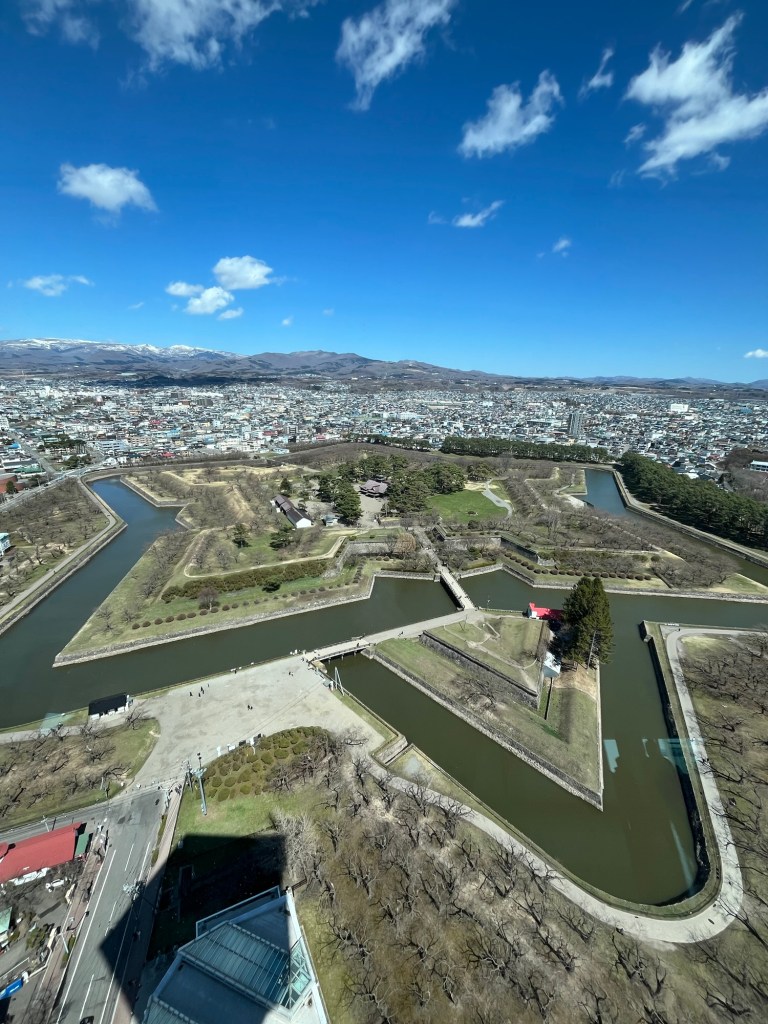
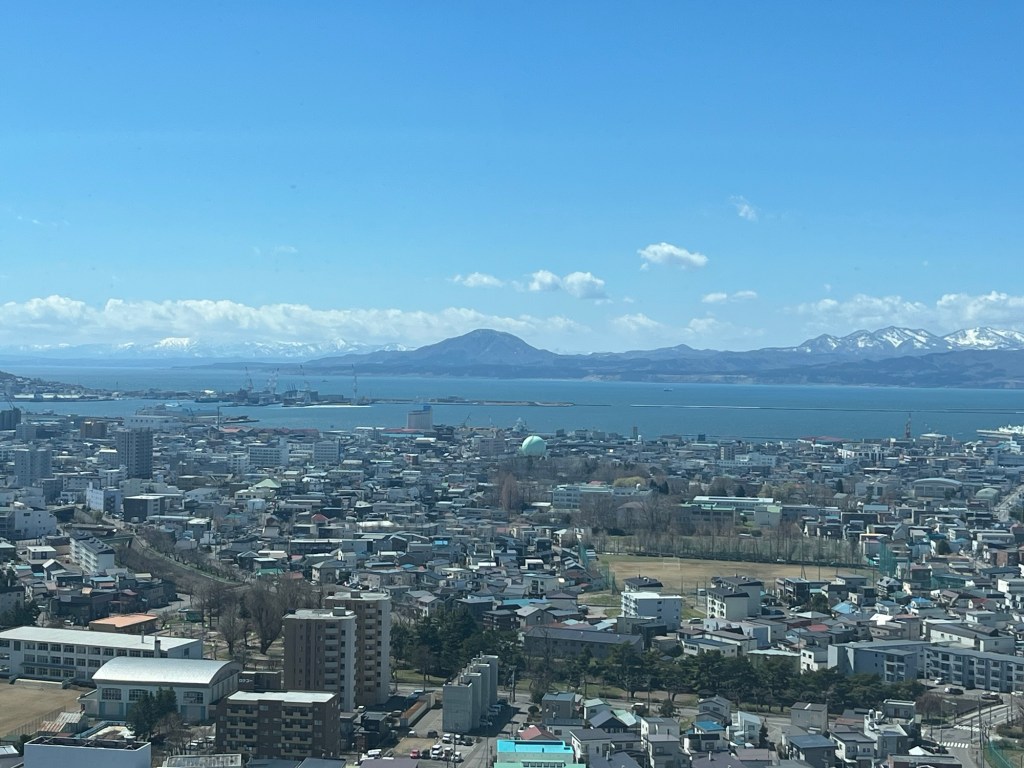
We were in Hakodate by mid morning and dropped our bags at the hotel. We took a tram to Goryokaku Tower and went to the observation deck where you get great views over the city, and of Goryokaku fort directly below. The fort is in a star-shaped design and apparently influenced by European designs. In a couple of weeks, the cherry blossoms will be bursting forth, outlining the fort in beautiful pink blossoms.
Views from Goryokaku tower
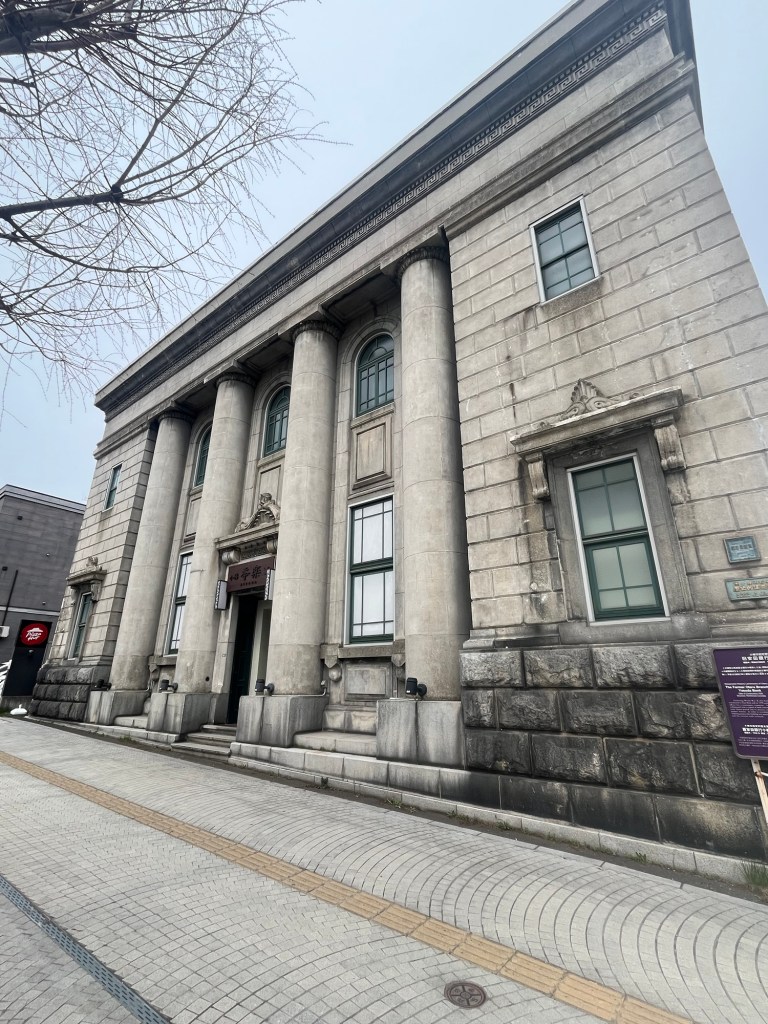
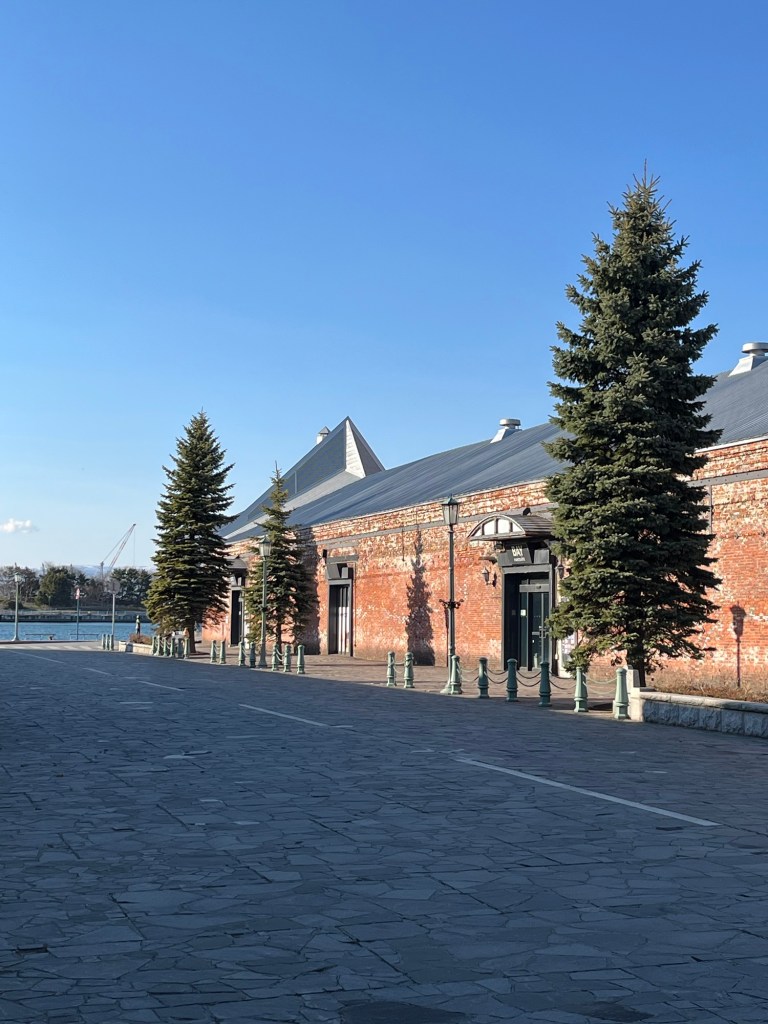
We had some free time after lunch and I wandered around part of the historic port of Hakodate, to the red brick warehouses which now house an assortment of shops and restaurants. As we were on the coast, it was quite breezy, and the architecture here is very European, it made me feel quite at home!
Red brick warehouses, Hakodate
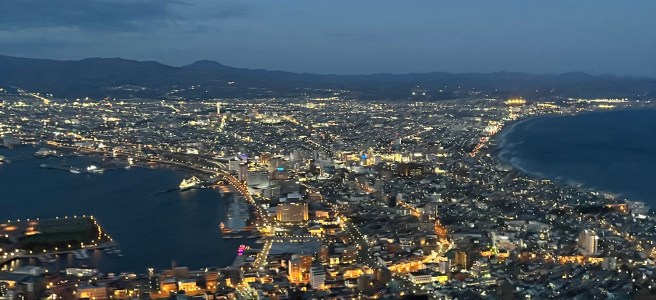
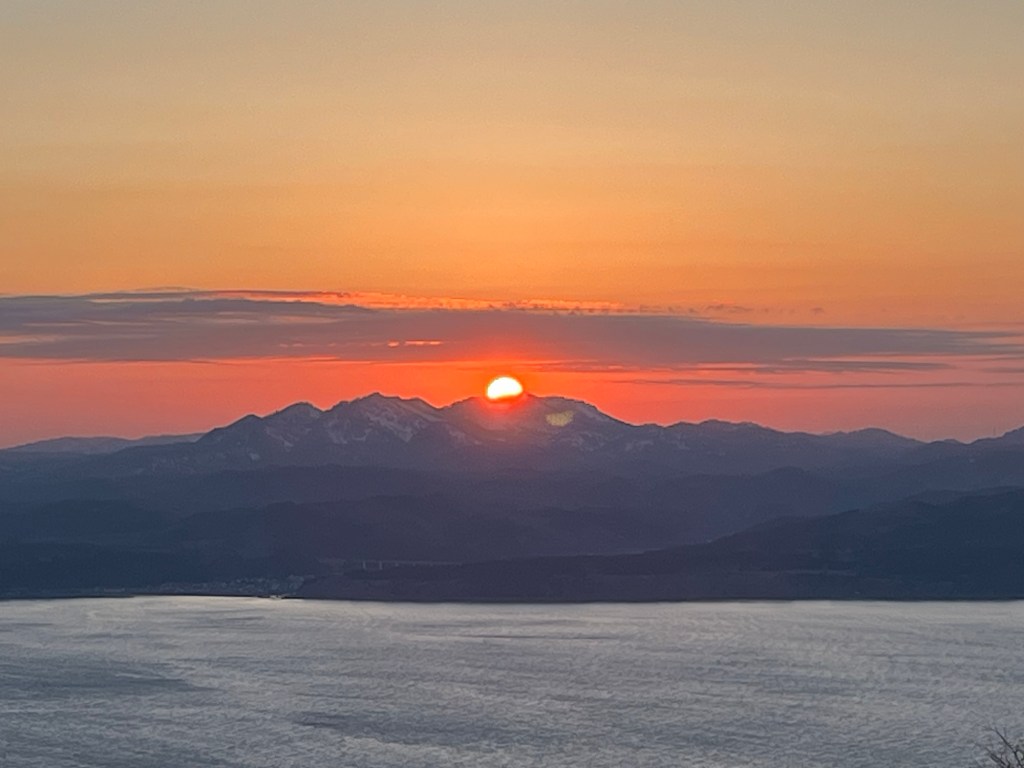
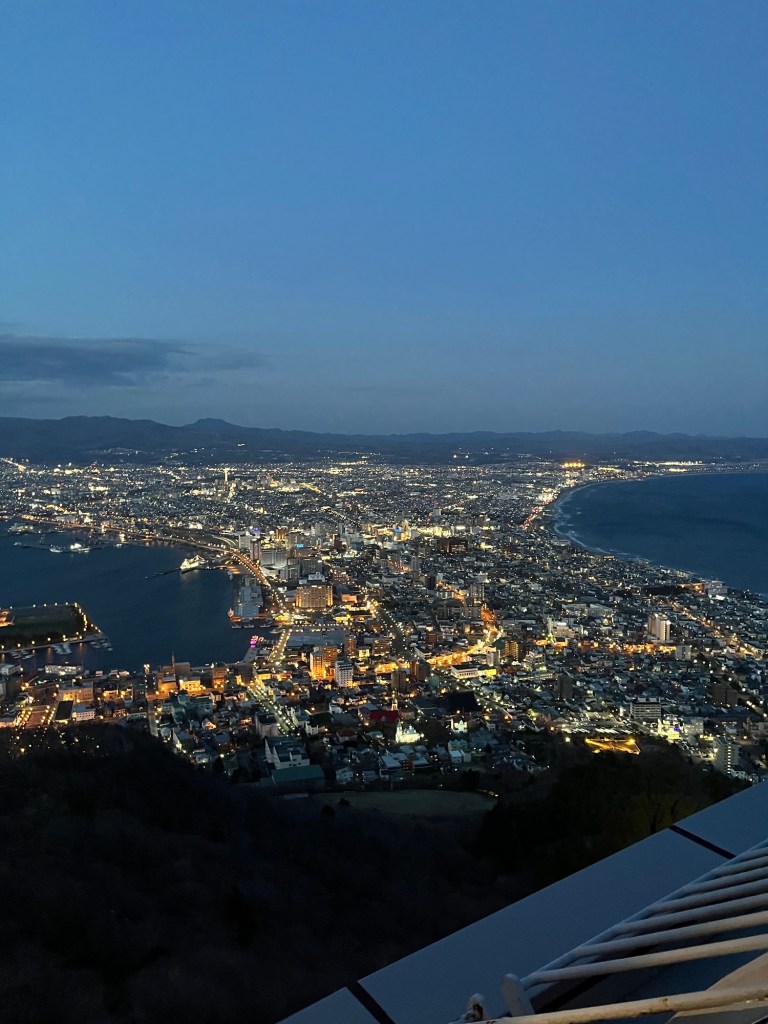
In the evening after dinner we went to the Hakodate Ropeway (cable car) and timed it perfectly to get to the top in time for sunset. We, and hundreds of others, then hung around for about half an hour for it to get properly dark as you then get great views of Hakodate lit up at night. After getting our photos we then tried to beat the rush back down in the cable cars and called it a night.
I’m already really glad I decided to come north on this trip. It’s a lot quieter than the traditional tourist route though southern Honshu, but has spectacular scenery and great food. Next up, a couple of days in onsen territory…
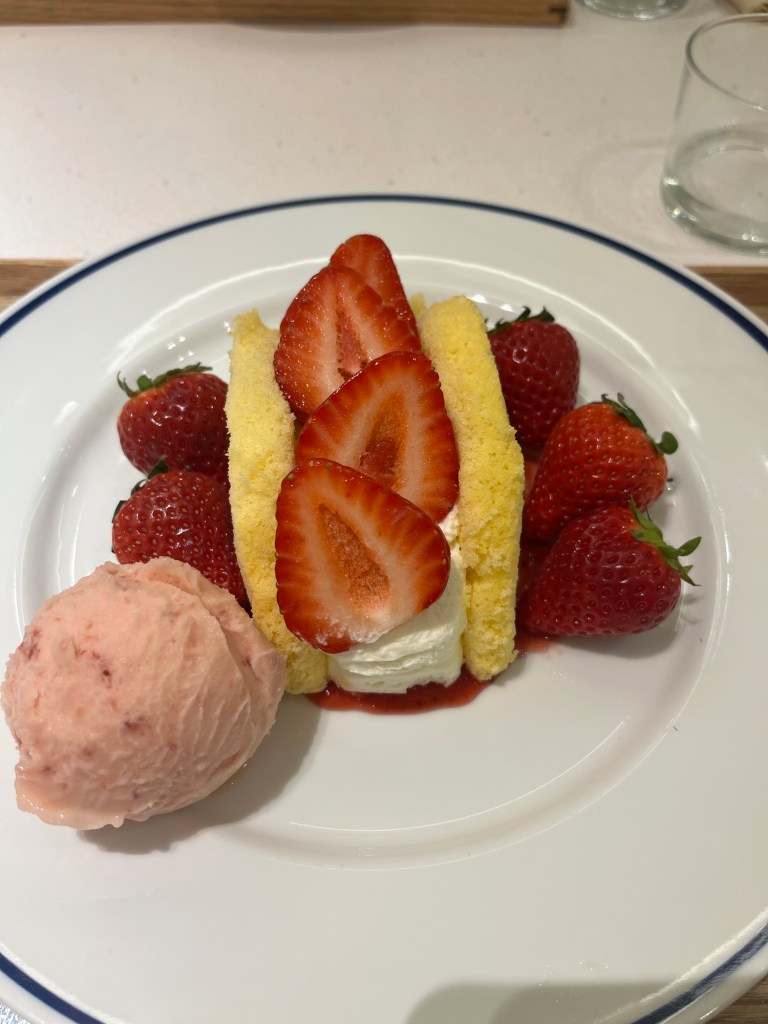
Back on a Shinkansen the next day towards Hiroshima. We arrived at lunchtime and made use again of the amazing facilities at the station. Most of the stations we’ve been to have large shopping malls/department stores attached to them with food courts and restaurants. I ended up having dessert for lunch. A strawberry sandwich cake with delicious fresh strawberries and strawberry sorbet. Absolutely no regrets.
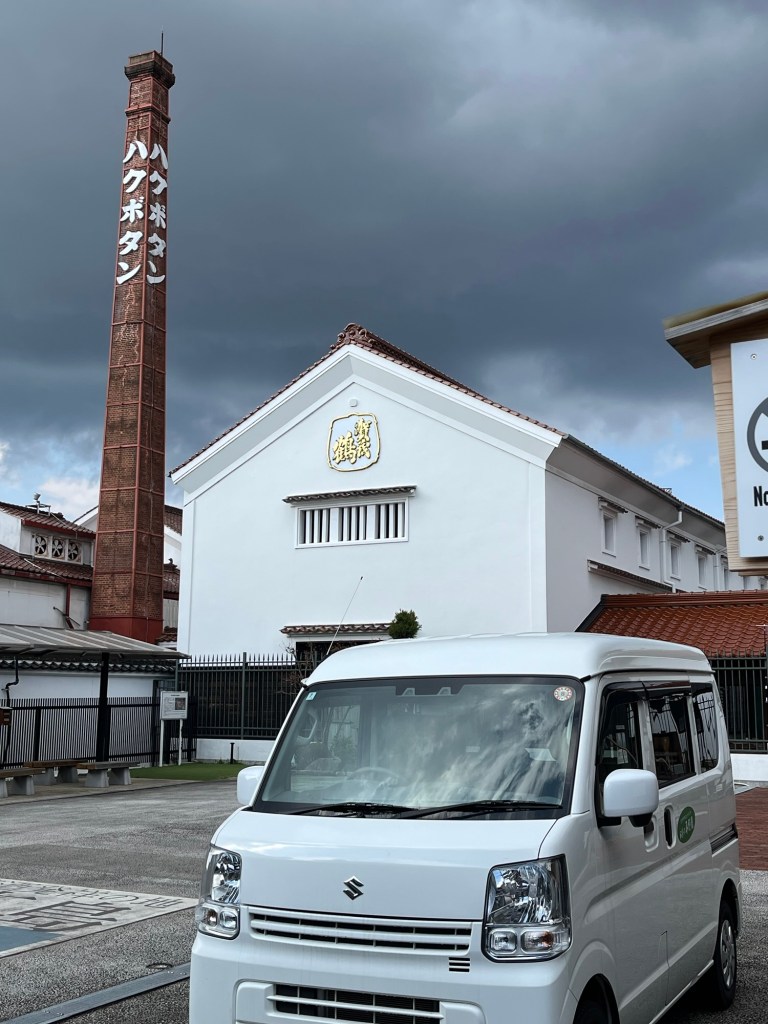
In the afternoon we hopped on a local train to Saijo, which is famous for its sake brewing. There are several sake breweries (distilleries?) in this town, and most are open for tastings. As I mentioned in my Kyoto post, I’m not entirely sure I like sake, but I’m continuing to try it!!
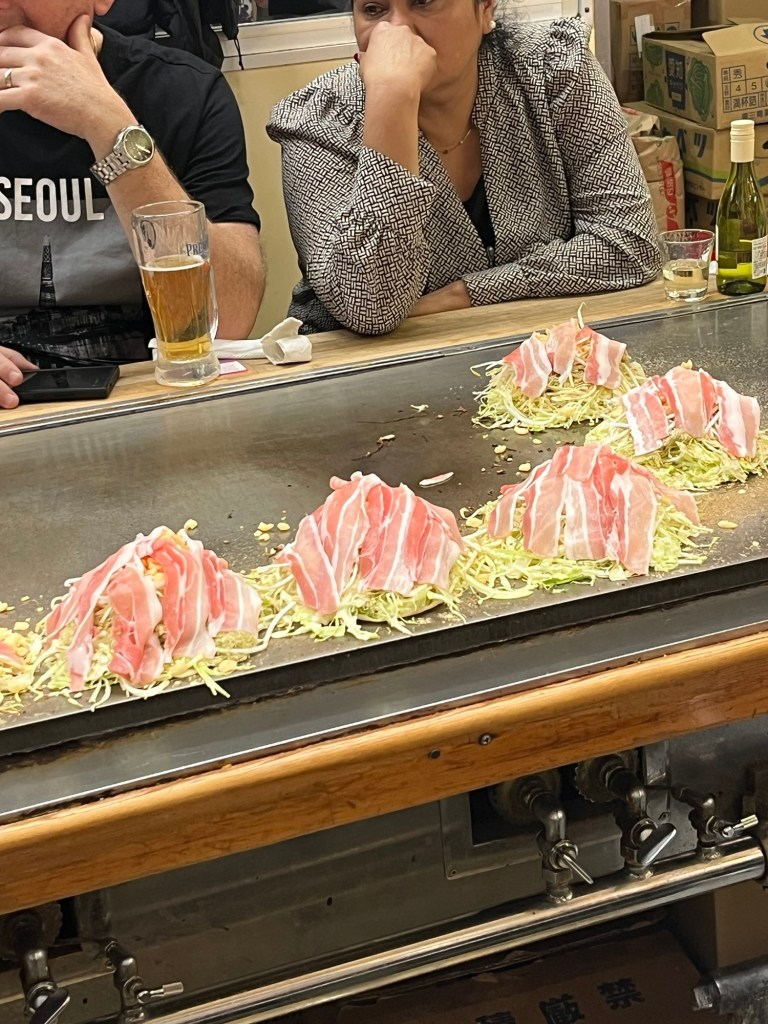
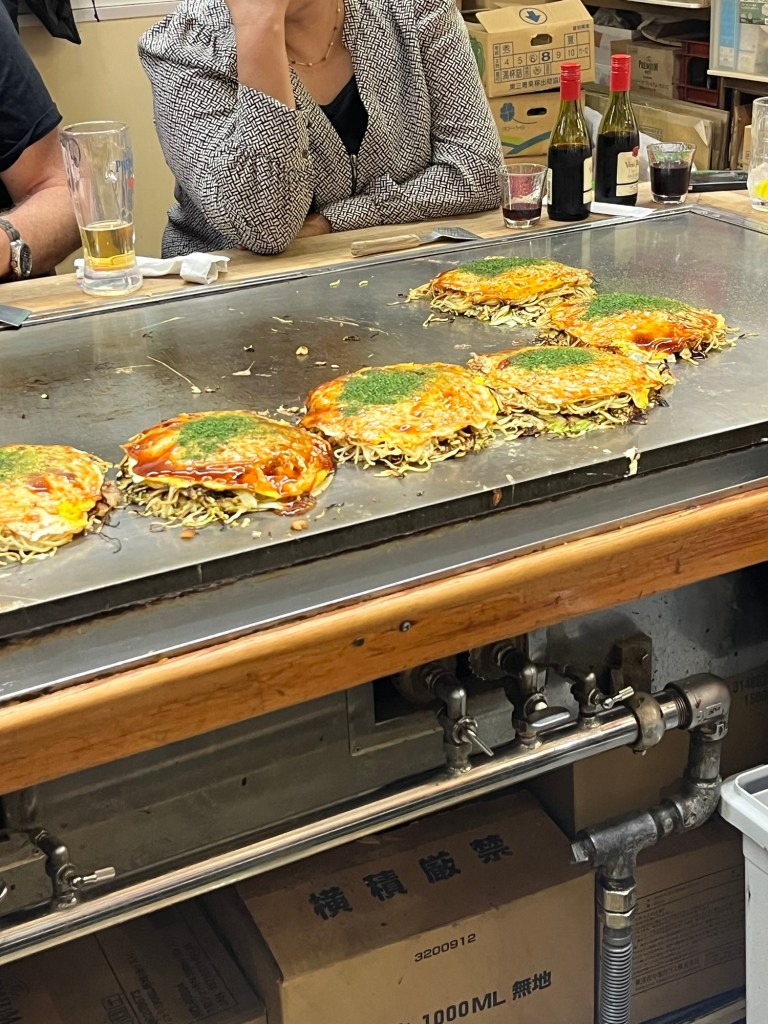
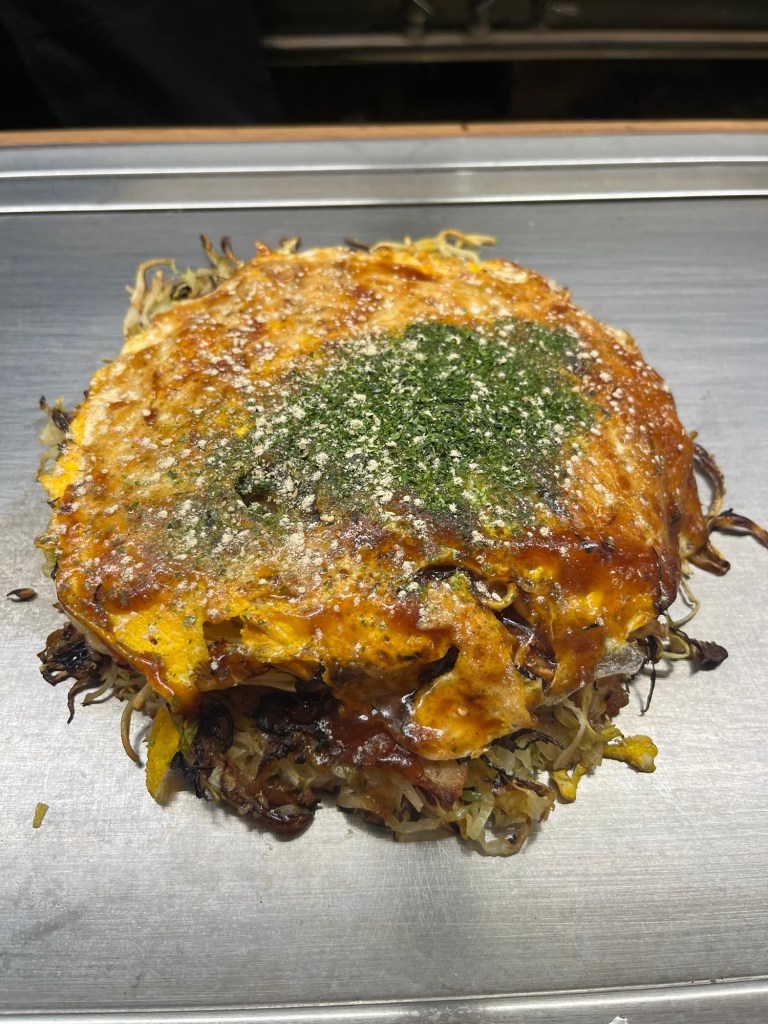
Back to Hiroshima and to check in to the hotel before dinner. Hiroshima is famous for its okonomiyaki – the cabbage pancakes which I had at the home stay in Kawane. We went to what seemed to be an okonomiyaki centre where lots of separate vendors were serving okonomiyaki which is cooked right in front of you. It’s a great spectacle to watch your dinner being cooked. I was a bit worried about the large size of the okonomiyaki but I managed to polish it all off with a couple of beers.
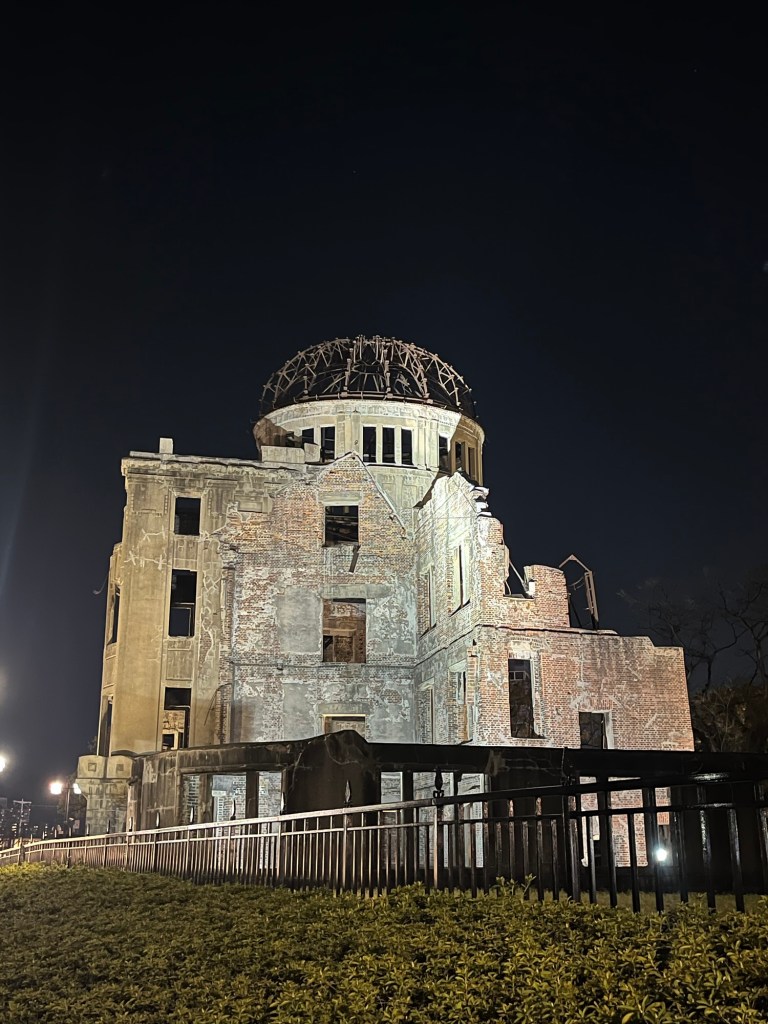
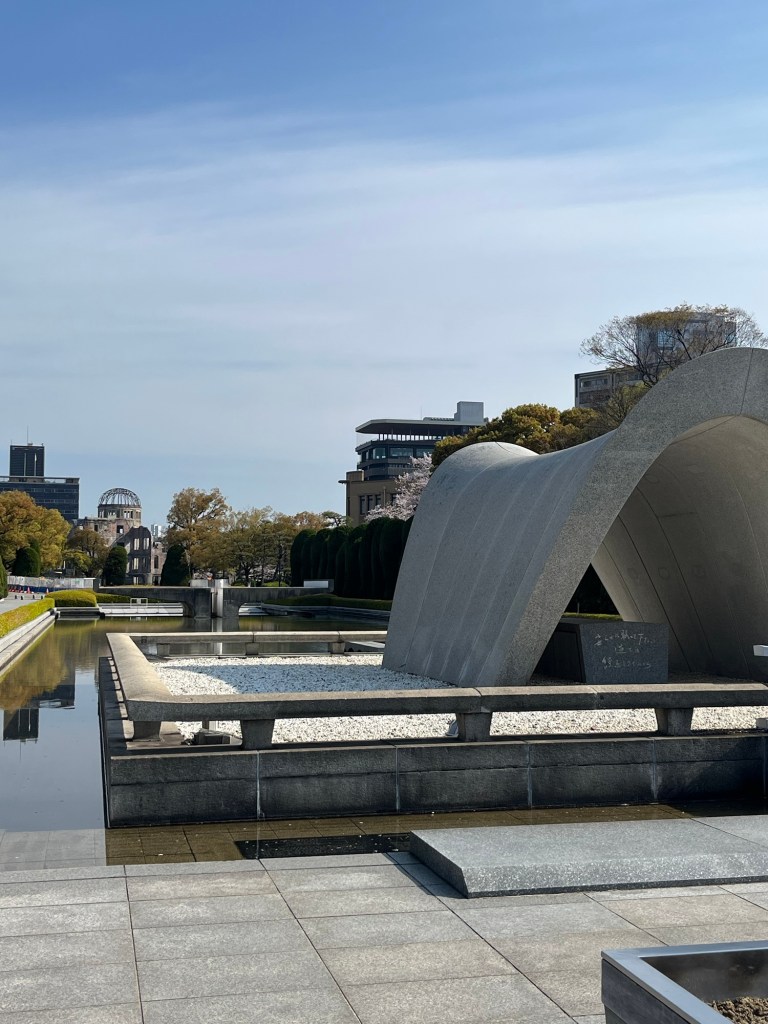
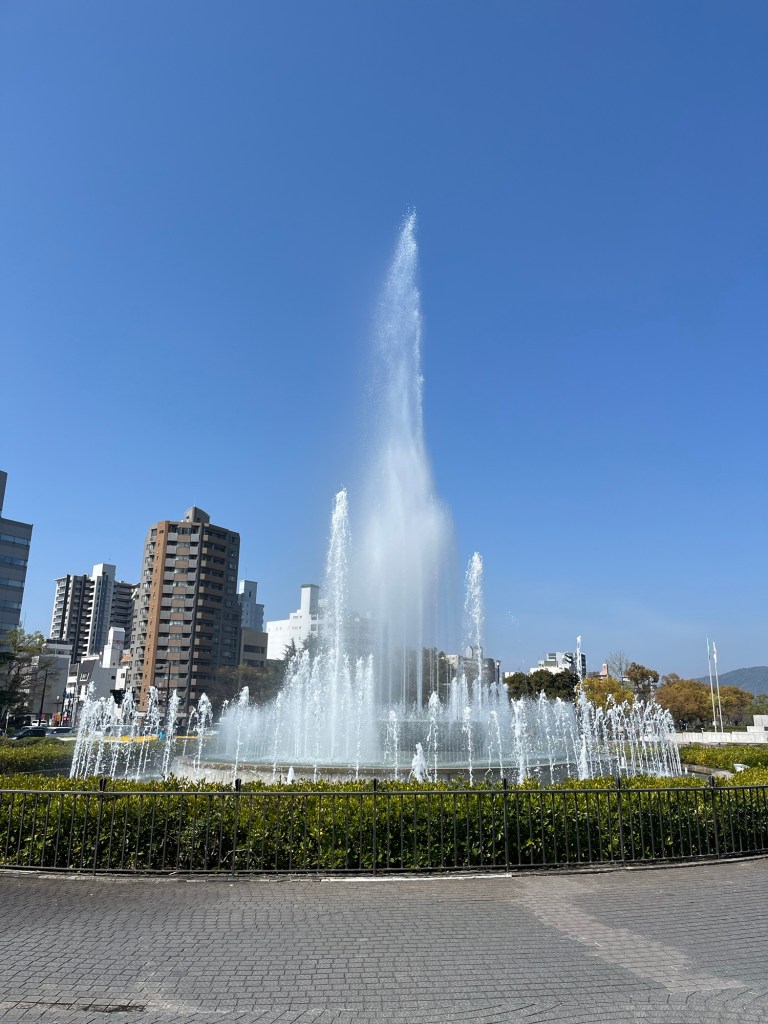
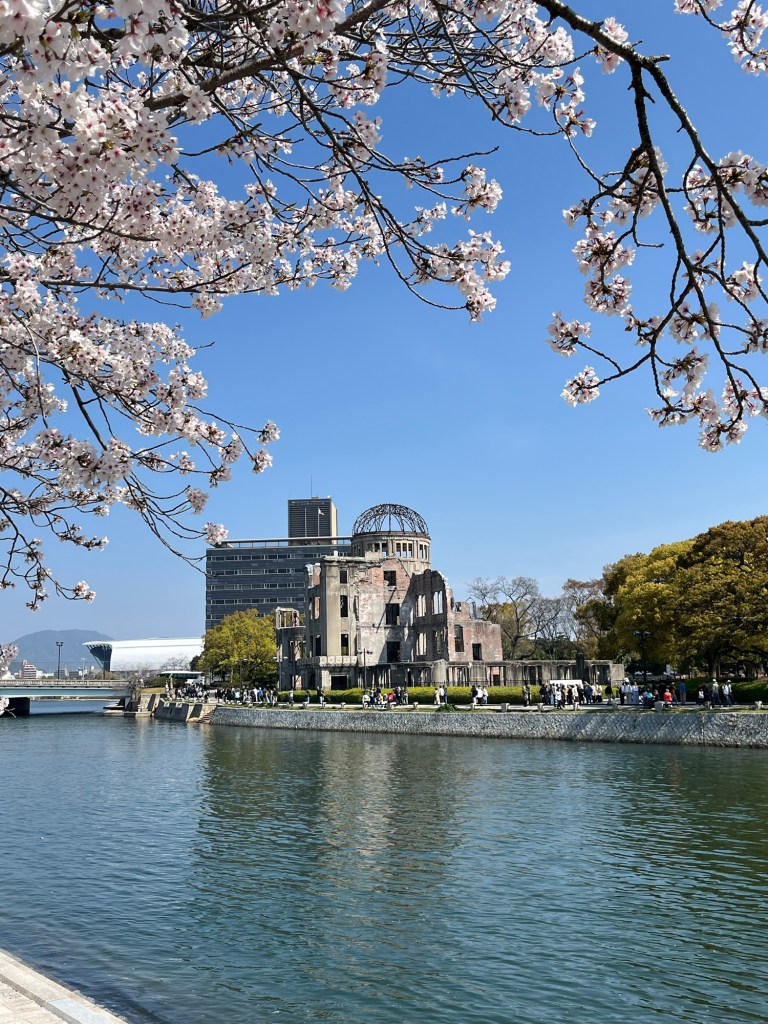
After dinner we walked back to the hotel via the peace park and the A-Dome, which is lit up at night. The atomic bomb went off directly above the building now known as the A-Dome, which ended up preserving the structure of this building when everything else in the vicinity was destroyed.
We started the next day with a visit to the Peace Memorial Museum, a must-do in Hiroshima. We learned about the devastating impacts of the bomb on Hiroshima, and on the people who survived the initial blast who subsequently became ill, in some cases years afterwards. It was a very sobering visit.
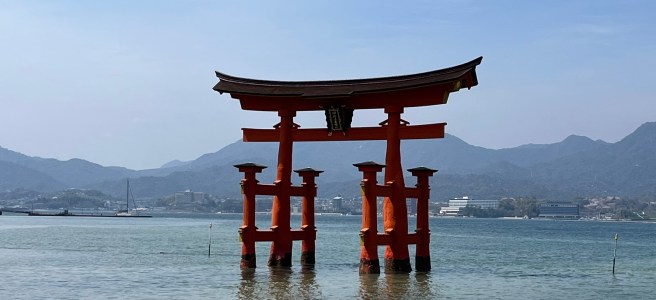
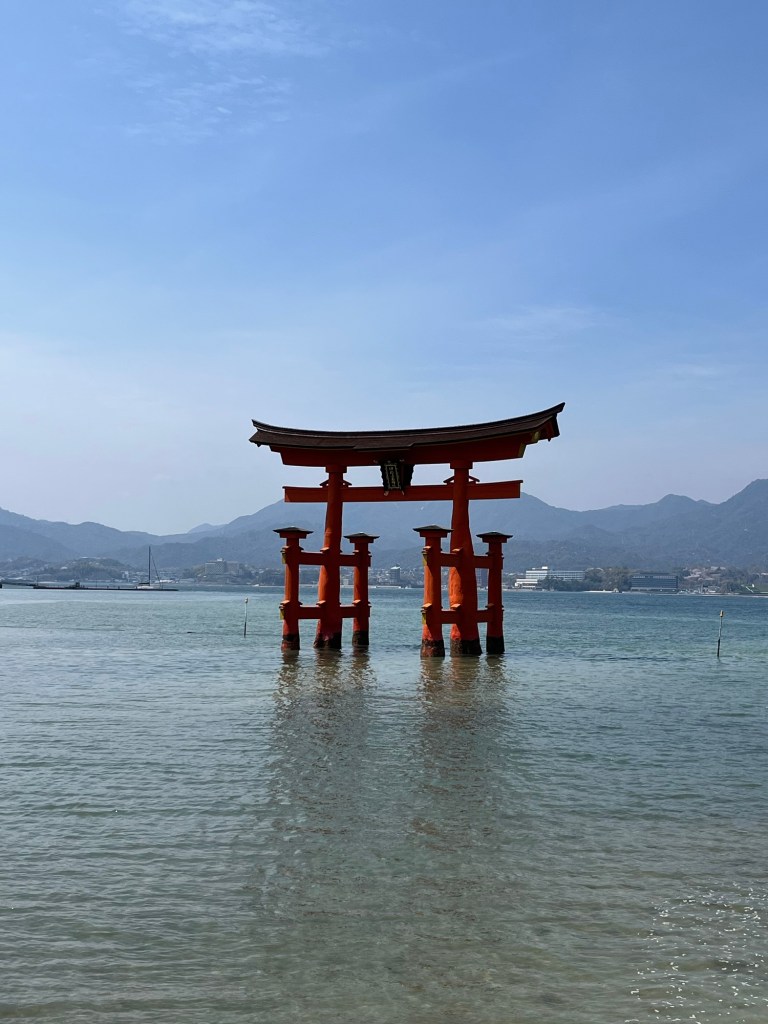
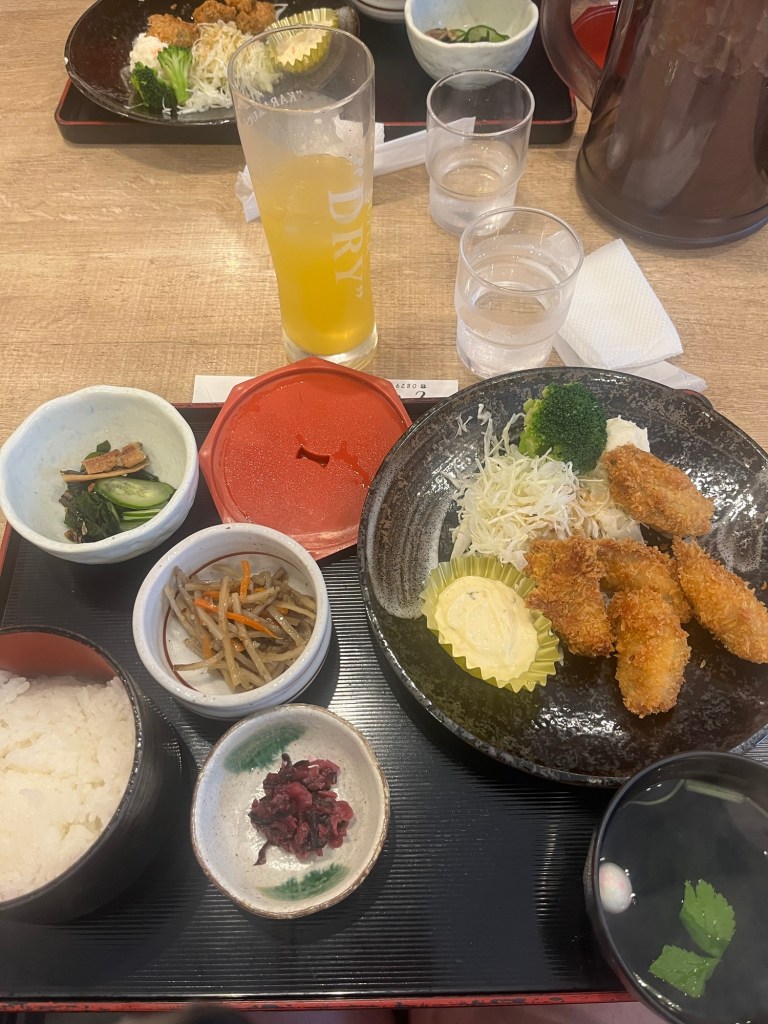
We then took a train and a ferry to the nearby island of Miyajima, which had a ‘floating’ torii gate (certainly when the tide is in). The sun was out and it looked idyllic. Deer roam around the town and were stealing food so we opted for an indoor lunch – deep-fried oysters which were really good.
After some time wandering around the town and the souvenir shops in the afternoon, we got back on the ferry and train back to Hiroshima. A few drinks in a pub definitely catering to tourist groups, and then a delicious bowl of ramen to round off the day.
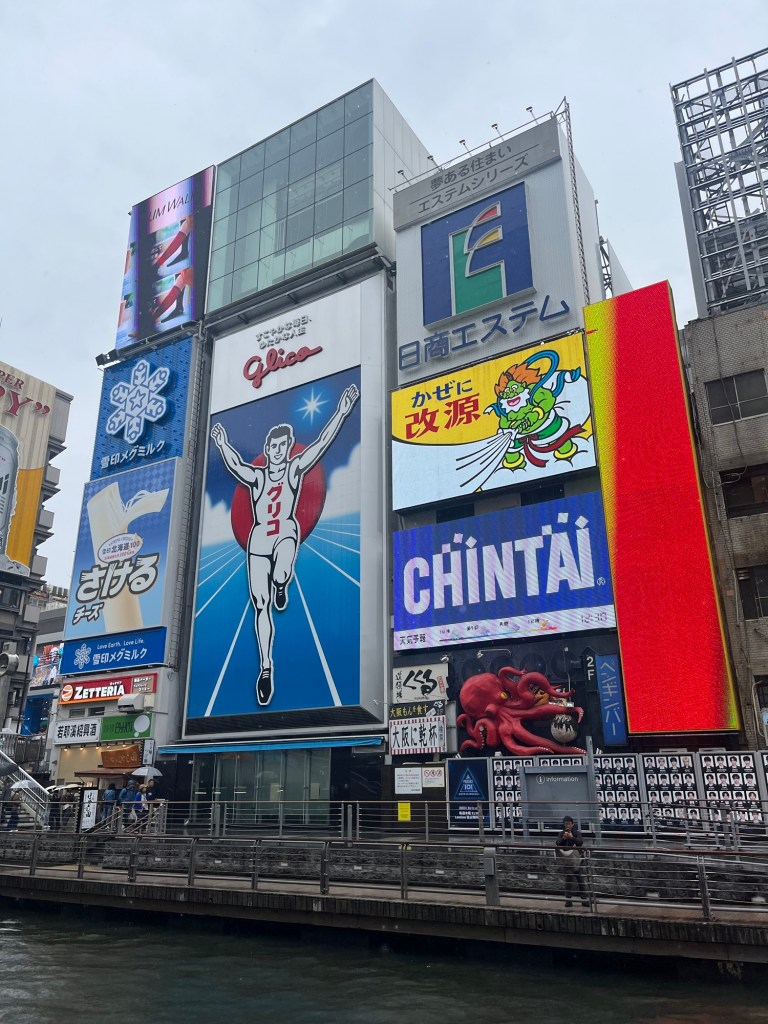
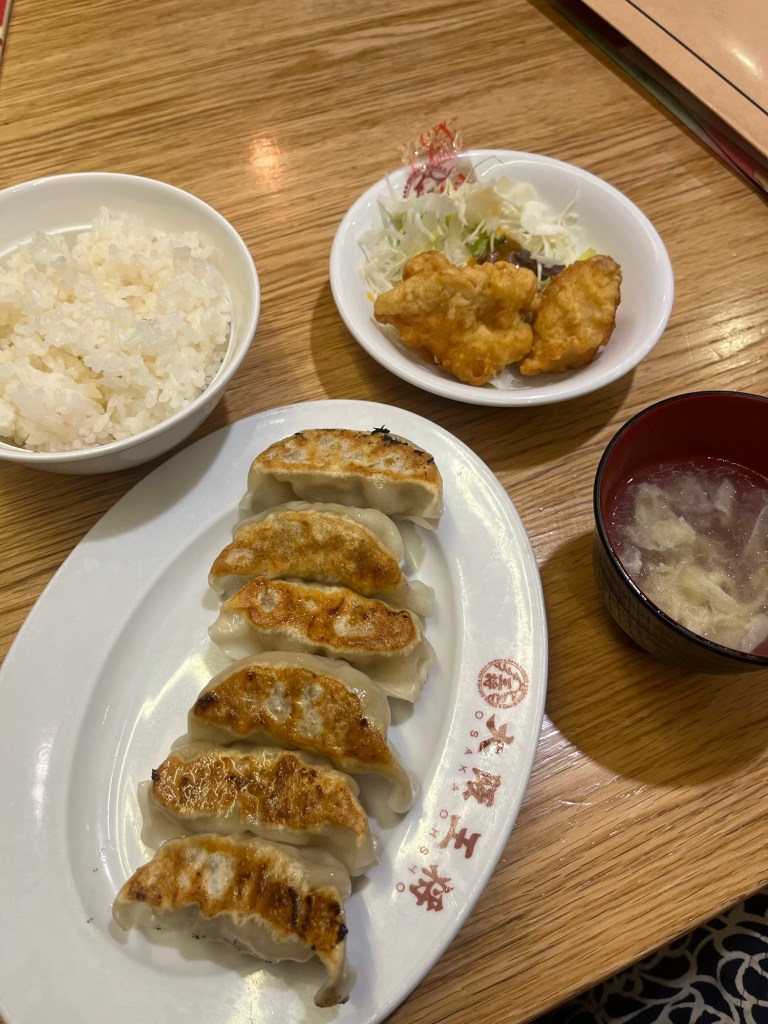
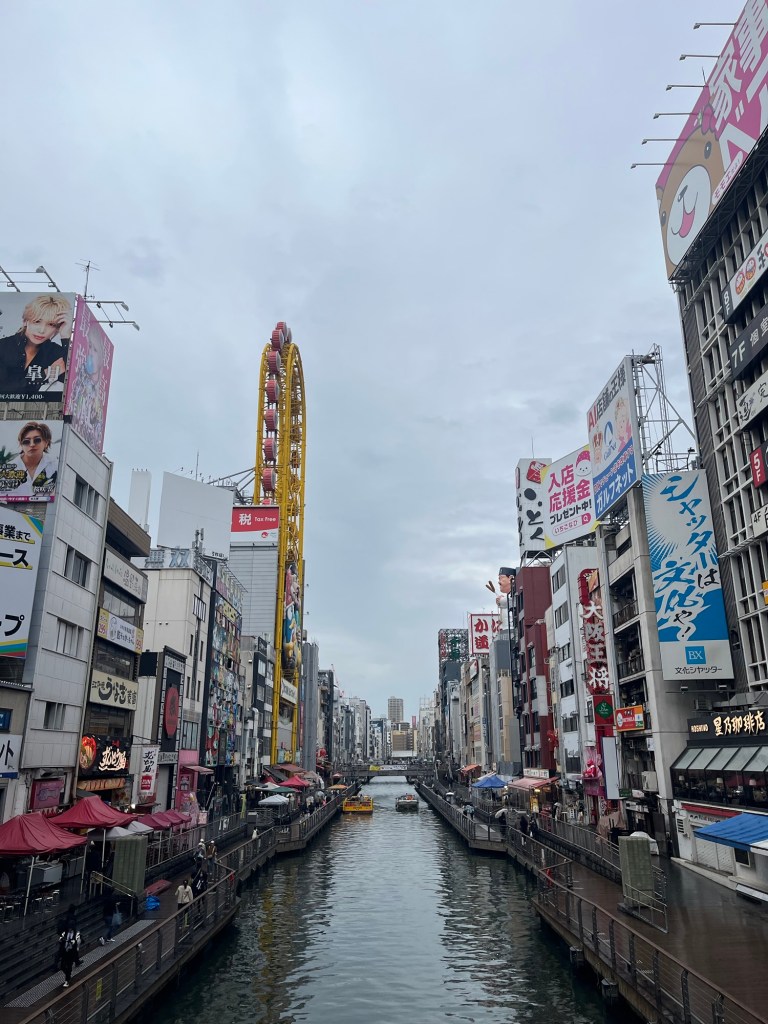
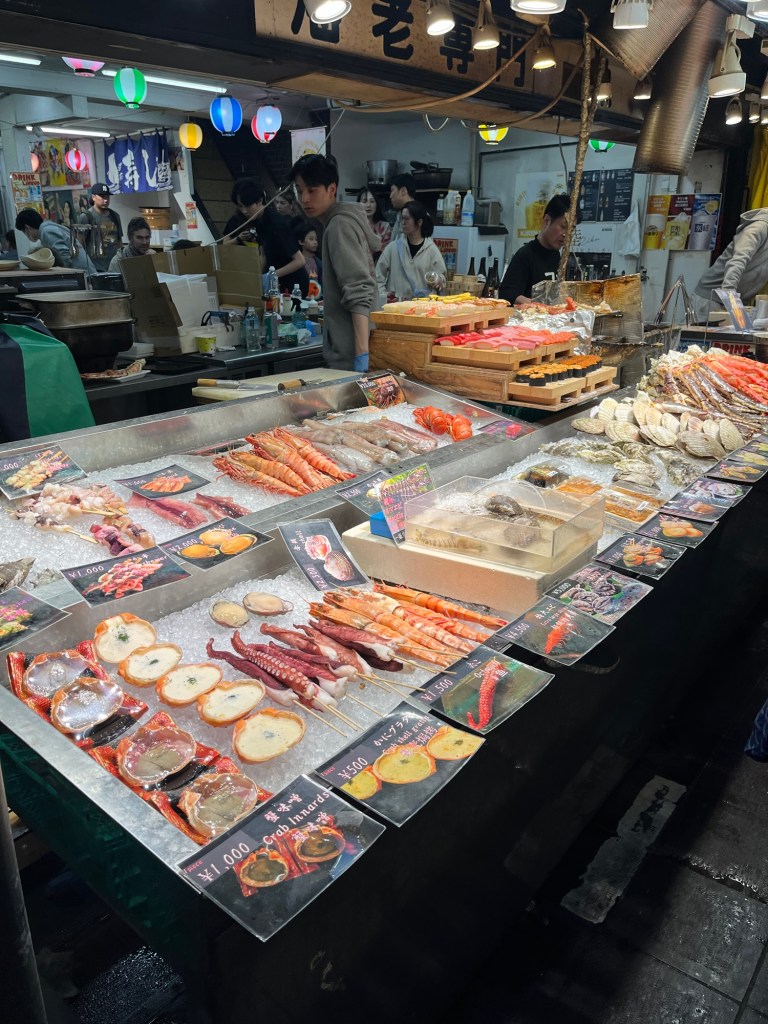
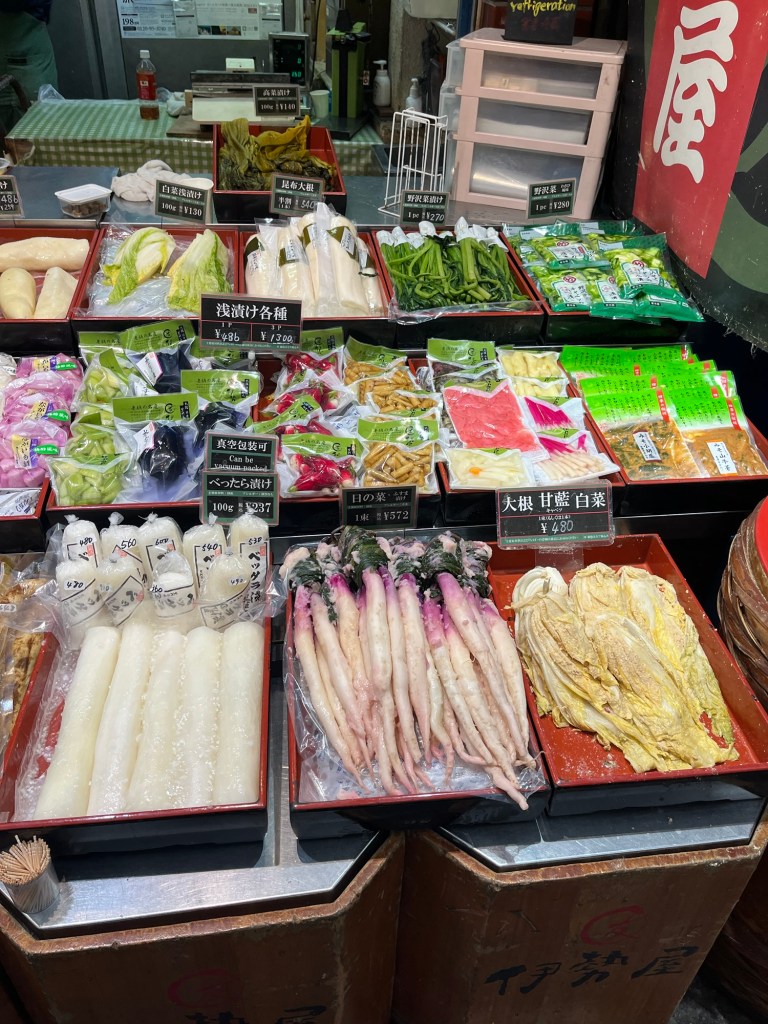
Another day, another Shinkansen. This time to Osaka. Again we arrived before lunchtime, and after dropping our bags at the hotel, we headed out in the rain to the Dotombori area. This area has restaurants and bars with slightly outlandish facades, it reminded me a bit of downtown Las Vegas. Gyosa for lunch out of the rain, and then a walk through Kuromon Market which has loads of street food stalls. Japanese street food etiquette is a little different to elsewhere as you don’t eat and walk at the same time, you buy your food and stand by the vendor to eat it and then dispose of any waste in their bin.
We also went into a gaming arcade and had a quick go at Mario Kart which was a lot of fun!
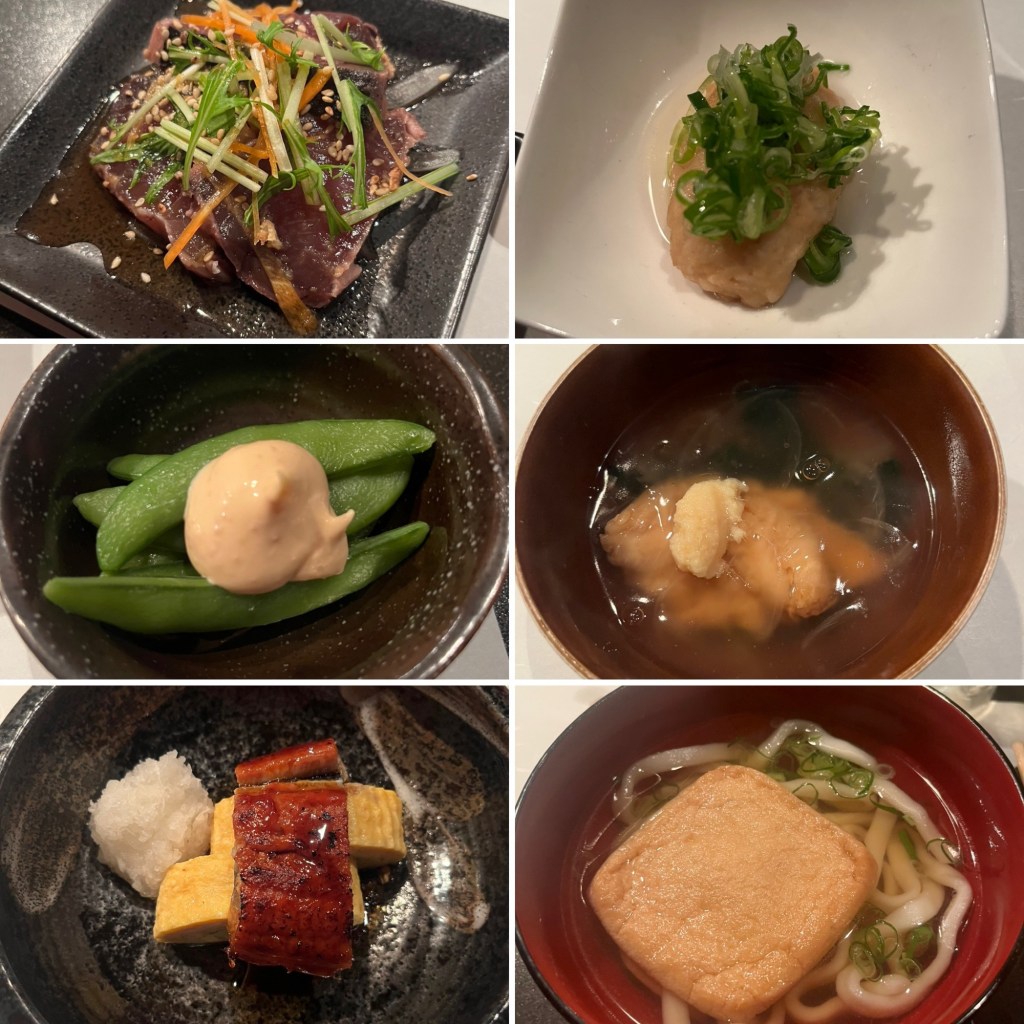
This evening in Osaka was the final night of the first part of my Japan trip. We had a lovely group dinner at a small restaurant and had a Japanese tasting menu – a kaiseki. So much food!! And it was all delicious.
We rounded off the night with karaoke – has to be done in Japan!
Next is was back to Tokyo to meet the much smaller group for the second part of my Japan adventure.
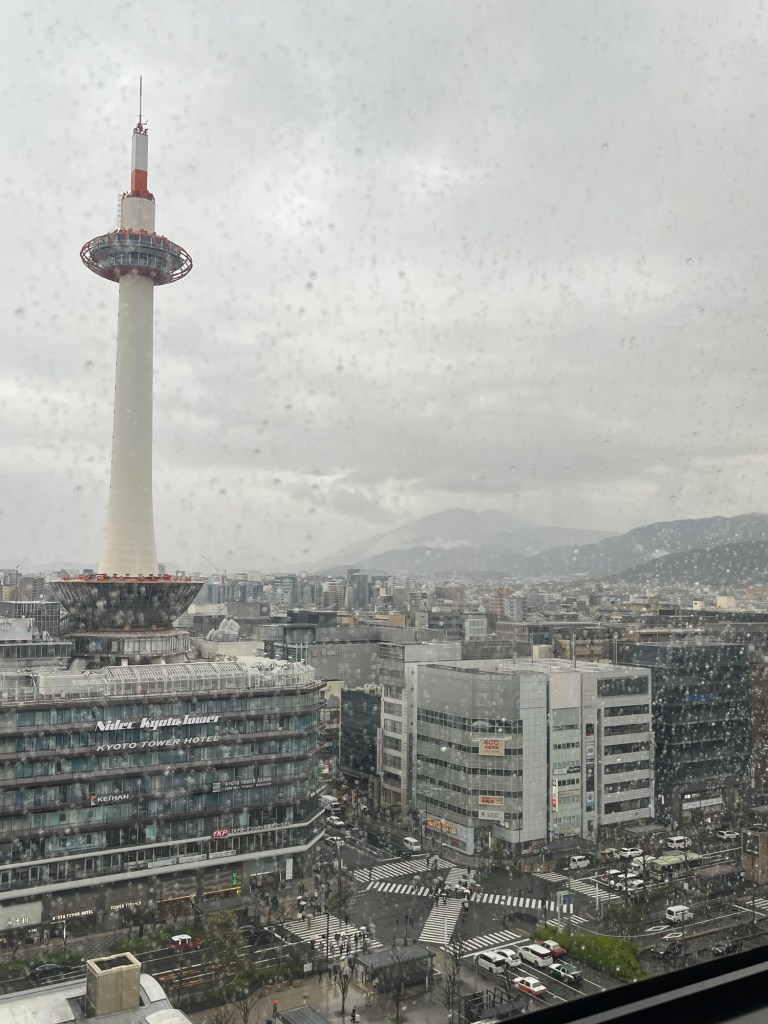
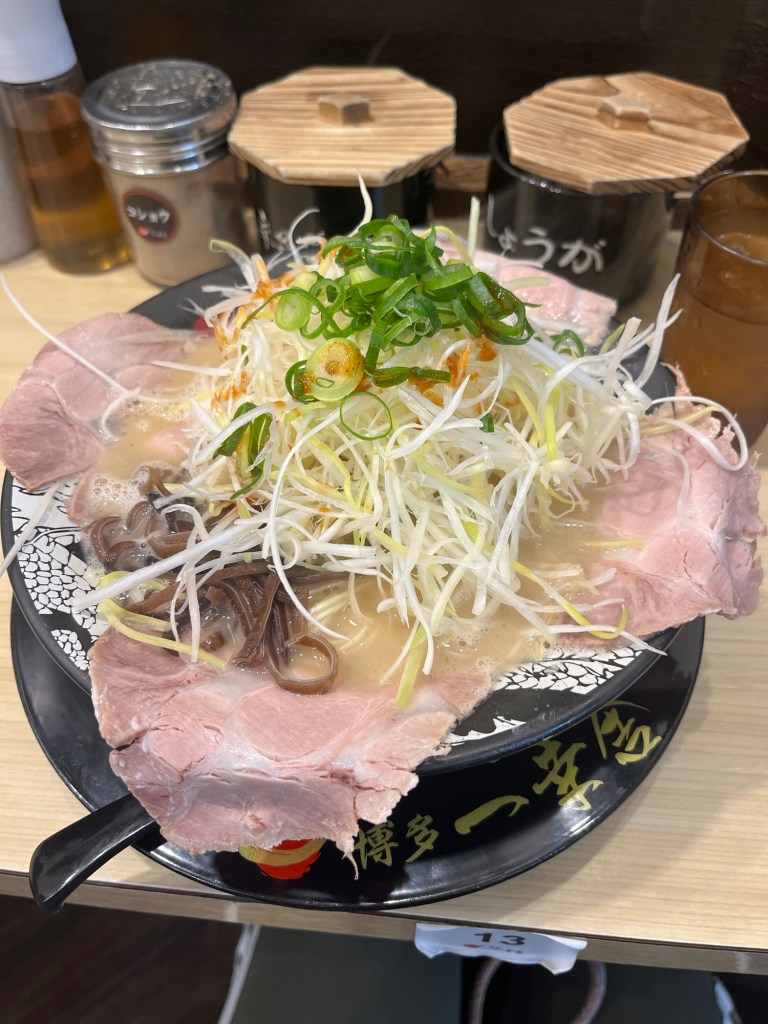
A bus and 4 trains from Kawane and we arrived into Kyoto at lunchtime. The train station in Kyoto is absolutely massive, like an airport really, and it has quite a spectacular roof. We went for lunch at a shopping centre attached to the station where there was a ramen floor with lots of small restaurants, holding probably no more than a dozen people each. You ordered from a screen and waited your turn to be seated.
Rainy views of Kyoto and Kyoto tower from Kyoto station skyway Delicious pork ramen
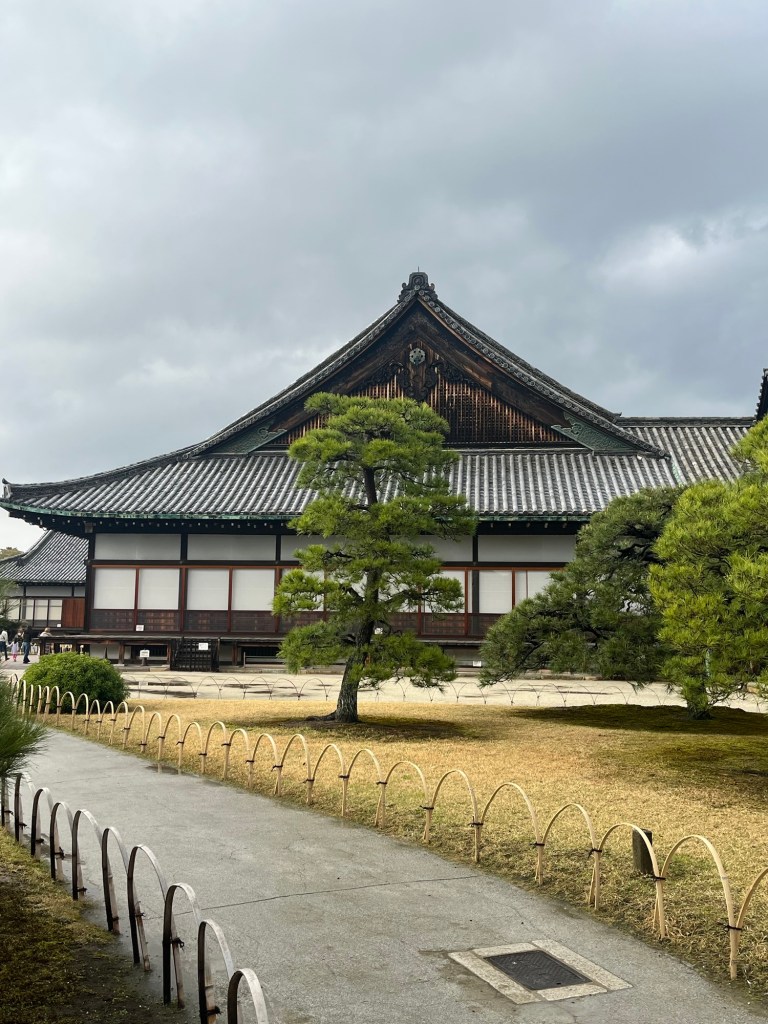
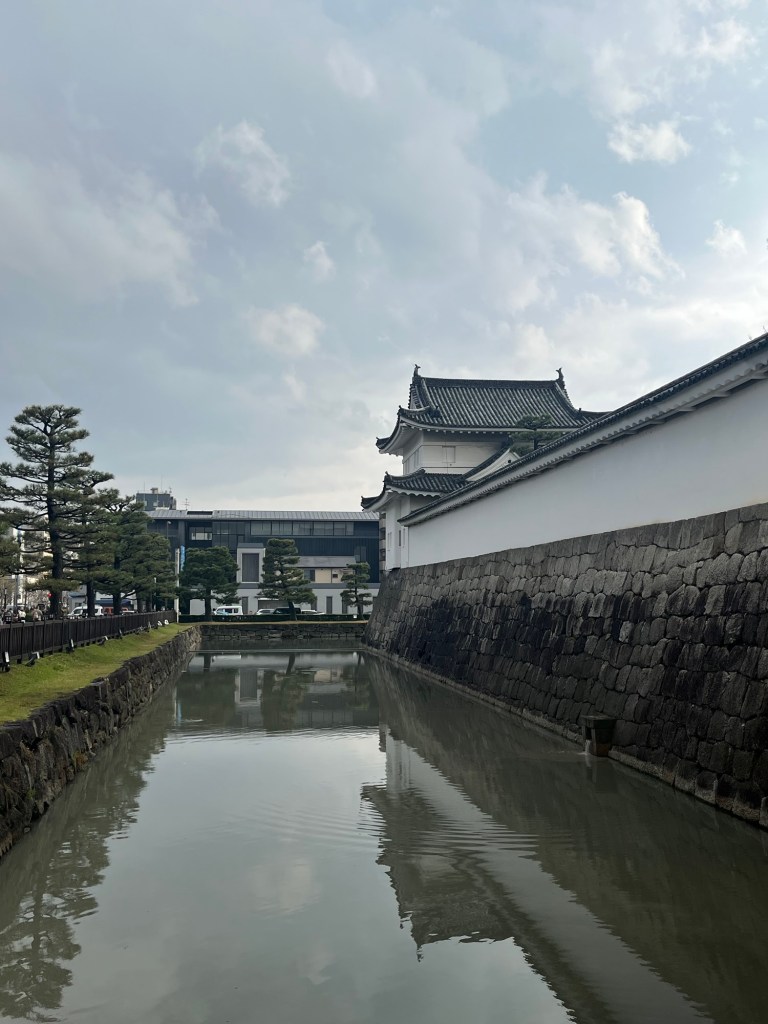
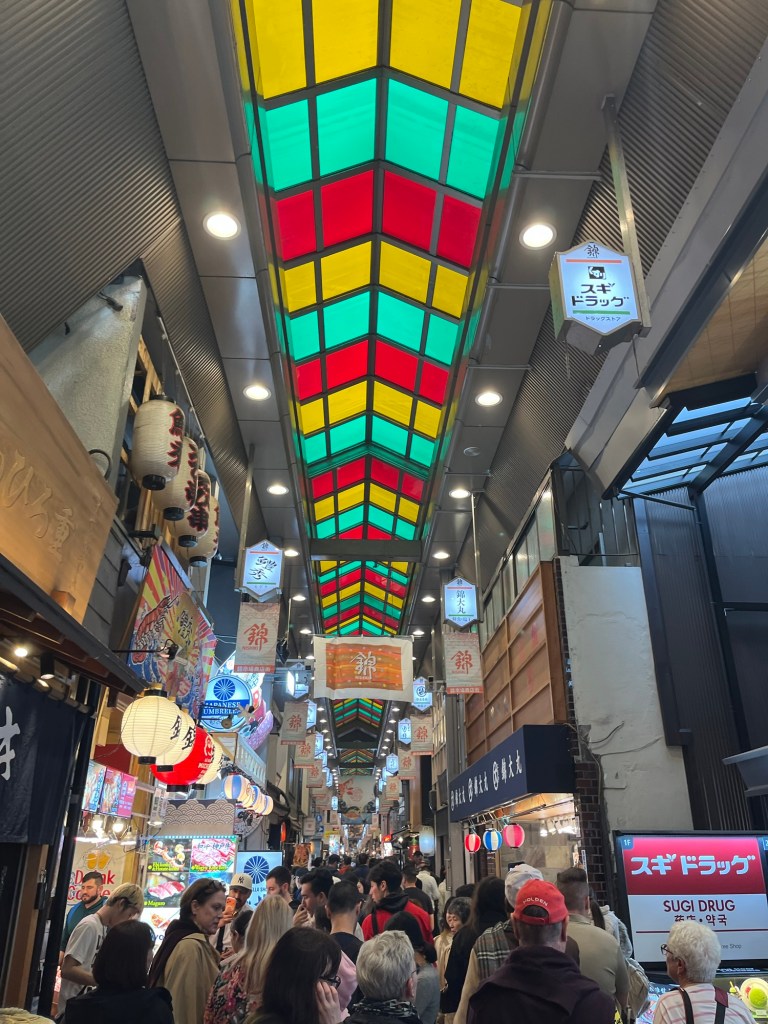
After refuelling we headed to the hotel and had some free time. It was, sadly, raining but I couldn’t just sit in the room so my roommate and I went for a little walk to nearby Nijō-jō Castle. Inside there are these incredible paintings of trees and animals, including leopards which the artists had never seen in real life and were drawing based only on hides. They also have ‘nightingale corridors’ which sound like nightingales as the floorboards creak as you walk along, which was to deter intruders. Really cool. Unfortunately we hadn’t quite given ourselves enough time before both the castle closed and we were meeting up with the rest of the group for a walk through Nishiki Market on our way to dinner.
Nijō-jō castleNijō-jō castleNishiki market
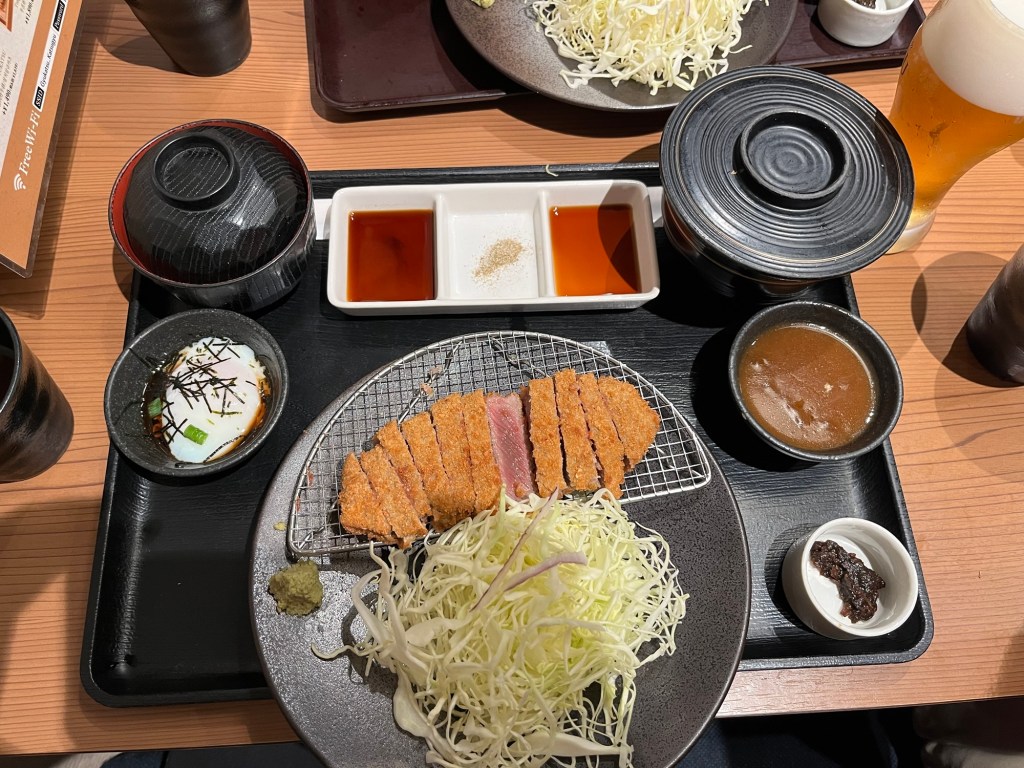
Our leader on this tour is a bit of a foodie and is taking us to lots of different places to try as many different types of Japanese food as possible, which I am extremely grateful for. Tonight we went Gyukatsu Kyoto, for breaded katsu beef steak (gyukatsu), which you can then cook to your own liking on the table in front of you.
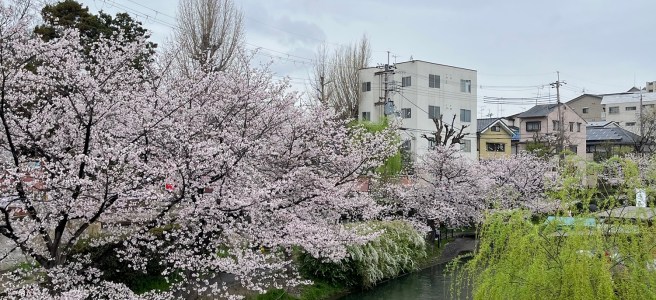
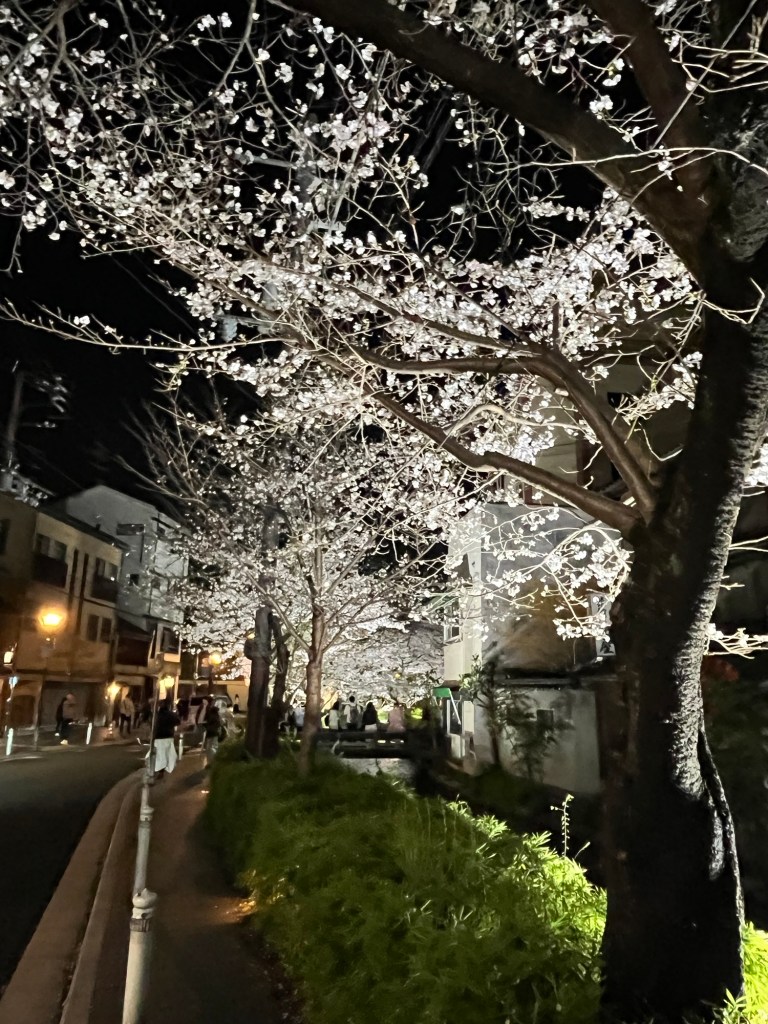
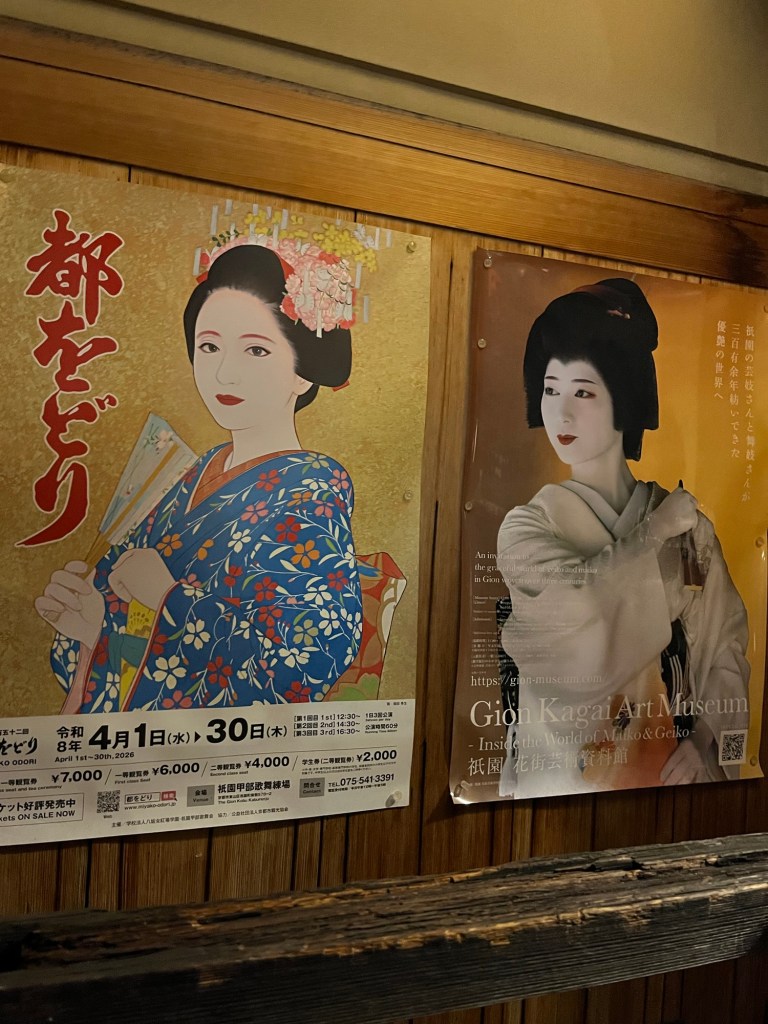
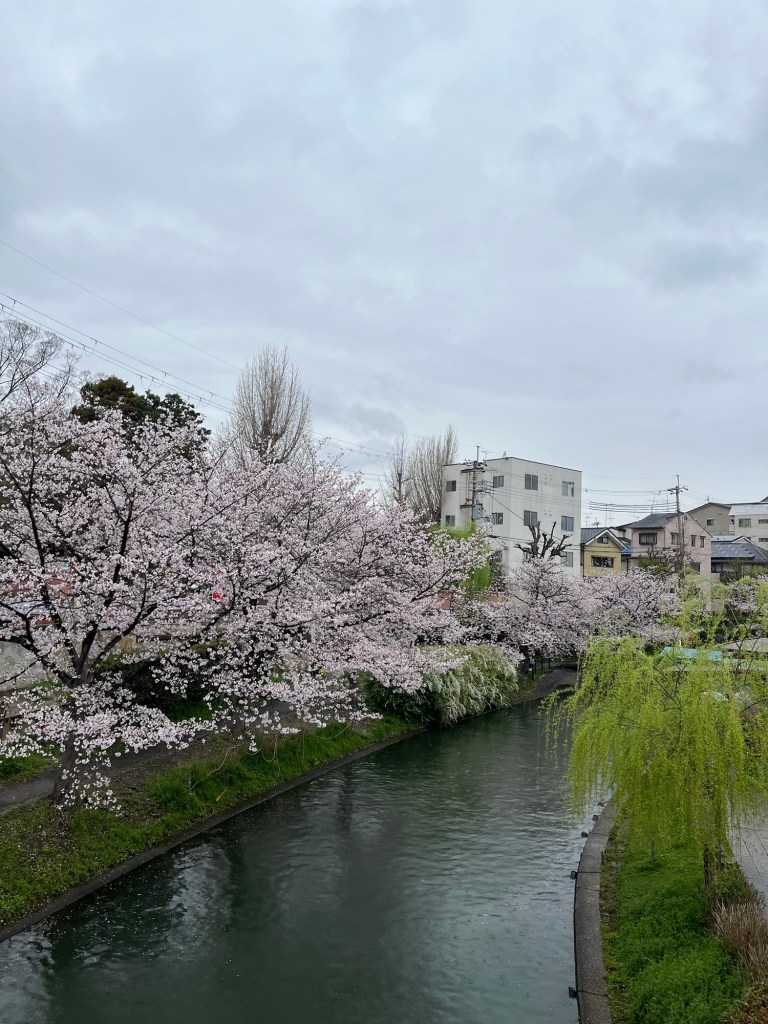
After dinner it had just about stopped raining and we walked past more cherry blossom-lined streets, into the Gion district which is where Geiko and Meiko’s (geishas) work. However, due to tourists being too intrusive, you no longer see them wandering around the streets so we didn’t see any in person. The evening finished with a drink on a rooftop bar with great views over the city.
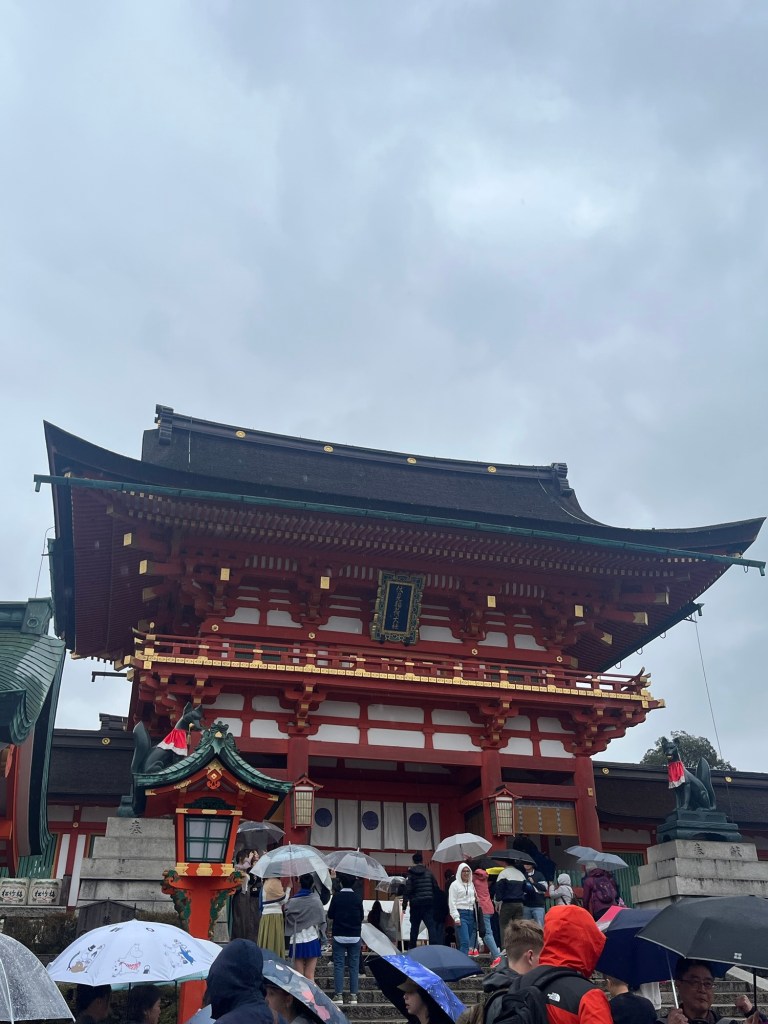
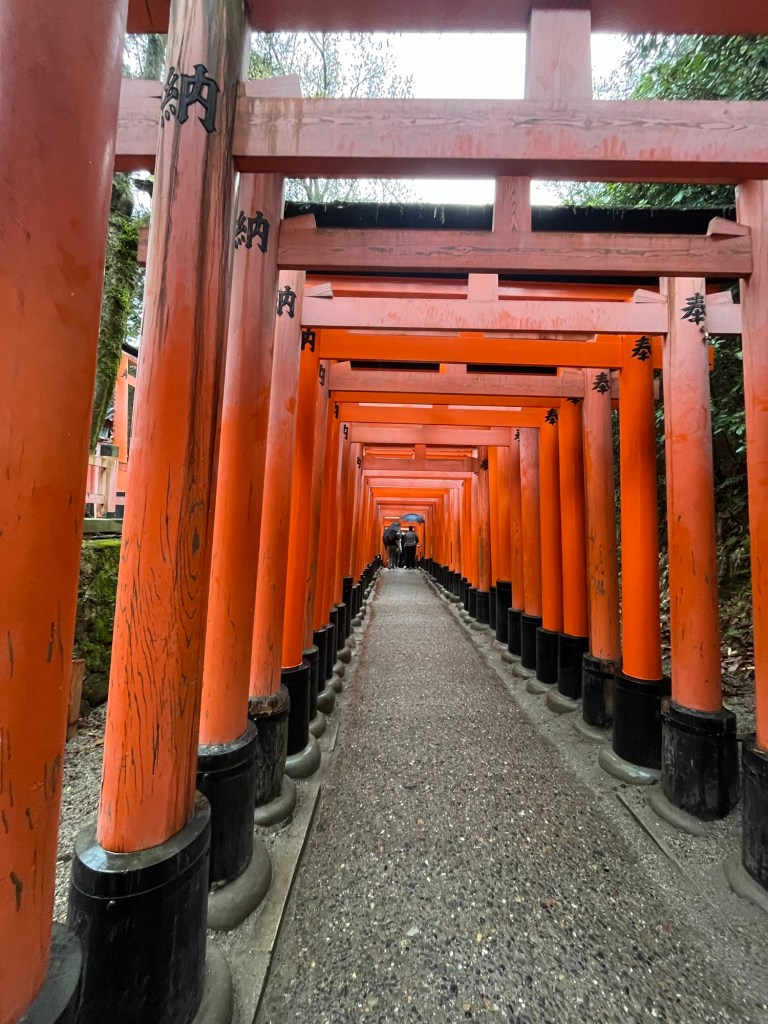
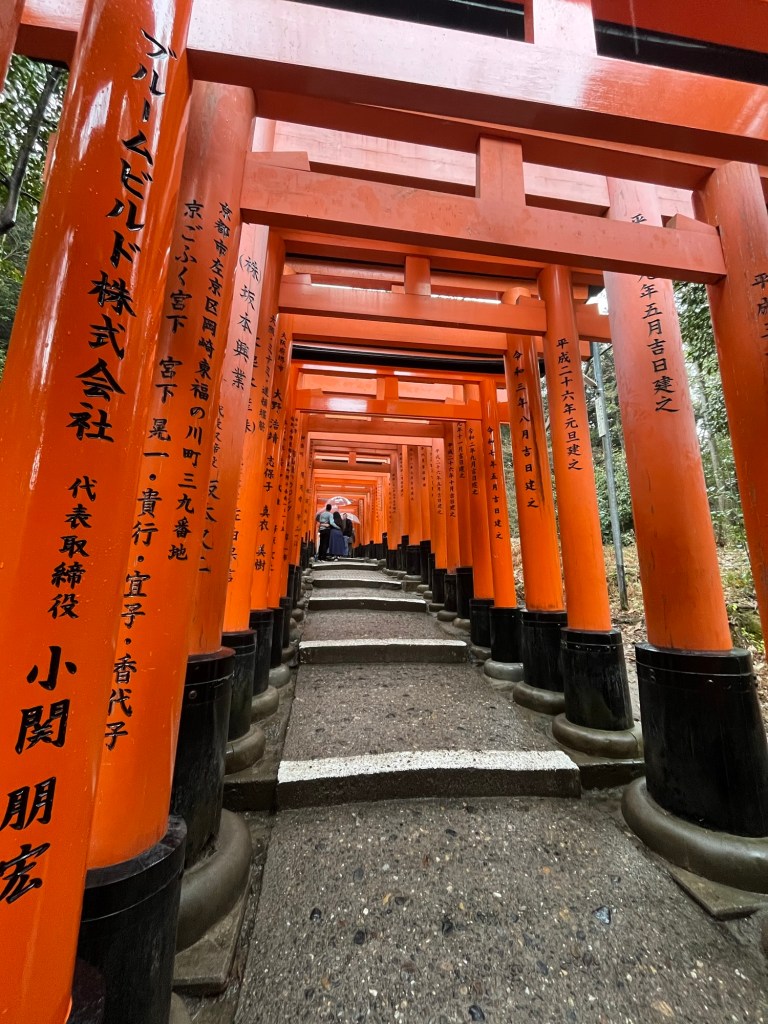
The next day was a reasonably early start (sadly still in the rain, the poncho came in handy) to take the train out to Fushimi Inari Taisha shrine. This shrine is dedicated to Inari, the god of rice, and has hundreds of scarlet red/orange torii gates which look so picturesque. The writing on them looks really cool as well, though apparently it is just the names of people and companies who have sponsored each of the torii gates!! It’s a good idea to get there early as it was very busy despite the rain. The torii gates create a long walkway up the hill and the further up you get, the fewer people you encounter.
Fushimi Inari Taisha shrineTorii gates at the shrineTorii gatesCherry blossoms in Kyoto
We went to a sake museum after this, to escape the rain and learn about how sake is made. We also had a tasting afterwards of 3 different sakes. I’ve actually never had sake before, and if I’m honest, I’m not entirely sure I like it. I preferred the more fruity ones, there was quite nice melon-y flavoured one, but I think I’ll stick to wine given the choice!
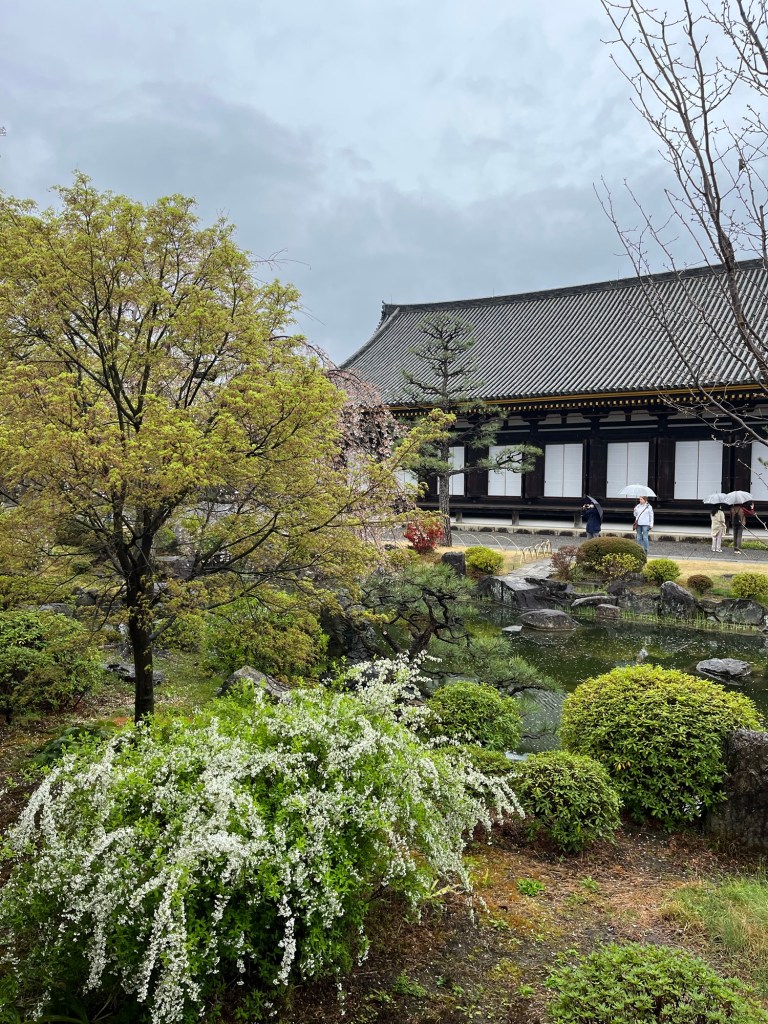
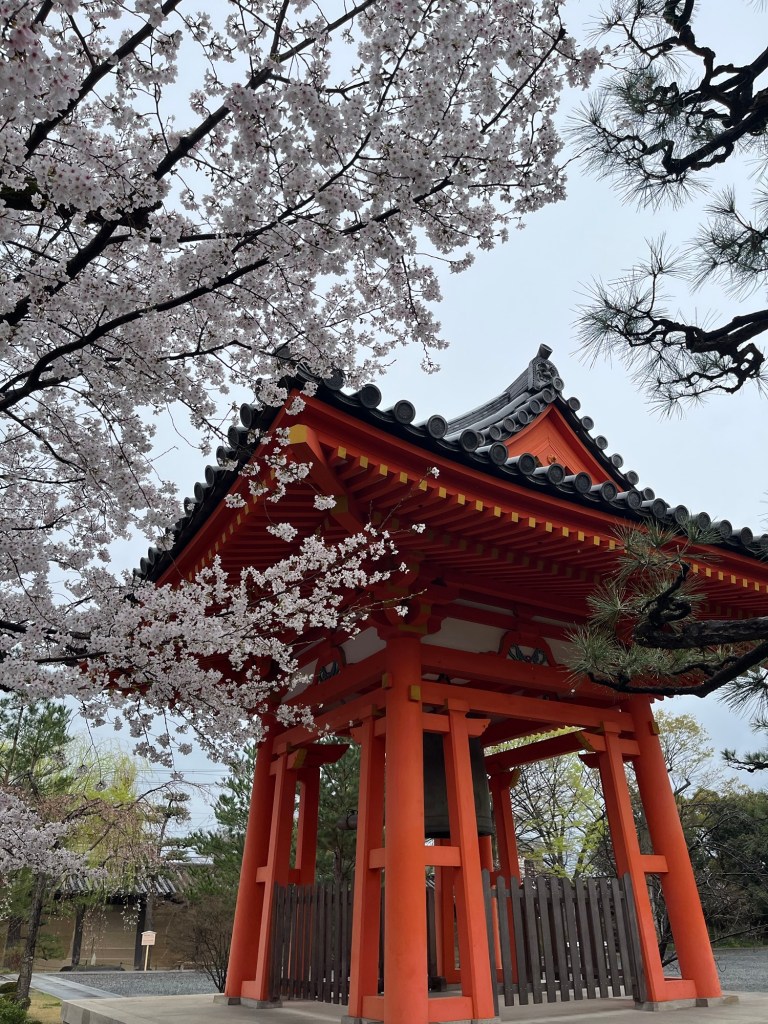
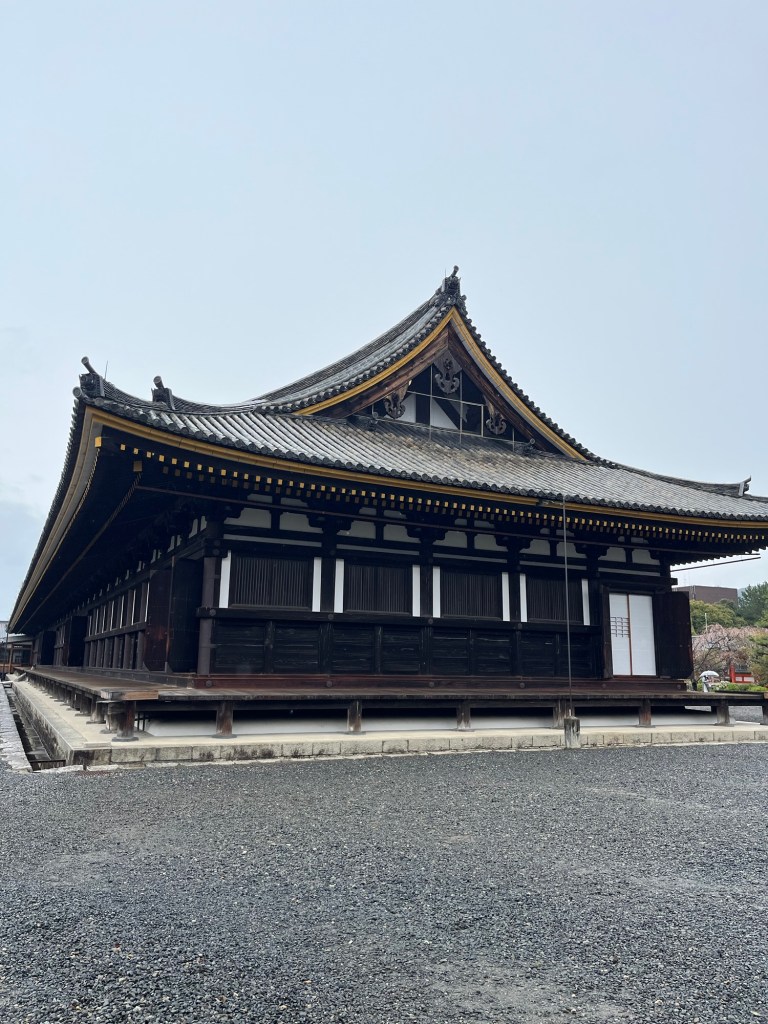
After lunch in a food hall in the basement of Kyoto tower, we had a free afternoon. It was still raining, and whilst most of the group retreated back to the hotel, I went to visit Sanjusangen dō, temple containing 1000 Buddhas. It’s really quite the sight as you walk into the main hall where all the Buddhas are lined up in neat rows, the length of the room. No photos inside but outside in the gardens, the blossoms are out so armed with my poncho and brolly, I wandered though the gardens for some photos.
At Sanjusangen dō
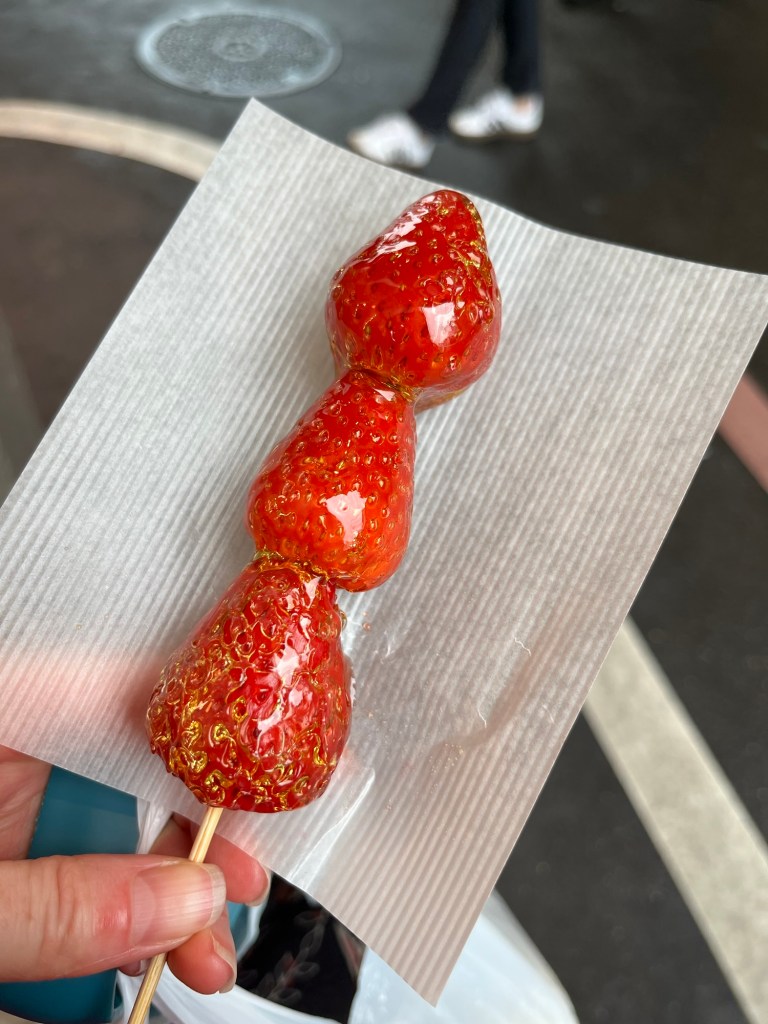
On the way back, I made a pit stop in Nishiki market for some candied strawberries. It’s strawberry season here and these strawberries were so sweet even after cracking the sugar-coating. Delicious!
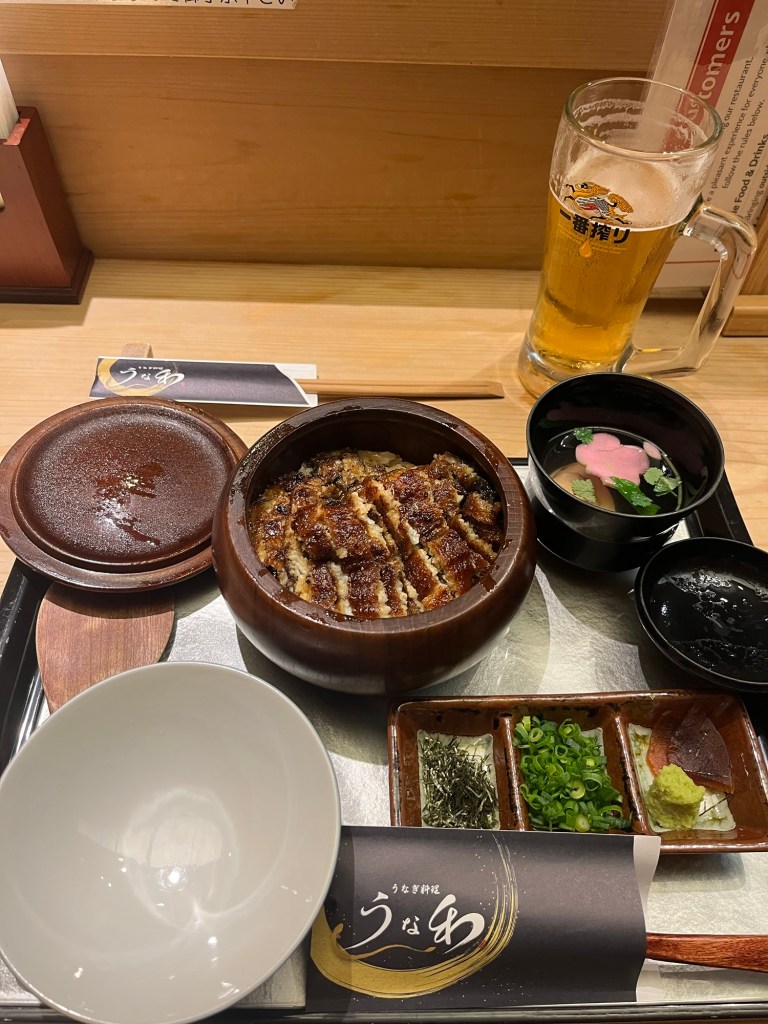
That evening for dinner I had eel, cooked over charcoal. This was my first time eating eel and I’d imagined it would have a texture similar to squid, but it was much more like a white fish in texture. I really enjoyed it. The restaurant, like most I’ve been to in Japan, is very small, often sitting at counters, and maybe holding slightly too over a dozen people in total.
Strawberry candiesEel
This was our last evening in Kyoto – an all too brief visit as there is so much to do and see here. I already feel like I will come back here one day to see more. Kyoto is a big and busy city but I really liked it.
Japan, the final leg of this part of my travels, and somewhere I’ve wanted to visit for a very long time. The flight from Hong Kong was just about 4 hours, and I’d arrived to Narita airport, east of Tokyo, in the evening. This immigration queue has beaten Hong Kong for the longest on my trip but it moved very efficiently. I would definitely recommend filling out the online arrival immigration and customs form in advance of arrival as it saves a lot of time, though you can still fill out a paper form at the airport.
As I was arriving into Narita in the evening, I had booked an hotel close to the airport as I didn’t want to try and navigate the Japanese rail system to get me into Tokyo late at night. This was definitely a good decision after a long travel day as I got into my hotel room after 9pm.
After a decent nights sleep, a bath, and a play with the fancy Japanese toilet, I was refreshed and ready to figure out how to get the 40 or so miles (65km) from Narita to my hotel in the Ueno area of Tokyo.
I headed back to the airport to get the Skyliner train to Ueno station, and then took a local JR train to the station nearest my hotel. Google maps has been so helpful here for public transport, and I have been surprised at how much of the transit system signage and audio announcements are also in English. Some of the stations are a little overwhelming as there can be several different types of trains which all require different tickets. But the internet is my friend, and with the help of Reddit, Google Maps and Google Translate, I made it to my hotel about 2 hours after I’d left which I was pretty pleased with.
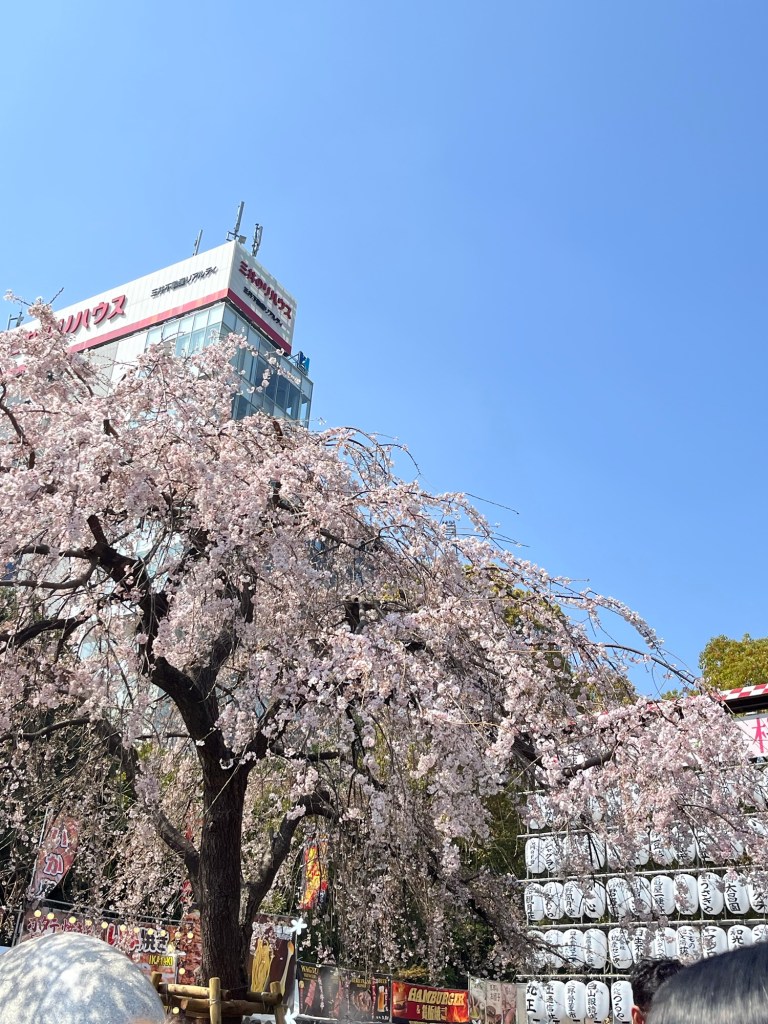
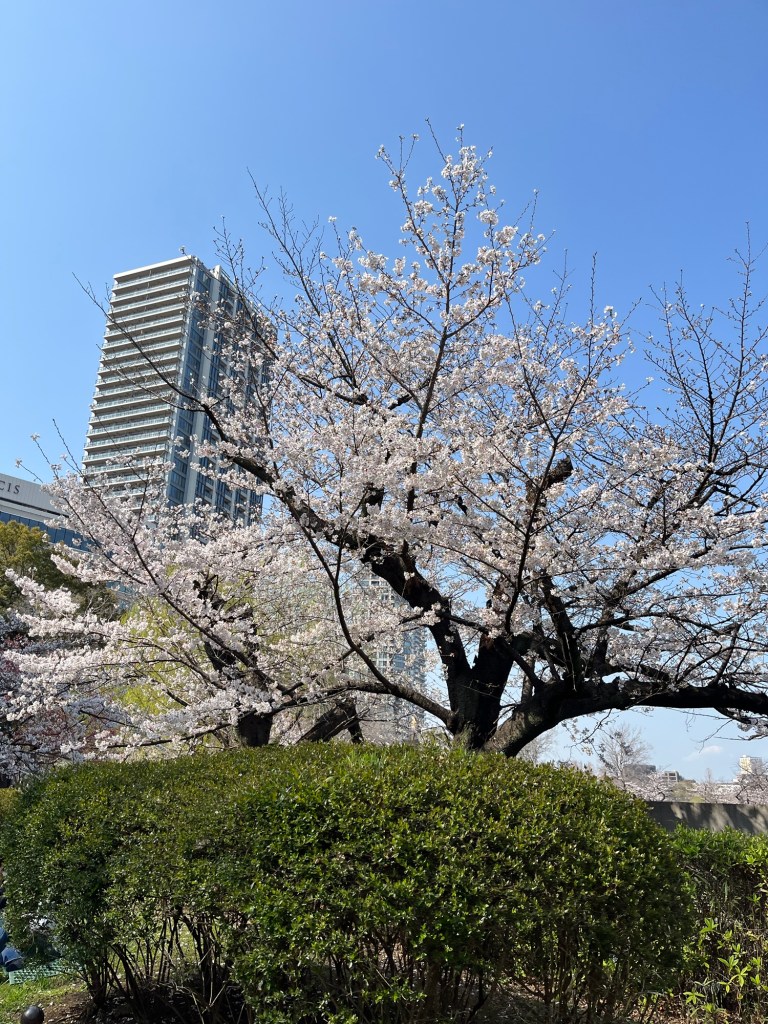
I was too early to check in so after leaving my bags, I walked to nearby Ueno Park, which had helpfully been advertised at me on Facebook the previous evening, telling me they had a Sakura festival on. It was a Saturday and the park was extremely busy, mostly because the Sakura (cherry blossom) was in full bloom in Tokyo at the end of March which I understand is early. Despite it being very busy, it was very orderly to walk up and down to view the cherry blossoms as you are directed to walk on the left and everyone complies. In coming to Japan at this time of year (late March) I was keeping my fingers crossed that I would be able to see cherry blossoms and I was successful on day 1!!
I grabbed a sandwich from 7-Eleven – everyone says that the food in Japanese 7-Eleven’s is amazing and they are not wrong! The best sandwich I’ve had since I left home.
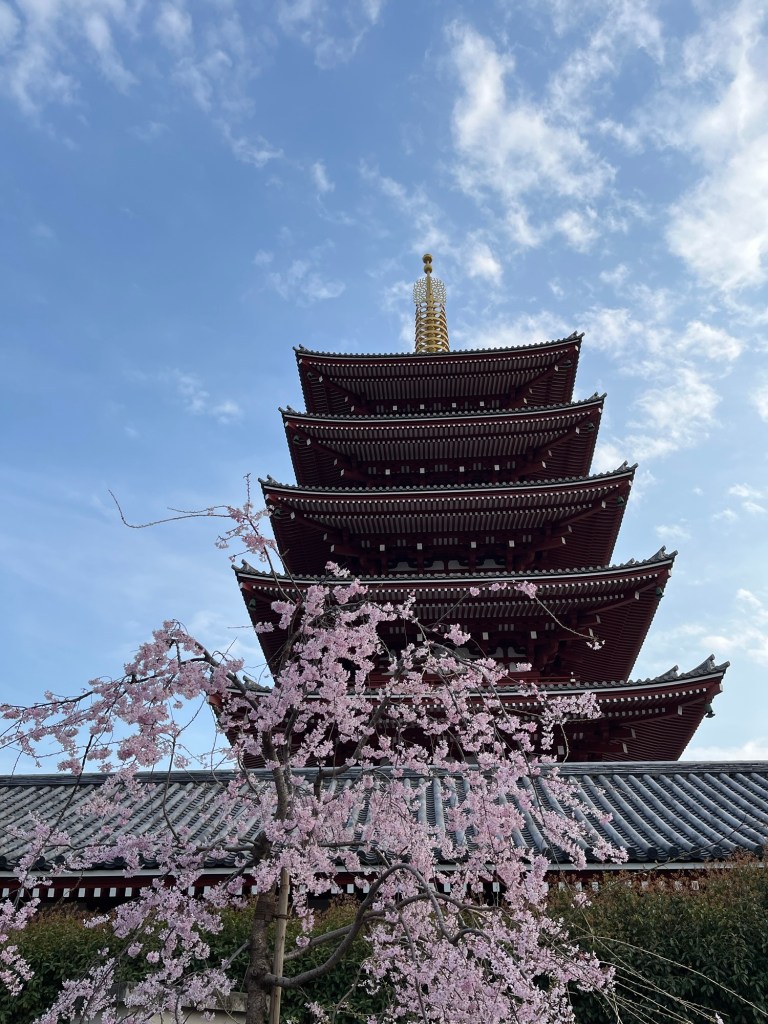
After checking in at the hotel, I still had a couple of hours until the welcome meeting for the trip I’m doing in Japan with Intrepid. I walked to Sensō-ji temple, through the narrow streets of Matsugaya and Asakusa. It was extremely peaceful as I walked, despite it being busy on a Saturday afternoon. Everything is orderly, walking on the left, and everything is immaculately clean. Someone was even hosing down the road near a construction site. It somewhat puts the current state of the UK to shame.
After meeting the group in the evening, we went for a group dinner at a small yakitori place, where helpfully the menu was available in English and we could order on tablets.
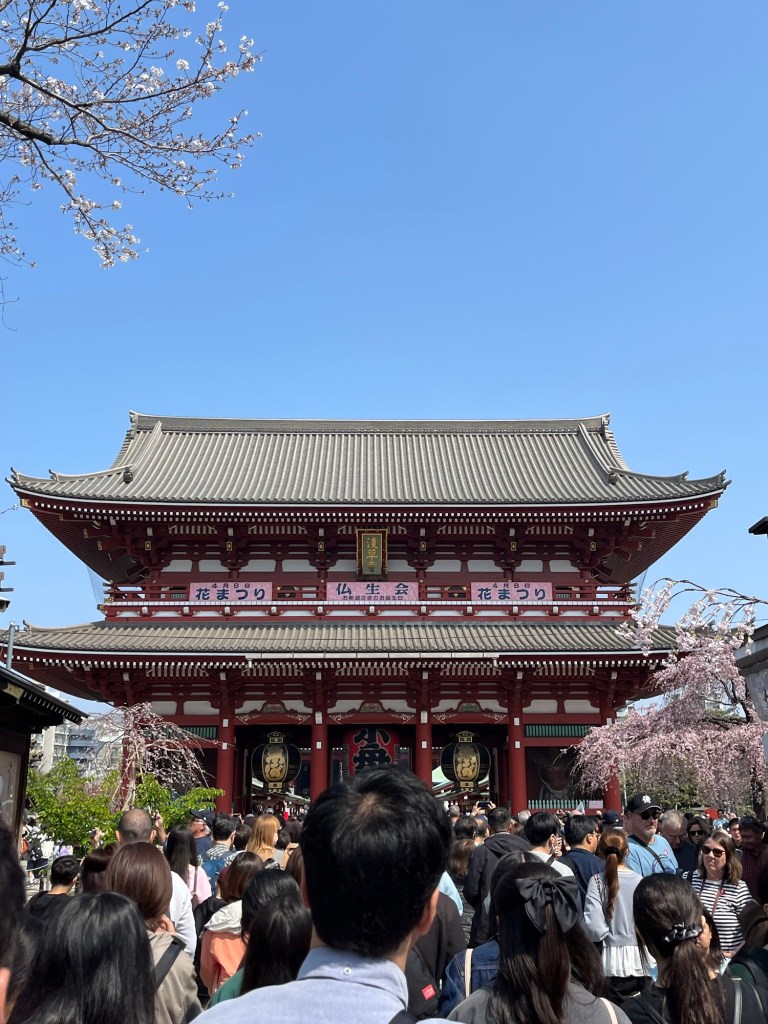
The next day we started with a visit to nearby Asakusa and the Sensō-ji shrine (again!) though this time we approached through all the little stalls and shops which were already heaving with tourists at 10am on a Sunday morning.
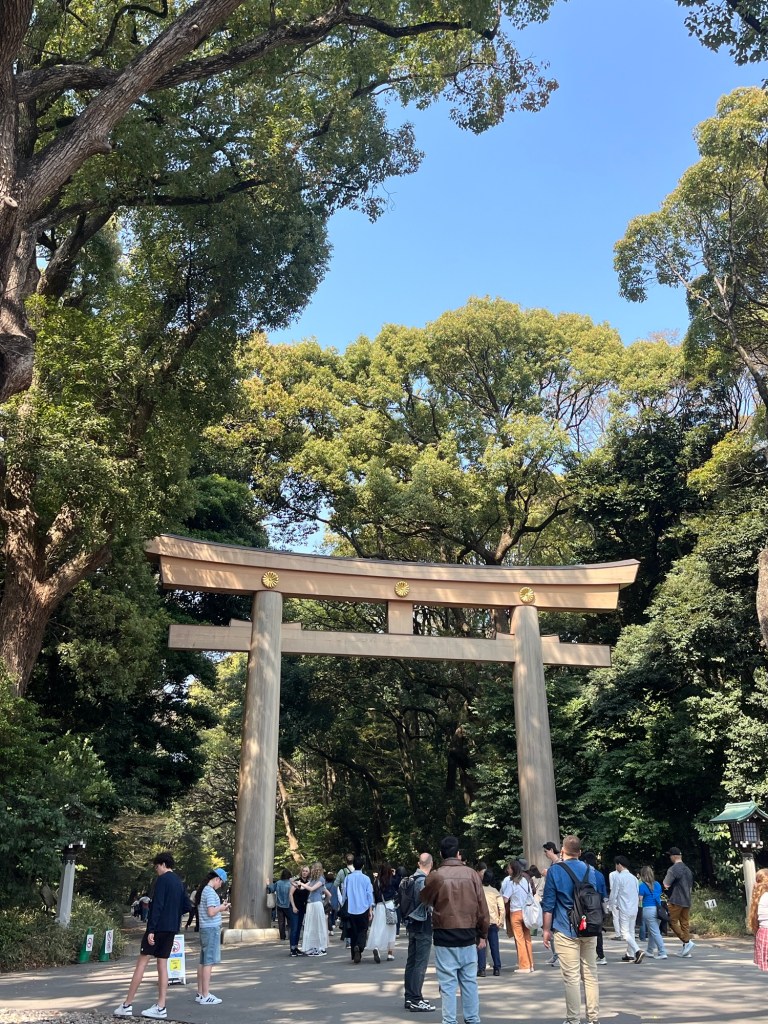
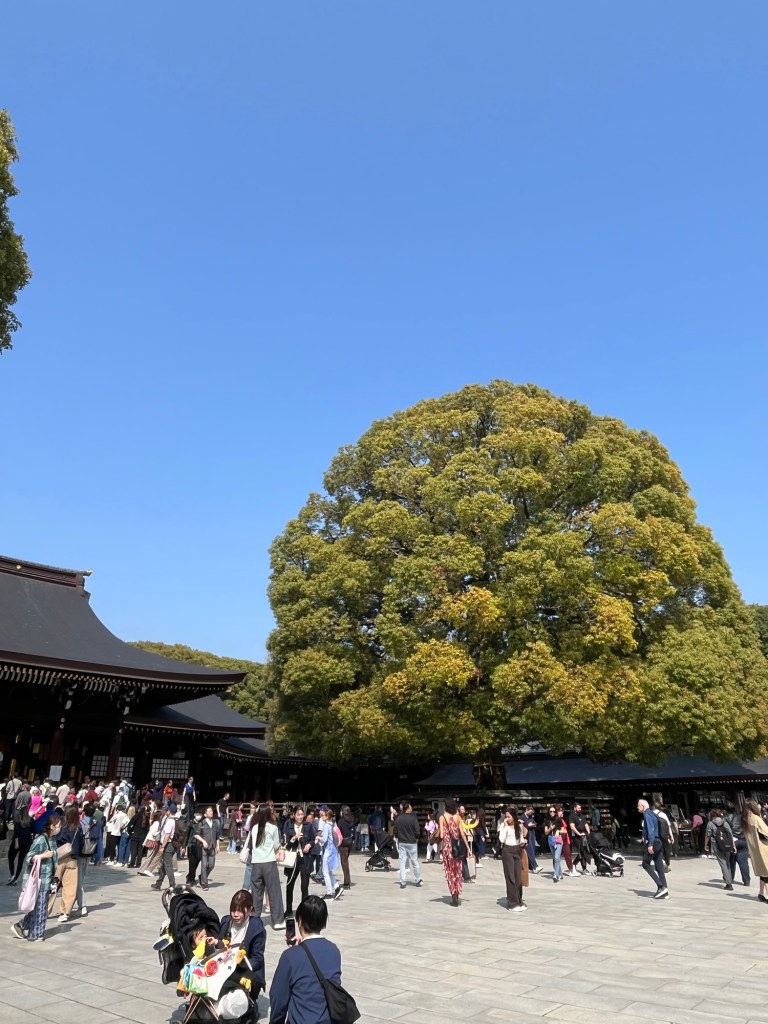
After having an early lunch of tempura and udon noodles, we headed across the city on the metro to the Meiji Shrine, in the Harajuku district. Harajuku is a very busy shopping area, but the Meiji Shrine, which is in a forested area, is a peaceful retreat from the hustle and bustle.
Sensō-ji Sensō-jiMeiji shrineMeiji Shrine
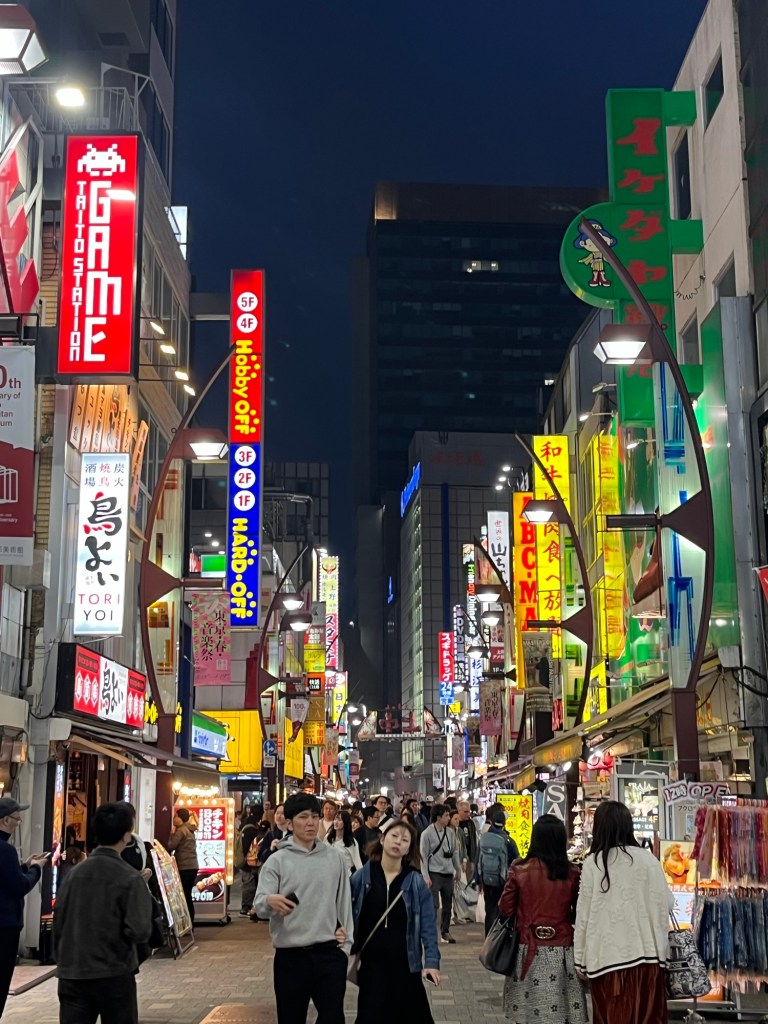
Afterwards we also went to experience the Shibuya Crossing, an extremely busy pedestrian crossing at a crossroads which maybe something of a self-fulfilling prophecy given everyone seems to go there to experience how busy the crossing is!!
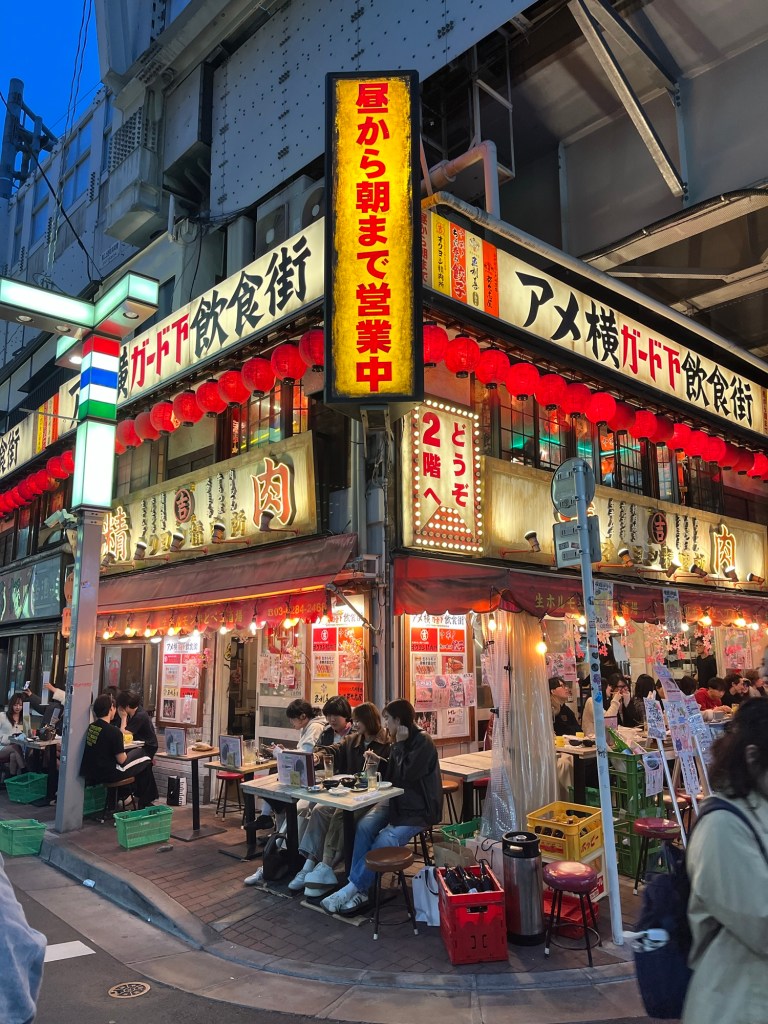
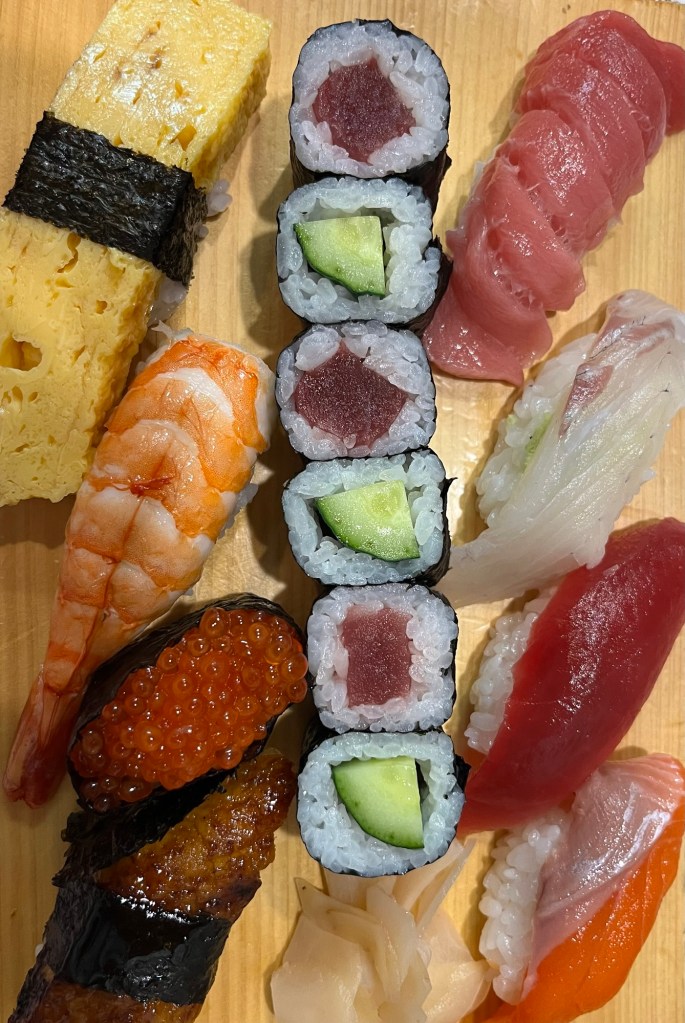
Dinner that evening was in the Ameyoko Market area, where I had a plateful of sushi and a beer for £12.
The next day we left Tokyo and headed to a homestay in Kawane. 4 trains (including a Shinkansen) and a local bus later, we arrived for lunch at a small restaurant run by 2 local women where I had a delicious bowl of curry soba noodles.
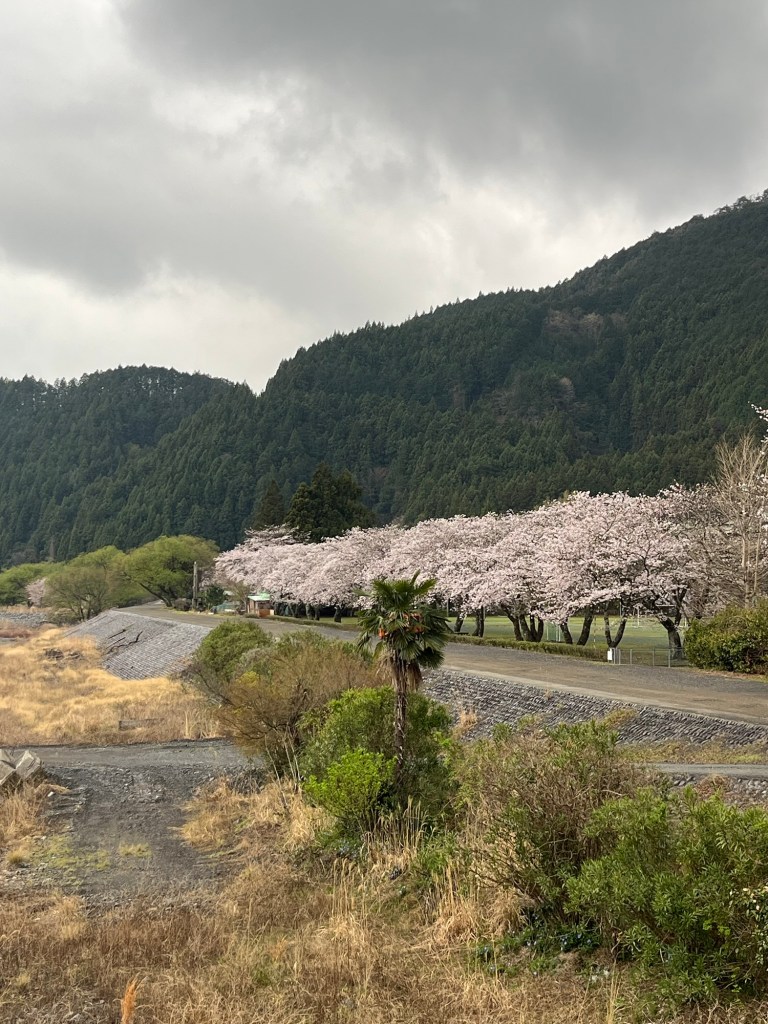
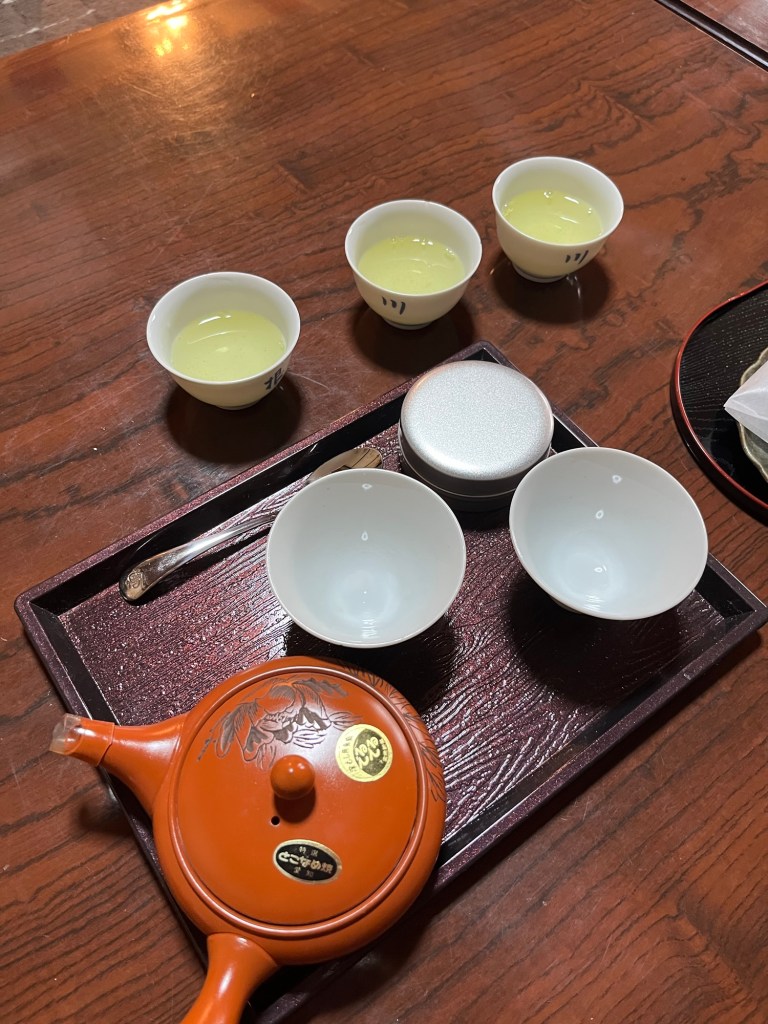
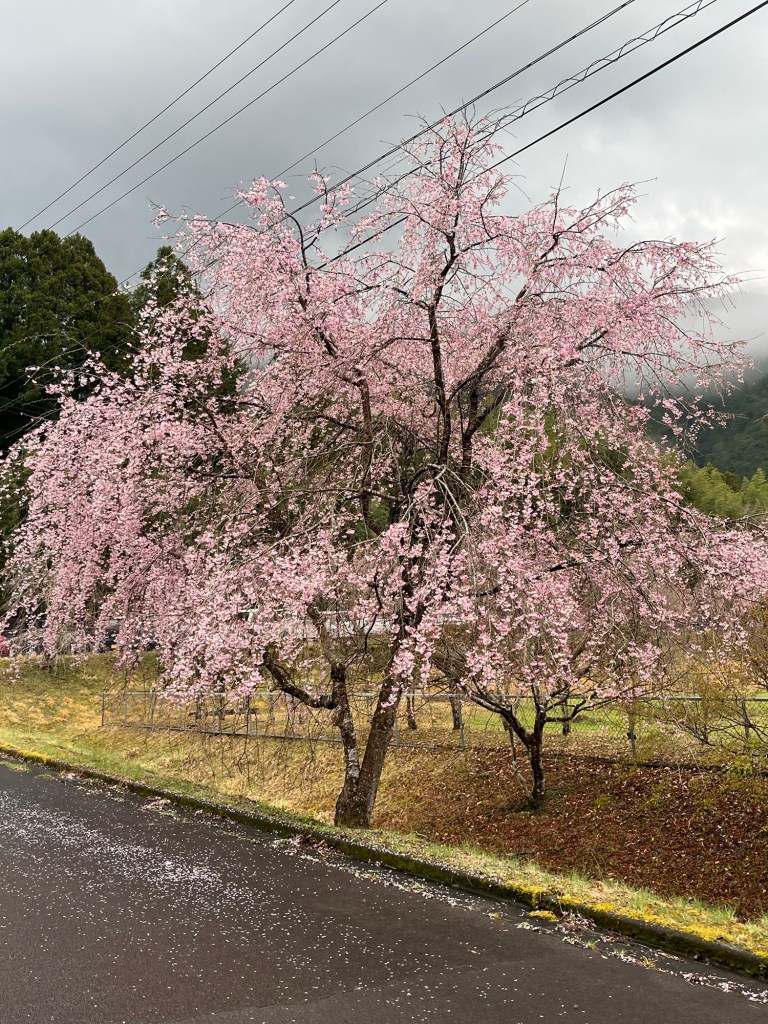
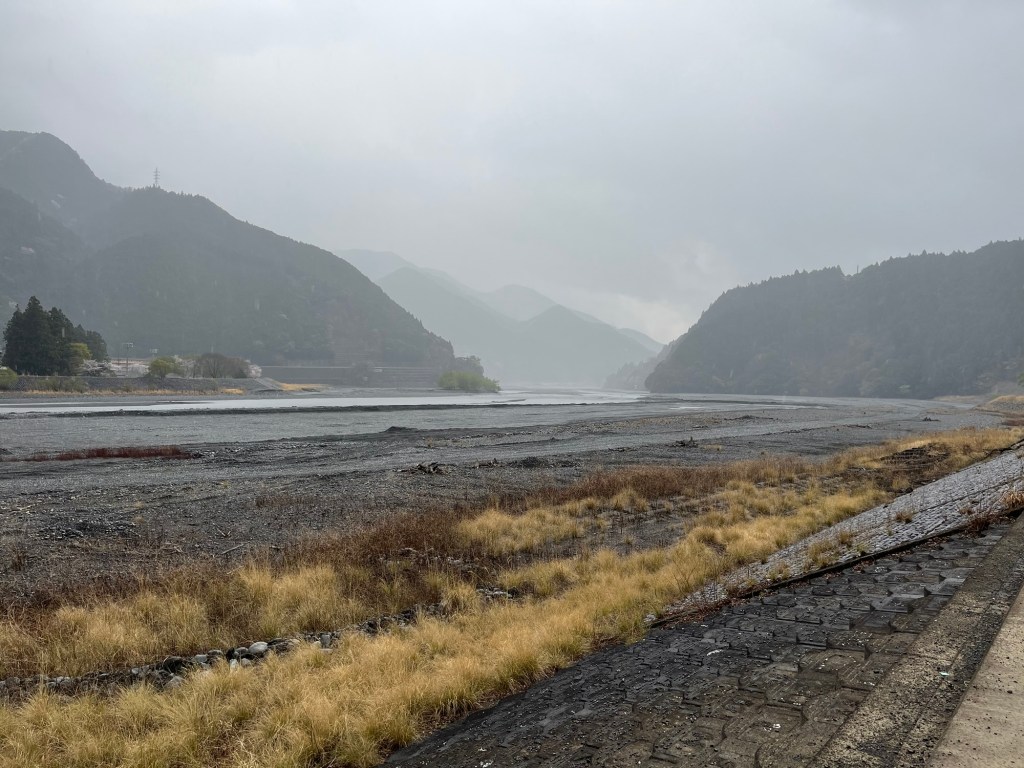
We went to a local tea farm in the afternoon and learnt how to properly brew green tea (turns out I’ve been doing it wrong for a long time…), before meeting the families who we would be staying with tonight. We went to walk around some cherry blossoms which were just beautiful. I could honestly fill an entire day just wandering and looking at them. Daffodils and tulips were also out, and this area in a river valley was so picturesque. It reminded me a little bit of parts of the South Island of New Zealand with wide river beds and forested valley sides.
Before dinner we went to an onsen (hot springs) which was so relaxing, though one of the pools at 44C was a bit too warm for me! I have more onsens included later on this trip and I’m already looking forward to them.
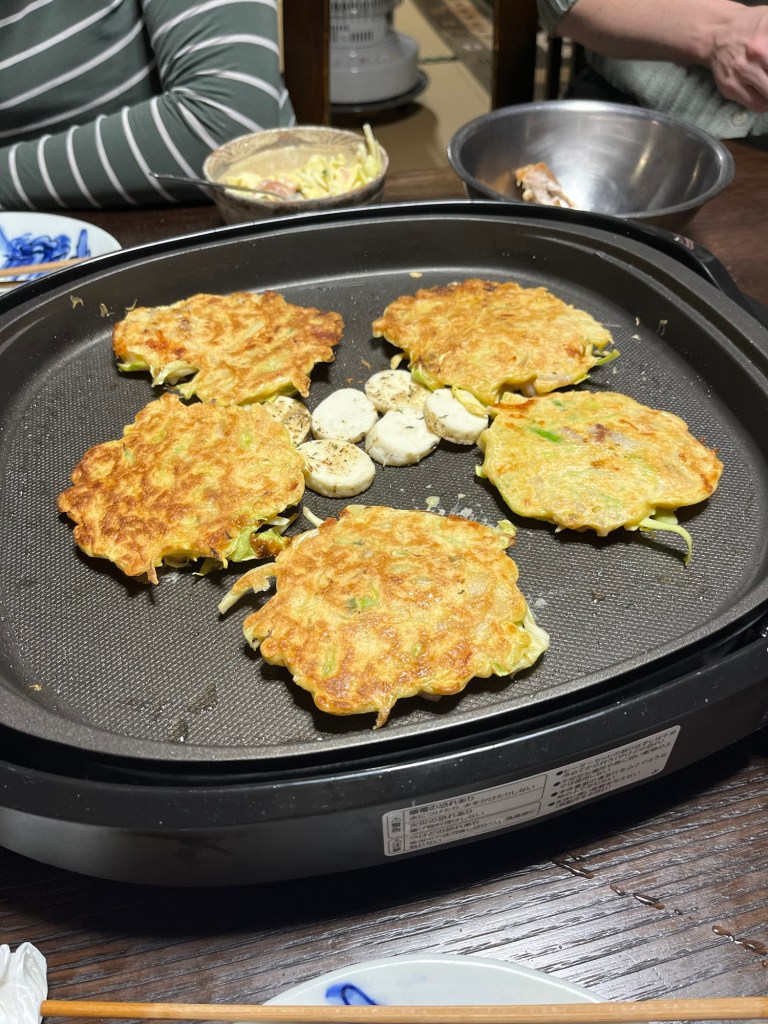
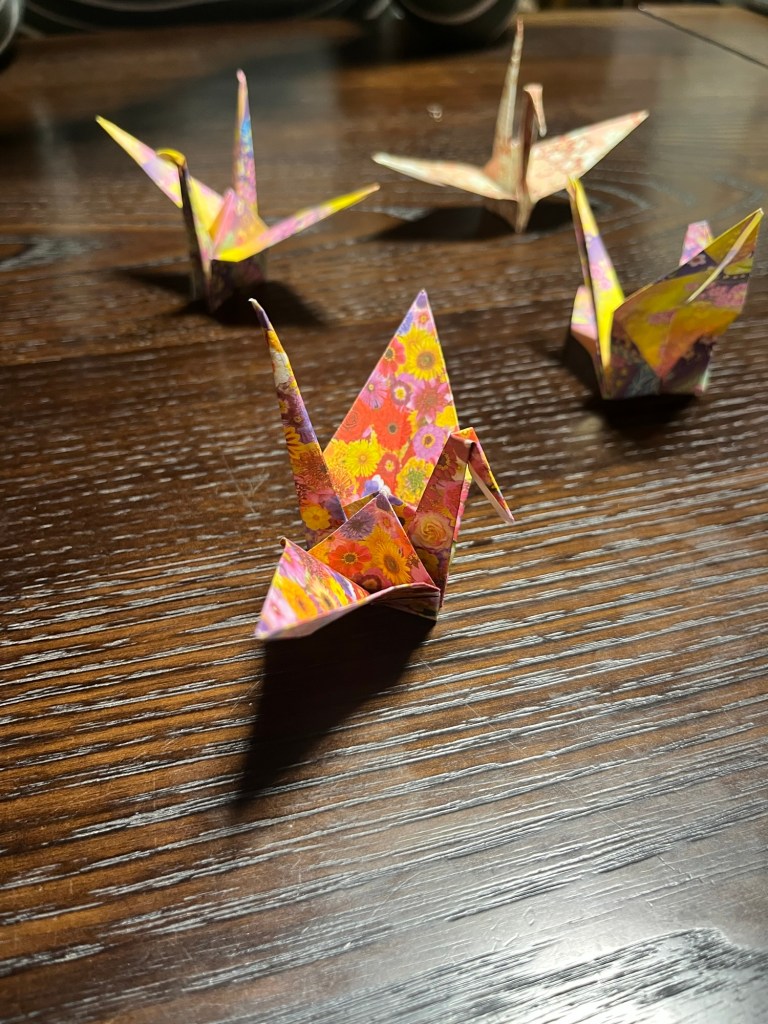
In the evening with our family, we cooked okonomiyaki pancakes (grated cabbage, bacon, cheese, eggs – delicious) and had chicken wings. We also learnt how to make the Japanese origami cranes, I was quite proud of my efforts! Google translate was super-helpful in allowing us all to communicate and getting this glimpse into rural Japanese life was really special.
We had an early start the next morning for the reverse of the bus and 4 trains to our next stop in Kyoto…