In my previous Australia travels, I’d spent a grand total of about 15 hours in Adelaide, and that included sleeping. This time I had a week and a half here, with a few days before and after the cricket to see the city and around.
Back to a hostel for the first 3 nights where most of my roommates were here for the cricket, and one of whom works for the same company I do and is also on a sabbatical…very small world
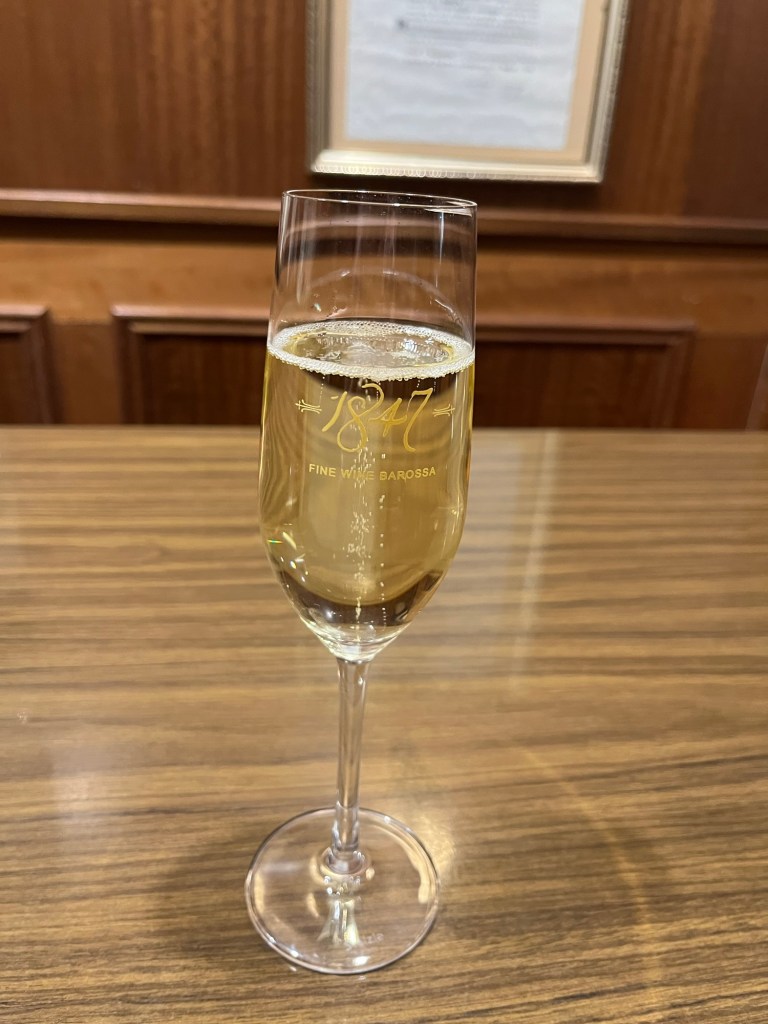
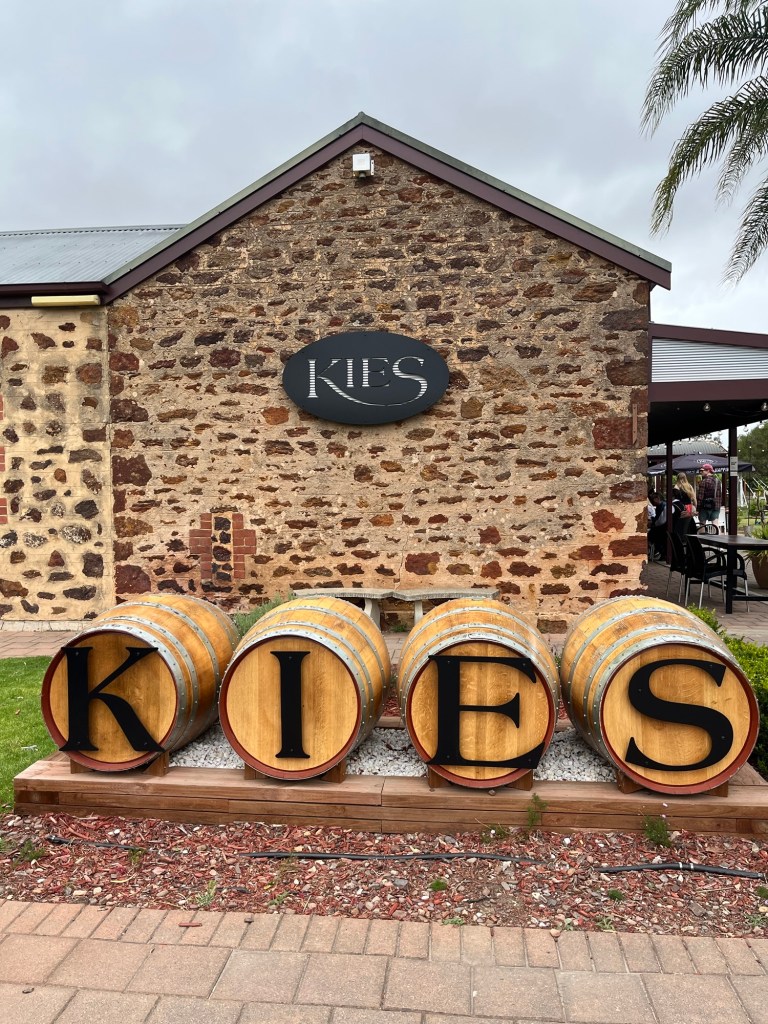
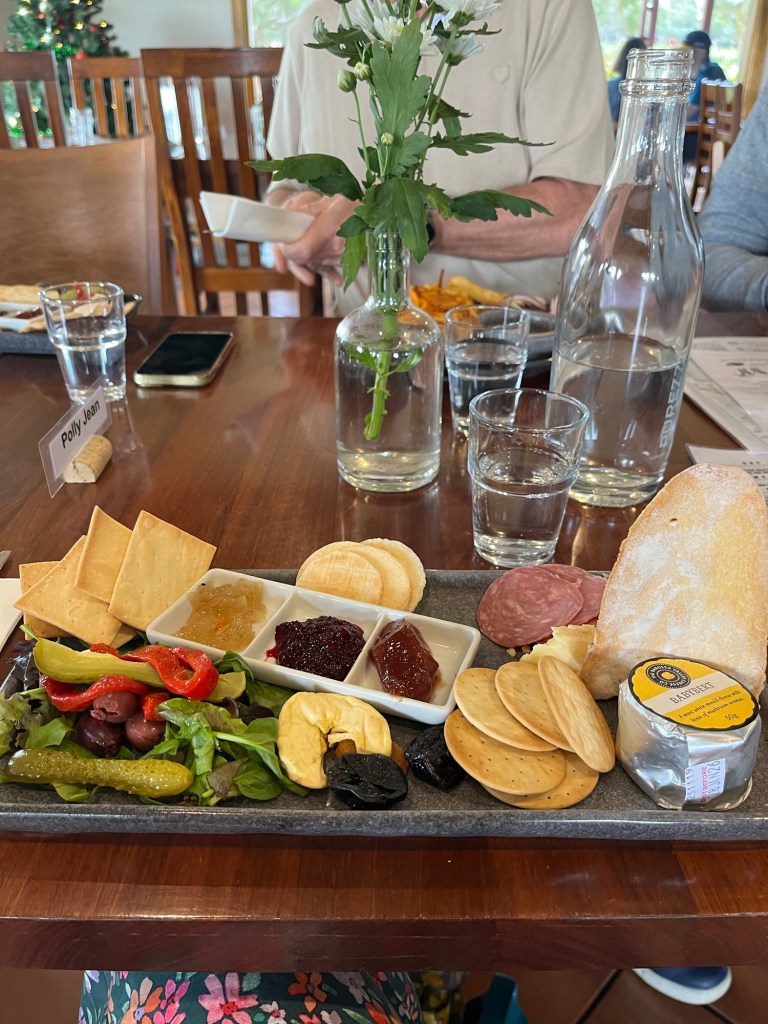
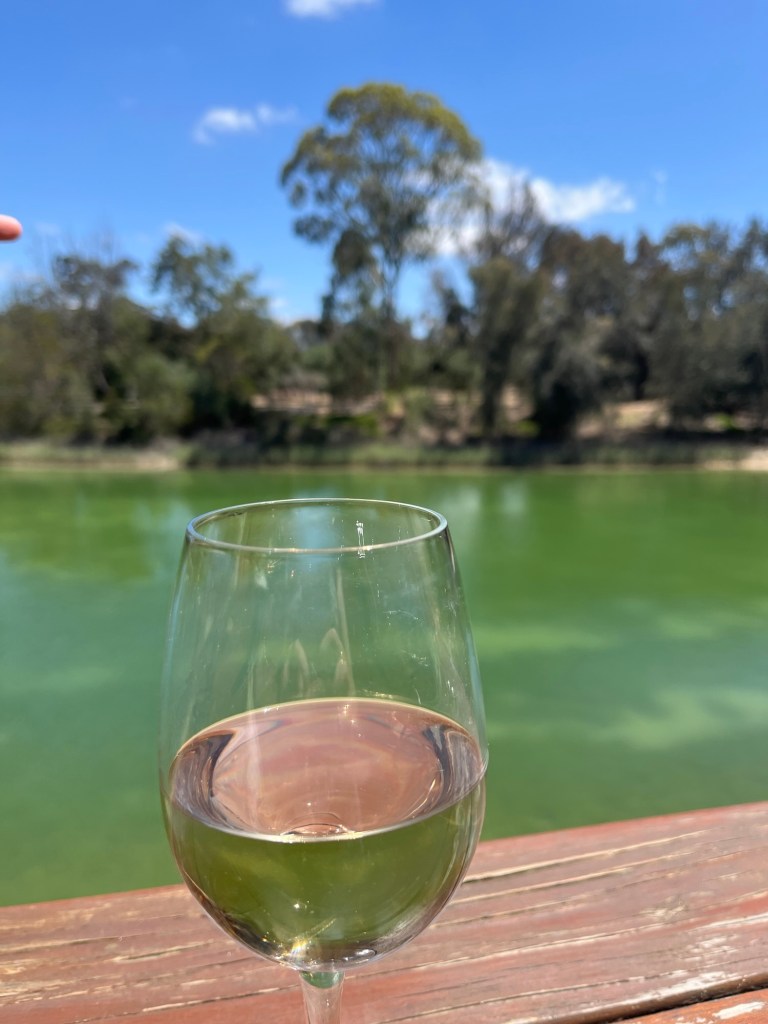
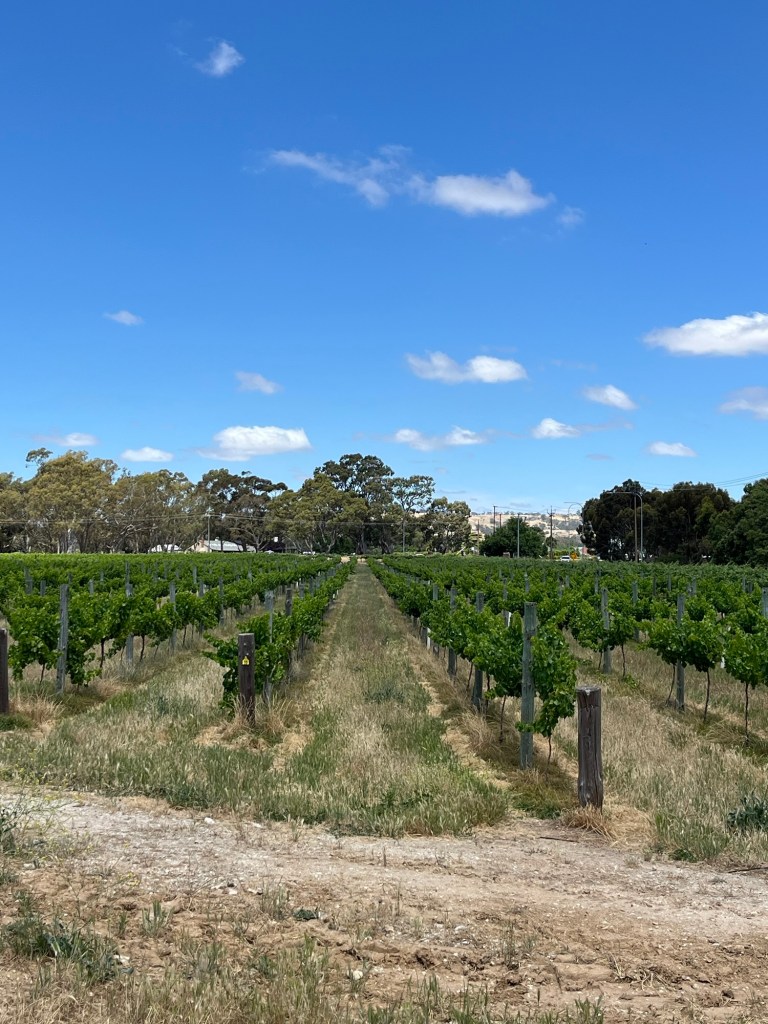
I’d booked a Barossa Valley wine tour on my first full day here and found that it was also full of Brits here for the cricket. A lovely group of people and we were drinking our first glass of wine at 9.40am!! A good way to start a Sunday
Barossa Valley Wines
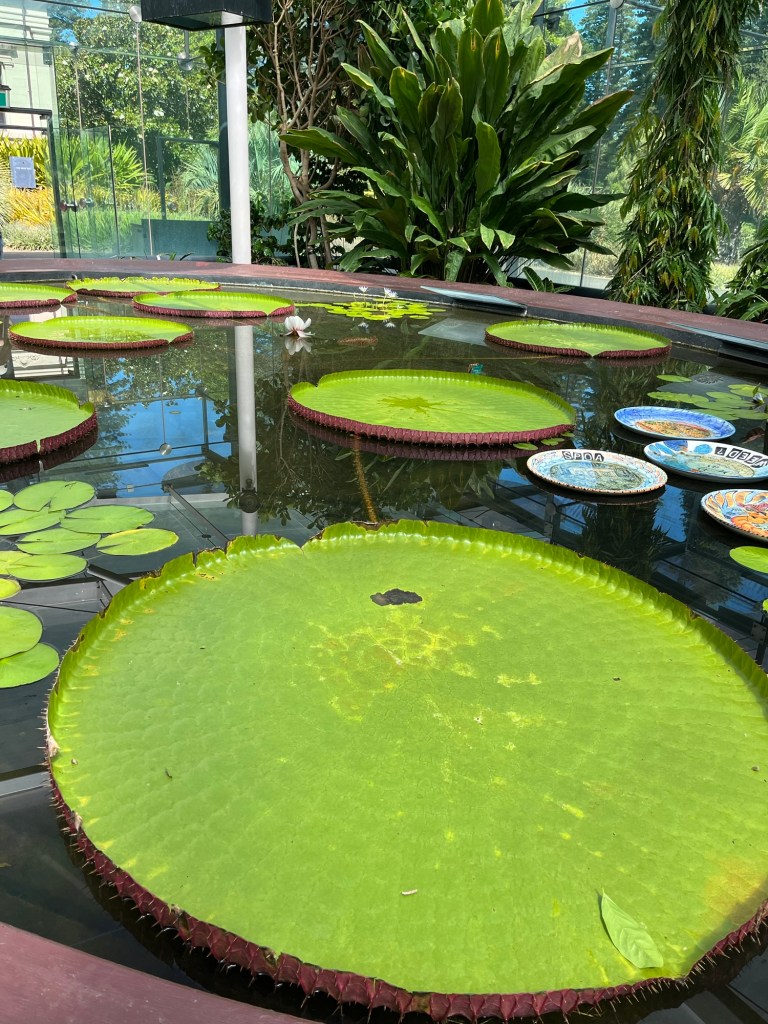
In the remaining days before the cricket started, I mostly spent my time wandering around the museums, which are all handily on North Terrace (and free), as well as the Botanical Gardens
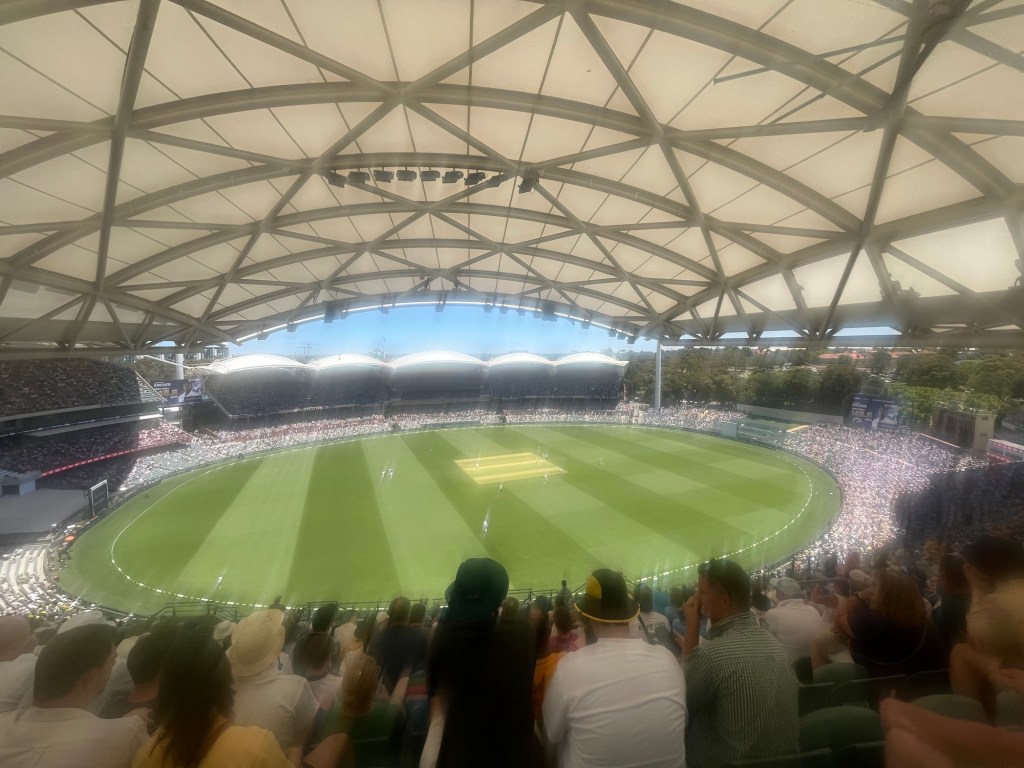
The cricket started just in time to coincide with a heatwave. I’d arrived on a Saturday and it was a very pleasant (to this Brit) temperature, in the low 20s. The cricket started on Wednesday, when the temperature was in the mid 30s. On Thursday it got to 40C. Thankfully it was a dry heat rather than a humid heat, but being sat in it, albeit in shade, for 7 hours certainly wilted me. By the time the game ended on Sunday, it had been raining and was only in the high teens. Such a crazy change in temperature in a very short space of time!
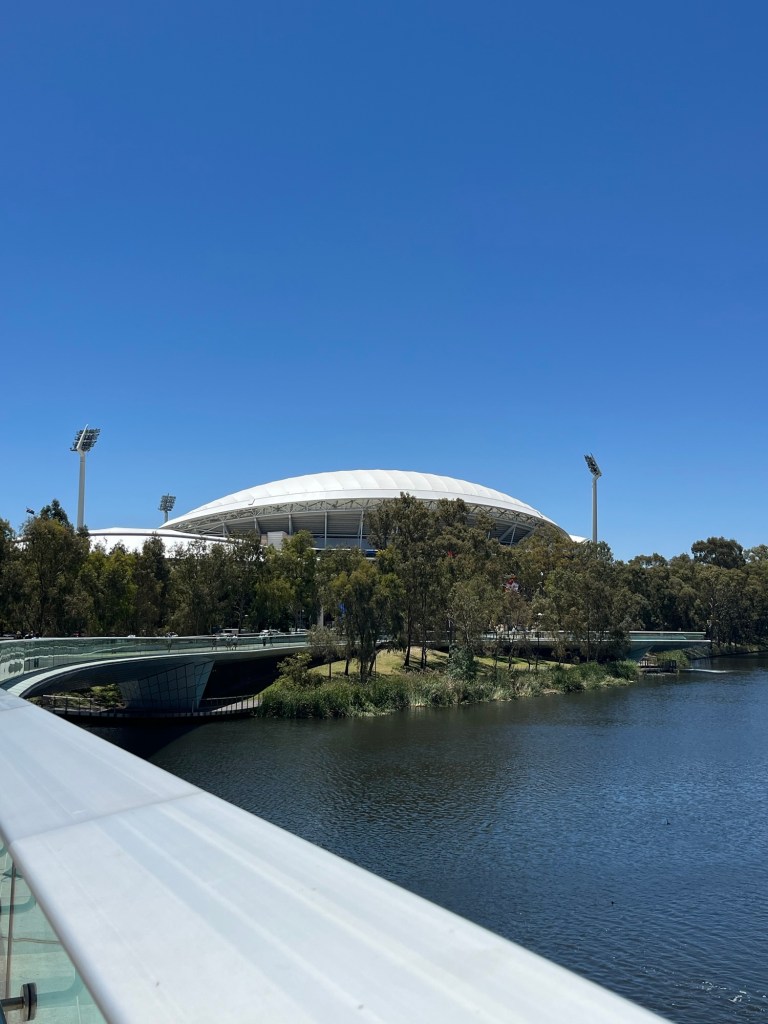
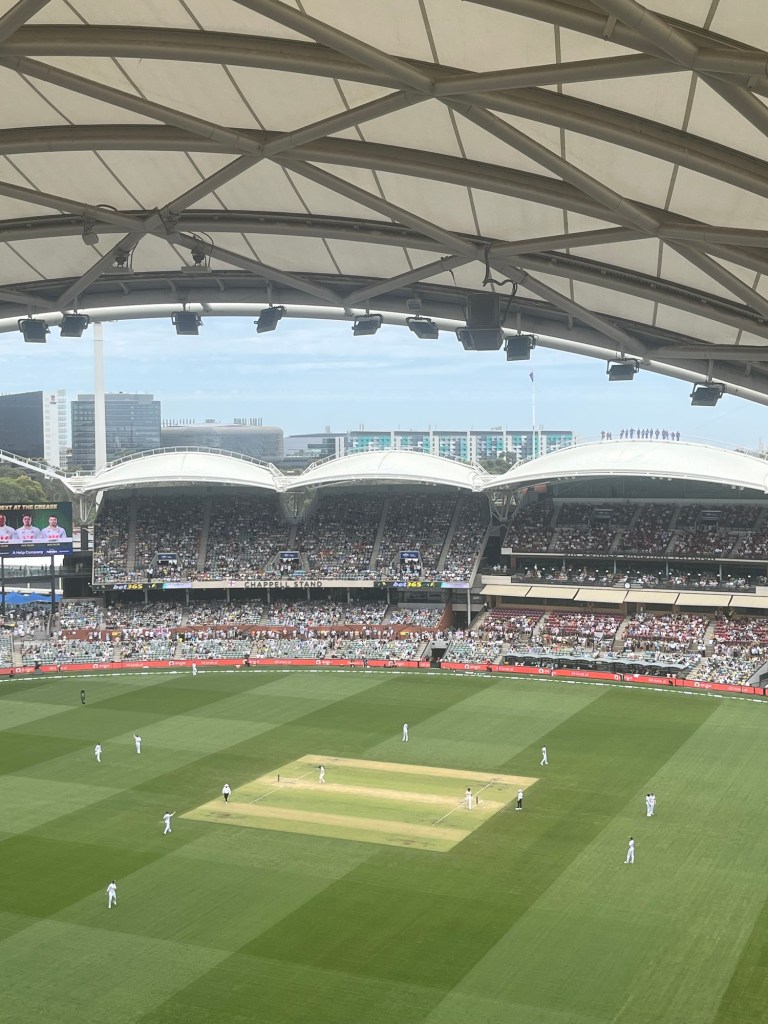
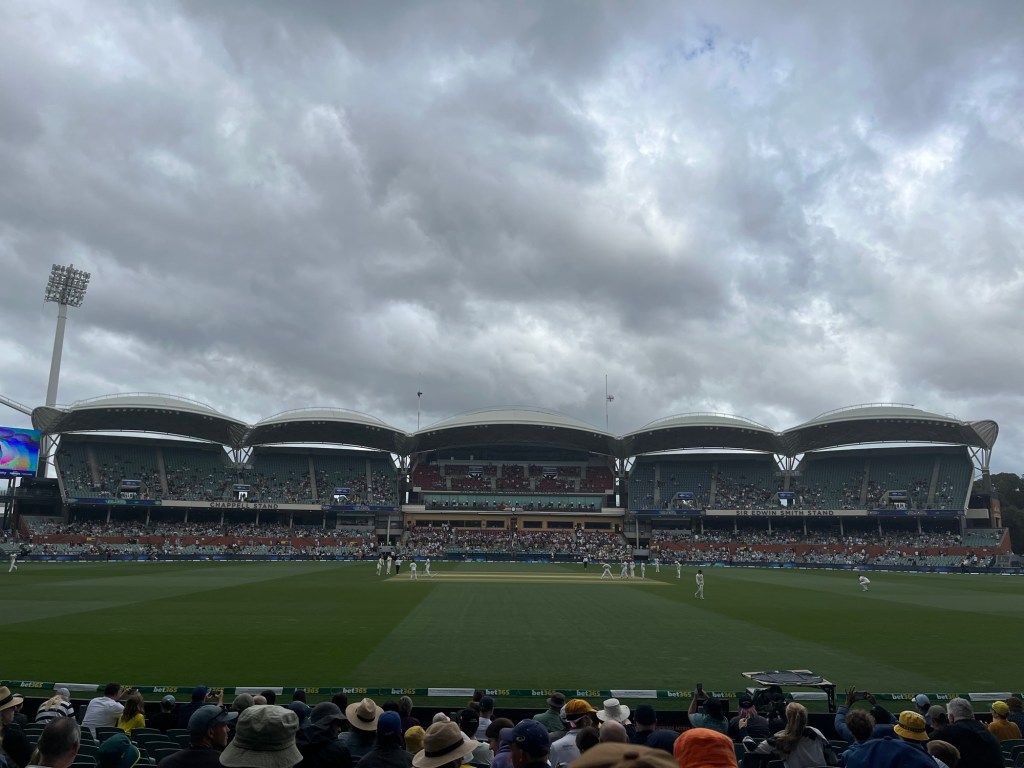
Views from the cricket
England were quite a lot better in this match – it got to day 5 and there was a tiny part of me that thought we were going to chase down the runs at one point in the morning session on the last day. But it wasn’t to be. I’ve now been to 5 test matches in Australia across 2 trips and have yet to see us win. But I’ve had a lot of fun watching the matches. There’s almost a mindfulness quality about watching live cricket. All I have to do for 6 hours is watch what’s going on on the field. I’m not staring at a screen. I’m not constantly looking at my phone. The ebb and flow of test cricket can’t be beaten in my opinion and despite the result I’ve had a great time.
I had a couple of days after the cricket in Adelaide before flying back to Perth on Christmas Day before onwards to Thailand. One of those days was an admin day involving finding a laundrette to do a big load of washing, as well as firming up and booking a couple of parts of my SE Asia itinerary.
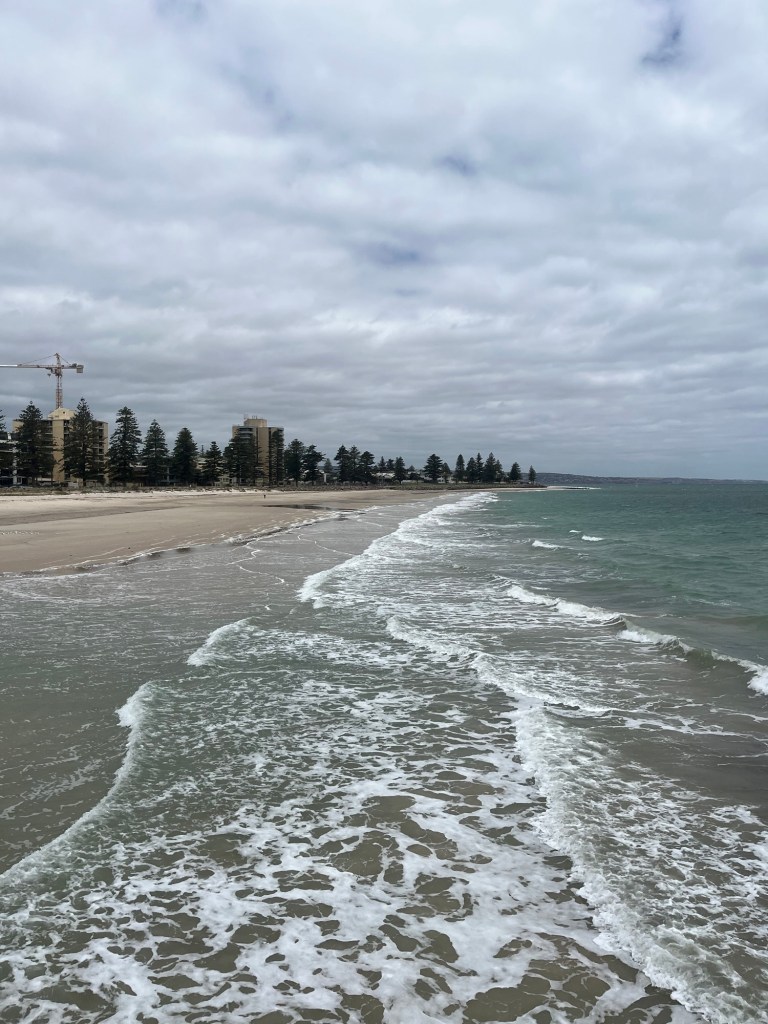
On Christmas Eve I went out to Glenelg. Ordinarily you’d get the tram from the centre of Adelaide, but due to engineering works, it was a replacement bus which took about 25 minutes. Sadly the weather in Glenelg was cold and windy, so it wasn’t looking its best. When I returned to the city mid afternoon, I found it in blazing sunshine!!
Glenelg
I really enjoyed my time in Adelaide. It seems to get a bad rep on occasion for perhaps being a bit boring. Certainly I thought it less intense than some of the other big cities here. But there’s plenty to do, it’s really easy to get around, and I squeezed in my third (and fastest) Aussie parkrun.
That’s it for my Australia travels on this trip. I’ve been here for 7 weeks, and covered a lot of places I hadn’t been to before. I think Perth and WA was my favourite part, the scenery and coastline there was just stunning. But I’ve loved it all. The people are friendly, the lifestyle seems great, everywhere is very clean and tidy, public transport is cheap, there are lots of amenities in all the cities and overall just a great place to visit. I’m sure I’ll be back again at some point!
After my stay in Brisbane, I hopped onto a Greyhound coach for the 90 minute journey to Surfers Paradise in Gold Coast. The coach was actually going all the way through to Sydney, a journey of nearly 1000km. I’m quite glad my trip wasn’t anywhere near that long!
I’d booked 4 nights in Surfers Paradise after the cricket for a bit of R&R, or as much R&R as you can get in a 100 bed dorm room. In fairness, this chain of hostels was pretty good, I also stayed in these in Brisbane and Adelaide outside of the cricket. The pods give pretty decent privacy and the price (around £30 per night) includes breakfast and dinner which is pretty unusual in a hostel.
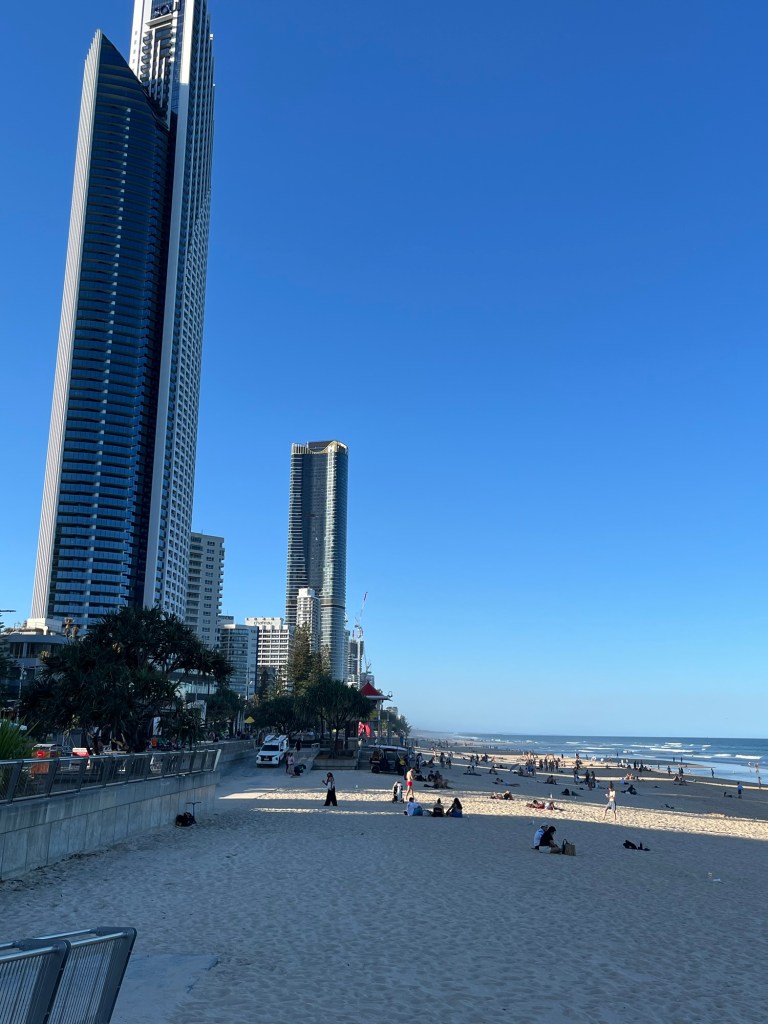
After a day of doing laundry (cost $12 and all done in an hour, and could pay by card which was a bonus), I spent the first couple of days wandering around and finding shade on the beach, which, due to the massive buildings, was actually quite easy even without my own tent/parasol/shade. I don’t read very much anymore but I’d bought a physical book in Brisbane and so spent my time on the beach reading Michael Palin’s New Europe. I do enjoy reading his travel books, and especially when I’ve been to some of the same places. It’s also useful inspiration for future trips…
On the beach in the shade at Surfers Paradise
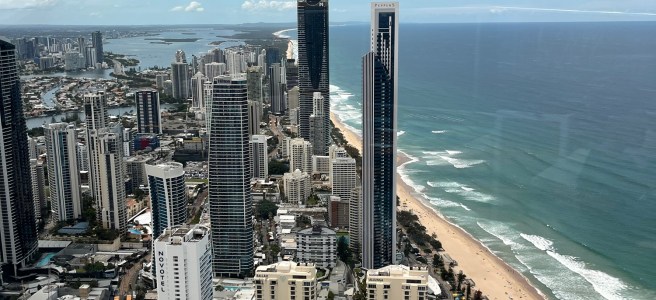
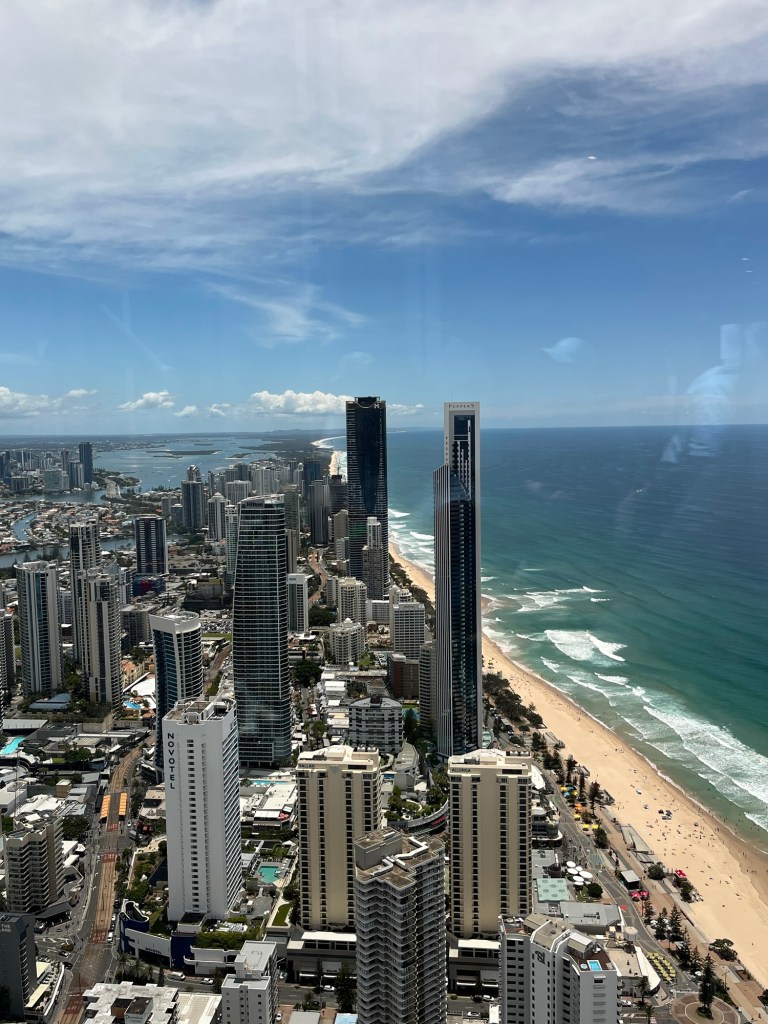
Given all the very tall buildings, I thought I’d go up one of them to take in the views. I went to the Skypoint observation deck which is on the 77th floor of the Q1 building. Some spectacular views to be had whilst enjoying a tea and slice of cake
Views from the Skypoint Observation Deck
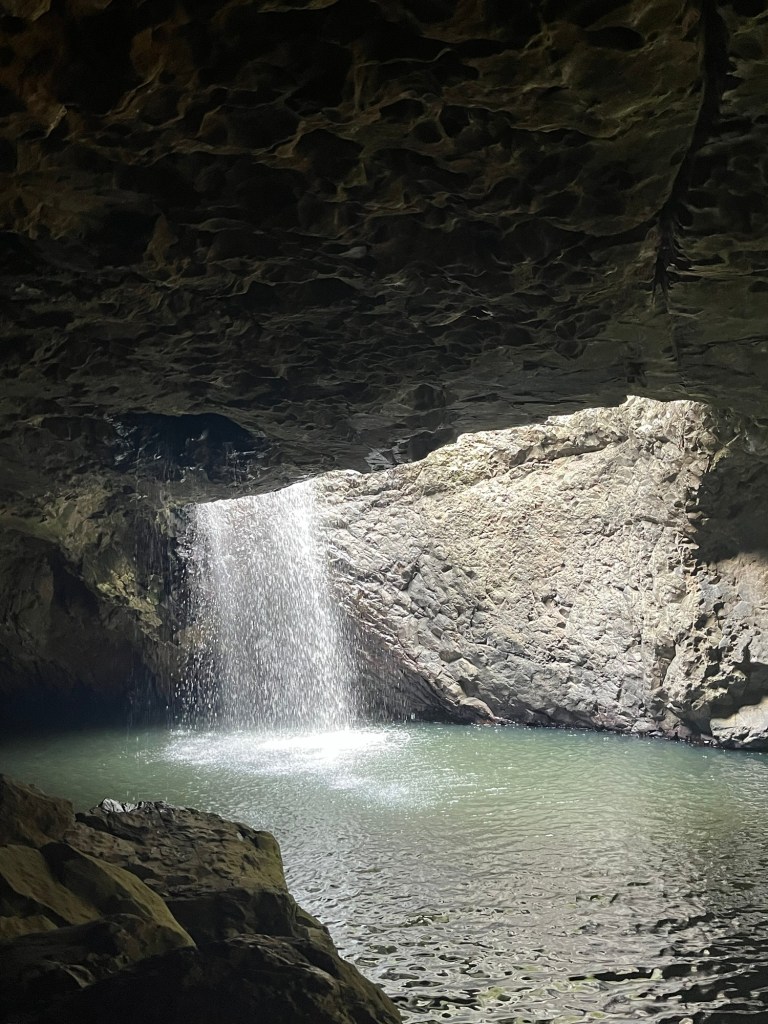
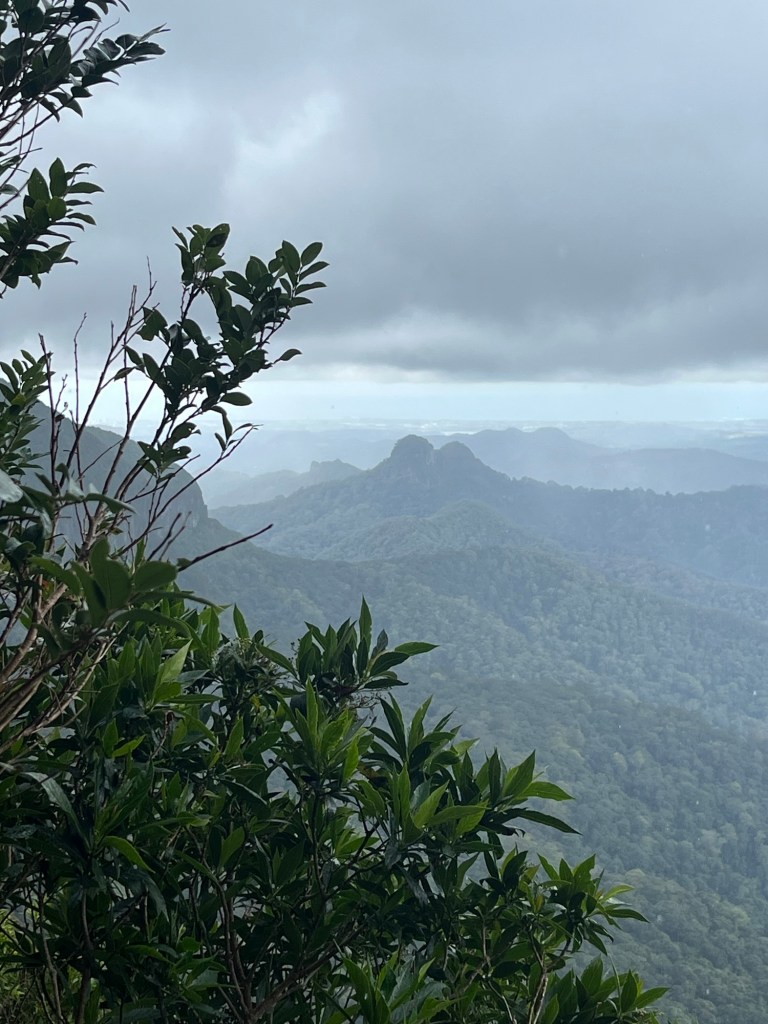
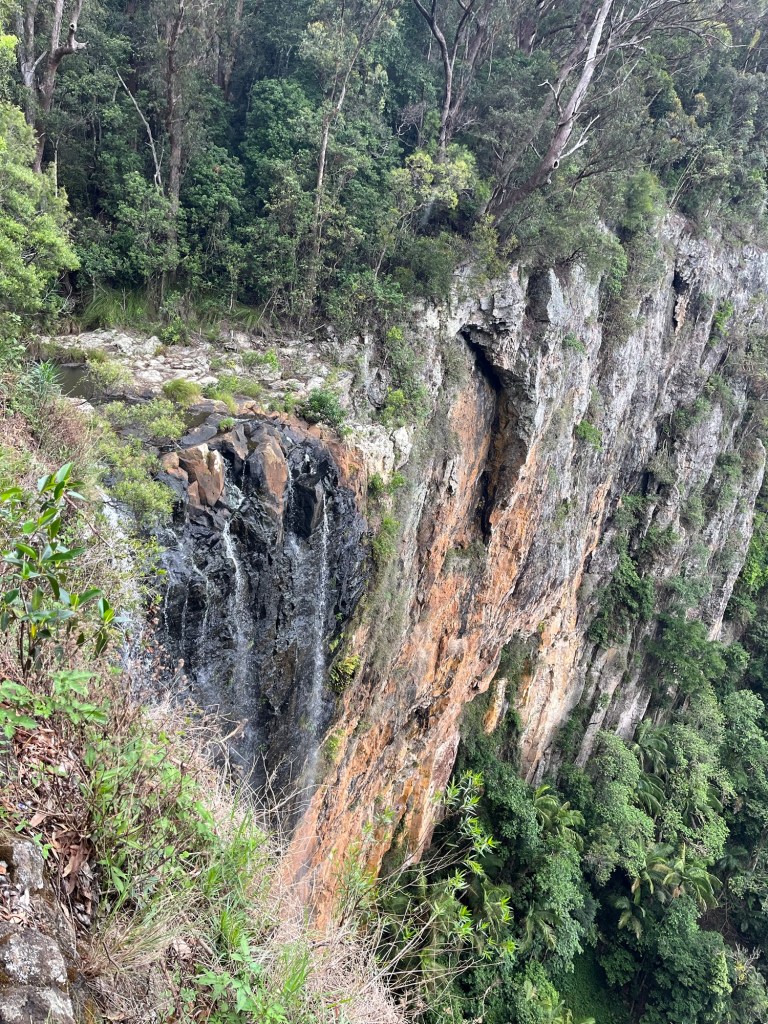
On my final full day, I’d booked (at fairly late notice through Viator) a half day trip to the Hinterland (the rainforest area inland behind Gold Coast), to Springbrook National Park and Natural Bridge. The weather was a little gloomier on this day and I did at one point have to get my waterproof out for the first time on this trip. The scenery was stunning. so green and lush, and it was a nice change from the coast and cities I’d mostly seen on this trip. Also apparently where UK I’m A Celebrity is filmed.
Natural BridgeSpringbrook National ParkBest of All LookoutPurling Brook Falls
There were beachside markets in Surfers Paradise on the final night I was there so I ended my trip by wandering up and down all the stalls before calling it a night to reorganise my bags before my flight to Adelaide the next day.
I’m glad I’ve been to Surfers Paradise, I’d seen it from a distance on one of my previous visits to Australia. It’s got a bit of a party vibe about it. Lots of bars and restaurants and fairly fancy hotels, and miles of golden sand and surf. I’m not absolutely sure I’d go back (maybe if I was 20 years younger…), but it was nice to have a few days by the beach…onto Adelaide and some more cricket
Trundling into Brisbane Roma Street train station nearly 2 and a half hours behind schedule was actually fairly helpful as instead of arriving at 9am, I got to the hostel shortly before midday and was able to check in.
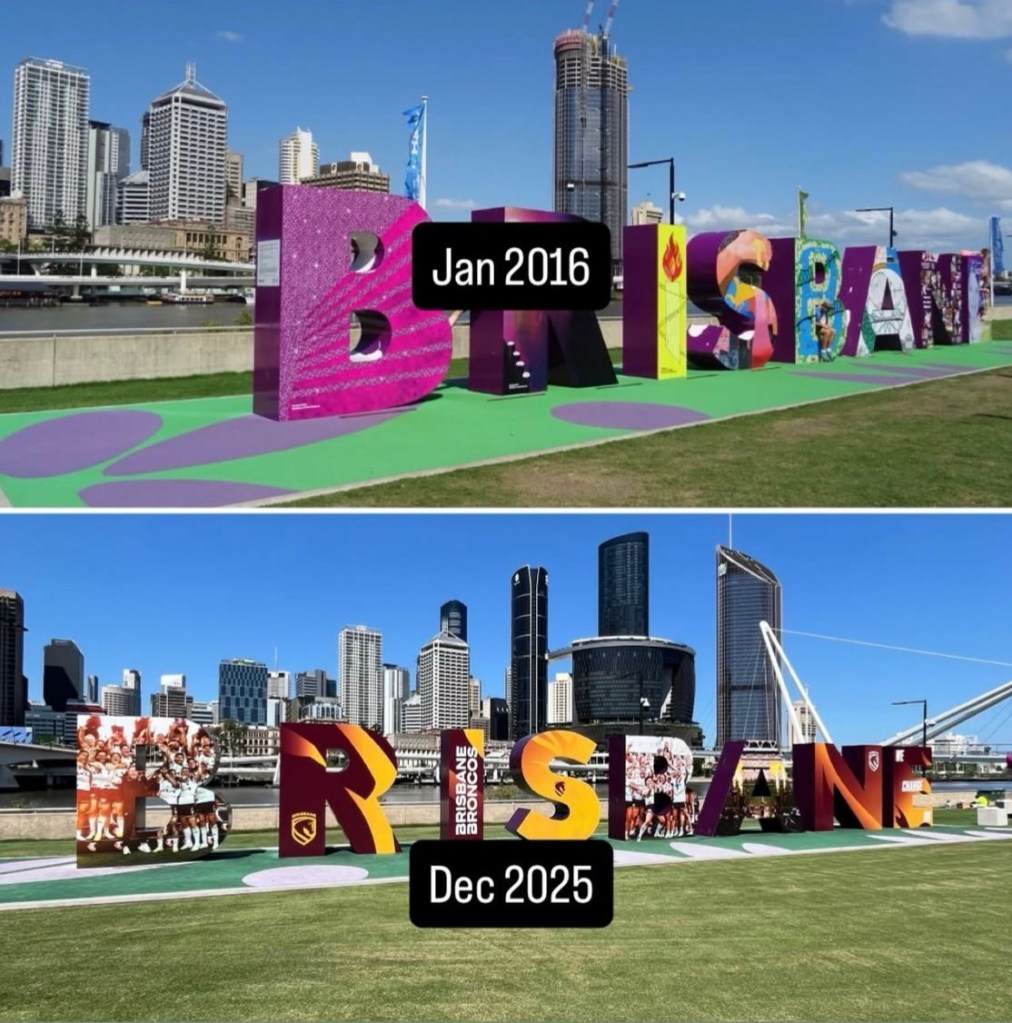
I had a couple of days in Brisbane before the next attempt at cricket started. I have been to Brisbane once before, in January 2016, and saw fit to write barely a paragraph about it here. I honestly don’t remember much beyond the koalas and a few photos I have revisited to attempt to jog my memory. We must have stayed fairly centrally based on the photos I have from then but I’ve no idea where, and honestly from walking around Brisbane this time, I don’t remember any of it really.
That said, it has changed quite a bit over the last 10 years…
I spent most of my first day on the South Bank wandering through the various museums and art galleries in this area – all free. I was also quite glad of the air conditioning, despite it being less humid than in the north, it was still approaching 30C.
The South Bank itself is a lovely area of rainforest, beach, open space, restaurants, cafes and bars and I actually spent some part of most days wandering and eating here.
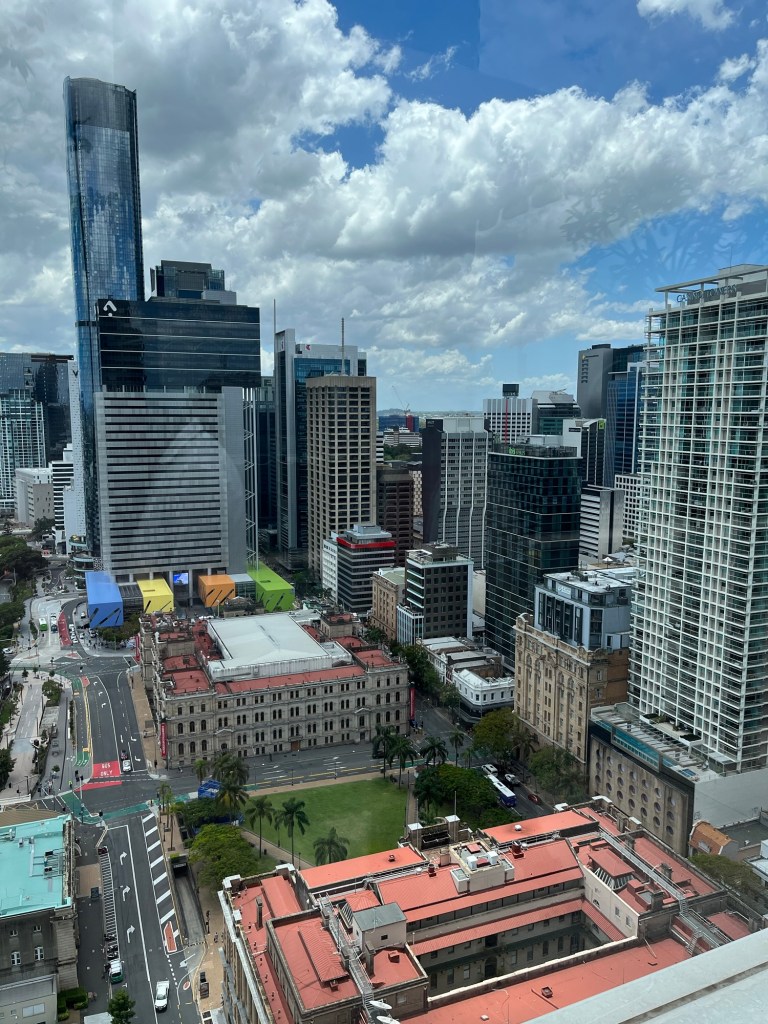
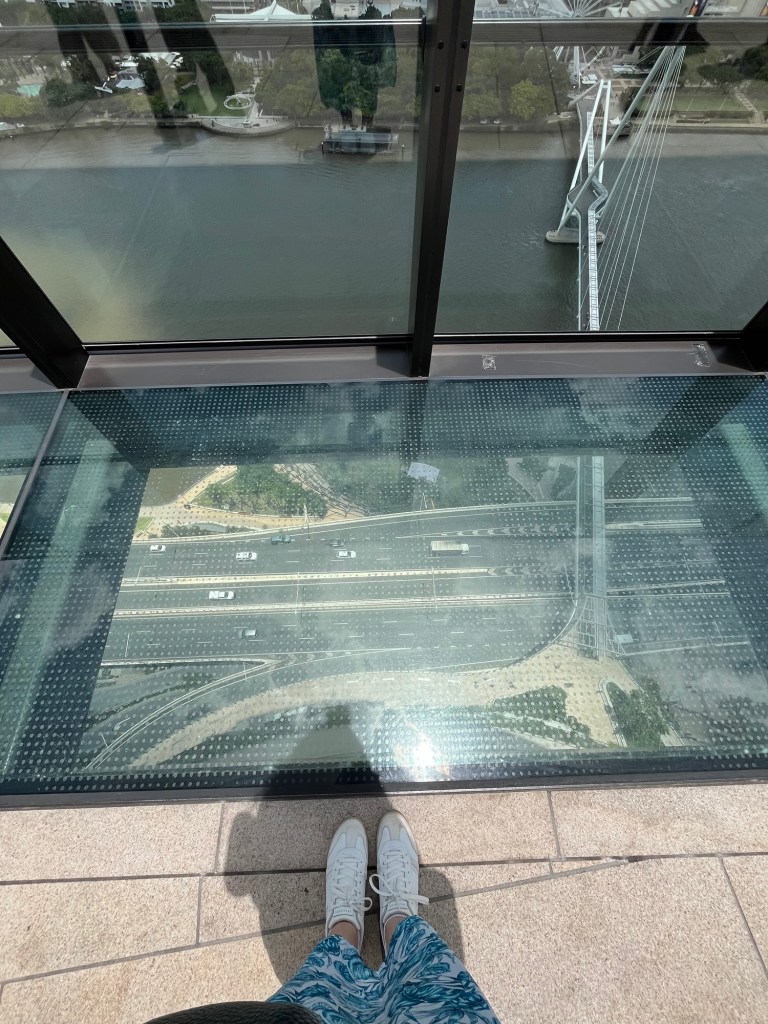
After getting some tips from a guy in the hostel, I went up the Sky Deck at the Star, which is one of the very tall buildings that wasn’t there in 2016! This viewing platform is around 23 storeys high and is, unbelievably, free to visit. There are a couple of cafes and restaurants ready to take your money though.
From the Sky DeckGlass walkway on the Sky Deck
Brisbane is a really good city to wander around, and I found myself doing a lot of walking. The test match was a day/night match which didn’t start til 2pm. And the Gabba is a good 40 or so minutes walk from the CBD where I was staying.
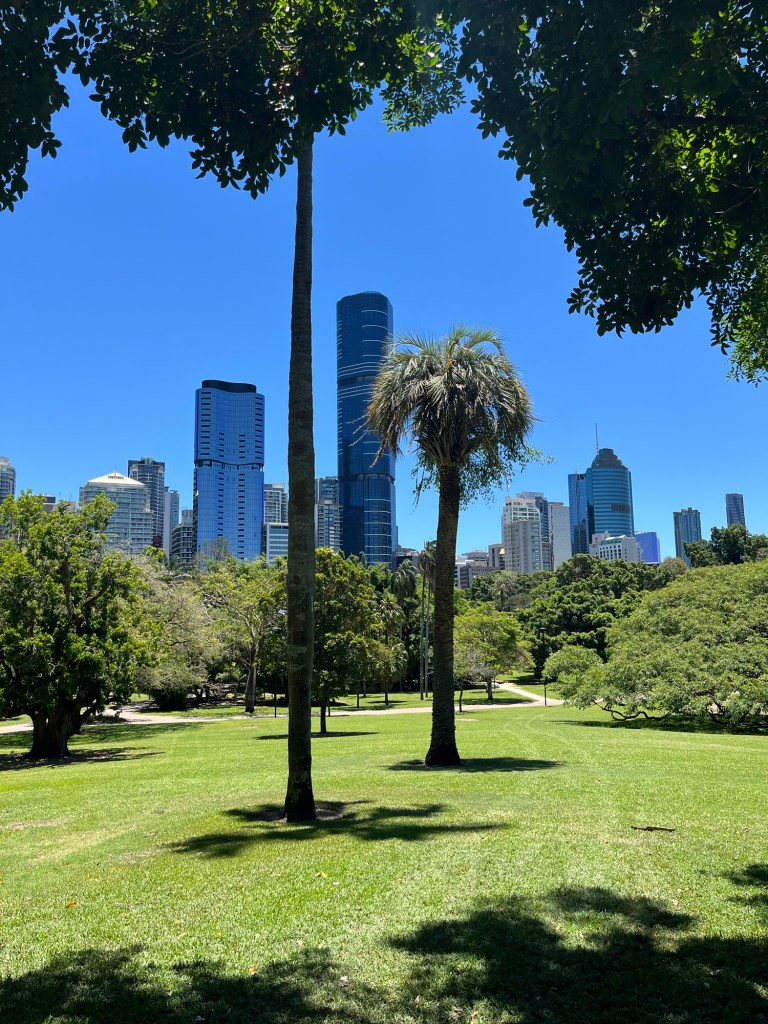
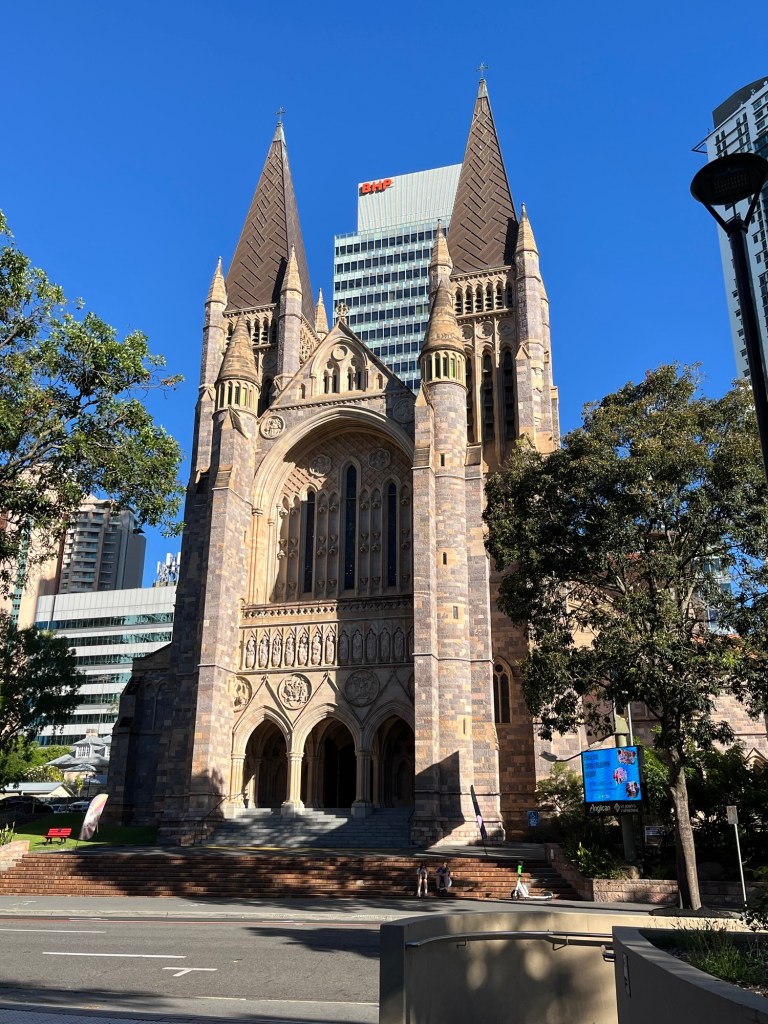
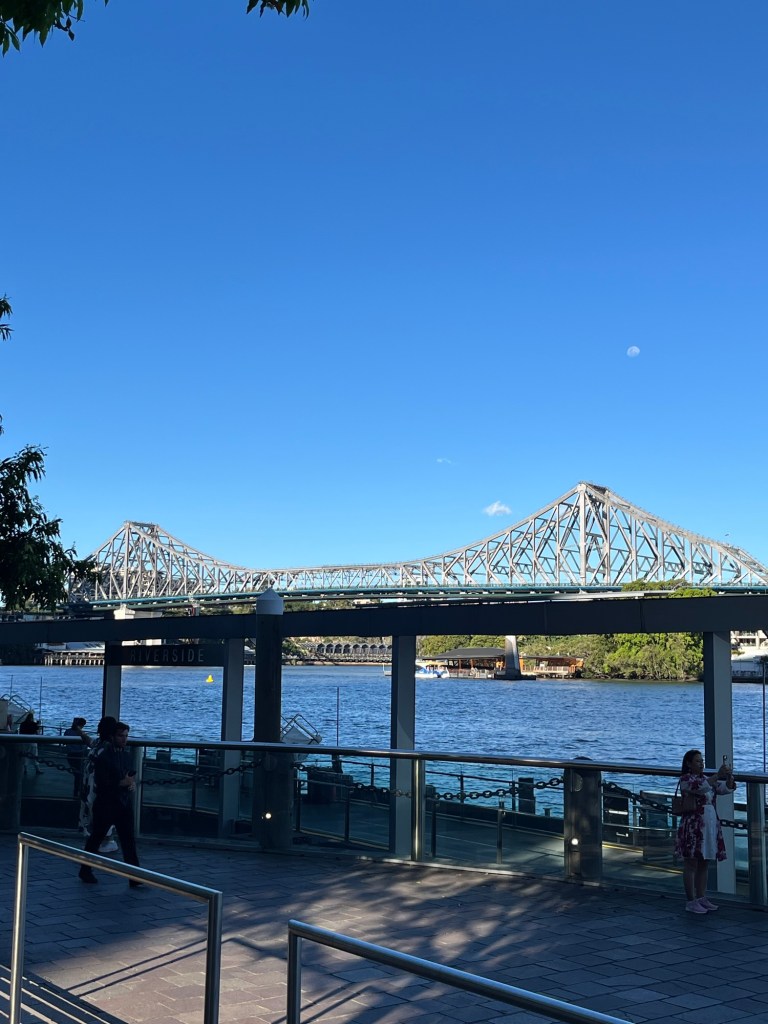
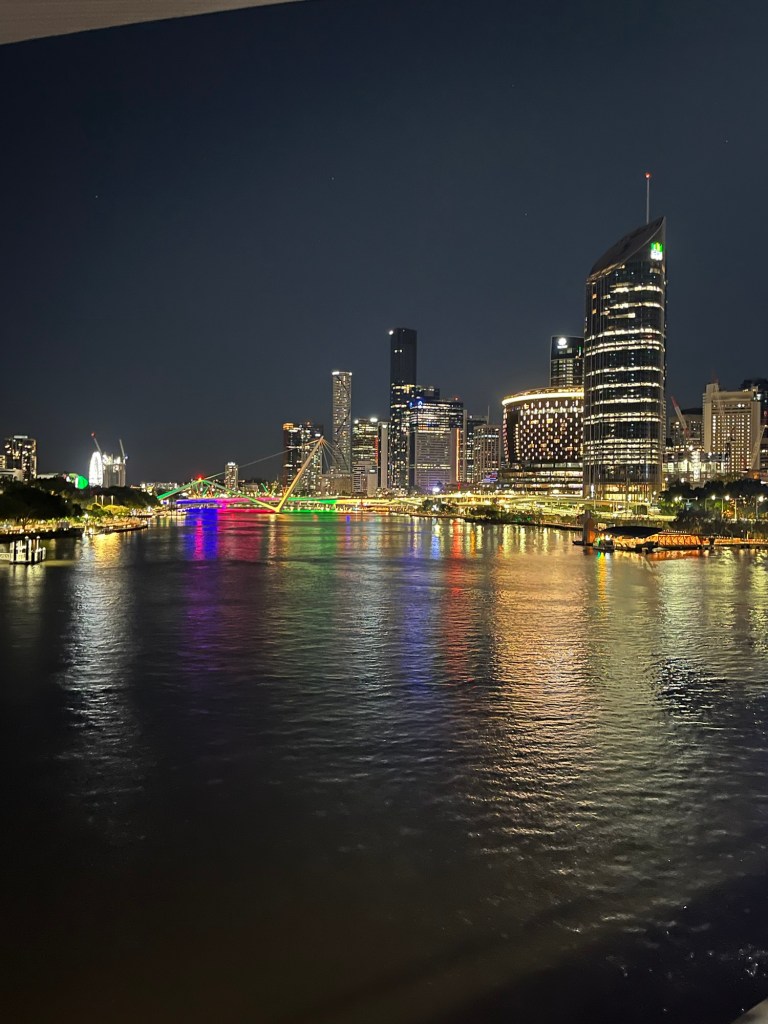
Various photos from my wandering: the city botanic gardens, St John’s Cathedral, the Story Bridge, Brisbane by night
The Gabba is not a particularly easy ground to get to. It’s across the river from the CBD and is surrounded by increasingly gridlocked roads in the lead up to the match. Once I was there though, getting in the ground was very efficient, as were all the bars and food outlets (more so than the Optus in Perth which struggled with some bottlenecks at various points which did make me feel slightly anxious).
The atmosphere at the Gabba is incredible. It’s a proper cauldron, literally and metaphorically, and the intensity of the sound, especially when Australia were on top, was unlike anything I’ve heard before in a sporting arena. On the first day I was sat on the first level but essentially at the back, and some of the sound didn’t travel too well (took me an hour or so to locate the Barmy Army and I’m certain they were making a lot of noise), but on the following days when I was slightly further forward, the acoustics were a lot better.
I guess there were 2 positives about this test – it lasted 4 days (and a lot longer on day 4 than I might have imagined); and secondly, Joe Root scored a hundred in Australia and might finally be able to shut up all the naysayers
Joe Root – absolute legend
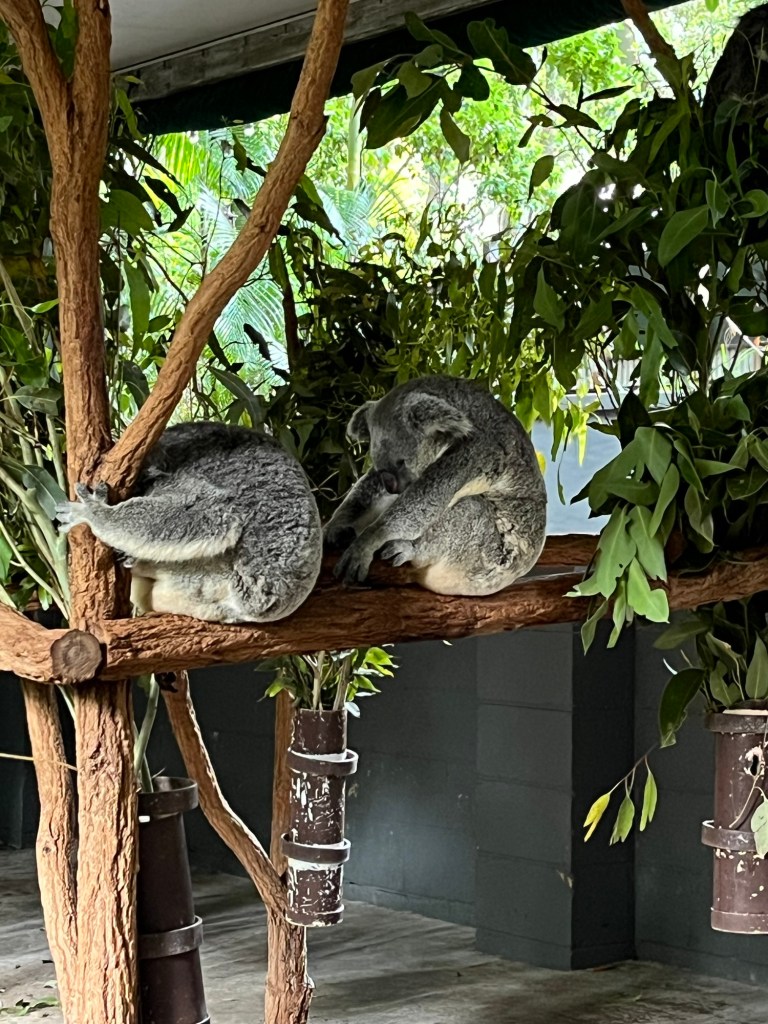
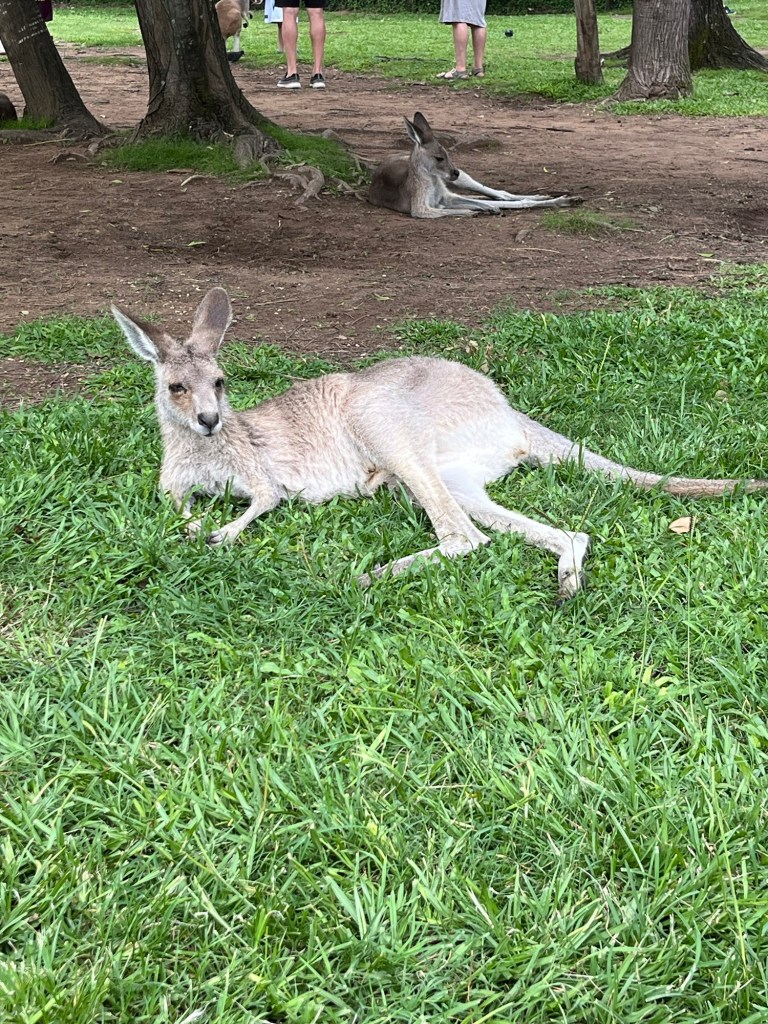
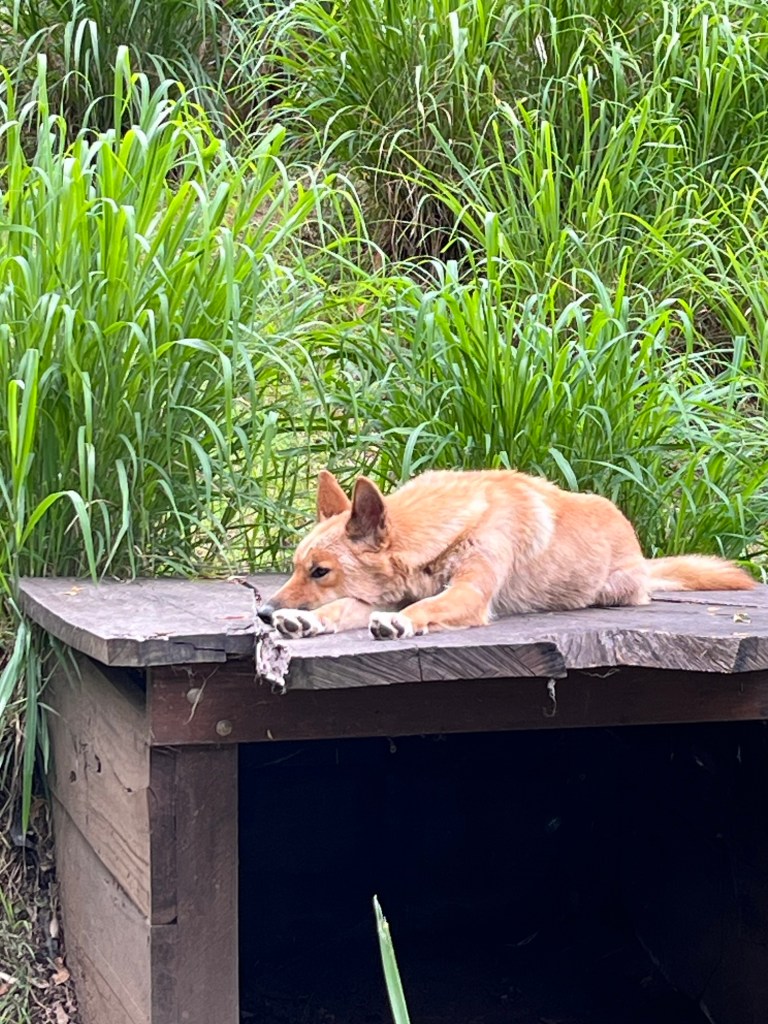
On my final (bonus) day in Brisbane, and in order to cheer myself up a bit after feeling fairly deflated over the cricket, I went to Lone Pine Koala Sanctuary. I mentioned earlier that I’d been here on my previous visit, when you were still able to cuddle a koala. Probably for the best that this practice has now ended. But you can still enjoy looking at the koalas, and the other animals there, including walking in amongst kangaroos and wallabies
Koalas – mood The guns on this guyA cassowary ChillingA dingo
After my week or so in Brisbane, it was time to hop onto a Greyhound coach and head to Surfers Paradise for some beach time…
After spending a week exploring south and north of Perth, I arrived back in the city with a couple of spare days before the cricket. And, as it turned out, 3 spare days after the cricket…
Back to hostel life and the first thing on my hit list was to do some laundry. Long time readers of this blog may recall my previous quests for cheap hostel laundry…my first impression of 2025 hostel laundry is that there has been a significant increase in price in the last 10 years. $6 for a wash and $6 for sufficient drying time is a lot more than I remember…anyway, at least I had a bag full of clean clothes.
The next day I was up bright and early to head out to Fremantle to catch a ferry to Rottnest Island. I’d booked ferry tickets the previous week (doing it 7 days before travel gives you a discount), though was obviously a little tired when doing so as I’d booked the outbound ferry from Fremantle rather than Perth City. This meant a slightly earlier start to take the train out to Fremantle and to be there 30 minutes before departure. It all turned out fine, and Perth is a city that gets going early so despite being on a train at 7.45am on a weekday, it was not busy as most people had already got to where they were going.
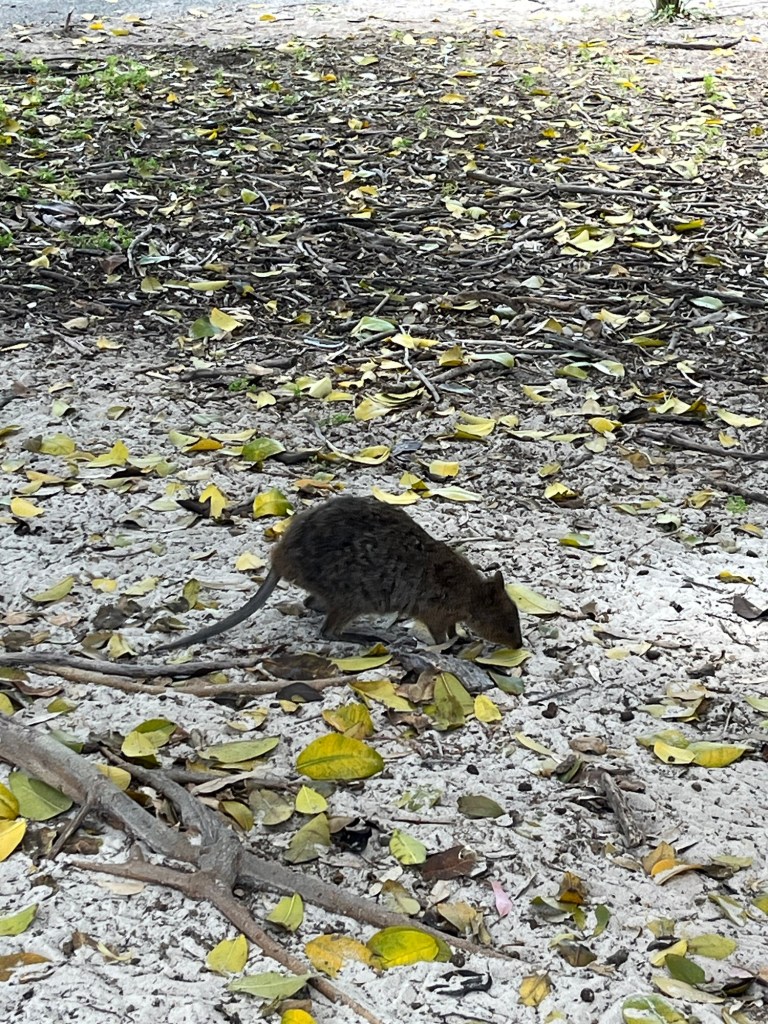
Rottnest Island is home to a large population of quokkas. There were also more flies so I was glad yet again for the fly net!!
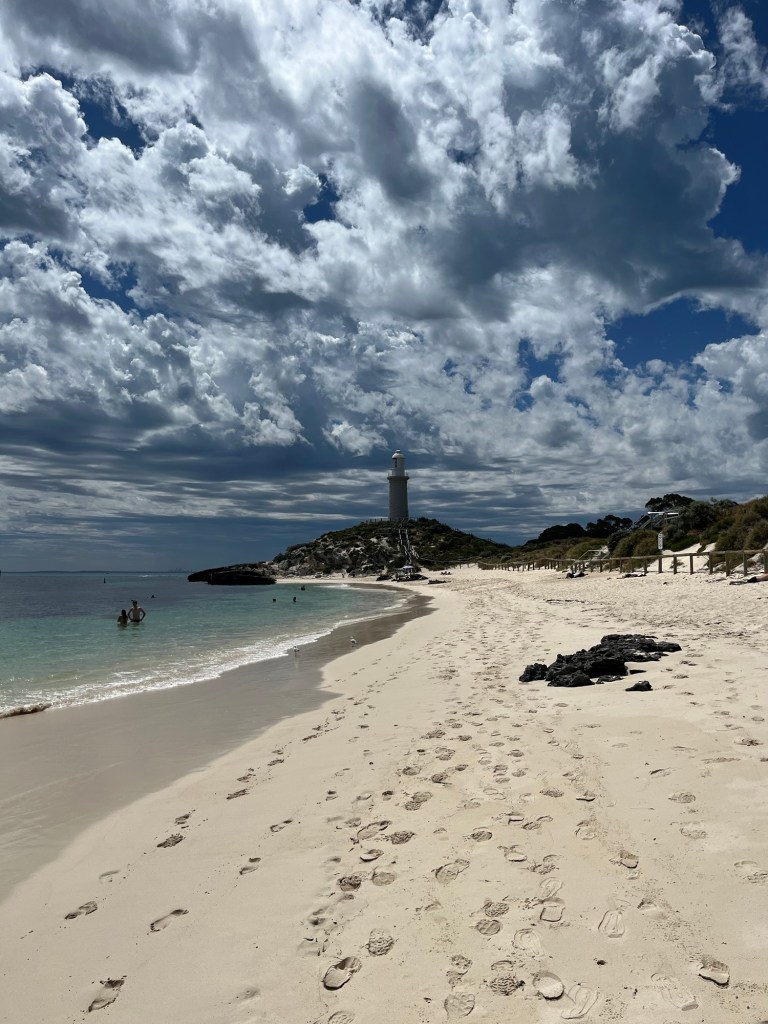
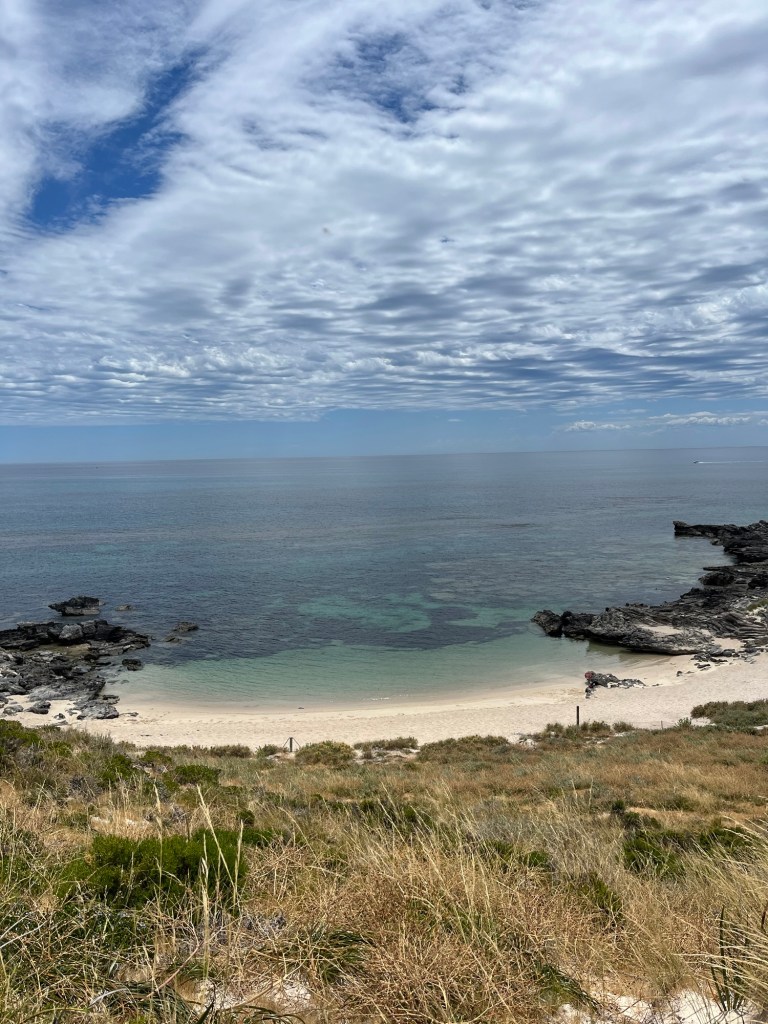
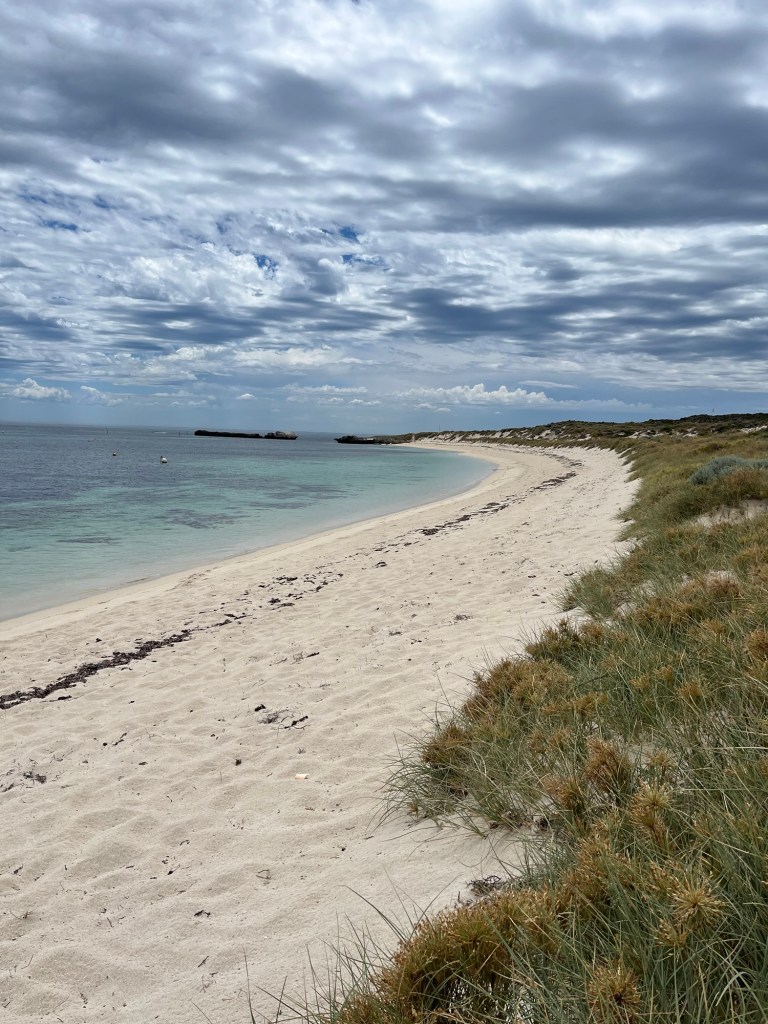
I hadn’t really made any plans for my 6 hours on the island, but spotted there was a Catherine Bay that I thought would be worth visiting… This turned into a 7 mile round hike in some quite sticky weather, but I passed through a number of extraordinarily beautiful beaches along the way.
Beaches on Rottnest Island, the last photo is Catherine Bay
After returning to the main settlement, I had lunch and was joined by a few quokkas who clearly knew where to look for food. There are signs everywhere telling you not to feed them so I was very careful about not spilling any of my Subway!
Quokkas are really quite odd animals, mouse-like, yet hopping along like a rabbit, or a small kangaroo. But very endearing
Quokka on Rottnest
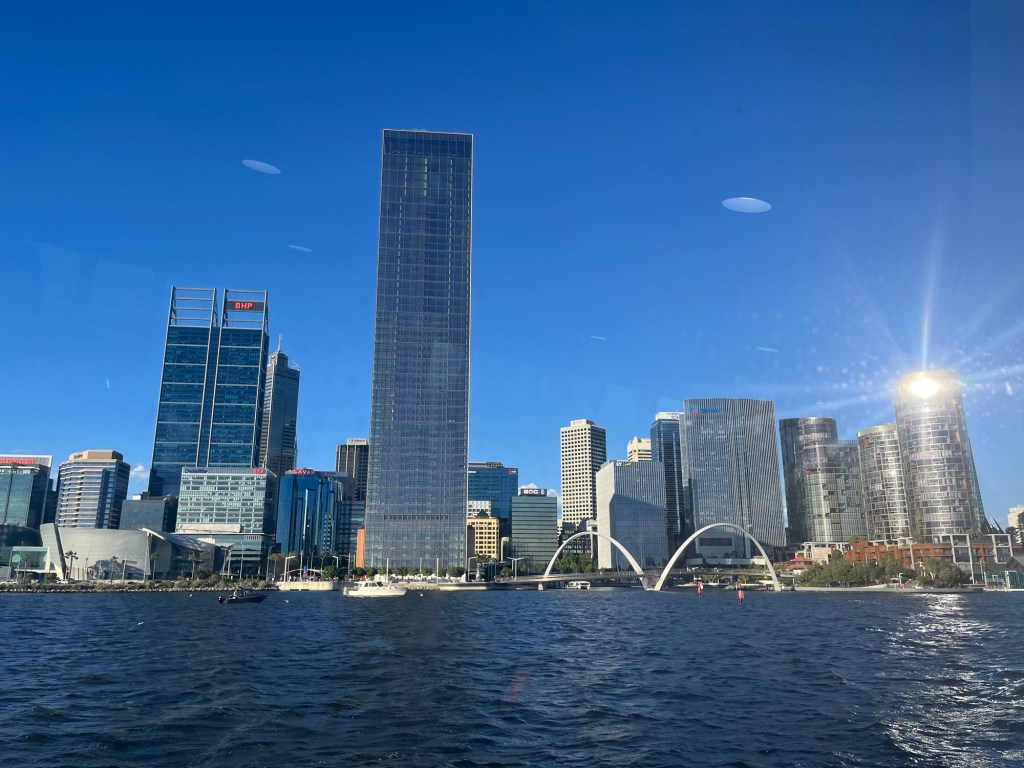
Caught the ferry back to Perth City (as intended) at 4.30pm. One of the advantages of getting the ferry all the way back to the city is that it cruises up the Swan River so you get some lovely views of the outer suburbs of the city, and then a great view of the CBD as you come into the jetty.
Elizabeth Quay and around from the ferry
The next day was a moving day, from the hostel into a hotel for the next 6 nights. This was part of the package I’d bought for the cricket. I’ve done a hotel and ticket package through Gullivers Sports Travel for the 3 test matches that I’m attending. It was quite nice having my own space, and the room had a decent-sized fridge so as I was on a room only deal, I went to the local IGA to stock up on healthy breakfast food and snacks.
The next day I was up and eager to get to the cricket. The Optus Stadium was about a 30 minute walk from the hotel and I followed the crowds towards the ground. It’s a very impressive stadium and after the usual security, I was in my seat just before the toss. I was sat amongst the Barmy Army and it was great fun with all the singing and clapping, trying (and one might argue failing) to encourage England to bat. The first half of day 1 was less than ideal but the second half, with Archer and Wood steaming in, was incredible to witness.
At the Optus Stadium, day 1 of the 2025/26 Men’s Ashes
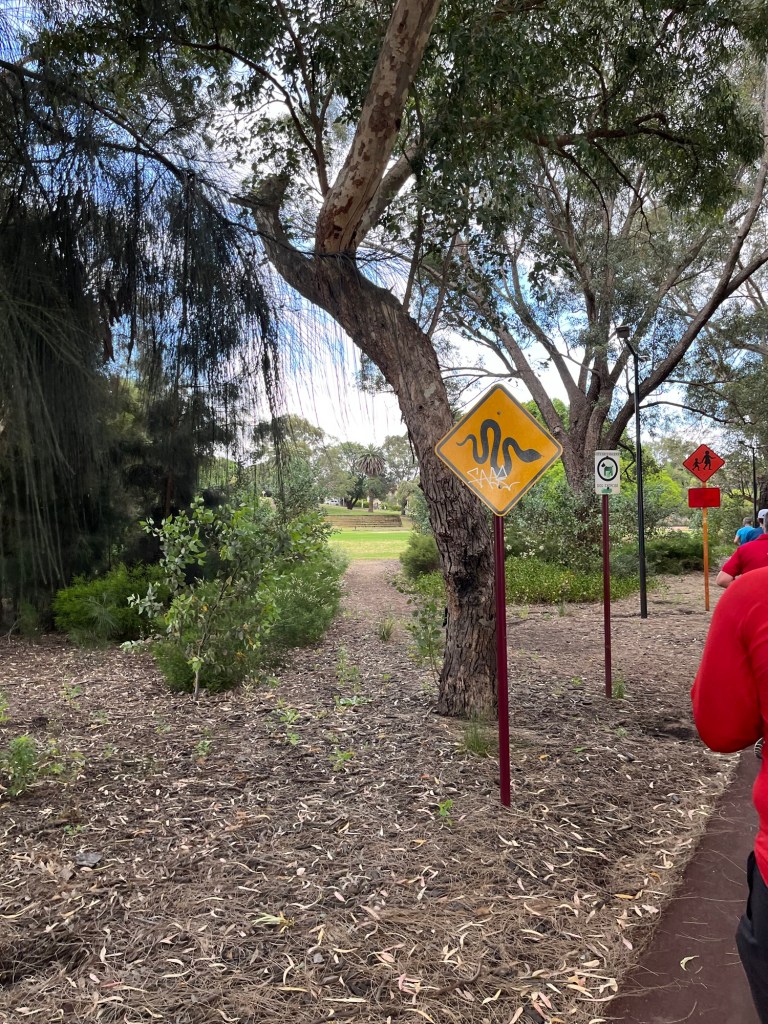
The next day was Saturday, which means parkrun. Parkruns in Perth start at 8am so I just about had enough time to walk the 20 or so minutes to Claisebrook Cove parkrun, huff and puff round the 5k in 35 minutes, walk back to the hotel to shower and then walk the 30 mins to the stadium in time for the first ball of day 2 at 10.20am. It was a slightly frantic morning, which included some interesting warning signs along the parkrun course…
Seen at Claisebrook cove parkrun; you don’t get this at Tremorfa!!
The less said about day 2 at the cricket, the better…it did mean I had 3 extra days in Perth though, to see things I’d so far missed.
I started by meeting up with some old travel companions from my Peru trip 10 years ago who live in Perth. It was so lovely to see Janine and Pat after all this time, we had brunch and a scenic drive around the city
That evening I ended up going to see the Kaiser Chiefs, who were in town and playing their debut album (out when I was at university) in full. It was great fun relieving my uni days as they blasted through Employment and some of their other hits.
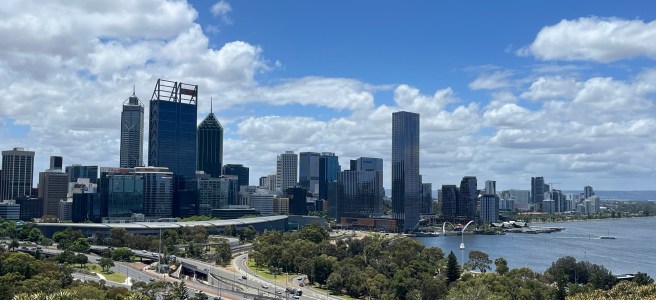
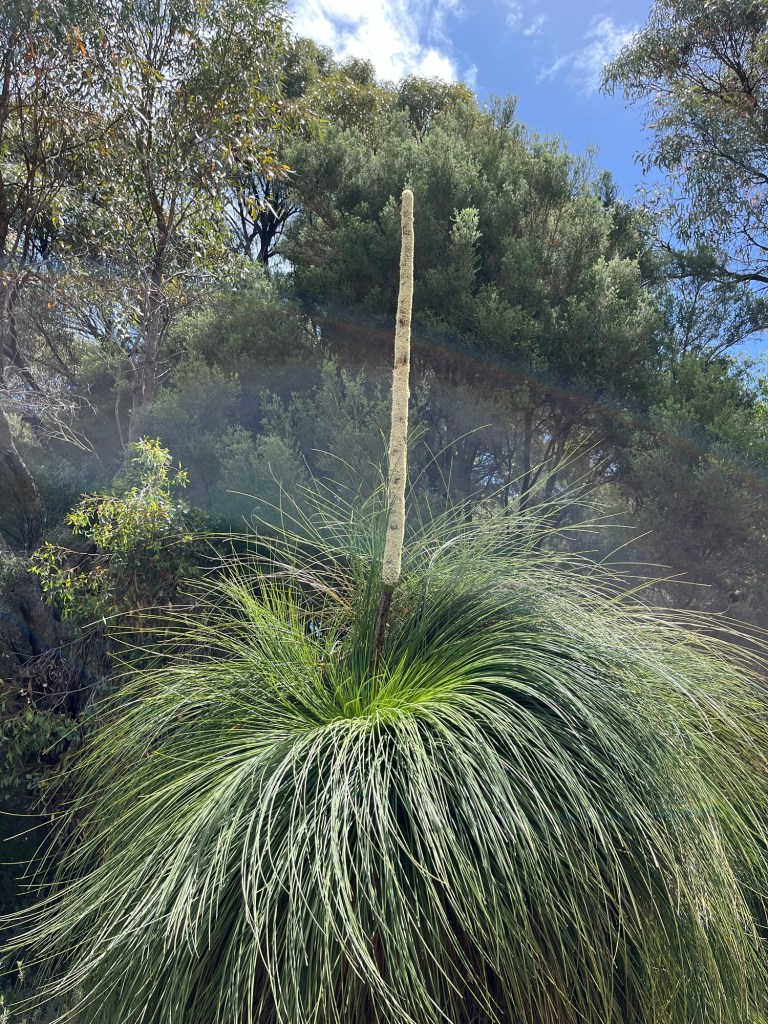
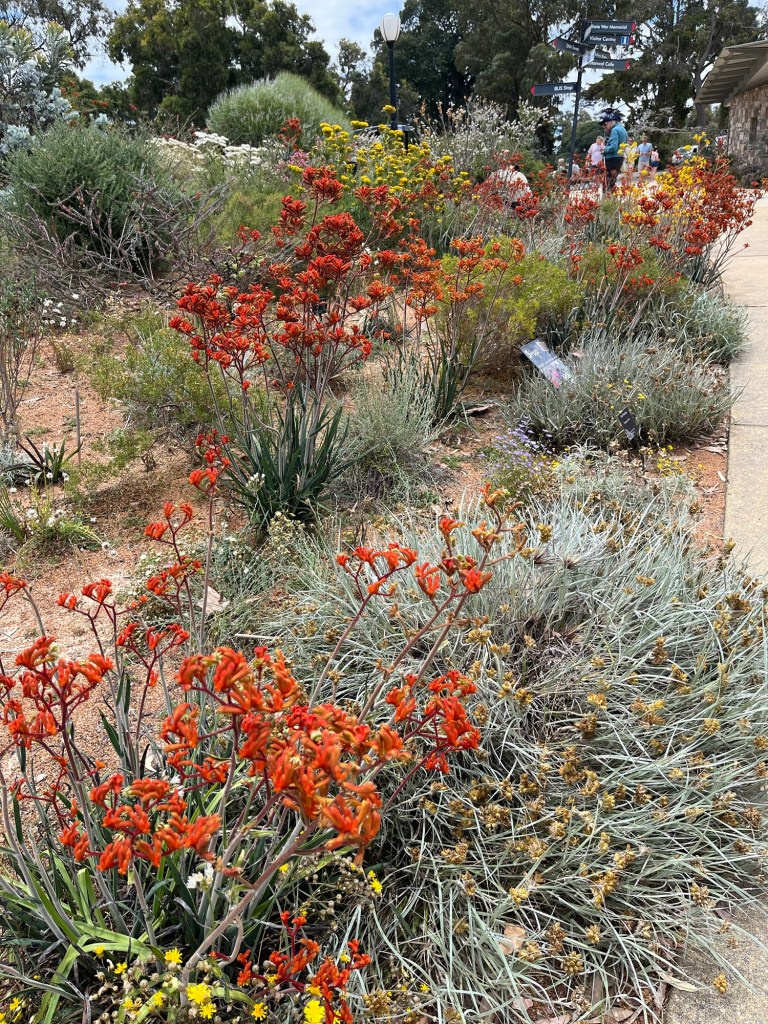
My remaining 2 days in Perth were full of walking. I went to Kings Park, for wonderful views of the city, and also a lovely walk through the Botanical Gardens. And on my final day, I failed to find any kangaroos during my walk to Heirisson Island Kangaroo Sanctuary.
In the Botanical Gardens
After 2 and a half weeks, it was time to leave Perth. I’ve really enjoyed my time here, and exploring Perth, Margaret River and the coast up to Monkey Mia. The coastline is absolutely stunning, the people are friendly and laid back, and it seems like a really good lifestyle here. The only bugbear (!) was all the flies!! I highly recommend a trip to this part of the world, and don’t forget you can fly direct from the UK and Western Europe to Perth, if you can stomach 16 hours or so in the air at once!
2022 was the year I finally went across the sea to Ireland. I decided to go on the ferry and take my car with me. Living in South Wales, I headed over to Fishguard and took a Stena Line ferry over to Rosslare in southeast Ireland. Having never taken a vehicle on a ferry before, I was a little apprehensive and decided to head over to west Wales the previous day so I would not run into any traffic issues. As it turned out, my ferry was on the day of the Queen’s funeral and I encountered very little traffic on the 30 minute drive between Milford Haven and Fishguard. As a result I was at the ferry terminal very early, however, check in was very straightforward (number plate) and I was 5th in the queue which made for a swift exit at the other side,
A calm crossing, and 3 and a half hours later we pulled into Rosslare harbour in the late afternoon. After some not-entirely-foolproof border control (British citizens do not require a passport to travel in Ireland, question from the border guards as I drove off – ‘what’s your nationality’ and waved me through on my answer without having to produce any evidence), I drove the 20 minutes or so to Wexford and my first hotel of the trip – The Talbot. I went for a quick stroll around the town before dinner and then an earlyish night as I had a lot planned for the next day.
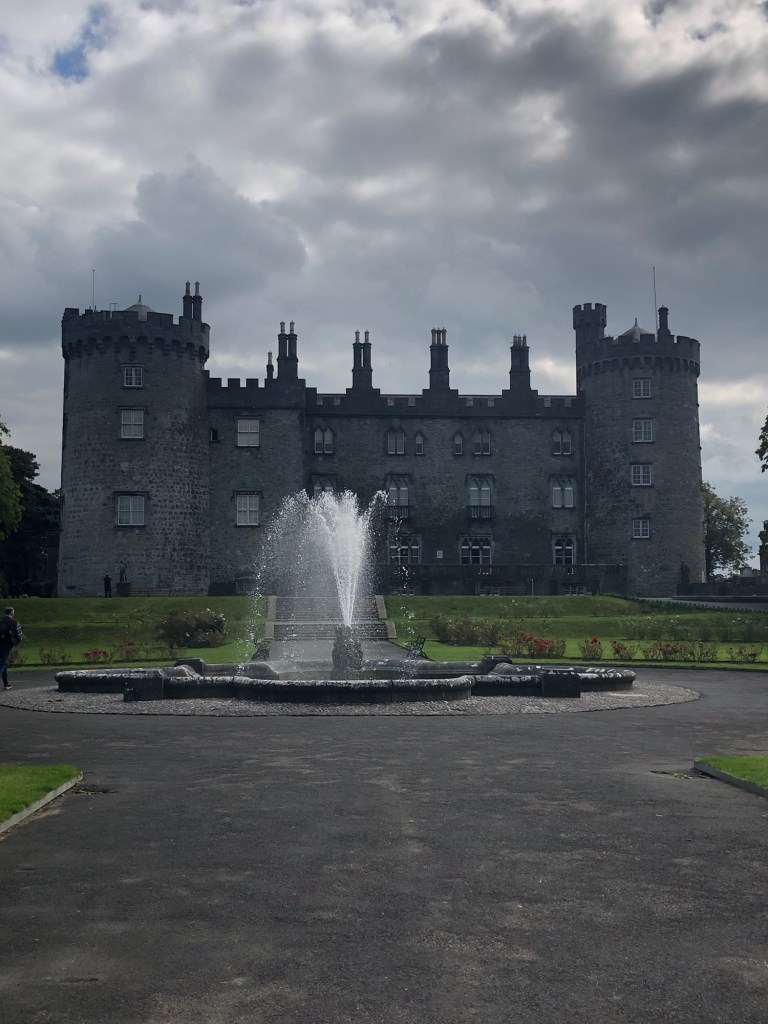
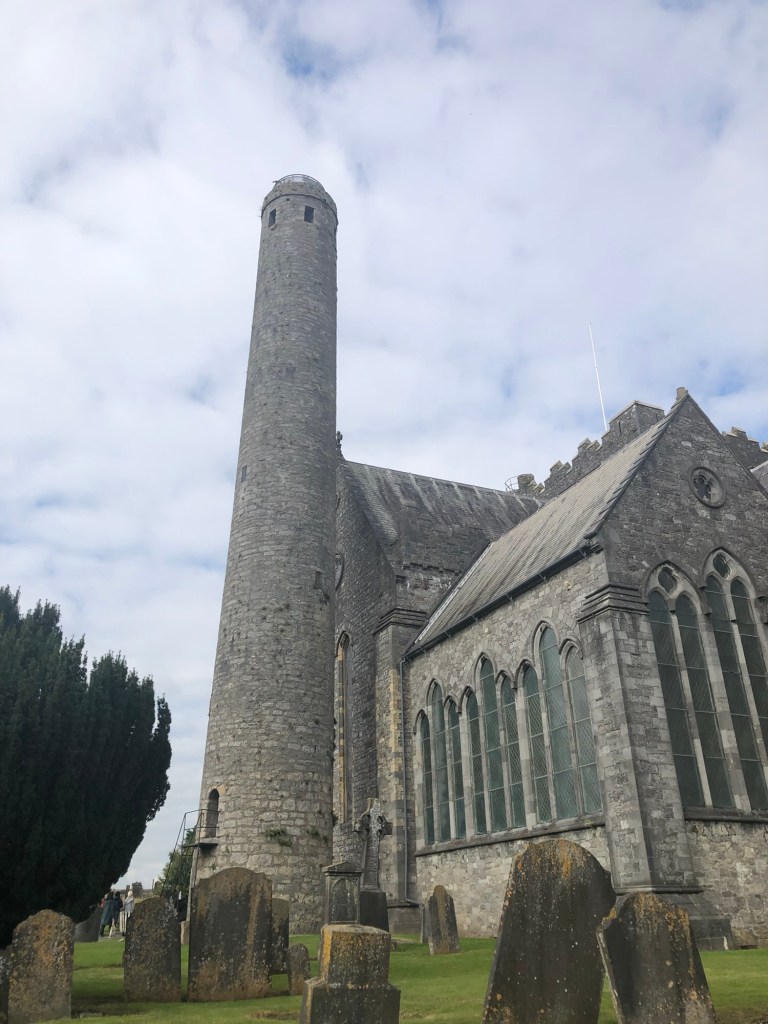
An early start to drive inland to Kilkenny. I took the scenic route which took a couple of hours, and parked up in the large central car park in Kilkenny mid morning. A very pretty town, I had a wander to St Canice’s Cathedral, and the down the Medieval Mile to Kilkenny Castle. After a scone and green tea I got back on the road and headed south to Waterford.
Kilkenny Castle; St Canice’s Cathedral
As I drove along the harbour front in Waterford, it really reminded me of being in Europe, and by that I mean continental Europe. For some reason I haven’t quite put my finger on, it reminded me of Bordeaux. A lovely, if brief, stroll around the picturesque streets before heading along the south coast to Cobh and eventually Cork.
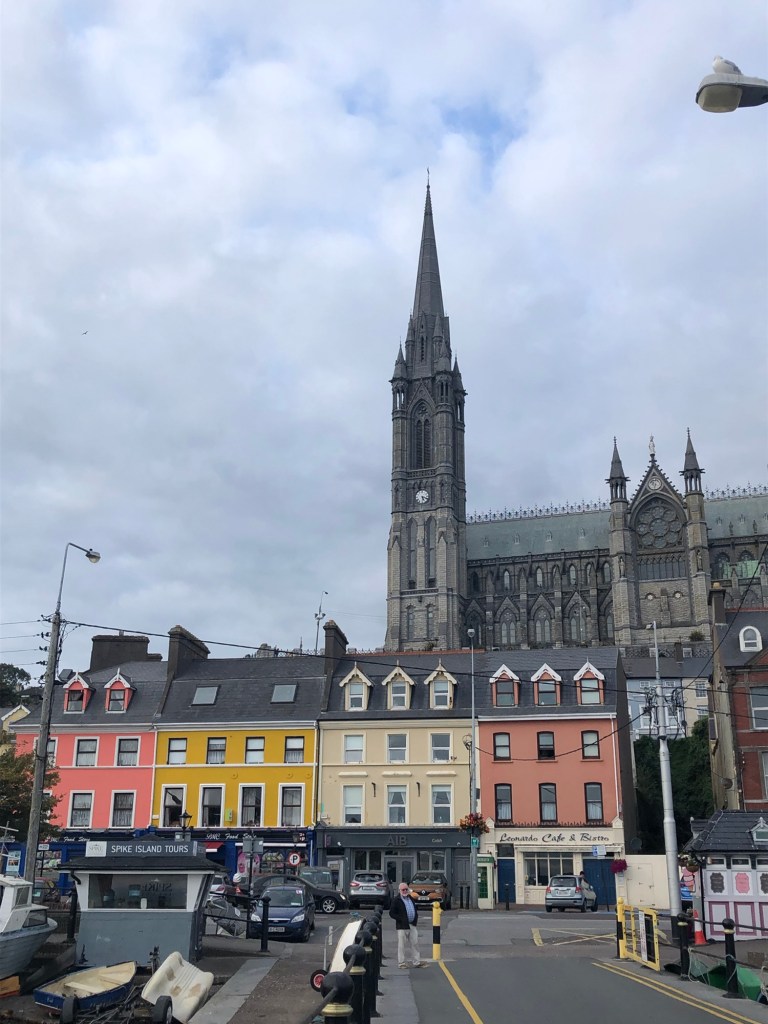
In Cobh (pronounced Cove), I parked in the Cathedral car park (free when I visited) and had a wander. It’s a steep walk down to the shorefront. Another very pretty little town, loved the colourful houses, I walked east along the front for about 15 minutes, to the Titanic Memorial Garden (Cobh was the last stop the Titanic made).
Colourful buildings in CobhCobh cathedral
From Cobh it was a short drive into Cork. I was staying in a funky modern hotel (The Dean Cork – as an aside, the first hotel I can remember staying in which provided tampons and sanitary towels in the rooms – kudos), next to the train station which was handy as there was no parking at the hotel. The good thing was I arrived in the evening so was able to find a parking space quite easily in Kent Station car park. The following morning when I left, it was jam-packed and APCOA were busy clamping vehicles which hadn’t paid, or had overstayed.
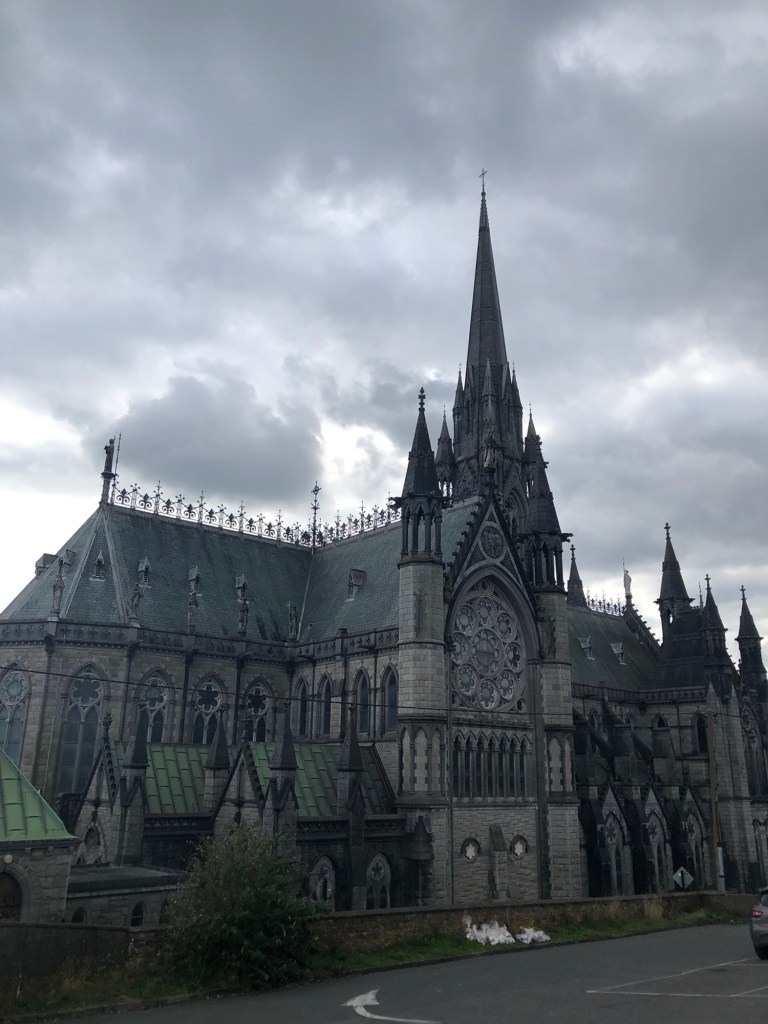
As I’d had a long day and arrived in the evening, I didn’t do much exploring that night. However, I had the following morning to have a wander around Cork. I went to St Fin Barre’s cathedral (after a false start where I’d put St Finbarr’s church into Google maps and ended up down a slightly dodgy-feeling side street).
St Fin Barre’s Cathedral interior was designed by William Burges, who designed the interiors of Cardiff Castle and Castell Coch, and I could definitely see his signature style in the decoration.
St Fin Barre’s Cathedral, Cork
I wandered back through the English Market and along the river before heading back on the road around lunchtime. My aim was Killarney, and I again went the scenic route, along the south coast, through Clonakilty, Skibbereen, Bantry, the Caha Pass, Kenmare and finally to Killarney.
After filling up at Tesco (both the car and some supplies), I headed to my home for the next 2 nights, a very cute glamping pod about a kilometre out of Killarney.
The next day was one of the highlights of my trip – the Ring Of Kerry. Sadly the weather was not looking that encouraging, so I delayed my start the next day to mid morning, after most of the weather had cleared. I drove in an anti-clockwise direction (top tip – this is the same way that the coaches drive so you are less likely to meet one head on. In my research for this trip, I read a lot of other blog posts that talked about driving in Ireland and the narrow roads. Most of them were from a North American perspective, and to be absolutely fair to them, the roads are significantly narrower than you generally find in North America, and you’re on the other side of the road (left), but if you are a Brit, the roads are absolutely fine and nothing you wouldn’t find in the UK).
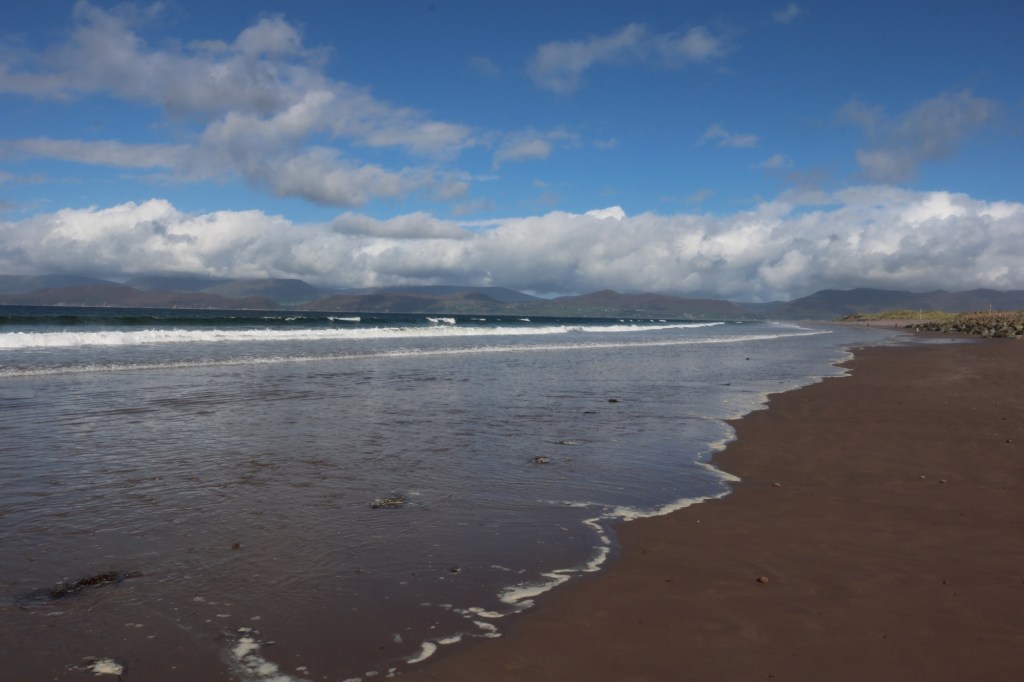
First stop was in Killorglin, crossing the river and pulling into the first car park I came across. I don’t think I quite saw the best of Killorglin. After a very brief wander round some colourful buildings I hopped back in the car and carried on to my next stop at Rossbeigh Beach. A long stretch of rugged west-facing coast, perhaps a spit actually. By this point the weather had cheered up considerably.
Rossbeigh Beach
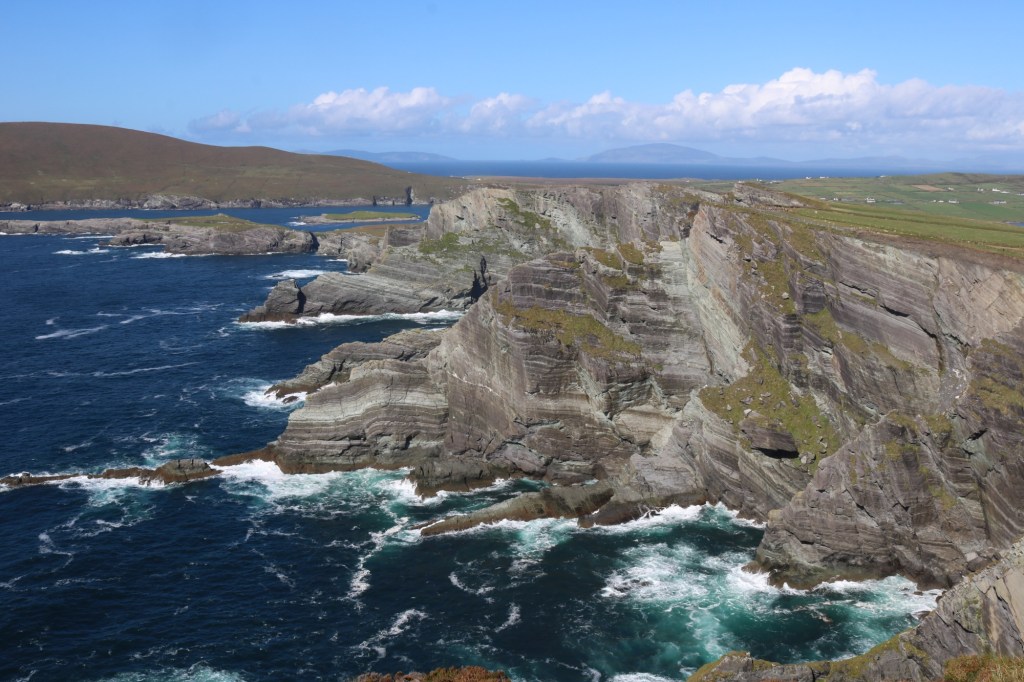
Back in the car to carry on driving. I had a lunch stop at the Mountain Stage viewpoint before a further pit stop at Cahersiveen. Another stereotypically colourful Irish town. I then took in the additional loop of the Ring of Skellig. This was a smaller road, no buses, and in some spots it’s single track with passing places. But it is beautiful. Stopped off in Portmagee and at the Kerry Cliffs (€5) where the coastline is absolutely stunning.
Kerry Cliffs
After this I carried on to Sneem and to meet my cousin-in-law and his family for the first time which was really lovely. Dinner at the local pub before I headed back to Killarney through the National Park, just as the sun was setting. All in all a pretty epic day.
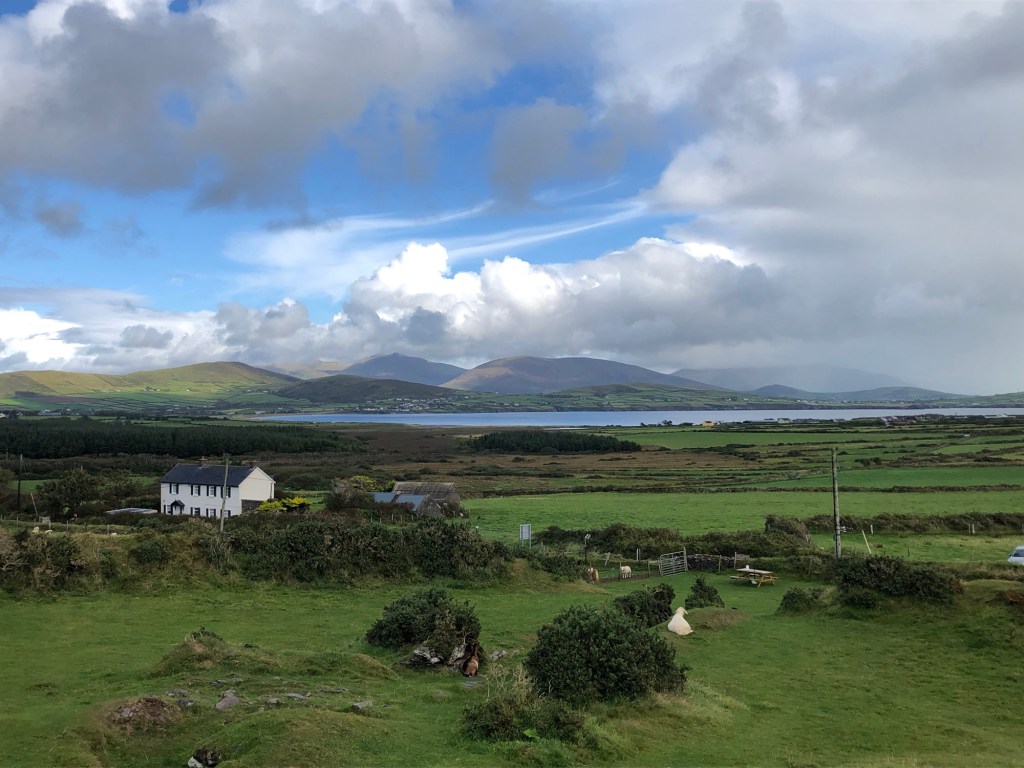
The next day it was off for another scenic drive to my home for the following night, Dingle and the Dingle Peninsula. My first stop was at Inch Beach, just as some very ominous grey clouds were about to dump their contents on the beach. A quick walk before a car picnic whilst the rain passed. As I carried on into the peninsula, the weather improved significantly and by the time I got my first glimpse of the colourful houses in Dingle, the sky was blue.
Colour in Dingle
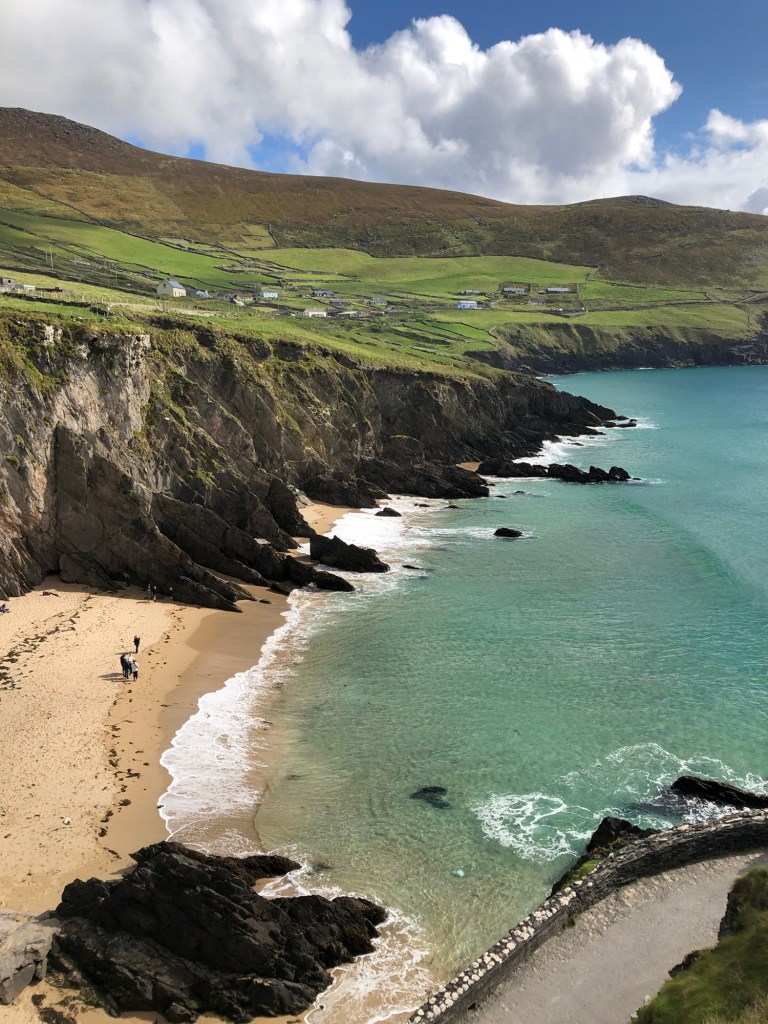
Beyond Dingle is the scenic Slea Head Drive. Not as touristy as the Ring of Kerry, and plenty of stunning coastline.
Views on the Slea Head Drive, Dingle Peninsula
After an evening in Dingle involving fish and chips and the strains of live music in many of the pubs, I was up and off early the next day towards Limerick. The hotel I had booked in Limerick did not have any parking so I utilised a town centre multi-storey car park (€23 for 24 hours parking). At the time, many roads in the centre of Limerick were being dug up which meant a couple of false starts before finding the car park entrance.
I’d arrived in Limerick in the early afternoon and after checking into the hotel, I headed out and about. Firstly to the Hunt Museum, then to King John’s Castle, and finally to St Mary’s Cathedral. A very pleasant way to fill a Saturday afternoon.
Off again the next day, back out to the coast. I was on my way to Galway, but I stopped along the way at the Cliffs of Moher. A truly spectacular stretch of coastline. There was a large car park which was already filling up with cars and coaches by mid morning (though it was a Sunday at the tail end of the summer). There is a coastal path along the cliffs, and whilst the hoards gather around the visitor centre for views, you only have to walk about 10 minutes along the cliffs in either direction to get a more peaceful view. In the end I made a much longer walk of it, and had a good stretch of the legs along the cliffs for a couple of hours.
By mid afternoon I was back in the car and heading towards Galway for a 2 night stop. I was staying in a hotel in Salthill, slightly out of the main town. It was a gentle 25-30 minute walk along the prom to Galway itself, which I did the following morning. Galway is another very pretty town.
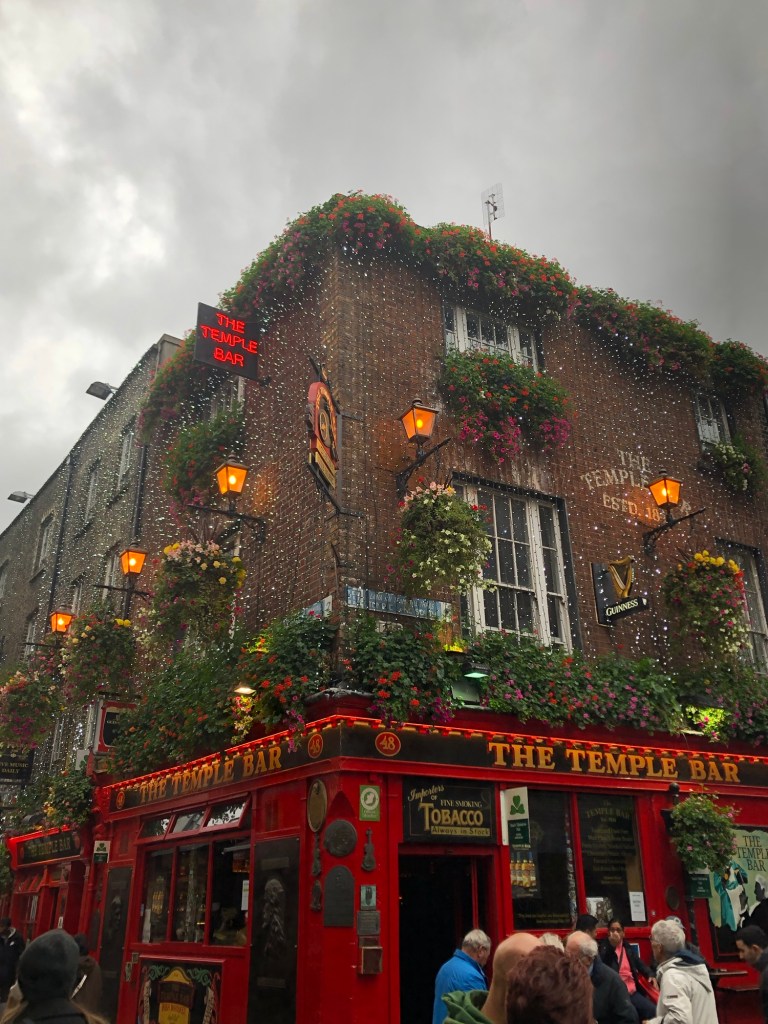
After Galway, it was a straight drive to Dublin for the final 2 nights of my trip. Driving in the centre of Dublin is not for the faint-hearted!! I think I ended up driving around the block 3 times before I managed to find somewhere to park in front of my hotel. I’d arrived late afternoon, and as it was now the end of September, it was a little on the cool side. I went for a wander around the city centre, to get my bearings before a day of sightseeing the next day.
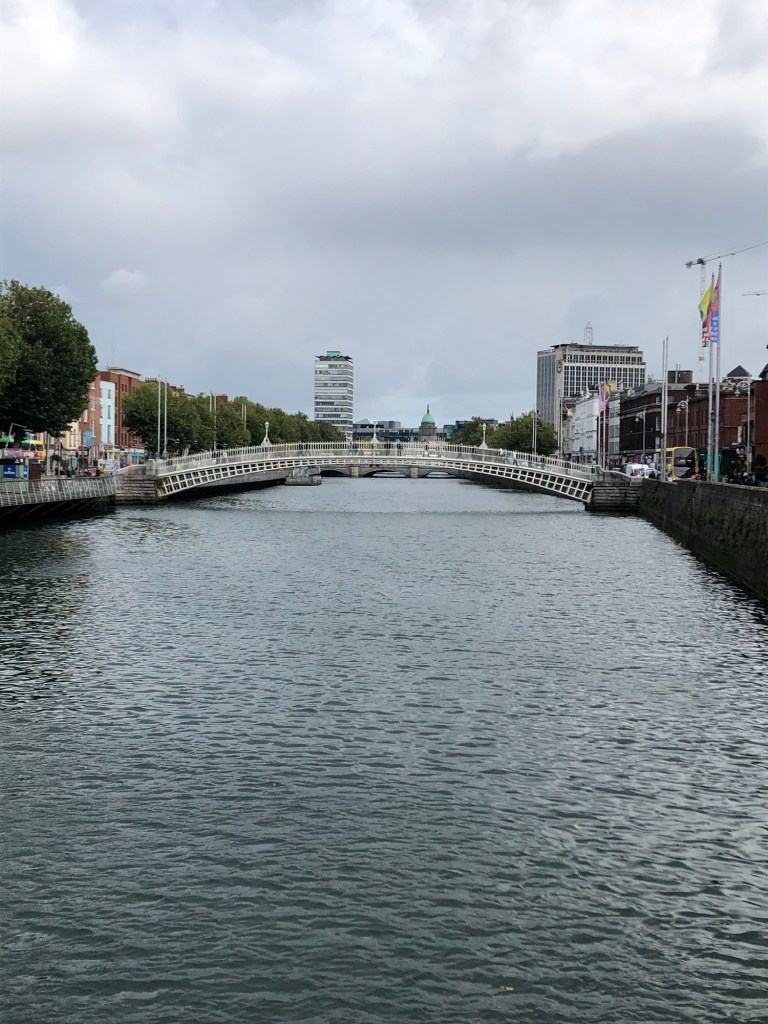
Made it to Temple Bar for a photo, but not a drink. The following day I saw Dublin Castle, several cathedrals, headed into an art gallery during a downpour, and meandered along the river to find the Spire
Temple Bar; Ha’penny Bridge; the Spire – all in Dublin
My final day was a drive down the coast back to Rosslare for the ferry. I stopped off in Bray for a coffee and a stroll and then later on at the beautiful Brittas Bay Beach before heading off for my early evening ferry back to Wales.
All in all I really loved this road trip. Part of me can’t believe I’d never been to Ireland even though it’s so close. Taking the ferry was so straightforward, I’d definitely do it again.
2020 was certainly a year like no other, and forced me to look closer to home for holidays. During the summer, I’d booked a glamping pod on a farm on the Pembrokeshire coast for 3 days in late November. As autumn progressed and things got worse with the pandemic, I’d resigned myself to not being able to go. As it turned out, there was a short window here in Wales where we were able to travel. And so it was that I set out on a beautiful, crisp, late November morning from Cardiff, and a couple of hours later I stopped for a packed lunch on the beach at Newgale.
Newgale
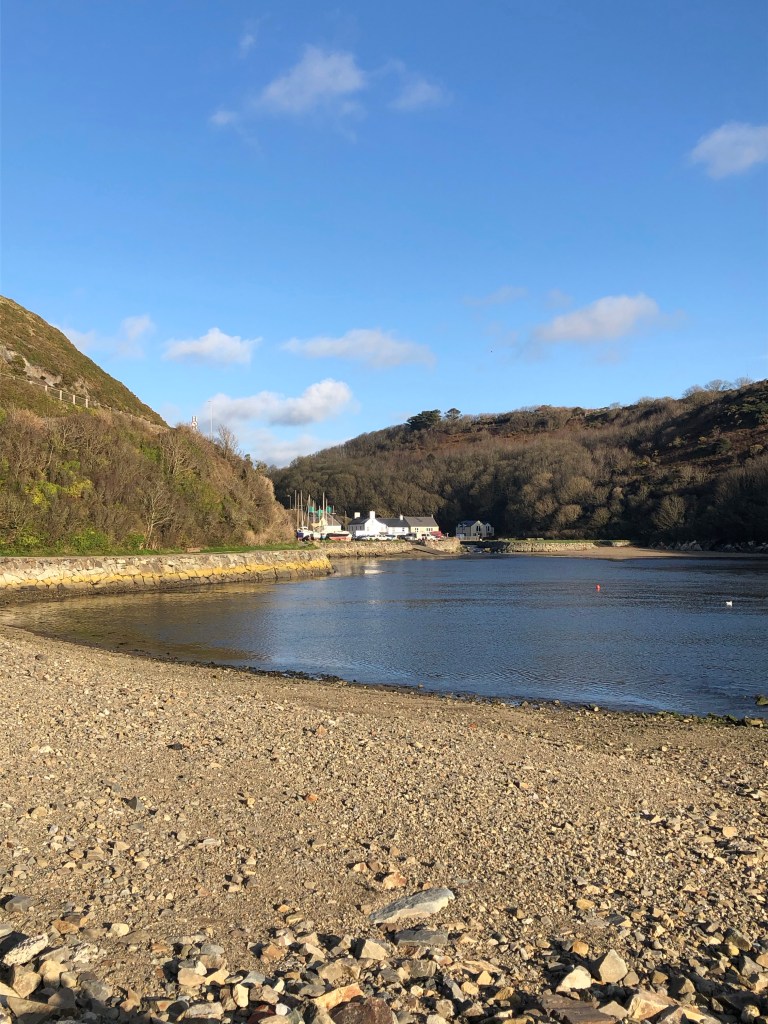
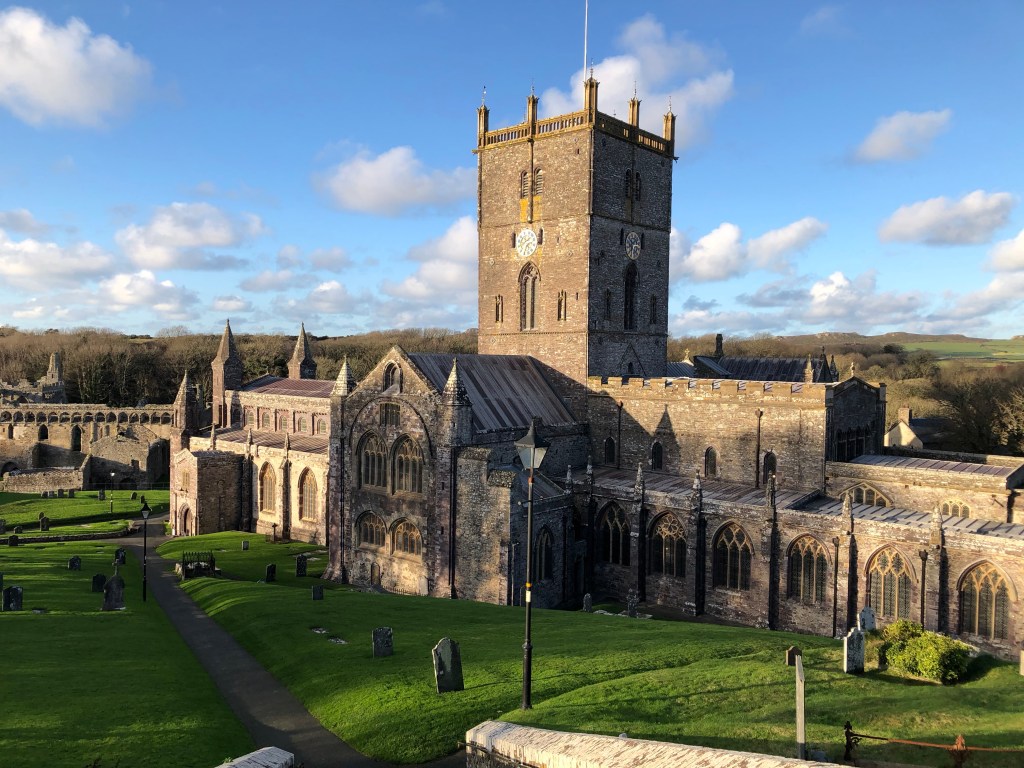
After lunch I headed a few minutes down the road to Solva and had a brief wander to the lime kilns, before hopping back in the car and carrying on to the small city of St David’s. I visited the cathedral (hence it being a city) as well as the ruins of the Bishop’s Palace.
Solva; St David’s Cathedral
After a very short walk around the town, I then headed approximately 10 minutes up the road to the farm where my pod was located, in the hamlet of Square and Compass (such a great name!). Whilst it looked as though there were hookups for caravans, there was no one else staying, and so it was a blissfully peaceful few days. The pod was super-cute, and you could just about glimpse the sea from the front decking.
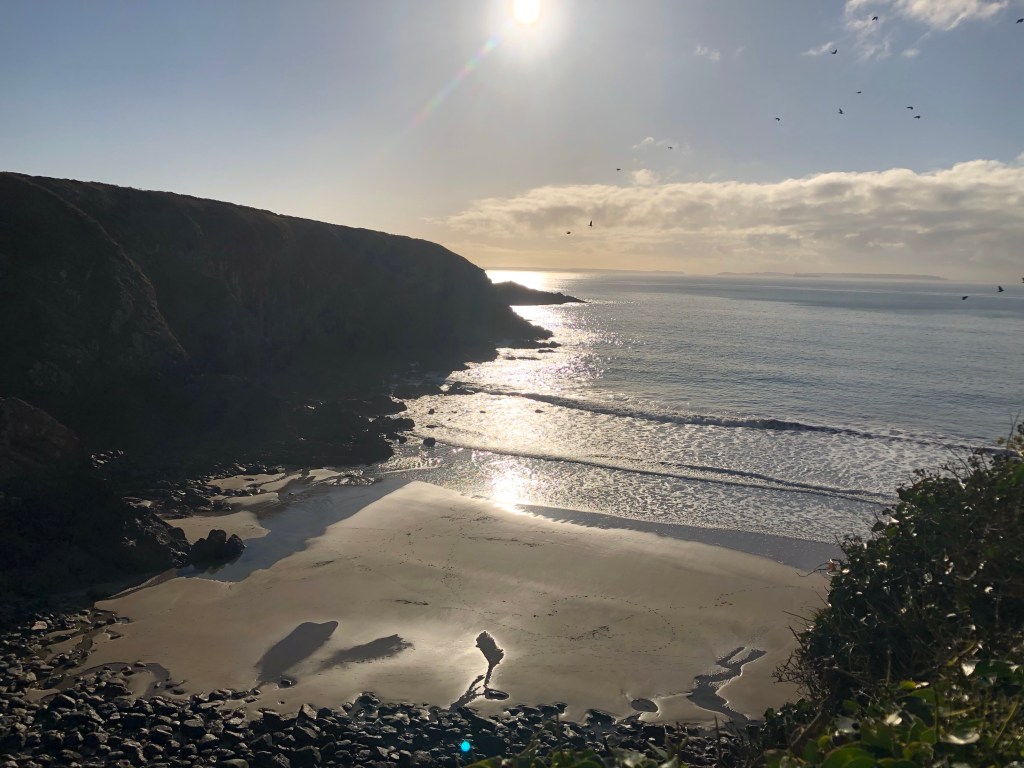
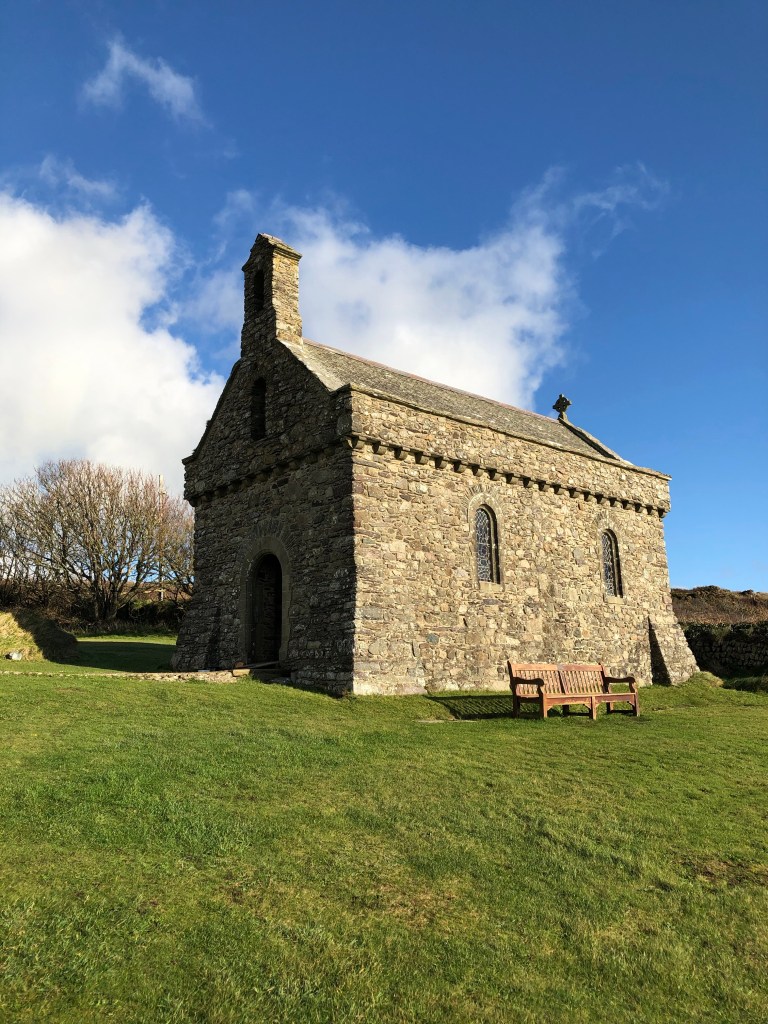
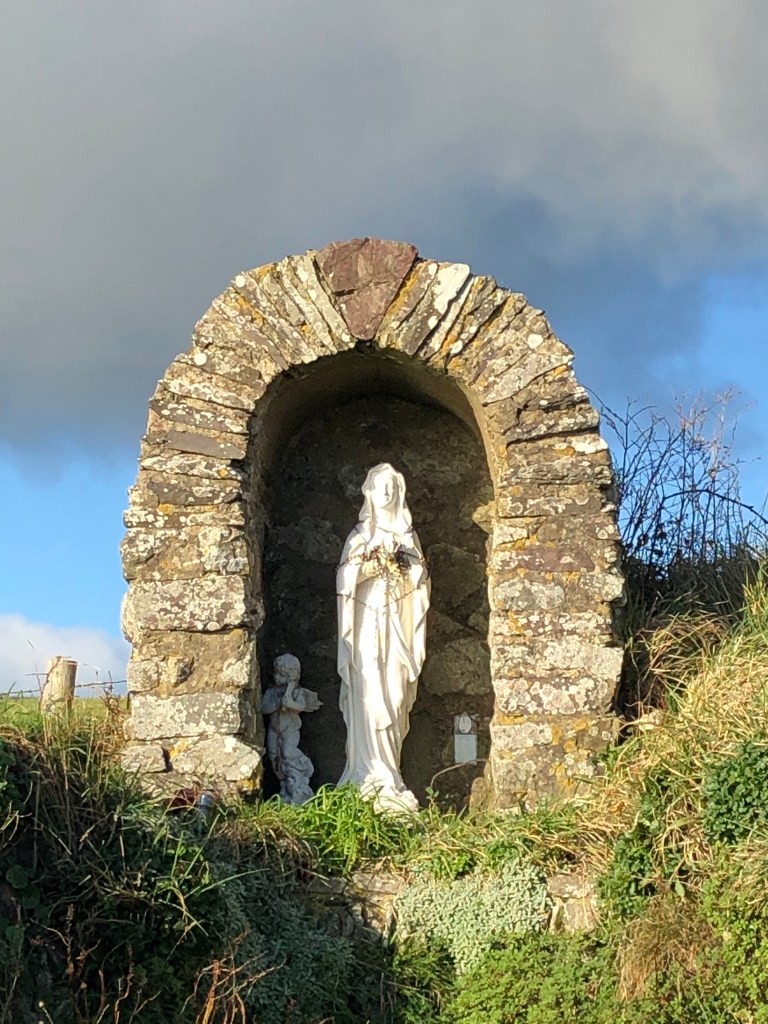
I’d planned myself a little itinerary, and so the next morning, after making a packed lunch, I headed back to St David’s and across to Caerfai Bay. After a walk down to the beach, where I was the only person, I then set off west on the coastal path and arrived at St Non’s Chapel and Well.
Caerfai Bay; St Non’s Chapel; St Non
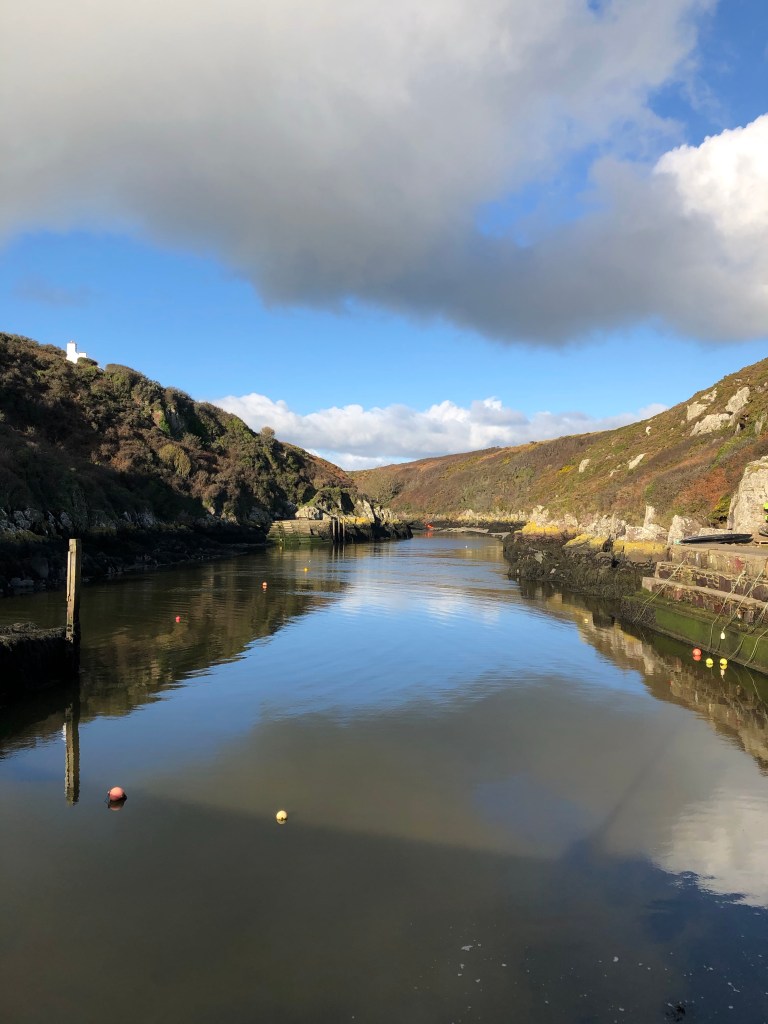
It was a glorious late autumn day, and I carried on along the path to Porthclais Harbour, where I found myself a sheltered spot on the harbour wall for lunch.
Porthclais Harbour
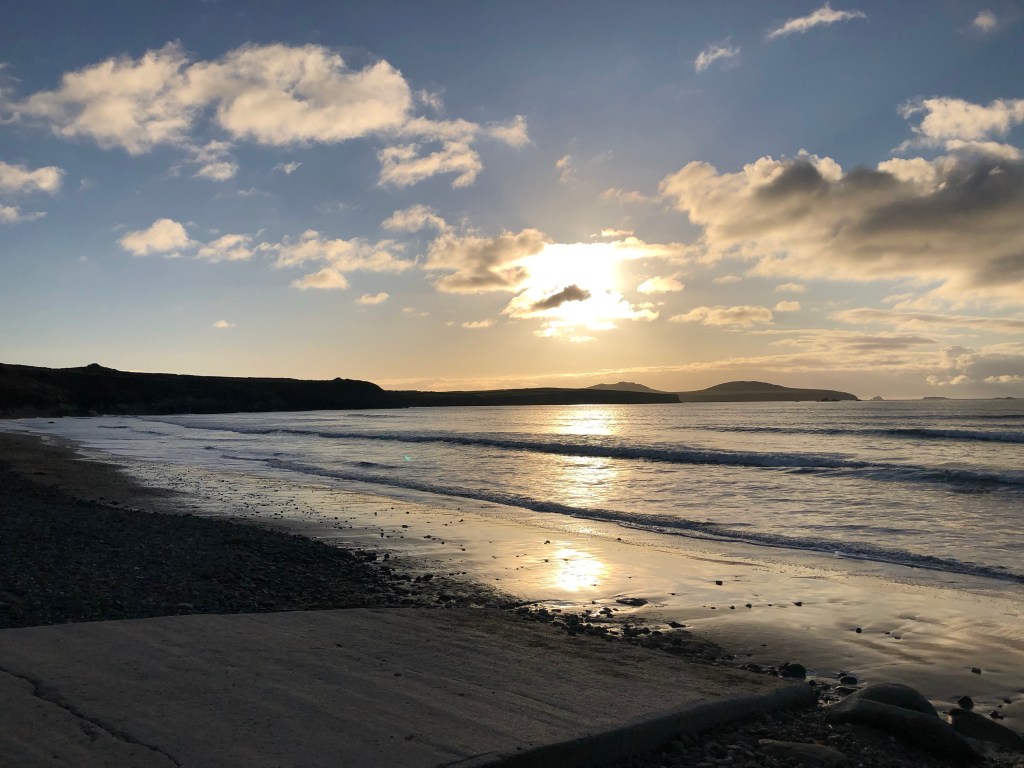
After lunch I retraced my steps back along the coastal path, back to Caerfai Bay and my car. I then drove back through St David’s and out to Whitesands Bay. A lovely, sweeping bay, which looked evocative in the setting sun on a winters afternoon. I had a walk to the north of the bay, towards Porthmelgan Beach, and back again, before calling it a day and heading back to my little pod.
Whitesands Bay
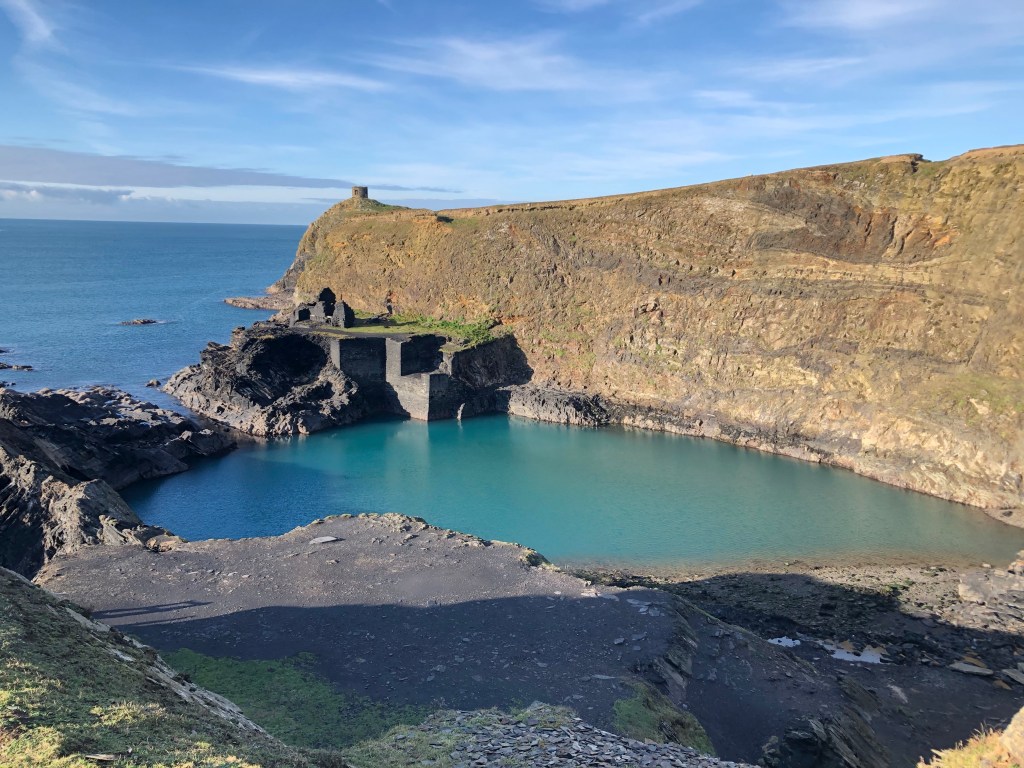
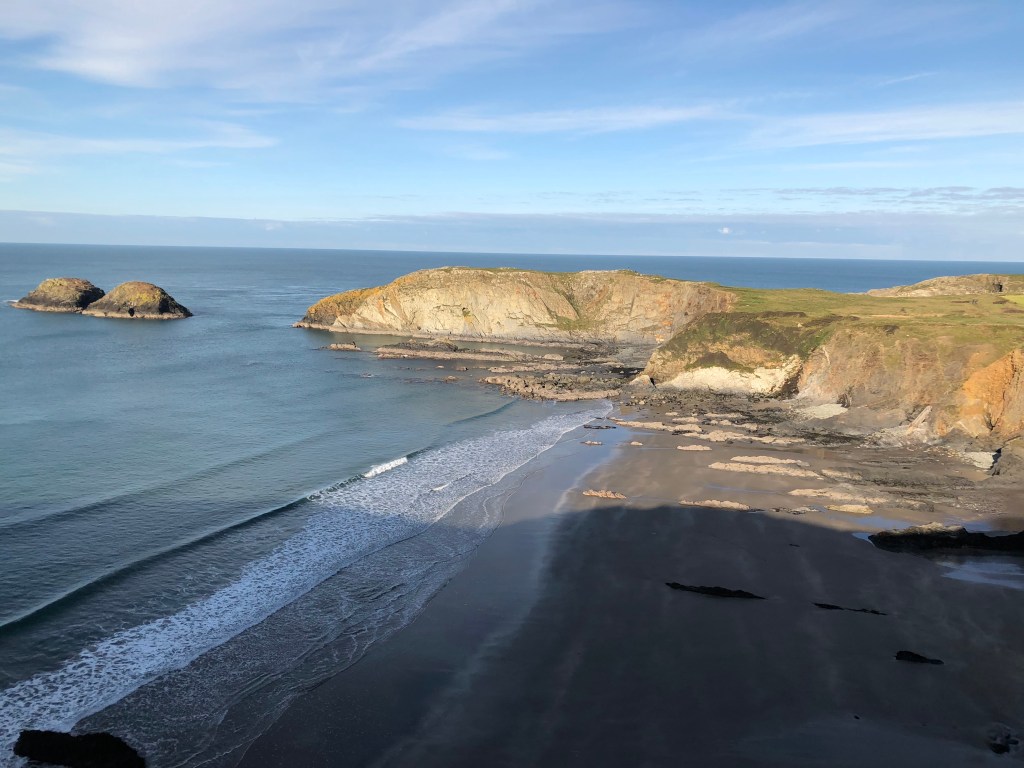
The next day it was a short drive in the other direction, to Aberreiddy Beach and the Blue Lagoon, a remnant from this area’s slate mining past. I was so fortunate with the weather, which really highlighted the blue of the Blue Lagoon. I then walked north along the coastal path to Porthgain. This part of the walk was spectacular, hugging the cliffs, and with a couple of detours down to secluded bays.
Porthgain Harbour; the Blue Lagoon; along the Pembrokeshire Coast Path
I arrived in Porthgain at lunchtime and found a picnic bench for my packed lunch, before making the return trip along the coastal path. I then drove to Fishguard (somewhere I’d return to when going to Ireland in 2022), before returning to my pod for a relaxing evening with wine and S1 of Ted Lasso.
This part of Wales is stunningly beautiful and I was so lucky with the weather in November and the ability to travel more than 5 miles from my home during the dark days of the pandemic. I really do recommend it.
On my way back from Cuba, I had a 3 day stopover in Mexico City – as I had a layover there anyway, I figured I might as well spend a couple of days there.
Mexico City, Ciudad de Mexico also stylised as CDMX, is the largest city in North America and is also at altitude – over 7,300 feet, which I hadn’t realised beforehand. The city is in a basin and surrounded by peaks and volcanoes which makes for an interesting descent into the airport.
I had arrived from Cuba in the early evening. I was staying at an Ibis Styles in Zona Rosa district. After a brief wander and a McDonalds (ordered in my faltering Spanish), I had an early night as I had an early start the following day for a guided tour around some of the main sights in the centre of the city.
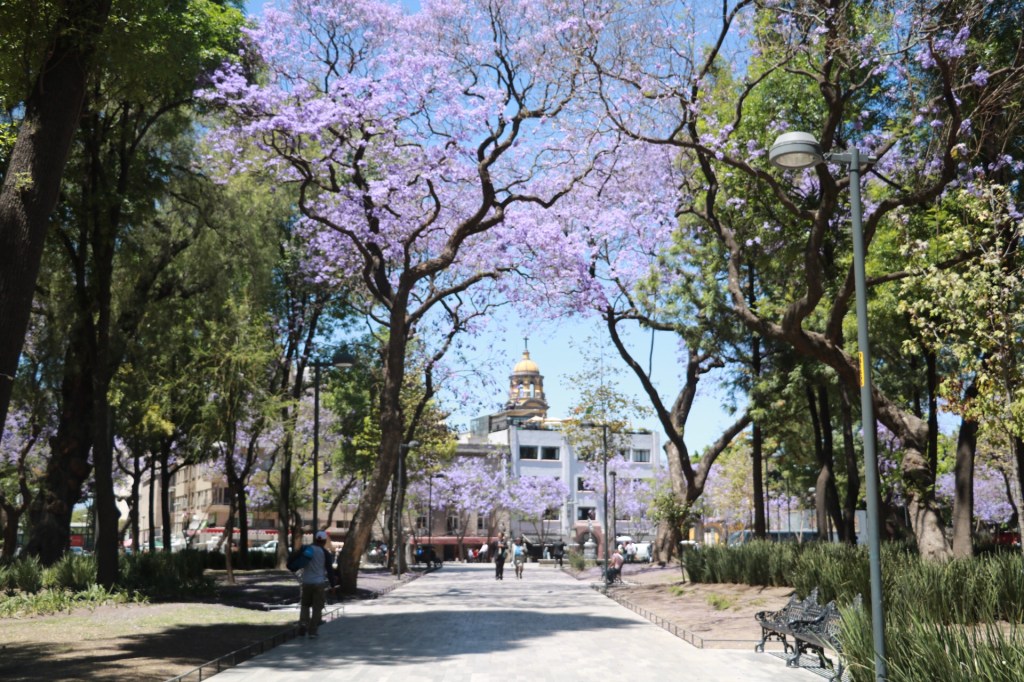
I was met at the hotel by my guides and we took a local bus and then the Metro to the historic centre of Mexico City. We emerged from the metro onto the Zocalo, the main plaza in Mexico City. We visited the Templo Mayor and its museum which contains heaps of artefacts from the excavation of the site, and lots of history on the Mexica peoples. We popped into the cathedral briefly as mass was taking place, and then walked through the streets towards the Palacio de belles artes (Palace of Fine Arts) and Alameda Park. The trees all around the city had this gorgeous purple blossom (I visited in March 2019).
Cathedral; Beautiful blossom in Alameda Park
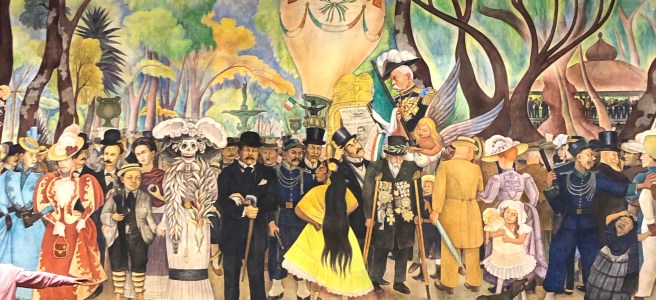
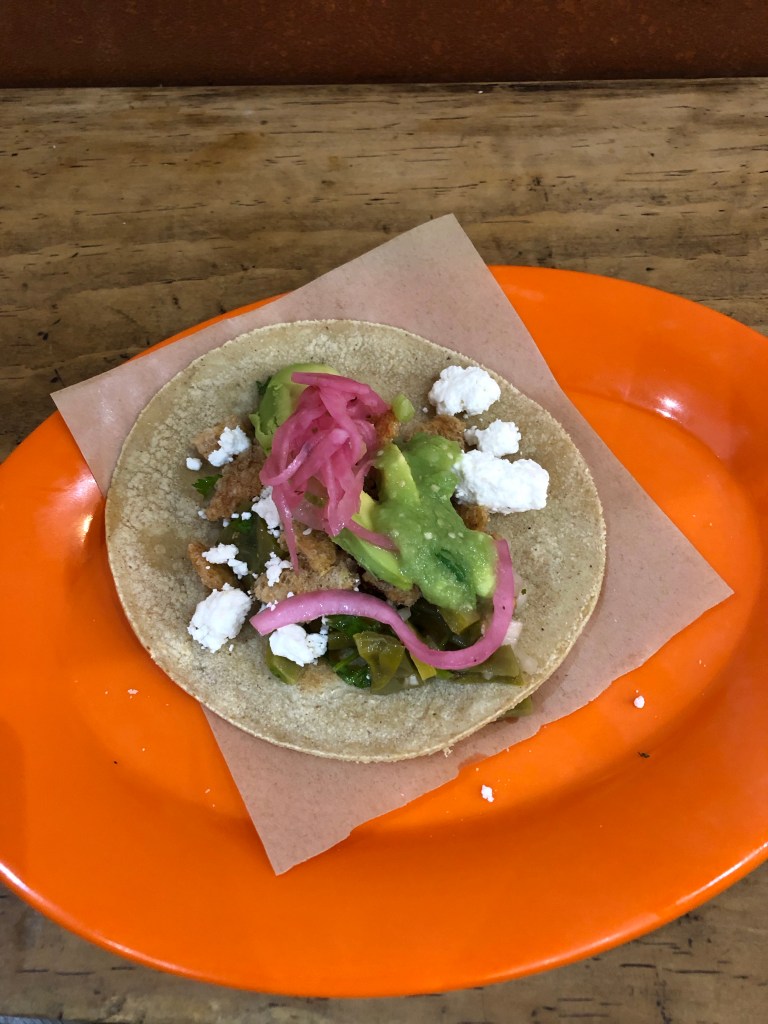
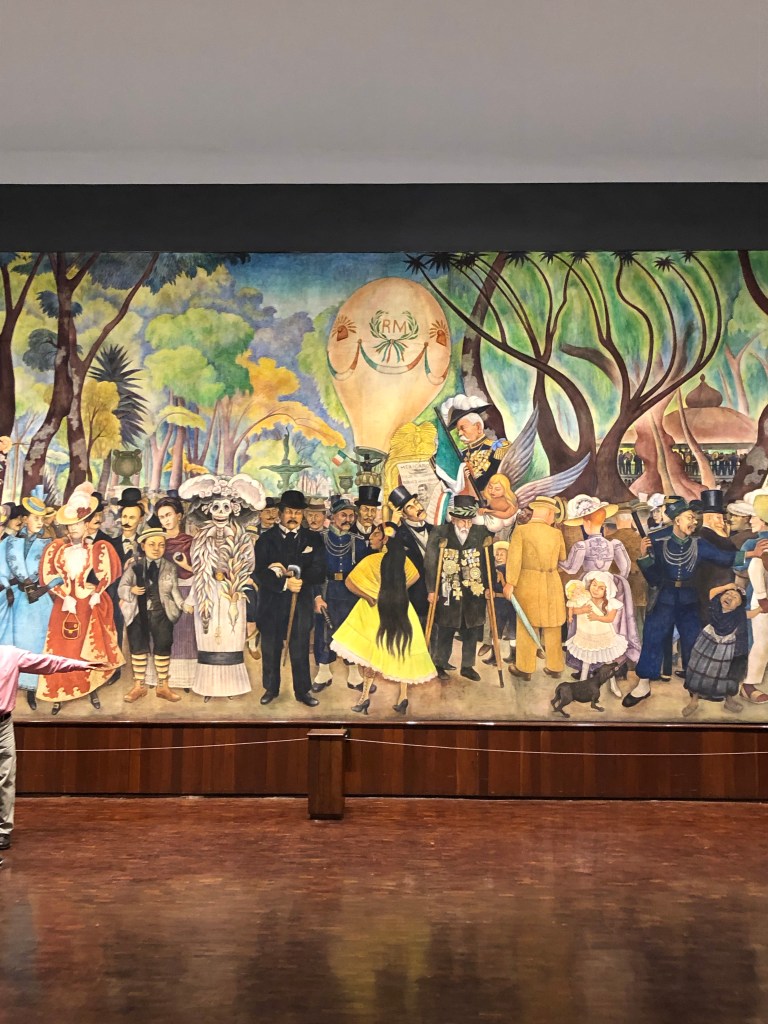
We then had authentic Mexican tacos for lunch (delicious) and visited Diego Rivera’s famous mural before heading to San Juan market to try some (less delicious) local delicacies including grasshoppers and ants. I can’t say I enjoyed them, but when in Rome…
Authentic Mexican tacos for lunch; Diego Rivera’s ‘Dream of a Sunday Afternoon in Alameda Park’
That was the end of the guided tour, and I took an Uber back to my hotel for a quick refresh before heading off down the Avenida Chapultepec towards Chapultepec Castle (featured as the starting point of series 2 of the BBC’s Race Across The World). I wandered around the castle and its grounds for the rest of the afternoon before heading back to the hotel for another early night.
The view down Avenida Chapultepec from Chapultepec Castle
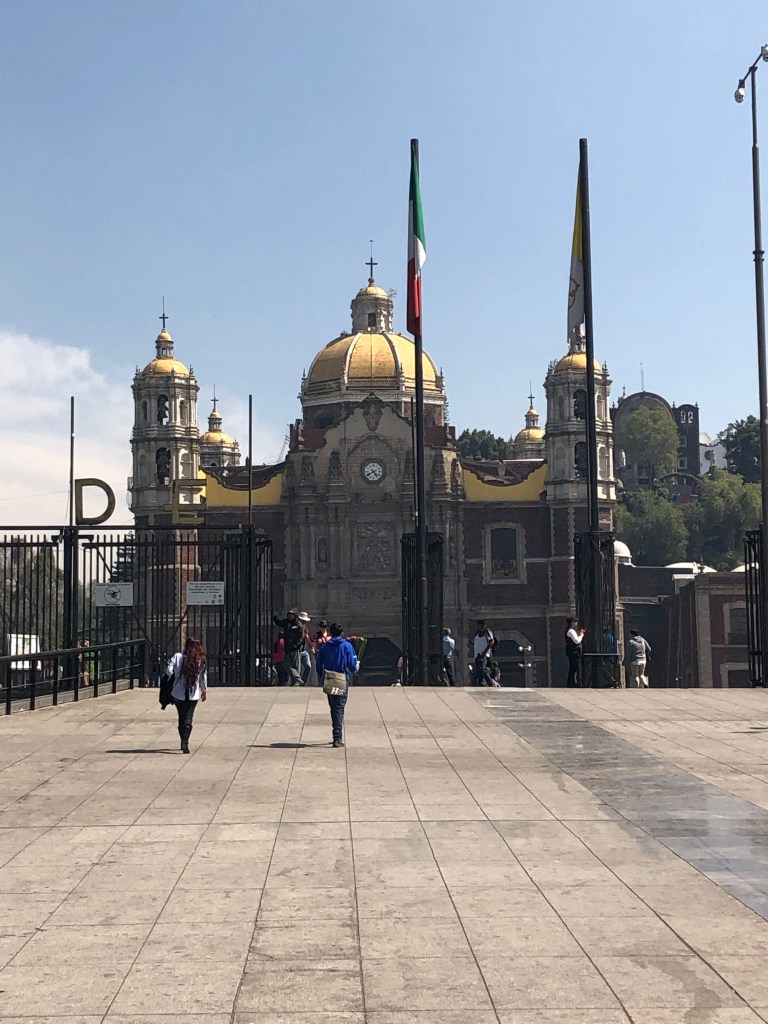
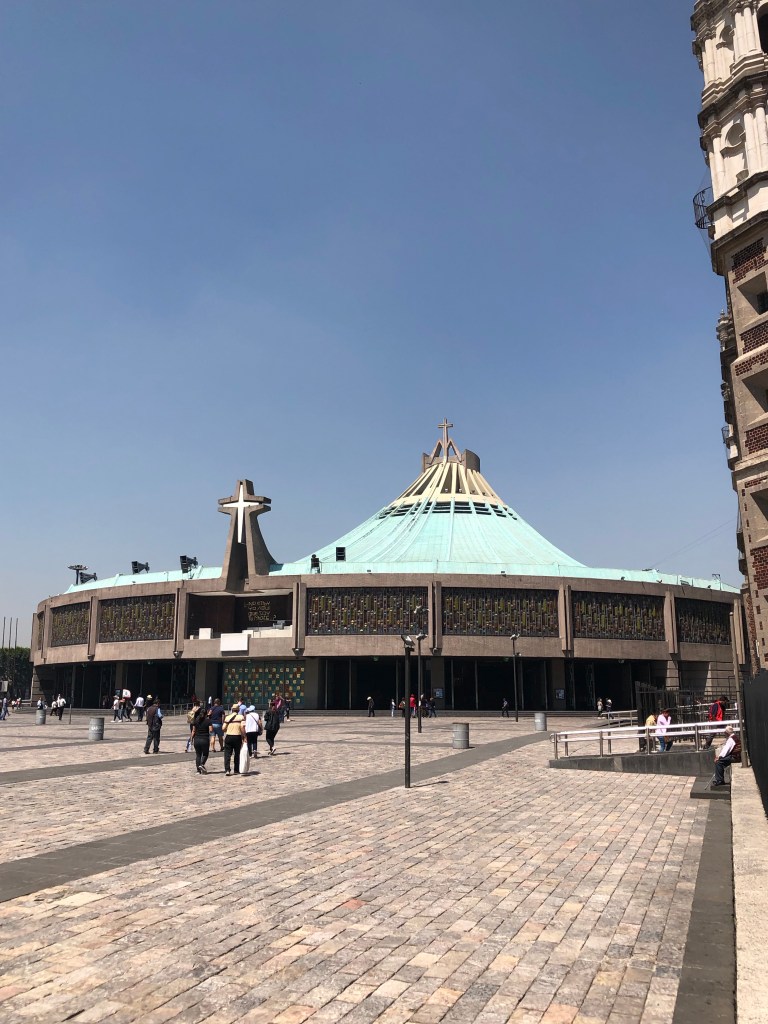
The next day I had another guided tour – in the morning we took the metro out to the Basilica of Our Lady Guadalupe in the north of Mexico City. The site contains the Old Basilica and a Modern Basilica which was built in the 1970s as the Old Basilica was sinking due to the terrain on which CDMX is built. Following repairs, the Old Basilica is still open to the public to visit but the masses are mainly held in the Modern Basilica which can hold up to 10,000 people.
Old Basilica (left) and modern Basilica (right)
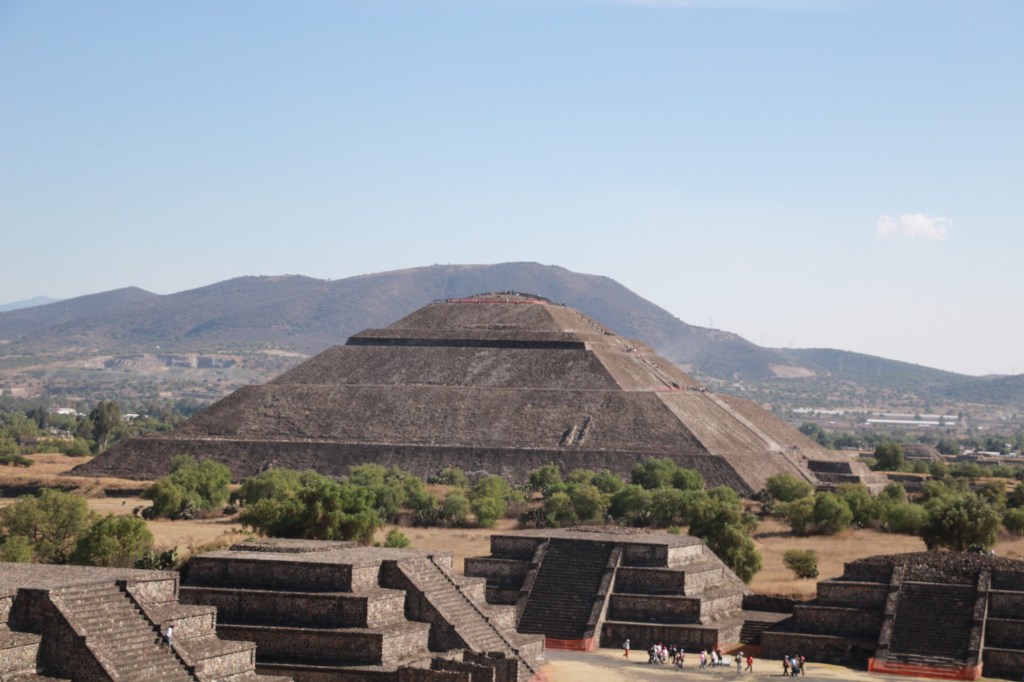
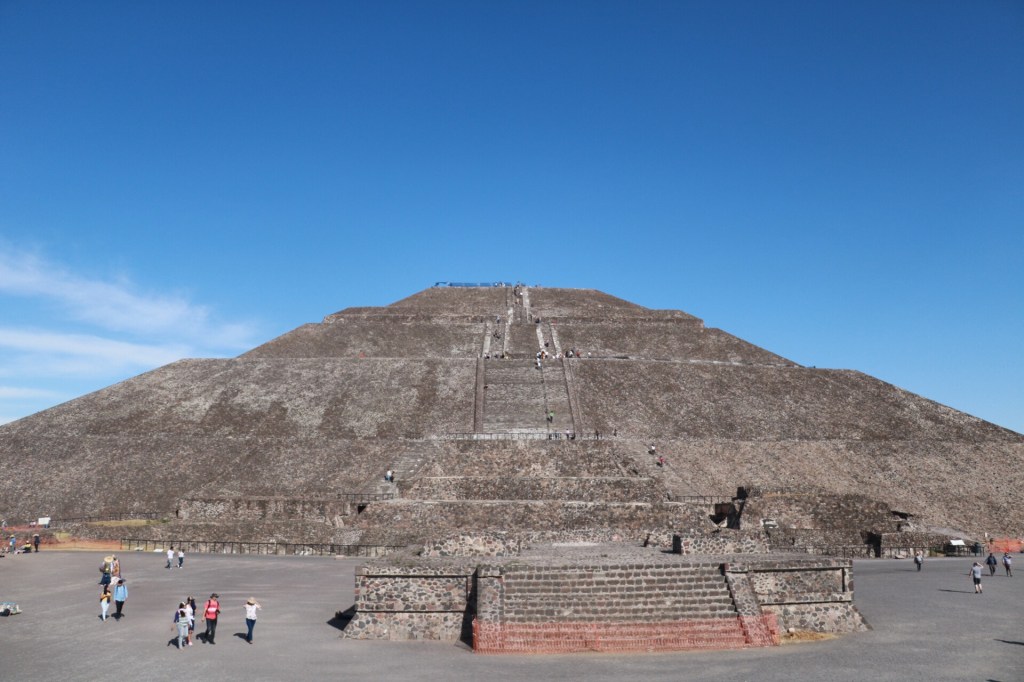
In the afternoon, we took a local bus about 25 miles outside of the city, to the Teotihuacán pyramids. The 2 main pyramids here are the Pyramid of the Sun and the Pyramid of the Moon. I was quite surprised to find that we were allowed to scale both of them, as well as some of the smaller pyramids surrounding the site.
At Teotihuacán
We then went to a local obsidian shop, and stopped by a local hostelry where we tried pulque and tequila, and then went for dinner for some more genuine Mexican fare. After dinner we headed back to the city on the bus, and then I took the metro back to my hotel.
The next day was my final day in CDMX, though my flight wasn’t until late in the evening so I still had a full day to explore. I’d booked a ticket to the Frida Kahlo museum, and made my way there via the metro. The metro in Mexico City definitely has a reputation and as a solo female traveller I certainly had to have my wits about me. The front carriages on Metro trains are reserved for women and children only, and I used these when travelling on the metro by myself. I also wore my backpack on my front, as indeed many of the locals were doing. I didn’t feel unsafe, but I was well aware that I needed to look out for myself.
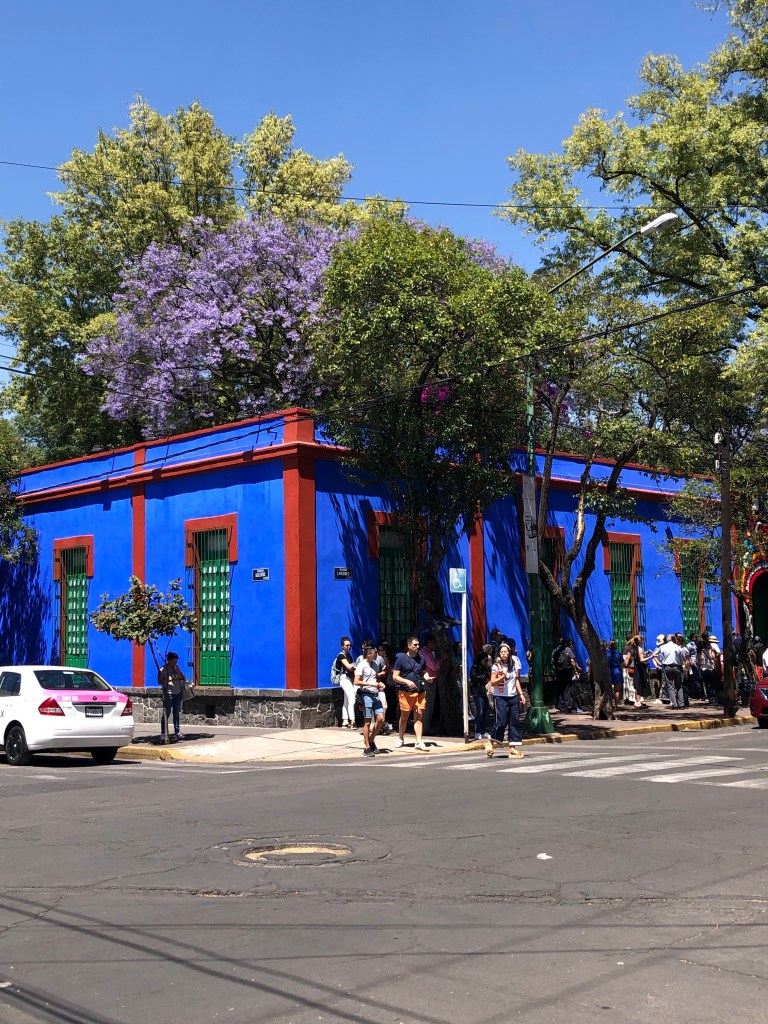
The Frida Kahlo museum is in her former house in Coyoacán, and is a bright azure blue. That, along with the queue, makes sure you can’t miss it! An incredibly interesting woman.
Casa Azul, Frida Kahlo Museum, Coyoacán, Mexico City
So, in summary, Mexico City was well worth a couple of days on a stopover. Lots of history, great food and loads of interesting things to see. Definitely recommend!
In March 2019 I went to Cuba, having been inspired by seeing some amazing photos from someone I met on previous travels.
A short indulgent interlude before I get into the trip. I’d decided a few years ago that if I was on a long haul flight over 7 hours, that I would try and go ‘not economy’ if the price was not completely outrageous. By and large, this meant going premium economy, which I did when I went to Seattle and Alaska in 2018 and Utah and Arizona later in 2019. When looking for flights, I will always have a look and see what’s available price-wise. Usually, business class is prohibitively expensive (£4k+), but I’d spotted a deal via Skyscanner from Heathrow to Havana via Mexico City with Aeromexico for £1900 return. Obviously still expensive, but very reasonable by business class standards, plus as the UK-Mexico leg was 11+ hours overnight, and long time readers will recall my inability to sleep on aeroplanes, plus with a 3-4 hour stretch between Mexico City and Havana, I was eager to grab the deal before it disappeared.
One of the many advantages of travelling business class is the swift journey through the airport – priority check-in, fast track through security and relaxing in the lounge. I did get a slightly odd look at check-in as I was travelling with a backpack and was in my smartest ‘comfy’ pants. After relaxing in the lounge with a glass of vino, the flight departed at approx 10.30pm. We were then fed an evening meal before I then spent 7 hours lying horizontal in the lovely flatbeds on the Dreamliner. I know I’m rubbing it in but it was utter bliss, and definitely helped me cope with the 6 hour layover in Mexico City which was between the hours of 4am-10am local time. Another advantage of flying business class was that I could spend that time in the business class lounge at Mexico City Airport instead of trying to find somewhere to sit in the not-enormous departure lounge..
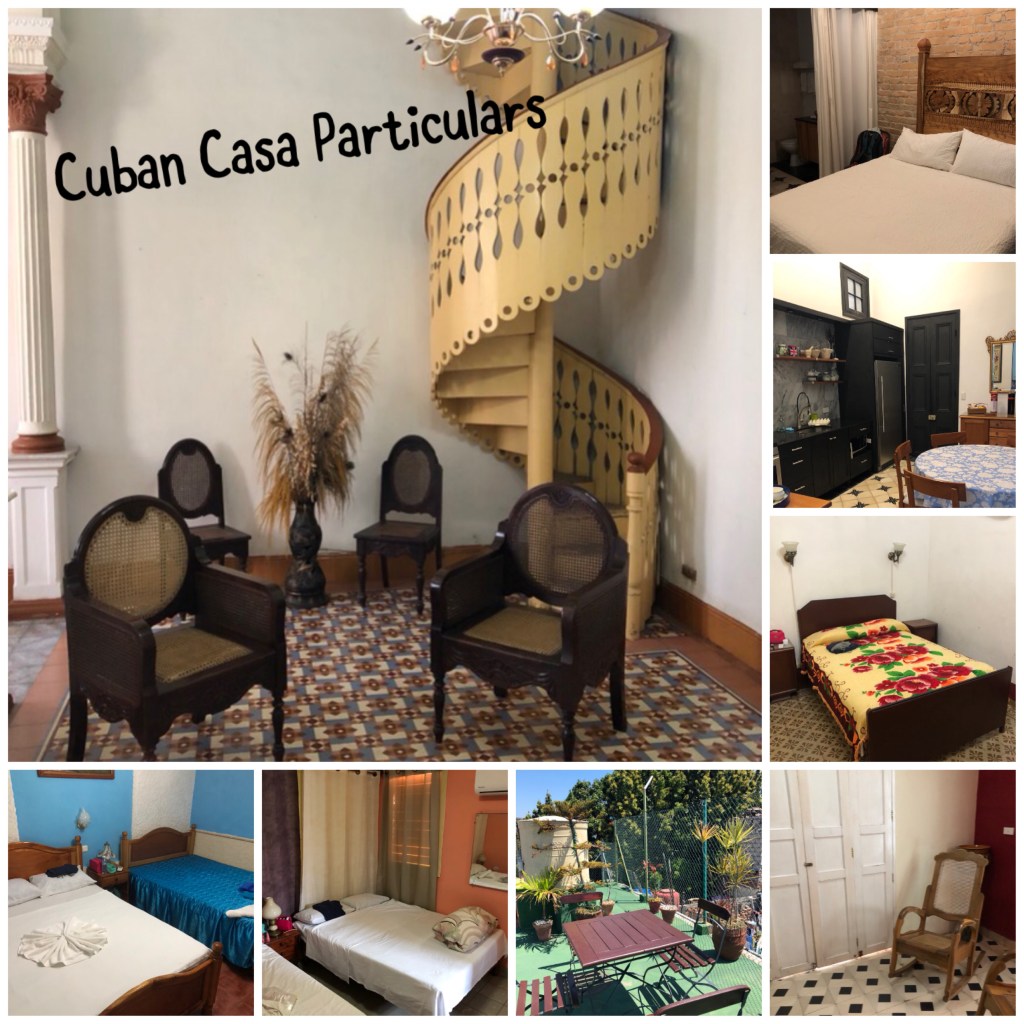
I arrived at the airport in Havana (actually a reasonable distance out of Havana) in the middle of the afternoon, and negotiated immigration successfully (I was ready to produce all the documentation that I’d been warned about but needed none of it). After changing approximately £300 for CUC (Cuban convertible currency, mainly used by foreigners, there is a second currency CUP used by the locals) I then had my organised transfer to the casa particular in old Havana. A lot of the accommodation in Cuba is in casa particulars which are nominally rooms in people’s houses, but in most of the cases that I experienced, are analogous to boutique hotels.
Some of the casa particulars we stayed in
After meeting the group in the evening and going out for our first meal (roast pork with salad and the first of many Cuba Libres), we bonded over rum on the casa terrace. I caved in at 11.30pm having had a very long day.
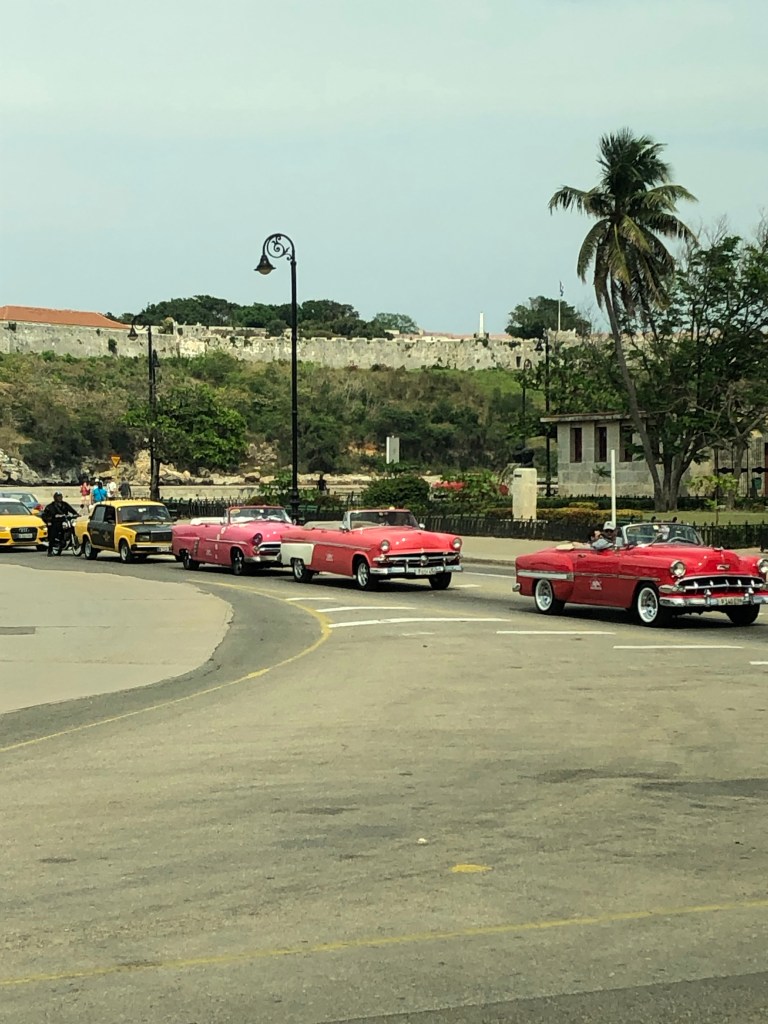
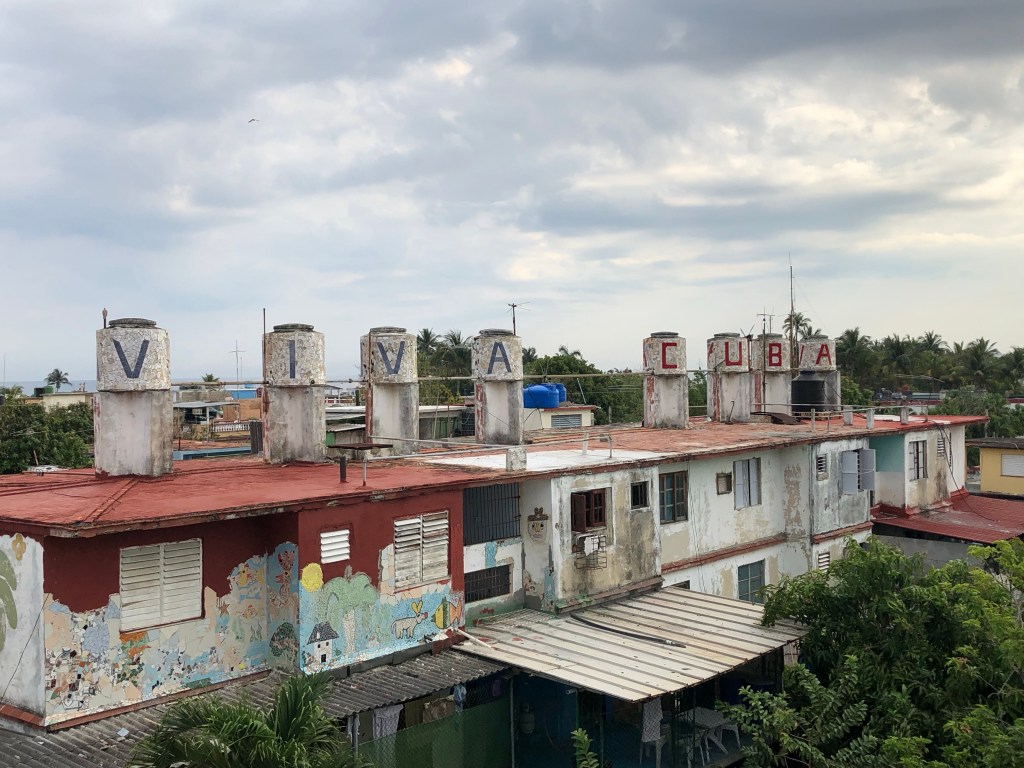
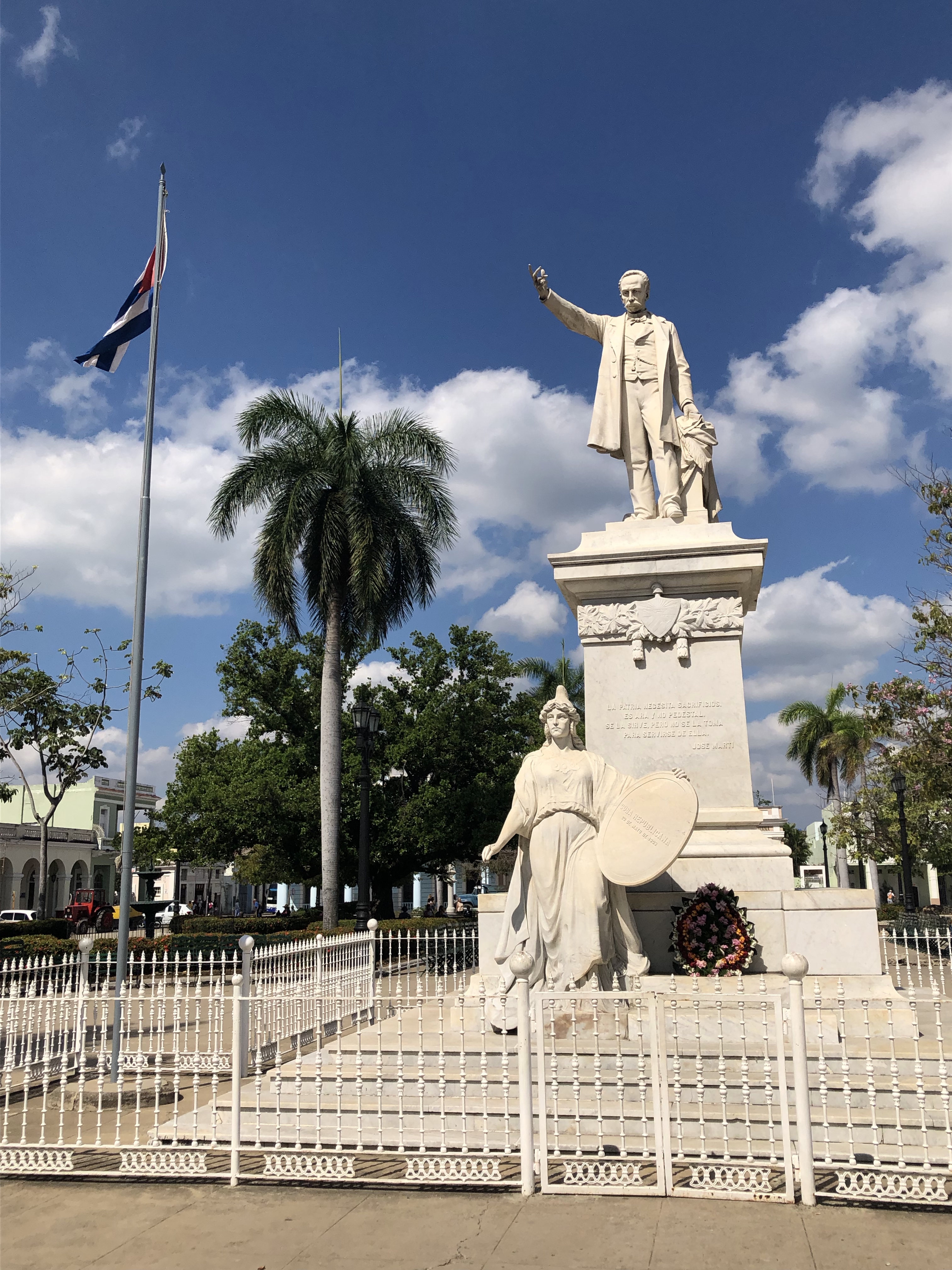
The next morning we had a vintage car tour around Havana – definitely a must-do. The vintage cars are an iconic part of Cuba and it’s so cool to be riding around in one. We went to Revolution Square, drove around some neighbourhoods and down the Malecon before ending in Old Havana where our tour guide then gave us a guided walking tour around some of the beautiful squares in Old Havana. The architecture is amazing – crumbling facades and buildings alongside some brilliant, bold, colourful ones.
Then we were treated to normal Cuban service for lunch. The longest lunch ever – we waited over an hour and a quarter from arriving to getting food – the food was good once it arrived, but it just took forever to do so!
We had what was left of the afternoon to ourselves, so I continued wandering around the streets of Havana Viejo. In the evening we went for dinner and then went to the Buena Vista Social Club to listen to some fabulous Cuban music – very enjoyable.
The next day we headed west, and after stopping at Fusterlandia in the outskirts of Havana (inspired by Picasso and Gaudí), we continued our drive out. After a baños stop and a morning Piña Colada (when in Cuba…), we carried on to a tobacco plantation for lunch (roast pork, pumpkin, rice, beans and salad). Cuba is world-famous for its cigars and it was interesting firstly to see how tobacco leaves are grown and then dried, and then to see Cuban cigars being rolled.
Looking out at Fusterlandia
Afterwards we continued our journey west towards Viñales. We stopped off to watch more cigars being rolled, and they were passed around the group. I’m not a smoker and so didn’t partake. The one thing I did notice was that Cuban cigar smoke does not linger on clothes and fabric like cigarettes do, and I actually quite liked the smell of the cigar smoke.
We arrived at the casa in Viñales in the afternoon and after a brief wander which was cut short by rain, we went for dinner (and got absolutely soaked on the way there). Tapas and cocktails, followed by a bar with Cuban dancing.
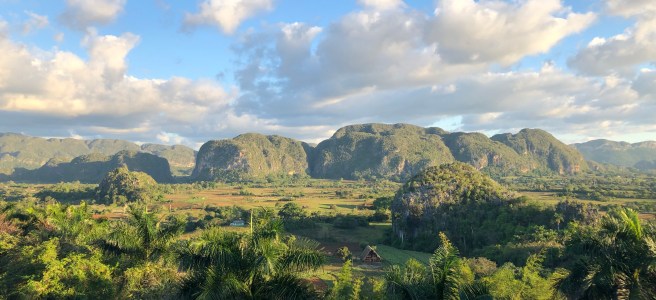
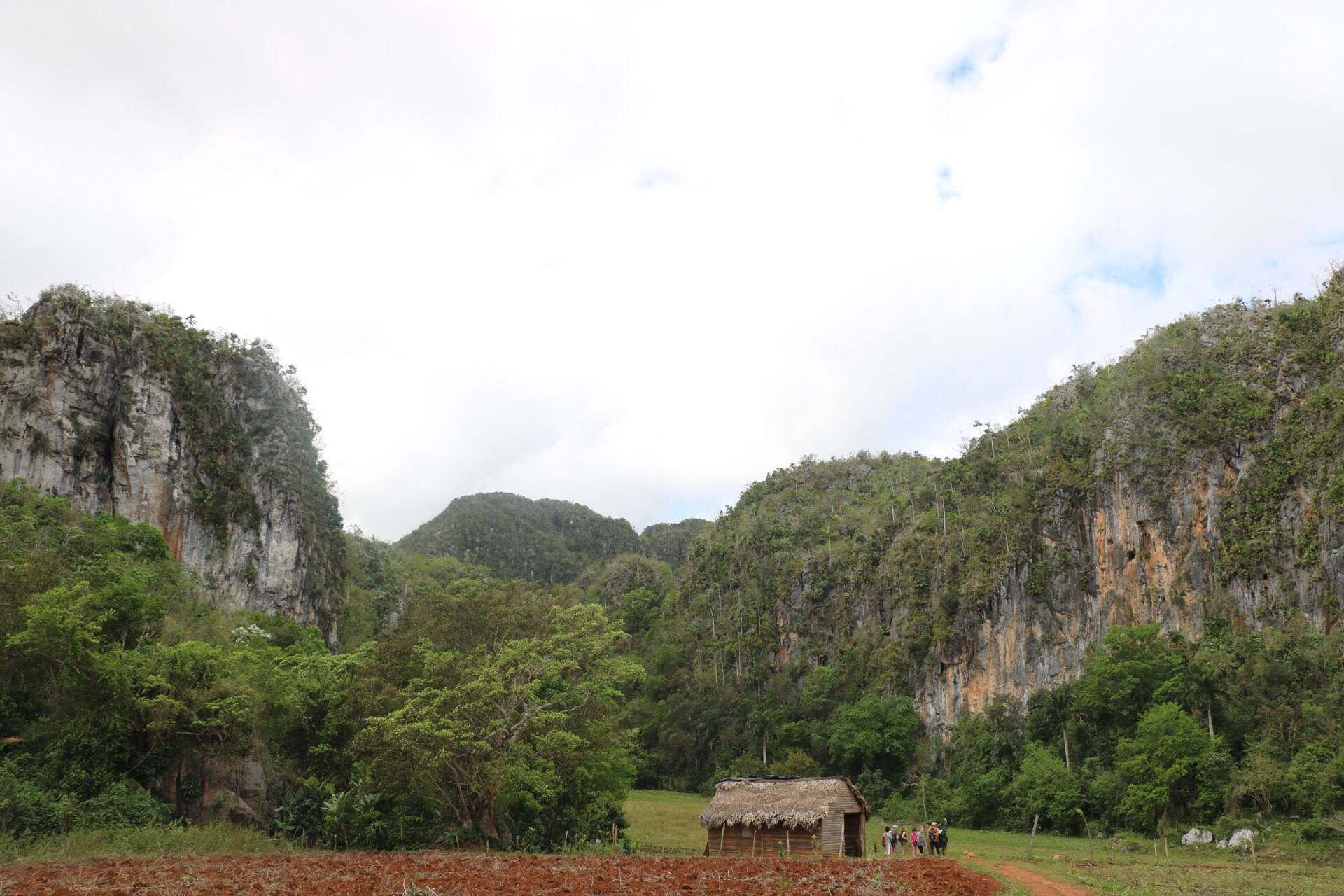
The next morning we went for a hike through Viñales Valley. It was a little cloudy and it briefly rained but the scenery is insane – like Jurassic Park. In the afternoon we had a salsa lesson which was fun (and involved more drinking) and then we played dominos – a massively popular pastime here – with more drinks.
In the evening we went to a restaurant a little way out of the town which had a great view over the valley. We then went to a bar for a dance show, and carried on drinking.
The next morning was an early start as we had a long travel day from Viñales in the west of the country, to Cienfuegos on the southern coast, towards the centre of the island. On the way out of Viñales valley, we stopped off at a wonderful viewpoint. With the blue skies it really looked like a landscape out of pre-history.
After one too many Cuba Libres the previous evening, it was a quiet journey. After lunch, we stopped at the Bay of Pigs for a refreshing swim in the sea – definitely a recommended hangover cure!!
We arrived in Cienfuegos in the early evening and went for dinner. After dinner we walked along the Malecon, which had a wifi spot and therefore large groups of people using the internet! The notion of mobile phone data hadn’t made it to Cuba, and very few of the casas had internet.
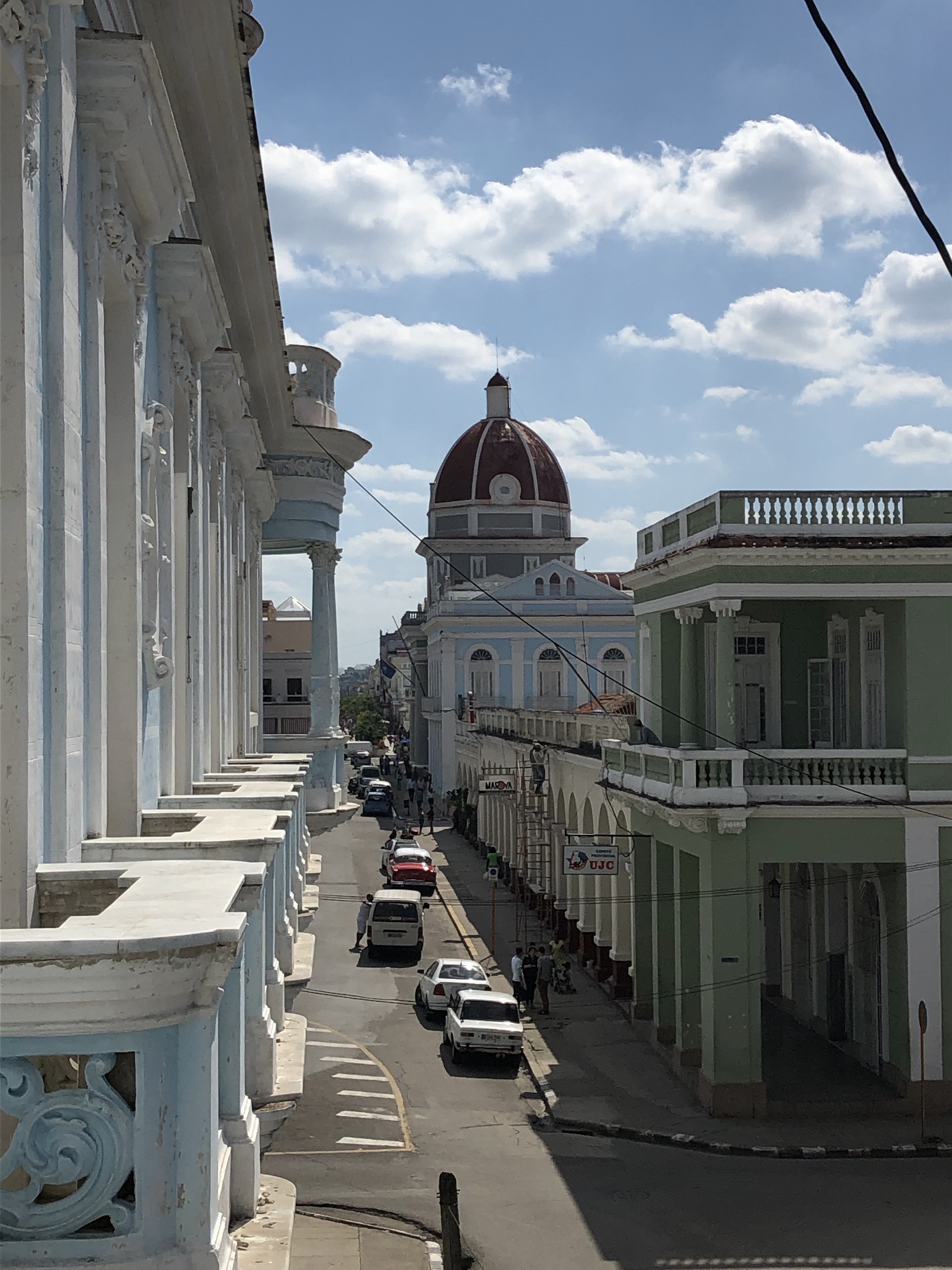
The next morning we had a walk around Cienfuegos including to the plaza major, and also went up a casa tower for a great view over the town. Cienfuegos felt much more well-maintained than other areas of Cuba and the architecture had a different feel from other areas we had already seen.
Sights in Cienfuegos
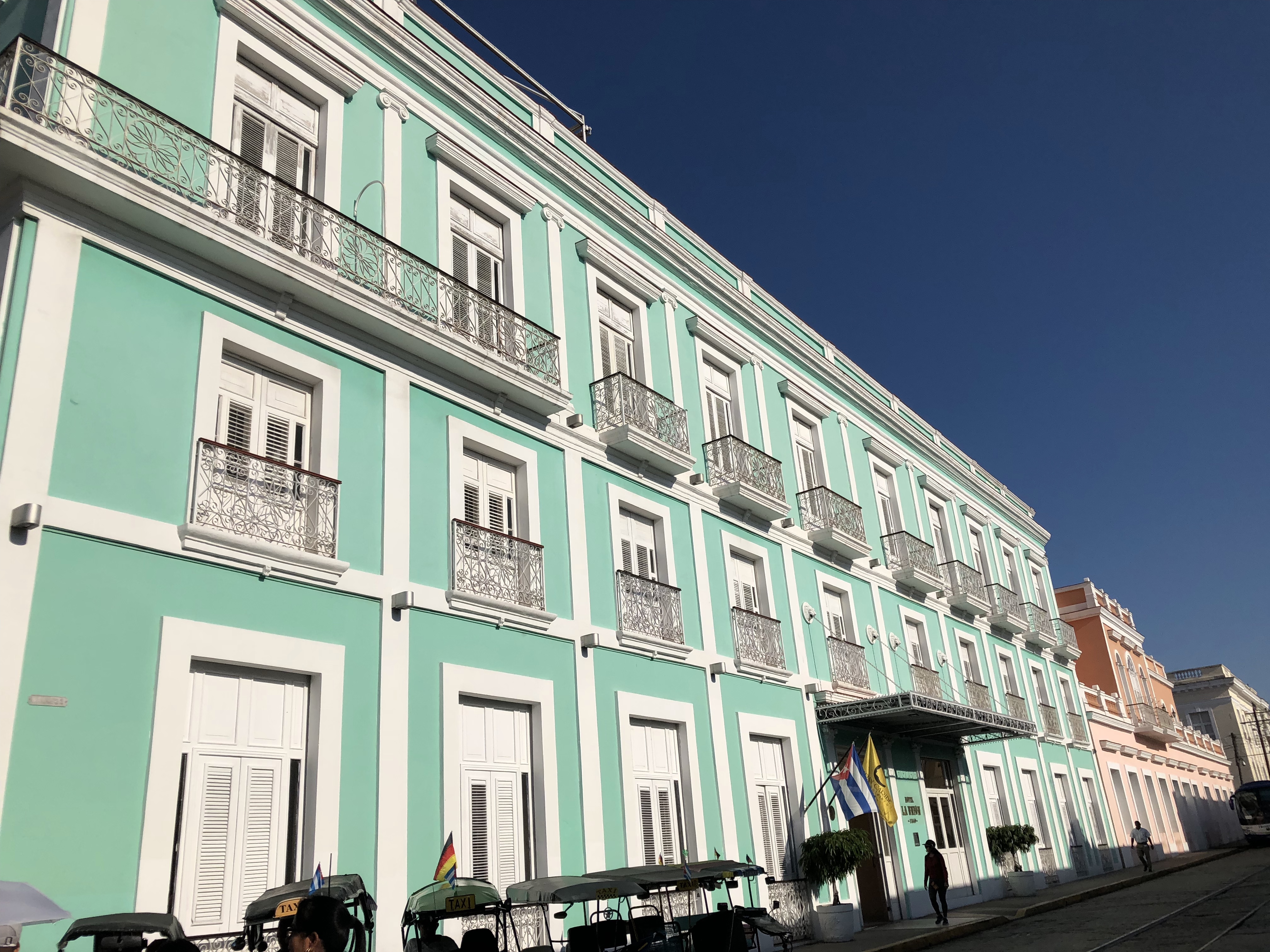
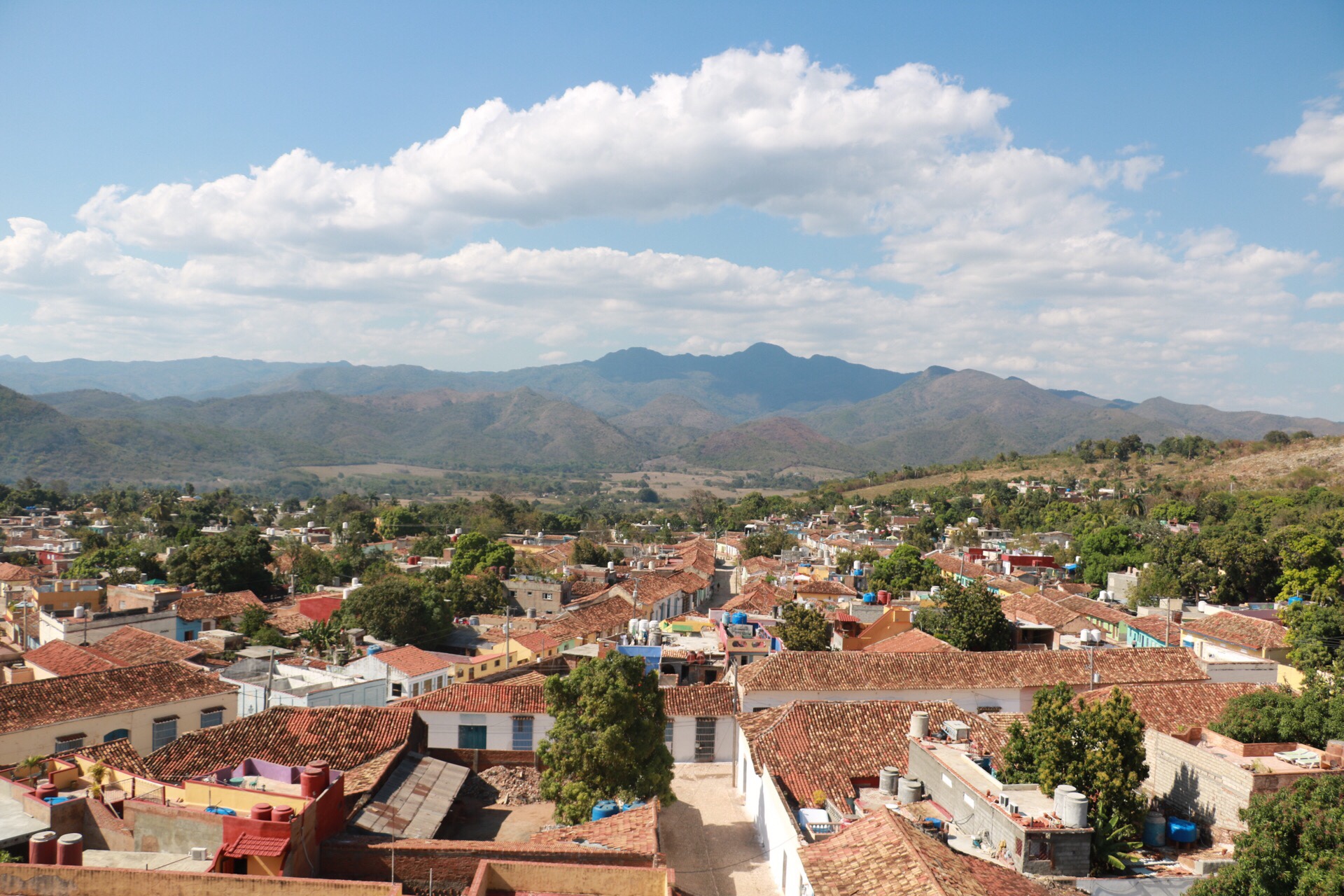
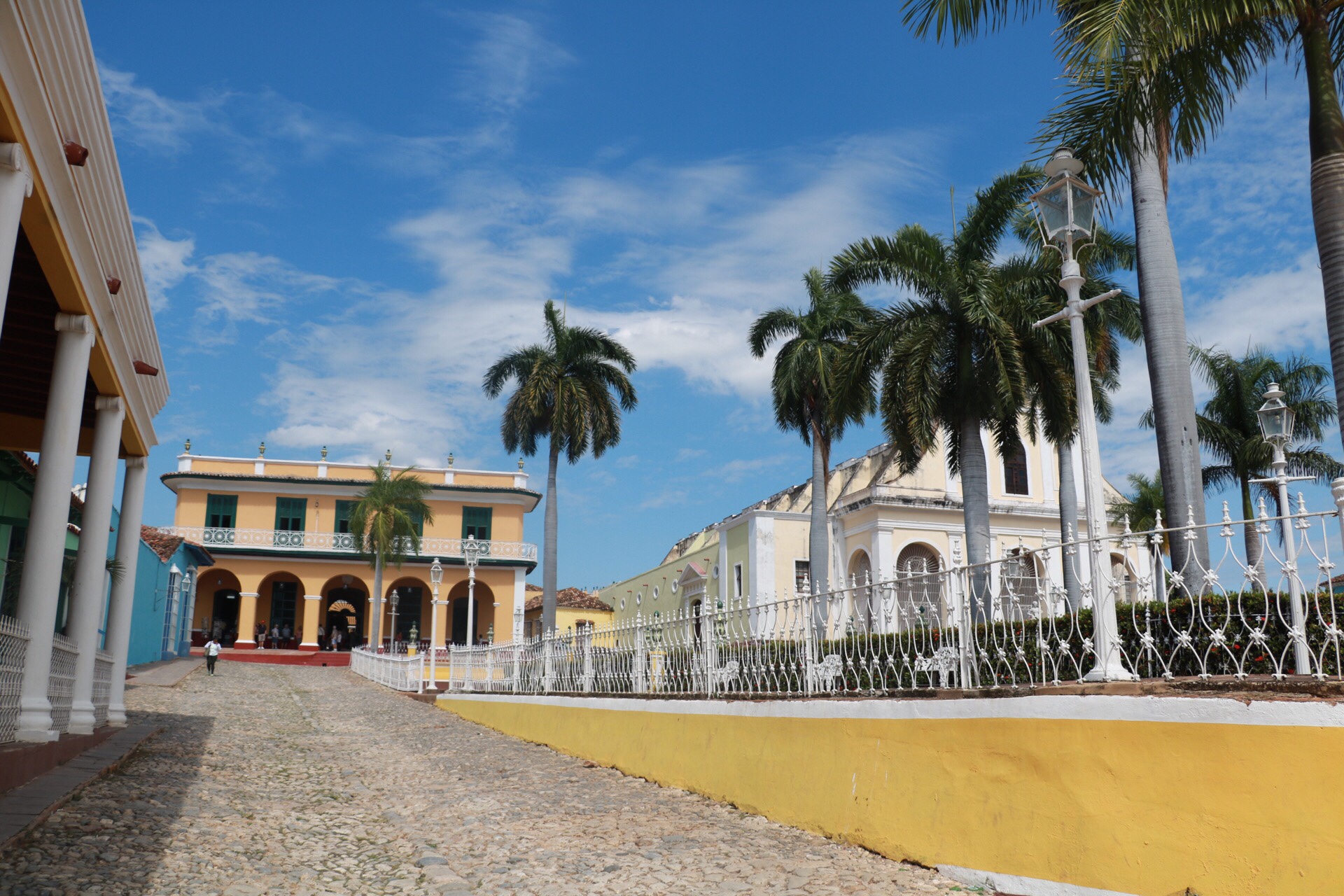
We then carried on travelling east for a couple of hours to the town of Trinidad. The heat was more intense here than the other places we had been. In the afternoon we had a wander around the old town – very colonial and Spanish-influenced. Another good view from the top of a monastery tower.
In Trinidad
In the evening, after dinner we went to watch salsa by the steps, and then went to the Cave for some Cuban raving.
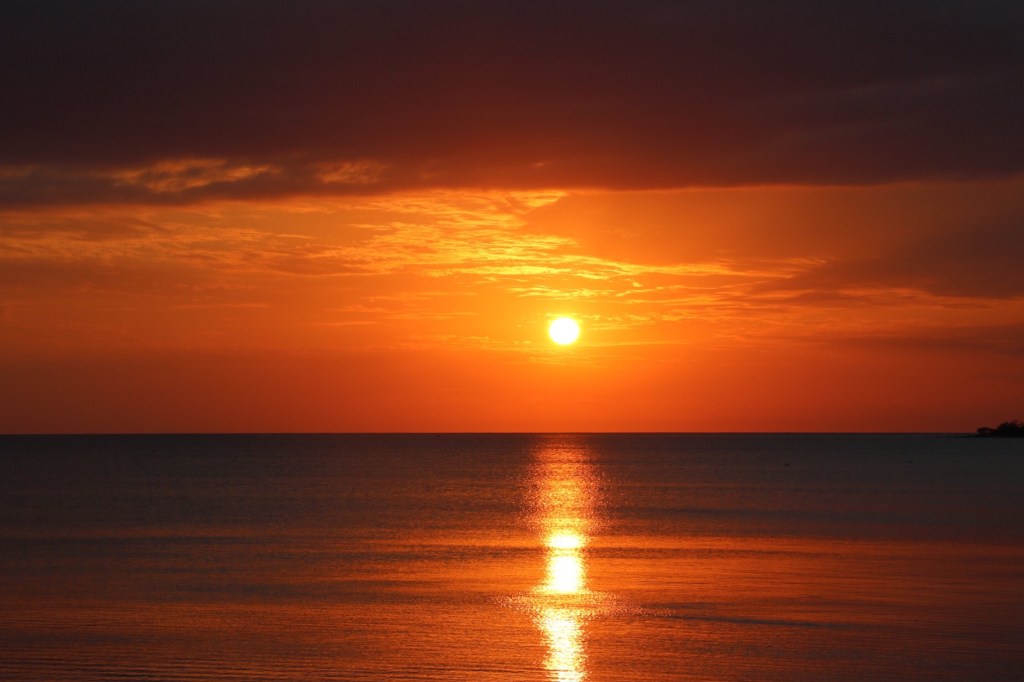
After a 2am finish, we went for a walk the next morning to a waterfall, and then went to the beach at Playa Ancon in the afternoon. A beautiful blue Caribbean Sea to swim in and some palm trees providing me with some shade to sit in. We stayed for sunset which had beautiful orangey red skies. After dinner I had an early night for a change as I was full of rum and sugar at this point!
The next day we headed back to Havana, via Santa Clara and a visit to the Che Guevara museum and memorial – an enormous statue of the revolutionist.
Back in Havana we had our final dinner of the trip at an Asian Fusion restaurant and a couple of enormous cocktails to finish me off.
So, my impressions of Cuba – a fascinating country, loved the architecture especially in Havana and Trinidad, the scenery in Viñales was spectacular. The food was ok, be prepared for menu items to not be available. There were signs that capitalism is encroaching. I didn’t go to Varaderos, which is the main ‘resort’ part of the island where the all-inclusive hotels are, but there was a lot of building going on in Havana, especially on the waterfront. I’m glad I went when I did as I can imagine it might be very different in 5-10 years.
This one was a long time ago – 5 years now, back in November 2015.
This was my first real solo foray into a non-western country, and one which I didn’t speak the language. I’d actually taken some informal Spanish lessons for a couple of months in the run up to this trip which proved invaluable, and useful for a few trips to Spain since then.
At the time I went, there were no direct flights between the UK and Peru. I had 2 viable options – via Madrid or via the US. I choose to go via the US to extend the amount of time on my trip that I could speak English, but having done this and transited through the US, I would not generally recommend this. Whilst I had booked connecting flights from London to Lima, via Dallas Forth Worth on the way out and via Miami on the way back, you always have to clear immigration in the US even when transitting which made for some slightly stressful connections and BA leaving my bag in Miami on the way back.
I don’t remember much about immigration into Peru – I didn’t need a visa, and I don’t remember it taking particularly long. I’d arrived early morning after an overnight leg from Dallas, the one thing I do remember is the hustle, bustle and chaos of the arrivals hall, finding my transfer (and another group member), and the traffic en route to the hotel being utterly insane.
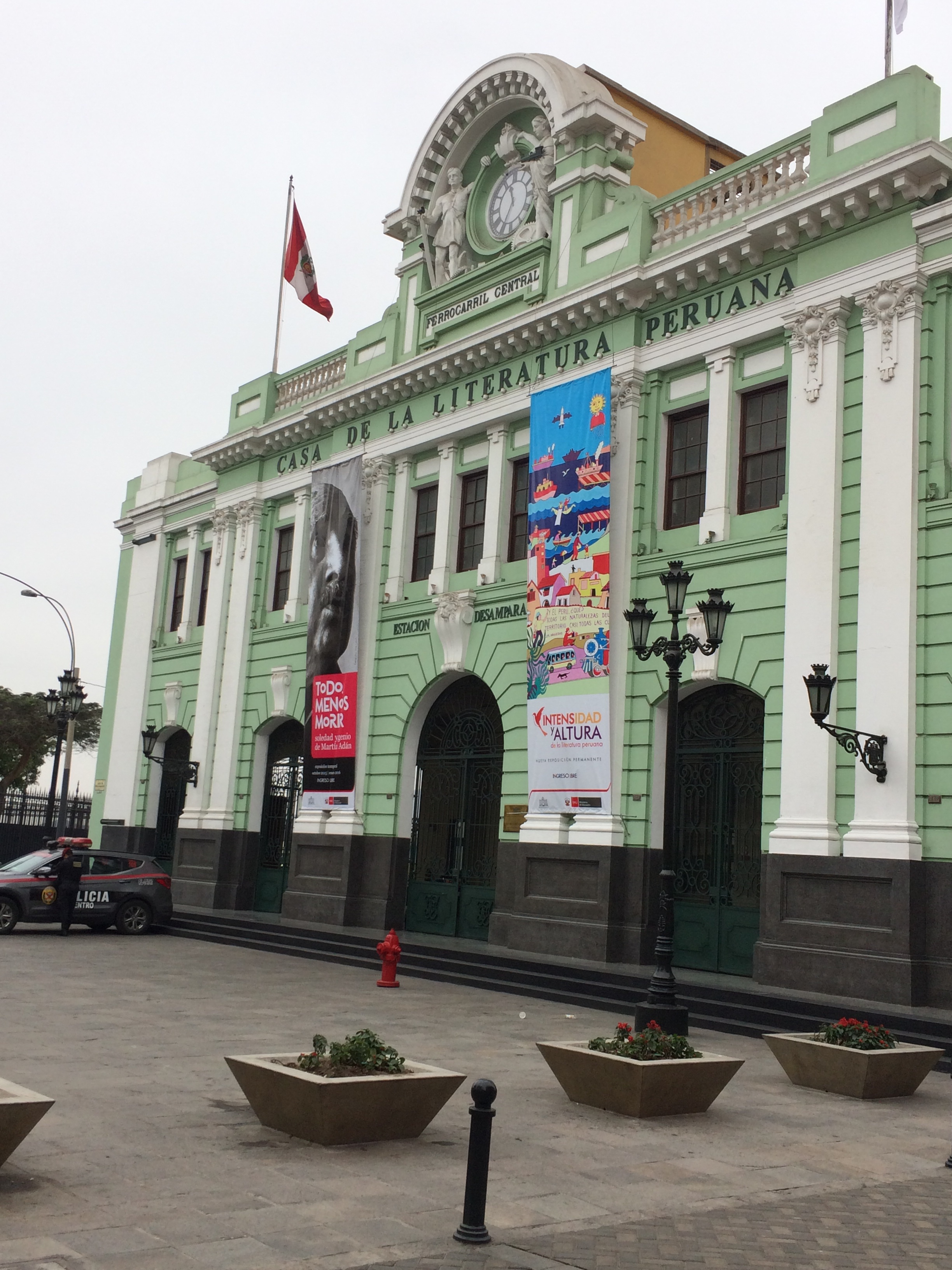
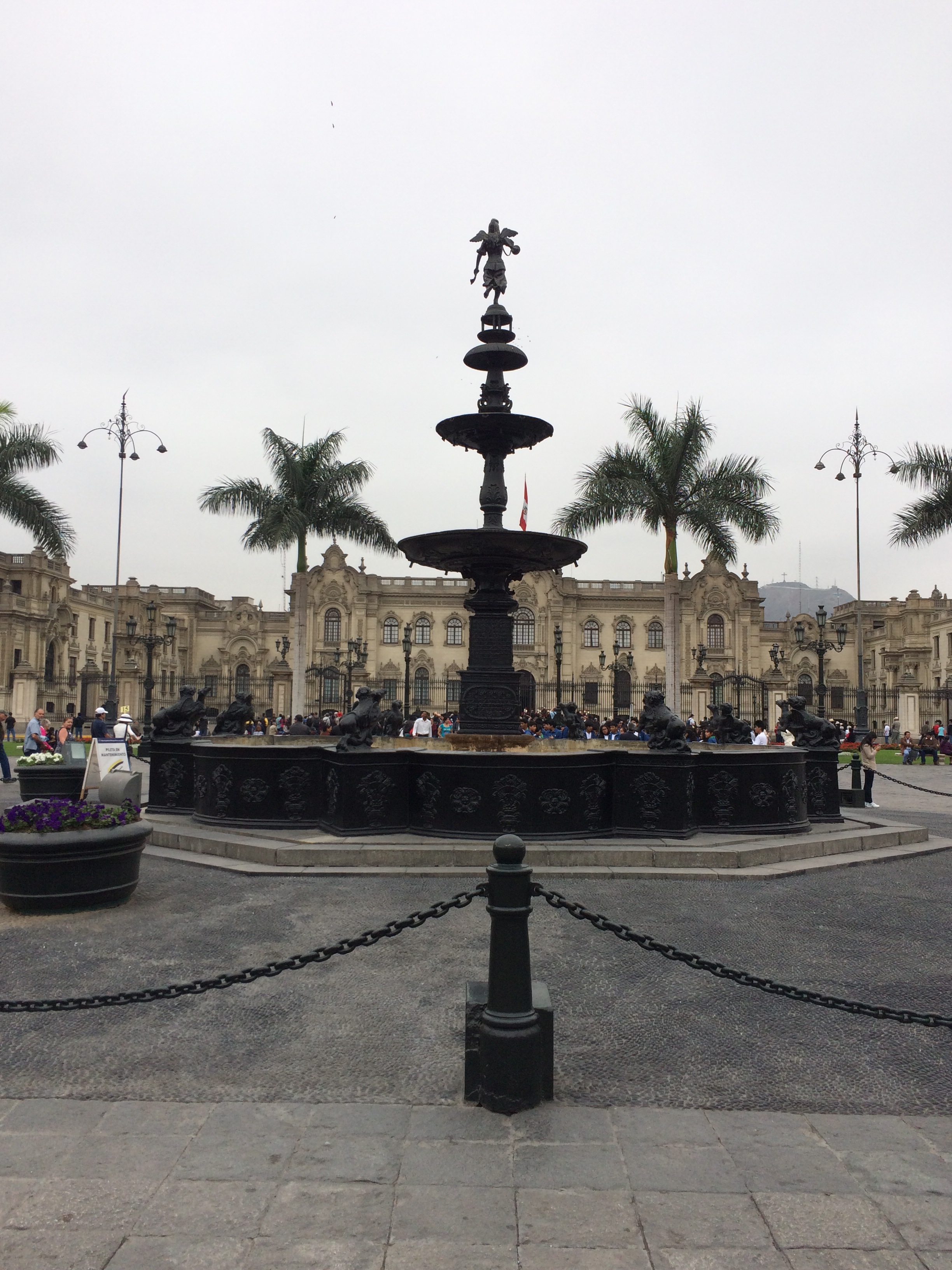
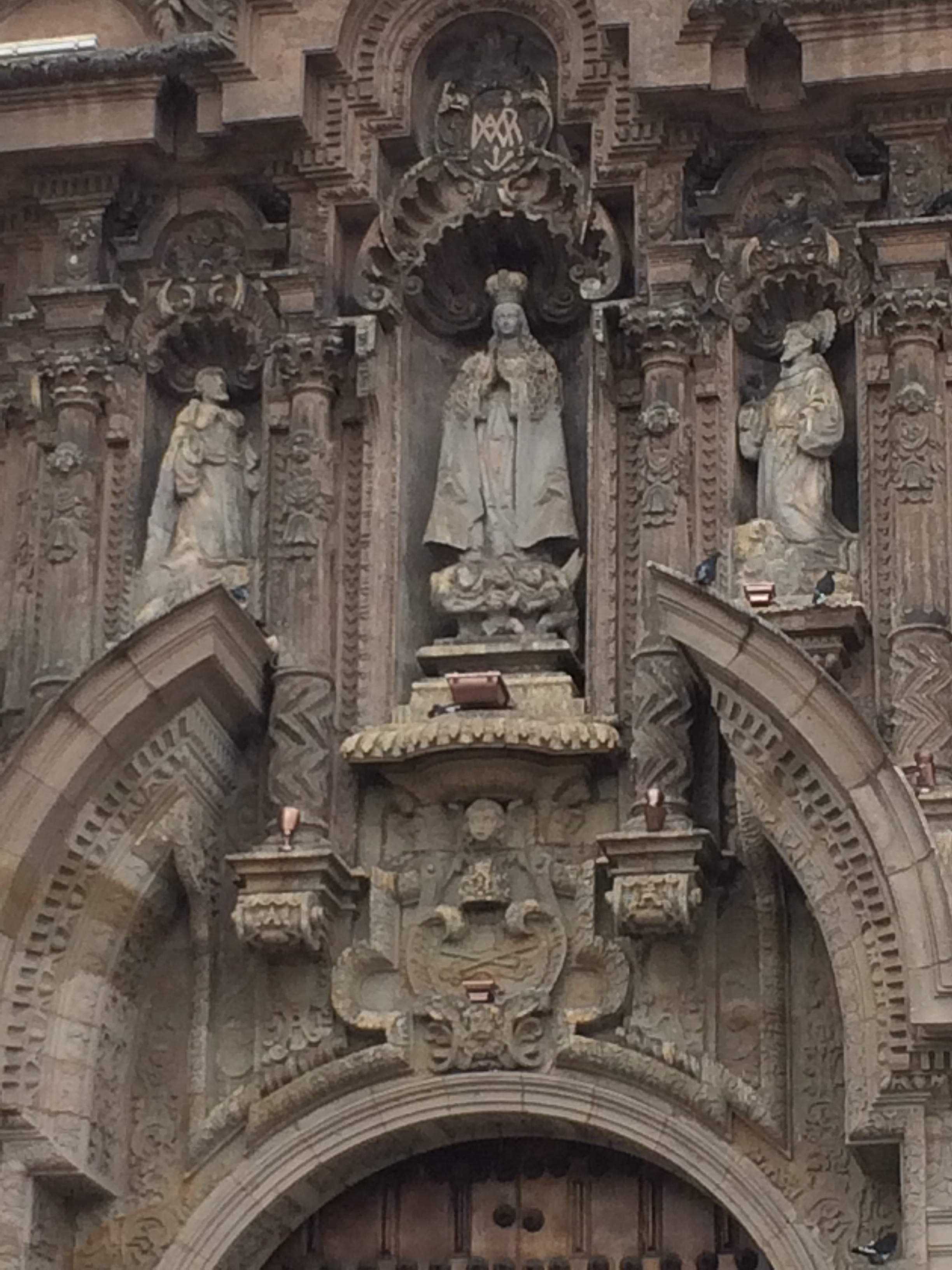
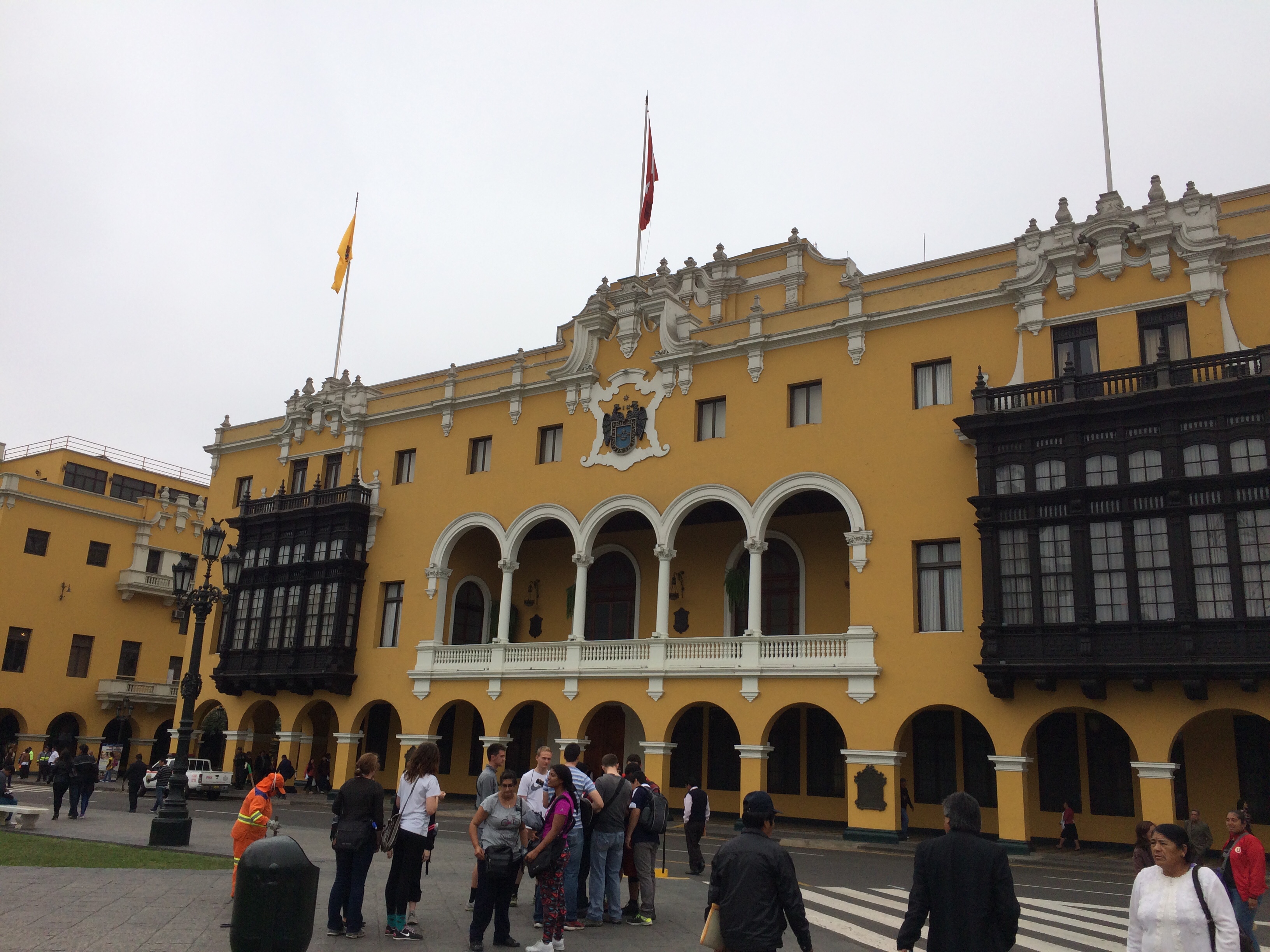
This was my second trip with G Adventures. We were staying in a hotel in the Miraflores district of Lima. Having arrived in the morning we weren’t yet able to check in. However, having arrived with someone else who was on my trip, we hatched a plan to go to the downtown area and got a taxi/paid a guy at the hotel to drive us. I’d read beforehand that whilst Miraflores was a relatively safe area, the centre of Lima was a little more dangerous and you needed to have your wits about you. I think it’s fair to say that I wouldn’t have ventured there on my own so was glad for the company. There is some amazing architecture in downtown Lima, and loads of churches and the cathedral with unbelievably ornate decoration.
Downtown Lima
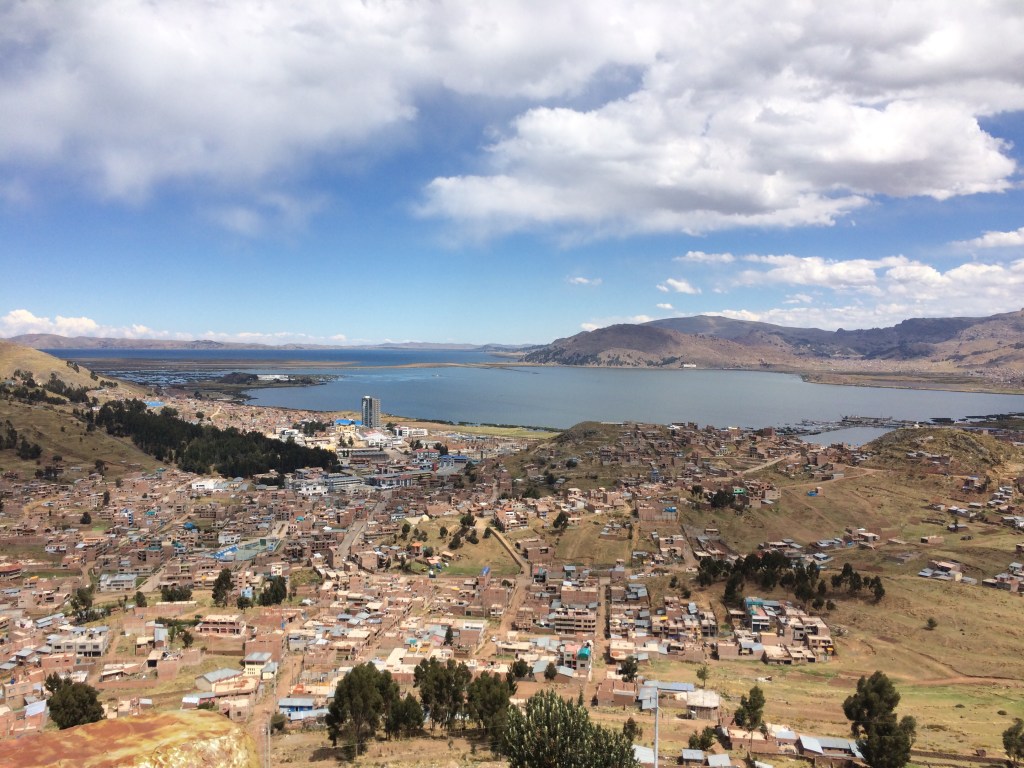
In the evening we met up as a group – there were 8 of us and we became a really close group – and went for our first dinner together. It wasn’t a late one as most of us were jet-lagged from travelling and we had an early start the next day to catch a flight inland to Juliaca. We arrived in Juliaca at altitude and travelled towards Lake Titicaca, the highest navigable lake in the world at over 12,000 feet above sea level, and the start of our acclimatisation ahead of the Inca Trail hike which would start in a few days.
Lake Titicaca
This was the first time I’d ever been at real altitude. Living in the UK doesn’t expose you to these heights, and whilst I’d done some exercise and preparation at home ahead of a 4 day hike, there was no way I could replicate the altitude. I was even more worried when we arrived at our hotel for a couple of days in Puno and got absolutely knackered walking up one flight of stairs!
We had a brief walk around Puno before dinner and drinks – though at this stage I was avoiding alcohol (unusual for me on holiday!) in preparation for our hike in a few days.
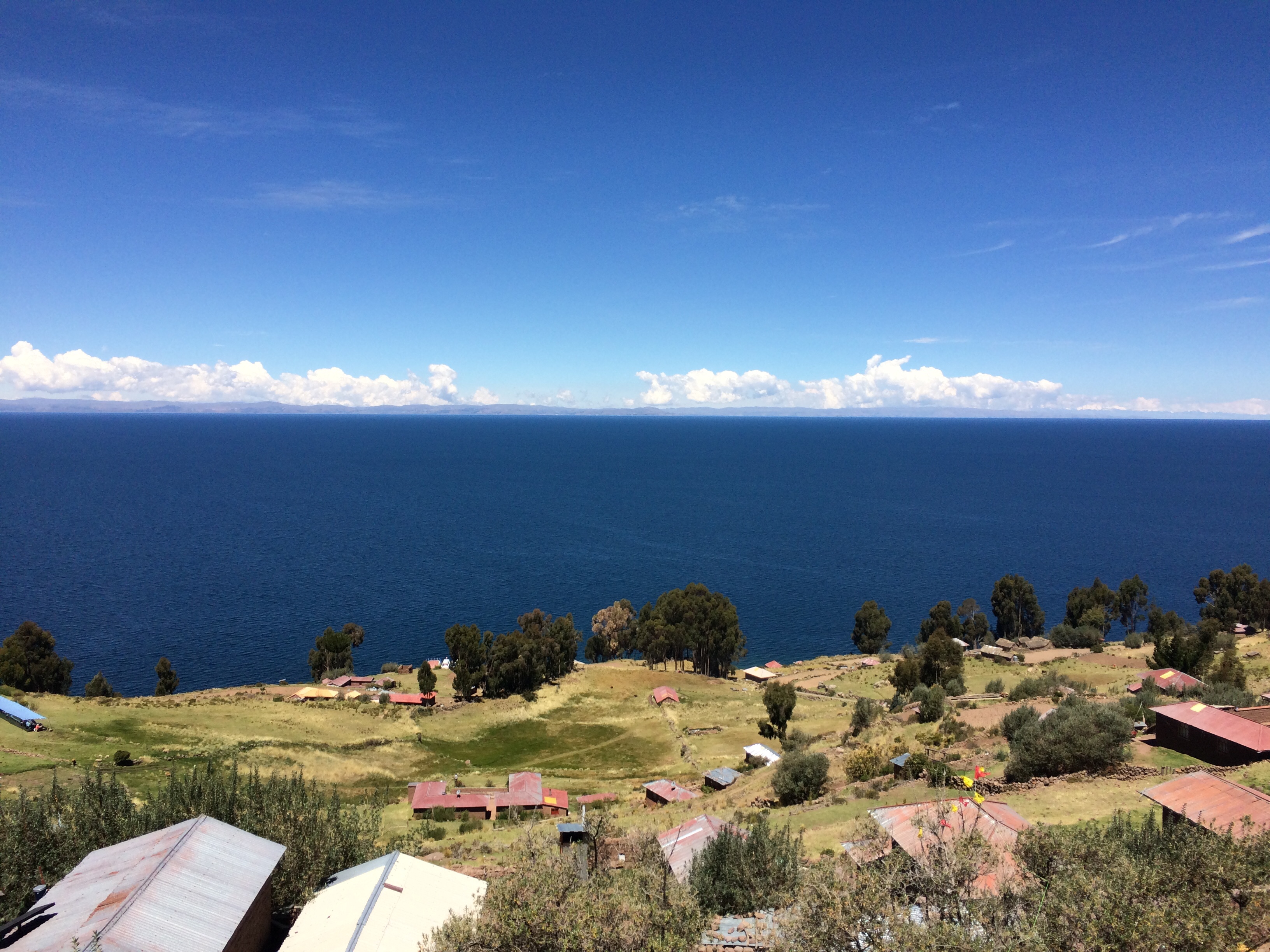
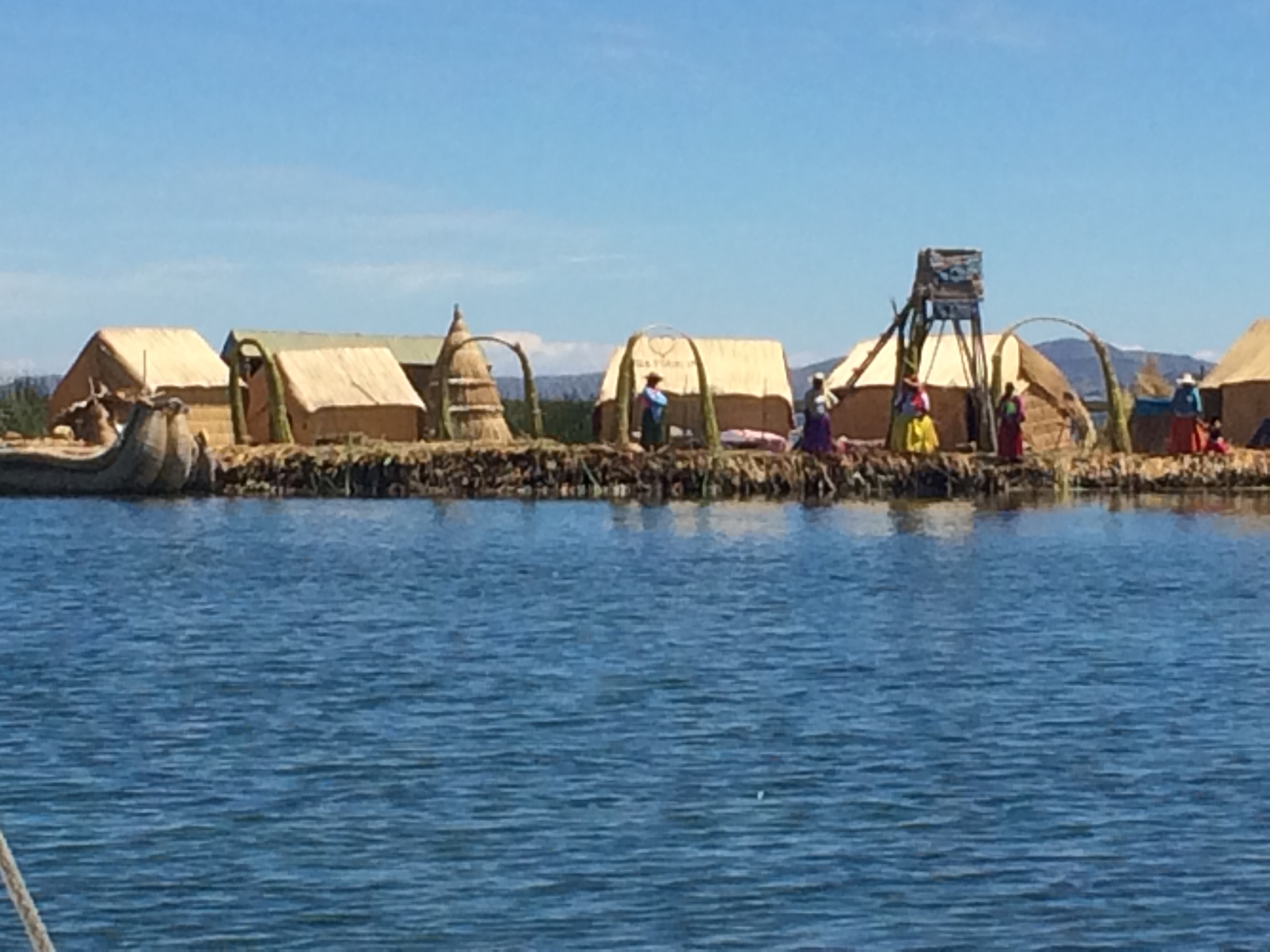
The next day we had a boat trip on Lake Titicaca and visited the Floating Islands of Uros on the lake, made of reeds, and people live here year-round. We had lunch on Taquile Island (grilled trout according to my diary!), and then in the afternoon and evening we were introduced to our homestay families where we would spend the night with local families, learning about their way of life and being welcomed into their homes. This was where it was advantageous to have learned some Spanish, though my roommate was way more fluent than I was. After a delicious dinner of quinoa soup, rice and vegetables, we turned in for the night. The next morning we helped the family with their daily farm chores (taking the sheep out to graze) and watched on as the mother soaked and prepared the quinoa (now a western health food, but a staple in Peru).
Taquile Island, the floating islands of Uros, sailing on Lake Titicaca
In the afternoon we sailed back across the lake and back to Puno for a final night before heading to Cusco on a local bus the next day. I was very impressed with the local bus – it was a double decker and we had lots of legroom and reclining seats. It was pretty much an all-day ride to Cusco, but it was super-interesting to watch the scenery go by. I had no idea what to expect from the landscape beforehand.
On the bus between Puno and Cusco
When we arrived into Cusco, the first thing we did was head to G Adventures’ hiking depot to get kitted out with sleeping bags, hiking poles and other kit for the Inca Trail hike. We would be leaving our main bags in storage at the hotel in Cusco as we’d be returning here in a few days.
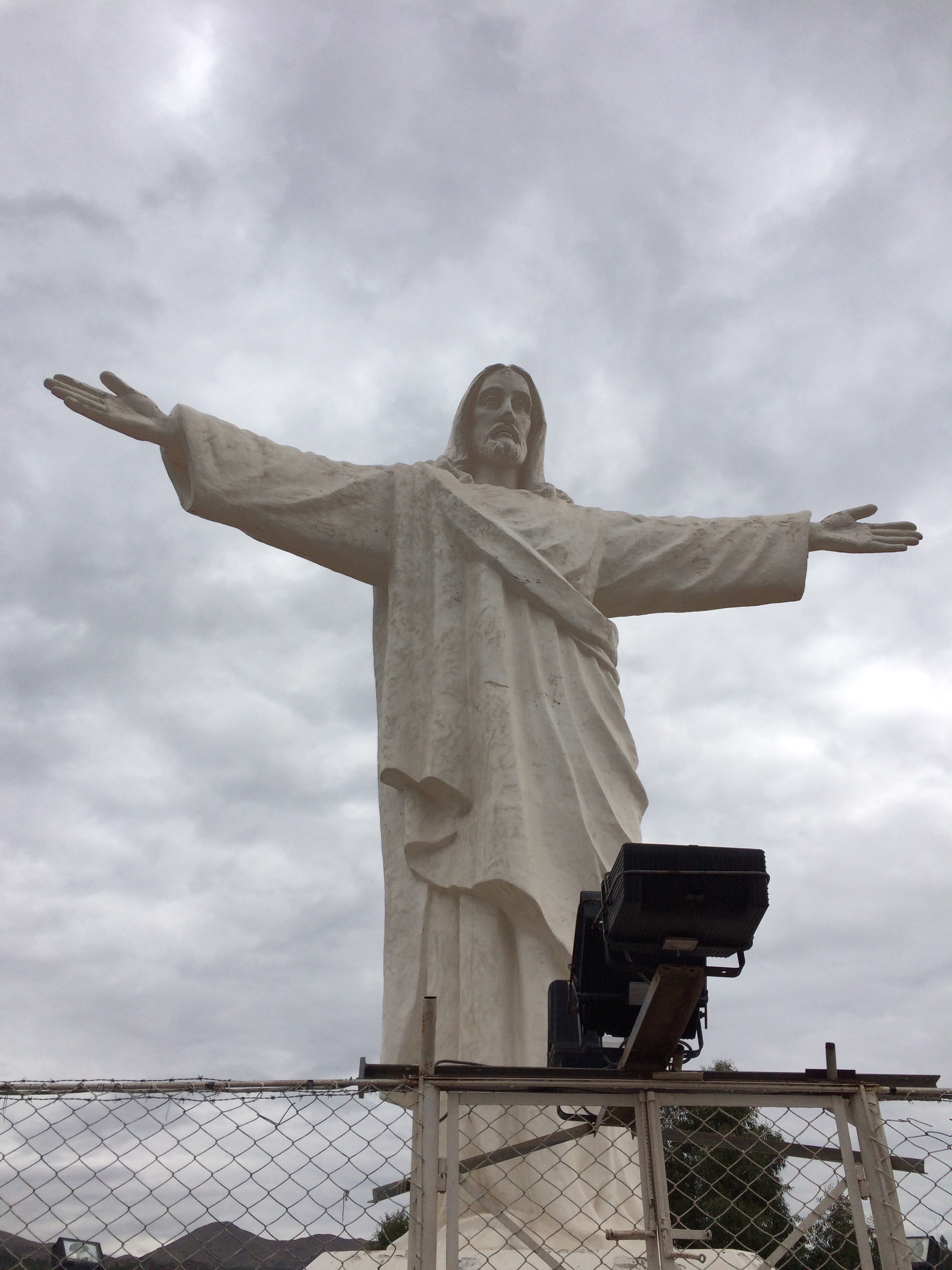
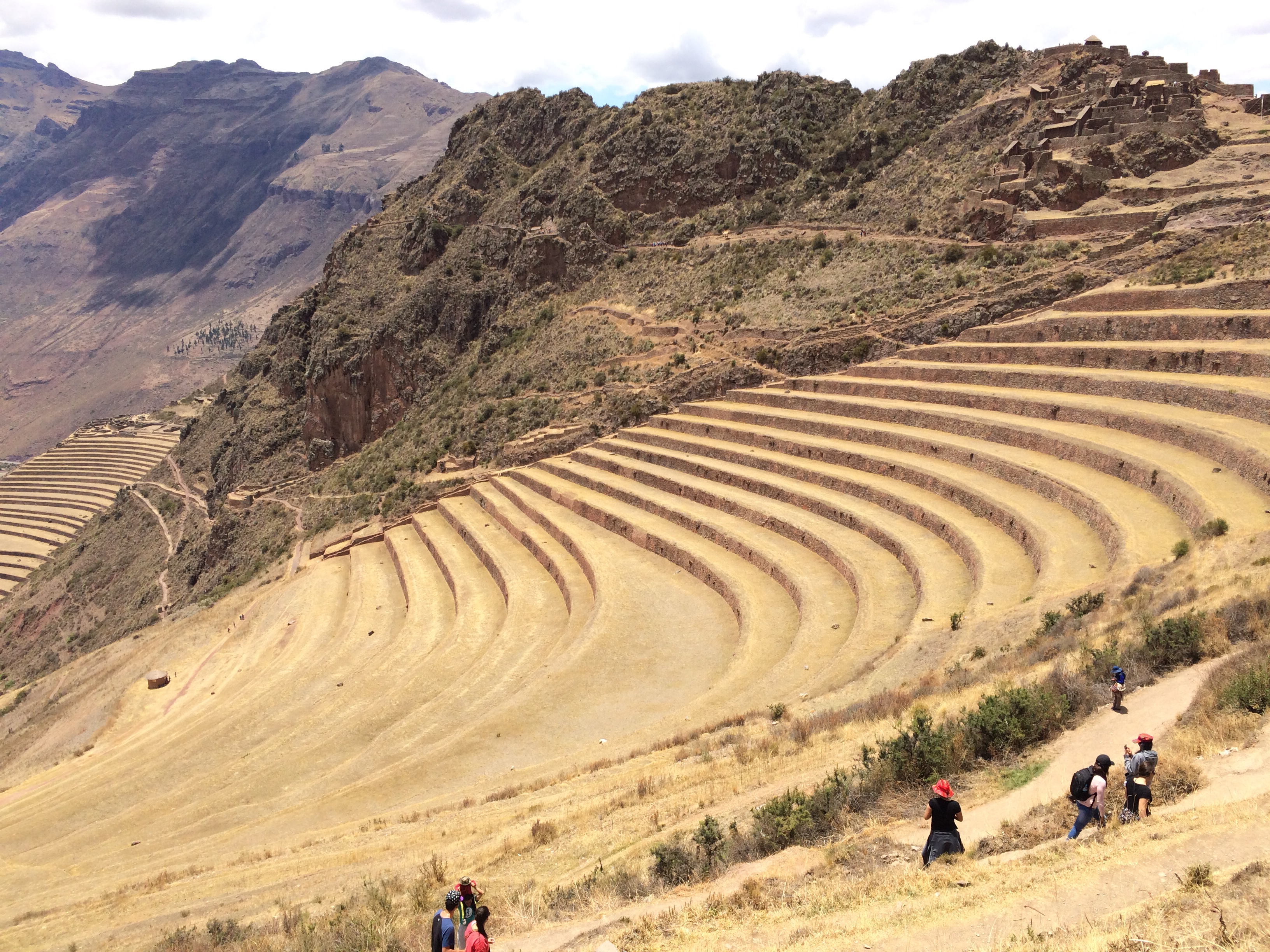
The next day on the way out of Cusco, we stopped at the Cristo Blanco statue high in the hills on the way out of Cusco. We were heading through the Sacred Valley and stopped off at various spots, including at a women’s weaving co-operative, at Pisac which has some great Incan terraces, and at a wonderful restaurant which is supported by G Adventures for some more delicious food.
Cristo Blanco outside Cusco; at the weaving co-operative; terraces as Pisac
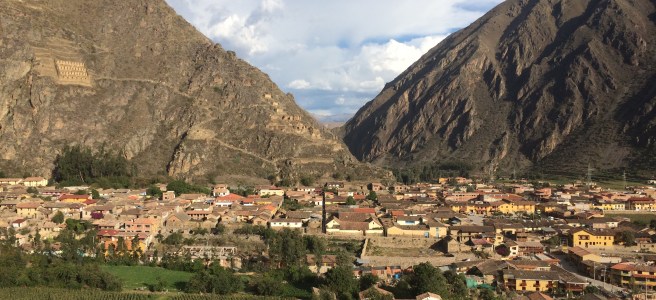
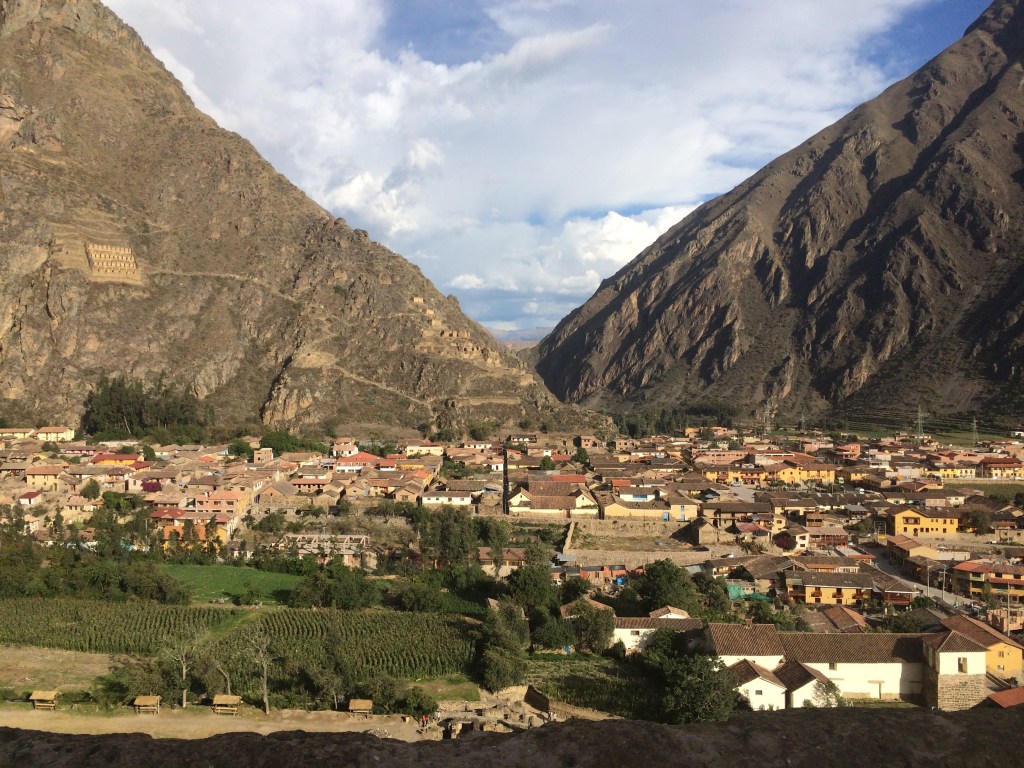
We ended the day in Ollantaytambo where we hiked briefly into the ruins – a spectacular view over the town and mountains from the ruins. After carbing up with a pasta dinner, it was an early night and an early start the next day to Kilometre 82 and the start of our 4 day hike to Machu Picchu. We got all our gear, met our porters who would be carrying food, tents, most of our stuff. We were also given snack packs to sustain us through the hike.
Ollantaytambo
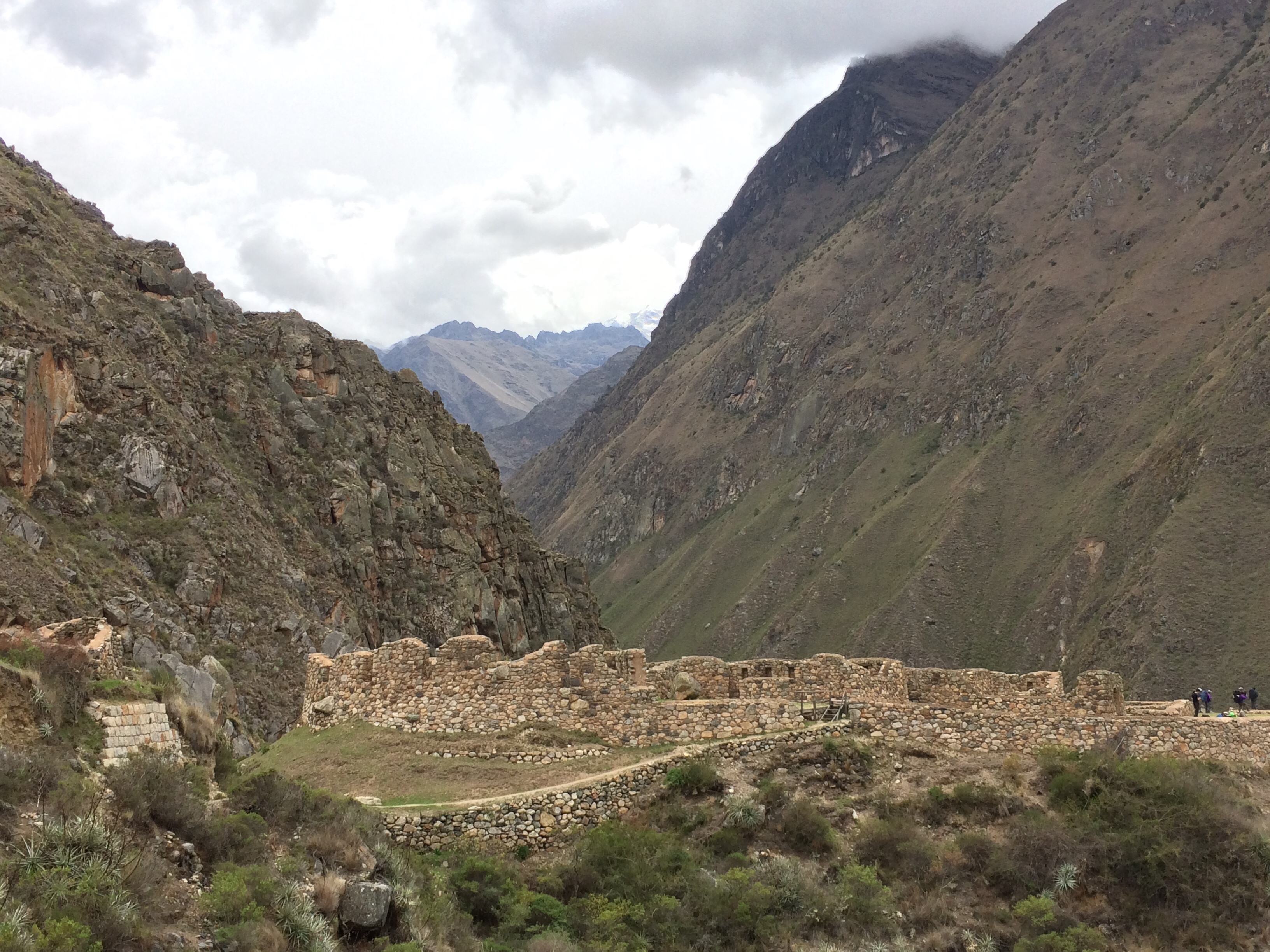
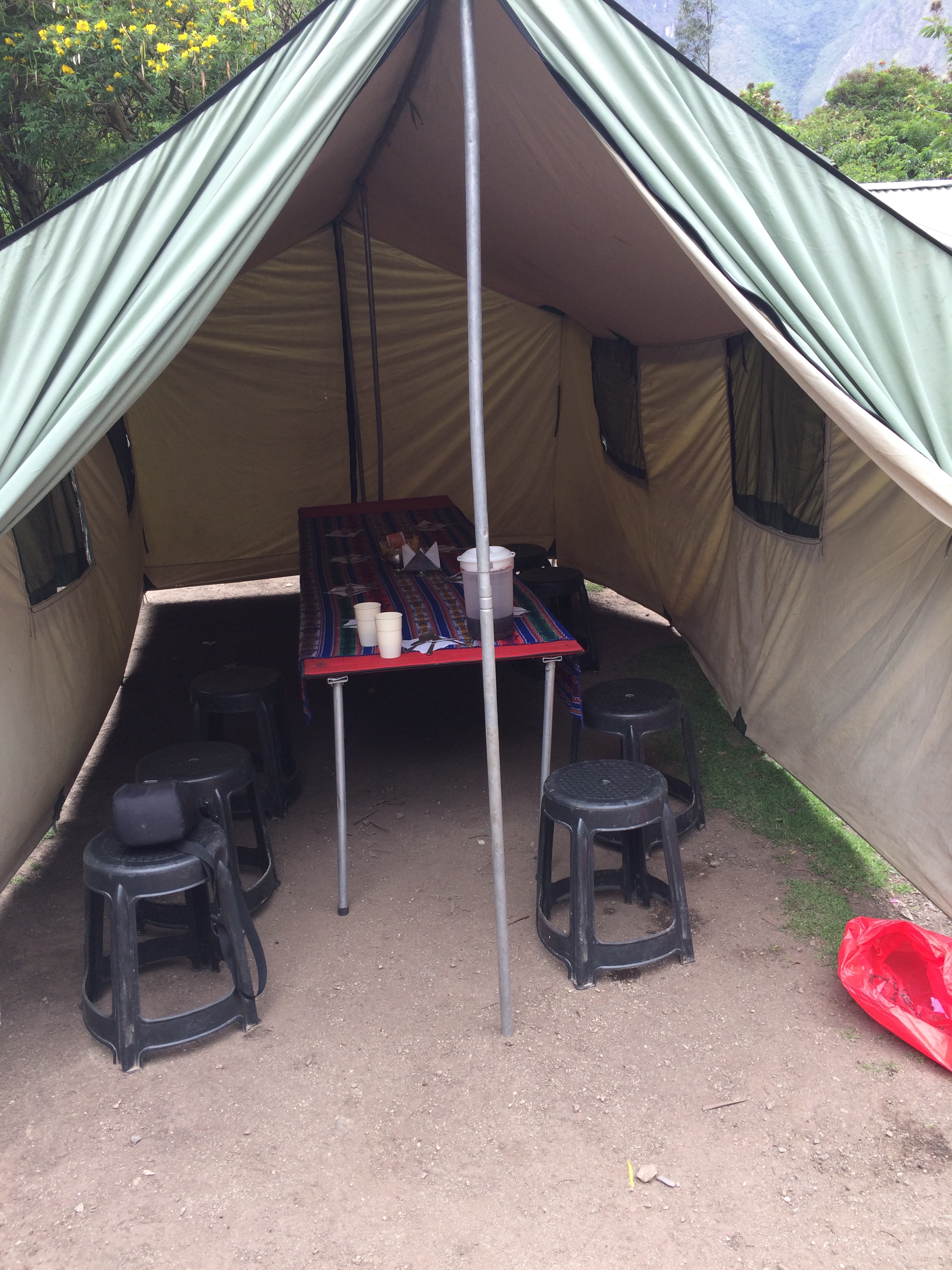
The first day of the hike is relatively gentle (certainly compared to what was to come on day 2), and it was absolutely beautiful. We also really lucked out with the weather. After a couple of hours we stopped for lunch. Again I had no real idea what to expect with the food but it was beyond anything I could have imagined – we had asparagus soup, fried trout, and jelly for dessert – all ideal for sustaining hiking, and the jelly was a very welcome surprise. At every meal stop we were also able to fill up with water which was obtained from nearby streams and boiled for sterilisation.
Hiking and our food tent
After lunch we headed off hiking again. You have to have a permit to hike the Inca Trail, which manages the numbers of people on there at any one time. This was arranged for me with the trip I’d booked. As you can imagine, this is a very popular hike so you would need to book well in advance. I’d booked this trip in February 2015 for a late November departure. We arrived into our first camp in the late afternoon. Our tents had already been set up by the porters so I took off my hiking boots and relaxed for a while before dinner.
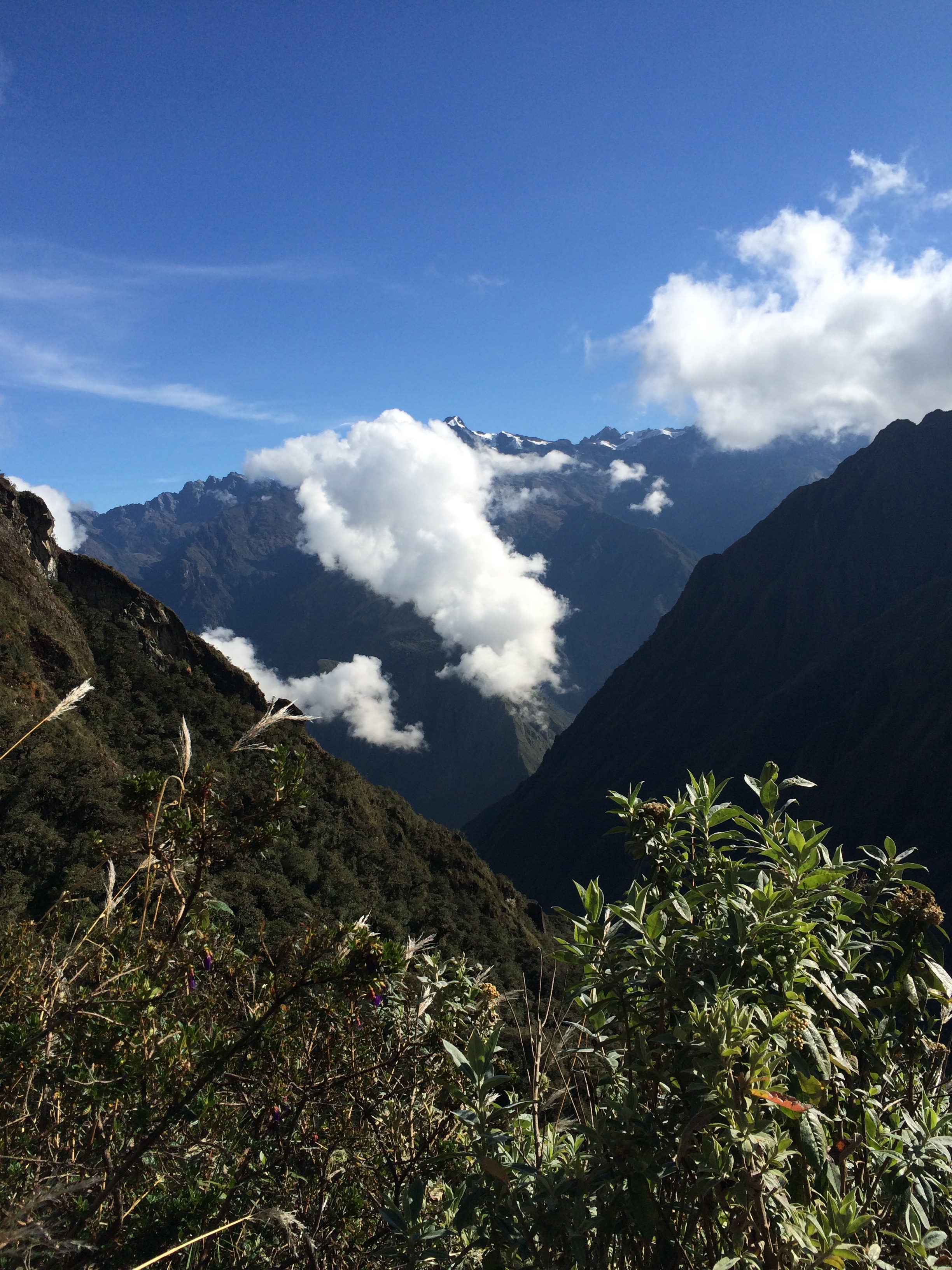
Day 2 involved walking up hill for about 5 hours as we reached the highest point of the hike at Dead Woman’s Pass (13,800 feet above sea level). There were times during the hike uphill where I could only make it literally 10 steps before needing a break due to the thin air. And whilst munching on coca leaves helped slightly, it was still very hard, but very rewarding work.
Looking back down the valley that we’d hiked up; exhausted at the top of Dead Woman’s Pass; hiking amongst the clouds
After a 3 hour walk downhill we arrived at the campsite for the second night where again our tents had already been erected and we were able to relax before another delicious and nourishing dinner. In the evenings we would sit out chatting and stargazing. It was approaching a full moon whilst we were there, you do get amazing views of the night sky here.
Day 3 was a long day of hiking – around 9 hours in total, but not quite as steep as day 2. We passed several Incan ruins which we were able to explore. We were also walking above the clouds at several points which was really awesome.
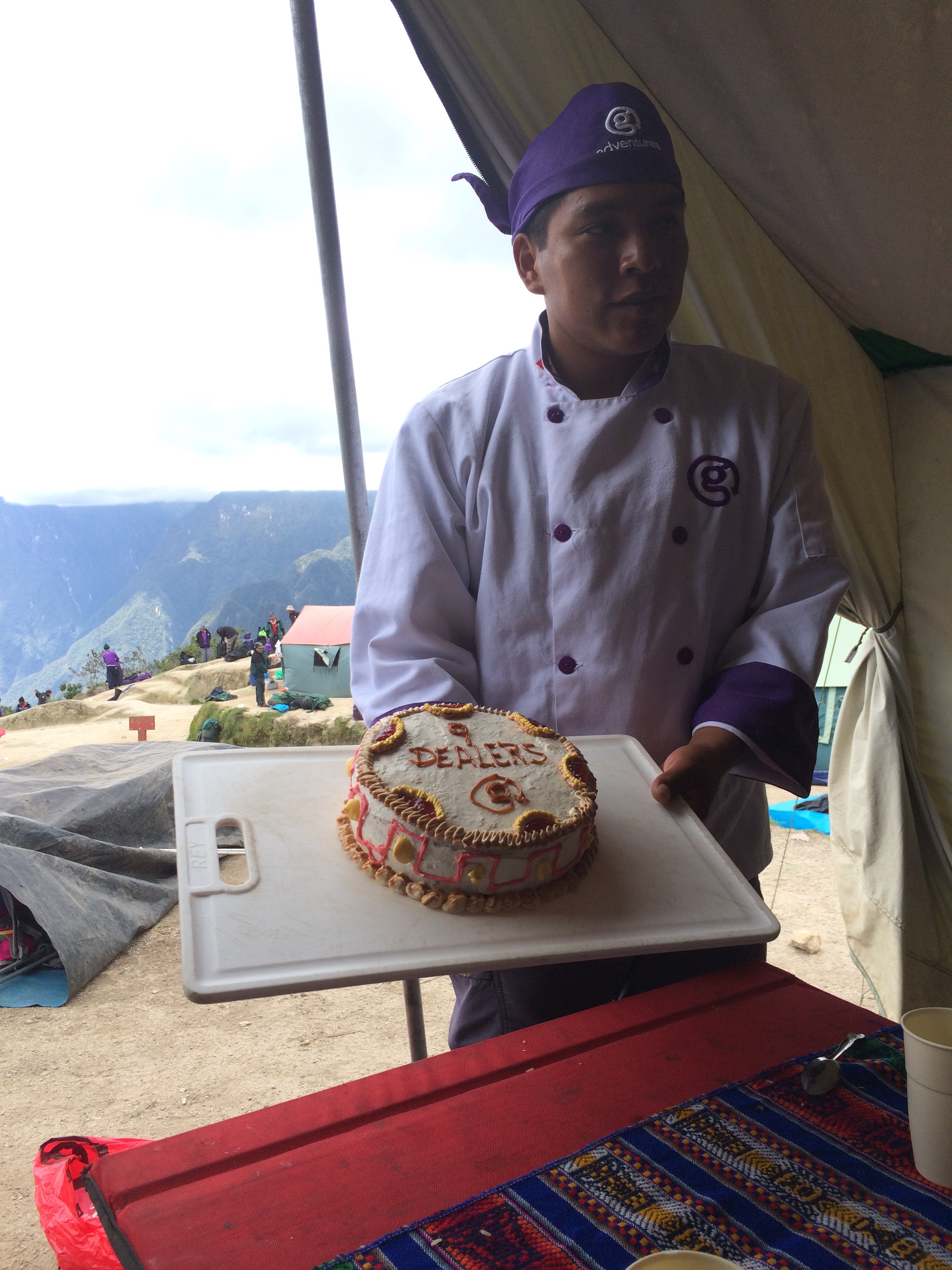
At lunch on day 3, our chefs had prepared a cake for us which was a huge surprise. the porters are truly amazing people who do this trip several times a month.
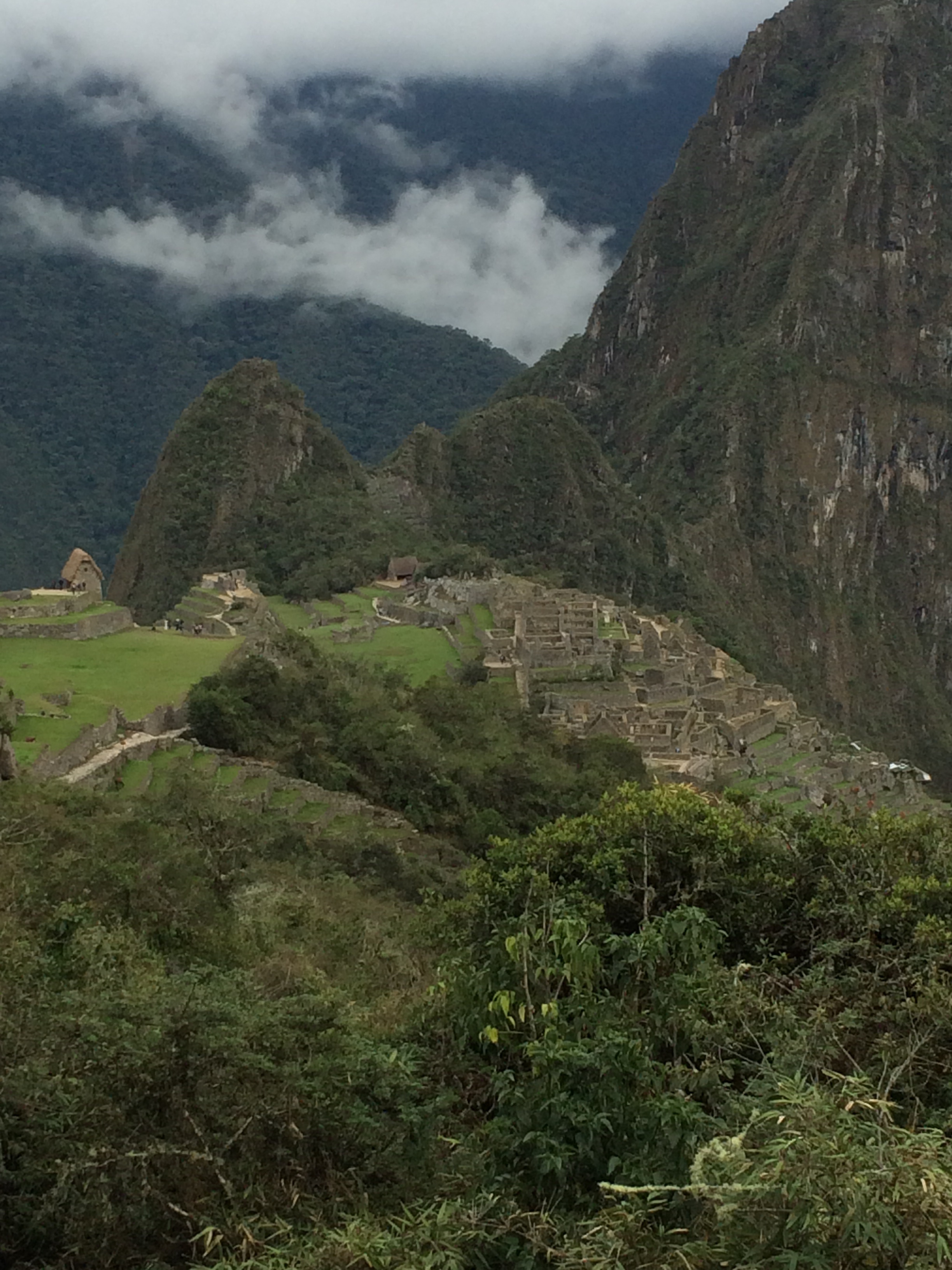
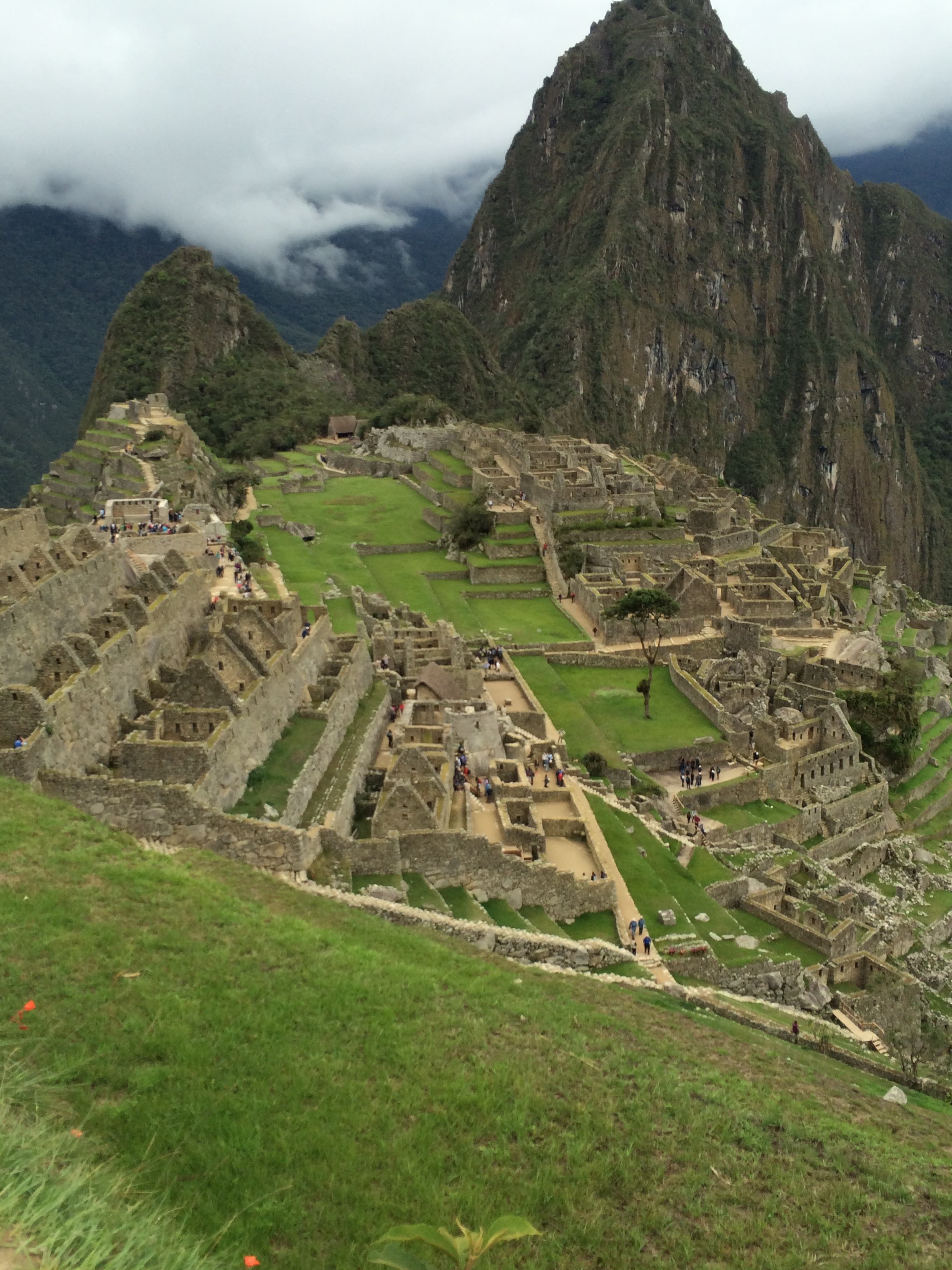
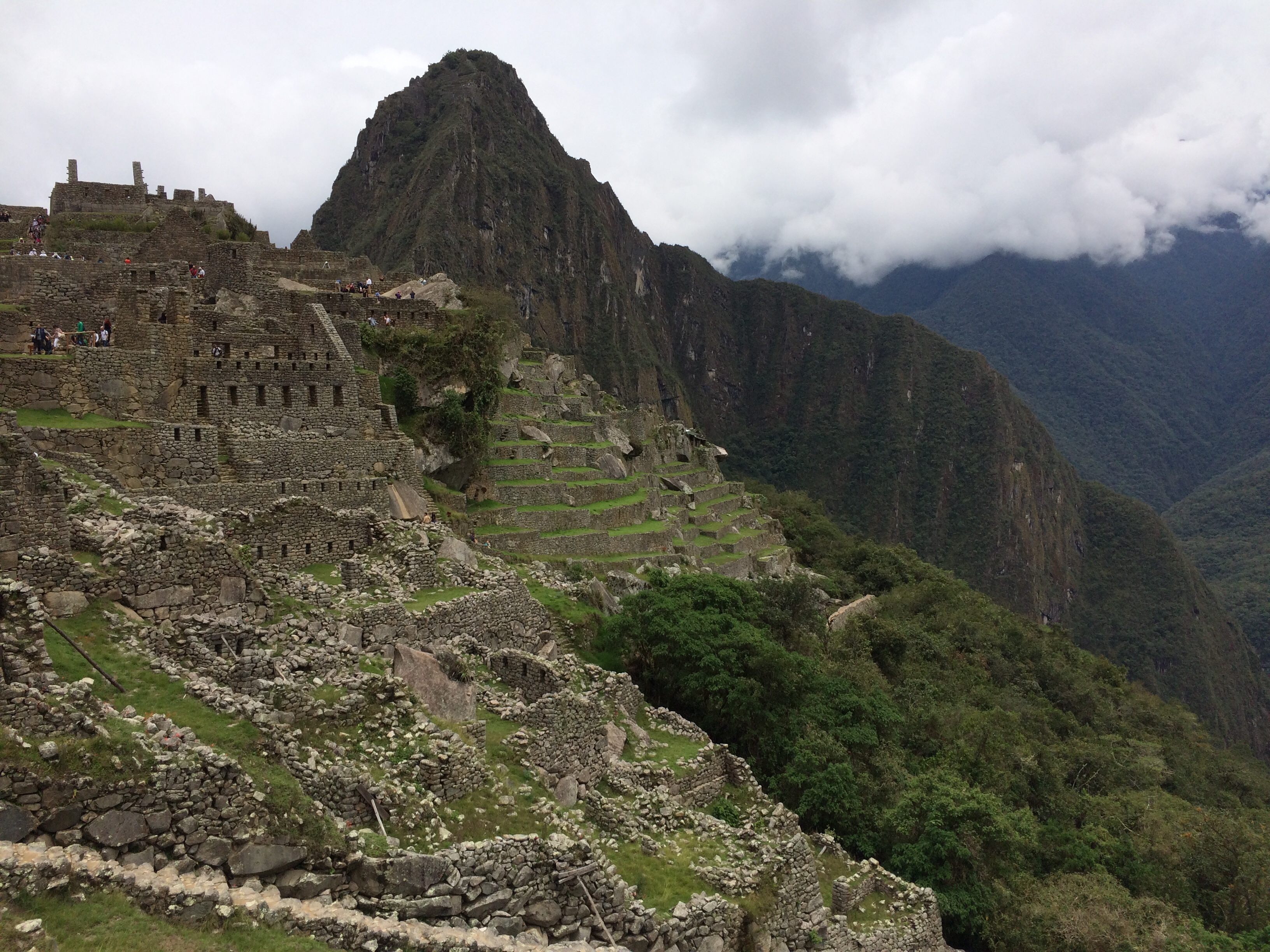
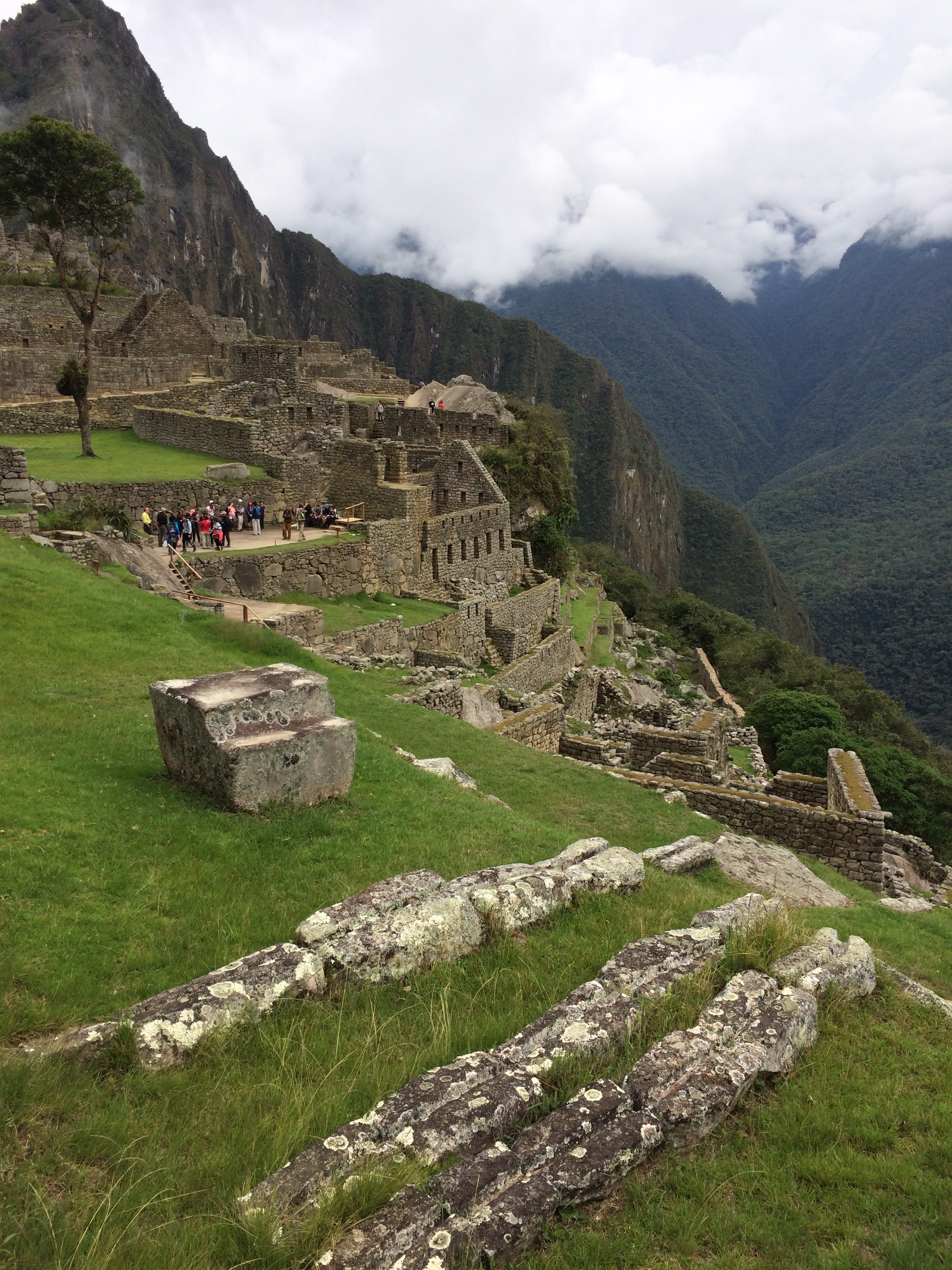
After an early night on day 3, it was an early morning for the final 5km into Machu Picchu. We were woken at 3.30am and headed out in the dark at around 5.30am. After climbing up a near-vertical wall, we arrived at the Sun Gate at around 7am and after getting down to the main citadel, we almost had the place to ourselves as only the early day-trippers from Aguas Calientes were arriving.
A cake for lunch; first view from the Sun Gate; Machu Picchu
After reuniting with others in the group who didn’t do the Inca Trail hike, we briefly freshened up in the bathrooms (actual flushing toilets after a couple of days of squats and holes in the ground) and then had a guided tour of Machu Picchu. It’s so awesome to walk amongst the ruins, and large parts of it are very well preserved.
After the tour, we took the bus down the winding road to the town of Aguas Calientes where we had lunch, wifi and a well-deserved beer before heading on the panoramic train back to Ollantaytambo, and then a bus back to Cusco.
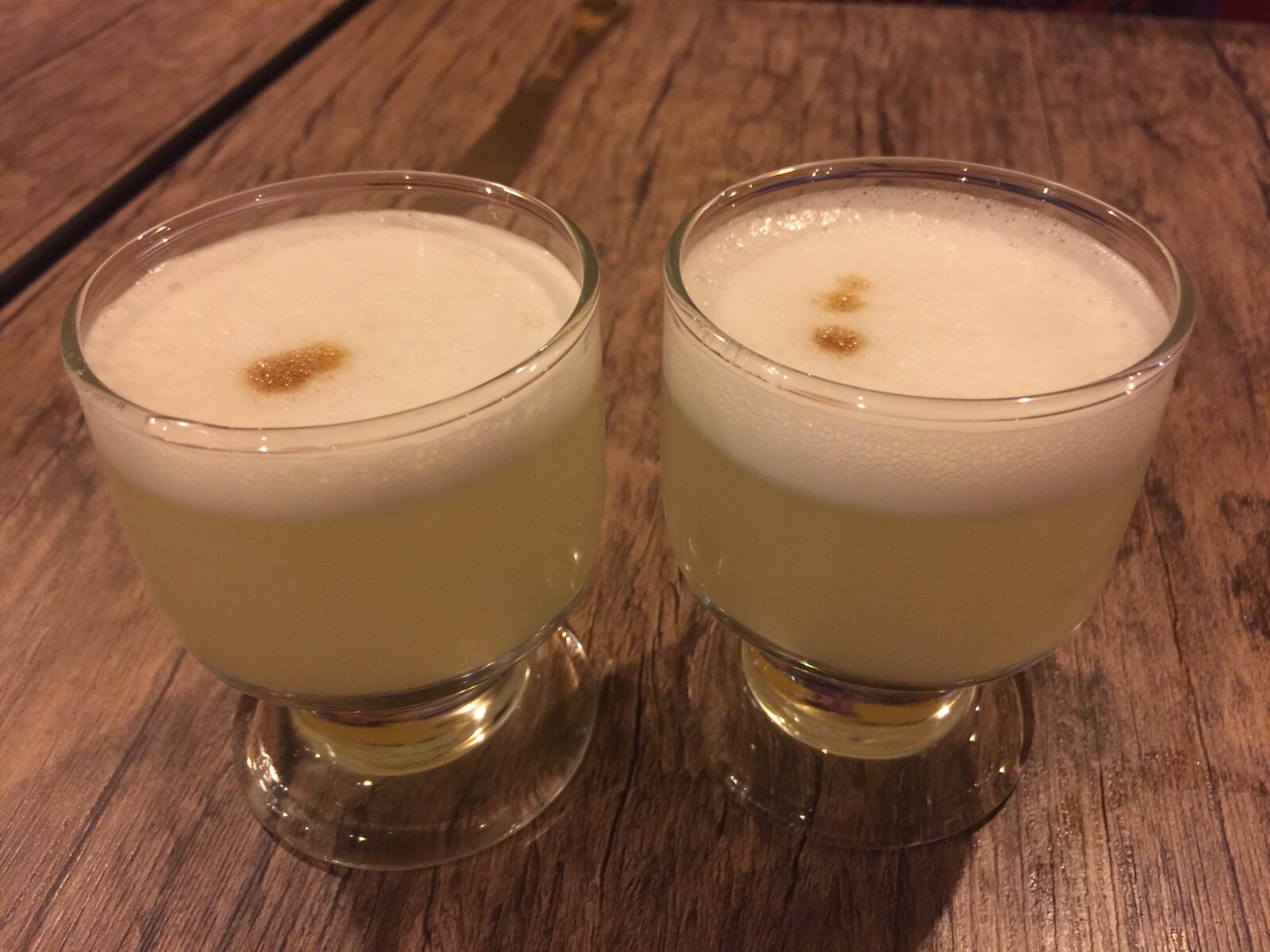
Back in Cusco I had the longest shower I was able to take in the intermittently hot/cold/dribble/gush of the shower head, as is usual in Peru. We then headed out for a celebratory dinner and Pisco Sours in Cusco. Definitely a night to let your hair down and celebrate a great hike.
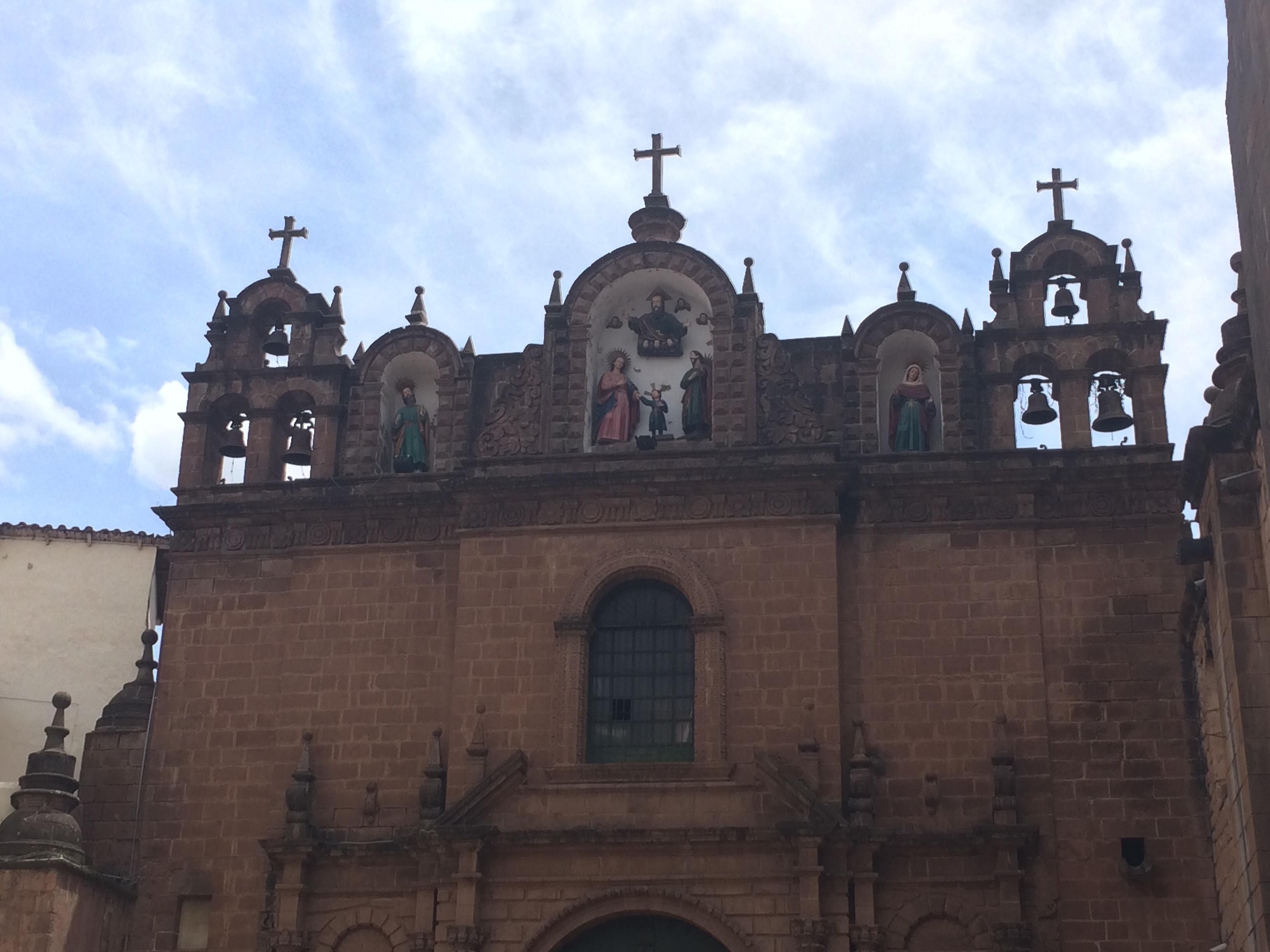
The final part of the trip had meant to be a trip into the rainforest. However at the time of our trip there was some unrest in Puerto Maldonado and so we ended up staying in Cusco for a couple of extra days. Cusco has a lot of history, a lovely cathedral, and we enjoyed a cooking class including sampling the Peruvian delicacy of ceviche (cured raw fish).
Sights of Cusco and Pisco Sours
We flew back to Lima for a final night before I flew home to a rainy UK (sans my bag which eventually made it a couple of days later). This was one of my favourite trips for many reasons. My first real time in a different culture, the food was so delicious (I think Peru and Vietnam are tied first in my favourite food experiences), the scenery was epic, the people on my trip were so lovely and to have the opportunity to hike the Inca Trail is something I will never forget.
Today marks the final day of my 6 month sabbatical from work, so I thought I’d round things off with one last blog post. The last 6 months has flown by, and yet, at times, Hong Kong and Australia seem like a lifetime since.
A lot has happened since mum took me to Swindon station on 29th December. I’ve taken 11 flights, flown approximately 32,000 miles, been driven roughly 17,000 miles (and sometimes it was a bit rough!), taken about 5,000 photos, met so many amazing people and seen so many amazing things (yes, I’ve used ‘amazing’ twice). I’ve made friends and memories to last a lifetime. And now I’m back home and about to go back to work. The last 6 months has definitely given me a different outlook on life. I am determined to have a better work/life balance (before I went away it was just work, and for the last 6 months it has just been life), and I am also going to make more of an effort to see more of the country I actually live in. Basically just to have a bit more fun.
To round things off, here is a list of the things I have learnt/discovered over the last 6 months, some of it serious, some of it less so…:
1. Free wifi is a godsend. It was distinctly lacking in hostels in Australia and New Zealand. You do, however, get good at finding places which have free wifi, including Starbucks, Macca’s (McDonalds), libraries, banks, some towns and cities also have free wifi so it’s always worth switching your wifi on just to see.
2. Treating yourself to clean pajamas…lush!
3. The freedom of not wearing any make up
4. An eye mask and ear plugs are vital.
5. Umbrellas are not waterproof in a tropical rainstorm.
6. Neither are my ‘waterproof’ walking boots.
7. Drinking every day is not good for you. Aside from 3 weeks around Easter, I pretty much had a drink every day.
8. Power banks/battery packs are amazing. Massive thanks to work for getting me one as a going-away gift!
9. Don’t take any white clothes when you go backpacking, they’ll never be white again.
10. Hostels that provide towels are a godsend, and are very limited. I managed to lose my travel towel in San Luis Obispo, and I wasn’t that disappointed to say goodbye to it.
11. Dominos do $5 pizzas in Australia and New Zealand. That’s £2.50!!! (Or it was before the pound crashed).
12. If you listen to enough Justin Bieber, you’ll eventually like a couple of his songs.
13. Travelling on your own is liberating. You get the confidence to go to a restaurant on your own, go to the cinema on your own, drink a bottle of wine in a hostel on your own. And if you don’t want to be alone, there are always other people around who want to hang out.
14. Reading is good and I should do it more at home.
15. You will learn pretty soon to chuck all your clothes in the same wash, irrespective of colour. They’ll all emerge from it just fine.
16. Compression bags for packing are amazing – that and a battery pack were the best things I took with me.
17. McDonalds in the UK really need to start doing frozen cokes.
18. Don’t stop travelling!! There’s a big, wide world out there to explore and I very much intend to carry on exploring!
This is the end of one great adventure, but there will be more to come 😀👍✈️☀️🏝🌇🌅🏞⛰🌏🌎🌍👋