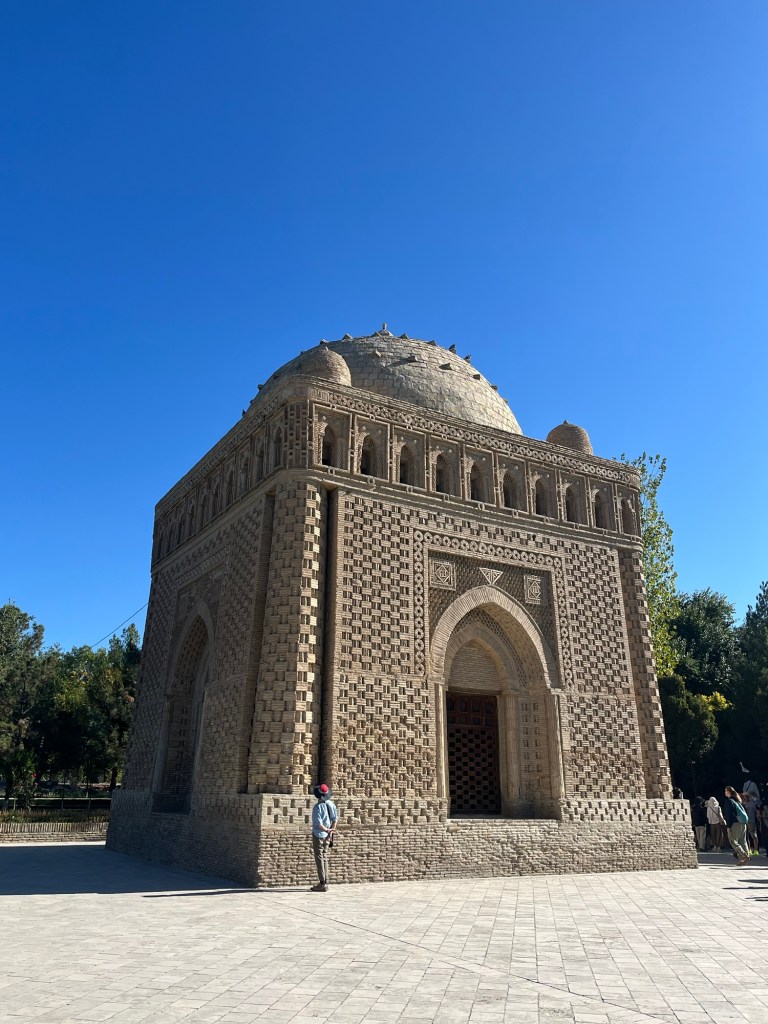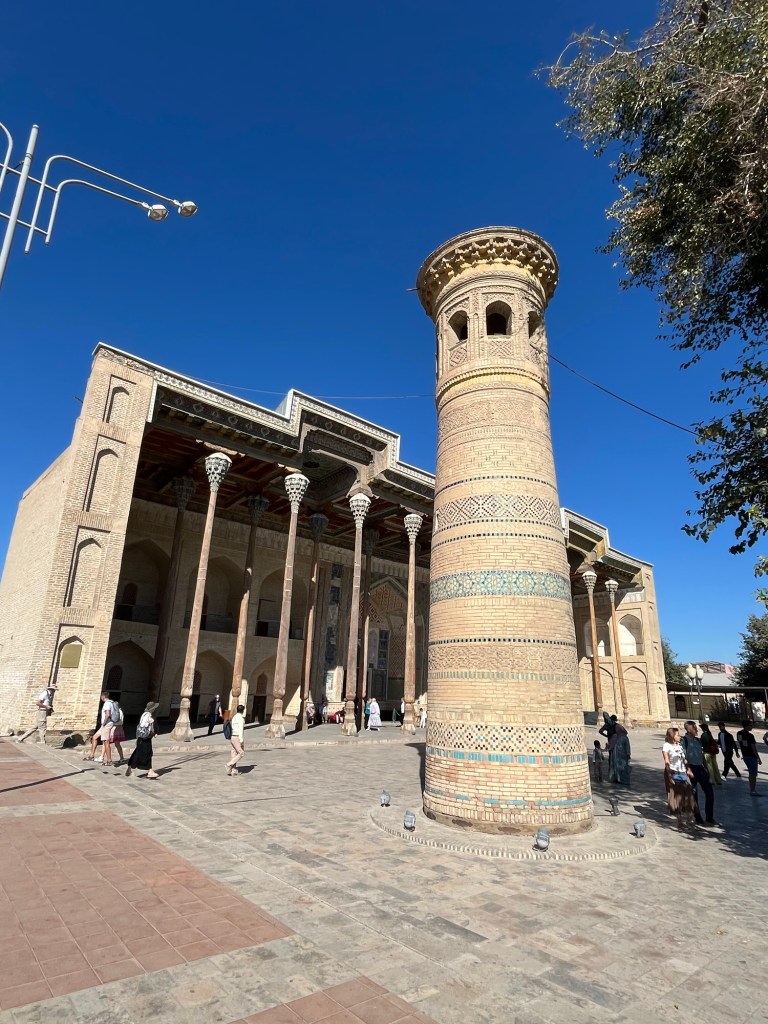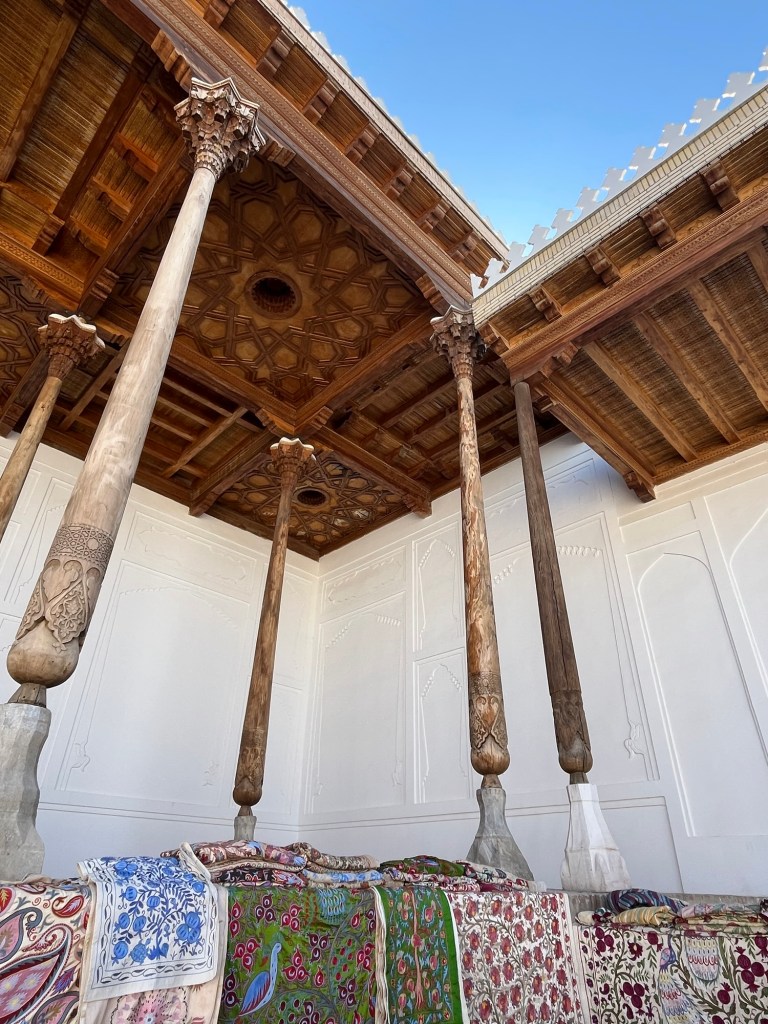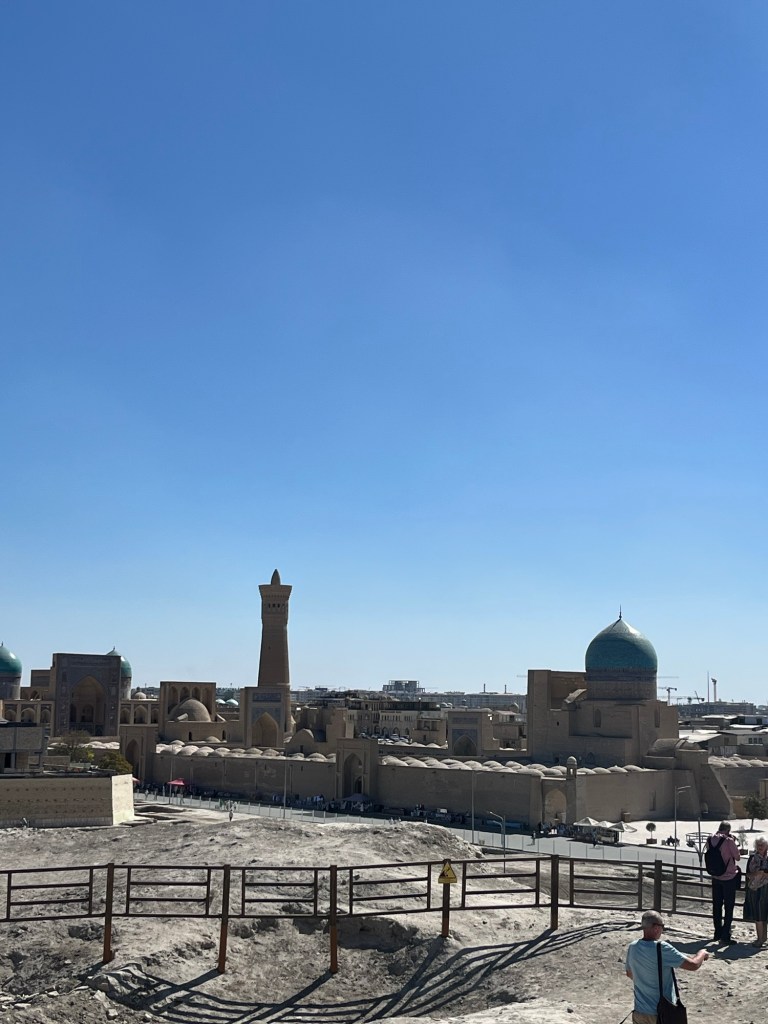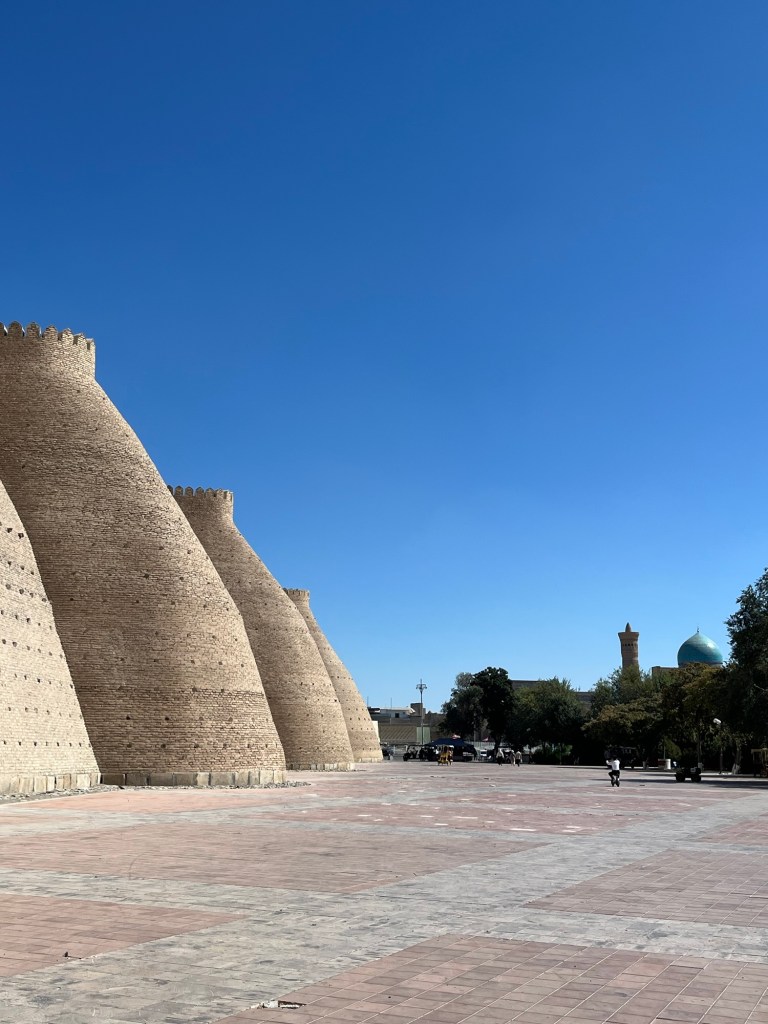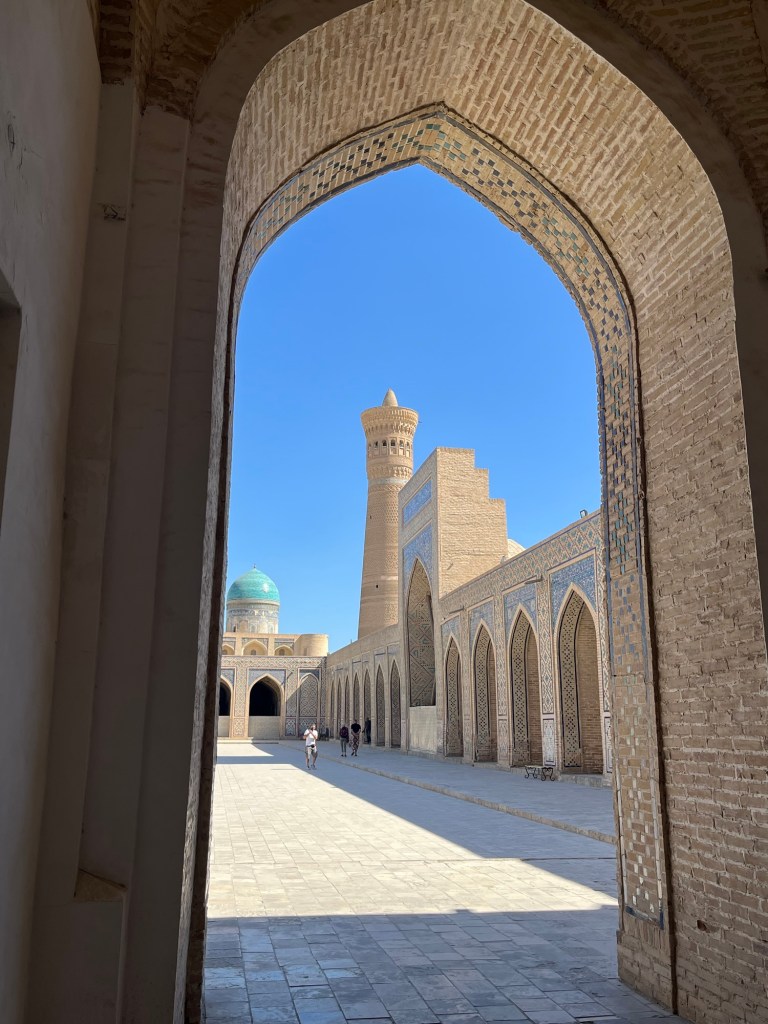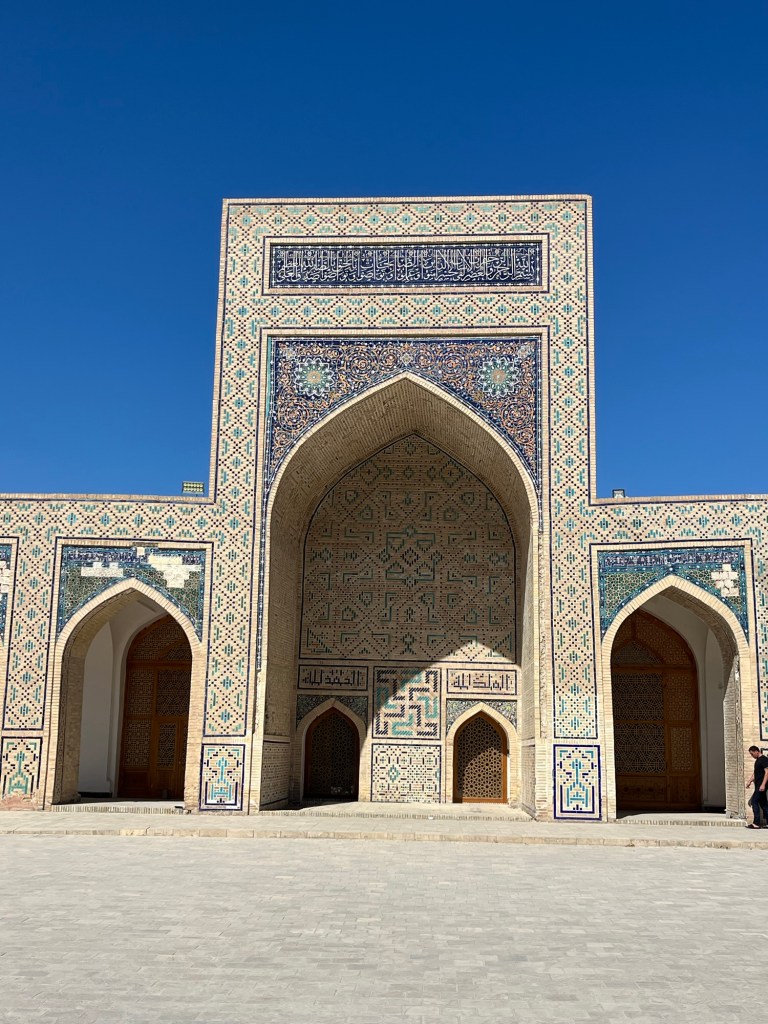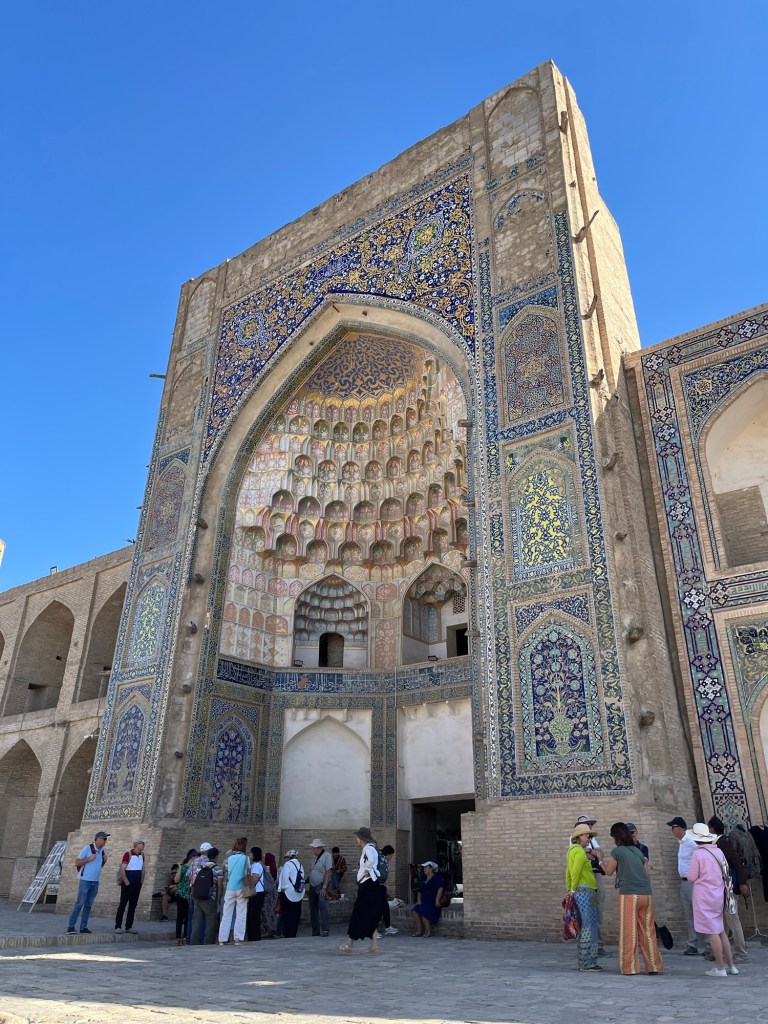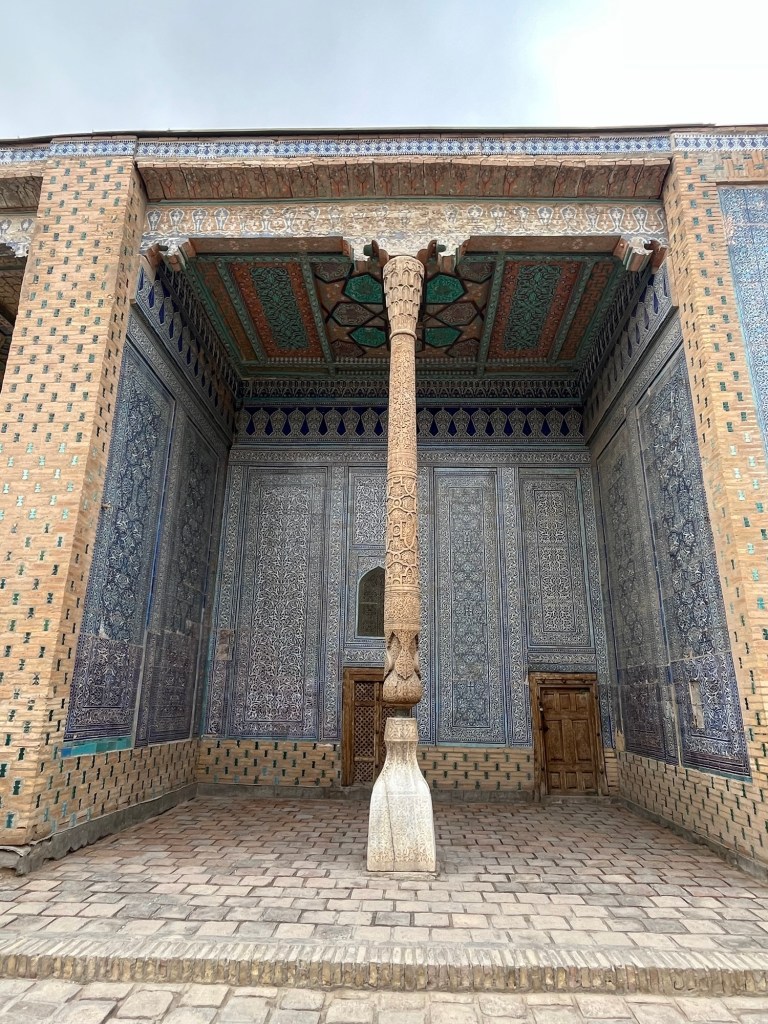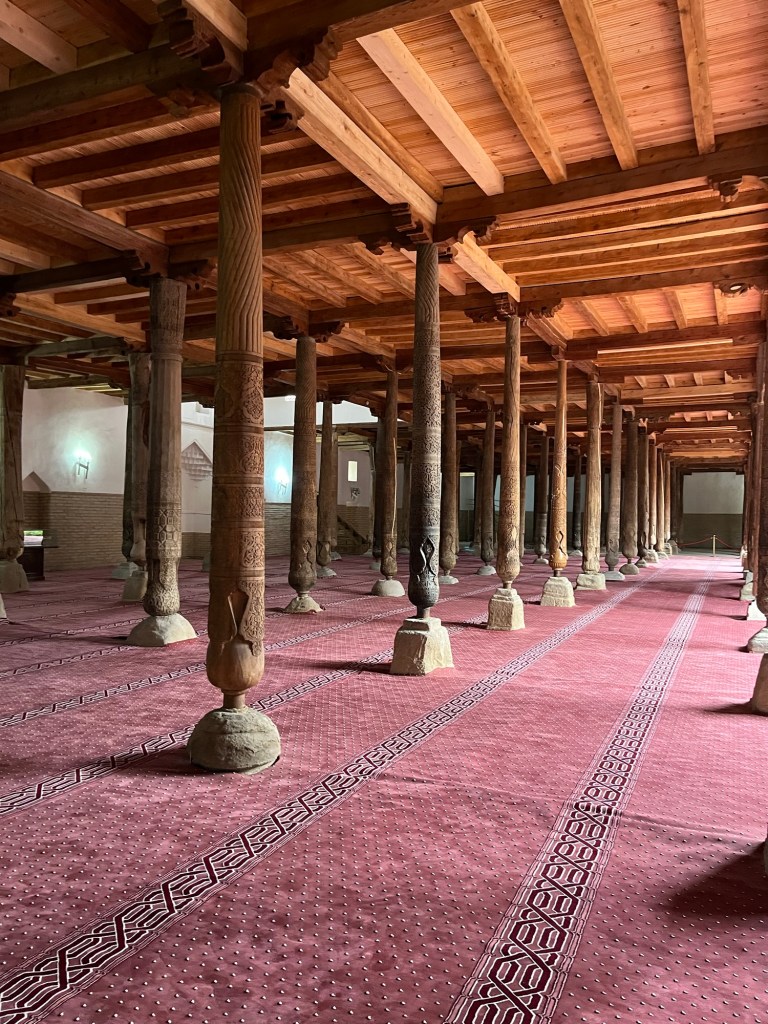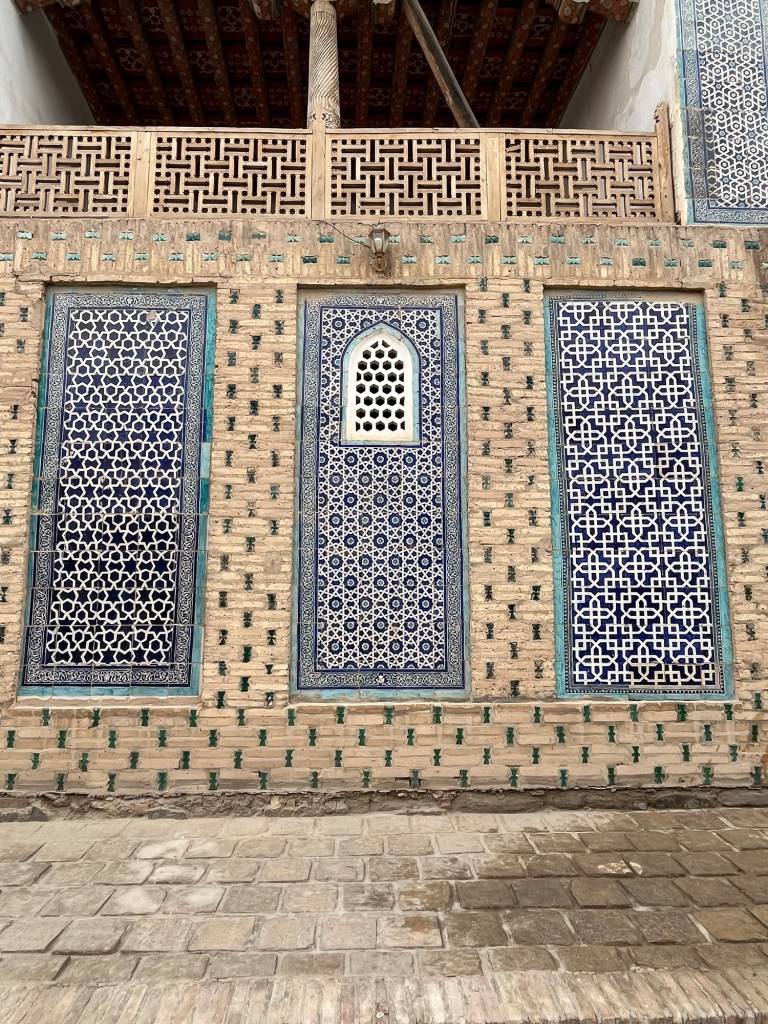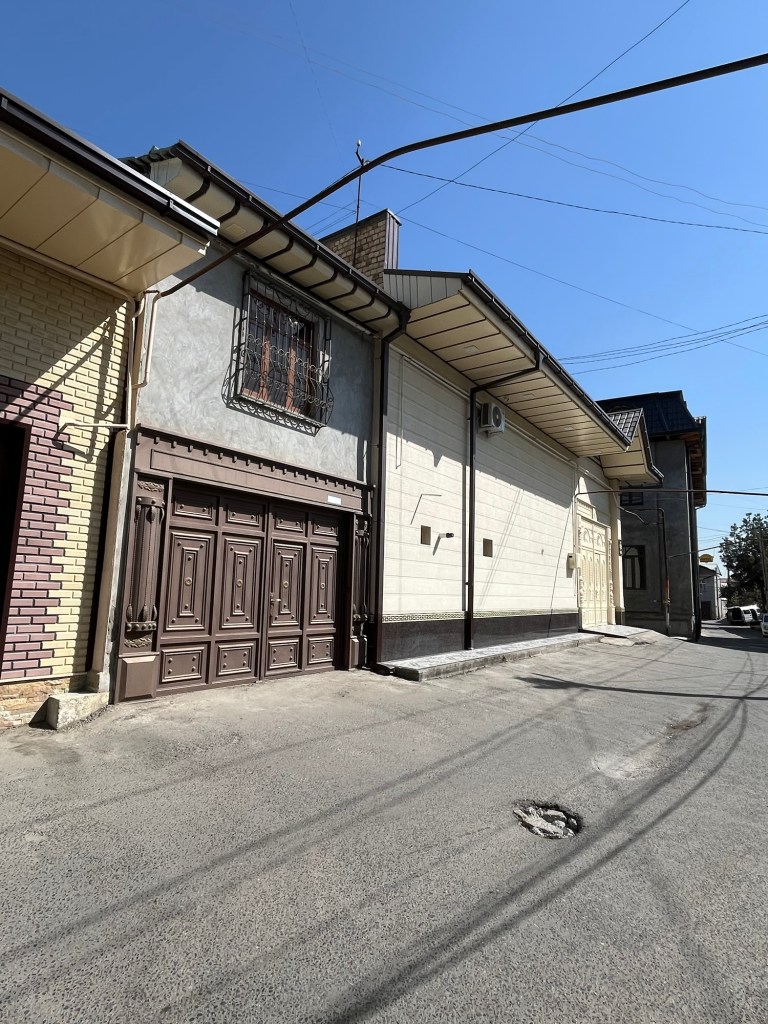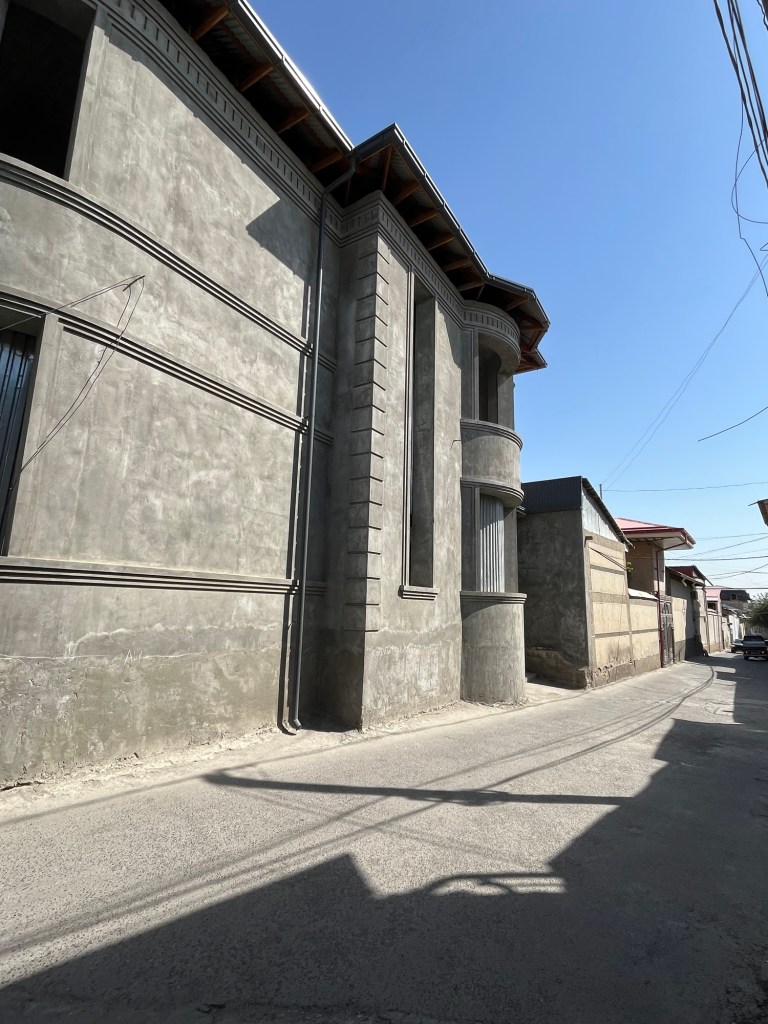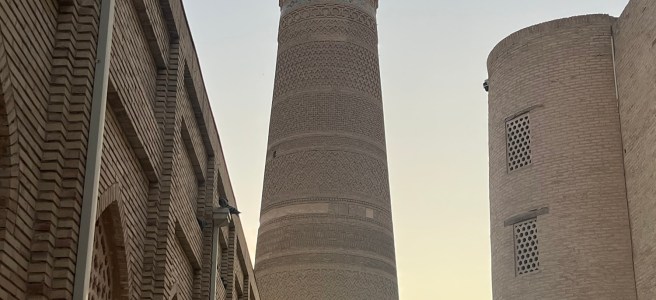
Tashkent, Samarkand and Aidar Kul

We crossed the border from Tajikistan to Uzbekistan at Oybek, north of Khojand. It took a while, and there was a reasonably long walk in the midday sun between the 2 border posts. But eventually we were through (no visa needed) and then all crammed into a minibus for the remaining drive to Tashkent.

We arrived in the late afternoon, and this would be the final night for around half the people on this trip. We went out for a farewell dinner to mark the occasion. Those of us continuing then had a free day in Tashkent before we would meet the new people joining us for the Uzbekistan part of the trip.

I’ve been to Uzbekistan before, in 2023. People have asked why I’m doing it again. Firstly I really enjoyed it last time, secondly I wanted to cover as many Stans as possible on this trip (quite gutted that I couldn’t find dates including Turkmenistan which worked for me), and finally I was intrigued to see how tourism was developing here as when I was here before, it felt like it was on the cusp of becoming really popular.

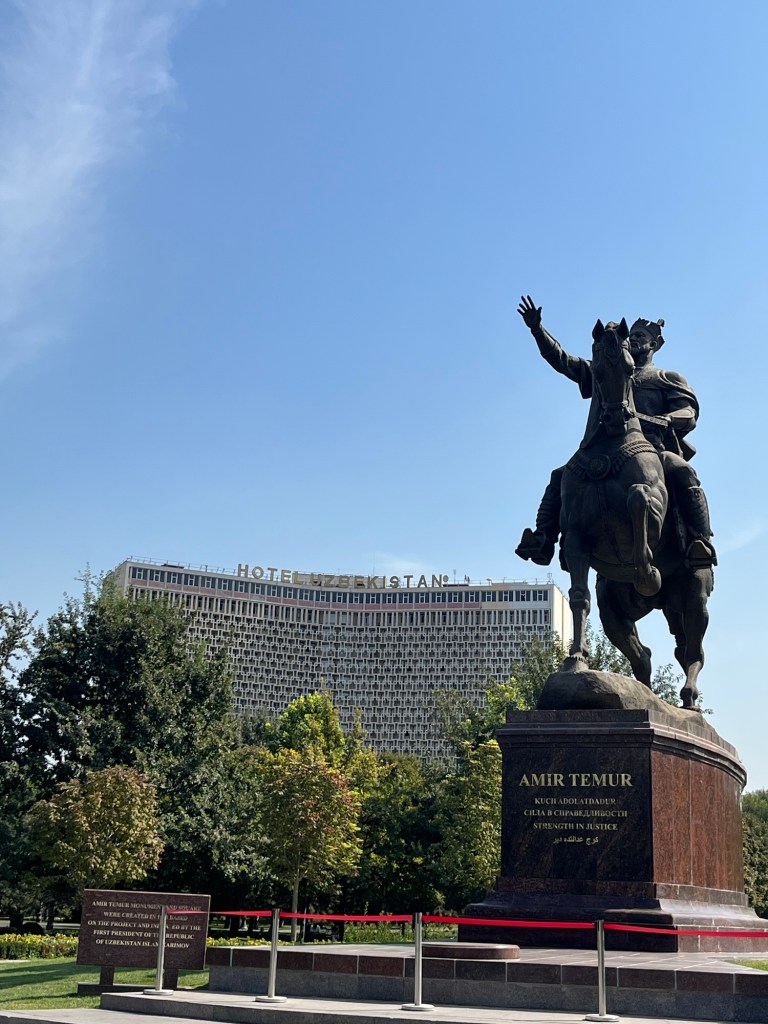
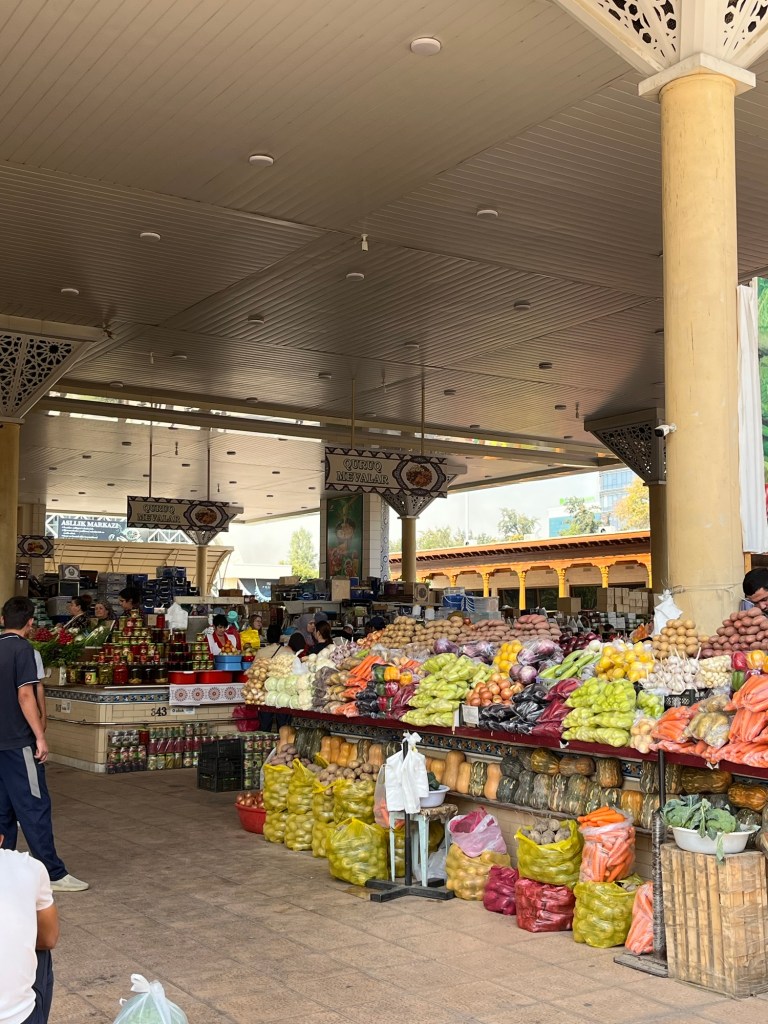
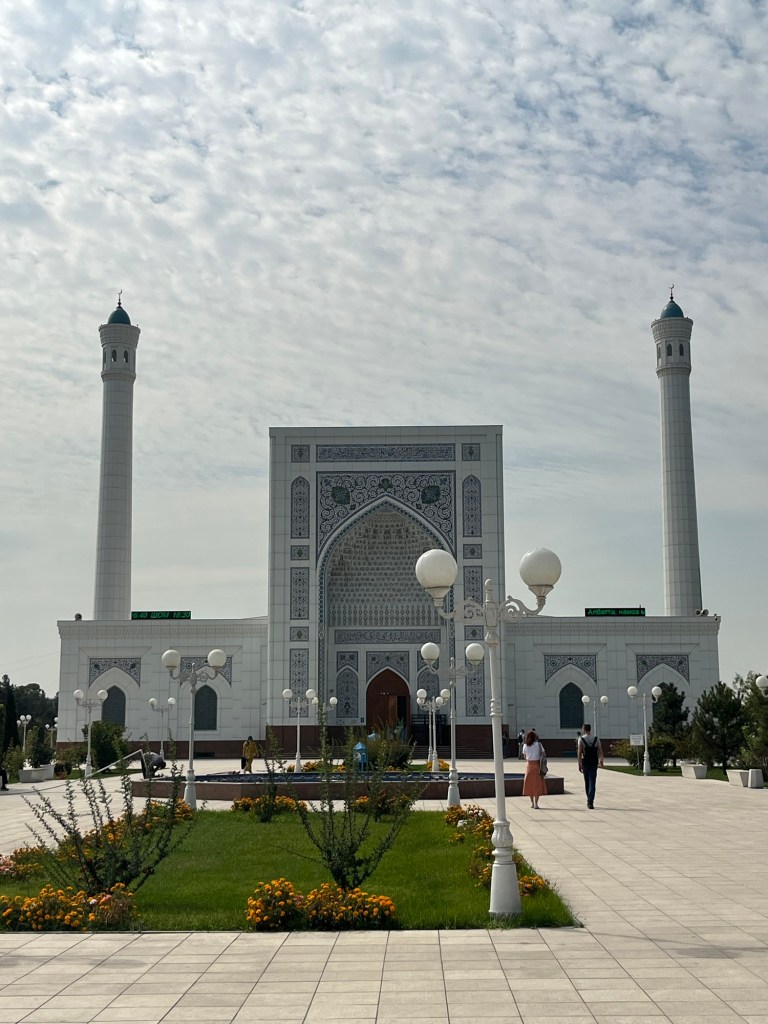
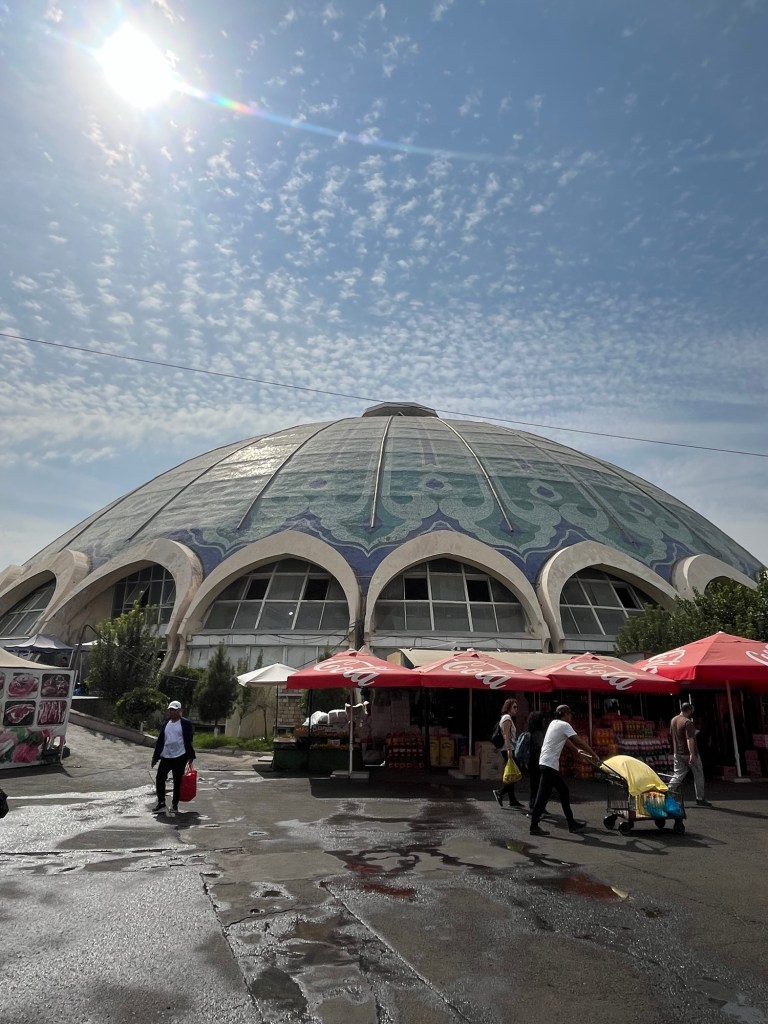
I spent my free day in Tashkent going to some new places (Amir Timur park, Abay bazaar) and some places I went before (Minor Mosque, Chorsu bazaar). One thing that has changed since last time is that you can now pay for the metro by tapping your card at the gate. The fare is still ridiculously cheap though, £0.11 per journey according to my bank account!

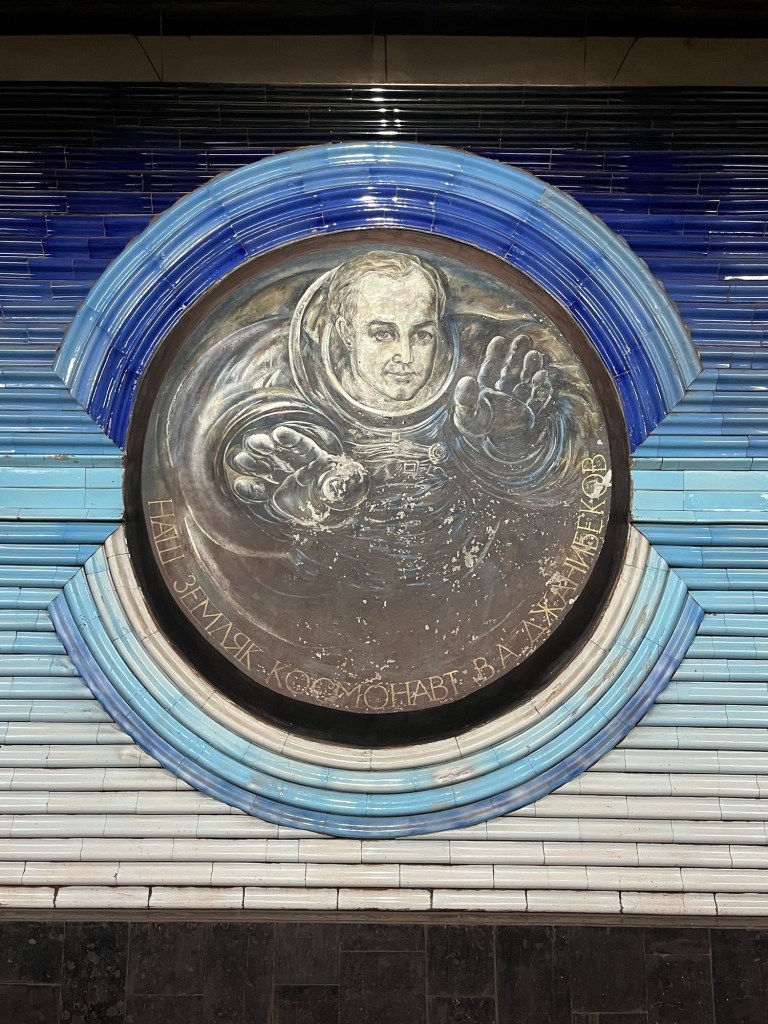
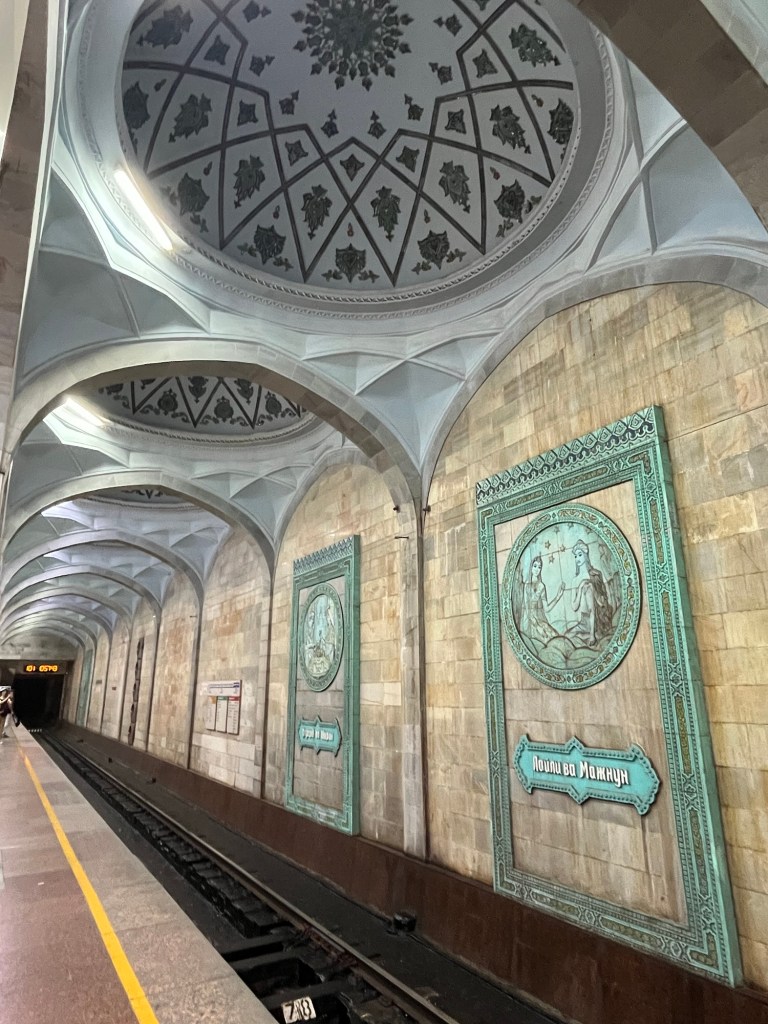
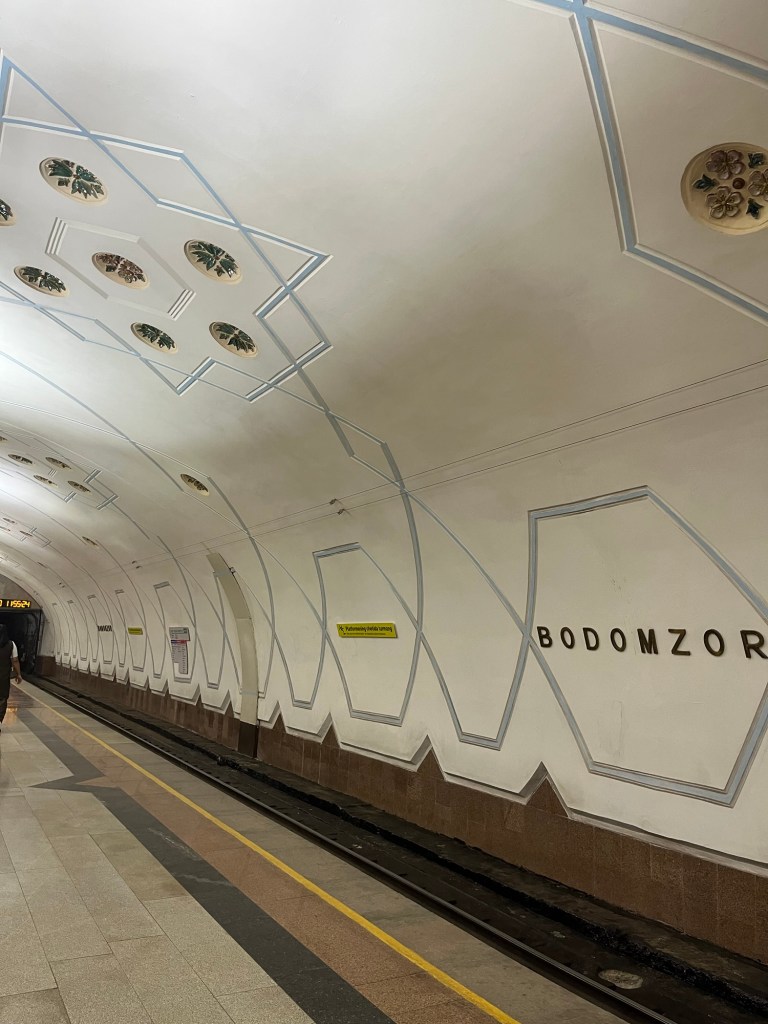
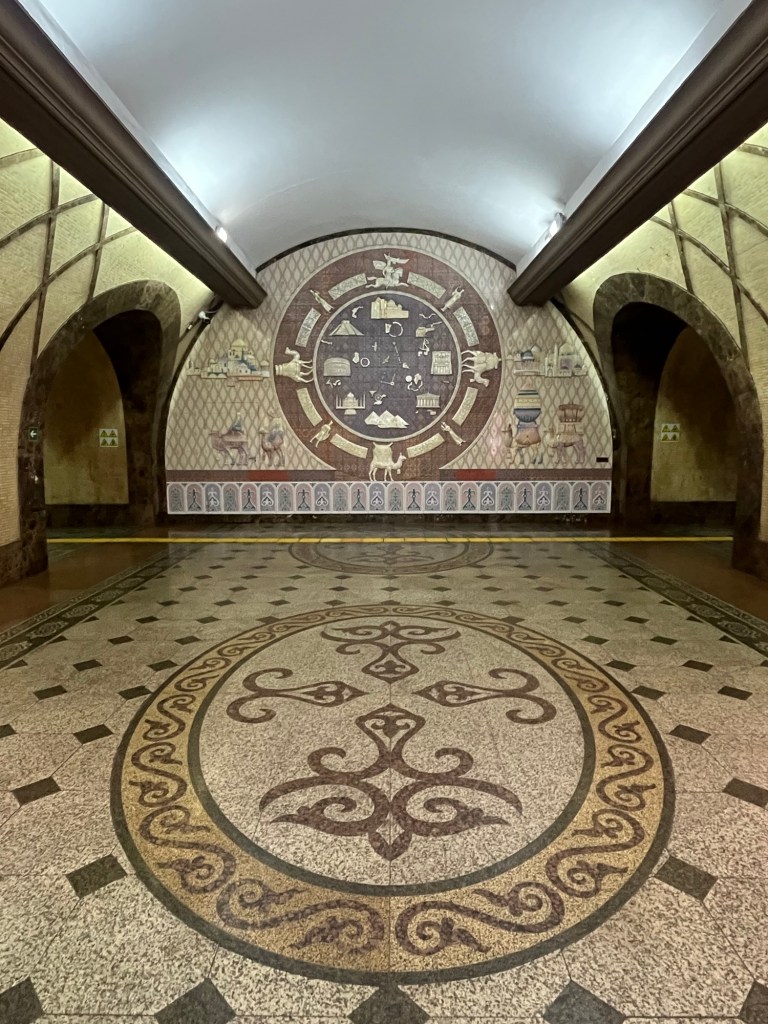
Tashkent metro also has some really interestingly decorated stations, built mostly during the Soviet era, so worth jumping off at a few to take a look.

After meeting the new group and going for dinner in the evening (I’m surprised to find I am the youngest person on this section of the trip, certainly not the case last time), we left Tashkent the following morning on a train bound for Samarkand. A reasonably comfortable journey in what looked like a Soviet era carriage, this wasn’t one of the high speed trains so took around 3 hours to get to Samarkand. We did get a free cup of tea though!

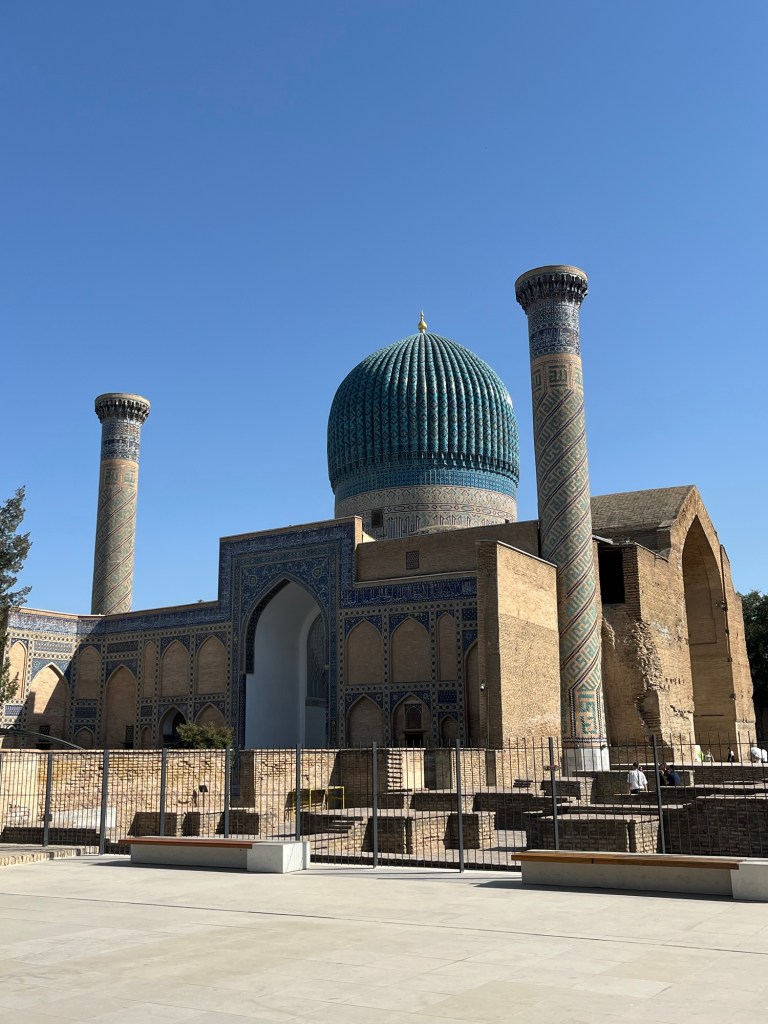
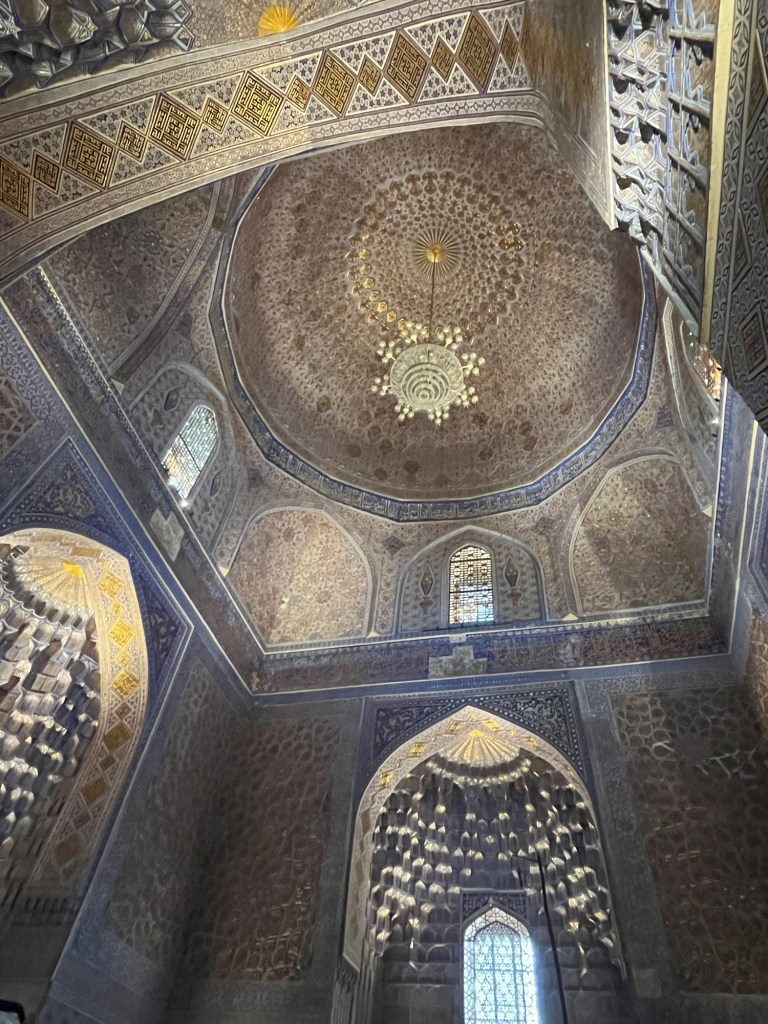
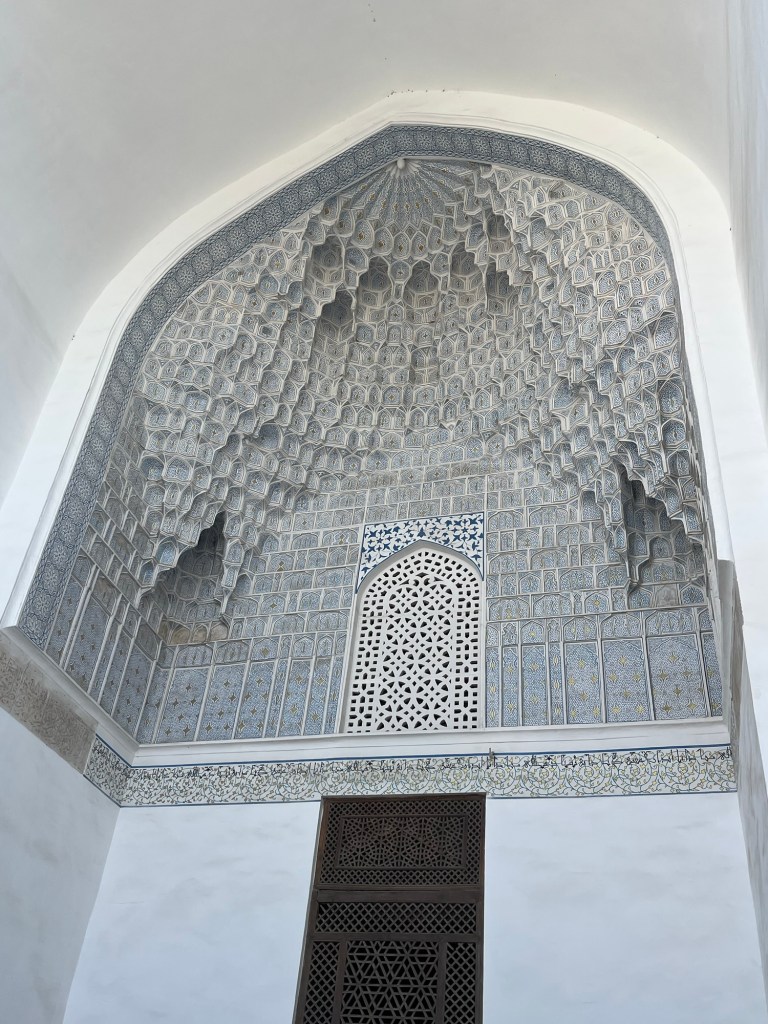
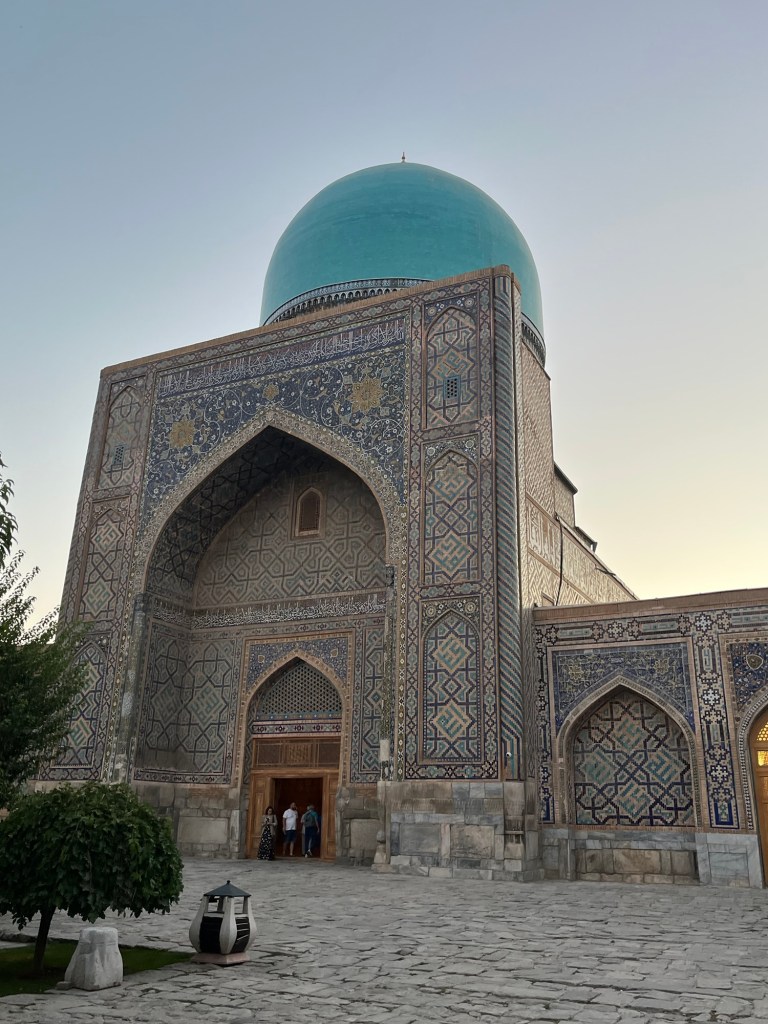
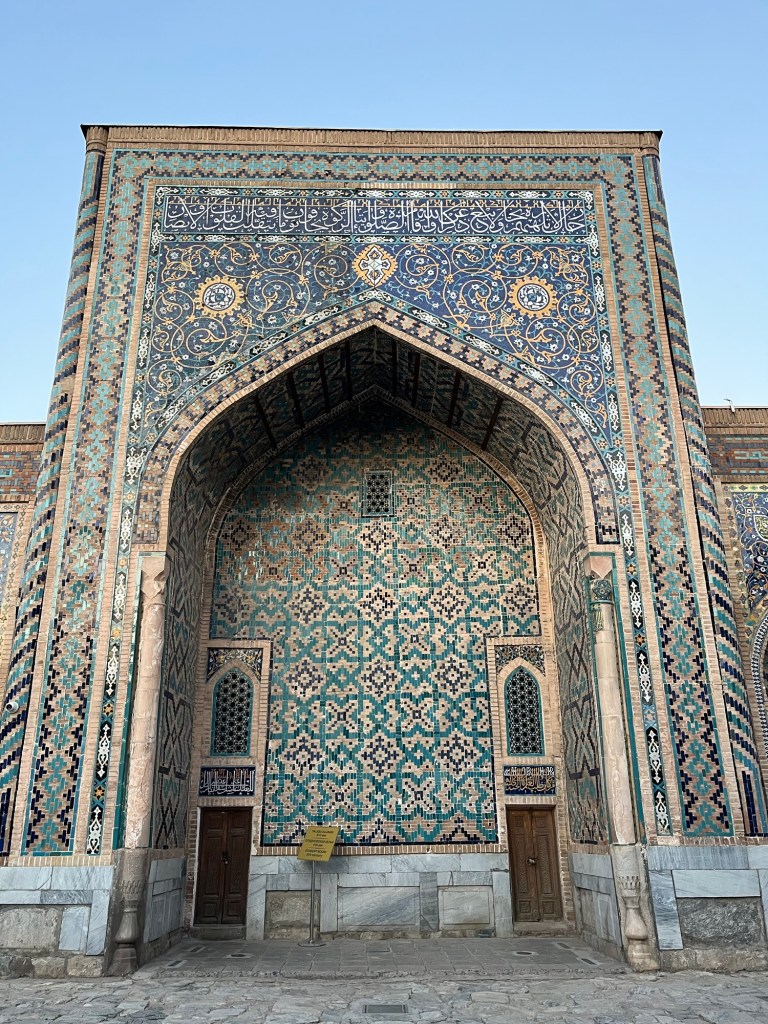
We arrived in Samarkand in time for lunch. And then after lunch we had a tour of some of the main sights which lasted for the rest of the afternoon. First up we went to the Gur-I-Amir mausoleum, in a beautifully decorated complex.

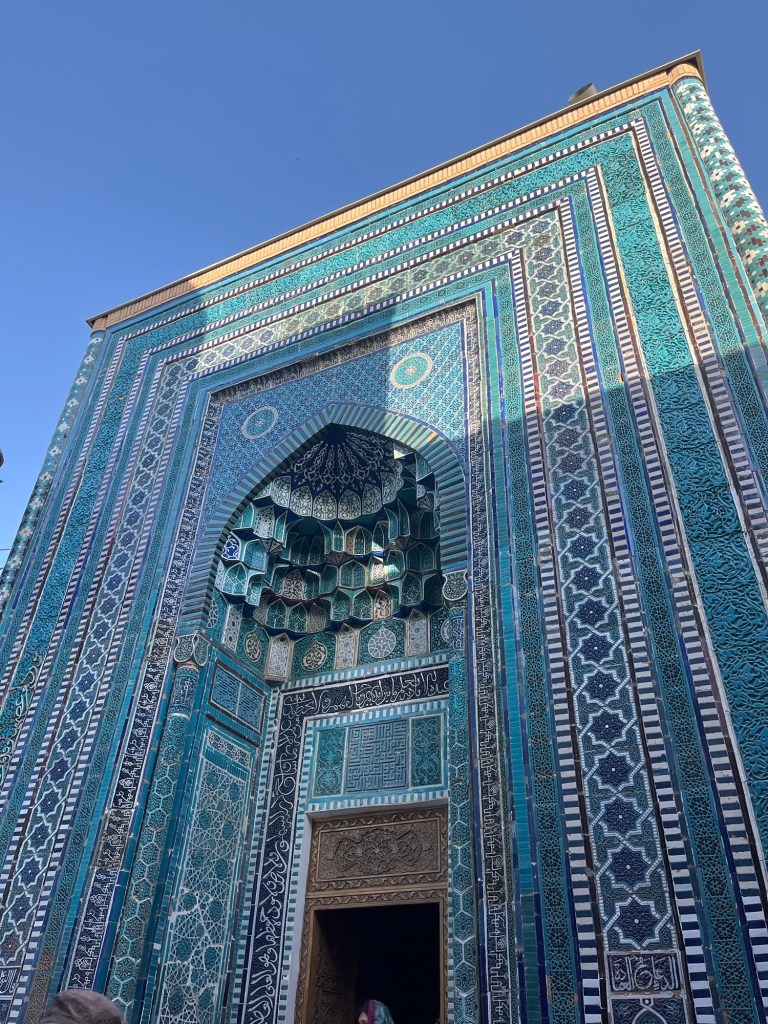
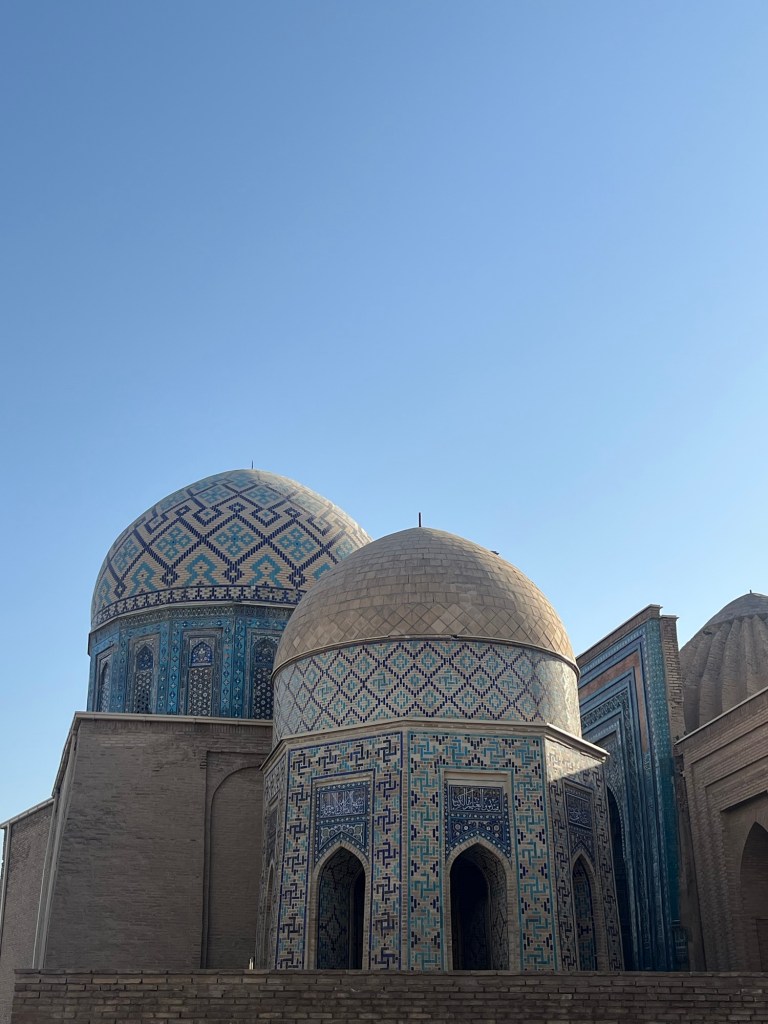
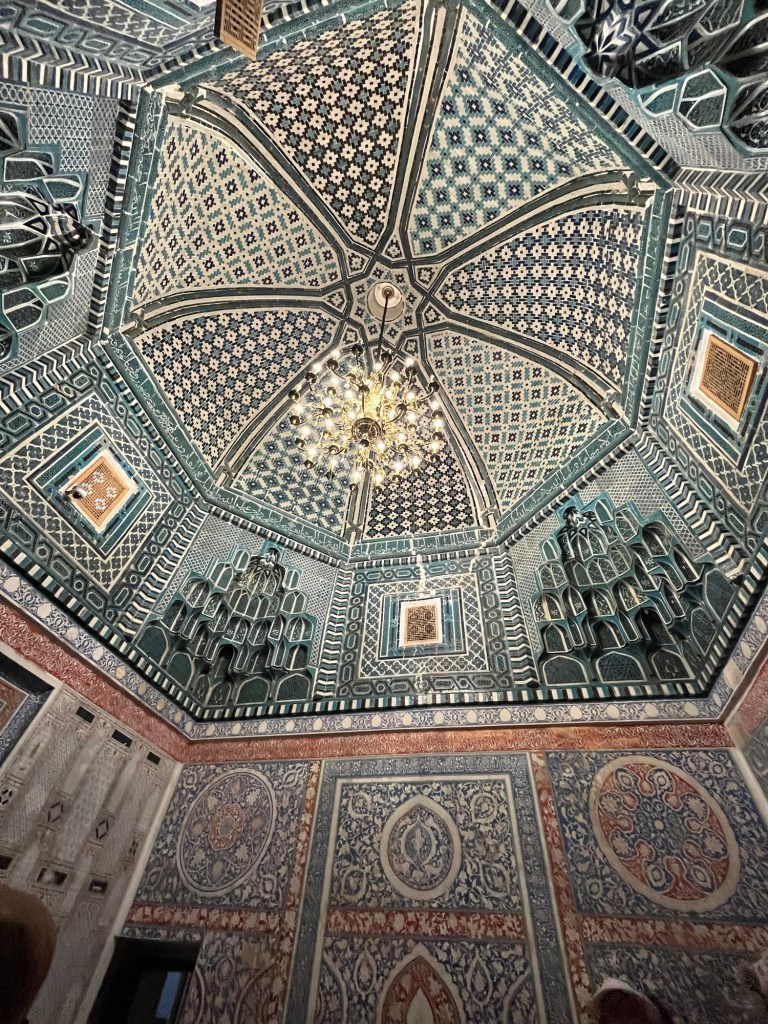
Then we headed to the Shah-i-zinda necropolis complex. The buildings here are stunning, and apparently similar in design to those in Iran. It’s a very atmospheric and contemplative place, even among the throngs of tourists.

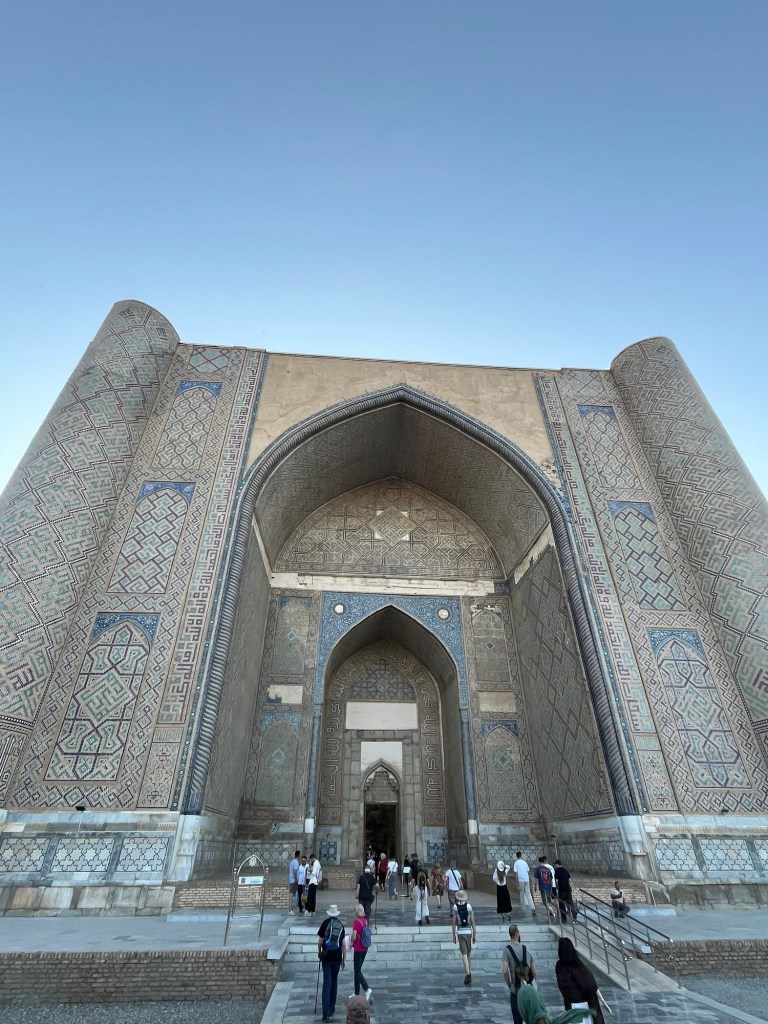
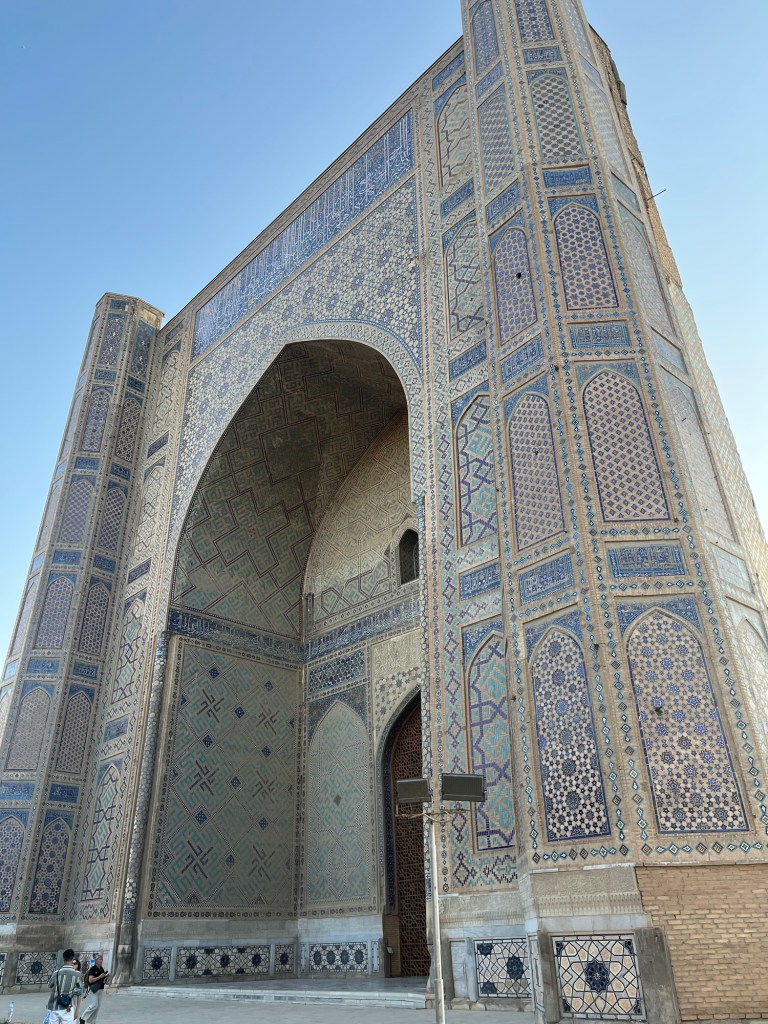
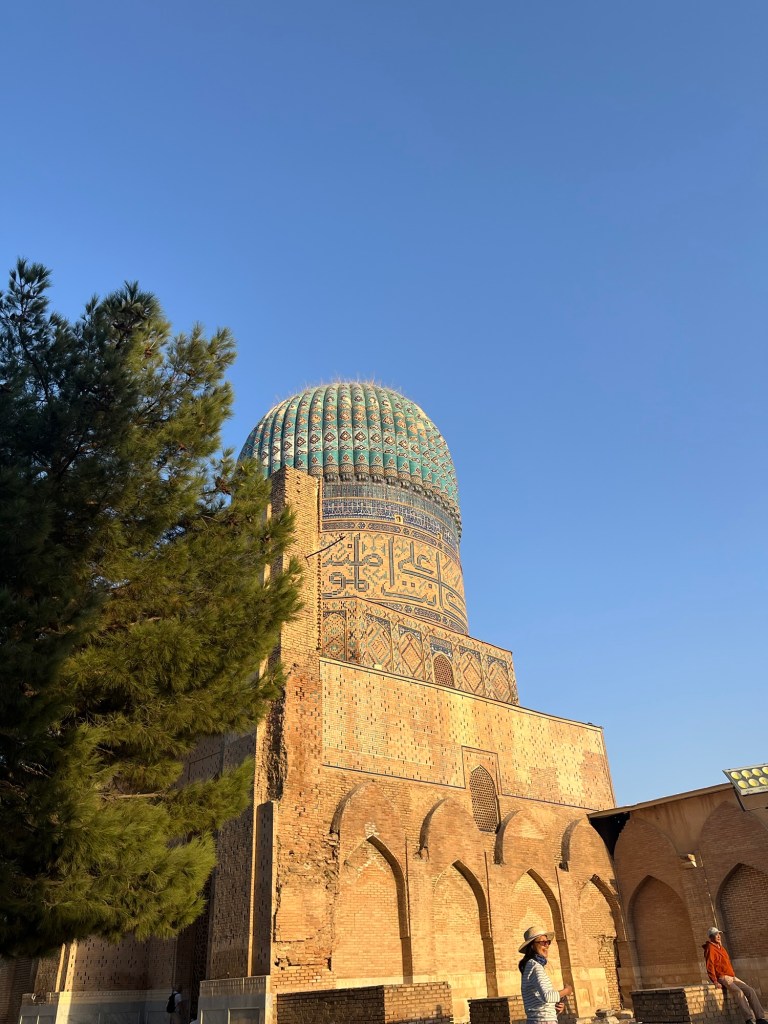
Next up was the Bibi Khanym mosque, a building which is absolutely enormous, and the photos as usual don’t quite do it justice.

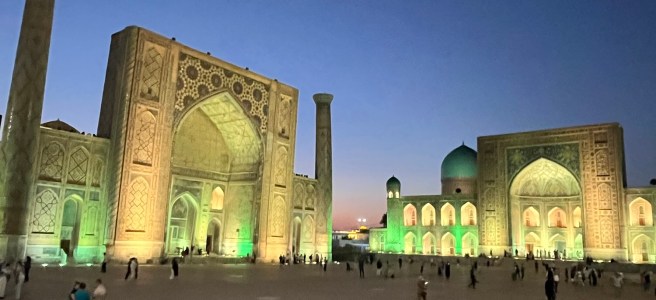
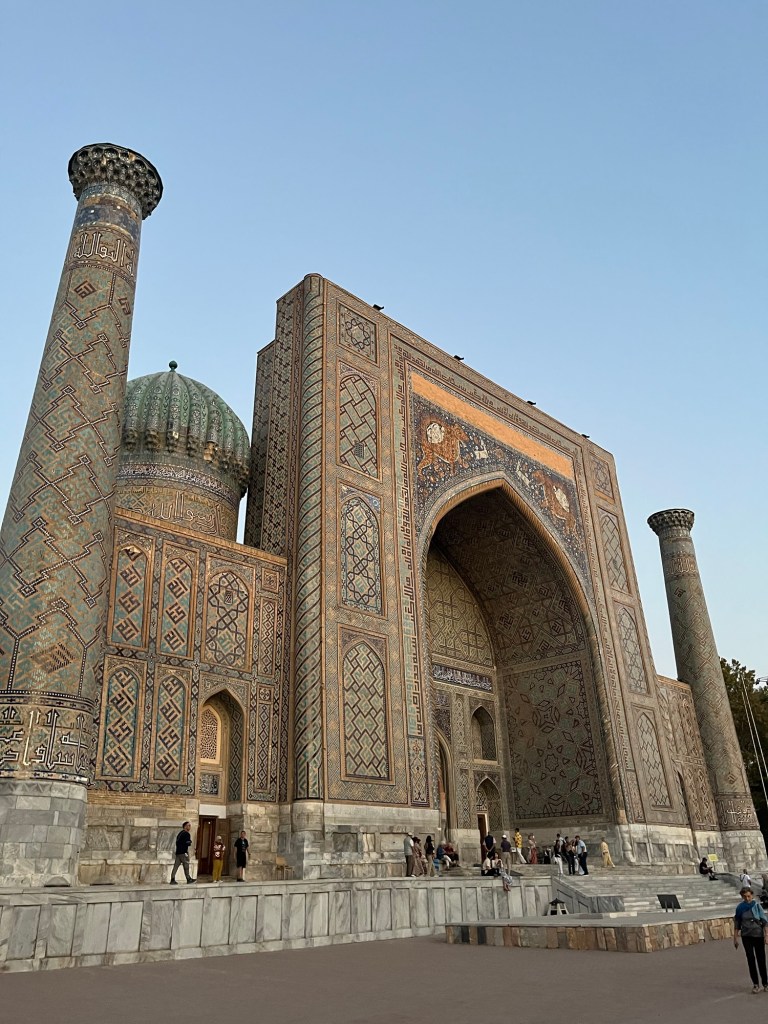
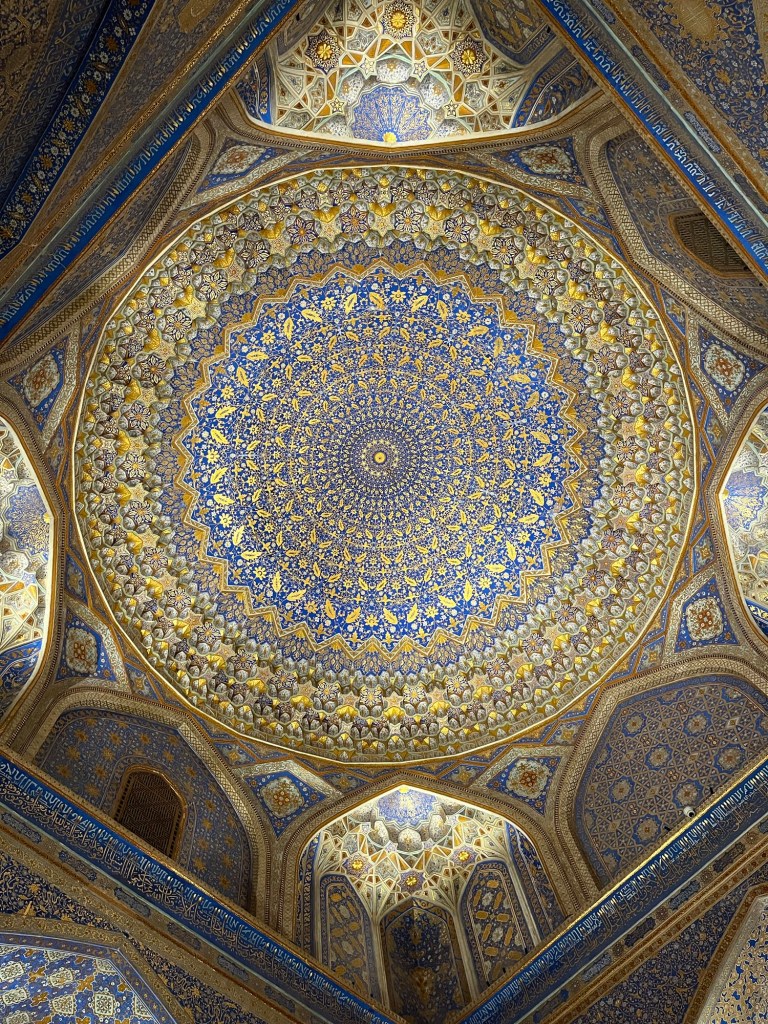
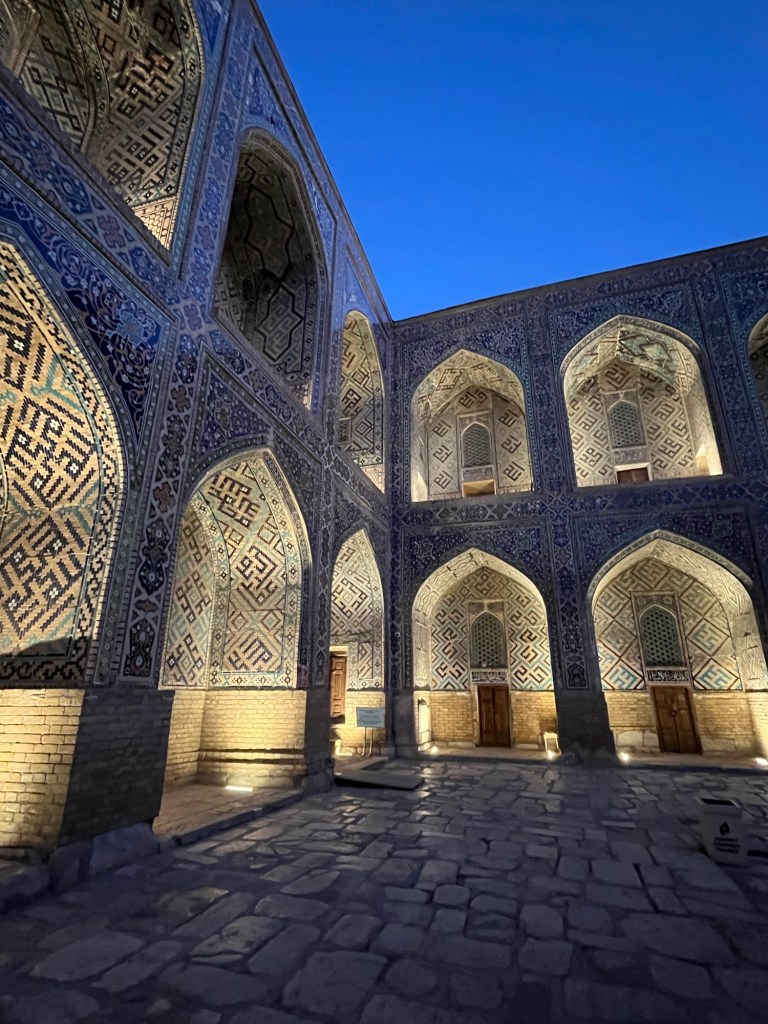
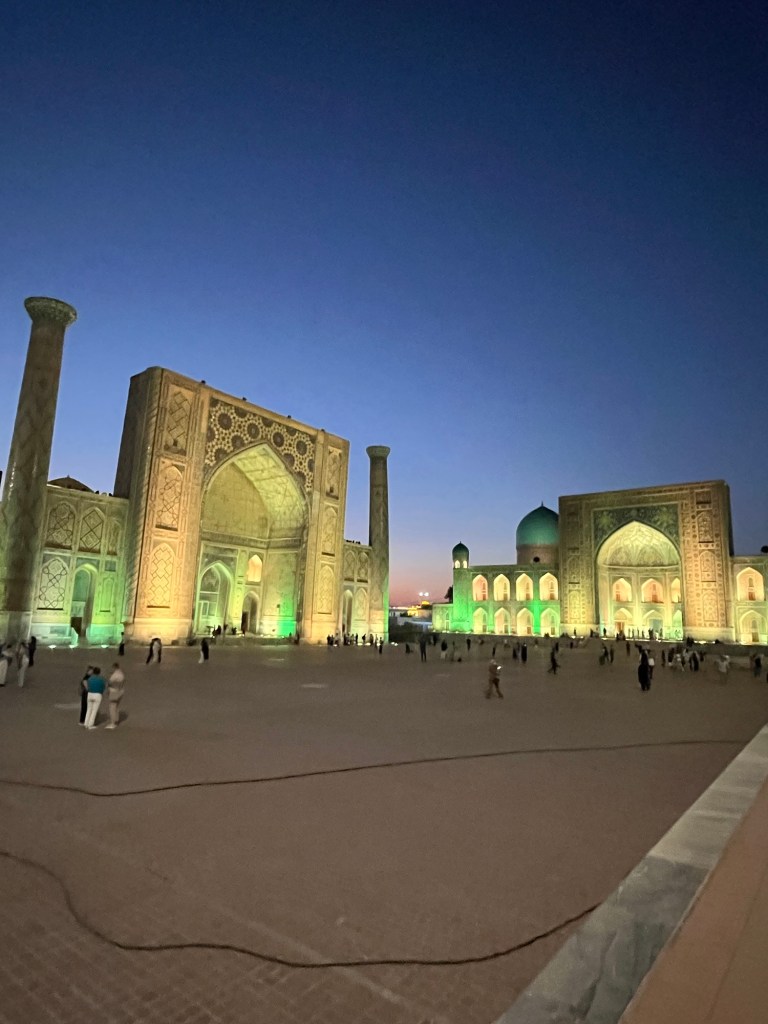
And finally that evening, the Registan. If people think of Samarkand, they are most likely thinking about the Registan, with its 3 enormous madrassas forming 3 sides of a square. Each madrassa has courtyards sitting behind, surrounded by what would have been the students rooms. It’s is a stunningly preserved complex, the decoration and tile work is mesmerising. And being there in the early evening as the sun was setting added to the atmosphere as the colours were constantly changing. As part of our tour we only had a short time in the complex but I’d decided to come back the next day when we had more free time to properly immerse myself in it. I could have sat for hours within the courtyards, admiring the colours, buildings and people watching.

Dinner that night in a restaurant near the Registan and this was really my first tell that tourism has increased in the last 3 years. I haven’t really felt that the sights were much busier, but I’d been to this rooftop restaurant 3 years ago and we’d had no trouble in getting a table on the roof terrace without a booking. This time, no chance. We did manage to get seated inside on the ground floor but all the rooftop tables were fully booked out.

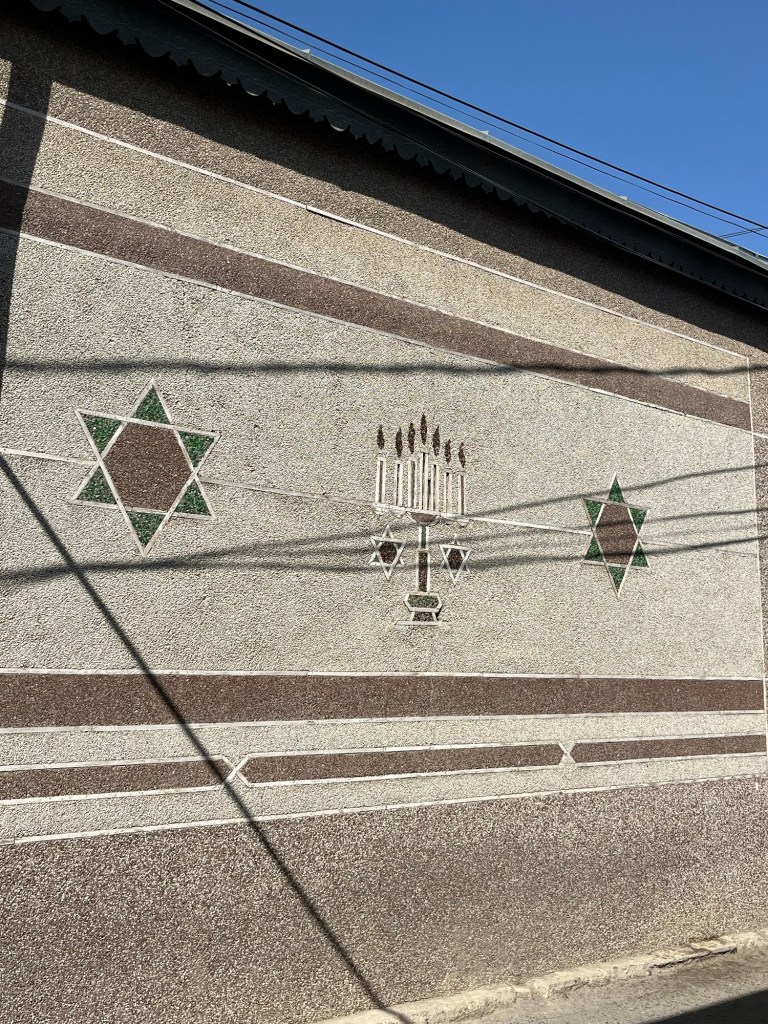
The following day was a free day, the first day fully to myself since I arrived in Kyrgyzstan 2 weeks ago. I had a leisurely breakfast and then wandered to the Jewish quarter, through local neighbourhoods where the locals greeted us with smiling faces and ‘hellos’ and ‘saloms’. The Jewish quarter is quite small and there is only a very small population (in the hundreds) of Jews remaining in Samarkand.

After a tea and baklava break, I headed to the Siyob bazaar for a wander and then looped around the back of the Bibi Khanym mosque before heading back to the hotel for an afternoon rest. In the late afternoon I headed back to the Registan to soak up the atmosphere at my own pace.

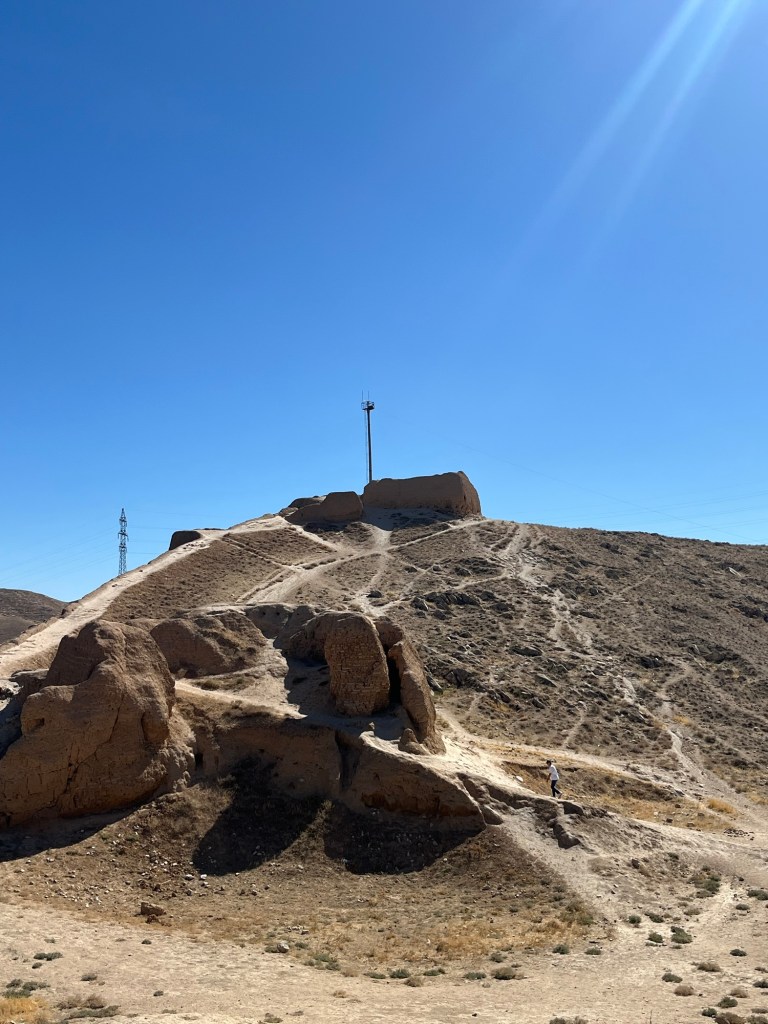
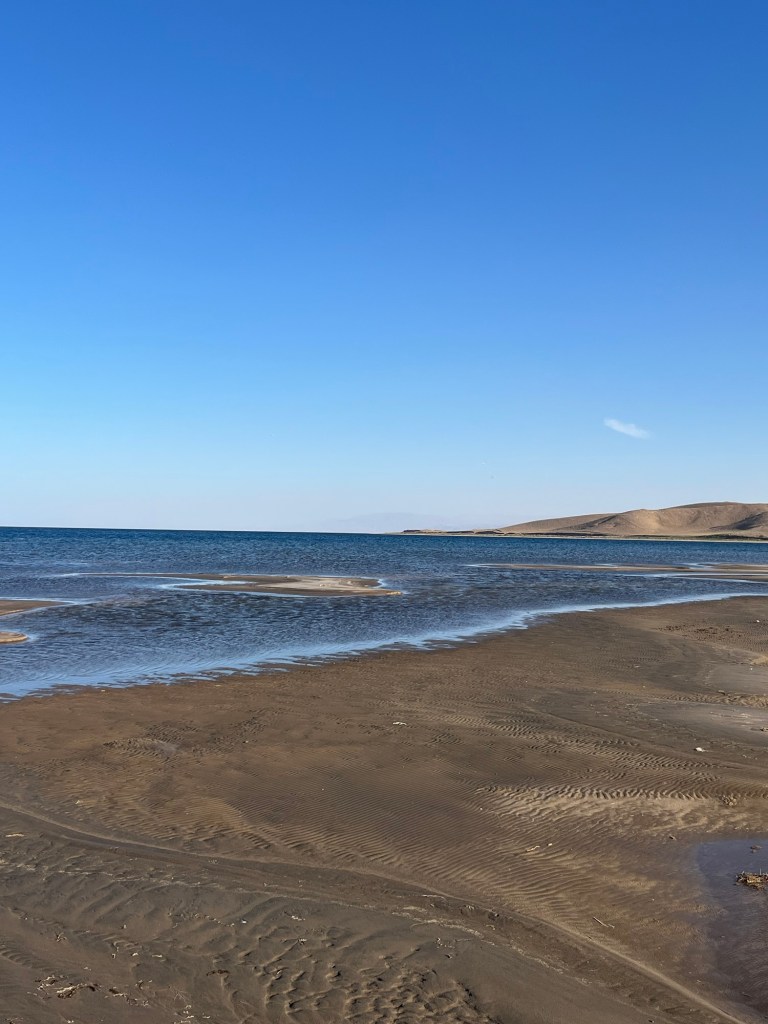
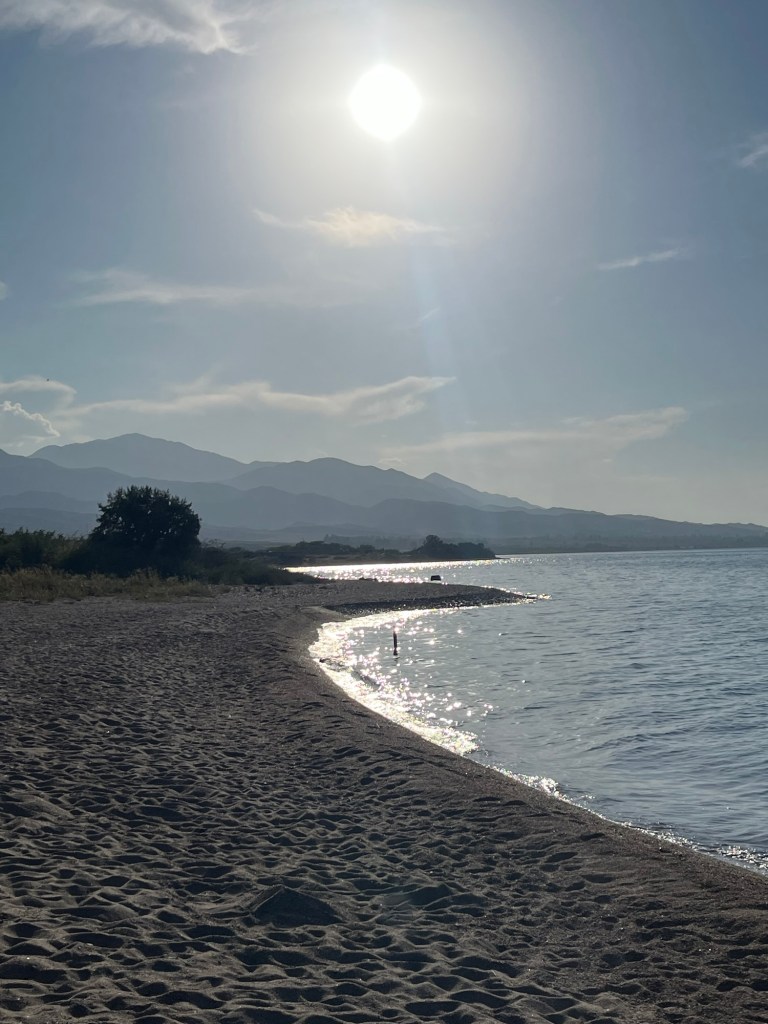
The next morning we headed out of the city, firstly to Nurata where Alexander the Great built a fortress up on the hillside. We then continued on to Aidar Kul lake and the beach. In a landlocked country, you’ve got to take what you can get! I’d been here 3 years ago and it definitely looked like a bit of development had happened. There was a boardwalk out to the water, and a hotel and restaurant were operating. I don’t hugely remember this being the case before. But in late September it wasn’t busy.

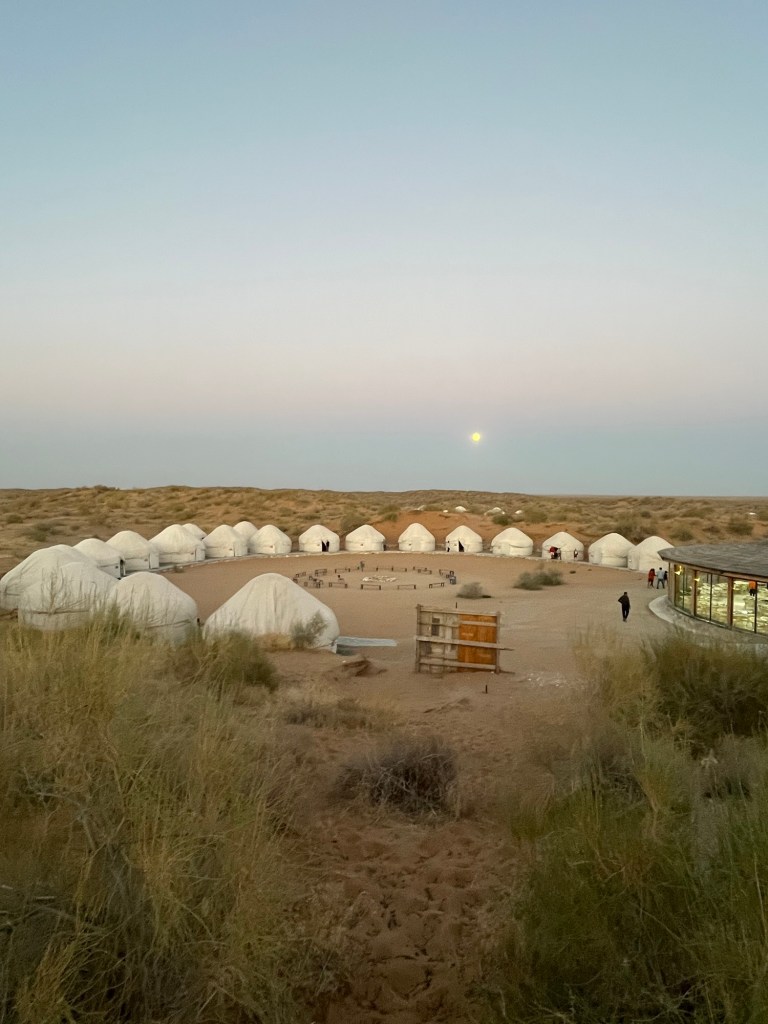
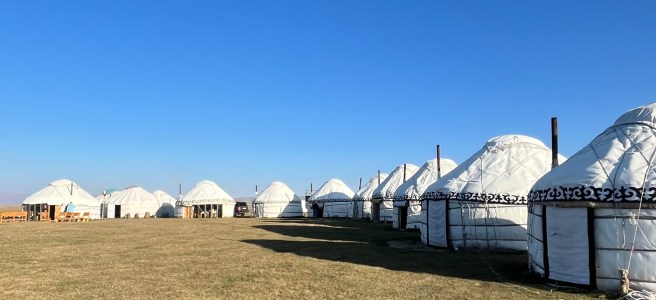
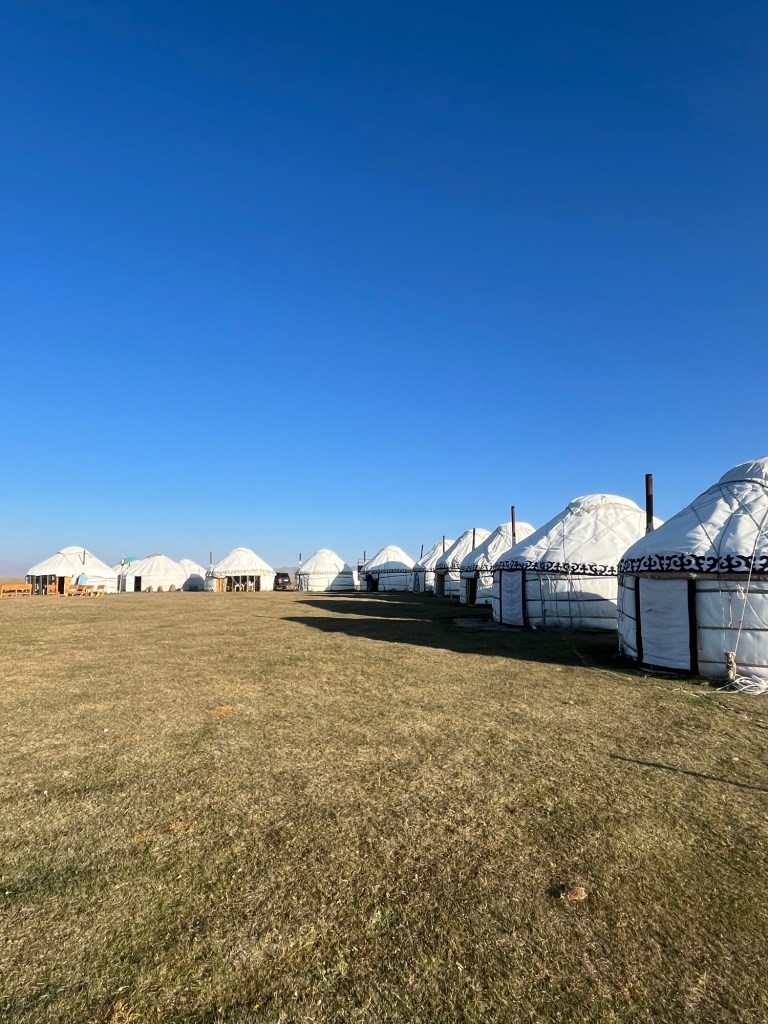
We made it to our home for the night, at a yurt camp, just as the sun was setting. I think it was the same camp as last time, though it too had undergone some renovations with a more substantial dining building and permanent walkway around the yurts. It was a bit of a shame the sun had dipped down by the time we got there as I remember the sunset being pretty spectacular last time.

We had a local dinner with salads, soup and a meat and veg dish before listening to some Kazakh music. The camp is relatively close to the Kazakhstan border and historically, central Asian peoples are nomadic peoples so it’s not surprising that you have such a mixture of cultures in this area.

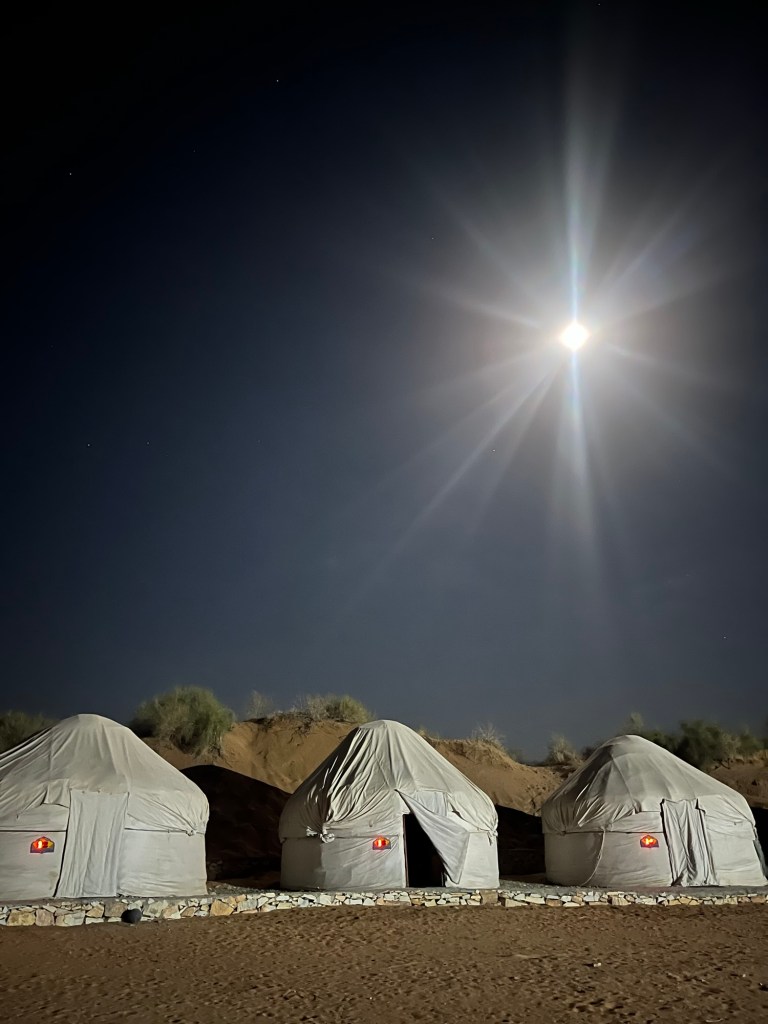
A bit of stargazing (with a near-full moon) to end the day before a not-too-bad nights sleep in the yurt. It wasn’t as cold as the one in Kyrgyzstan though it was still fairly fresh in the morning.

Yurts and a bright moon

After breakfast it was back on the road to my favourite Uzbek city, Bukhara…

Tajikistan

Almaty airport is gleaming and modern. We were dropped off in plenty of time for our afternoon flight to Dushanbe, the capital of Tajikistan. The flight was about an hour and 45 minutes and we departed about 10 minutes early which is almost unheard of!

Tajikistan is the only Stan I am visiting where British citizens need a visa, and it has to be applied for in advance. My advice would be to apply in plenty of time as mine took over 3 weeks to be processed. And be very careful with the dates on the visa as one member of the group ended up having to buy a new visa as they’d got the entry date wrong by a day.

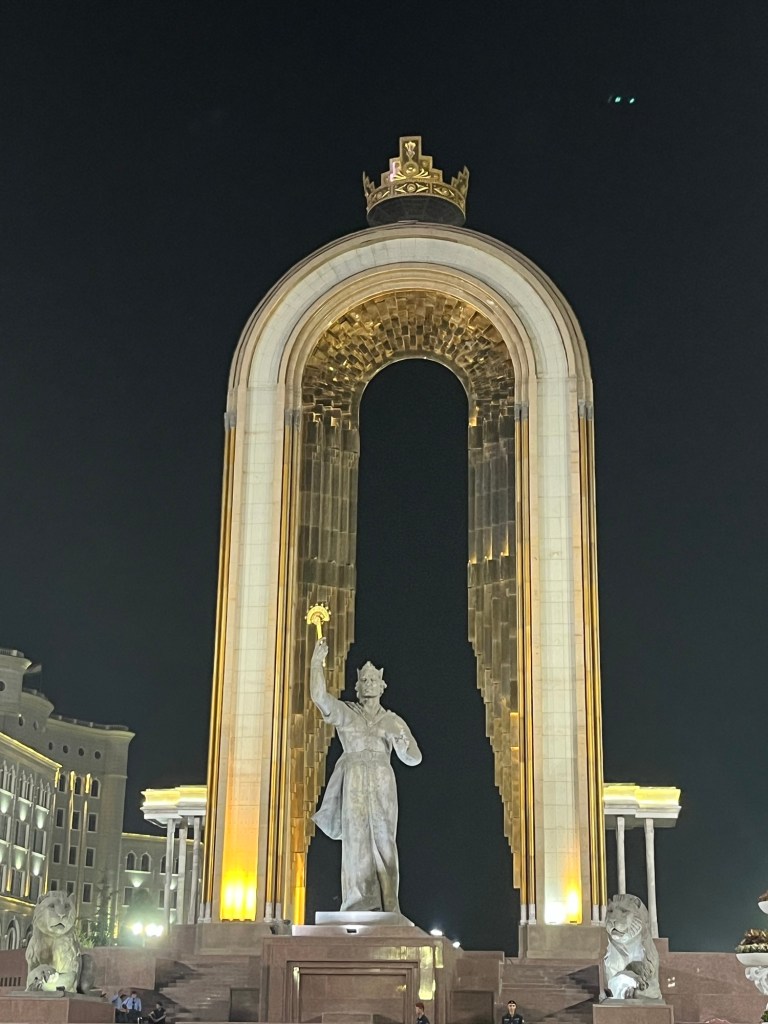
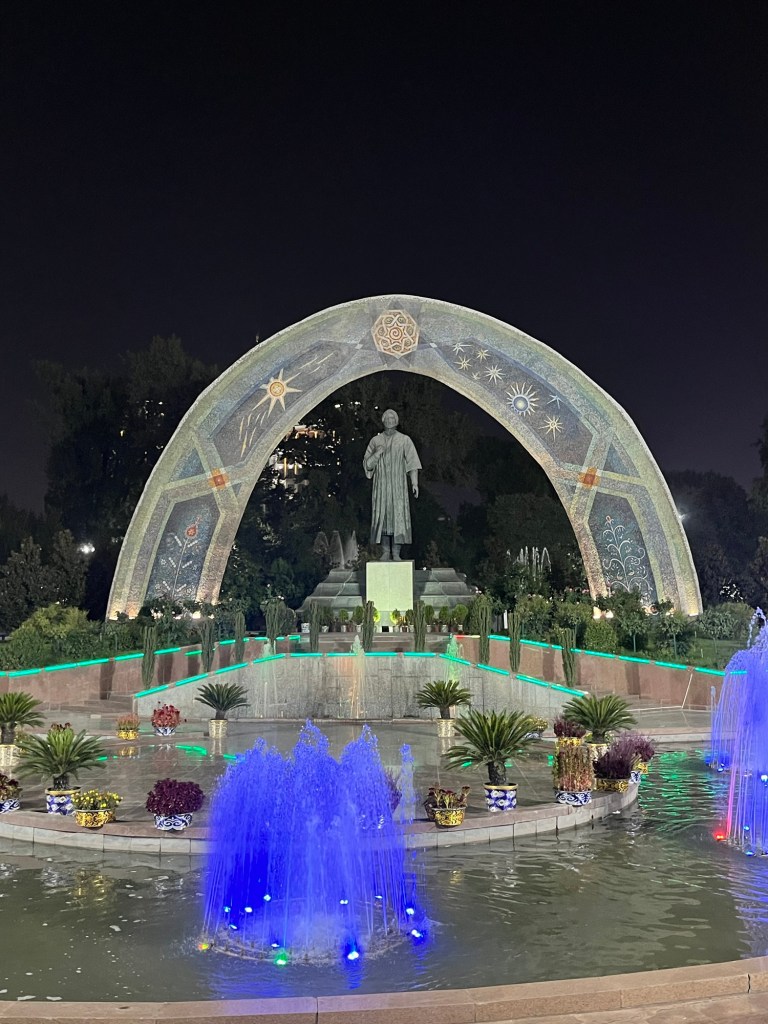
Eventually we were all successfully through and got our bags and were greeted by our new tour guide for Tajikistan. It was evening by now and so we had dinner first before a brief city tour. You might think it’s a bit odd to have a city tour in the evening or after dark but many of Dushanbe’s gleaming sights are lit up at night which adds a certain something. I was surprised by how prosperous the city appears to be, and it had a different vibe to both Bishkek and Almaty.

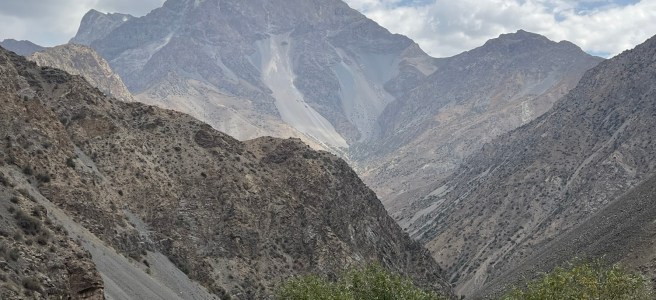
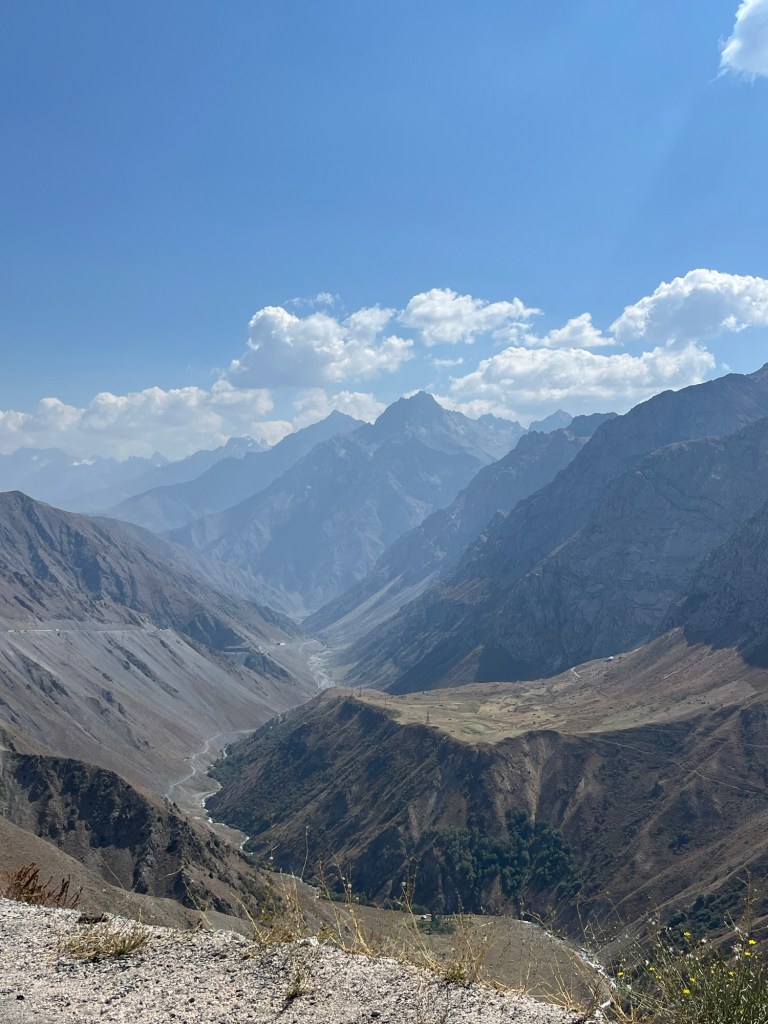
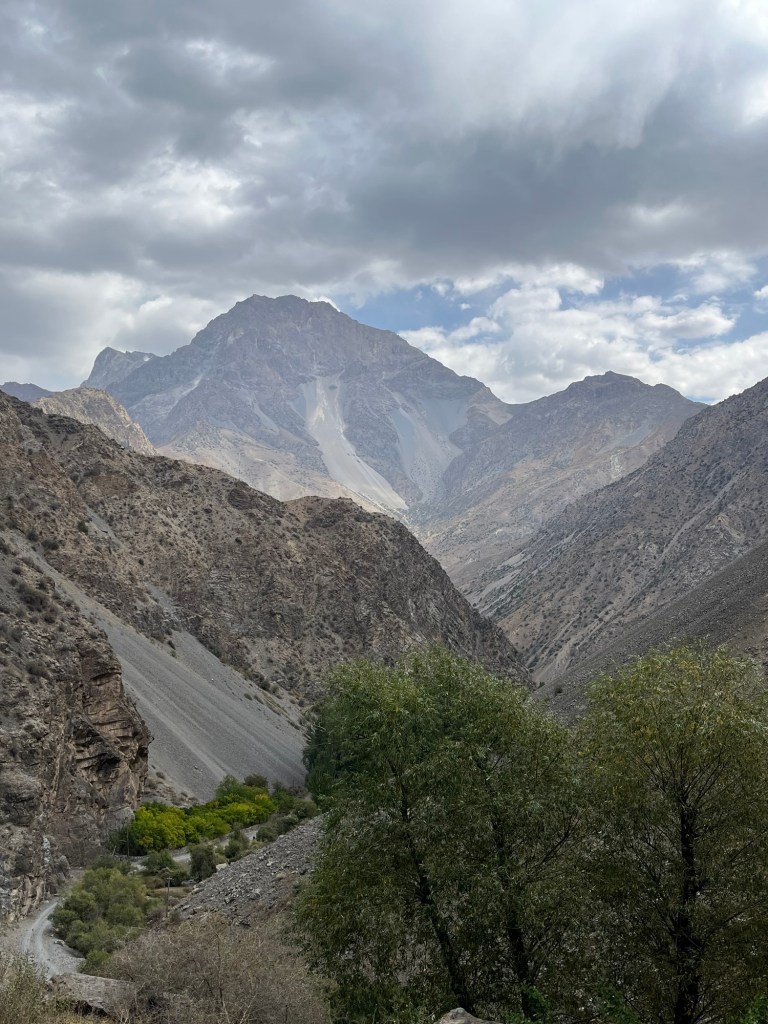
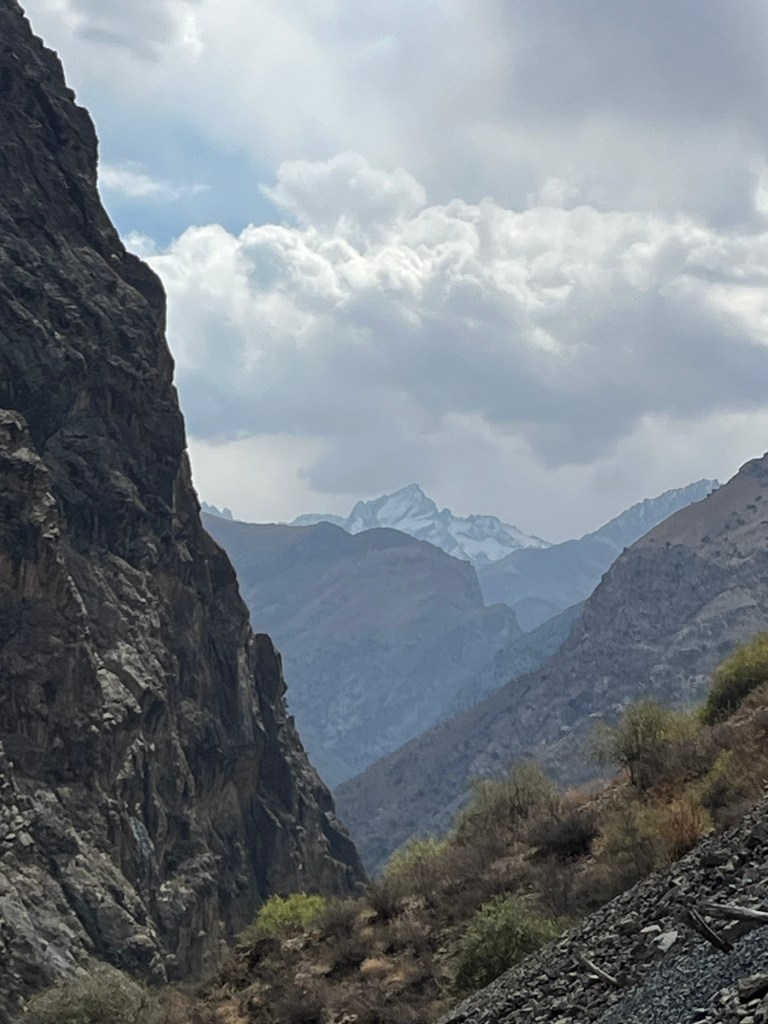
The next morning started with a museum tour and a visit to a mosque before we hit the road and headed to the Fann mountains. Like Kyrgyzstan, Tajikistan is over 90% mountains and many people come to hike. It is a stunning drive but some of the driving styles (and overtaking on narrow mountain roads) aren’t what I’m used to!
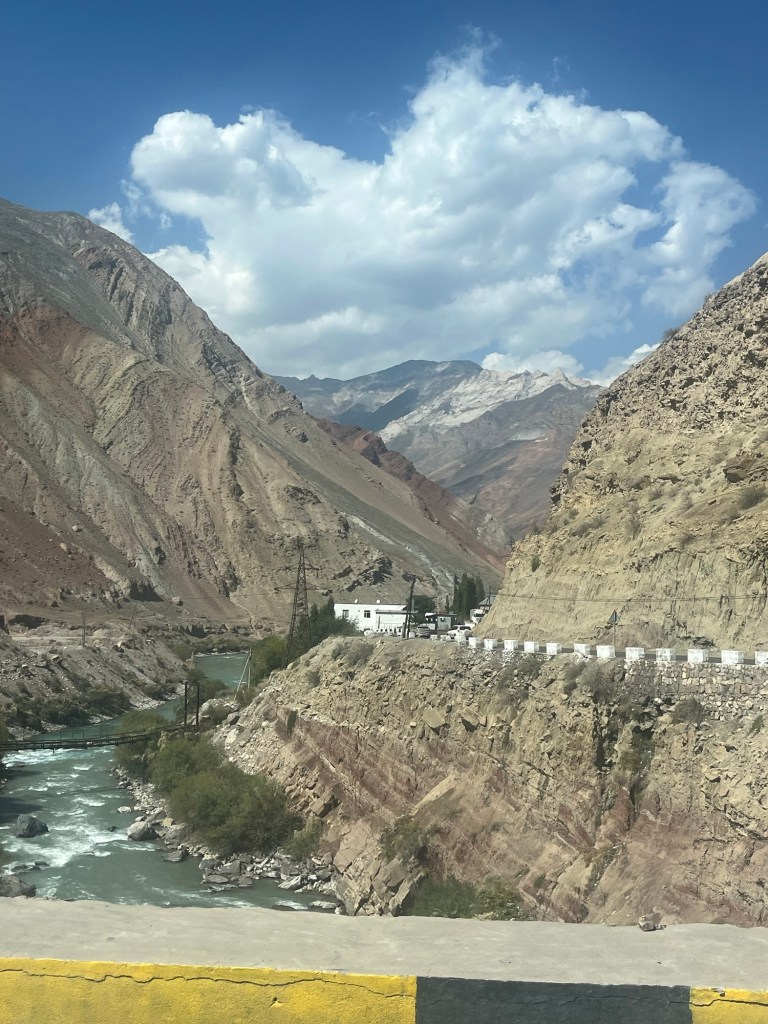
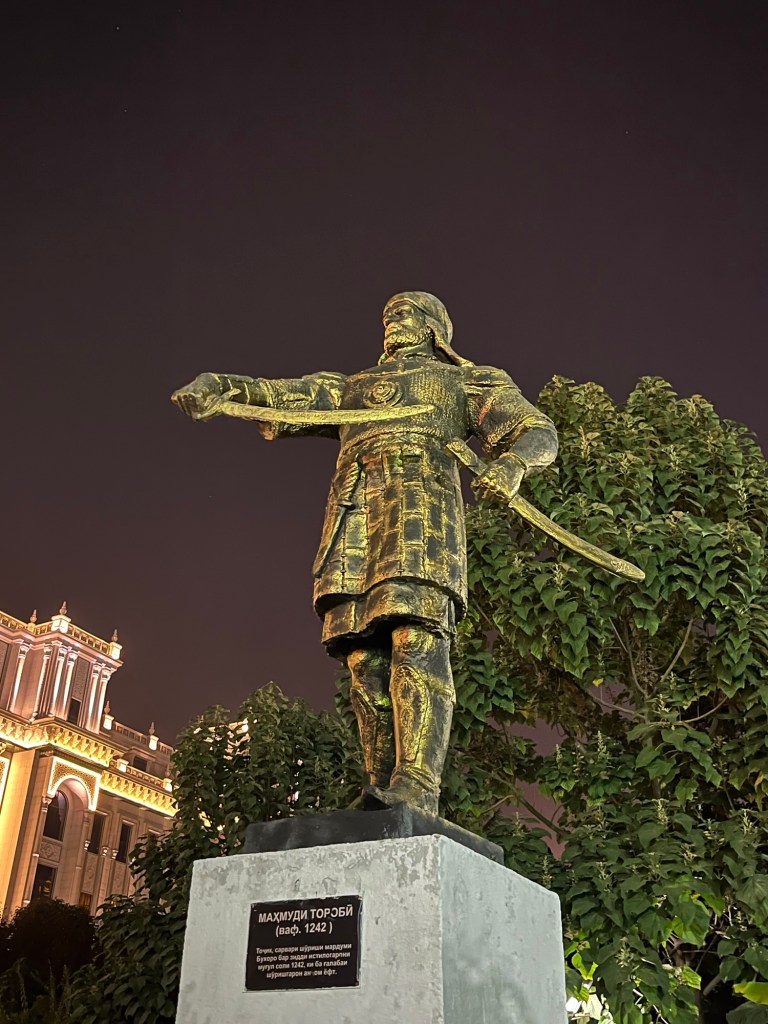
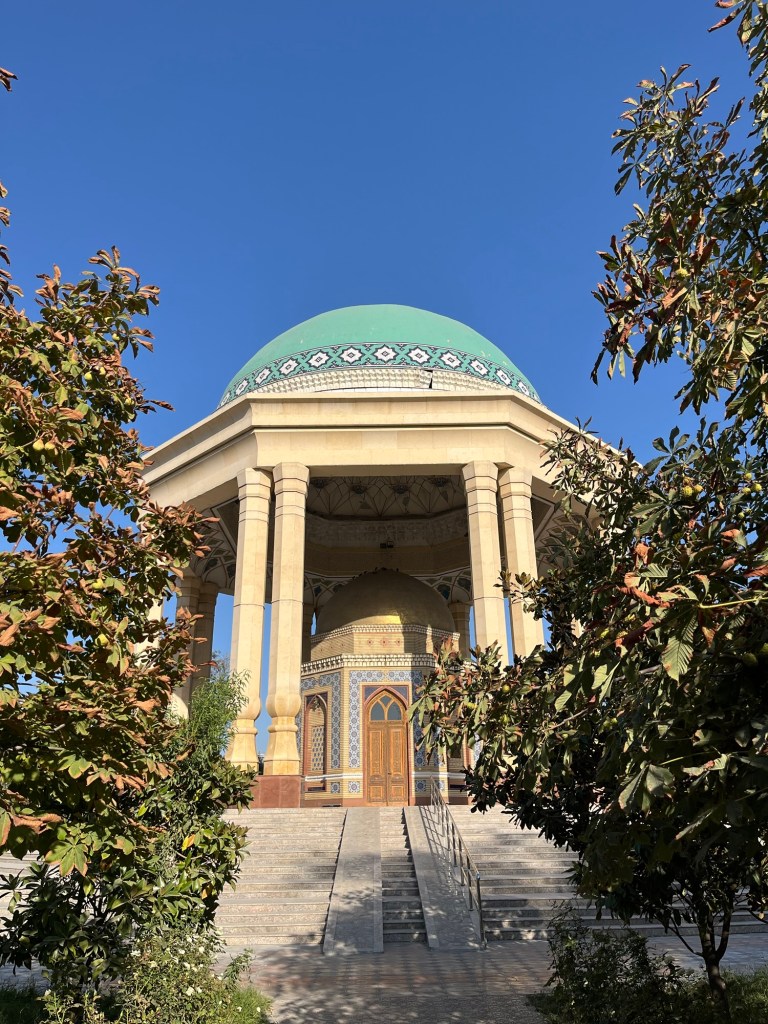
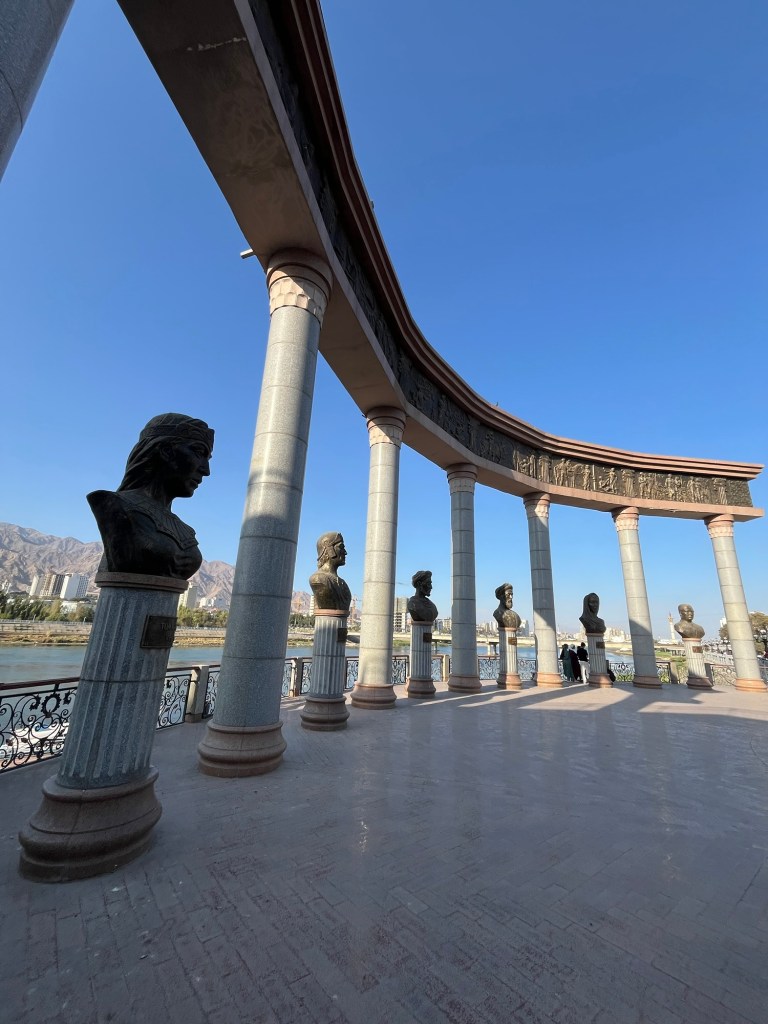
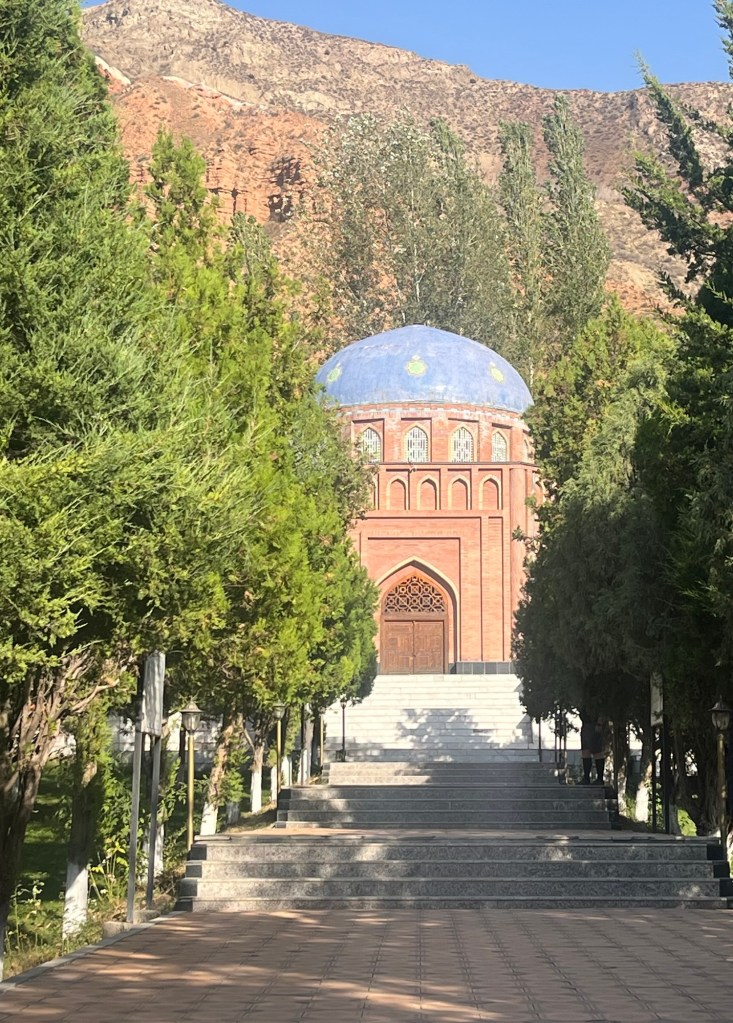
We were meant to go to Iskander Darya waterfall but the road was closed due to construction, which was a real shame as it’s meant to be a highlight of the trip. Instead we stopped at the Rudaki mausoleum. Rudaki was a poet, and from my observations, the Tajiks are very fond of commemorating their poets either like this or with statues.

Rudaki mausoleum

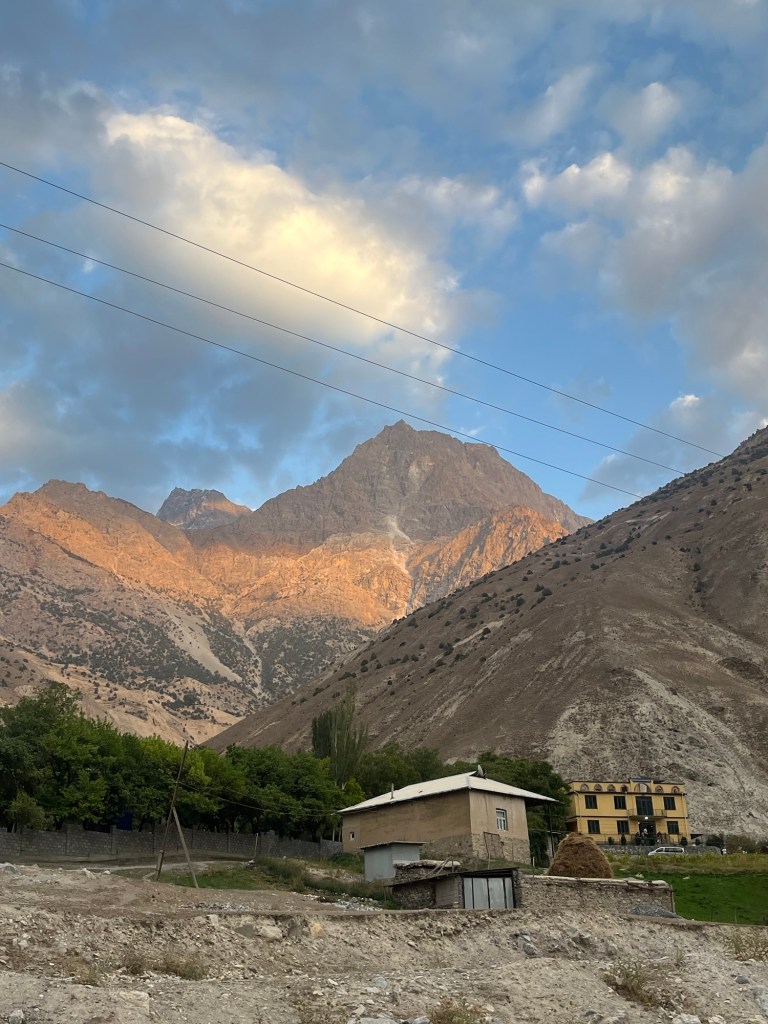
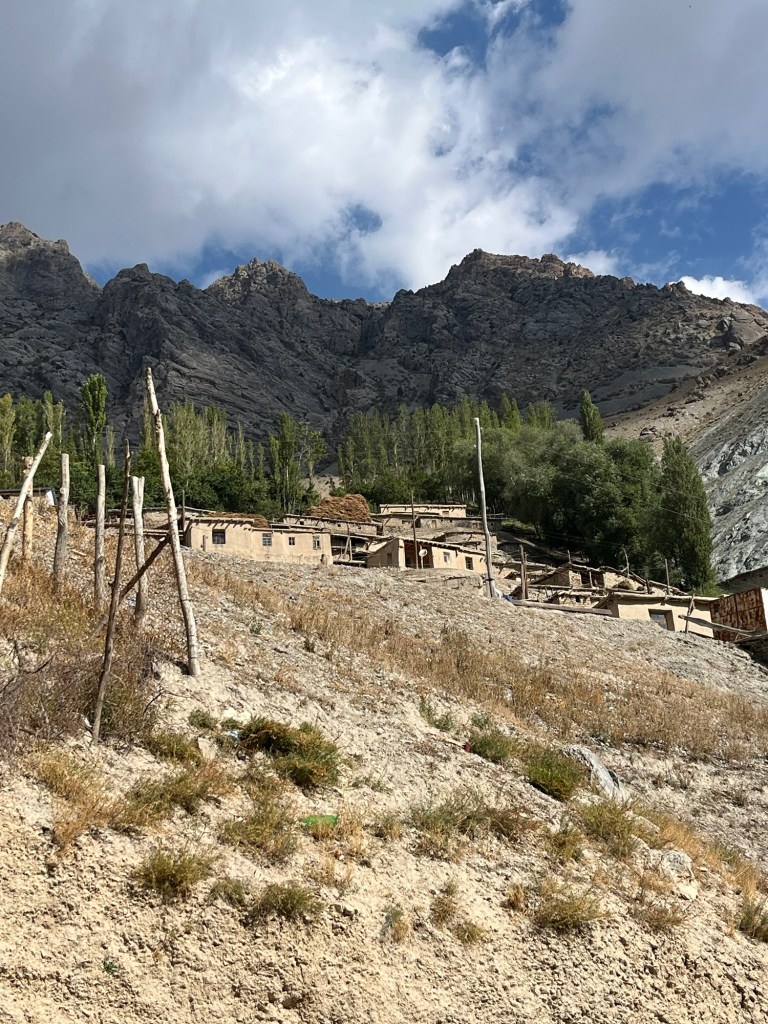
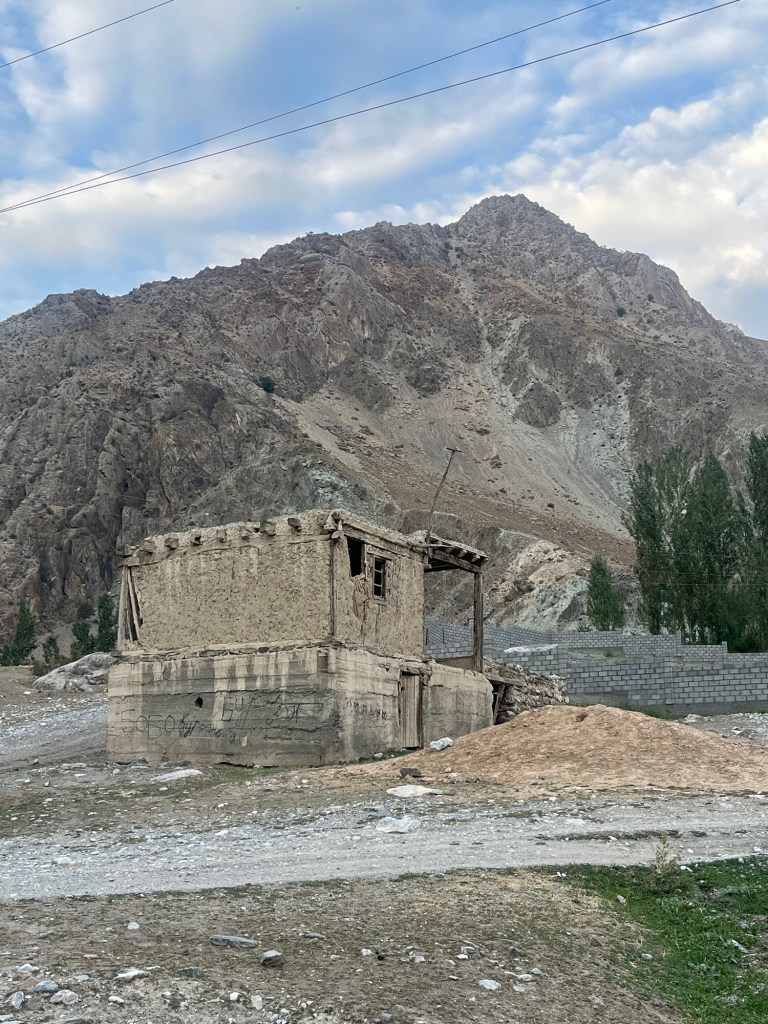
We arrived at the guest house in Gazza Village, deep in the Fann mountains where we would be staying the next 2 nights. The contrast between the village and Dushanbe could hardly have been starker. The villagers live simple lives with their livestock and farming, in these remote and stunningly beautiful mountains.

We hiked the next day, about 4km/2 and a bit miles, to Voru Village, a nearby village built into the hillside. As we’re at altitude, and we gained 350m/1100ft on the hike, it was a little strenuous and a good morning workout. Along the way we met many cheerful children who were waving at us and offering us apples from their trees. Everyone we’ve met has been very friendly.

After making our way back down the same 2 and a bit miles, we had a well-deserved lunch of Tajik plov accompanied by the usual tomato and cucumber salad which has been present at almost every meal I’ve had so far in the Stans.

A free afternoon to catch up on a few things, do a bit of reading and rest my tired legs.

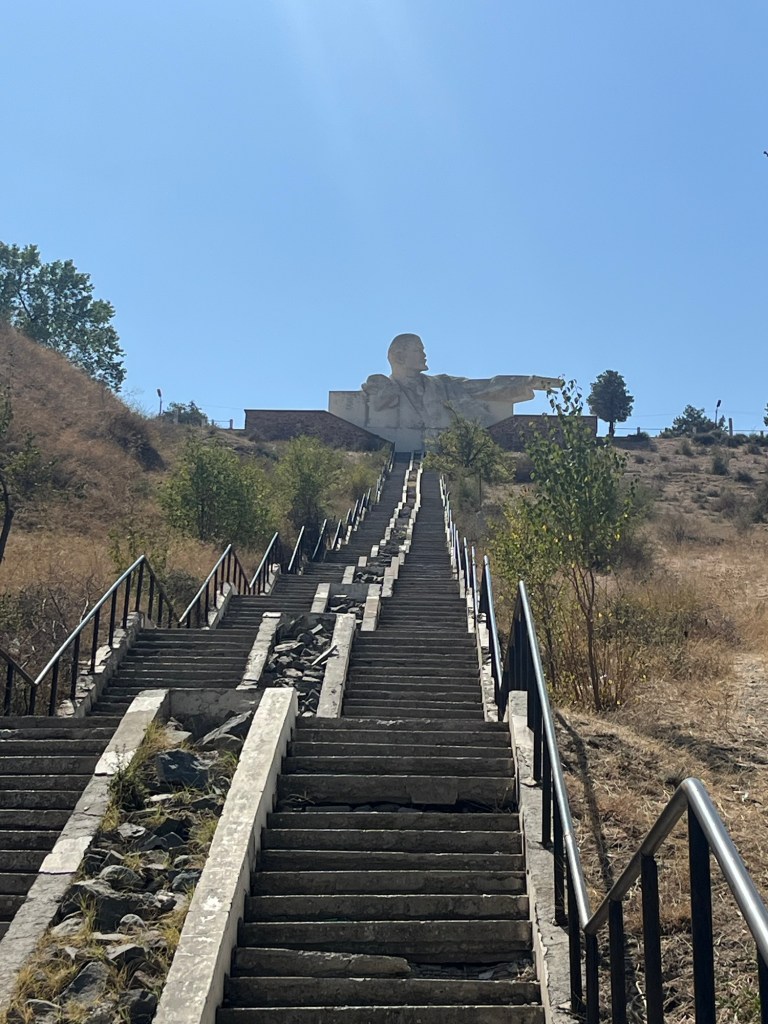
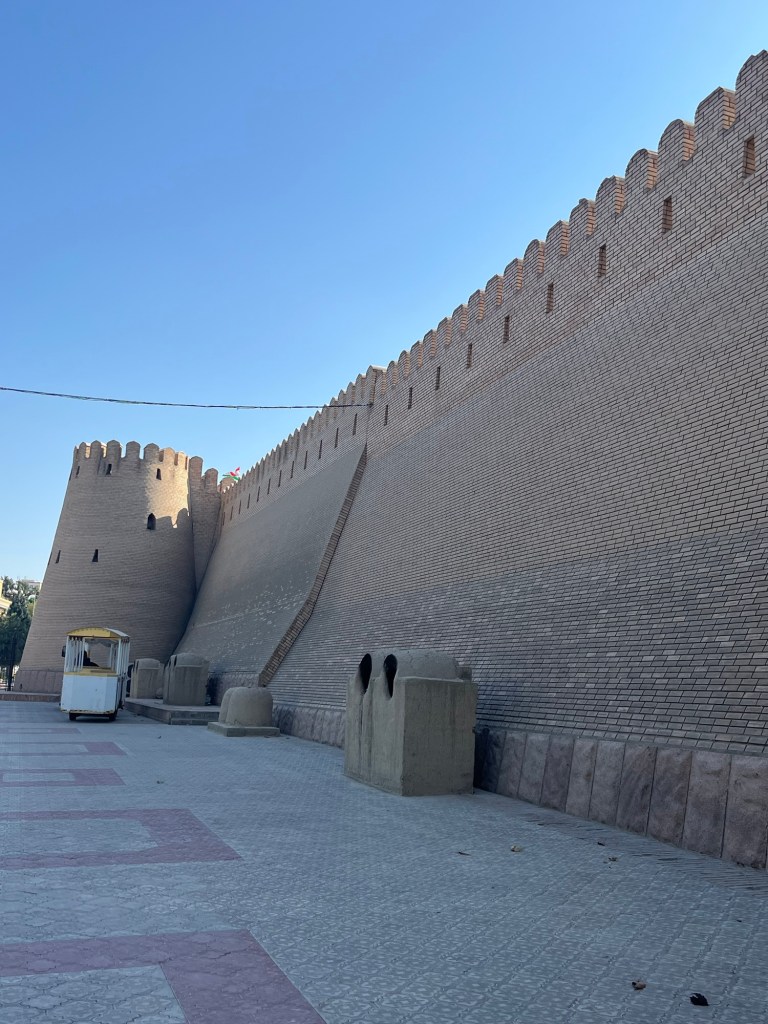
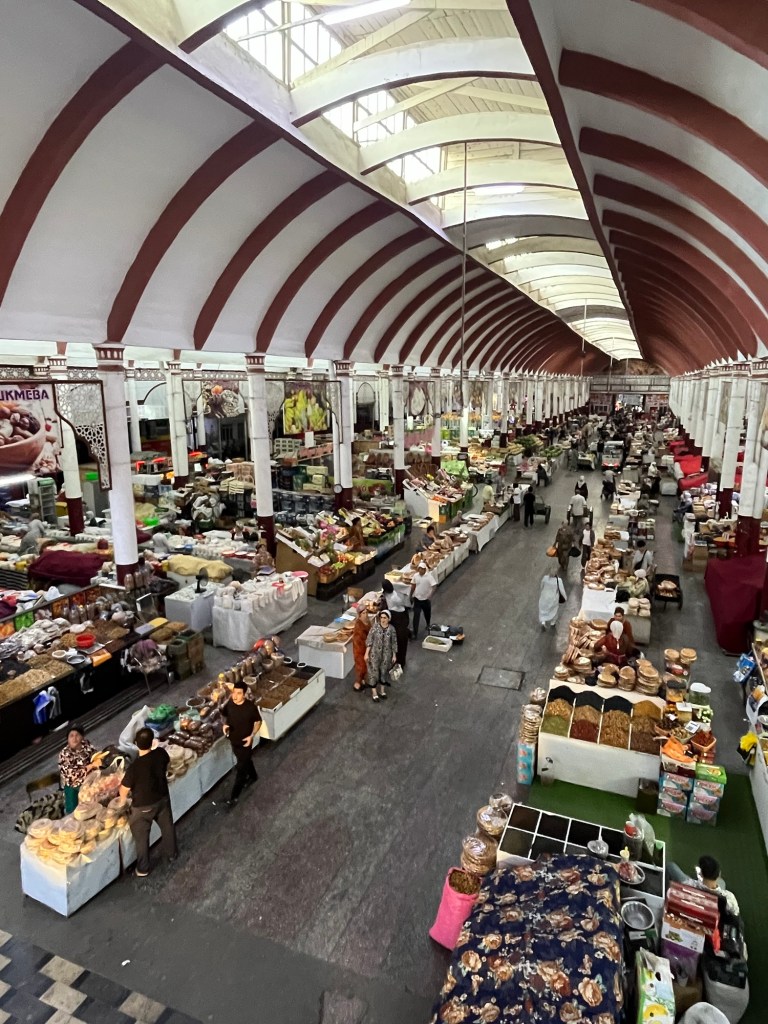
The following day we headed north, to the city of Khujand. On the way we stopped at an enormous bust of Lenin, perched atop a very long staircase which we all decided against climbing. We arrived in Khujand in the mid afternoon and had some free time to explore. There is a large fortress in the centre but sadly it was Monday and therefore closed. We did wander around the outside of the fortress (it reminded me of a smaller version of the Ark Citadel in Bukhara) and in a neighbouring park and briefly along the river. In the evening we went to look at the local bazaar before dinner. I do enjoy exploring bazaars and markets in other countries, to see how the locals shop and what they eat.

We visited a museum in Khujand the next morning before struggling to leave the city as the president was in town and the main roads out were all blocked. After driving in circles for a while, the roads eventually opened and we headed north towards the border with Uzbekistan.

A short but fascinating visit to Tajikistan. Full of friendly people and it was interesting to see the contrast between shiny Dushanbe, and the rustic yet beautiful Fann Mountains. Now onwards to Uzbekistan, and to retrace my steps from a previous trip here in 2023…

Kazakhstan

2 buildings in the middle of nowhere constitute the border post between Kyrgyzstan and Kazakhstan. Being British means I don’t often have the opportunity to walk between countries, and so when I’ve been on my travels this year crossing land borders, I’ve found it really fascinating. We all got stamped out of Kyrgyzstan and then walked a short distance to the Kazakhstan border to be stamped in (like Kyrgyzstan, no visa needed).

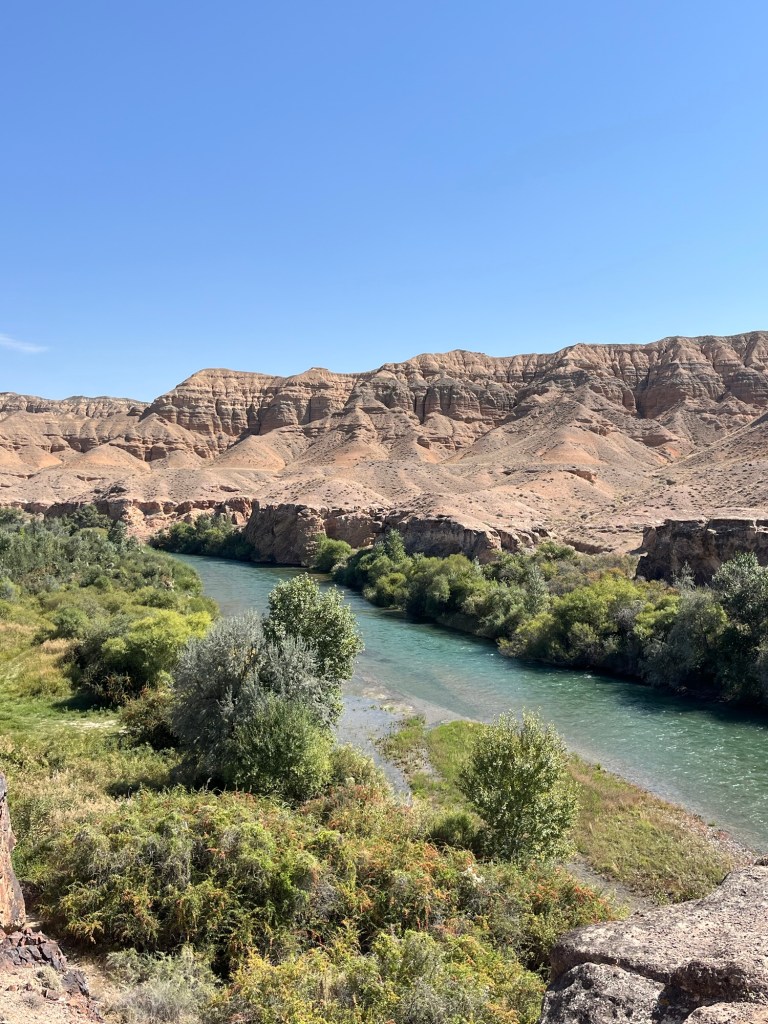
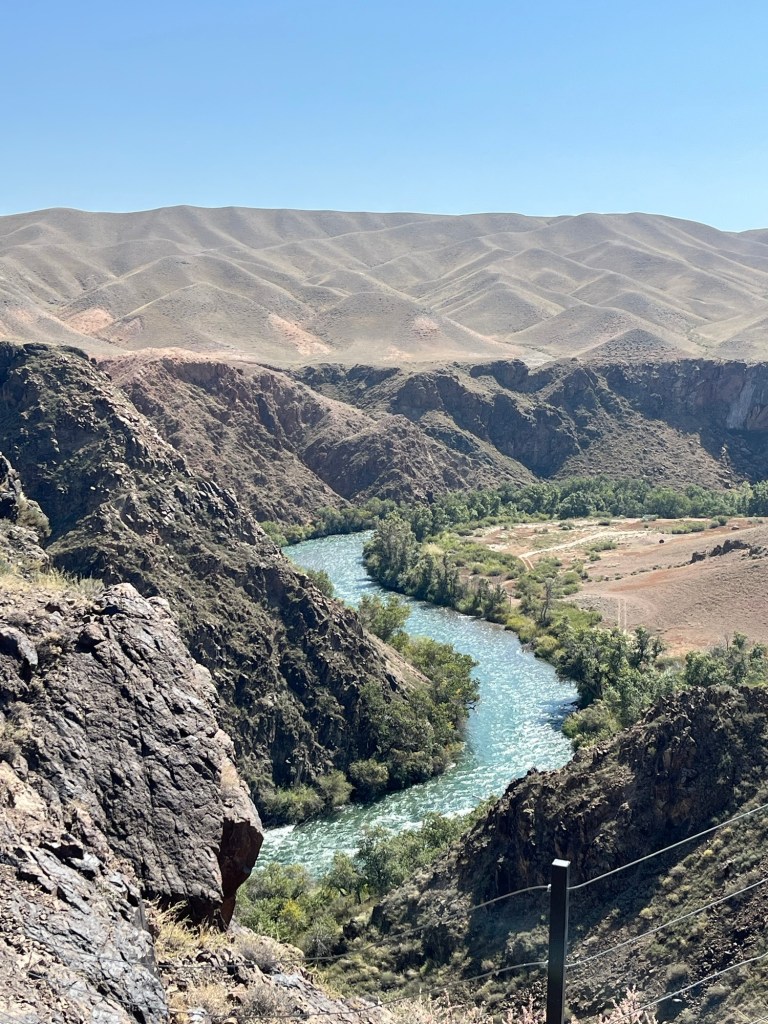
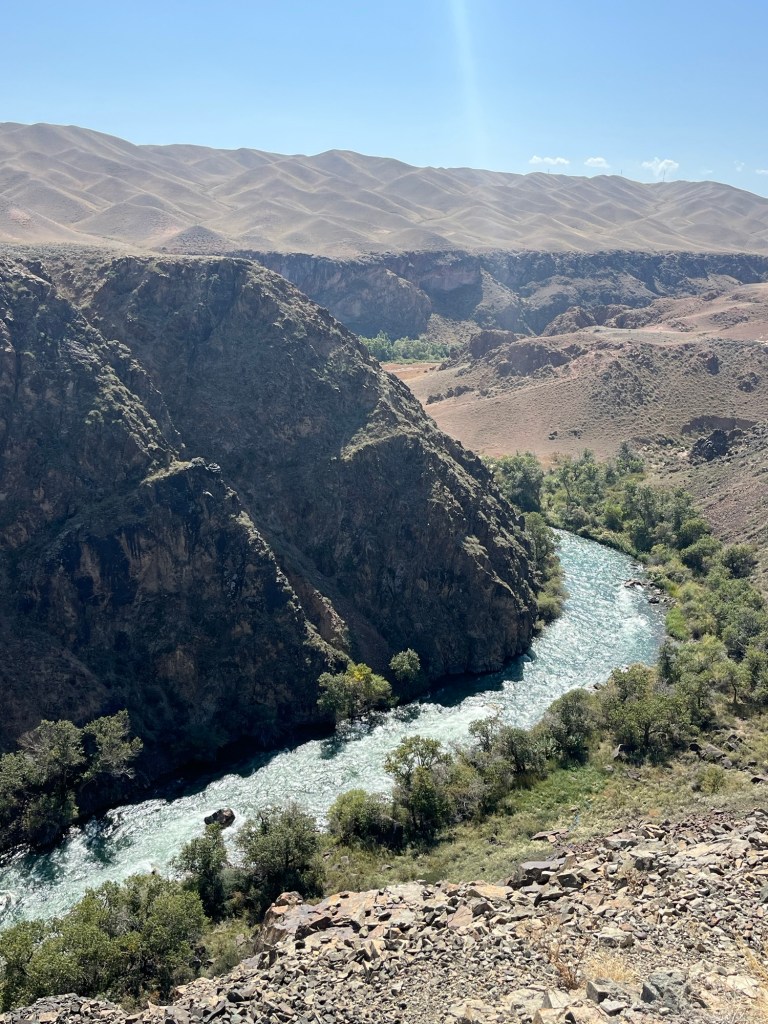
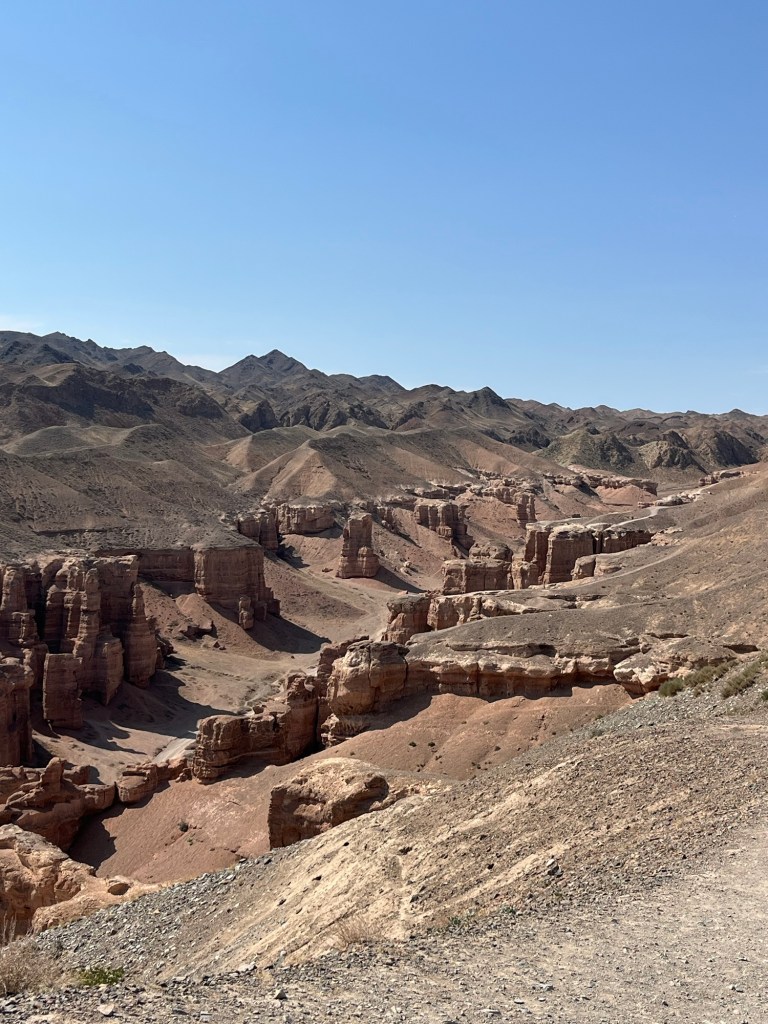
Then we set off on a big coach into Kazakhstan. Our first stop was at Moon Canyon, also known as Yellow Canyon, within Charyn Canyon National Park. Definitely had the feel of a lunar landscape. Our next stop, where we also had a picnic lunch, was at Black Canyon, where you could see the river meandering through the canyon. The landscape so far was softer than Kyrgyzstan.

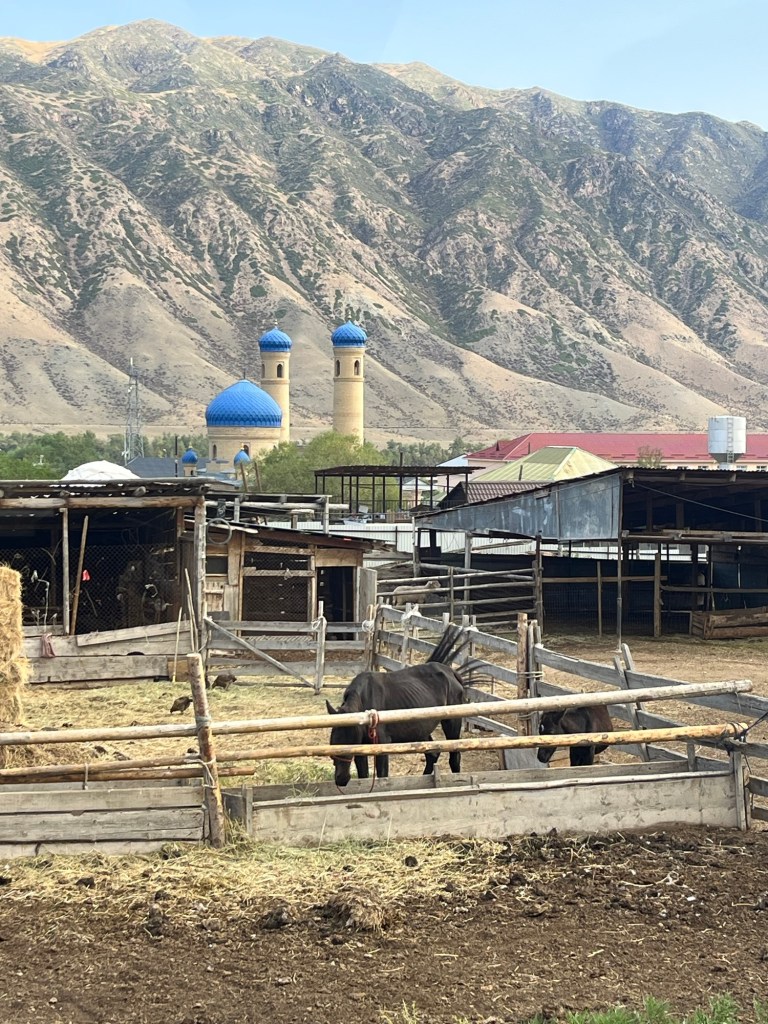
We arrived at our overnight stop, Saty village, in the mid afternoon. A typical southern Kazakh village, with small holdings, animals, a mosque and surrounded by mountains.

Saty village

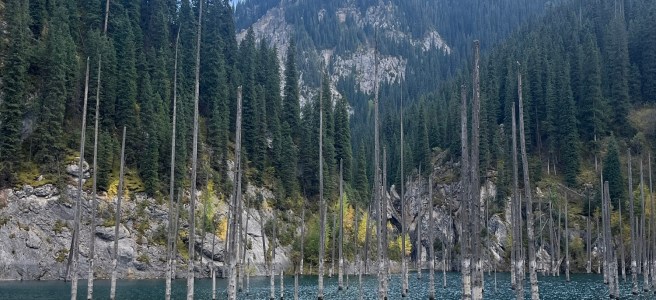
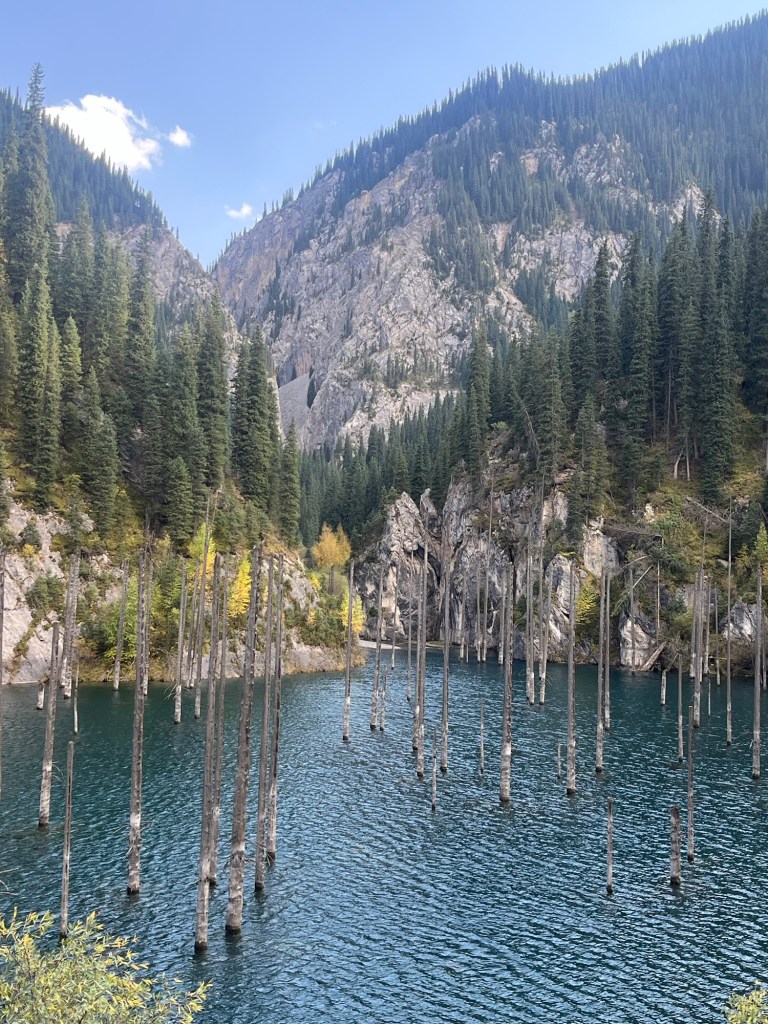
In the afternoon we drove a short distance for a hike to Kaindy Lake, where there are lots of drowned trees standing tall in the lake.
Kaindy lake

Dinner at the guest house and then an early night for me as a few long days and a slightly unsettled stomach had caught up with me.
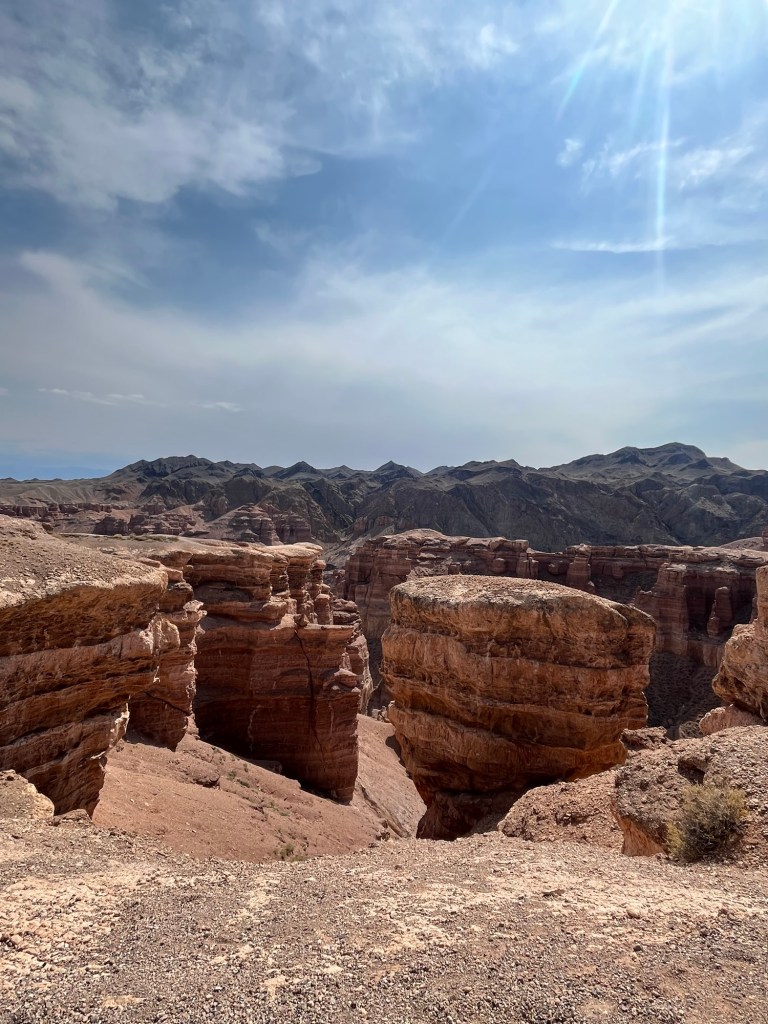
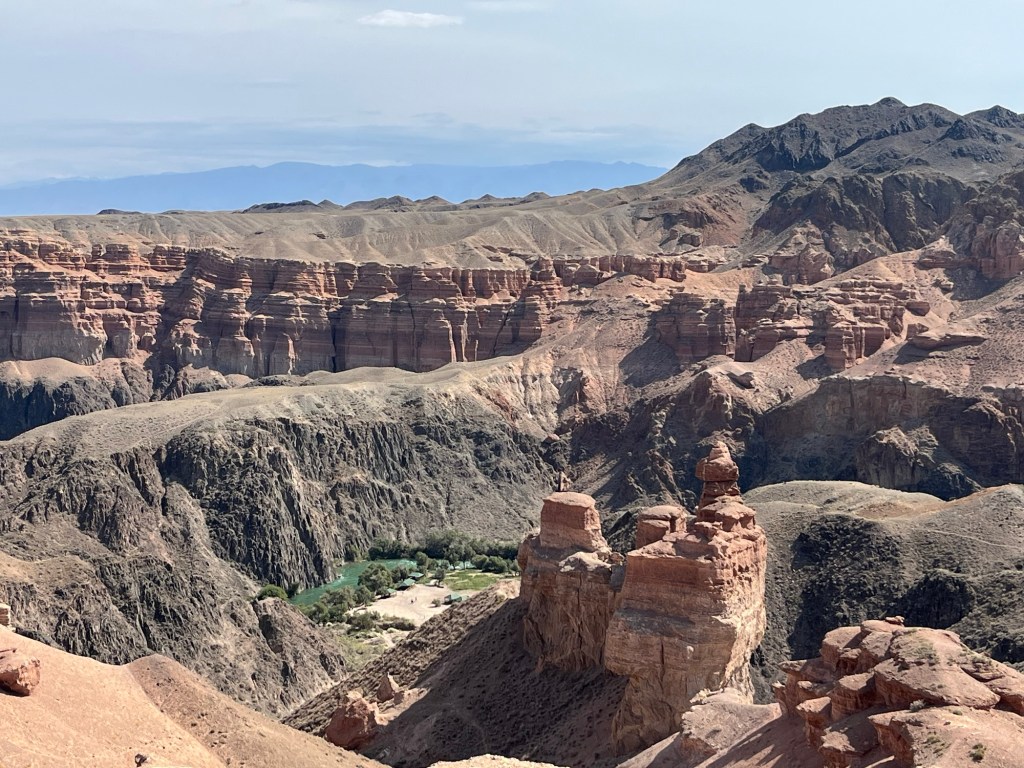
I felt a whole heap better the next morning as we set off back to Charyn Canyon National Park, and to Charyn Canyon itself where we had a couple of hours walking along the canyon rim and down some of the spurs. Not on the same scale as the Grand Canyon by any means but nonetheless a pretty spectacular landscape.
We then drove for the rest of the afternoon to Almaty where we would stay for 2 nights for the first time on this Stans trips.

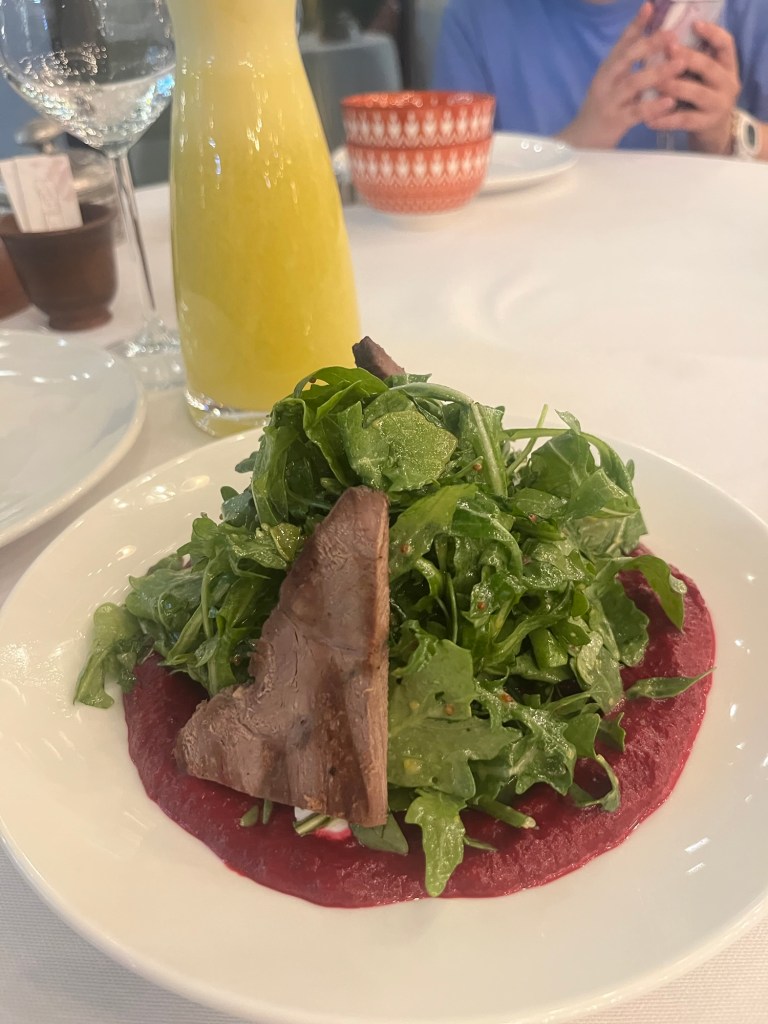
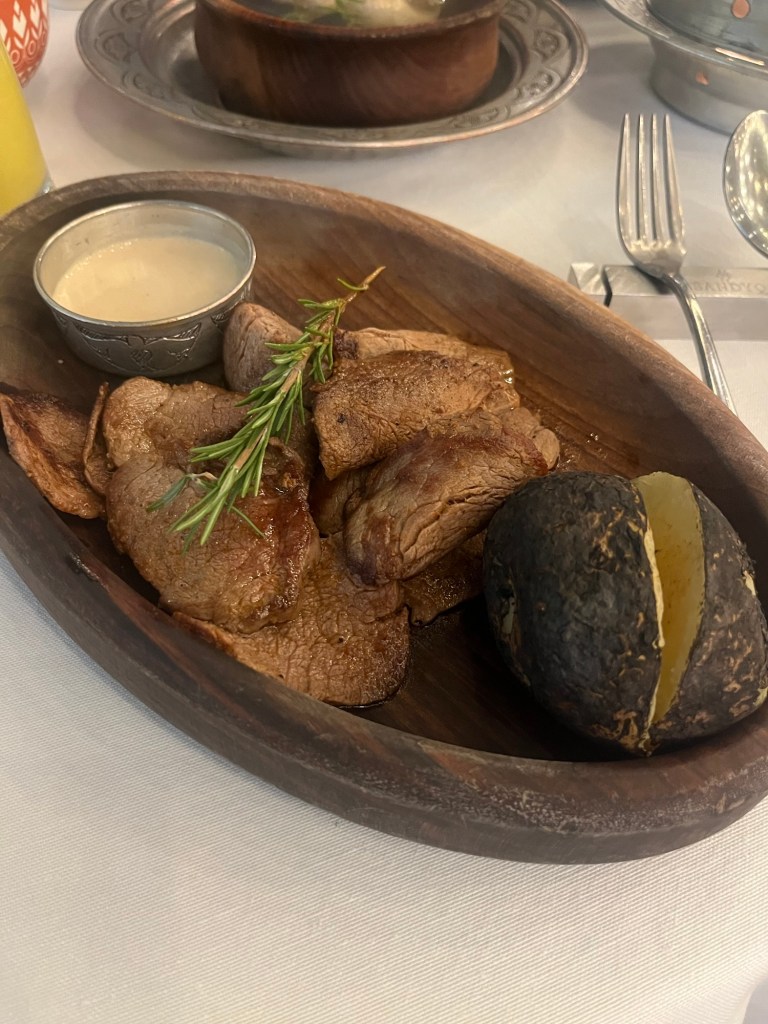
A free evening so I went with another person on the trip to a Kazakh restaurant which had been recommended. Smoked horse meat salad to start (quite like mild beef) and then veal and potatoes for main. All in all, pretty good.

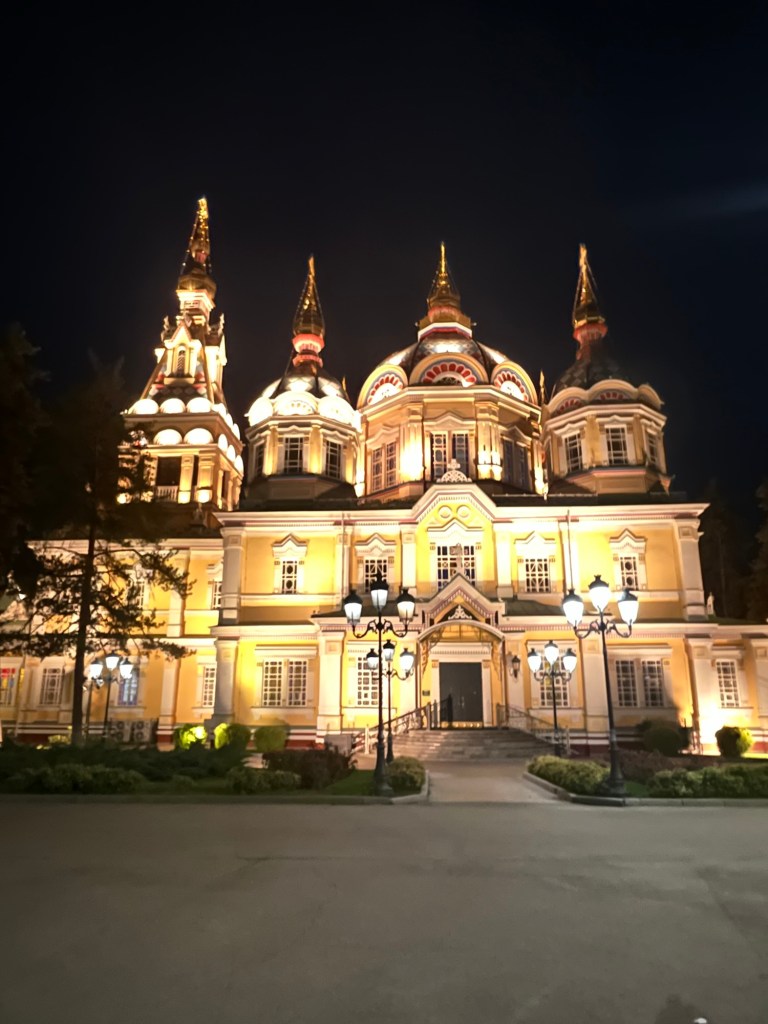
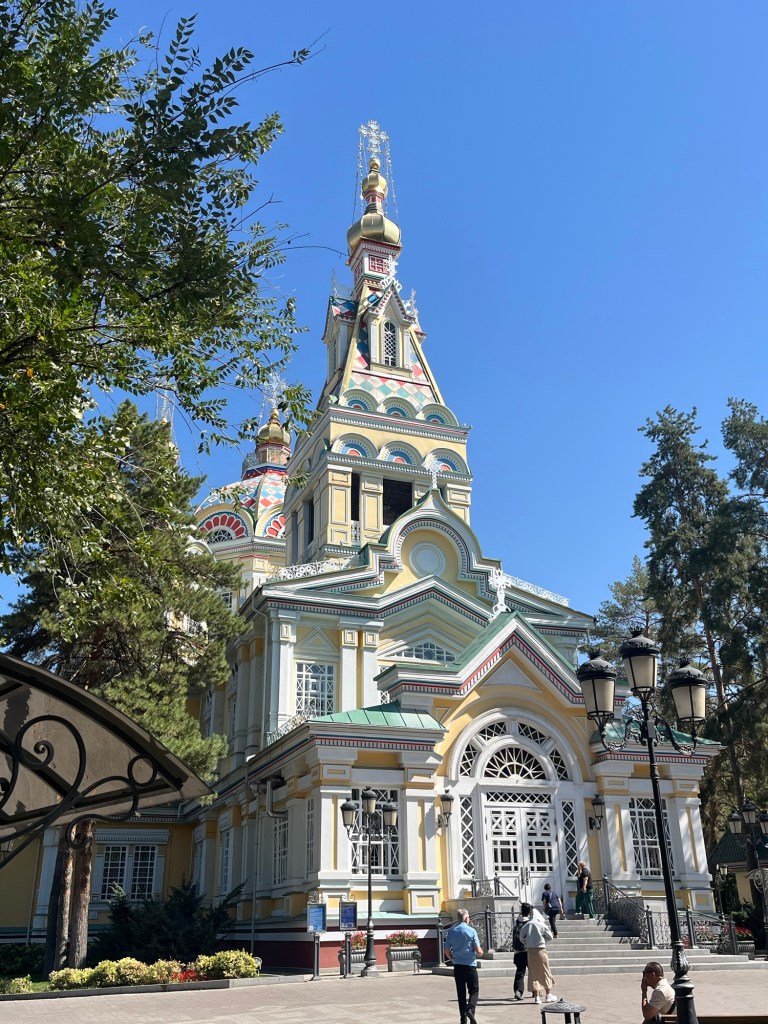
After dinner we walked back through the bustling Arbat Street where there were street musicians playing and plenty of people out enjoying themselves. We finished the night admiring the Russian Orthodox Cathedral in Panfilov Park which is lit up at night.

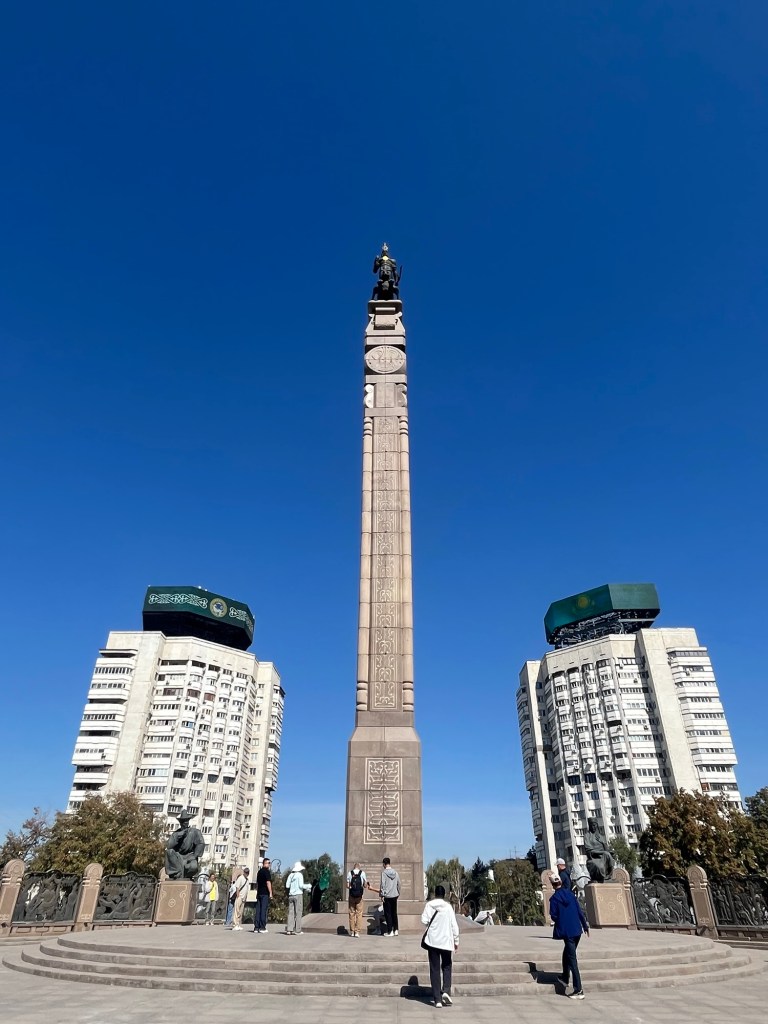
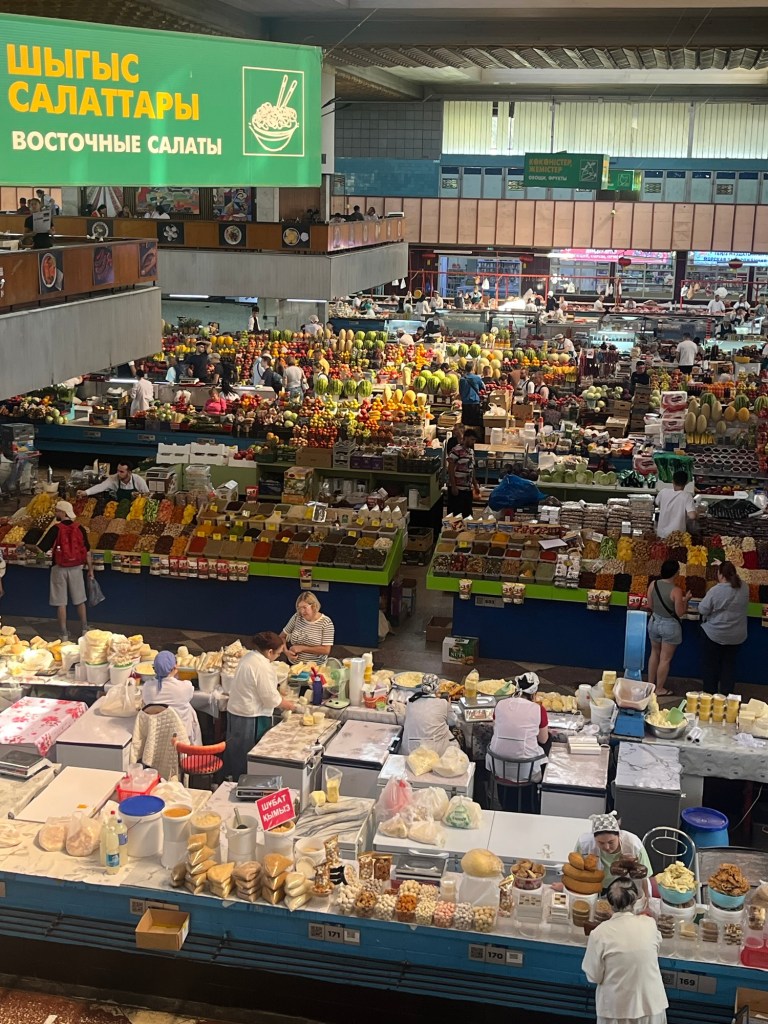
The next day we had a city tour in the morning covering Independence Square, the Green Bazaar and the cathedral.

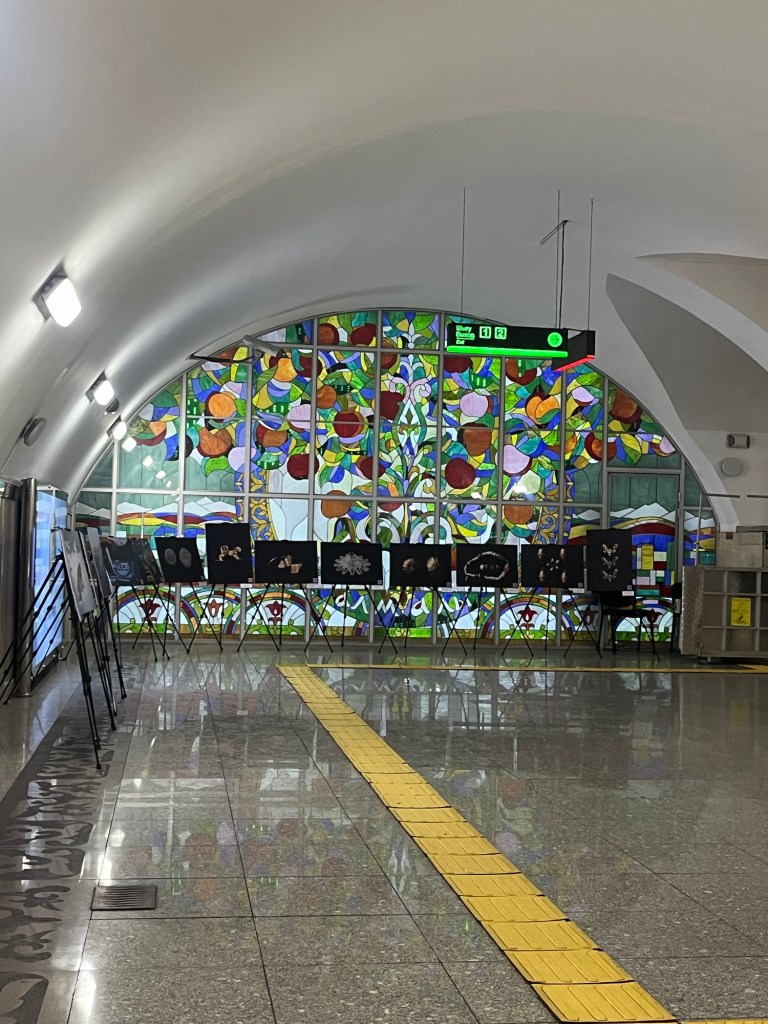
In the afternoon we went on the metro to a couple of museums. Almaty metro has some very nicely decorated metro stations, like Tashkent, so definitely worth stopping off at a couple for pictures.

That evening we had a farewell dinner at a Georgian restaurant as a couple of our group were finishing in Almaty, and we would get a new tour guide for our next country, Tajikistan.

Kazakhstan is a vast country, the 9th largest in the world by area, and I only saw a very small part in the south but the scenery was beautiful and Almaty was a very pleasant city to wander around.

Next up, Tajikistan…

Kyrgyzstan

Back to my new favourite airline, Turkish Airlines, for a thankfully uneventful connection through Istanbul to Bishkek in Kyrgyzstan. Arriving in a new country where everything is written in the Cyrillic alphabet at 4.30am after the usual lack of sleep on the flight continues to be a good idea… Long and slow-moving queues at passport control (no visa required) meant that my bag was slowly trundling around the baggage carousel waiting for me when I finally got through. I found my transfer and waited for some other people on the G Adventures trip I am doing to arrive.

We eventually got to the hotel at about 6.45am and I could thankfully go to bed for a couple of hours as I’d booked the hotel room for the previous night to make sure I could rest.

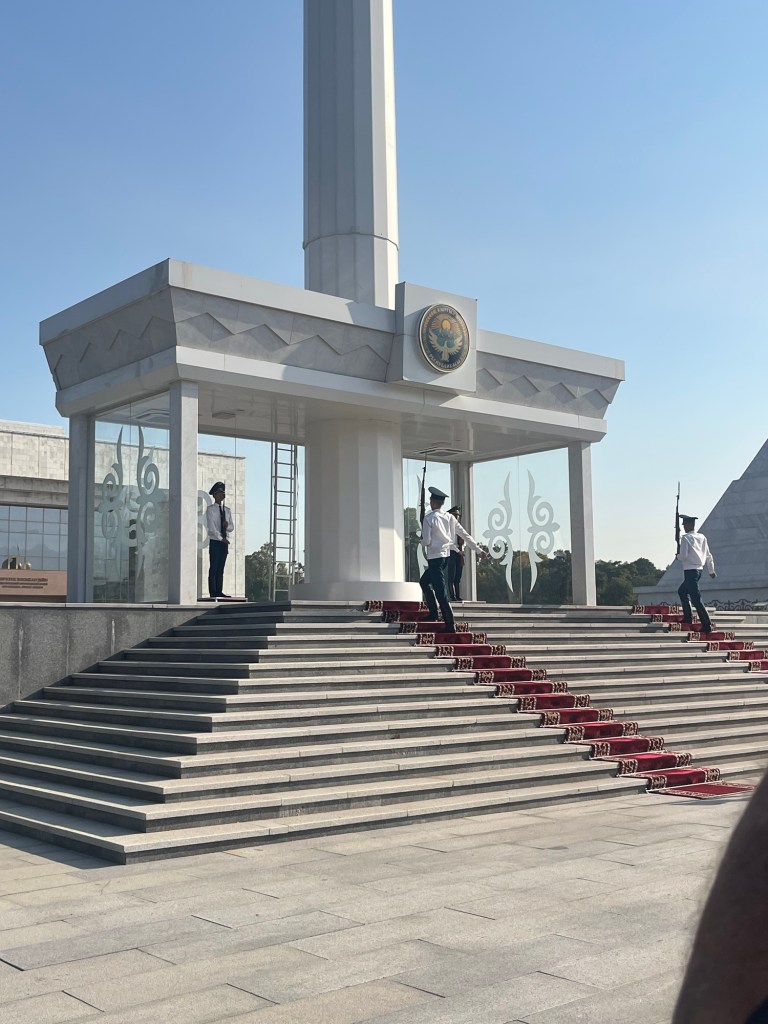
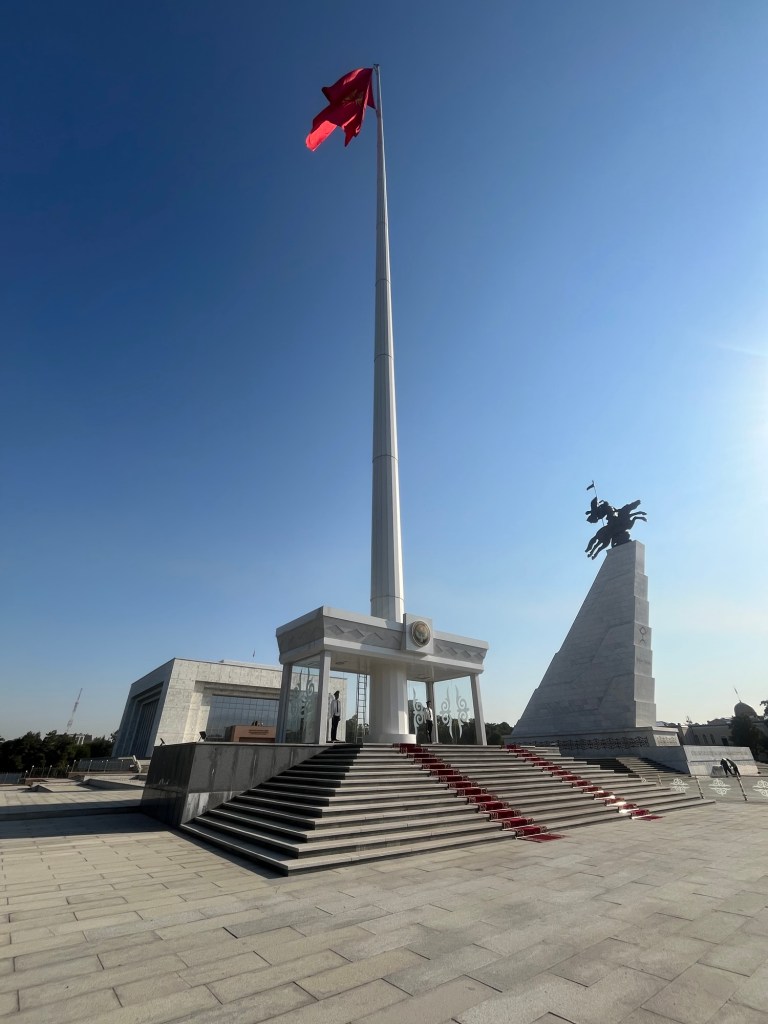
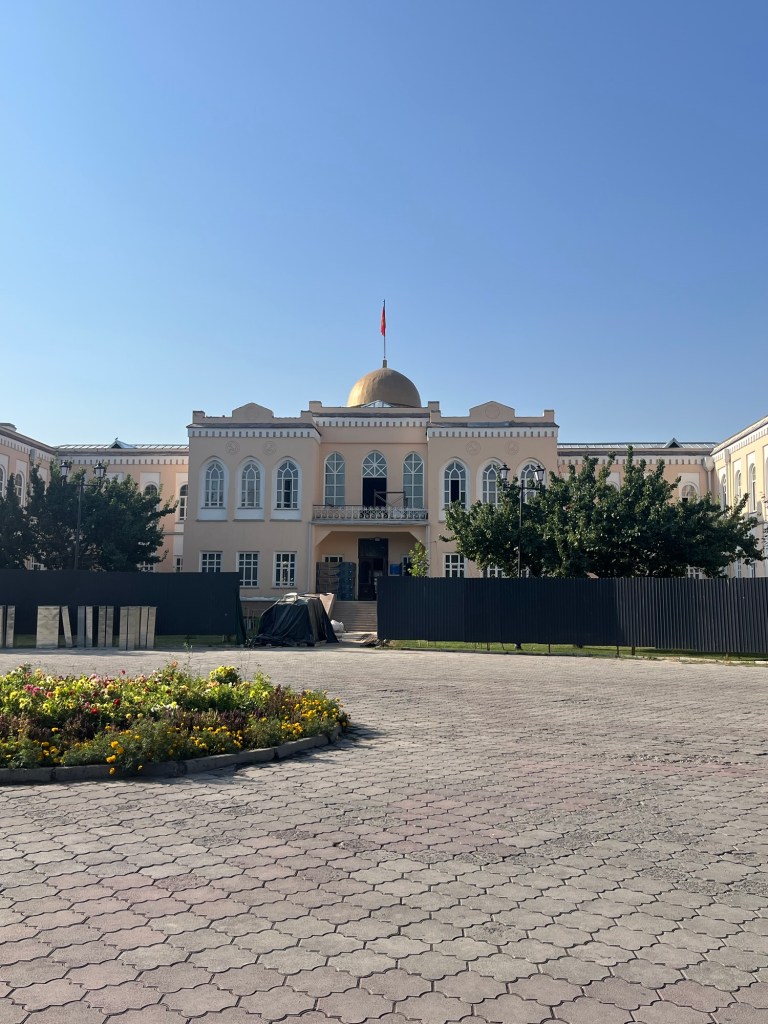
I reckon I had about 2 and a half hours sleep before heading out in the late morning with another person on the trip. We got a YandexGo (the Central Asia version of Uber) to Ala-Too square, a wide open space with a massive flagpole guarded by 2 young men. We managed to arrive in time to witness the changing of the guard which was an interesting ceremony where the participants were goose-stepping their way to and from their posts.

We then went into the History Museum which is situated at one end of the square. It was a very interesting museum explaining the history of Kyrgyzstan from the first settlers many centuries ago to its independence from the USSR and more recent history. There was plenty of information in English, alongside Kyrgyz and Russian. We would be in there a good hour or so I think.

After lunch we wandered back to the hotel through several very well maintained parks and squares.

Group meet-up in the evening and our first meal together, hilariously in a branch of the same restaurant we’d gone to at lunch time.

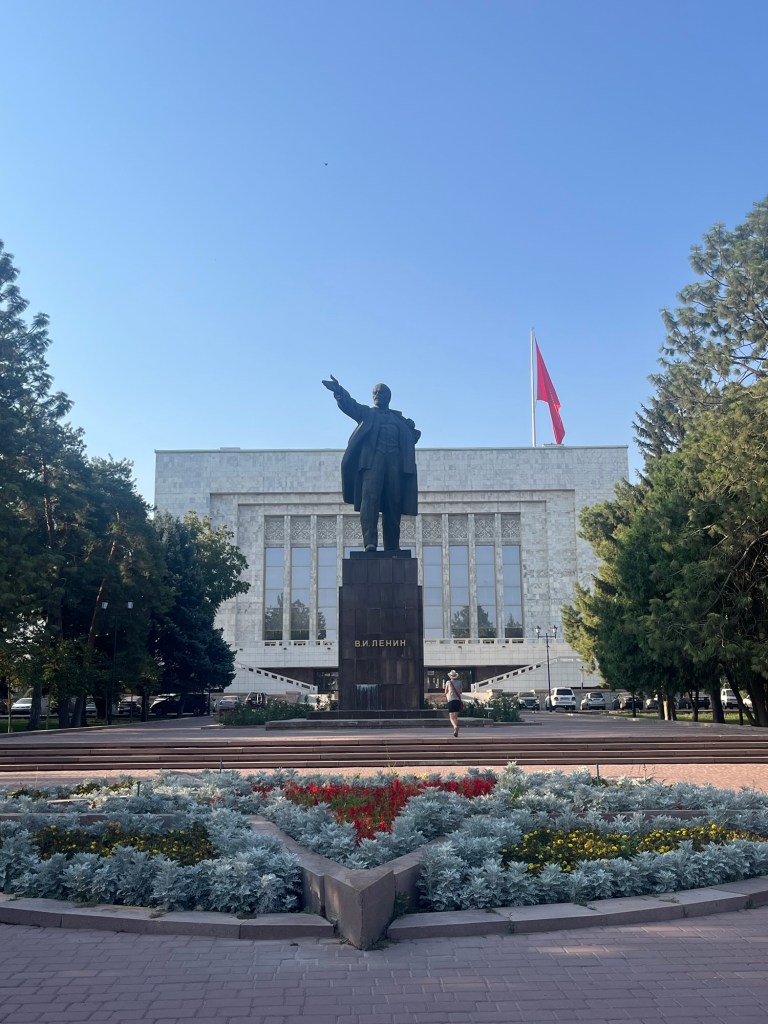
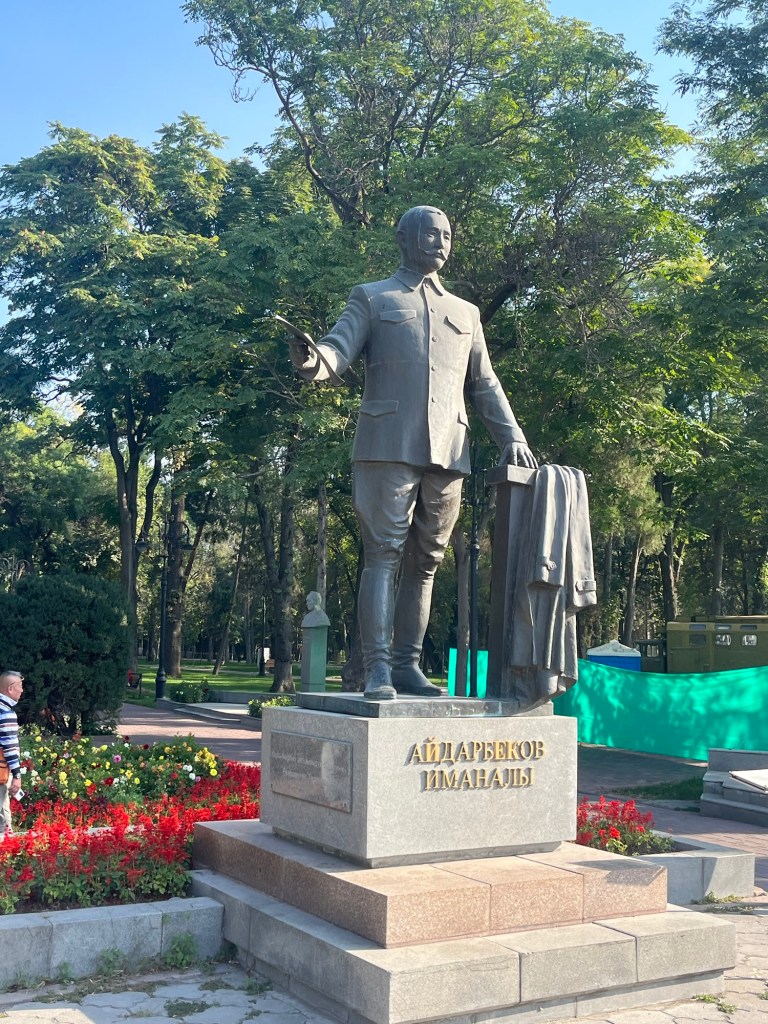
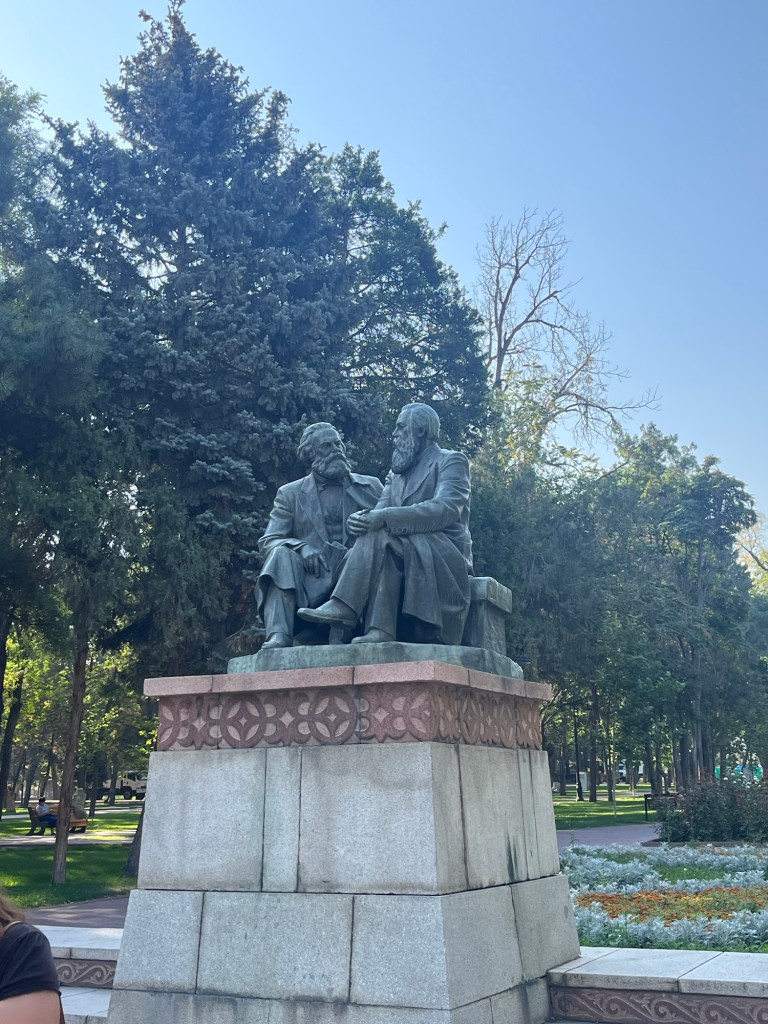
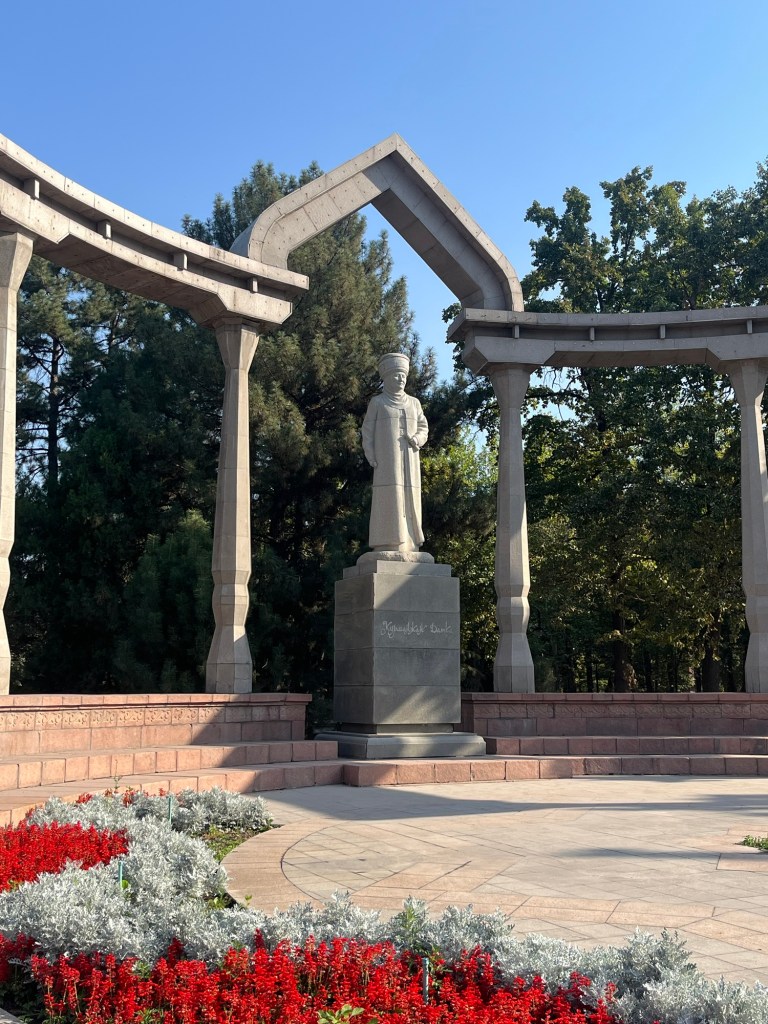
The following morning started with a walking tour of Bishkek, including revisiting some of the places I’d gone the previous day, though this time with more context from our local guide. Bishkek has a lot of parks with statues to all sorts of people from their history.

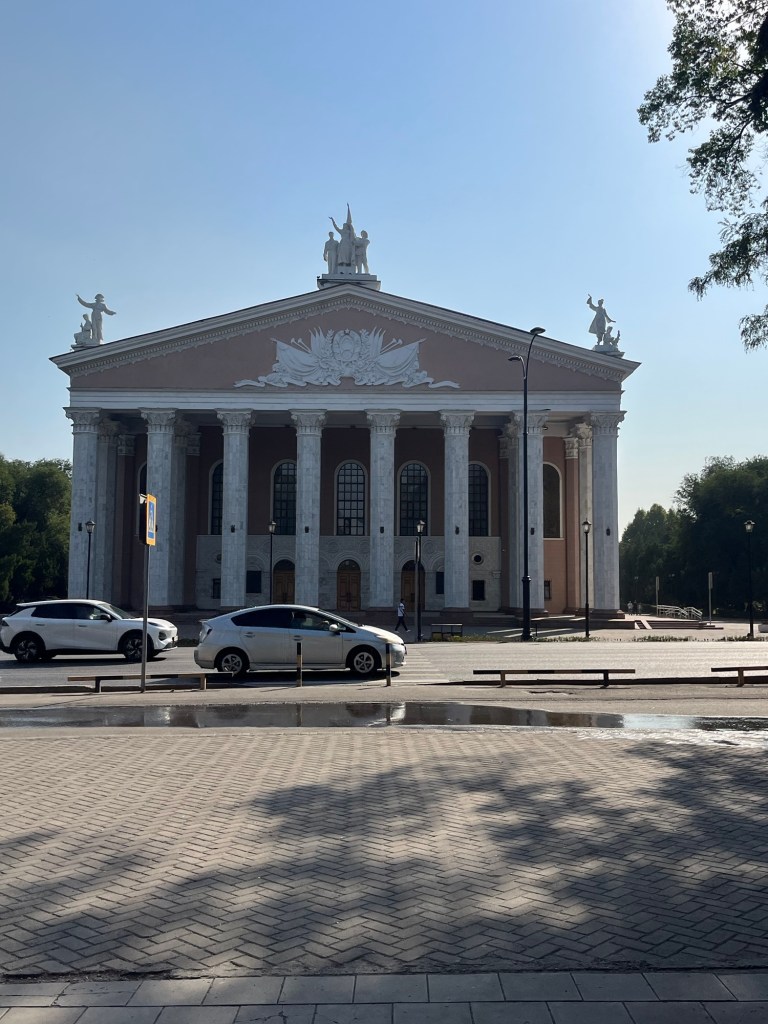
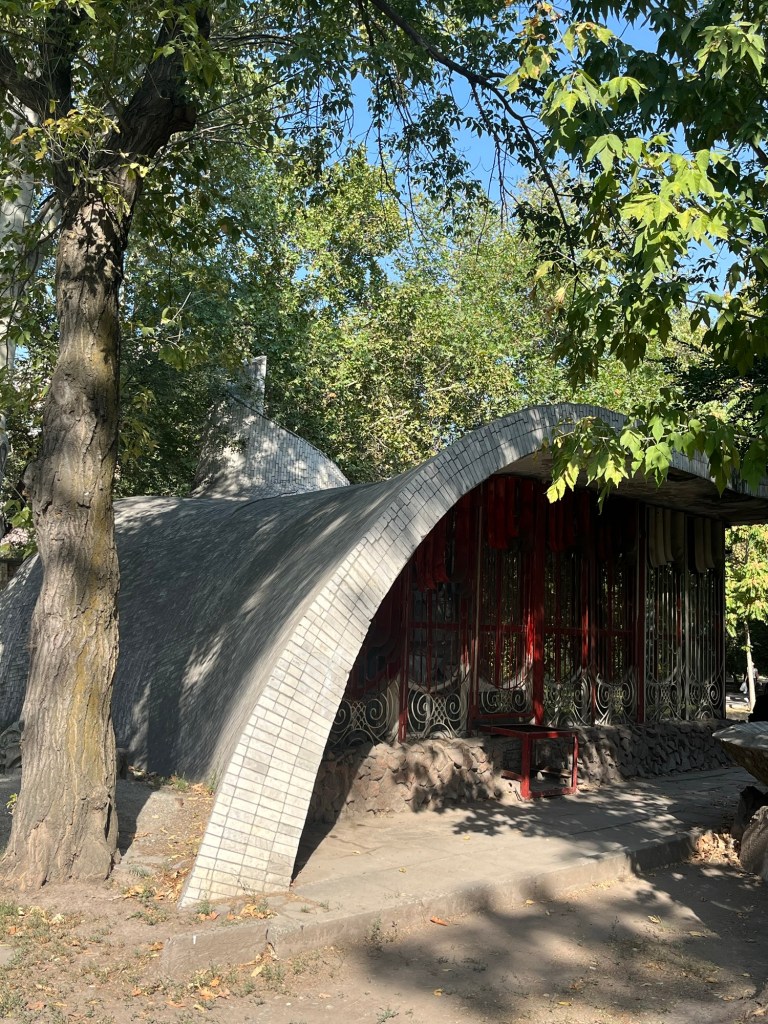
There are some quite contrasting architectural styles in Bishkek, from some quite beautiful Soviet buildings to some less aesthetic, brutalist buildings from the 1970s.

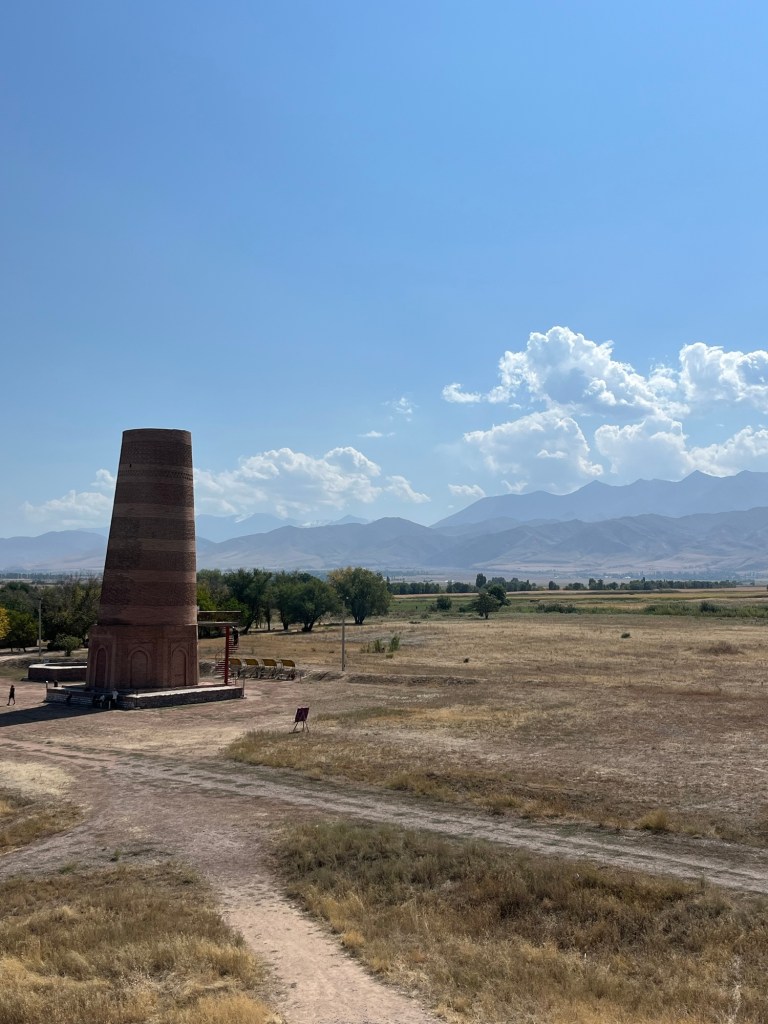
After we’d finished the walking tour, we headed out of Bishkek to the Burana Tower, essentially half a minaret and some petroglyphs are all that remain from the 9th century city of Balasagun. You can walk up the tower, up a dark, narrow staircase with very deep steps. My quads were still aching several days later.

Burana Tower

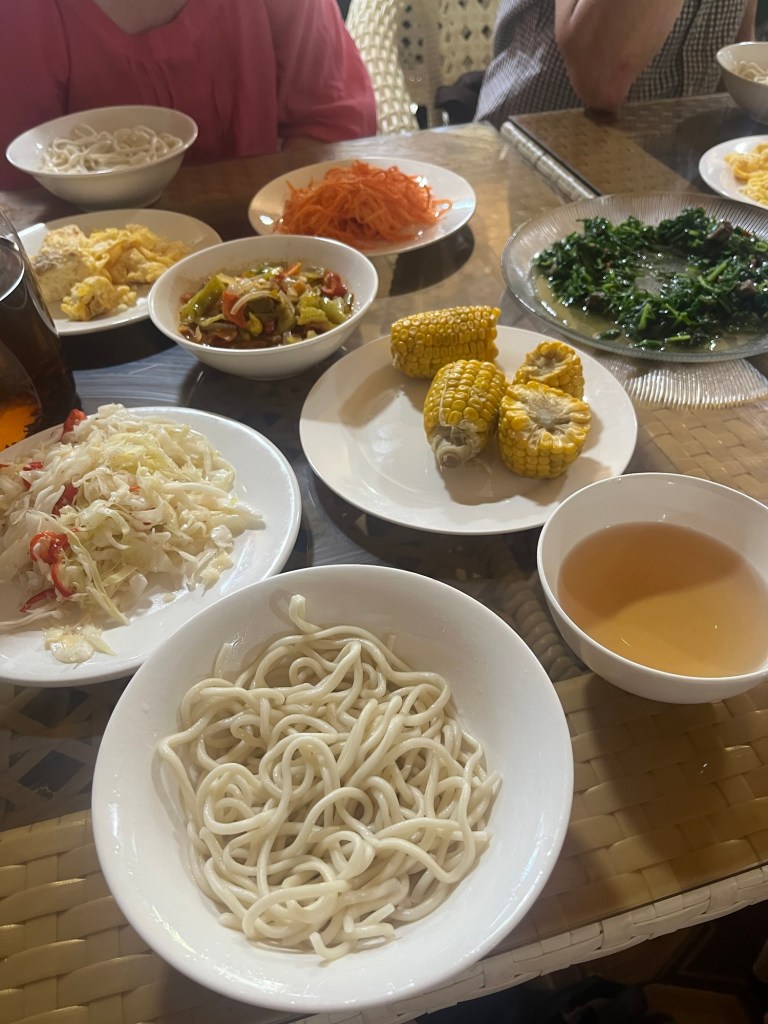
Lunch was at a Dungan restaurant. The Dungan are Chinese Muslims who fled persecution in the late 1800s and arrived over the Tian Shan mountains into Kyrgyzstan. A delicious spread and some of the best noodles I’ve had anywhere.

Dungan lunch

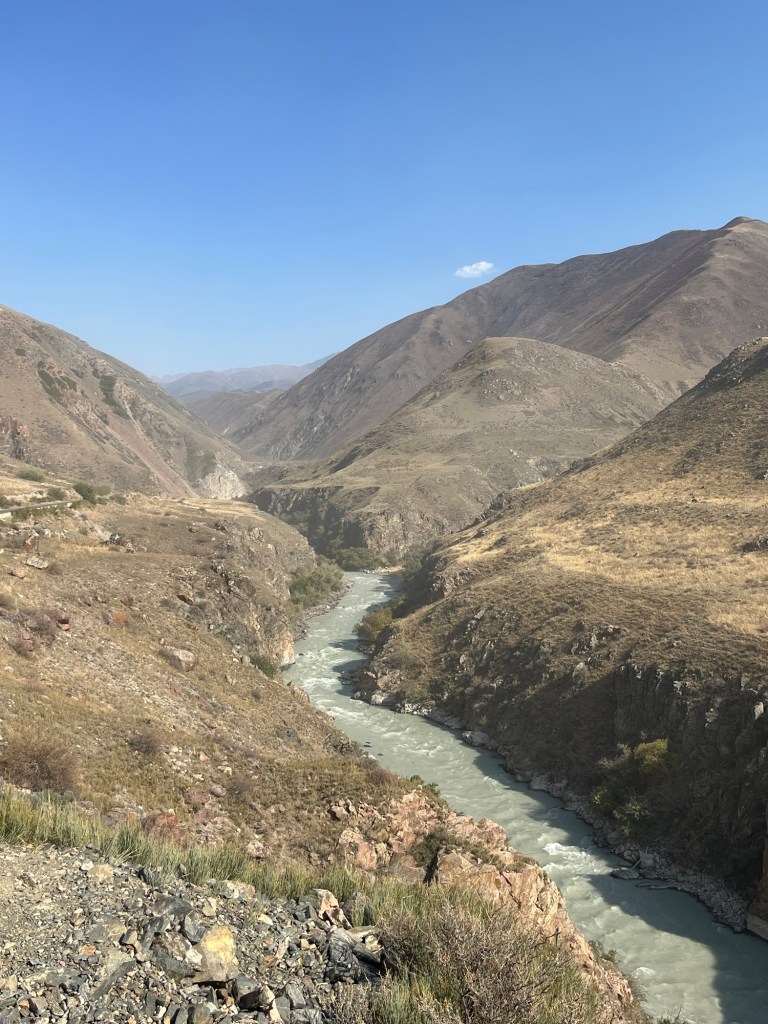
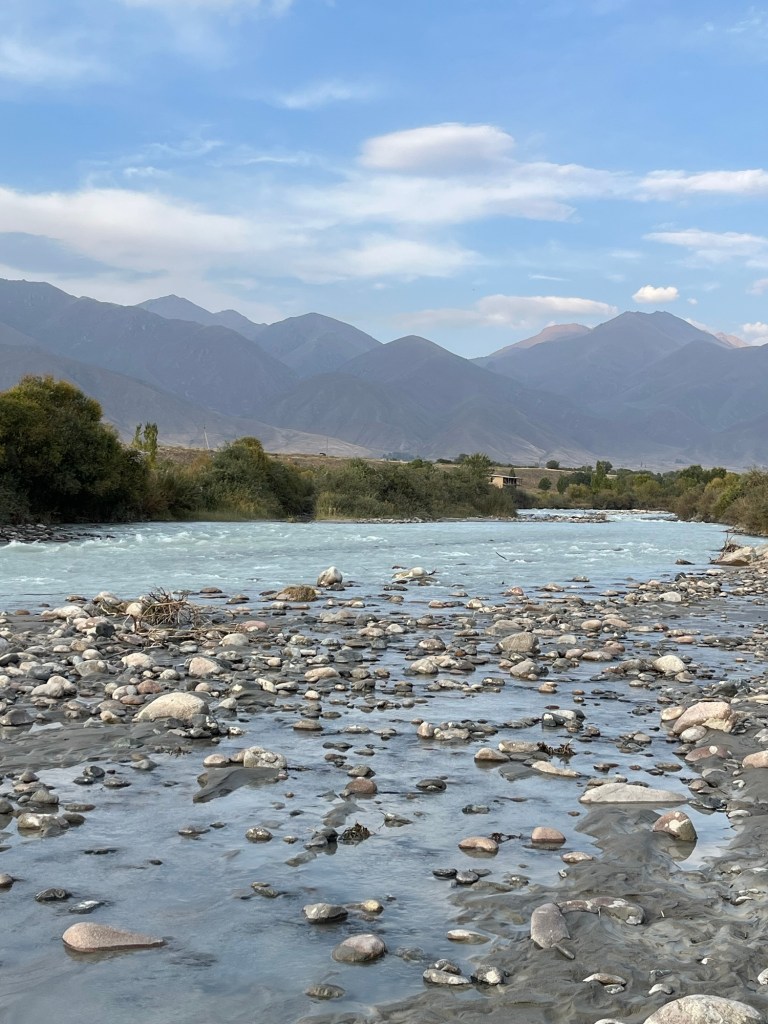
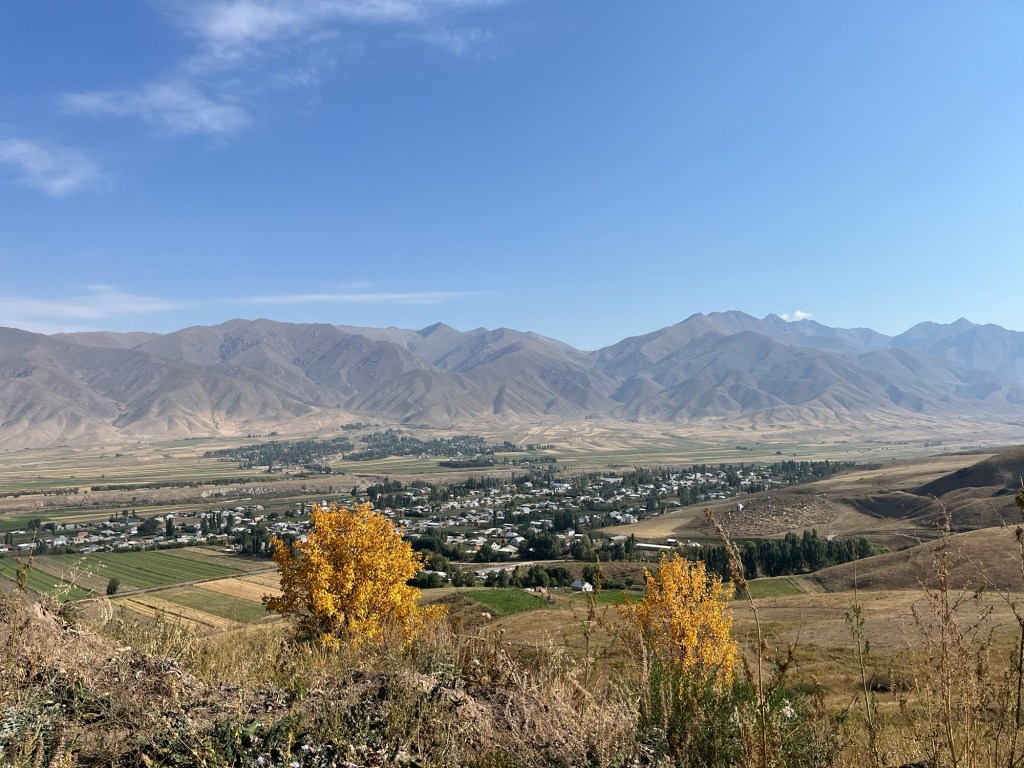
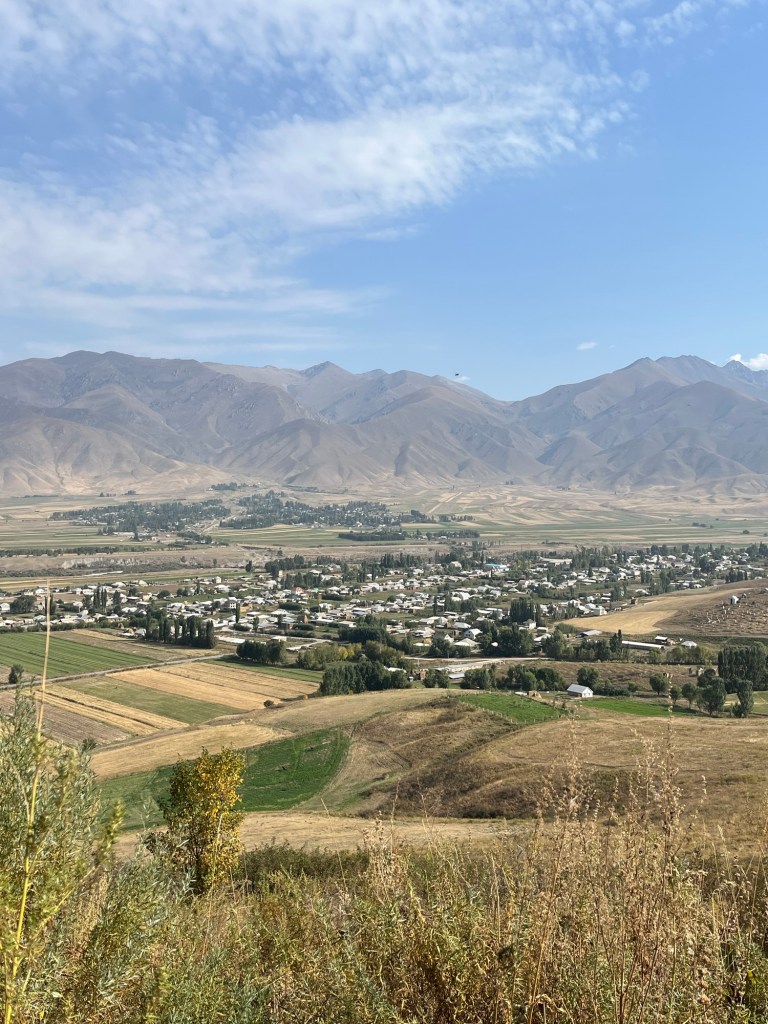
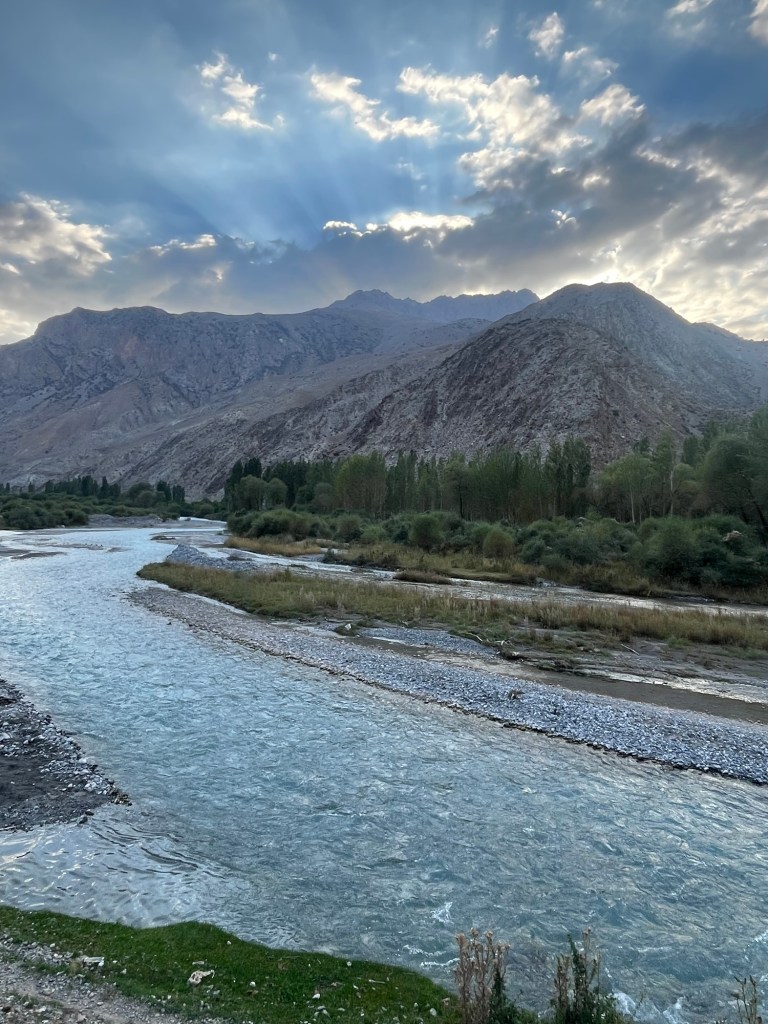
We continued in the afternoon to Chon Kemin National Park. Some lovely views of the gorge close to the entrance, rolling mountains and milky blue rivers. We overnighted in a guesthouse in a small village. In the morning we walked up a nearby hill for 360 views of the area, where we could see several villages and neatly farmed fields. The trees starting to turn yellow as summer ends and autumn approaches. A good way to start the day before getting in the minibus and driving for most of the rest of the day, through spectacular scenery, to Song Kul lake.
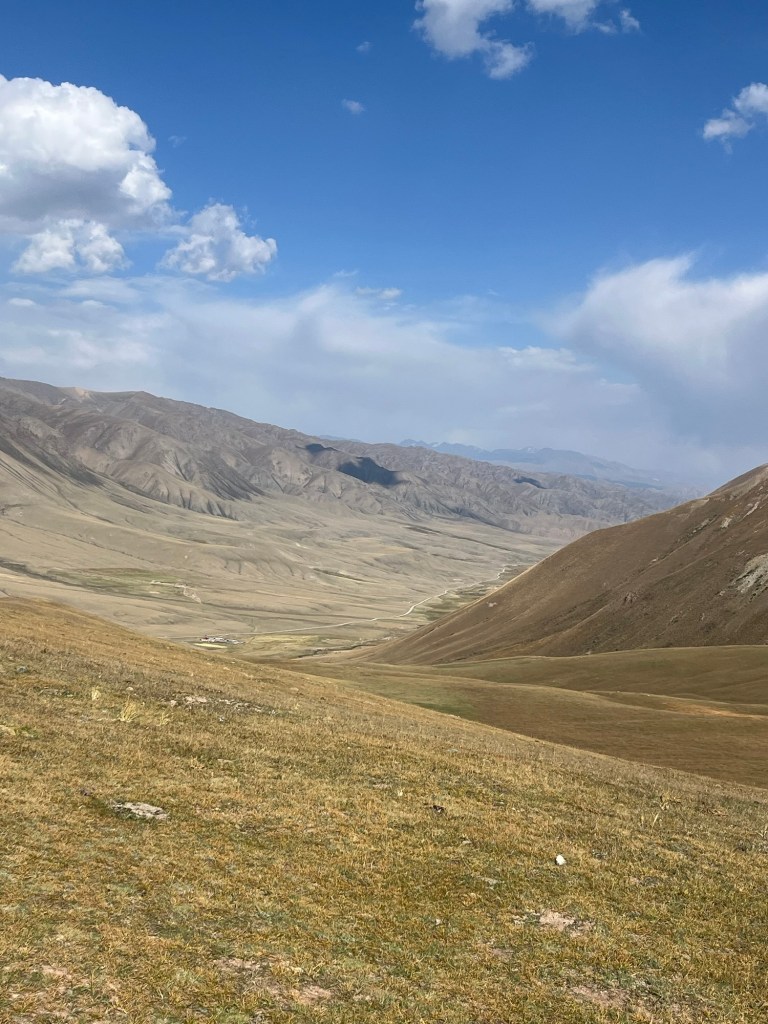
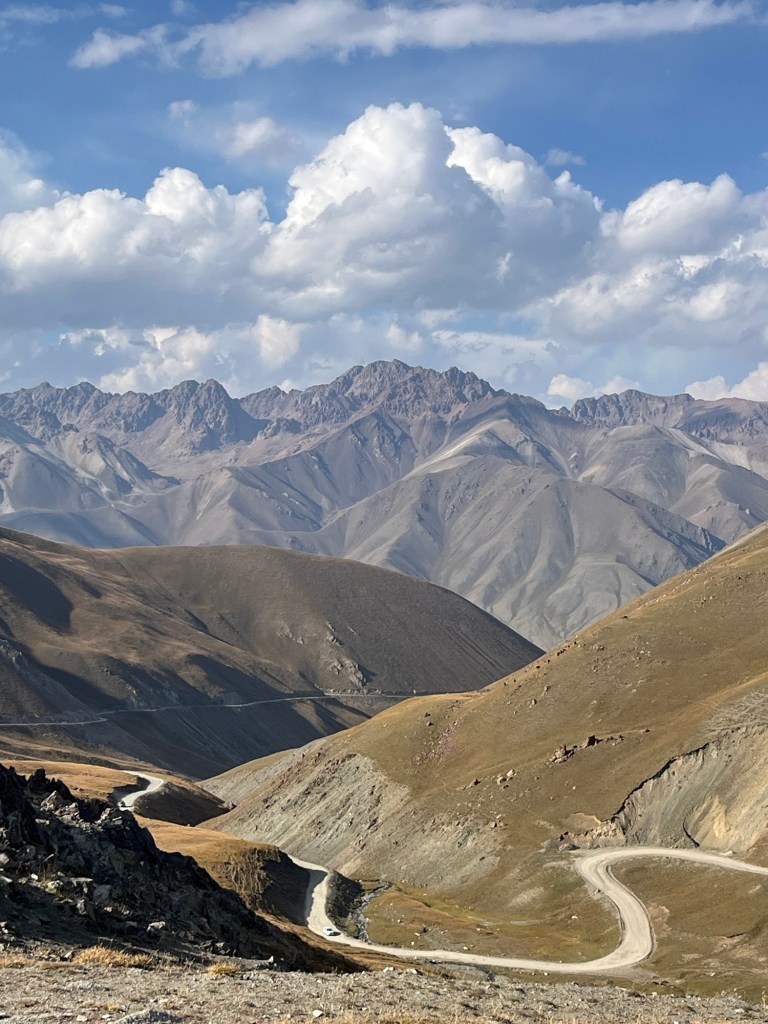
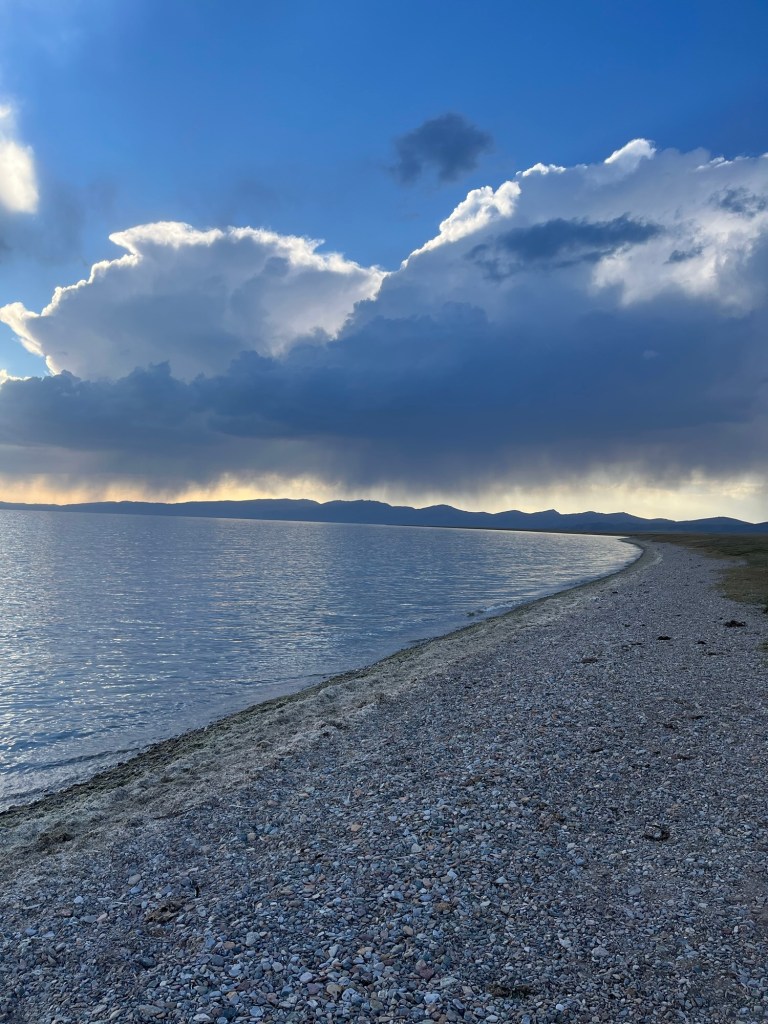
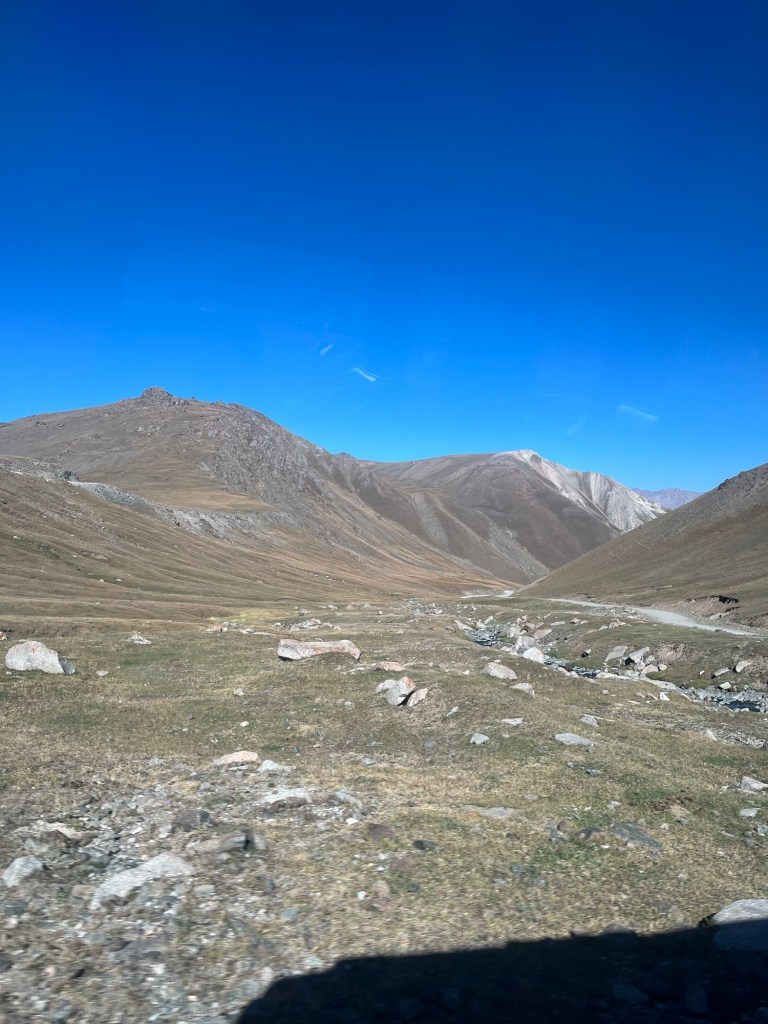
The road was pretty good for a while and then we turned off to a dirt road which wound its way high into the mountains. Some really impressive views as we climbed higher. We eventually arrived at the yurt camp on the shores of Song Kul lake in the late afternoon after an increasingly bumpy ride. The clouds had come over by now and the wind had got up so we were all grateful to wait for dinner inside the dining yurt where the stove was on and providing some much-needed heat. The lake is at an altitude of over 11,000 feet and the temperature change from the first couple of days was quite stark! For the first time on my travels this year, I’ve actually brought a coat with me (the coat I’d had to buy in Japan!) and I was very glad I had it!
A simple dinner of lentil soup and stuffed dumplings before bedding down for the night in a yurt. The stove had also been burning in our yurt so it was toasty warm. And the beds had a thick duvet and a couple of blankets so despite the cold outside, it was very nice and warm inside. I’d be lying if I said I’d had a good nights sleep. Various animal noises from outside, a drop in temperature overnight and a very narrow bed variously contributed to an unsettled night. But it was a great experience to sleep in a traditional yurt.

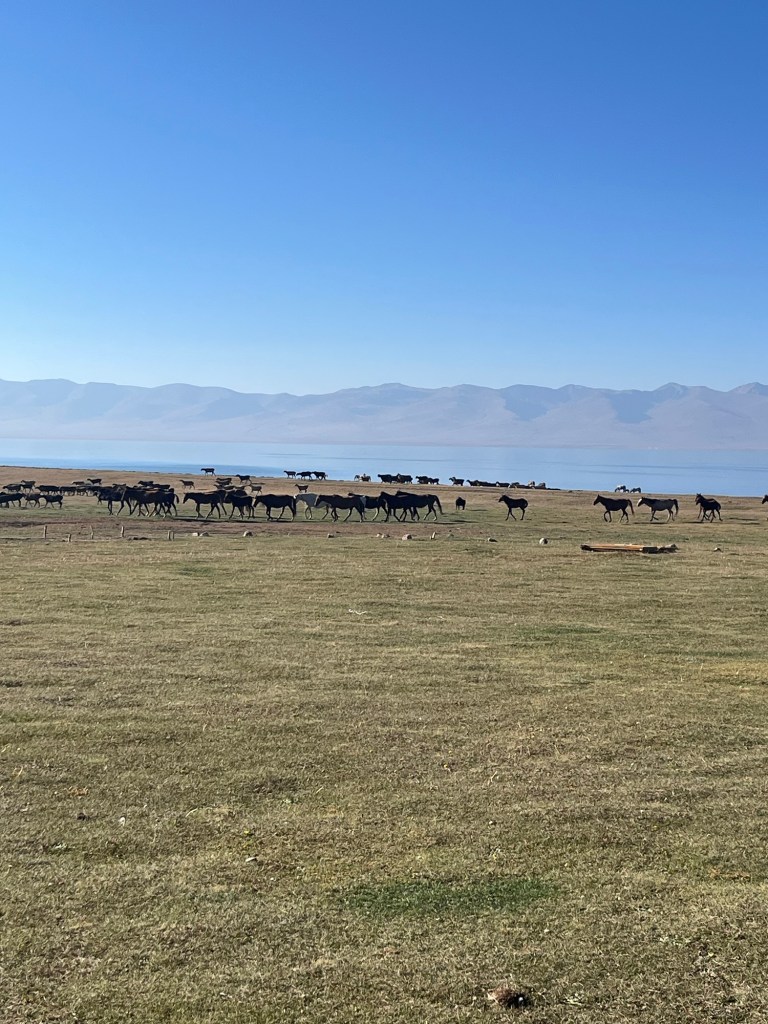
The morning sky was beautifully clear and blue and as we waited for breakfast, herds of horses, goats and other animals were making their way to the lake for their morning drink. I’m not quite sure where they all came from as there weren’t these numbers around the previous night.

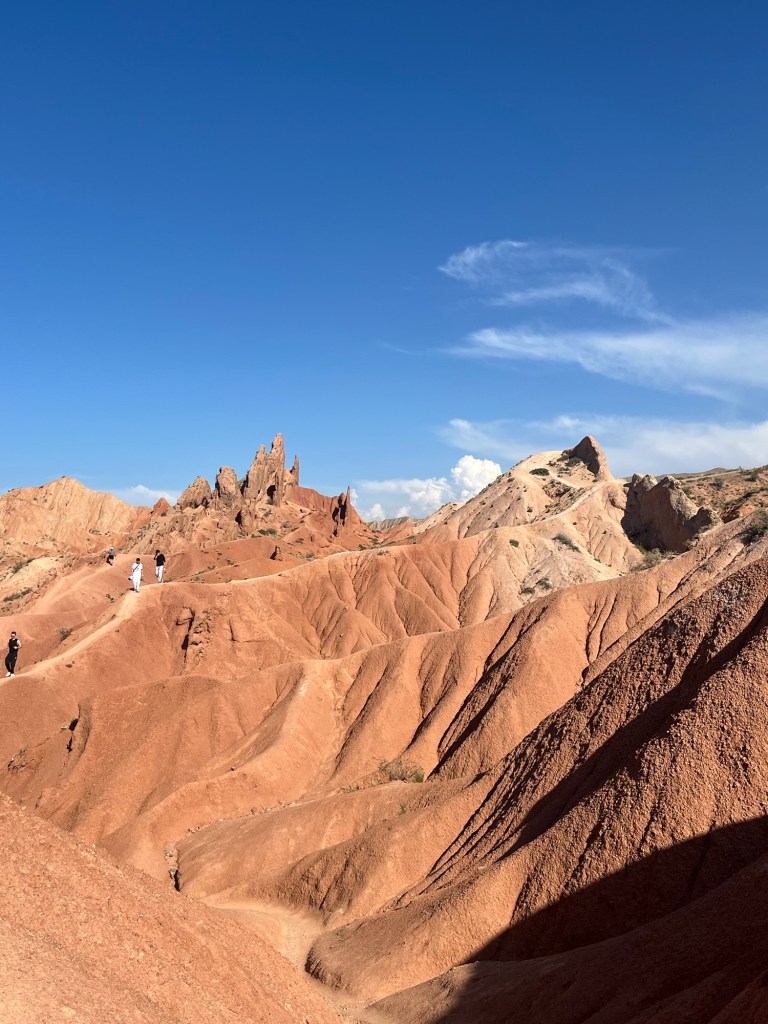
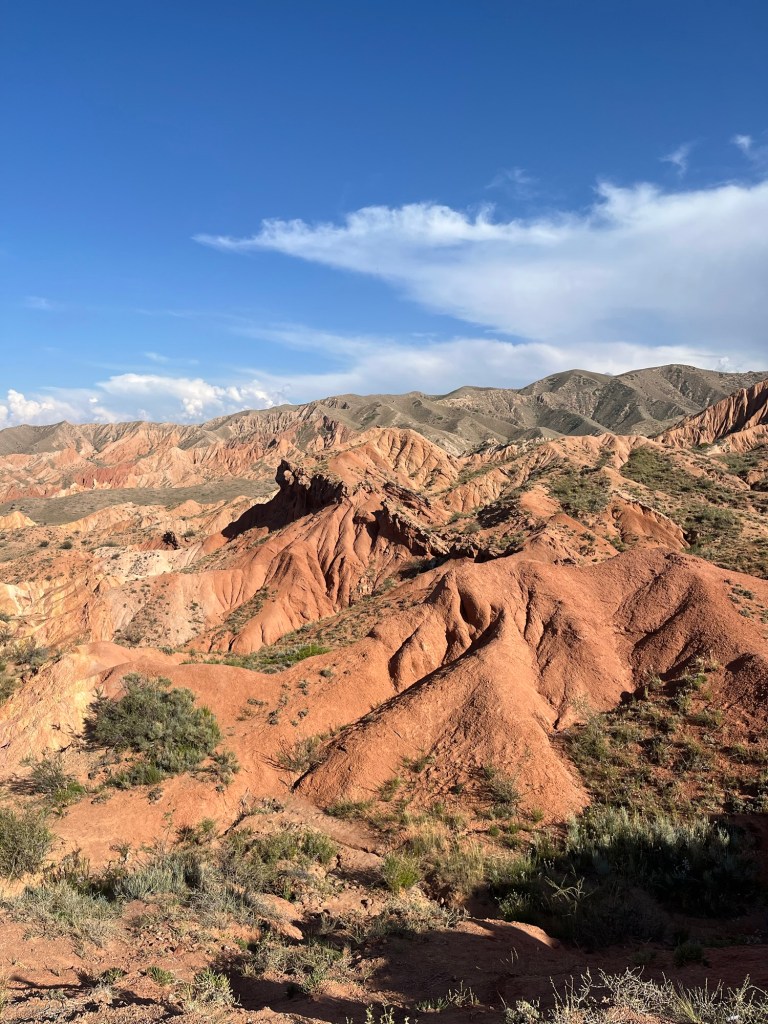
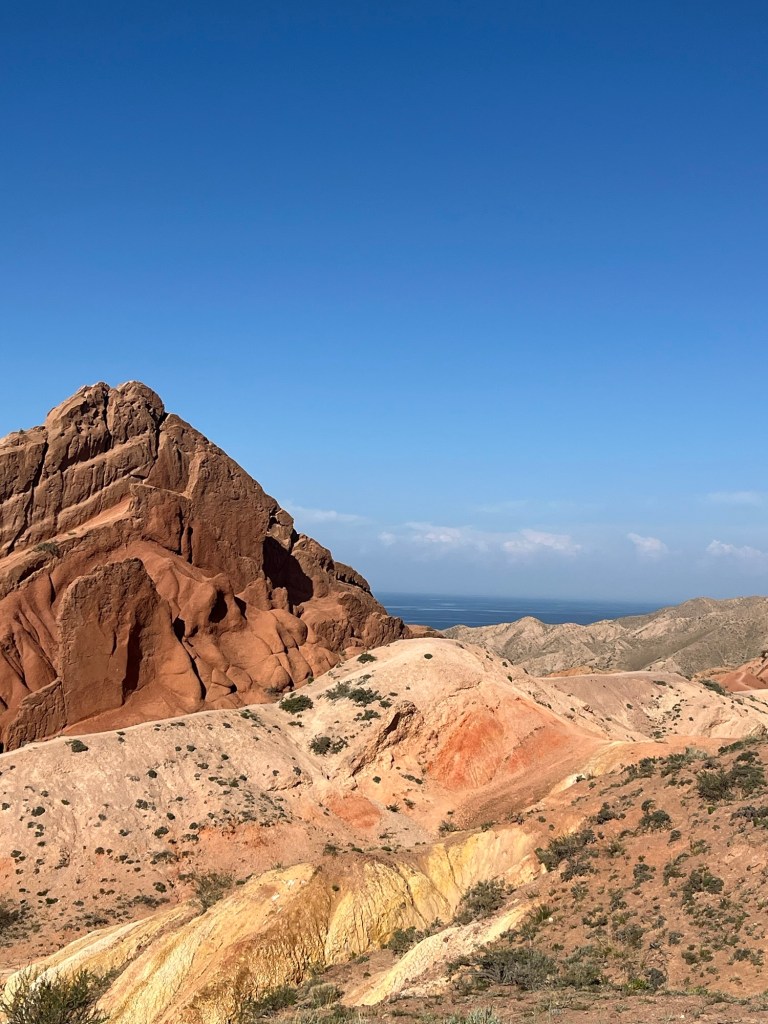
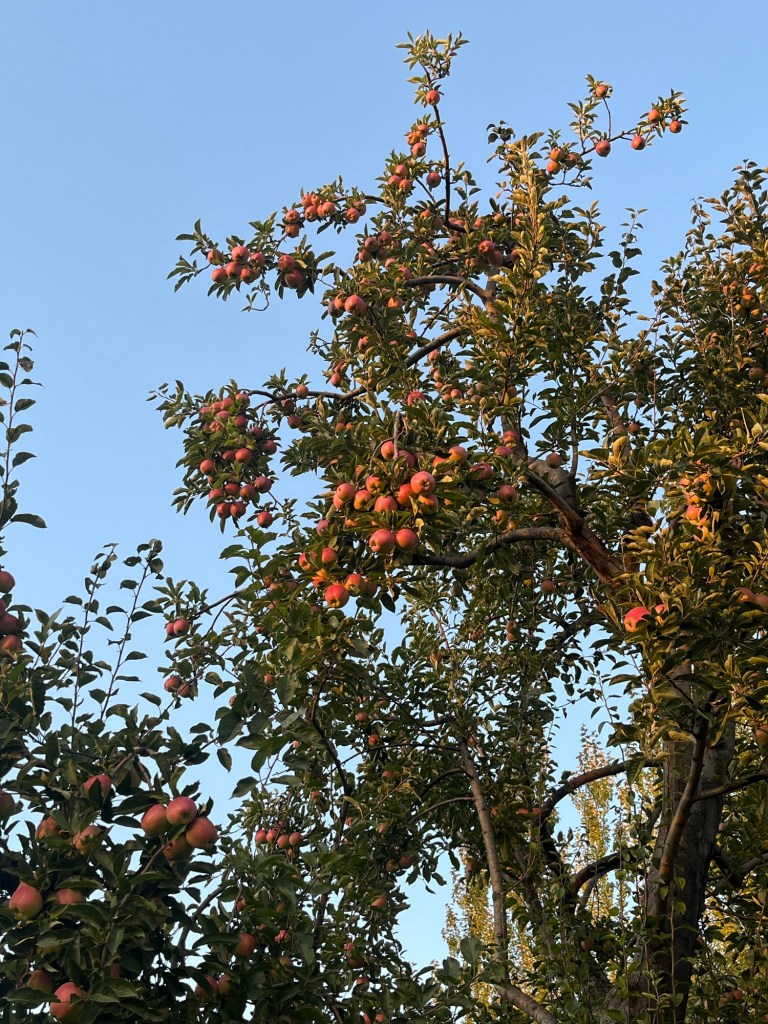
We set off after breakfast back down the bumpy mountain pass and to lunch in Kochkor. After lunch we continued driving east along the southern shore of Issyk Kul lake, the biggest lake in Kyrgyzstan. It was glistening a beautiful blue against the sky. We stopped in the late afternoon at Fairytale Canyon (Skazka Canyon). So-called because the rock formations are said to resemble buildings from fairytales. I’m not so sure… But a fun hour exploring the rocks before the final leg of the day to our guest house in Tamga. A beautiful guest house with an enormous garden and an abundance of apple trees heavy with ripe apples.

Another local dinner with some of the best mashed potato I have ever had.

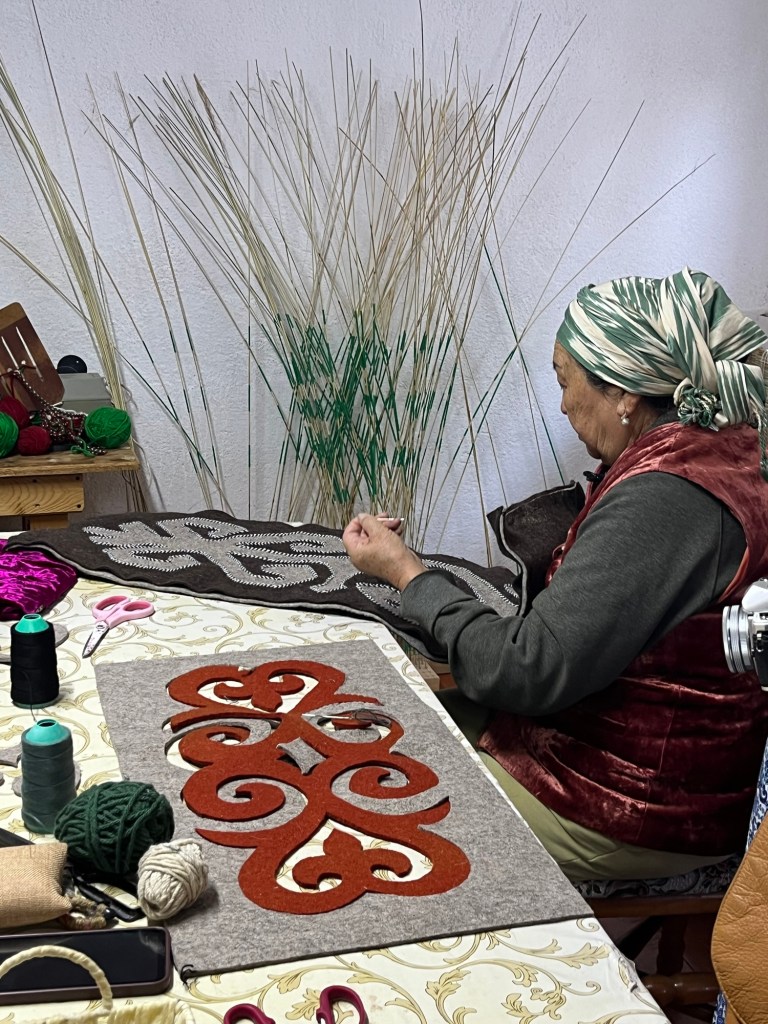
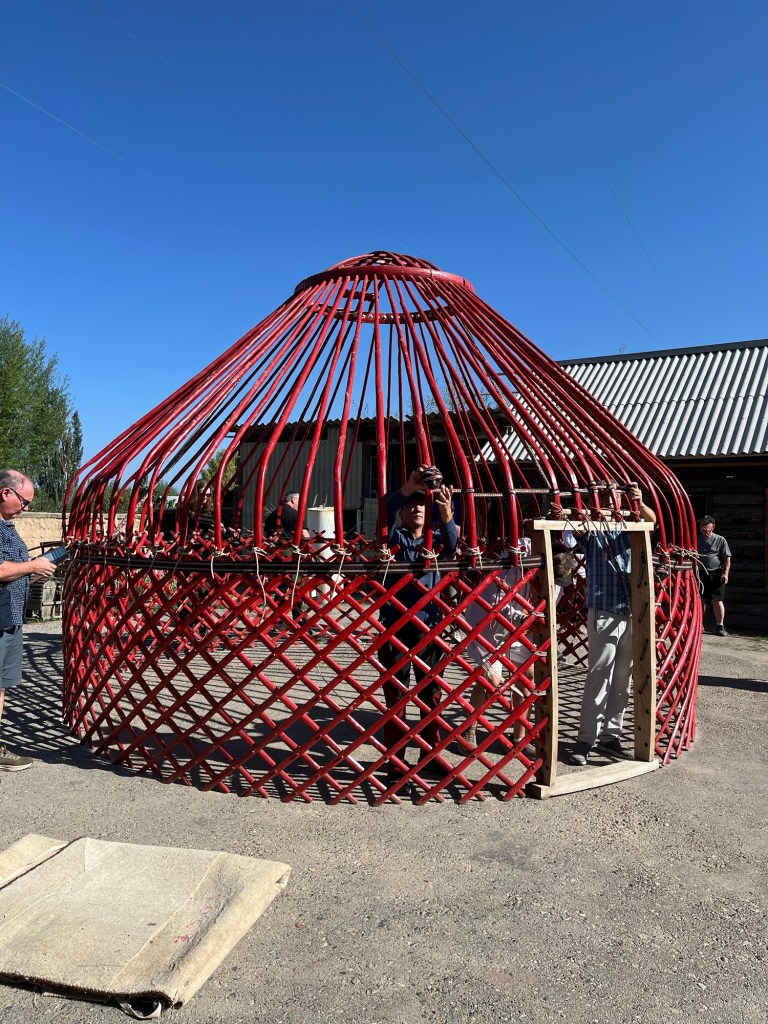
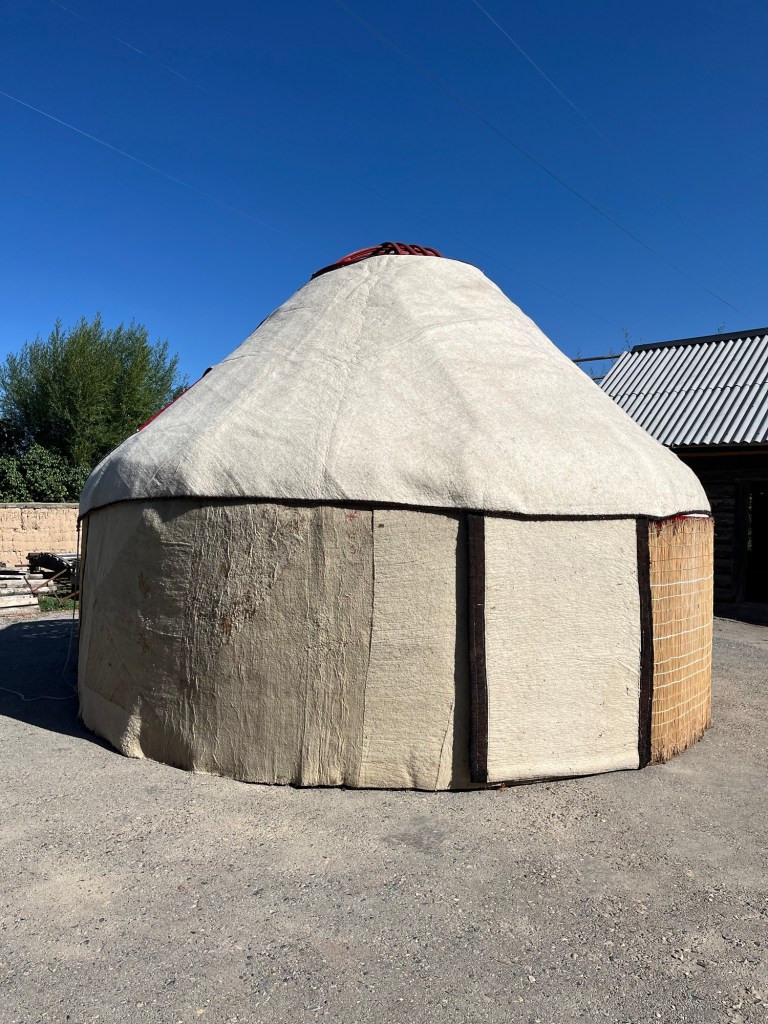
The following morning started at a project support by G Adventures which is ensuring the traditional Kyrgyz crafts of felt work, needle work and yurt-making are kept alive. We learned about how the beautiful felt panels which adorn the inside of yurts are traditionally made, and also helped to construct a yurt. They really are quite ingenious dwellings. A lot of G Adventures trips include a stop at a project being supported by its charitable arm and this was one of my favourites.

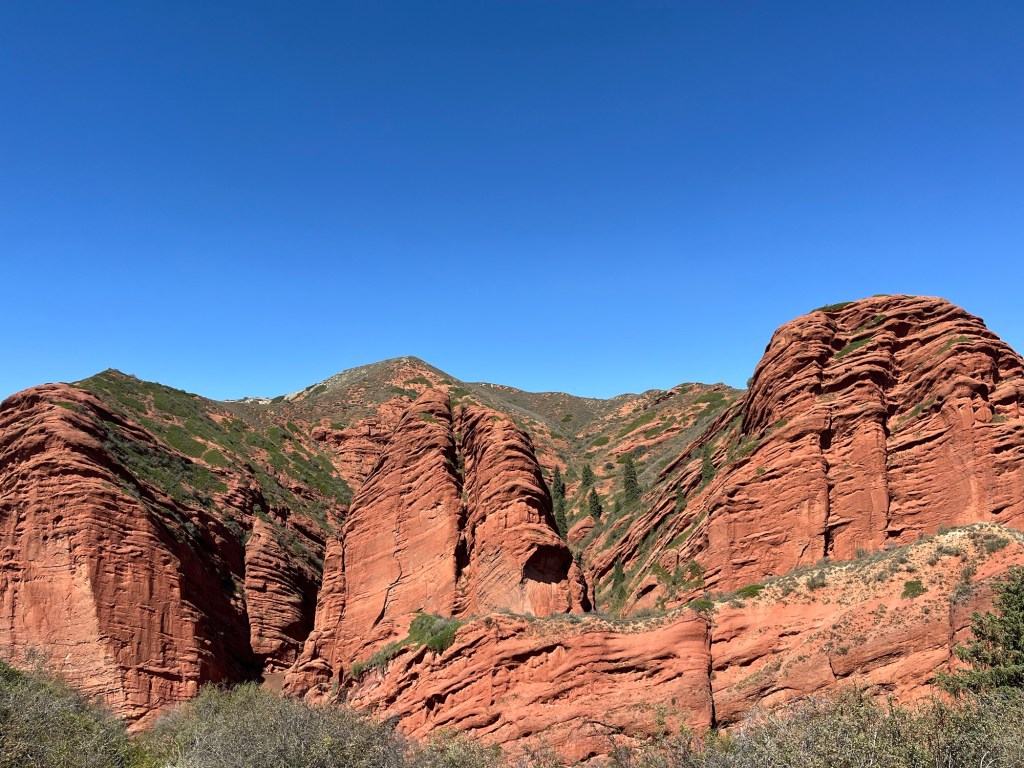
We continued on and had a picnic lunch at Jety Oguz, another striking rock formation. The colours here really reminded me of Zion National Park in the US. A very picturesque spot for lunch.

Jety Oguz

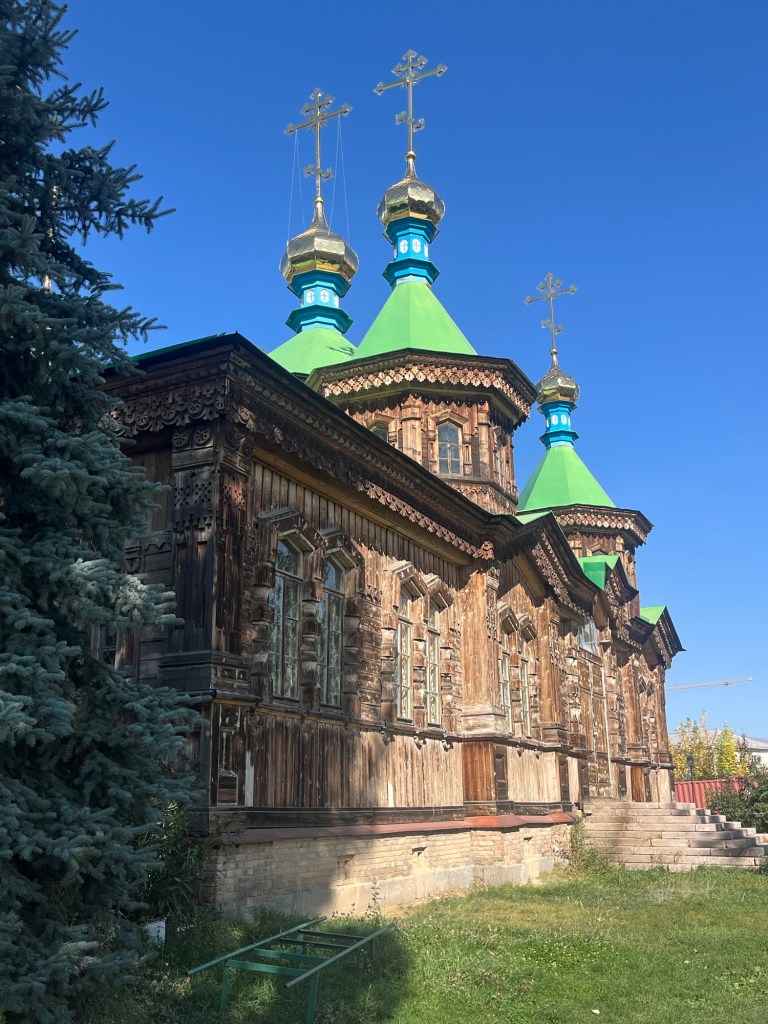
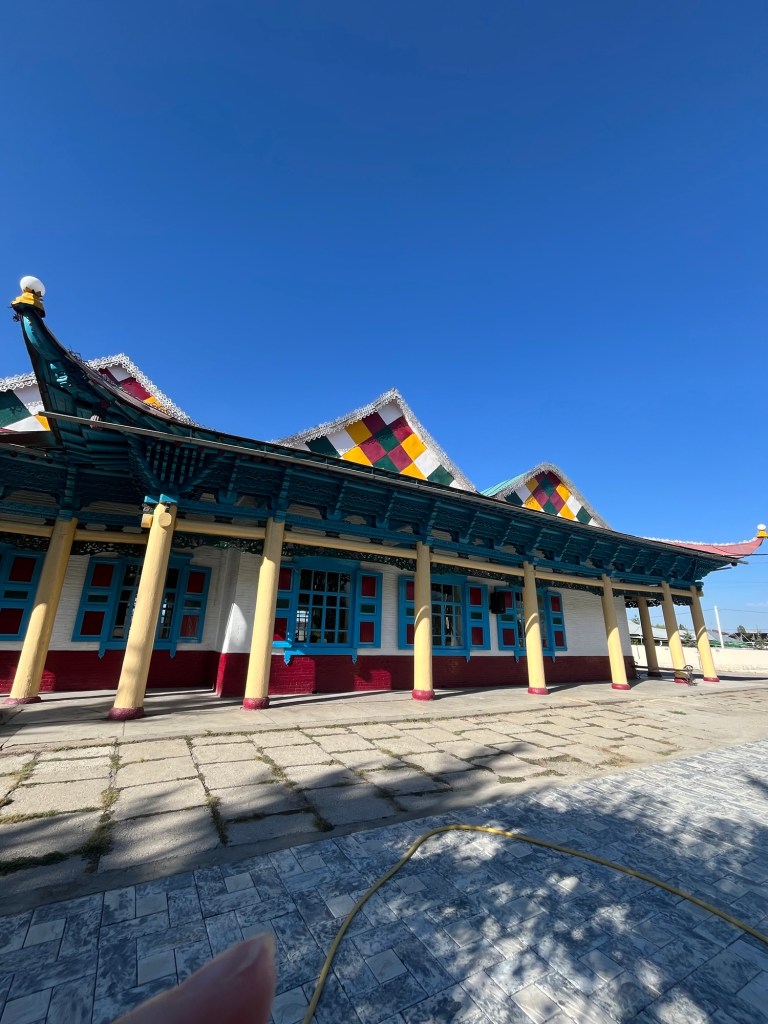
After lunch we continued to our final overnight in Kyrgyzstan, in the city of Karakol which is the 4th largest city in Kyrgyzstan. When we arrived we had a short tour of the 2 main sights in town – the Russian Orthodox Cathedral and the Dungan mosque. Both quite striking, and both made out of wood. Our final evening meal in Kyrgyzstan was at a Uyghur restaurant. It’s been very good to have lots of different types of food here in Kyrgyzstan, from traditional Kyrgyz food, to Dungan, Russian and Uyghur.

We made our way northeast the next morning, through a gap in the mountains to the border with Kazakhstan and one of the more unassuming border posts I’ve seen.

Kyrgyzstan is a stunningly beautiful country which I’ve really enjoyed. Now off to my next Stan…