
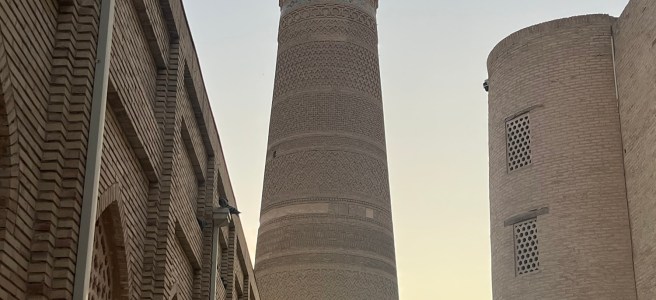
Bukhara, possibly my favourite city in Uzbekistan. I can’t quite put my finger on why, perhaps it’s the atmosphere here, the buildings and old town are more concentrated than in Samarkand and it doesn’t feel quite as Disney-fied as Khiva.
We arrived at our hotel, about a 20 minute walk from the old town, in the early afternoon, and after lunch we had a free afternoon until we were meeting in the early evening for an orientation walk and dinner. Because we were staying a little way out from the main sites, I decided to have a chilled afternoon at the hotel, which wasn’t a bad idea considering I was almost 3 weeks into this trip with not a lot of free time so far.
In the evening we were bussed into the old town and had a brief orientation around Labi Hovuz square and a couple of handcraft shops before dinner.
We had a much more thorough city tour the next day which again differed slightly from my previous trip here.
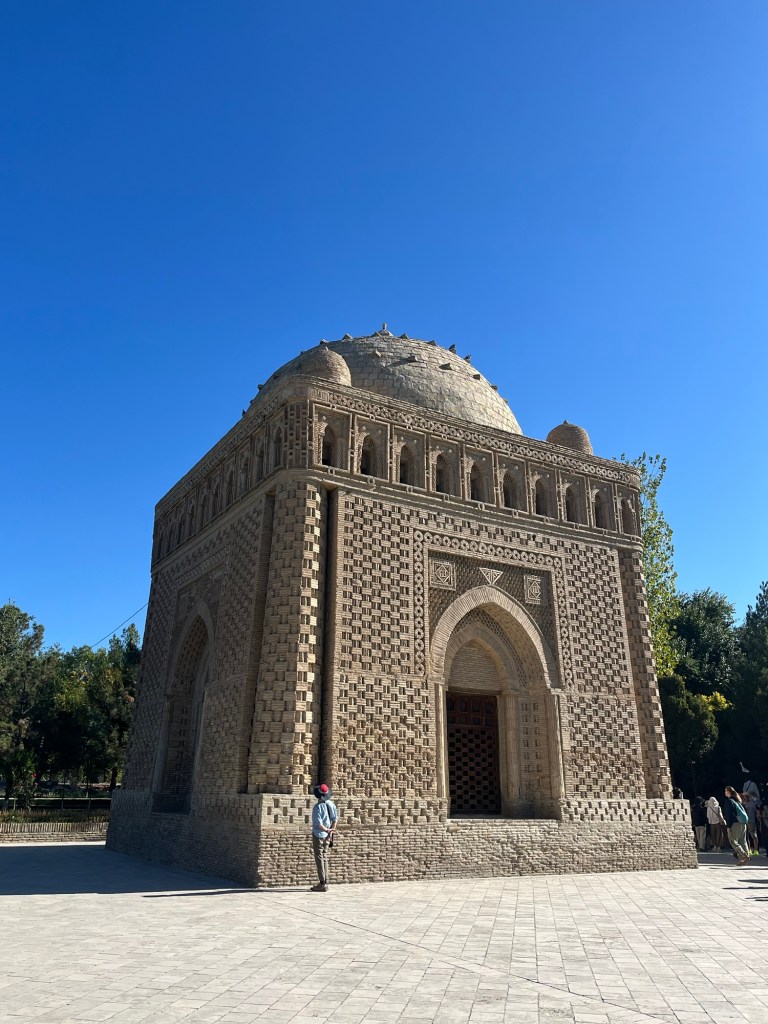
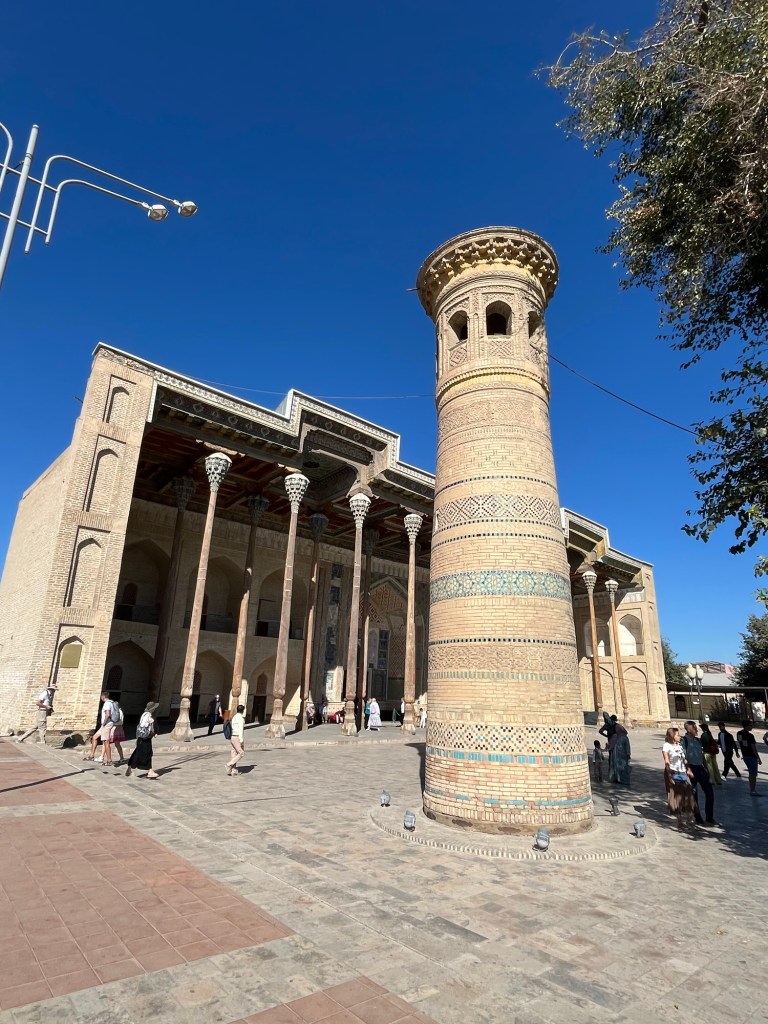
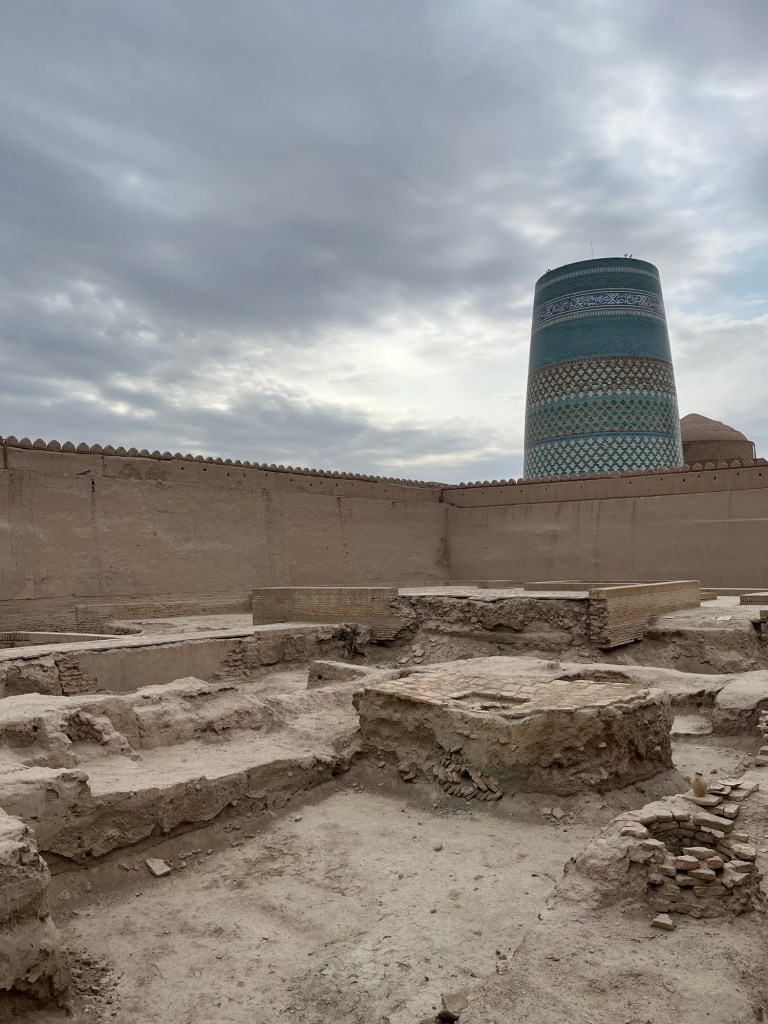
It did start off the same at the Ismail Somani mausoleum, a truly incredible building from the 9th century that has been extremely well preserved. We also visited Bola House mosque before a new inclusion this time, the Ark of Bukhara. The Ark looms over one side of the city, and only about a quarter of the original site has been reconstructed though you can walk through the archeological remains of the remaining site.
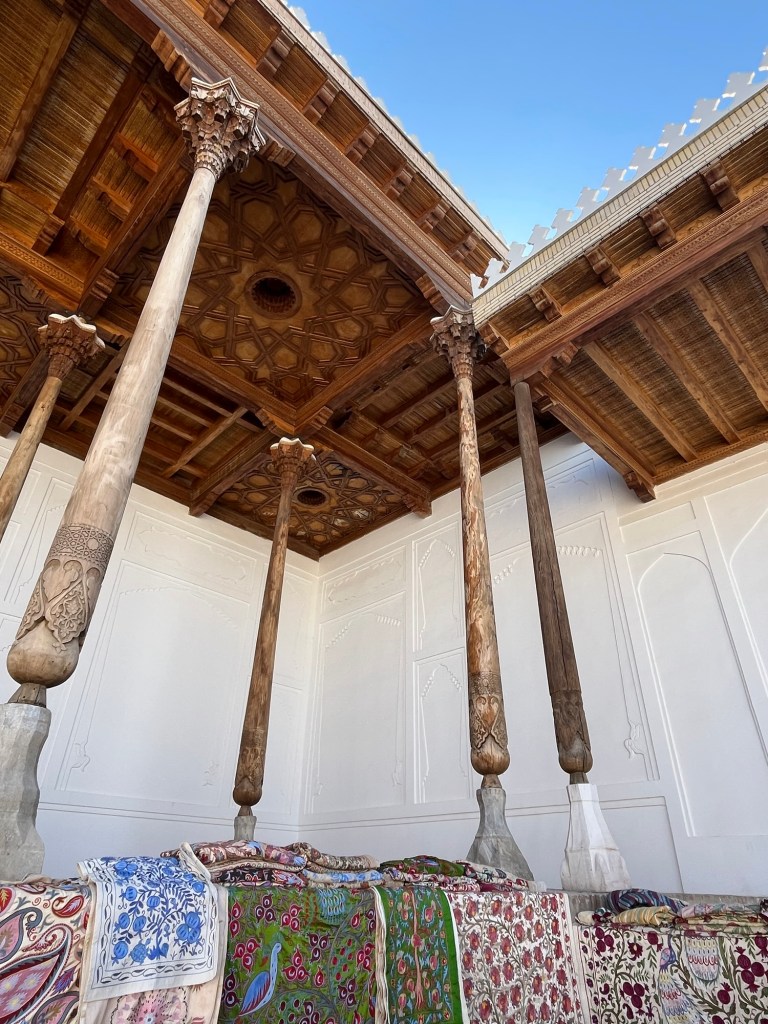
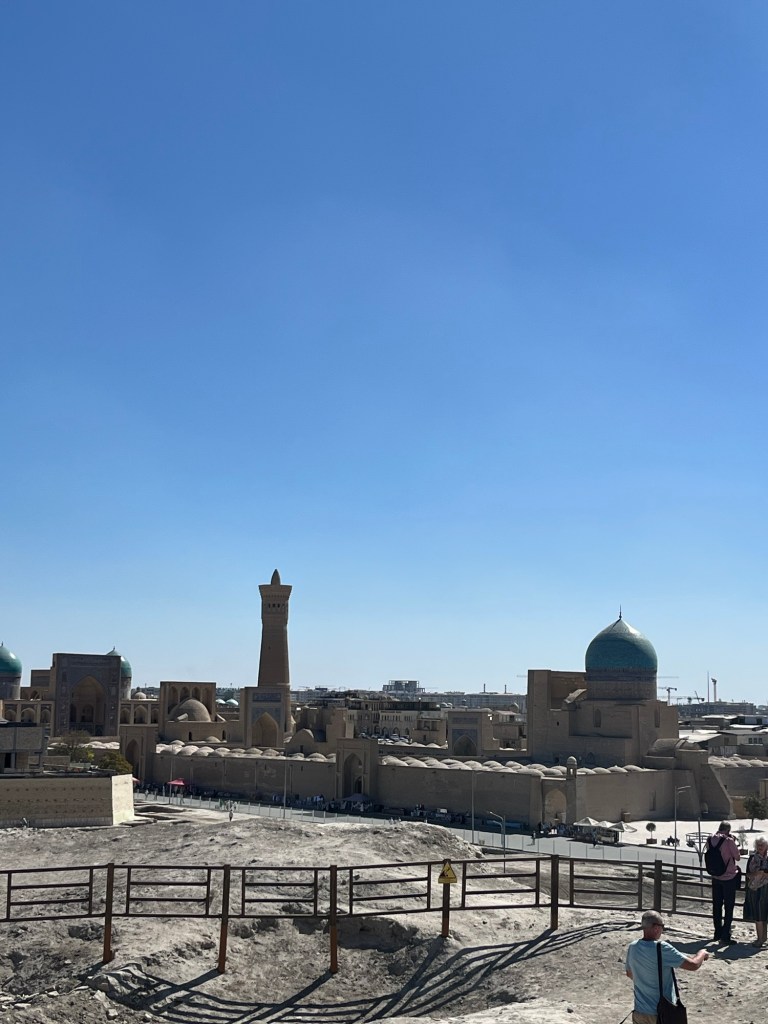
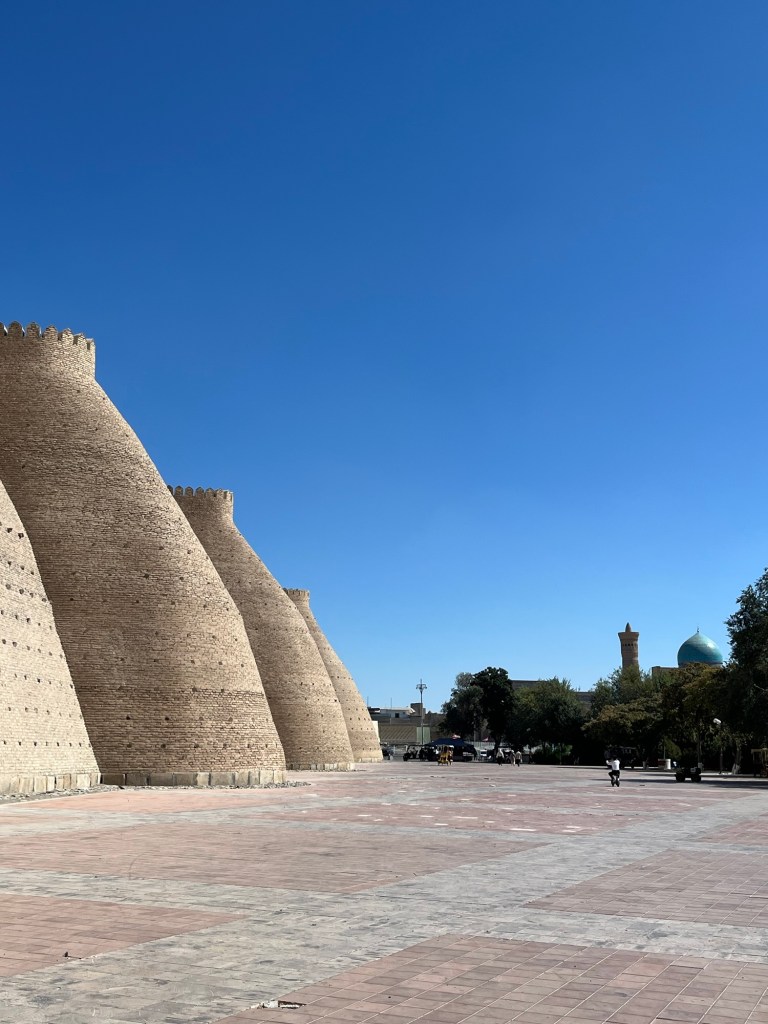
I’d planned to go to the Ark anyway this time so was pleased it was included.
We then went to the Kalyan mosque and minaret. The minaret really dominates the old town at about 150 feet tall.
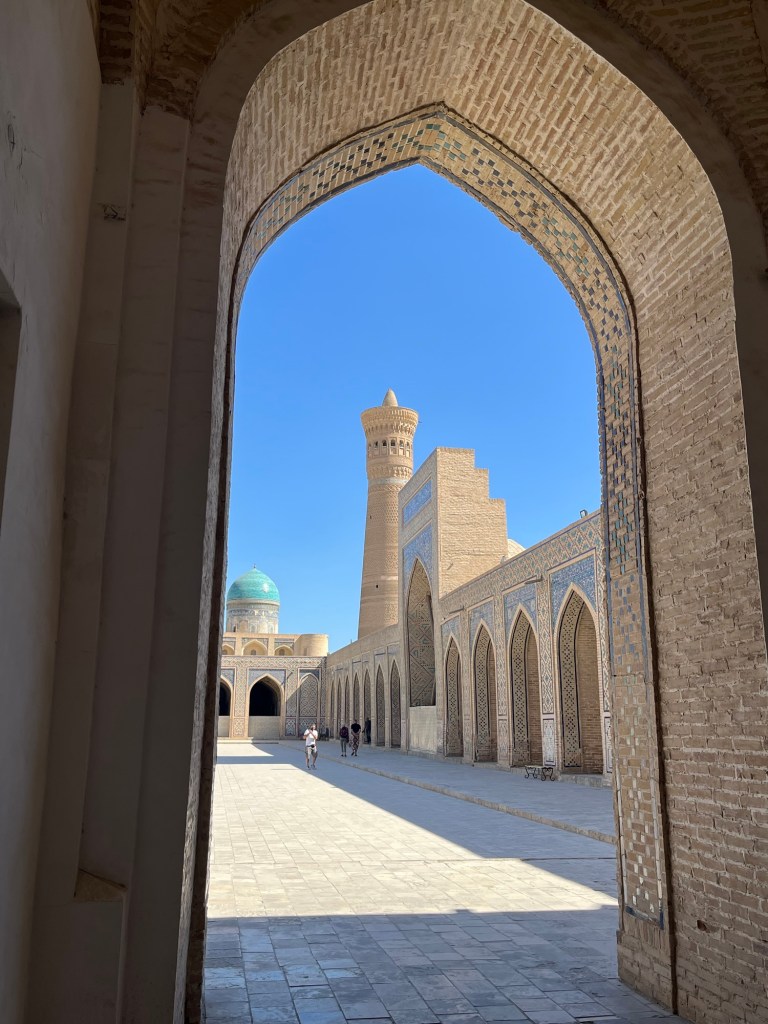
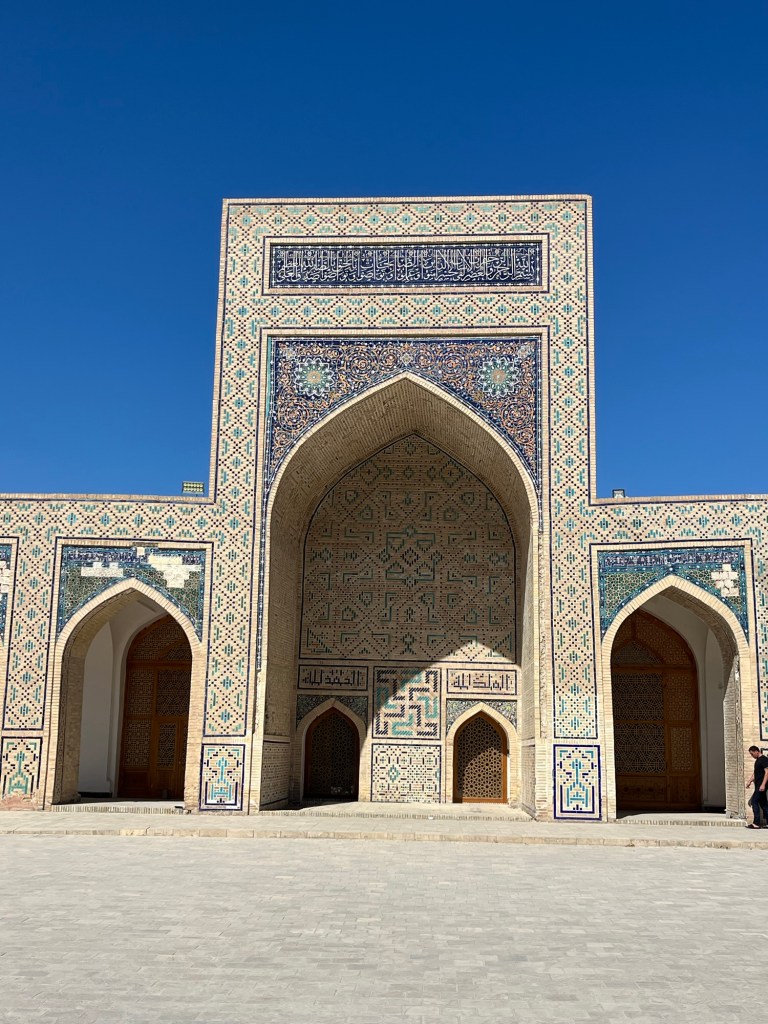
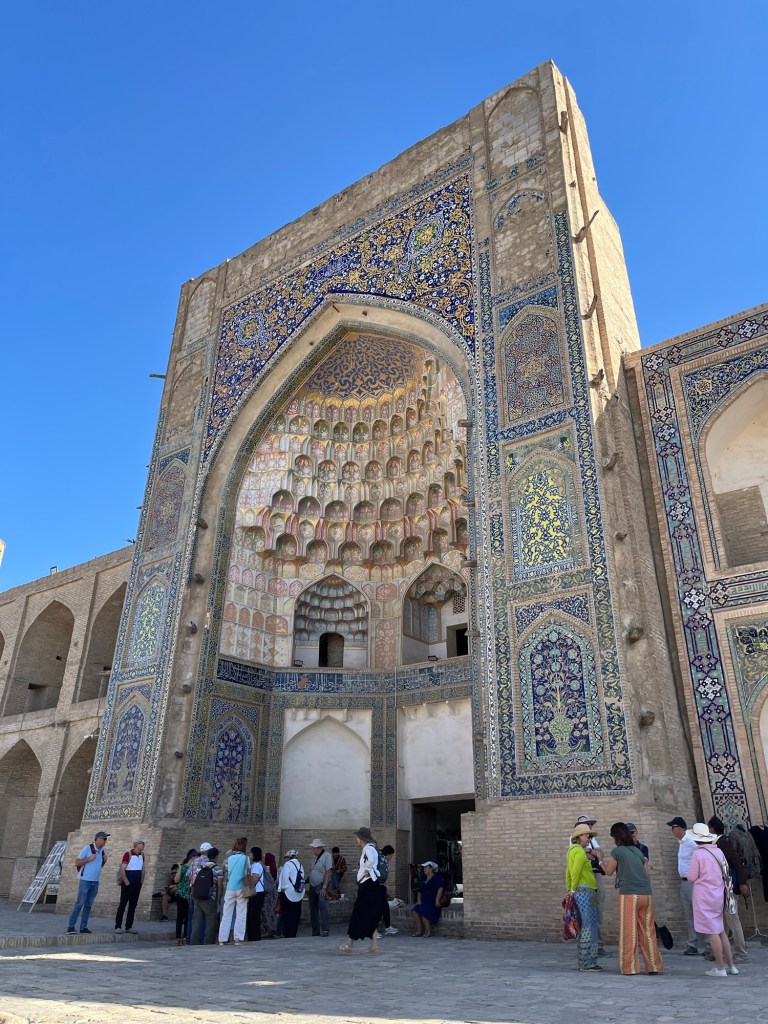
We then traipsed through a carpet workshop where the staff did their best to sell us some very expensive carpets, and finally to a blacksmith’s workshop. Afterwards we had some free time and after a tea and baklava break I went in search of a miniature painting which Bukhara is famous for.
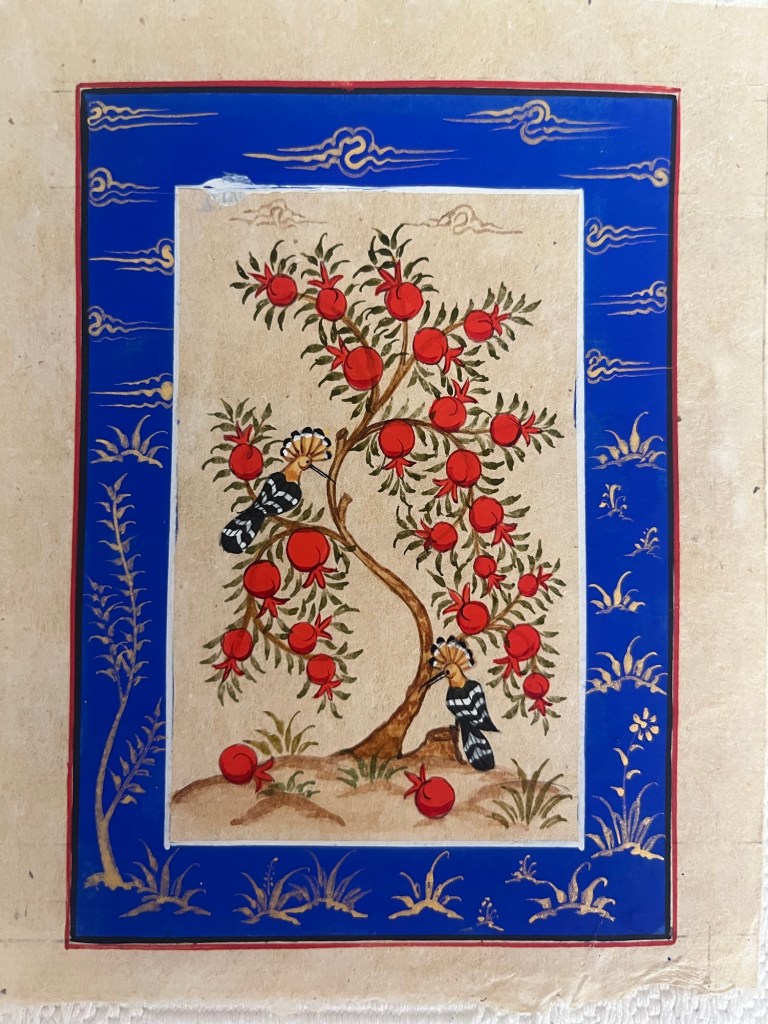
Dinner for one in the evening and a chilled night before a long drive to Khiva the next day.
It’s about 7 hours on the road and includes getting within spitting distance of Turkmenistan, just the other side of the river. So near and yet so far!
The journey was mostly through desert which did change from hard rocks to softer sand and eventually to something more green as we approached Khiva and Urgench.
We rolled into Khiva in the late afternoon and to our accommodation in a converted madrassa in the heart of the old town, ichan kala.
A short orientation walk in the evening before an early dinner at a terrace restaurant with great sunset views. I had the local speciality of shivit oshi, green noodles – definitely a must-try when in Khiva.
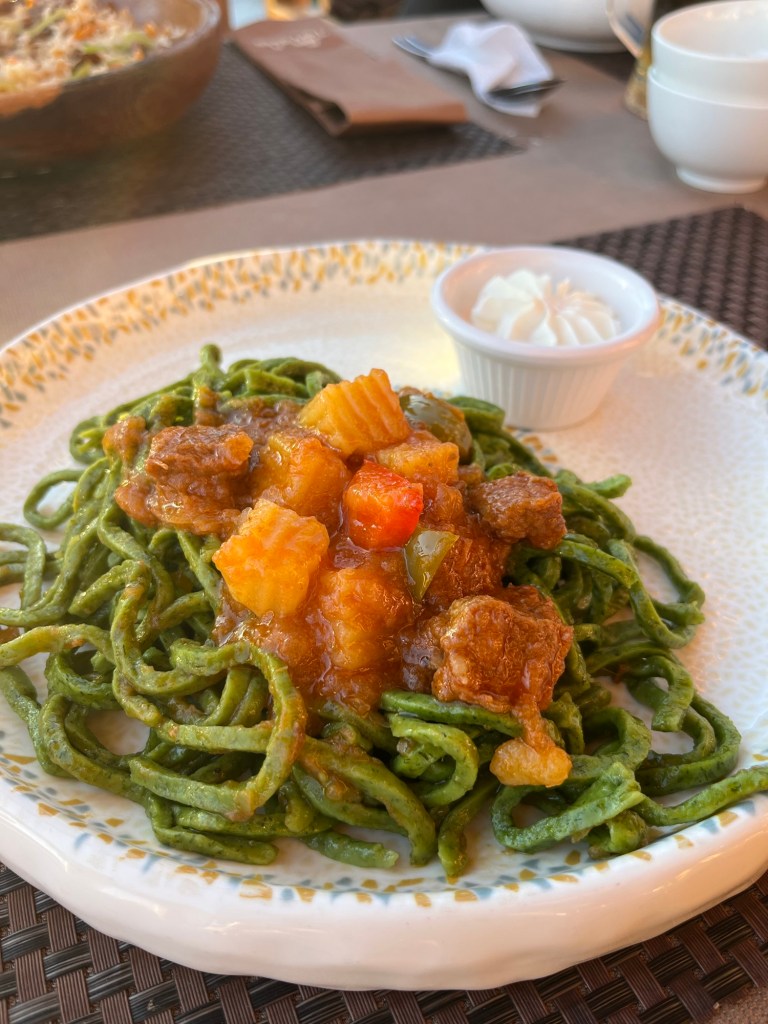
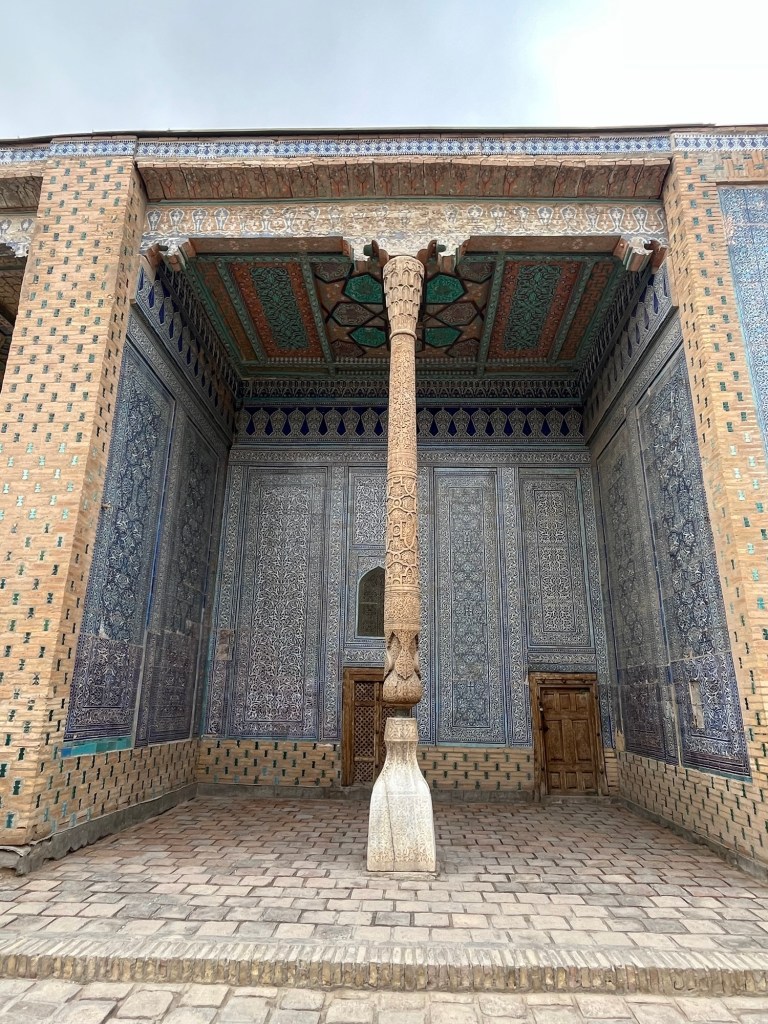
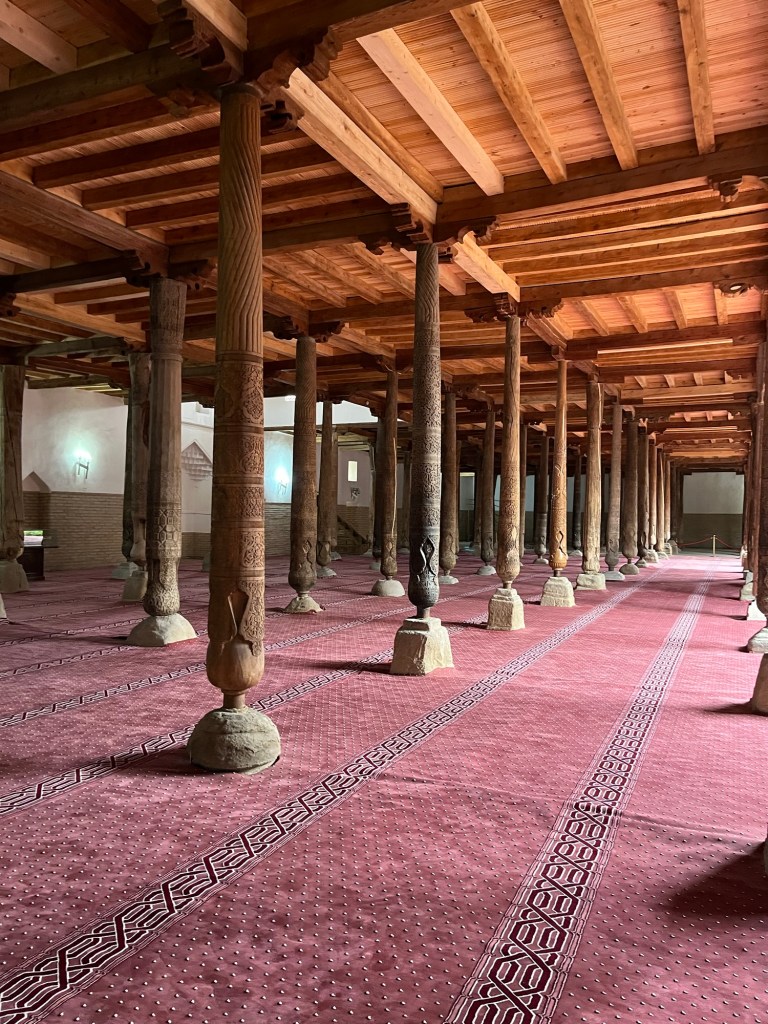
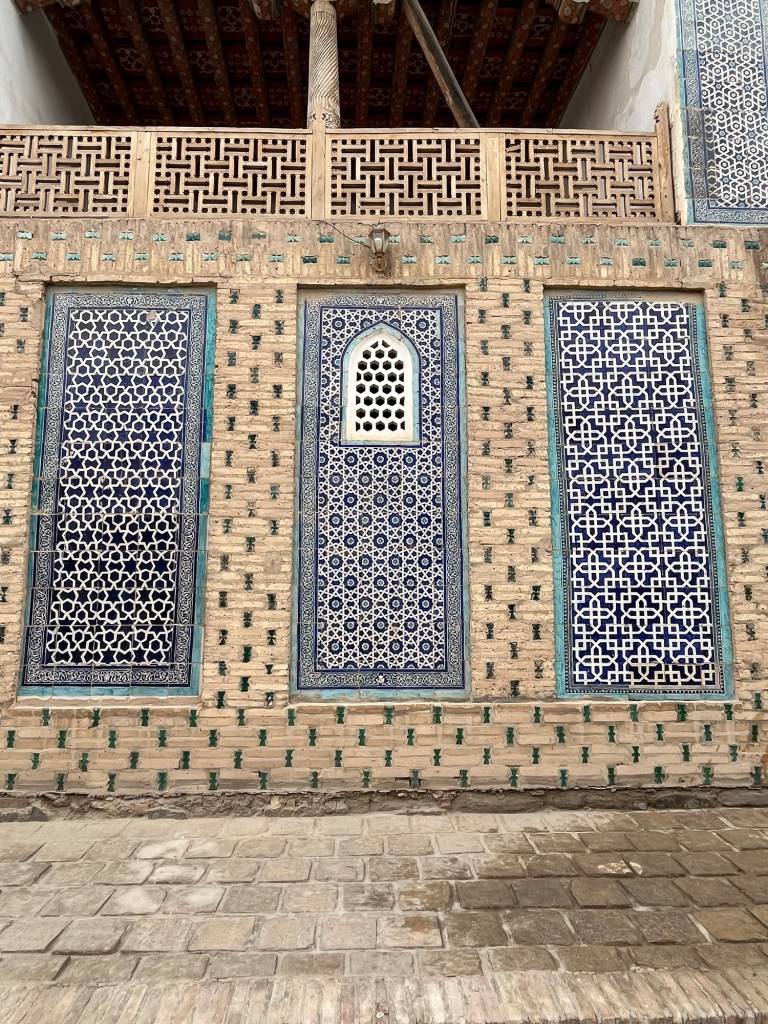
The following day we had a tour around the old town, starting at the Kalta Minor minaret, which is an iconic view in Khiva. We also went to the Toshhovli Palace which has lots of beautiful blue tilework, the Juma mosque which has around 200 wooden pillars holding up the building, some dating back centuries, and also to the Masjid-I-Ark where there was a performance ongoing depicting a parade and crowning.
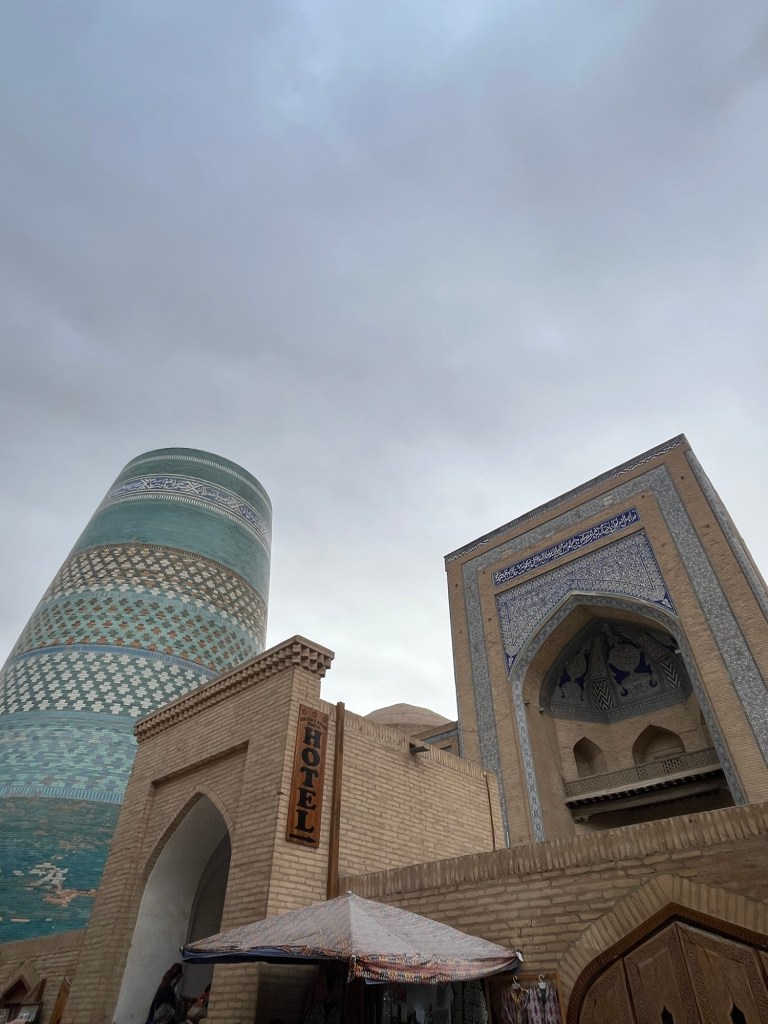
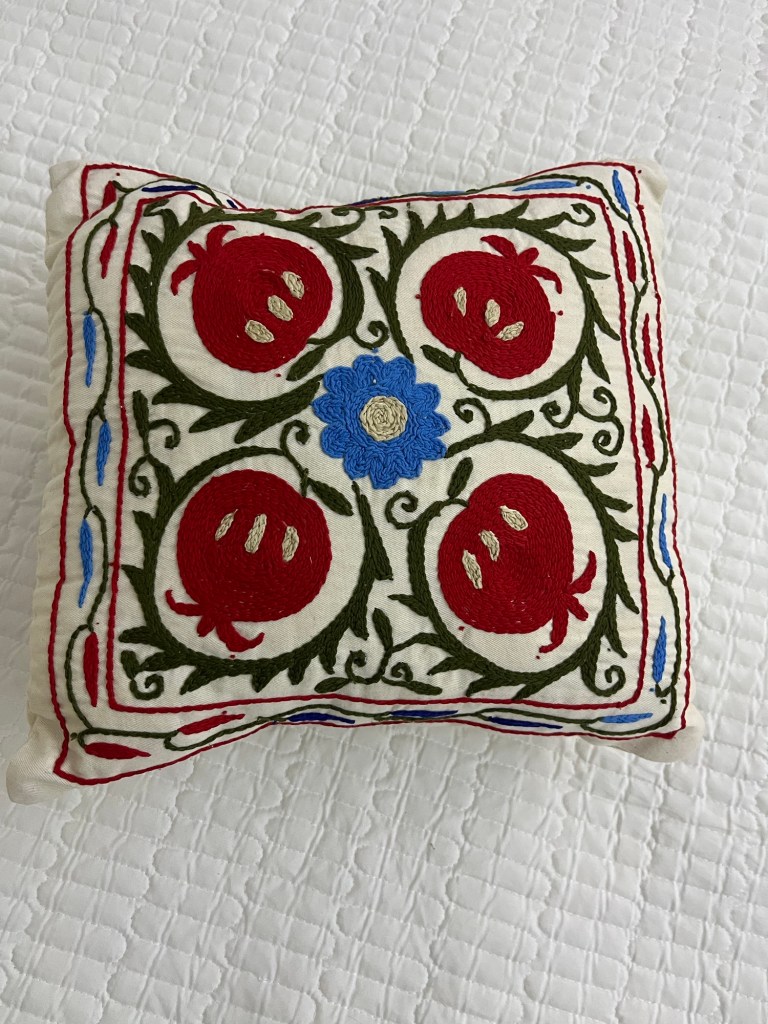
Afterwards we had free time for the rest of the day and I enjoyed wandering around the old town, in some of the shops, and an old caravanserai which had been turned into a market. I bought a blue silk scarf and a suzani cushion cover. Suzani is the traditional embroidery from Uzbekistan which often depicts pomegranates.
I said earlier that Khiva is a bit Disney-fied. What I mean by this is that it has been very well preserved and reconstructed, and that most of the old mosques, madrassas and caravanserais have been converted into hotels, restaurants and shops. It’s pretty but somehow lacks some of the authenticity (to me) of Bukhara.
Another rooftop dinner and another cracking sunset before an early start for the flight back to Tashkent. After going back to a restaurant we’d gone to on the first night which served the most delicious ginger and mint tea, we had a brief tour in Tashkent in the afternoon before our final dinner at a Georgian restaurant close to Amir Temur square. It was very interesting to revisit Uzbekistan. Certainly from my point of view, the country in the Stans with the most Silk Road culture. Definitely more touristy than Kyrgyzstan, Kazakhstan and Tajikistan, and much more city based. A really fascinating place and I would recommend anyone with even a vague interest in the Silk Road to go.
Now, back to Istanbul airport and, at my 6th visit, I’m actually going to leave it and see what Türkiye is like.


