
We crossed the border from Tajikistan to Uzbekistan at Oybek, north of Khojand. It took a while, and there was a reasonably long walk in the midday sun between the 2 border posts. But eventually we were through (no visa needed) and then all crammed into a minibus for the remaining drive to Tashkent.
We arrived in the late afternoon, and this would be the final night for around half the people on this trip. We went out for a farewell dinner to mark the occasion. Those of us continuing then had a free day in Tashkent before we would meet the new people joining us for the Uzbekistan part of the trip.
I’ve been to Uzbekistan before, in 2023. People have asked why I’m doing it again. Firstly I really enjoyed it last time, secondly I wanted to cover as many Stans as possible on this trip (quite gutted that I couldn’t find dates including Turkmenistan which worked for me), and finally I was intrigued to see how tourism was developing here as when I was here before, it felt like it was on the cusp of becoming really popular.
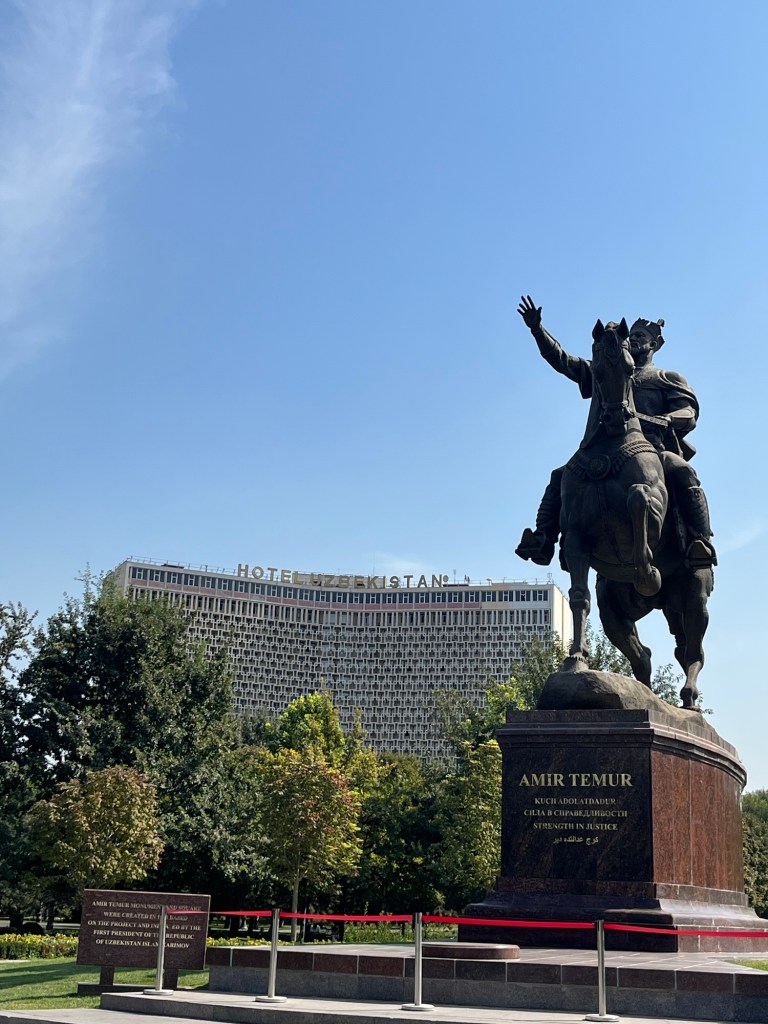
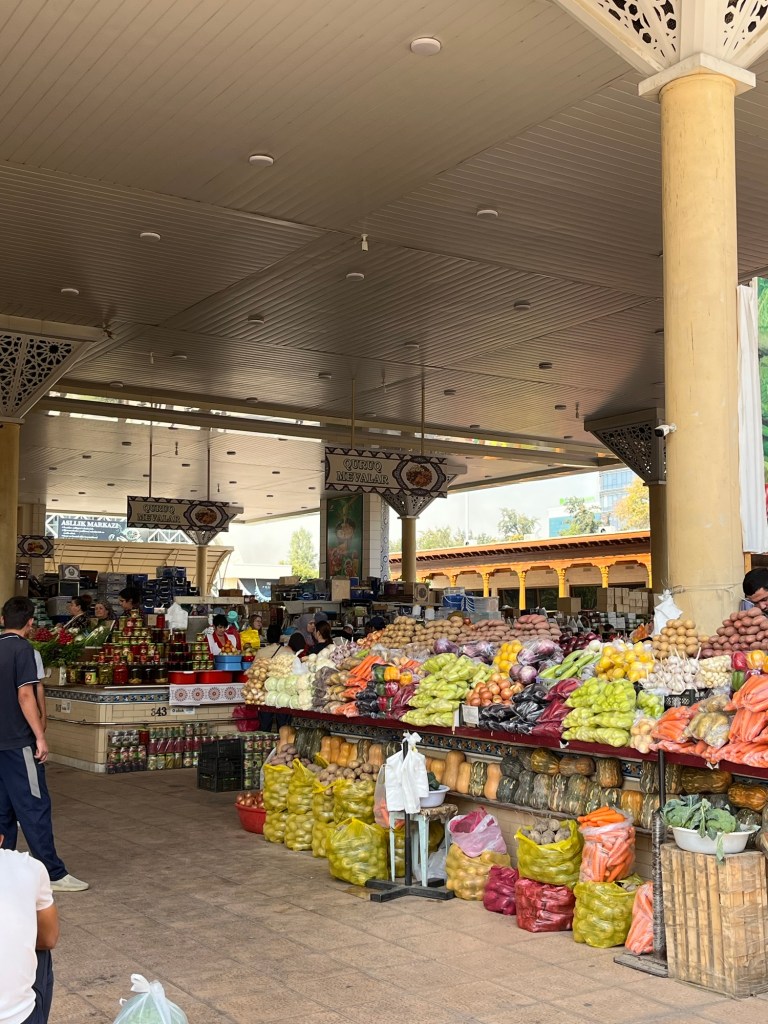
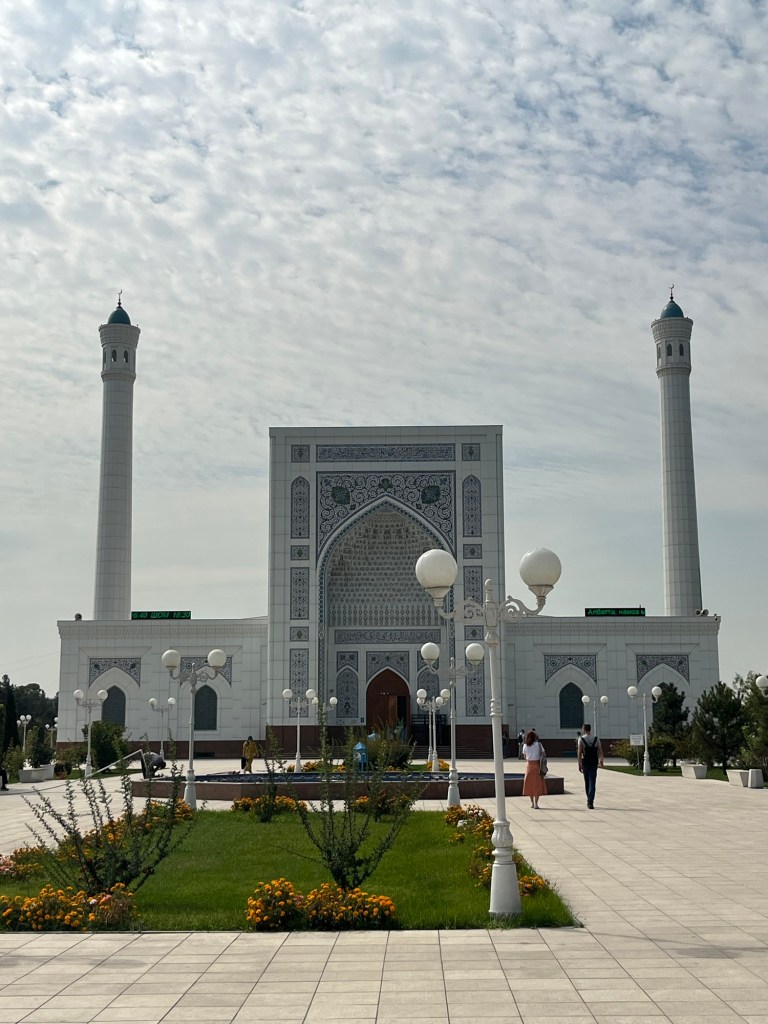
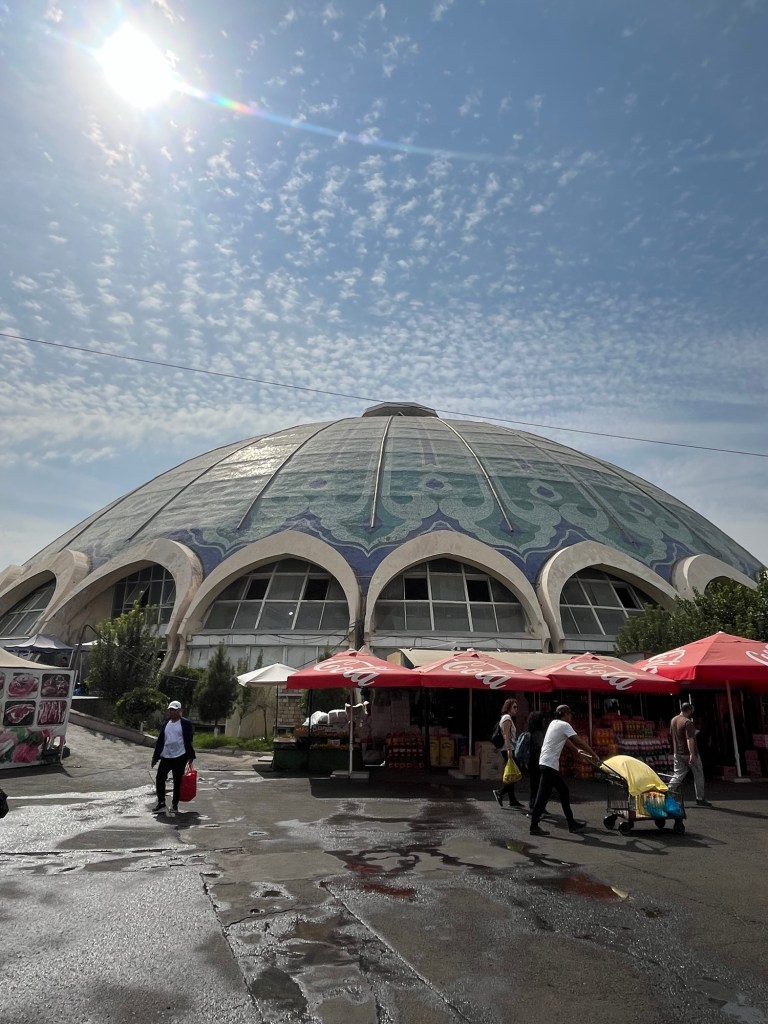
I spent my free day in Tashkent going to some new places (Amir Timur park, Abay bazaar) and some places I went before (Minor Mosque, Chorsu bazaar). One thing that has changed since last time is that you can now pay for the metro by tapping your card at the gate. The fare is still ridiculously cheap though, £0.11 per journey according to my bank account!
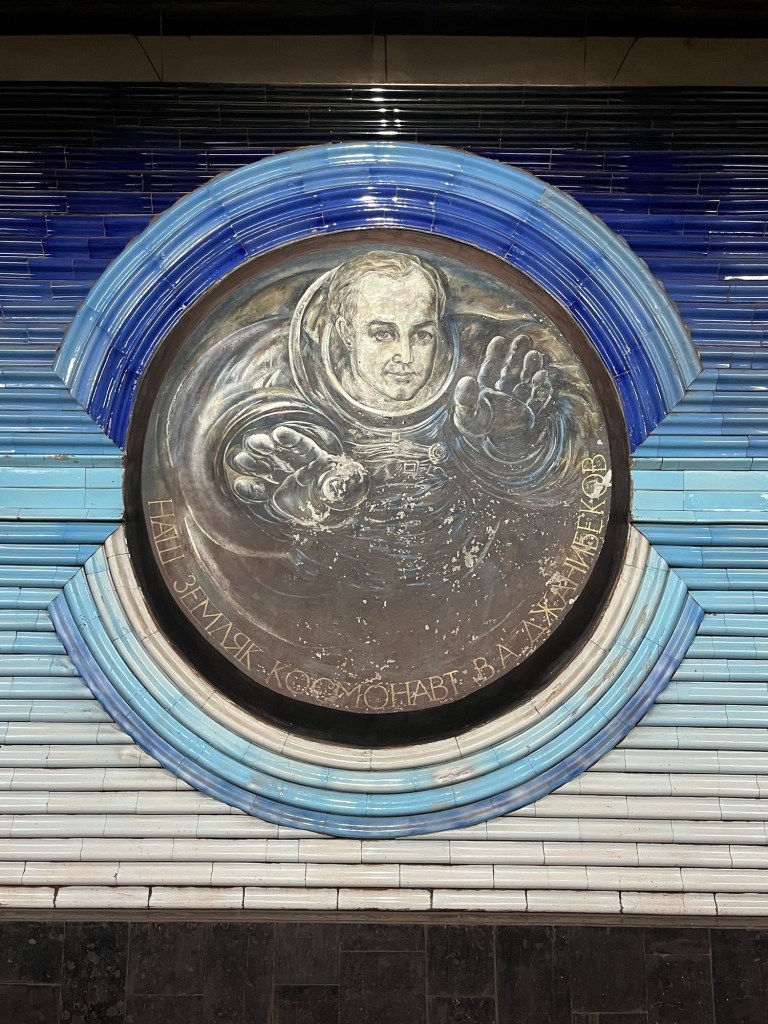
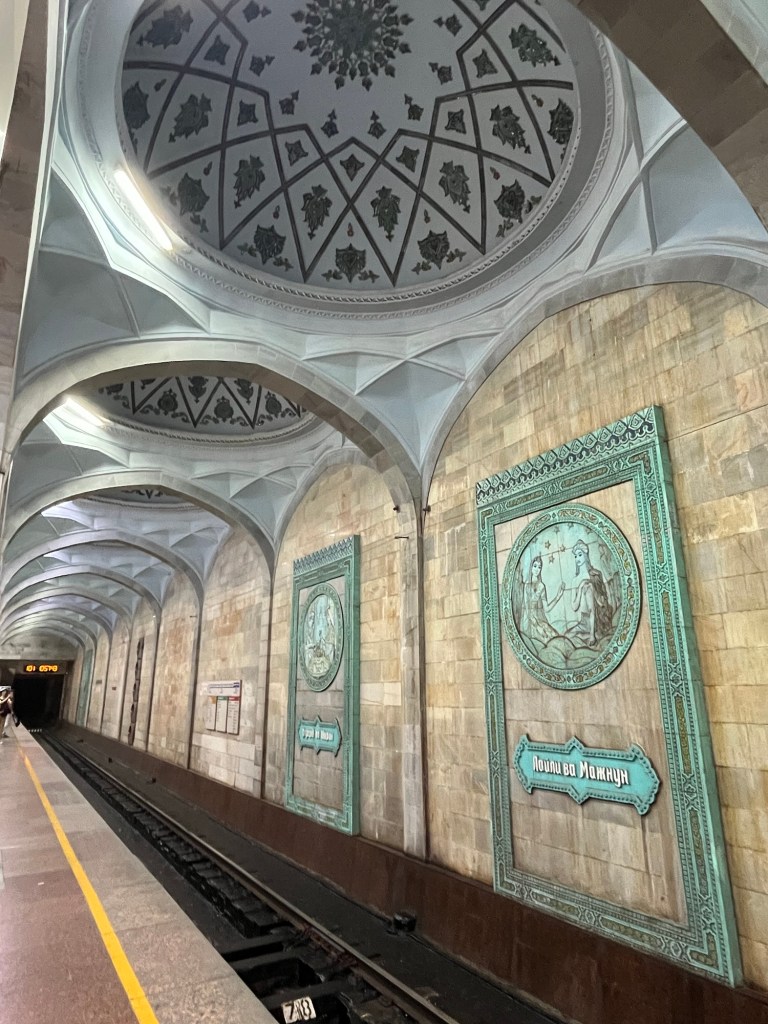
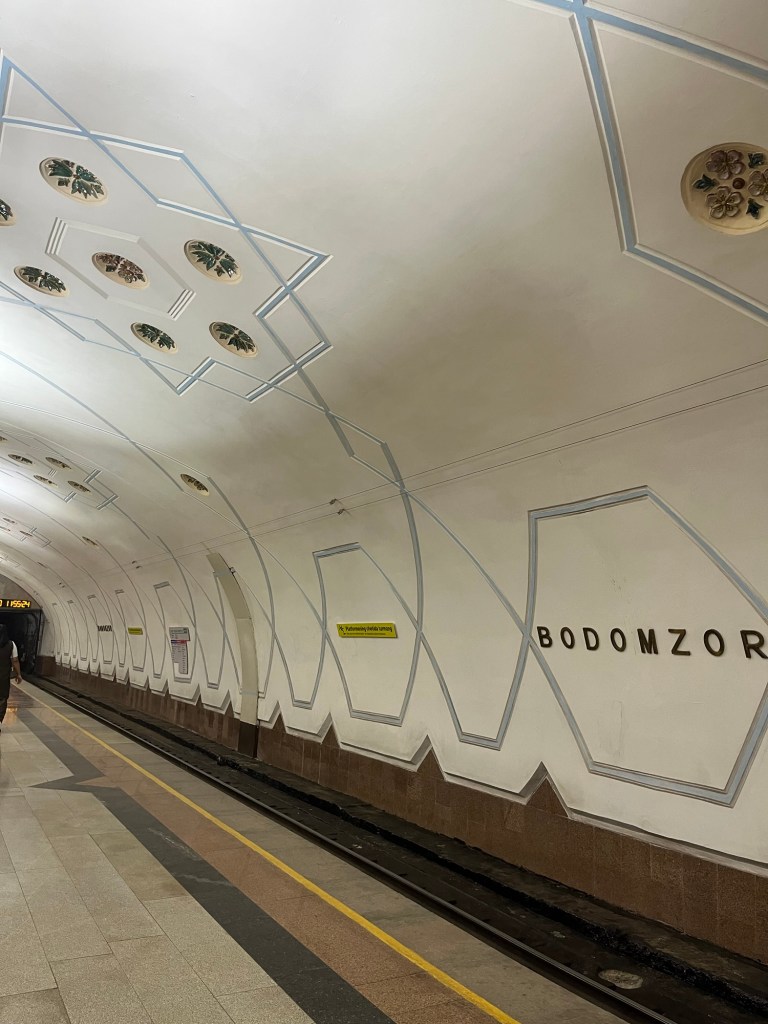
Tashkent metro also has some really interestingly decorated stations, built mostly during the Soviet era, so worth jumping off at a few to take a look.
After meeting the new group and going for dinner in the evening (I’m surprised to find I am the youngest person on this section of the trip, certainly not the case last time), we left Tashkent the following morning on a train bound for Samarkand. A reasonably comfortable journey in what looked like a Soviet era carriage, this wasn’t one of the high speed trains so took around 3 hours to get to Samarkand. We did get a free cup of tea though!
We arrived in Samarkand in time for lunch. And then after lunch we had a tour of some of the main sights which lasted for the rest of the afternoon. First up we went to the Gur-I-Amir mausoleum, in a beautifully decorated complex.
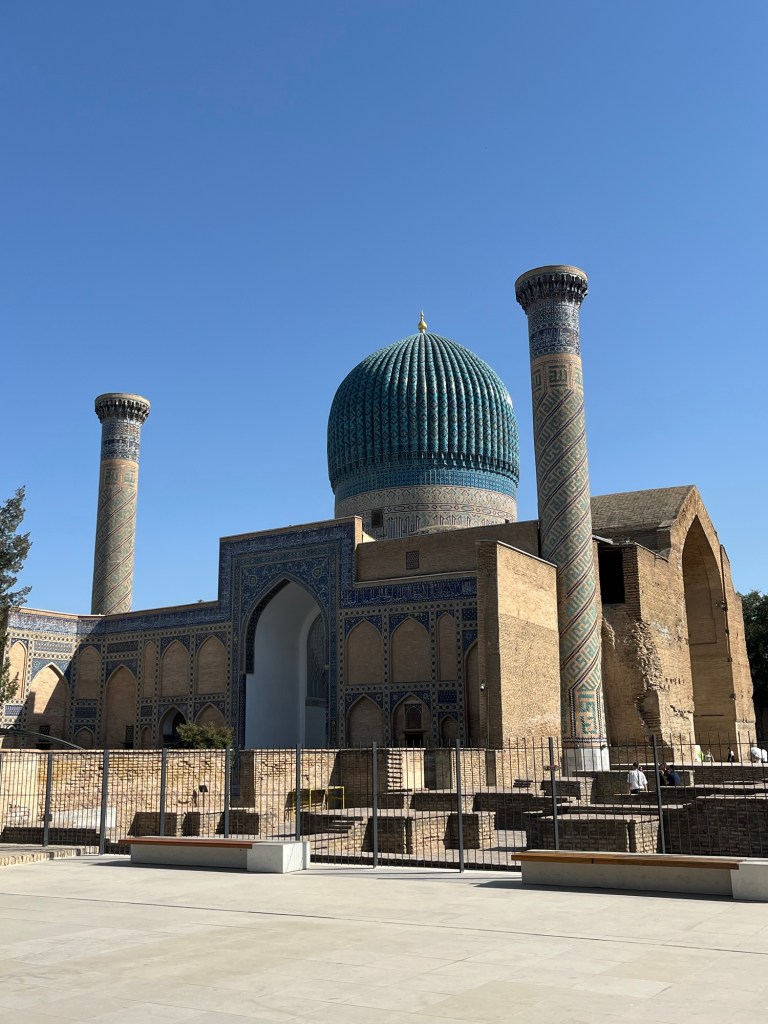
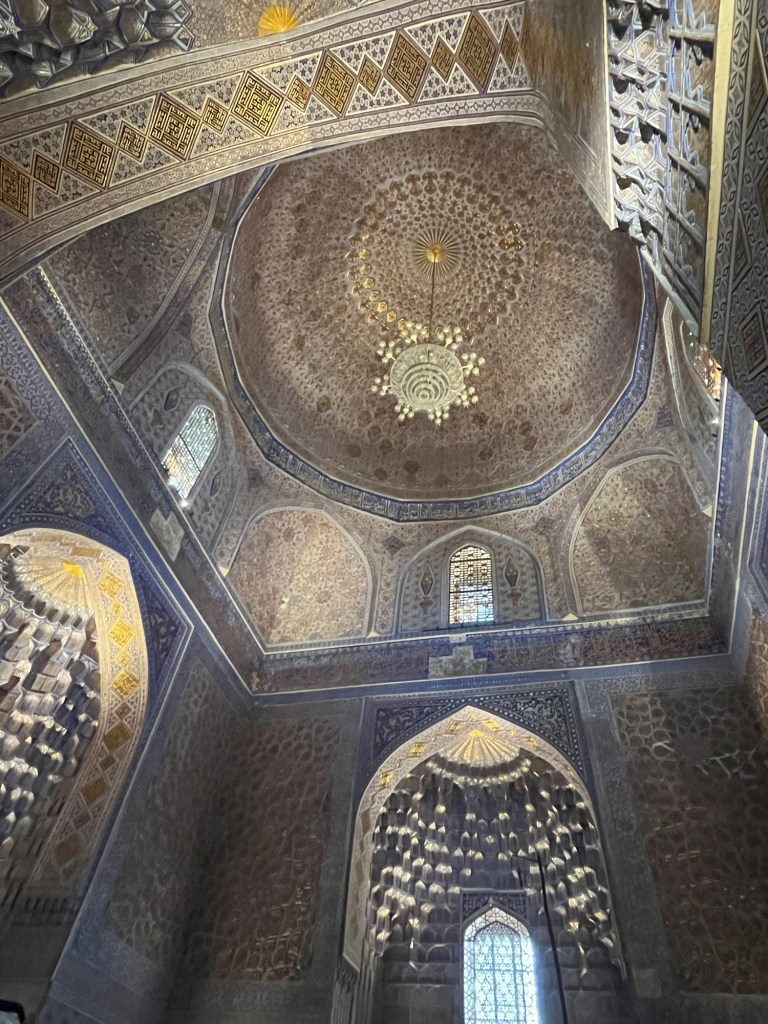
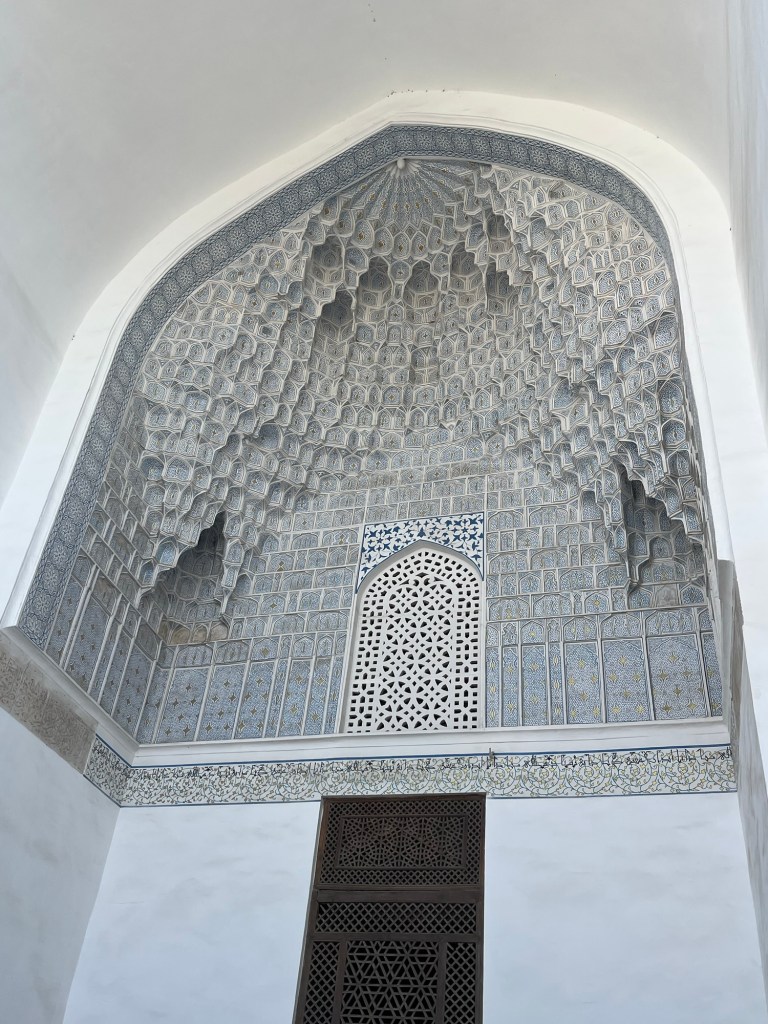
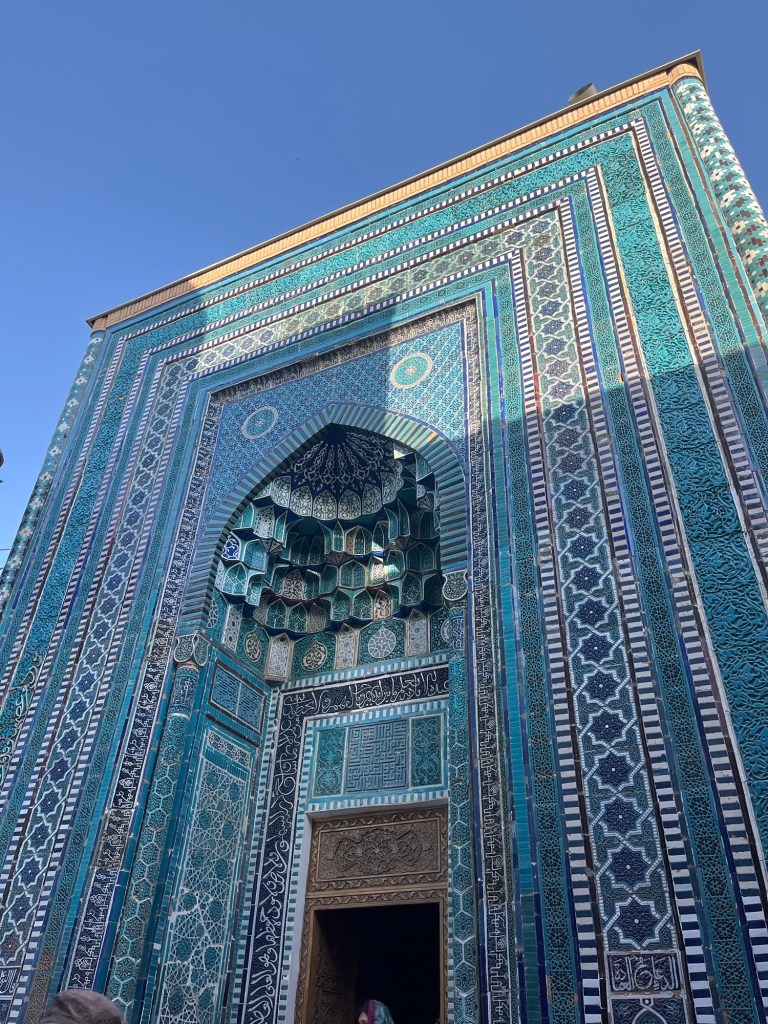
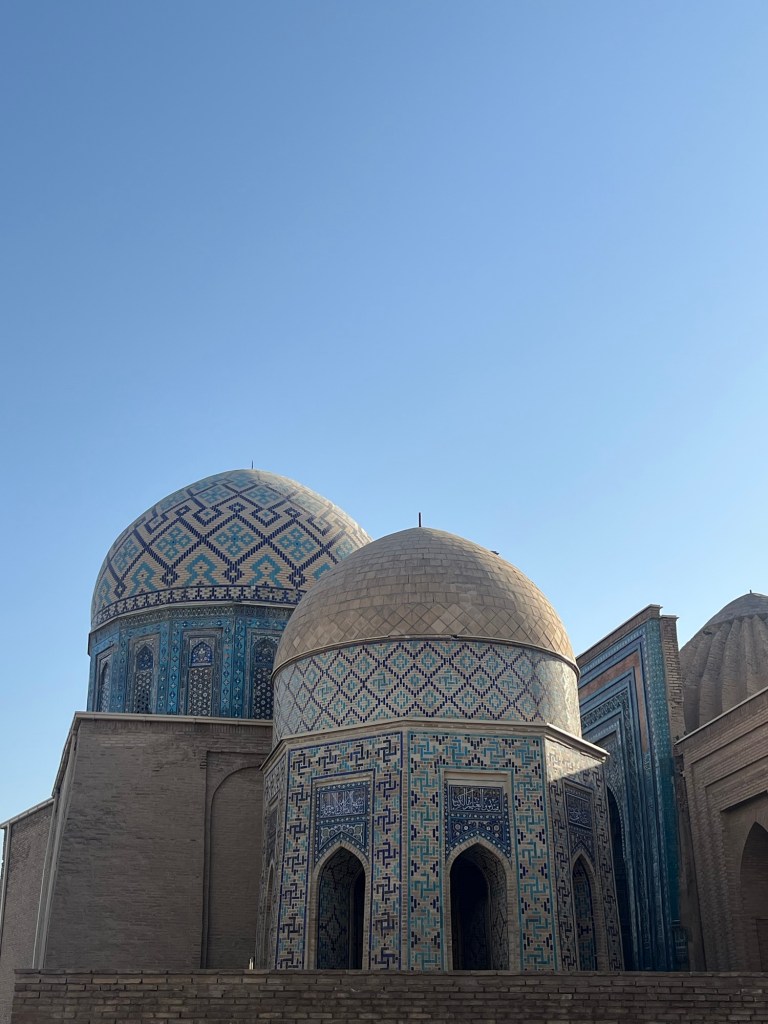
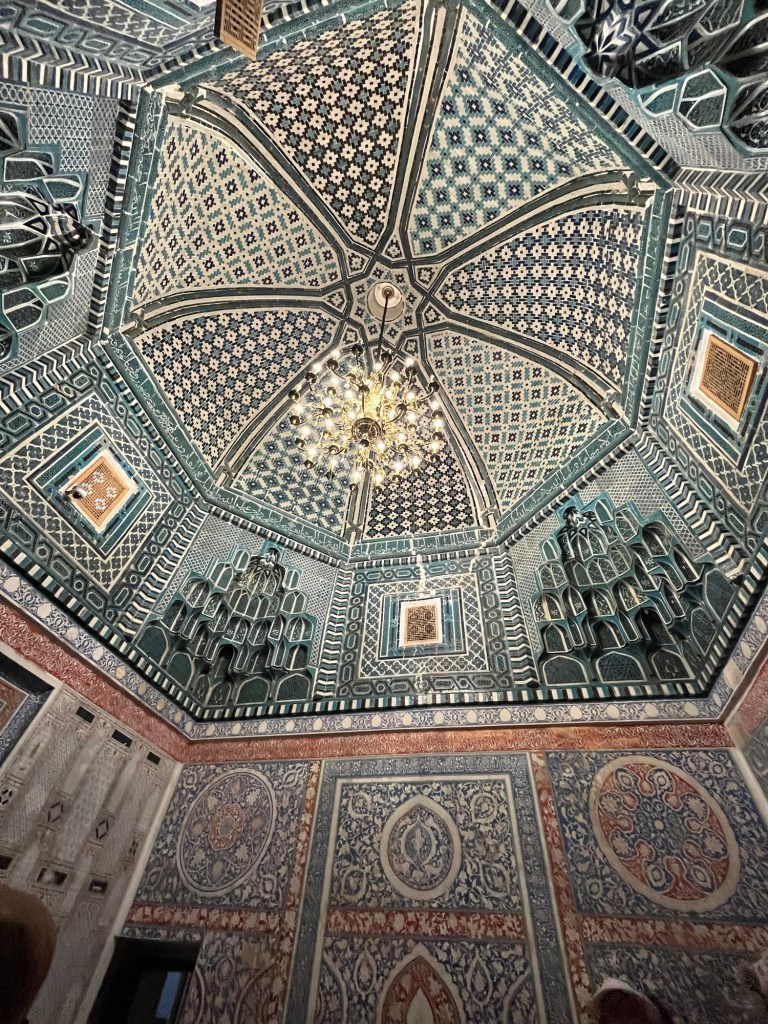
Then we headed to the Shah-i-zinda necropolis complex. The buildings here are stunning, and apparently similar in design to those in Iran. It’s a very atmospheric and contemplative place, even among the throngs of tourists.
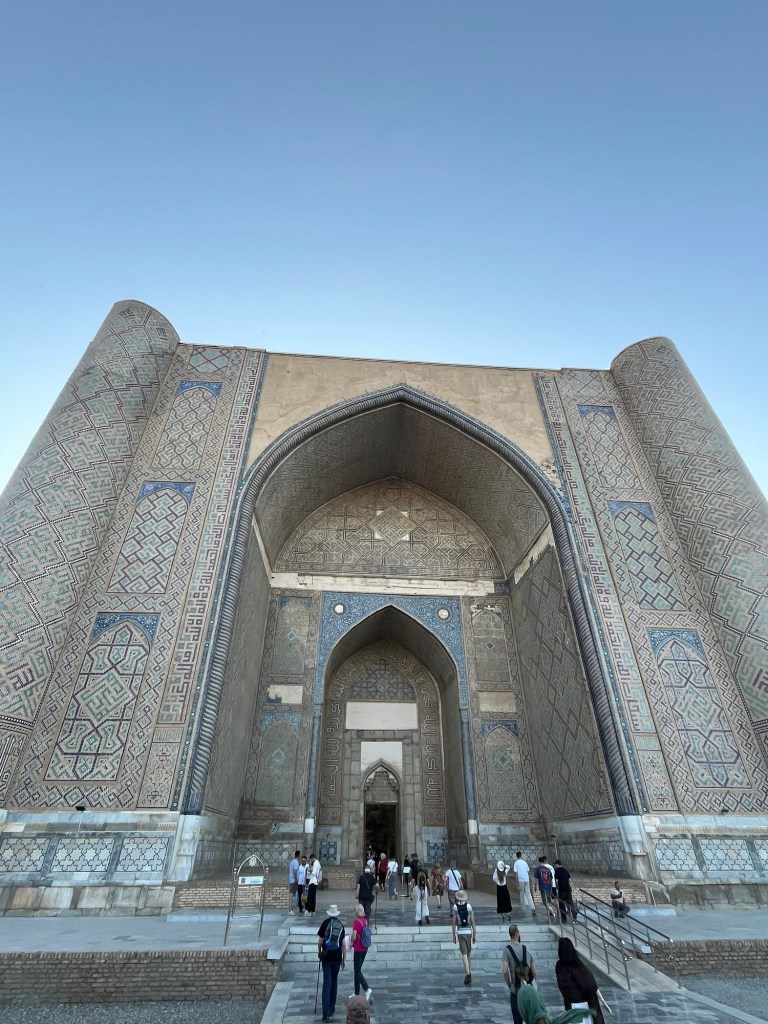
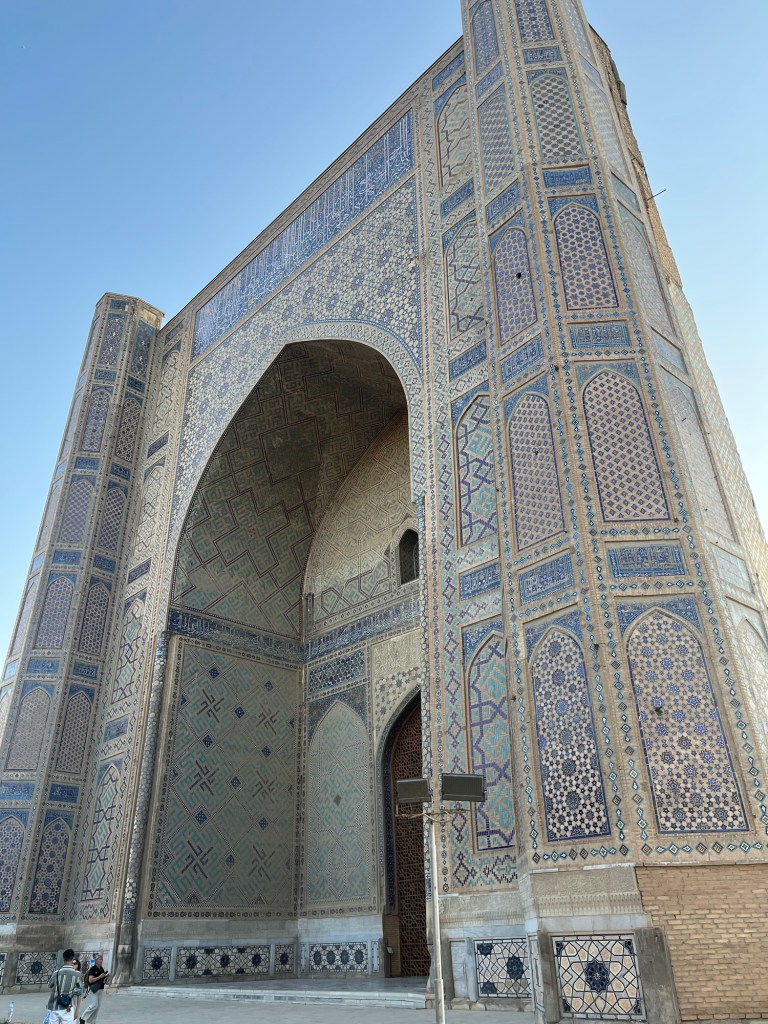
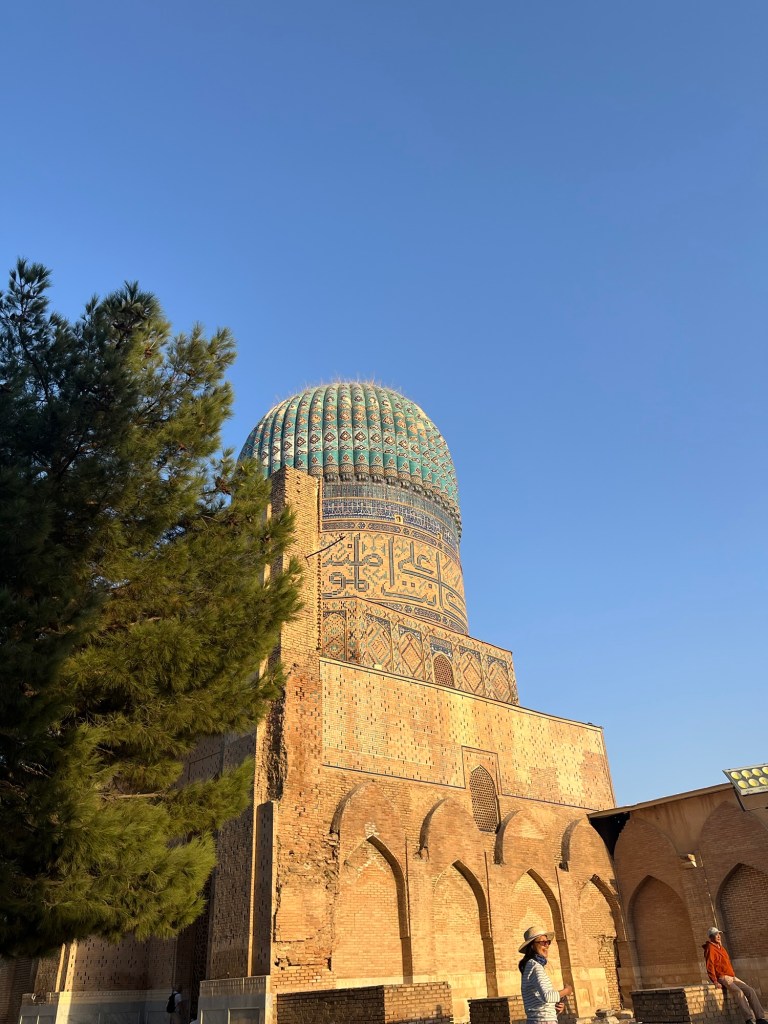
Next up was the Bibi Khanym mosque, a building which is absolutely enormous, and the photos as usual don’t quite do it justice.
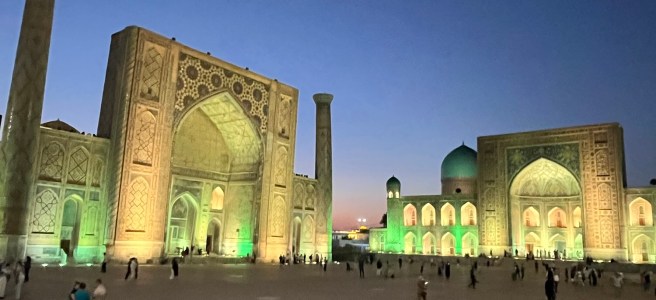
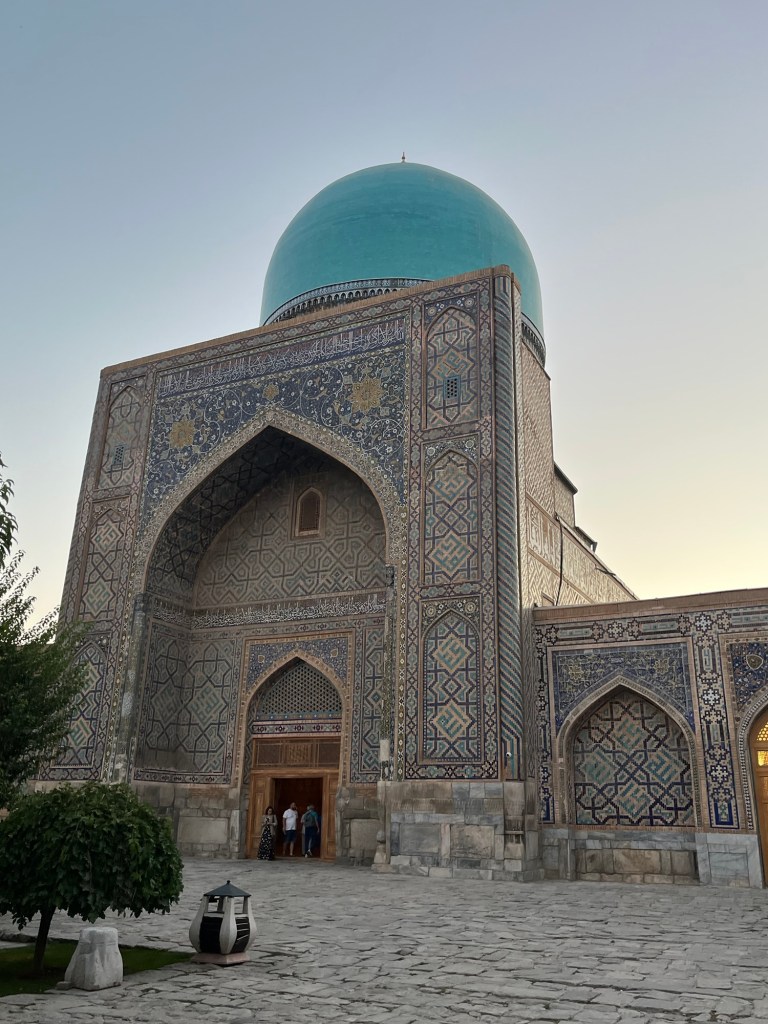
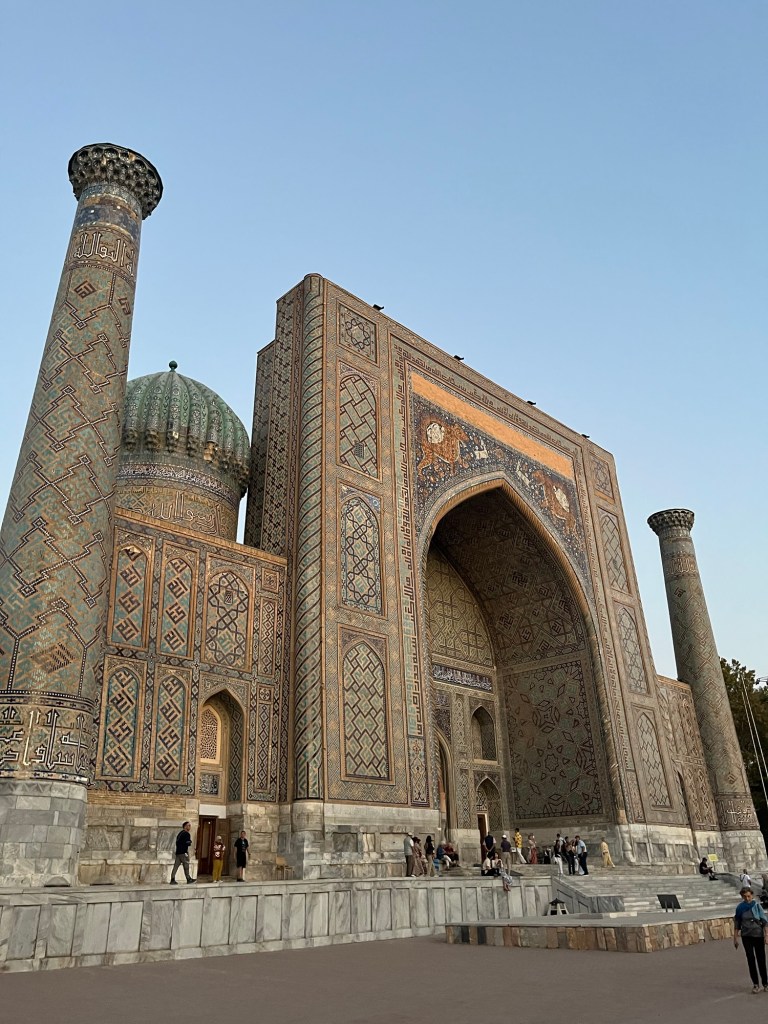
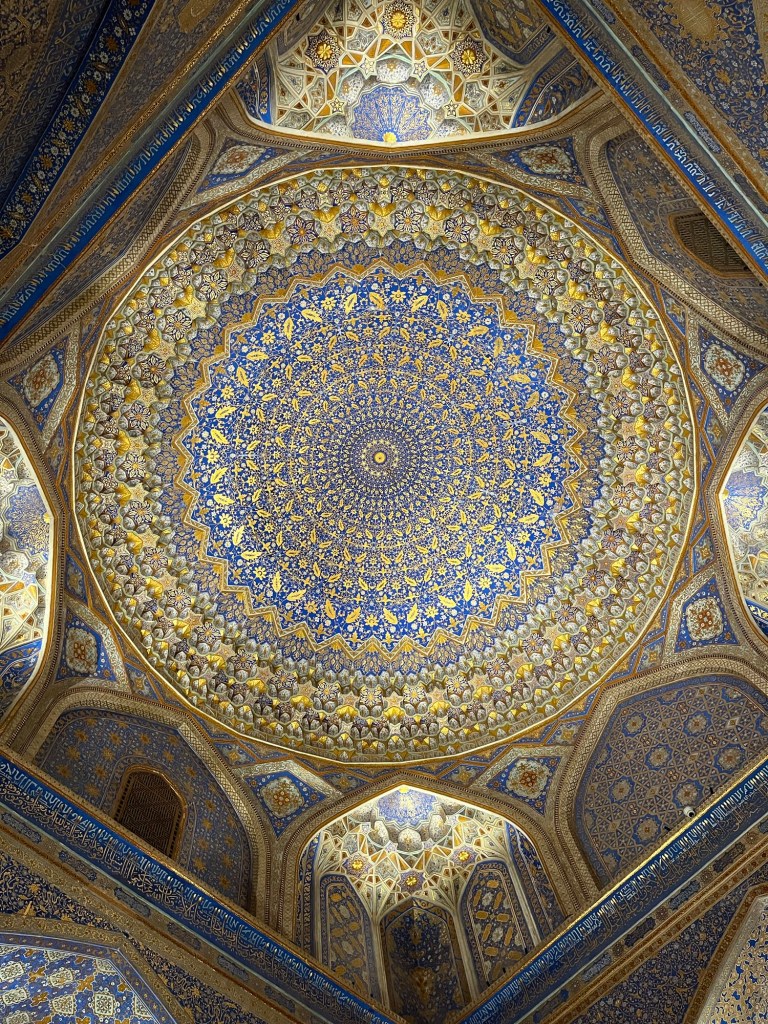
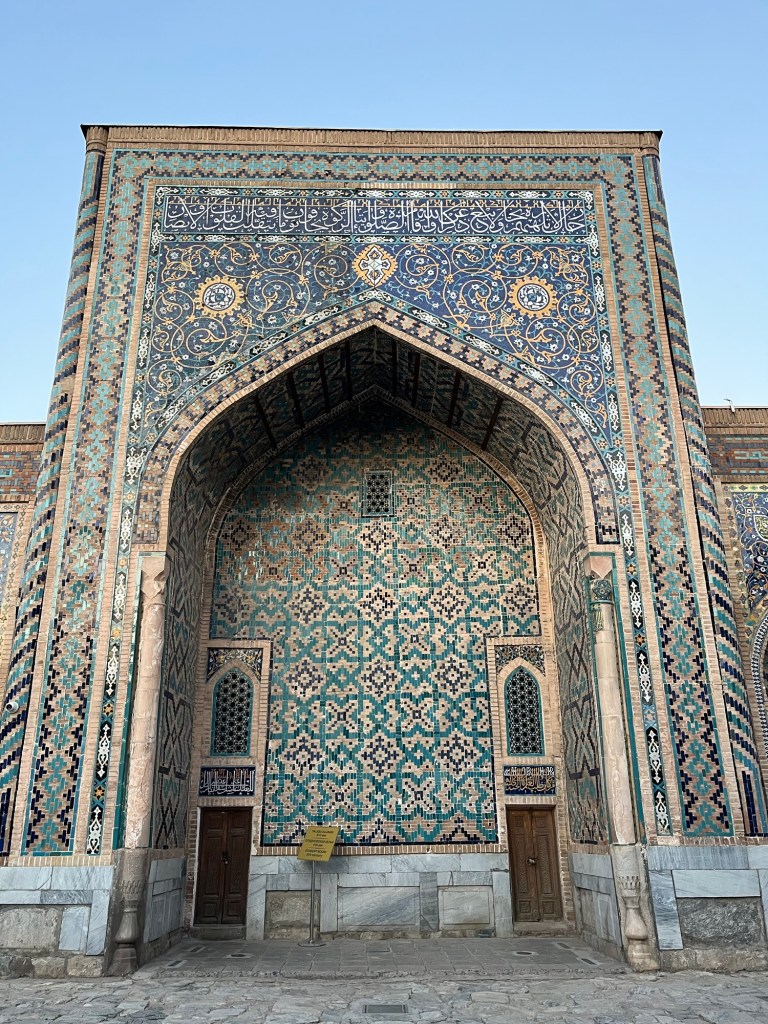
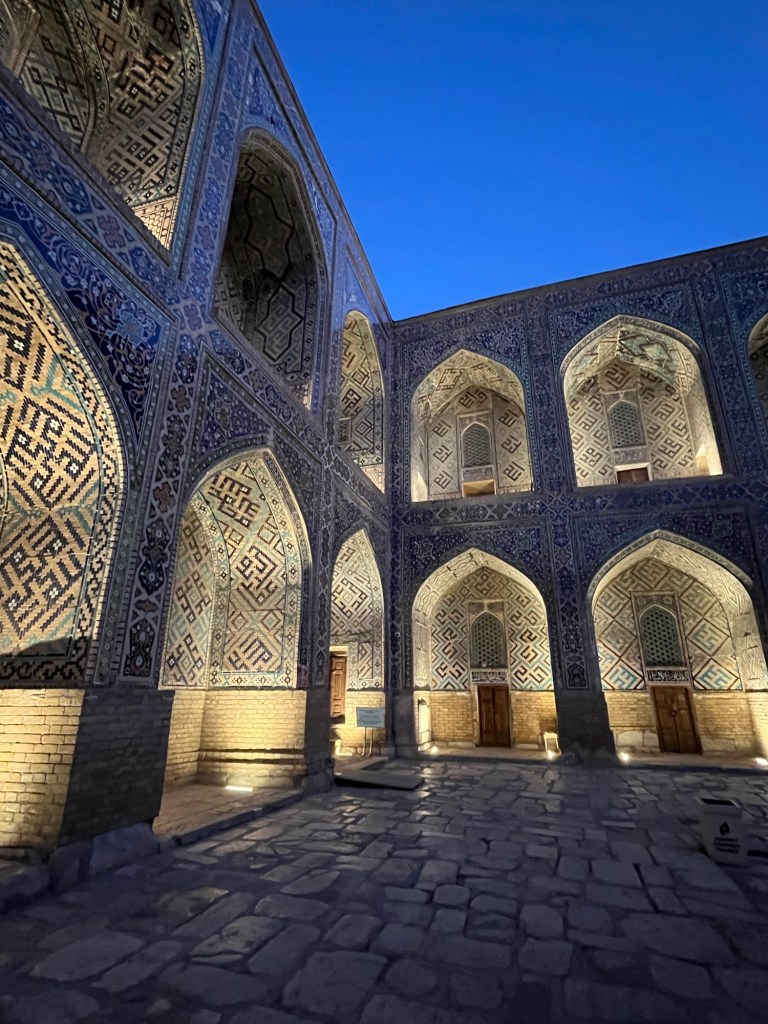
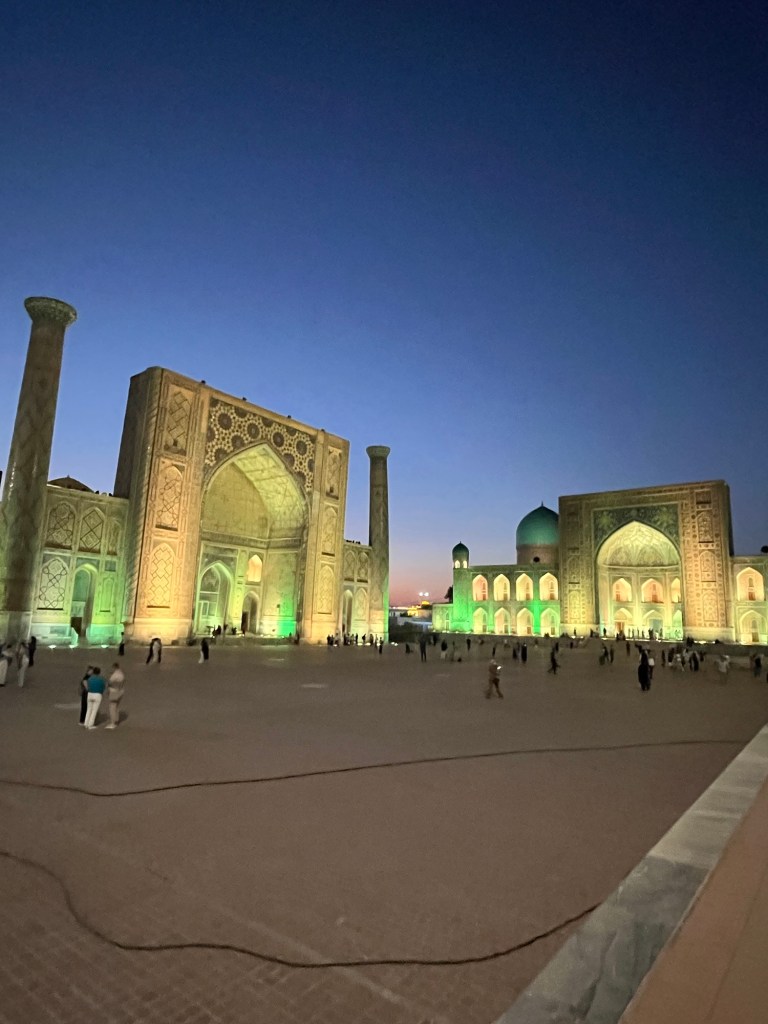
And finally that evening, the Registan. If people think of Samarkand, they are most likely thinking about the Registan, with its 3 enormous madrassas forming 3 sides of a square. Each madrassa has courtyards sitting behind, surrounded by what would have been the students rooms. It’s is a stunningly preserved complex, the decoration and tile work is mesmerising. And being there in the early evening as the sun was setting added to the atmosphere as the colours were constantly changing. As part of our tour we only had a short time in the complex but I’d decided to come back the next day when we had more free time to properly immerse myself in it. I could have sat for hours within the courtyards, admiring the colours, buildings and people watching.
Dinner that night in a restaurant near the Registan and this was really my first tell that tourism has increased in the last 3 years. I haven’t really felt that the sights were much busier, but I’d been to this rooftop restaurant 3 years ago and we’d had no trouble in getting a table on the roof terrace without a booking. This time, no chance. We did manage to get seated inside on the ground floor but all the rooftop tables were fully booked out.
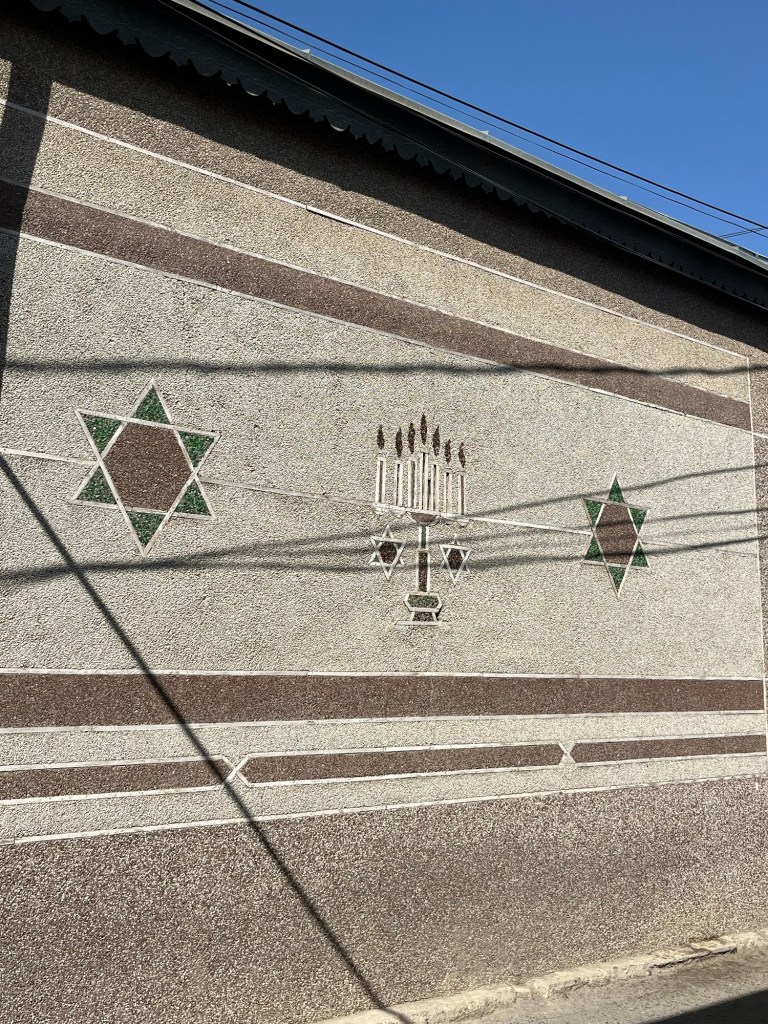
The following day was a free day, the first day fully to myself since I arrived in Kyrgyzstan 2 weeks ago. I had a leisurely breakfast and then wandered to the Jewish quarter, through local neighbourhoods where the locals greeted us with smiling faces and ‘hellos’ and ‘saloms’. The Jewish quarter is quite small and there is only a very small population (in the hundreds) of Jews remaining in Samarkand.
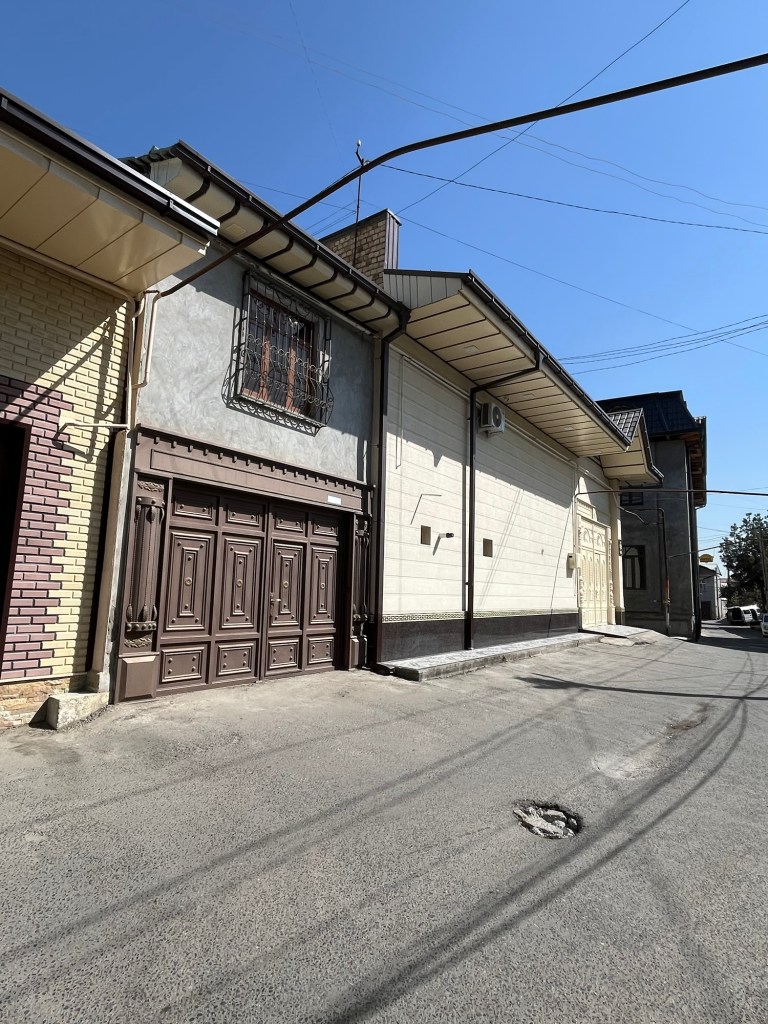
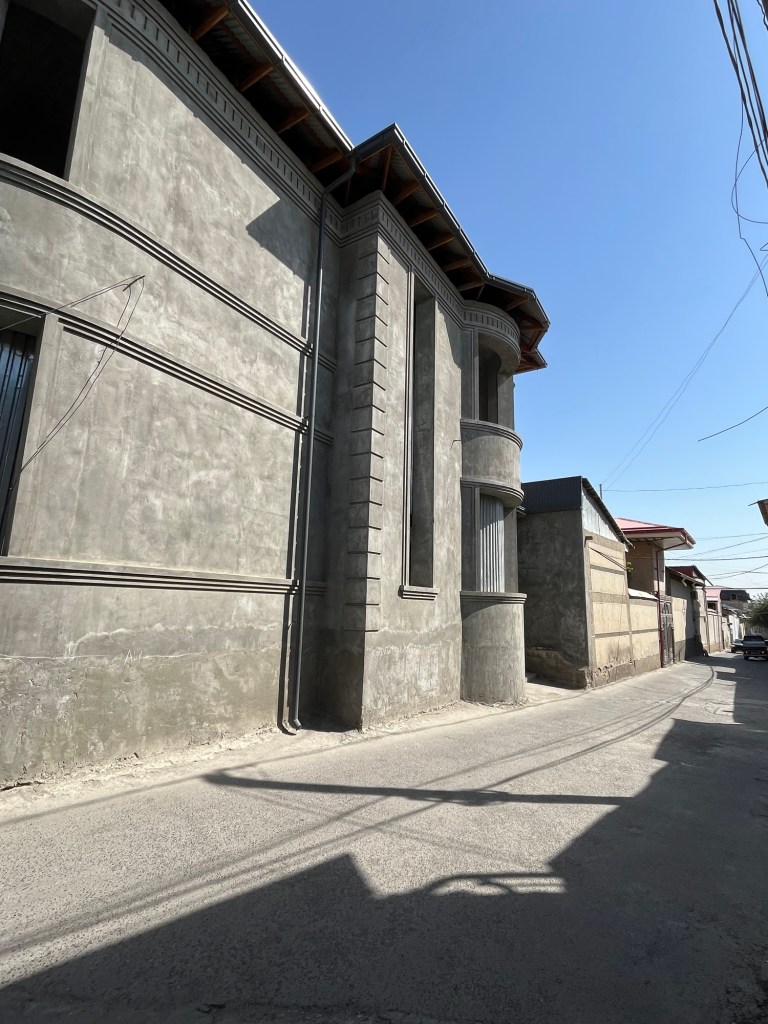
After a tea and baklava break, I headed to the Siyob bazaar for a wander and then looped around the back of the Bibi Khanym mosque before heading back to the hotel for an afternoon rest. In the late afternoon I headed back to the Registan to soak up the atmosphere at my own pace.
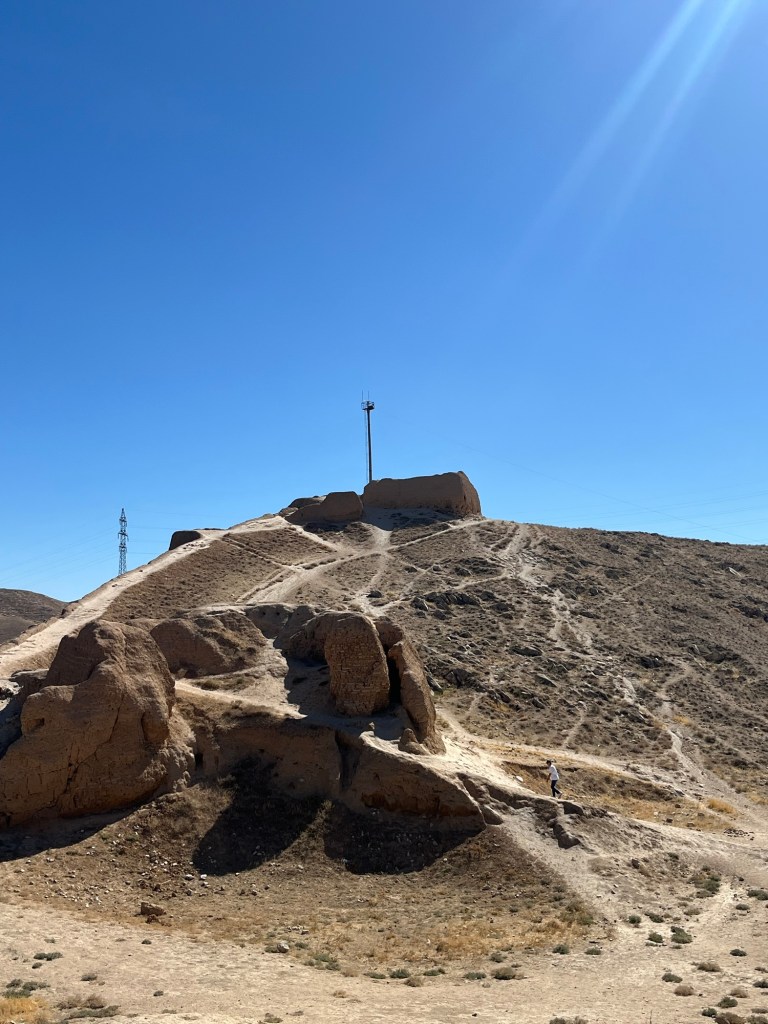
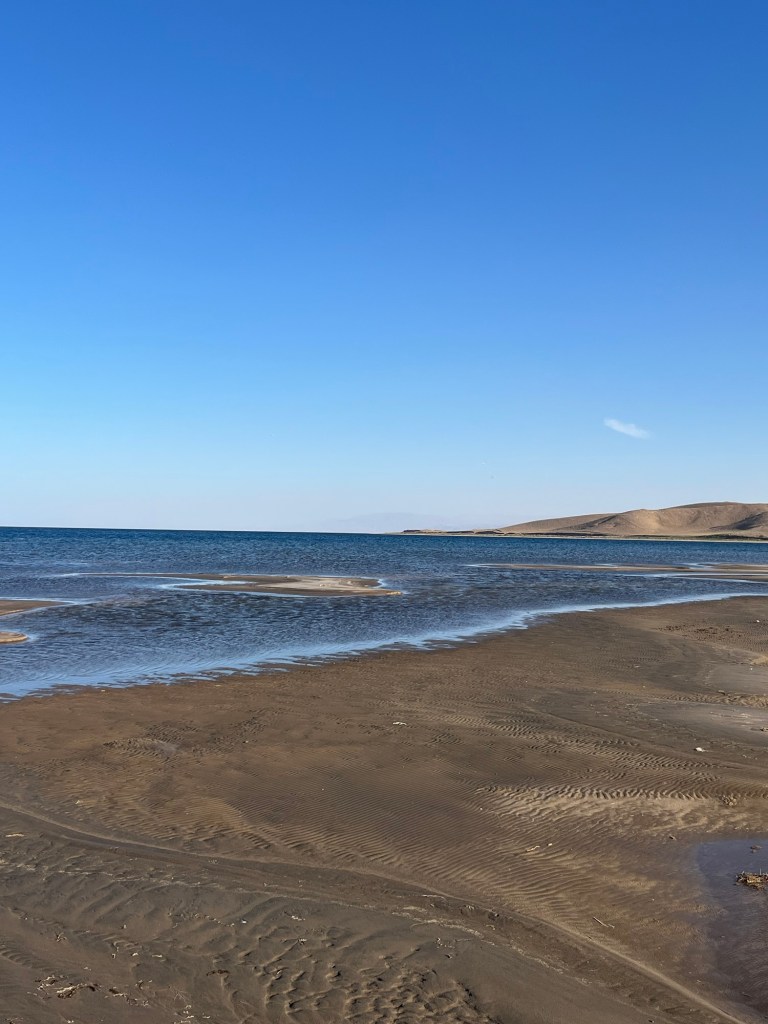
The next morning we headed out of the city, firstly to Nurata where Alexander the Great built a fortress up on the hillside. We then continued on to Aidar Kul lake and the beach. In a landlocked country, you’ve got to take what you can get! I’d been here 3 years ago and it definitely looked like a bit of development had happened. There was a boardwalk out to the water, and a hotel and restaurant were operating. I don’t hugely remember this being the case before. But in late September it wasn’t busy.
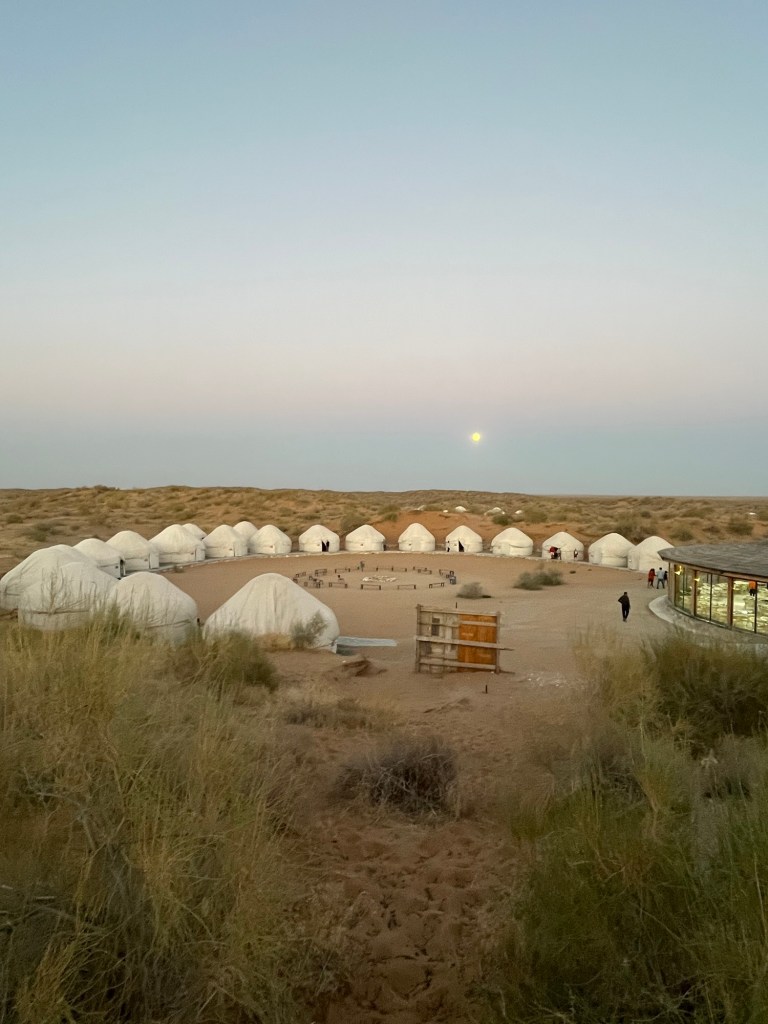
We made it to our home for the night, at a yurt camp, just as the sun was setting. I think it was the same camp as last time, though it too had undergone some renovations with a more substantial dining building and permanent walkway around the yurts. It was a bit of a shame the sun had dipped down by the time we got there as I remember the sunset being pretty spectacular last time.
We had a local dinner with salads, soup and a meat and veg dish before listening to some Kazakh music. The camp is relatively close to the Kazakhstan border and historically, central Asian peoples are nomadic peoples so it’s not surprising that you have such a mixture of cultures in this area.
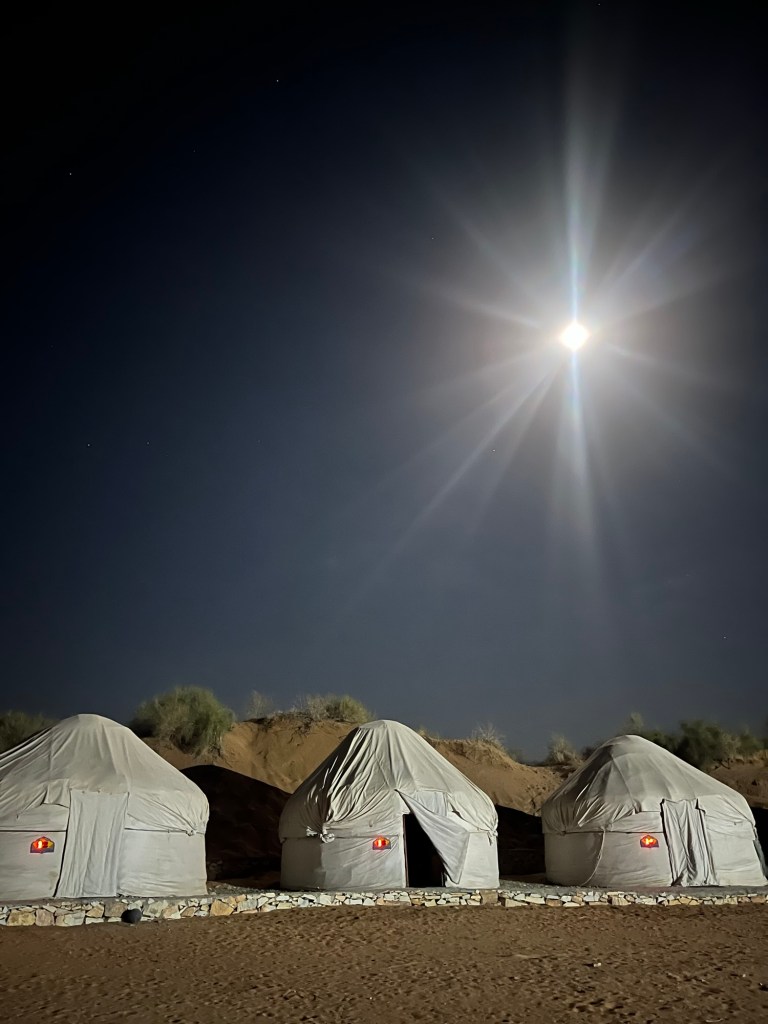
A bit of stargazing (with a near-full moon) to end the day before a not-too-bad nights sleep in the yurt. It wasn’t as cold as the one in Kyrgyzstan though it was still fairly fresh in the morning.
After breakfast it was back on the road to my favourite Uzbek city, Bukhara…

